Words: Craig Cheetham
Photography: Craig Cheetham
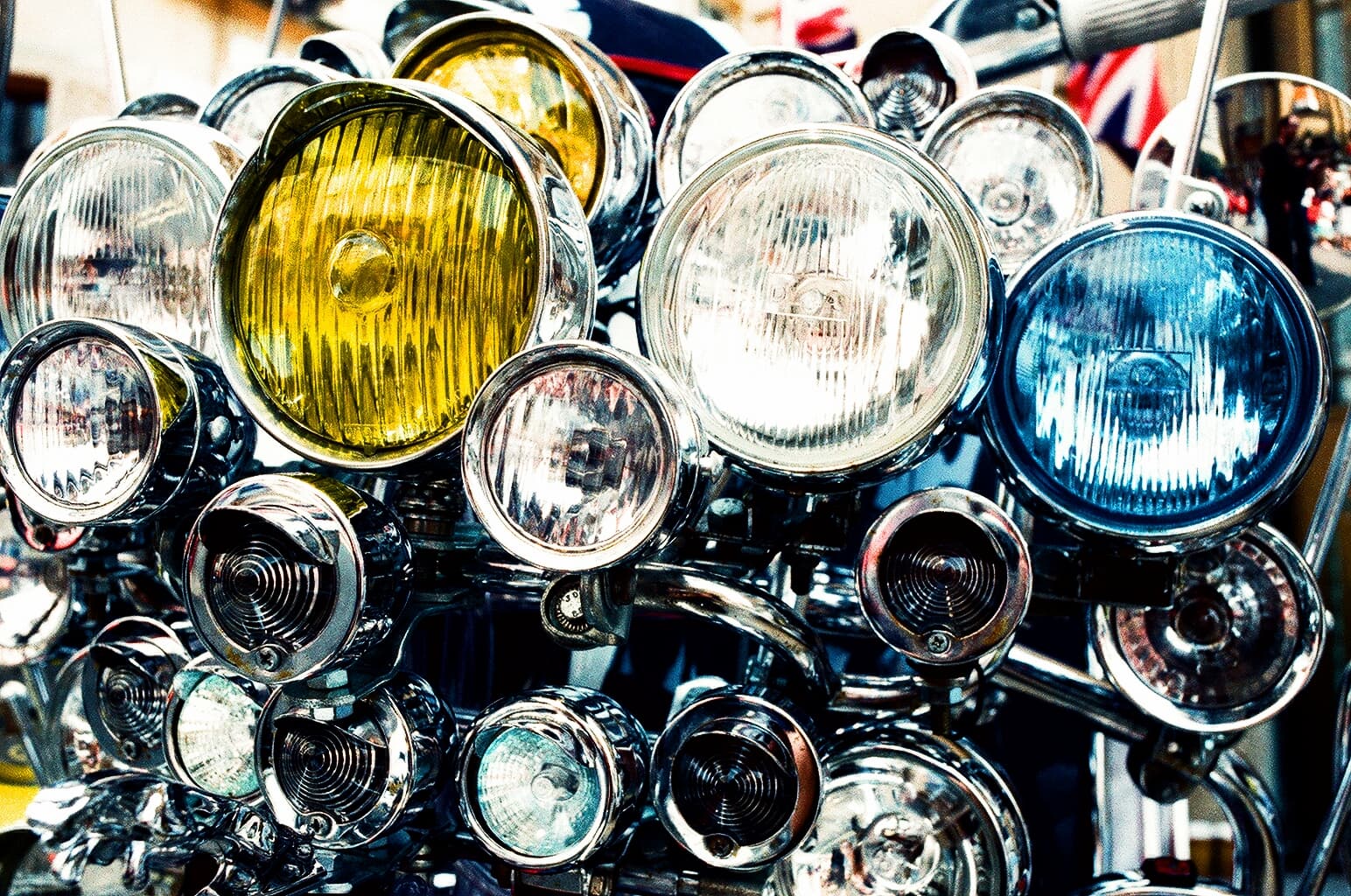
It’s easy to take your headlights for granted, but the harsh truth is that classic cars don’t light up the road as well as new ones because, like all elements of motoring, the march of progress has seen a series of developments over the past century or so.
From the acetylene gas lamps of early pioneering motoring to today’s sophisticated LED and self-dipping systems, here’s how lighting has changed, and what you can do to improve the lights on your classic.
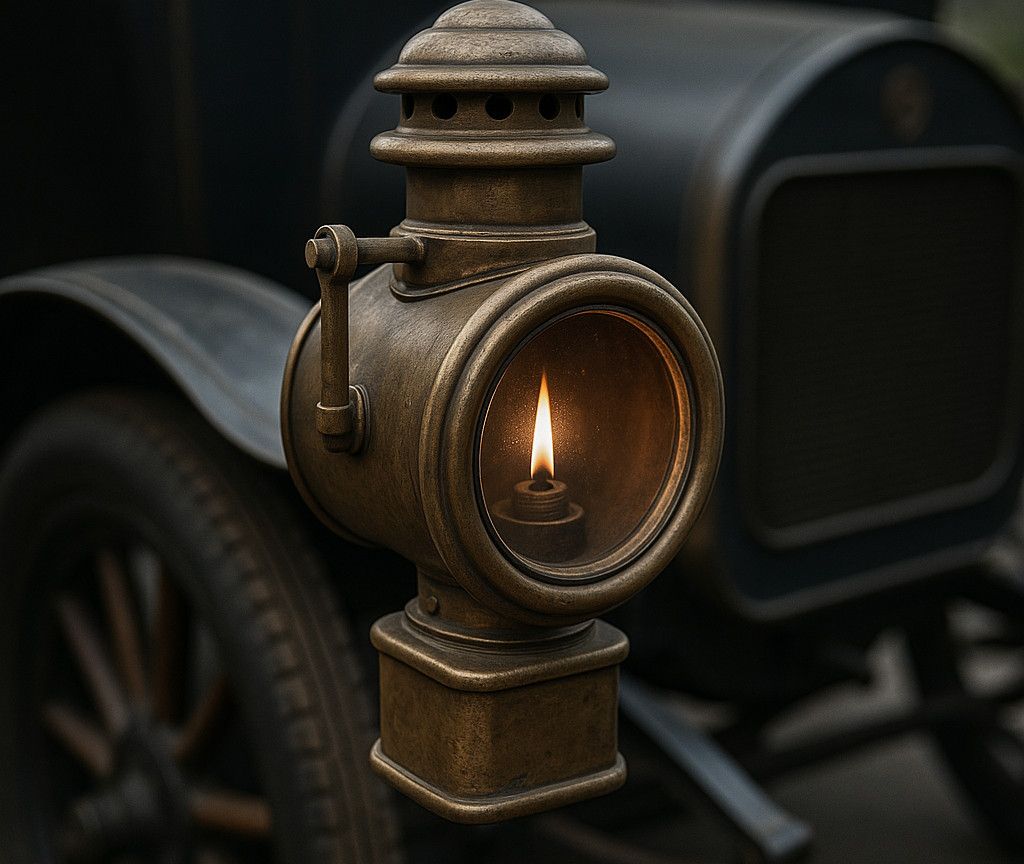
The first automobiles, appearing in the late 19th and early 20th centuries, did not have headlights as we know them today. Early lighting solutions included oil lamps, which provided minimal illumination and were largely ineffective for night driving. By the 1910s, acetylene gas lamps became the standard. These lamps burned acetylene gas, producing a bright, white flame. However, they required manual lighting and regular maintenance.
Electric headlights began to emerge around 1912, thanks to advancements in electrical systems and batteries. These early electric lamps used tungsten filaments, which were a significant improvement over previous technologies but still suffered from limited brightness and reliability.
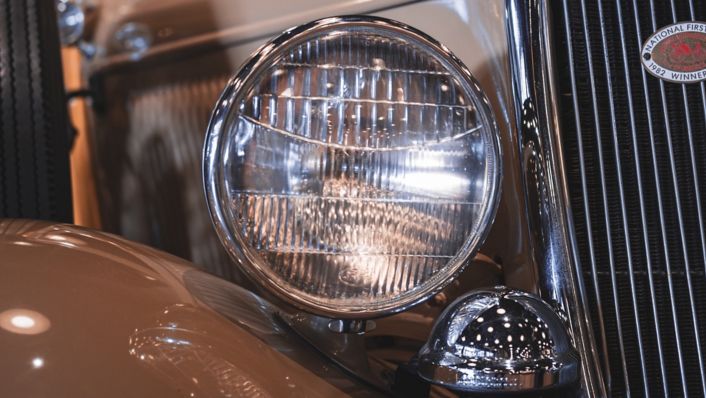
The introduction of sealed beam headlights in the United States in 1939 marked a huge turning point in automotive lighting. Sealed beams featured a filament, reflector, and lens all enclosed in a single sealed unit. This design offered several advantages: improved durability, standardised bulb sizes, and consistent light output.
For decades, sealed beam headlights became the legal standard in North America, with all cars required to use them until the 1980s. In the UK and Europe, manufacturers had more flexibility, allowing for the continued development of alternative headlight designs.
Sealed beam units typically employed tungsten filaments, which provided a reliable source of light. However, these headlights were not particularly bright by modern standards and had a relatively short lifespan, often failing with little or no warning. They also limited car design, as they were available only in a few uniform sizes.
The biggest evolution in car lighting – and a massive contributor to road safety – came in the 1960s and the development of halogen lamps. These were considered such an evolution that car makers used to boast about them in the marketing, just as they do about their all-singing, all-dancing LED systems today. The new lamps represented a substantial advancein car lighting technology, using a tungsten filament, but a bulb filled with halogen gas (typically iodine or bromine). The halogen gas interacts with the tungsten filament, allowing it to operate at higher temperatures without burning out as quickly.
The result is a brighter, whiter light that significantly improves night-time visibility. Halogen bulbs are also more energy-efficient and have a longer lifespan than their sealed beam and tungsten predecessors. They quickly became the standard for new vehicles and remain widely used today, although newer technologies such as xenon (HID) and LED lights are now common.
While halogen bulbs dominated for decades, recent years saw the rise of bi-xenon (or high-intensity discharge), LED, and even laser headlights. Xenon headlights use HID technology to produce an intense blue-white light, improving visibility but requiring complex electronics – for a period in the early 2000s, they were seen as the pinnacle of car-lighting technology, but many cars of this era have been switched back to halogen simply because of the cost of replacing HID units.
LEDs offer excellent energy efficiency, long life, and flexible design options, while laser headlights are at the cutting edge, providing unparalleled brightness and range.
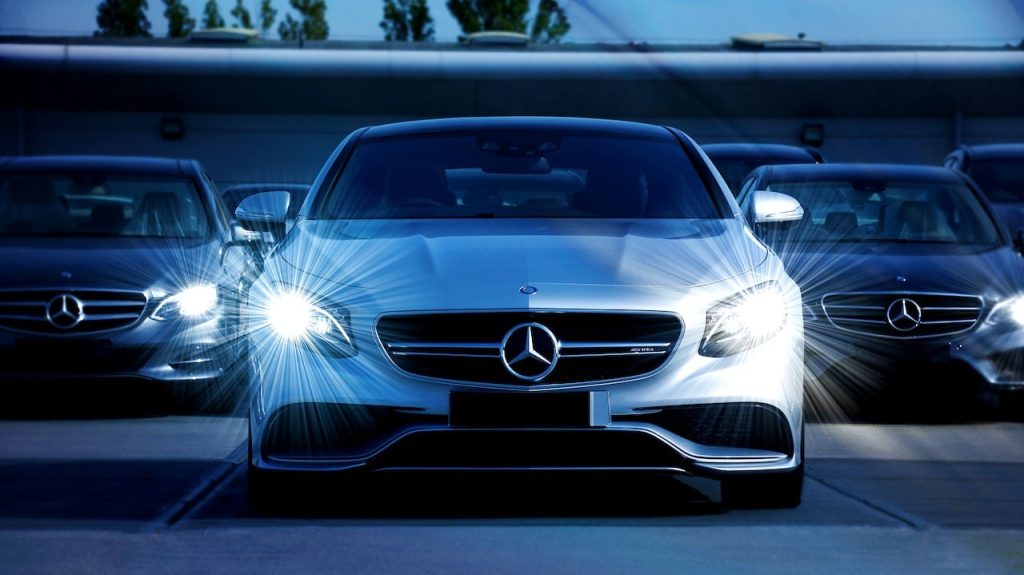
For classic car enthusiasts, these latest technologies may seem out of reach, but there are ways to enhance vintage lighting without compromising the vehicle’s originality.
Many classic cars still rely on sealed beam or early tungsten headlights, which can be inadequate for modern driving conditions.
Improving the lighting on classic cars polarises some owners, as they believe it sacrifices the vehicle’s authentic look – fine for pootling to shows on light summer days, but sub-optimal if you actually drive your classic in all weathers.
One widely adopted option is fitting halogen conversion kits, which allow classic vehicles to use more efficient and brighter halogen bulbs in place of the original tungsten or sealed beam units, but are often designed to fit directly into existing headlamp housings, making installation straightforward and reversible, thus preserving originality.
Another approach is upgrading to LED headlight units specifically designed for classic cars. Modern LED conversion kits provide superior brightness, consume less power and last much longer than traditional bulbs. Importantly, many manufacturers now offer LED assemblies that mimic the style of vintage headlights, ensuring that the upgrade does not detract from the vehicle’s classic charm – but you have to be careful here, as not all of these options will pass an MOT test if the original beam pattern is disturbed or they are considered too bright. For example, a lot of LED bulbs that fit into standard halogen headlamp plugs are technically illegal.
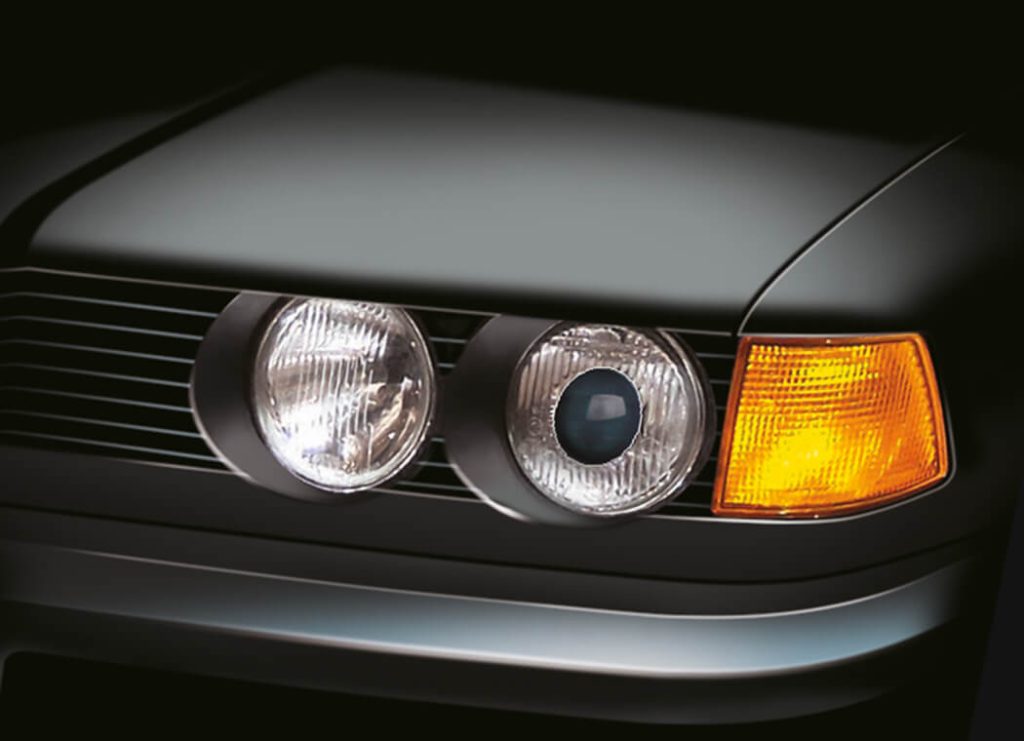
That means Halogen is the most popular way forward, and in terms of everyday usability is a much safer option than relying on old tungsten bulbs.
There are typically two types of halogen bulbs – H1 and H7. They look similar, but have different fittings and are not interchangeable.
The most significant difference lies in their design and application. H1 bulbs have a single filament and are typically used for high-beam or auxiliary lighting. They feature a single connector and are often found in older or classic cars, as well as in certain fog lights.
In contrast, H7 bulbs also have a single filament but are most commonly used for low-beam applications in modern vehicles. The H7 bulb has two prongs for connection, providing a more secure fit and the ability to operate on both high and low-beam.
Additionally, H7 bulbs tend to be more widely available for newer cars and may offer improved brightness and longevity due to advancements in technology – plus, they’re widely available and inexpensive.
How do you feel about evolution of car headlights and lightbulbs? Let us know your thoughts in the comments below.
Insure your classic with a specialist insurer
If you’re looking for cover for your pride and joy, why not consider Hagerty UK? Not only are we classic car insurance specialists, but we are enthusiasts at heart. Call us for a quote on 0333 323 1138.





What?! You do know they’re not interchangeable, don’t you? Have you been reading “Which Tap Washer” magazine? (Credit DJB)