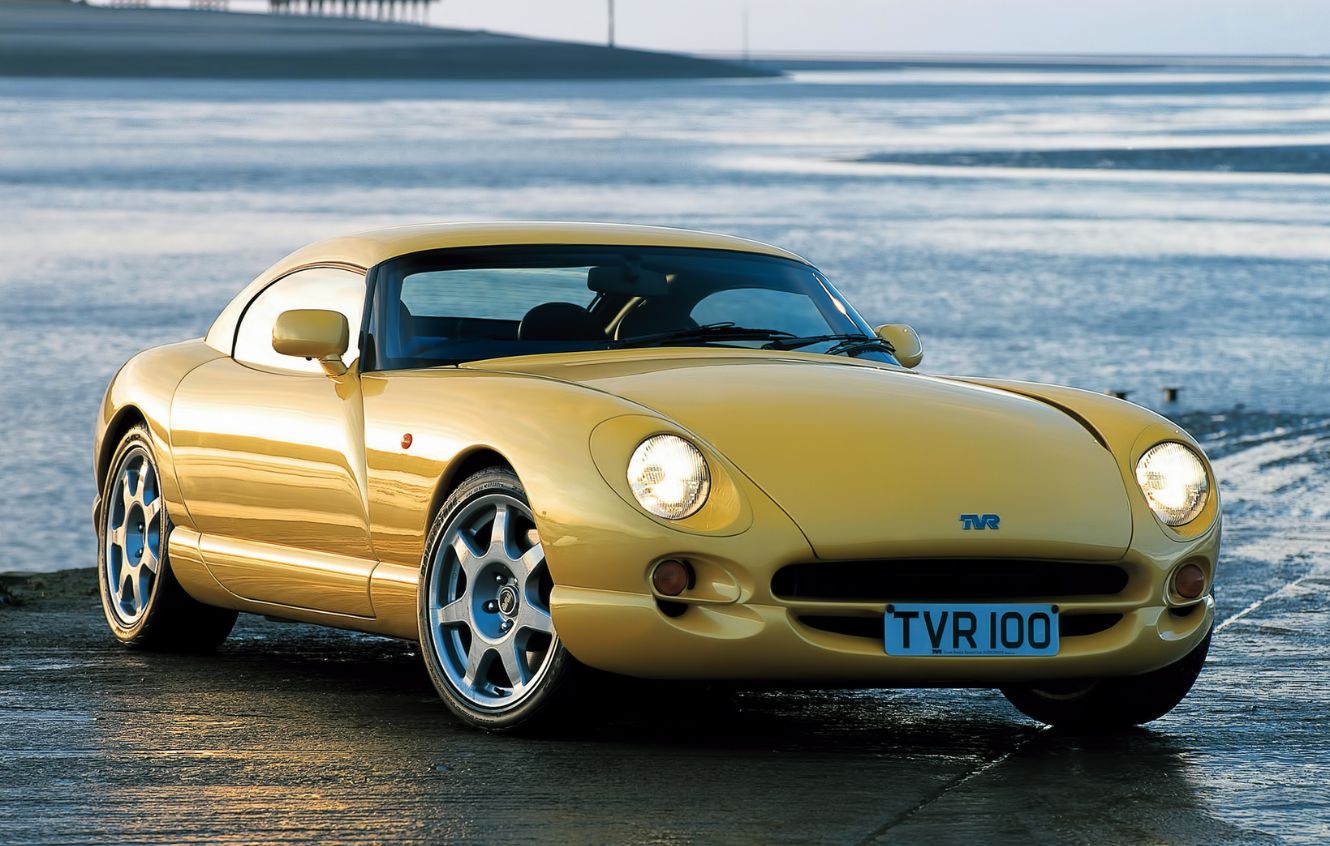
A raw, analogue V8 brute, the TVR Cerbera still thrills, terrifies and demands total commitment
Slide behind the wheel of a modern performance car, and you are immediately assigned a co-pilot. It isn’t a person, but an invisible, overbearing matrix of microprocessors. Lane assist nudges the steering wheel, traction control suffocates the throttle, and synthetic engine noise is politely piped through the stereo system just in case you forget you bought the ‘sport’ model. We live in an era where dynamic stability control and collision intervention have robbed us of the very thing that makes driving so intoxicating: the unadulterated burden of total responsibility.
If you want to remember what it feels like to be the sole master of your own destiny, you need to rewind the clock exactly 30 years. You need to travel back to 1996, to a small, smoke-filled office in Blackpool, where a 6ft 5in chain-smoking visionary named Peter Wheeler was busy ripping up the supercar rulebook. This year marks the 30th anniversary of the first customer deliveries of the TVR Cerbera, and three decades on, it remains one of the most gloriously unhinged, viscerally captivating analogue driving experiences ever committed to tarmac.
Before the Cerbera, TVR was a boutique purveyor of hairy-chested roadsters powered by bought-in Rover V8s. They were fantastic, flawed, and fearsome things, but Wheeler wanted more. He wanted a 2+2 grand tourer that could legitimately bloody the noses of Ferrari and Porsche. More importantly, he wanted TVR to build its own engines.
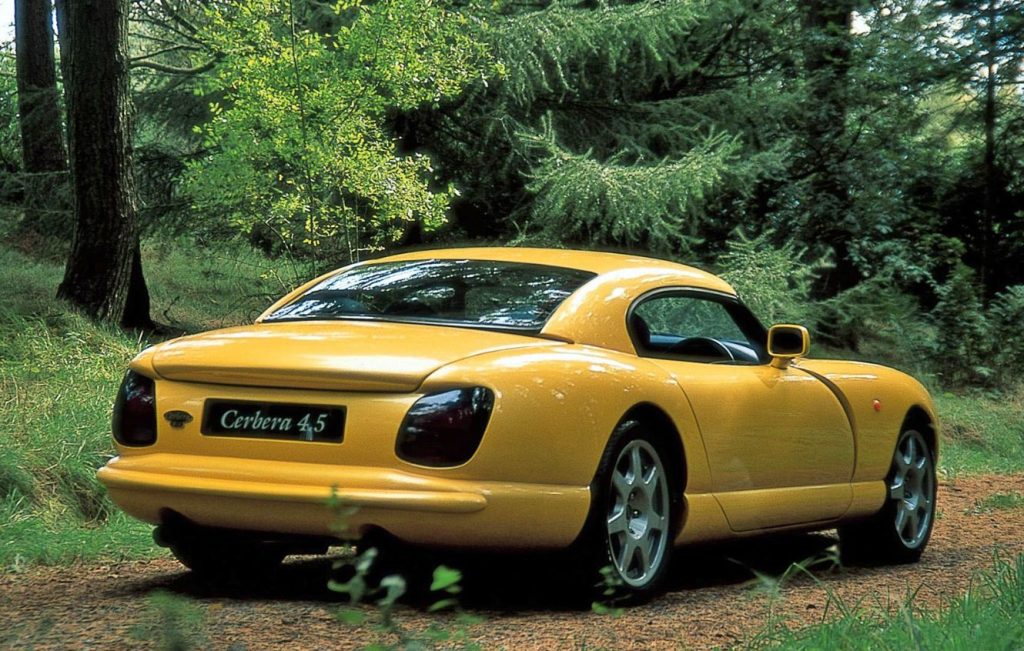
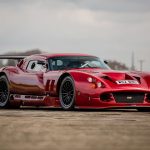
The resulting car was named after Cerberus, the mythical multi-headed hound that guarded the gates of Hades. Rarely has a car been so aptly christened. Unveiled as a concept in 1993 and finally reaching the hands of brave early adopters in 1996, the Cerbera was a jaw-dropping piece of automotive theatre. It was a sleek, low-slung coupe sculpted not by computers, but by men carving full-size blocks of foam until it looked right.
Seen today, the TVR Cerbera still looks utterly alien. There are no door handles to interrupt those sweeping fibreglass flanks; instead, the uninitiated are left fumbling underneath the wing mirror to locate the hidden microswitch. Press it, wait a beat for the window to drop, pop the latch, and fold yourself inside.
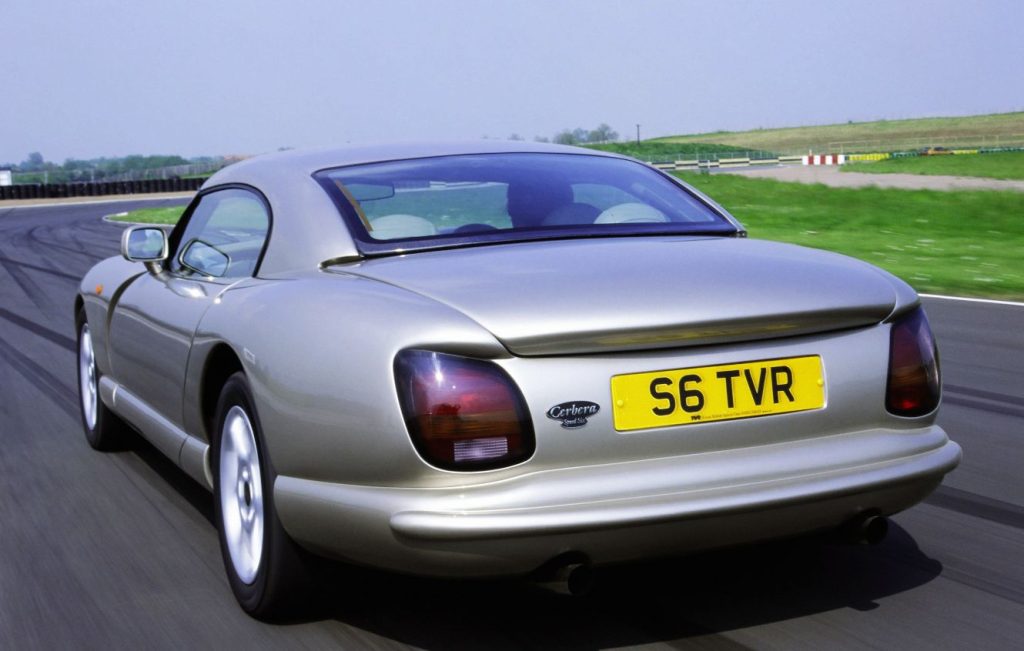
The interior is a masterpiece of eccentric British craftsmanship, dominated by the rich scent of leather, carpet adhesive, and curing fibreglass. Because Wheeler was so tall, the cabin is surprisingly accommodating, but it is the sweeping, asymmetrical dashboard that steals your attention. The two-spoke steering wheel looks like something plucked from a sci-fi prop department, housing an air vent and two auxiliary gauges entirely within the lower half of the rim. There are no backlit stalks. Unmarked buttons on the wheel spokes operate the horn, wipers, and lights. You don’t just sit in a Cerbera; you strap into it, committing its ergonomic idiosyncrasies to memory before you even dare turn the key.
Then there is the noise. TVR’s bespoke engine programme, helmed by Al Melling, John Ravenscroft, and Wheeler himself, birthed the AJP8. Originally a 4.2-litre V8 producing a claimed 360bhp, and later a 4.5-litre engine producing around 420bhp, or 440bhp in the Red Rose specification, it is an engine that demands respect. Because it utilises a flat-plane crankshaft, it doesn’t burble like a traditional lazy V8. At idle, it possesses a gruff, erratic, almost carb-fed four-cylinder character. But bury the long-travel throttle pedal, and it morphs into a jagged, mechanical wail that tears at the horizon.
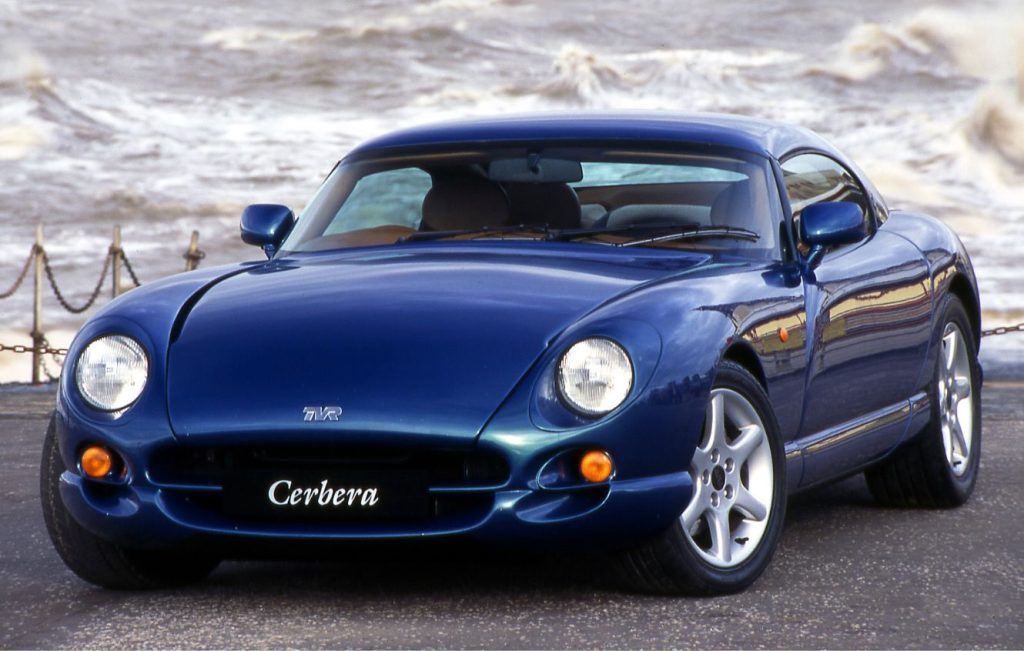
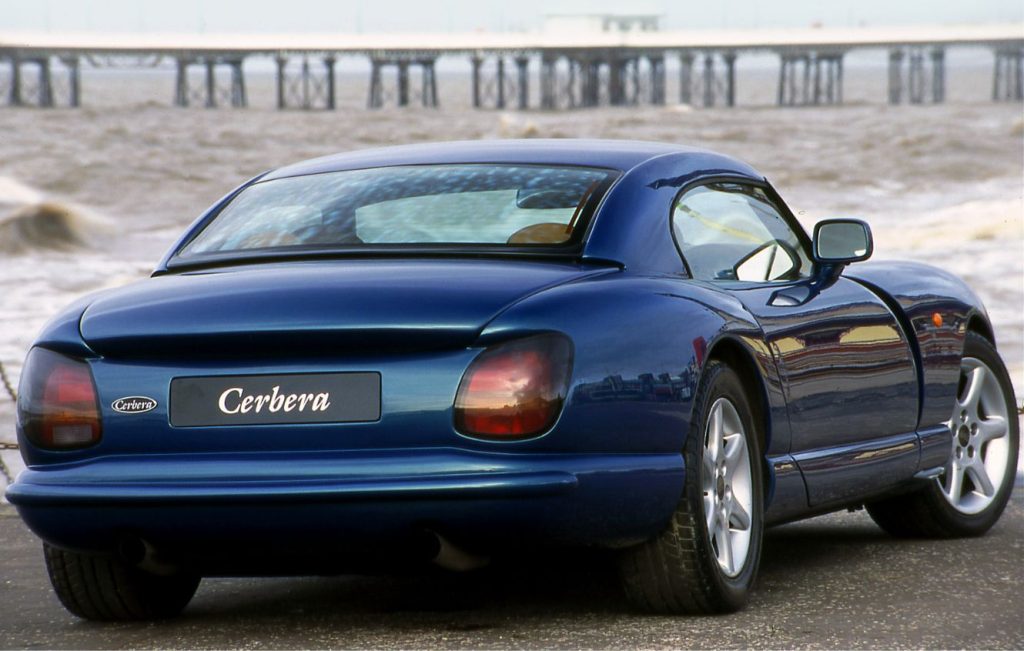
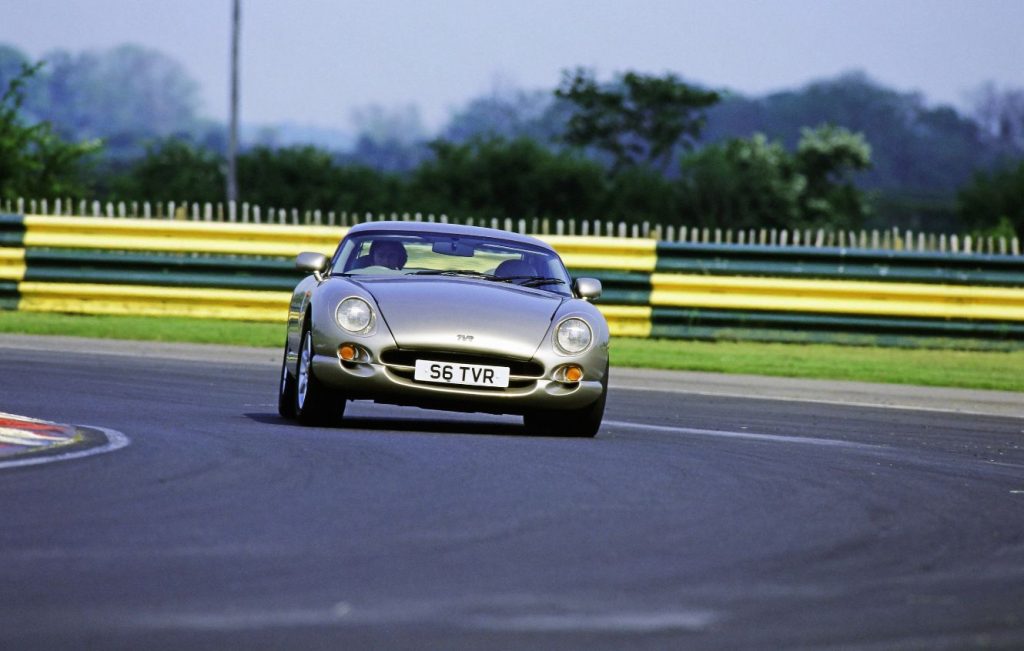
Driving a Cerbera is an exercise in managing sheer, intimidating physics. The clutch is heavy, requiring a purposeful shove, and the BorgWarner T5 five-speed manual gearbox, while robust, demands a firm, deliberate hand. But when you finally find a clear stretch of B-road and let the AJP8 breathe, the lack of inertia is startling. The TVR Cerbera weighs roughly 1100 to 1200kg. With over 400bhp on tap in the 4.5-litre cars, the acceleration is crushing. Back in the late nineties, this plastic fantastic from Lancashire was capable of running with Lamborghini Diablos and Porsche 911 Turbos in straight-line acceleration, hitting 60mph in around four seconds. Some of the test cars had fruitier engines than the customer ones, it has been rumoured – but it’s nothing major OEMs haven’t done.
Yet, straight-line speed is only half the story. The Cerbera’s steering is telepathically quick at just two turns lock-to-lock. Paired with a chassis that offers tremendous grip right up until the exact microsecond it doesn’t, it is a car that requires you to be awake, alert, and wholly committed. Early cars were not fitted with ABS, and there is absolutely no traction control to catch the rear end if you get too greedy with the throttle on the exit. The 235-section rear tyres simply light up, and the rest is entirely up to your own reflexes.
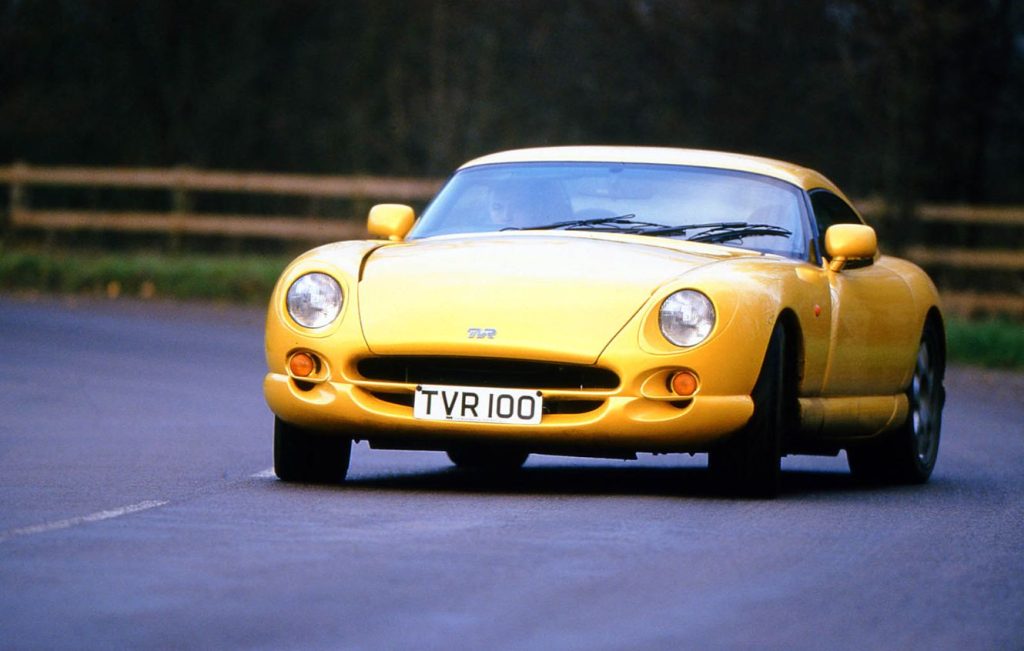
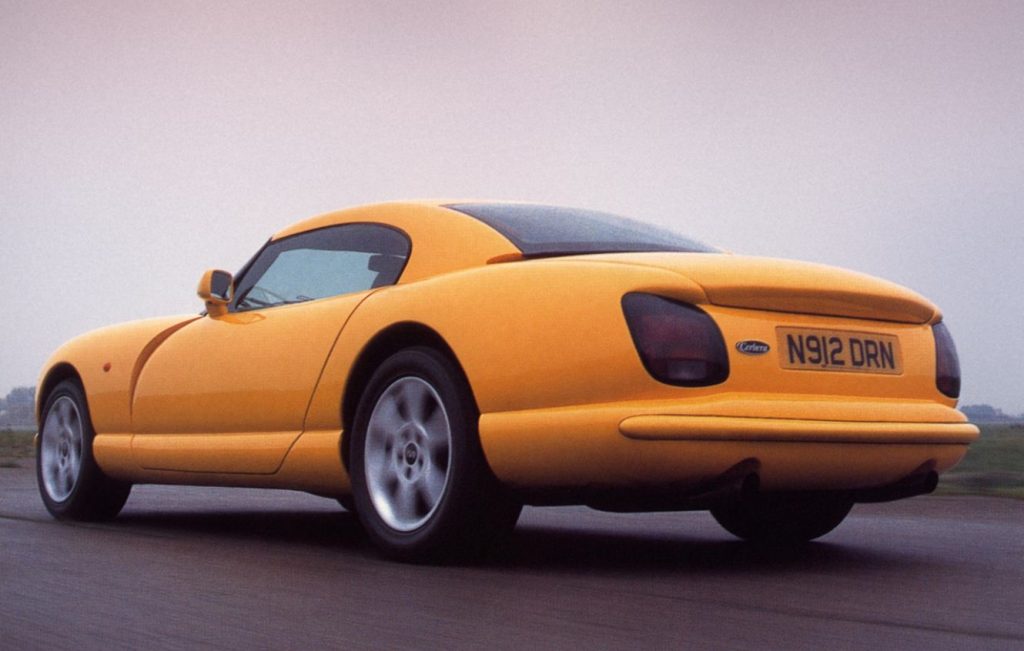
For those who found the AJP8 a little too binary, 1999 brought the introduction of TVR’s own 4.0-litre straight-six. The Speed Six engine offered a sweeter, more linear power delivery with 350bhp, trading a fraction of the V8’s outright savagery for a more progressive surge of torque and a soundtrack straight out of a 1960s Le Mans grid.
Of course, we must address the elephant in the room. The Cerbera’s reputation for reliability, or lack thereof, is legendary. Early cars were plagued by issues including timing chain problems, temperamental electronics and build quality that could charitably be described as variable. There were tales of occupants being locked inside by failing microswitches, and reports of rear screens detaching at very high speeds due to pressure differentials.
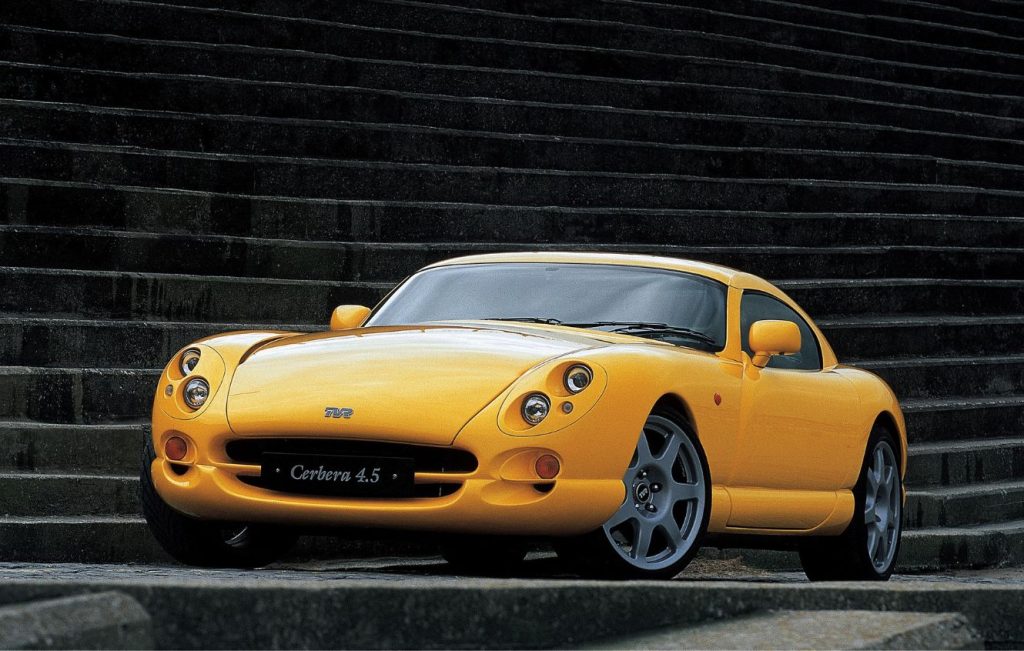
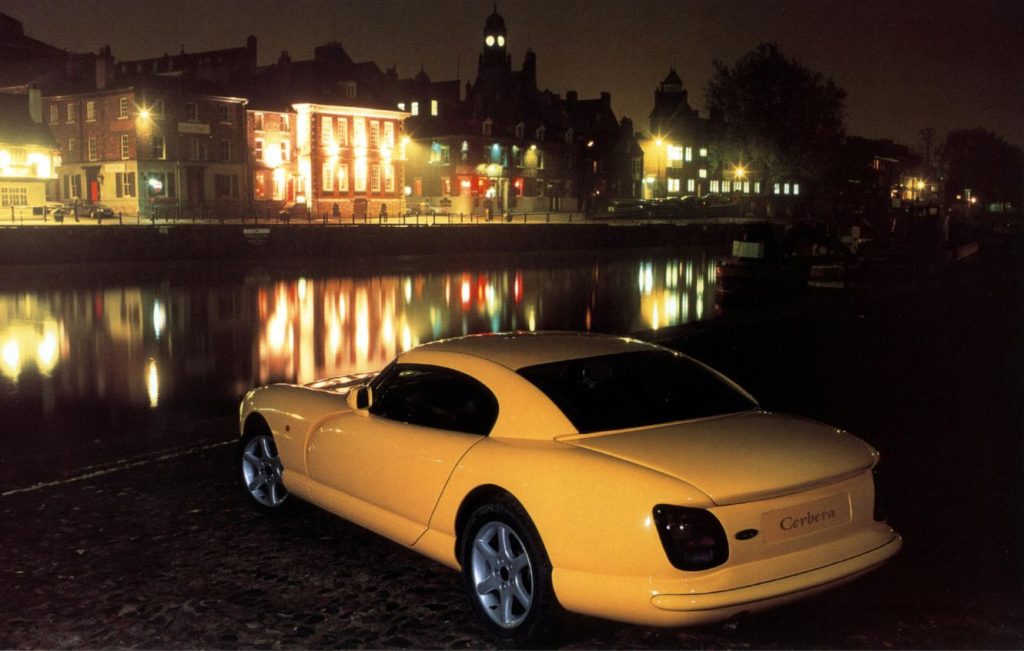
But frankly, who cares? Buying a TVR Cerbera was never about sensible transportation; it was about buying a ticket to an event. Today, the surviving cars have largely had their factory foibles addressed by dedicated specialists and a fanatical owners’ club. You still need deep pockets for servicing, and you must check the outriggers for rust with the paranoia of a bomb disposal expert, but for roughly the price of a mid-spec modern hot hatch, you can own a bespoke, near-200mph British exotic.
Thirty years on, the TVR Cerbera stands as a magnificent monument to a bygone era. It is a car built without focus groups, unencumbered by safety committees, and completely devoid of electronic assistance. It is pure, it is difficult, it is occasionally infuriating, and it is absolutely brilliant. In a modern motoring landscape increasingly defined by sanitised compliance, the Cerbera is a glorious, roaring reminder of the days when we were actually allowed to drive. Happy 30th birthday, you beautiful monster.
Insure your classic with a specialist insurer
If you’re looking for cover for your pride and joy, why not consider Hagerty UK? Not only are we classic car insurance specialists, but we are enthusiasts at heart. Call us for a quote on 0333 323 1138.



I’d rather have a Cerbera than a Bugatti.
Amen, Sidney
While there is a metal key in the cerbera it’s not really used. Instead you just hit the start button having disarmed the immobiliser with the keyfob.
None of the cars (early or late) had ABS, but all had power steering…
Video please!