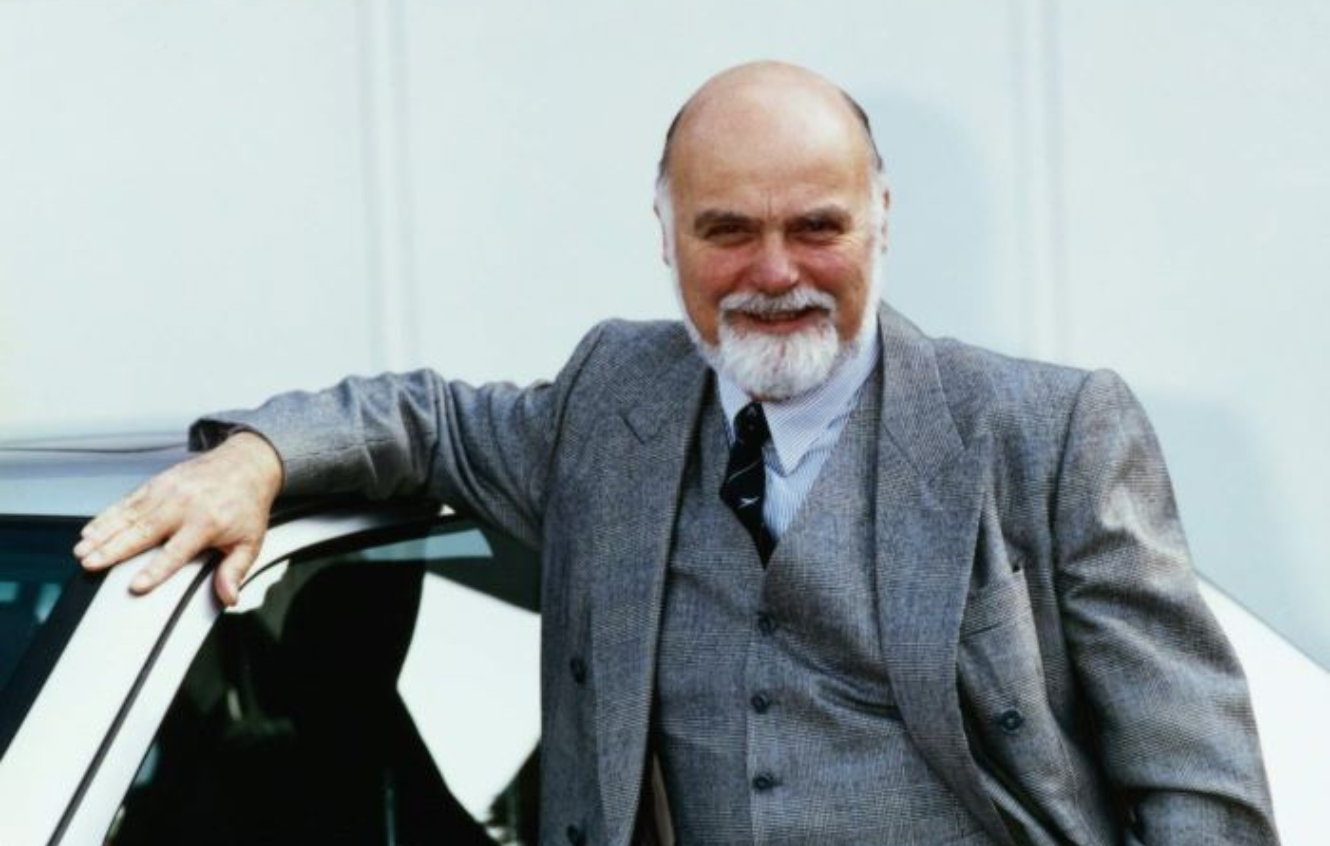
Most car designers move around throughout their careers, but not Italian visionary Bruno Sacco….
The Italians are well-known in the world of car design, but one of the country’s most influential automotive styling influencers was deeply and intrinsically linked with a German brand.
Bruno Sacco spent over four decades working for Mercedes-Benz, where his influence was so significant that it still runs through the company’s cars today.
Born on 6 November 1933 in Udine, Italy, Sacco’s early life was shaped by a fascination with engineering and aesthetics, which would later propel him to international renown.
His formative years were marked by an appreciation for Italian artistry, yet it was the precision and innovation of German automotive engineering that ultimately captured his imagination.
Sacco’s journey began at the Polytechnic University of Turin, where he studied engineering. This foundation provided him with not only technical expertise but also an understanding of how form and function could coexist in harmony. Inspired by the works of legendary designers and the burgeoning automotive scene in post-war Europe, Sacco sought opportunities that would allow him to merge his passions for art and engineering.
In 1958, aged 25, Sacco joined Mercedes-Benz – a pivotal moment that marked the start of his illustrious career. Initially, his role was fairly junior, but his talents quickly became evident. His ability to balance aesthetics with aerodynamic efficiency became a hallmark of his work, and he steadily rose through the ranks within the company.
By the start of the 1970s, Sacco had established himself as a key figure in the company’s design department, much of this based on his work on the W114/115 saloon cars with their distinctive ‘stacked’ headlights.
He became instrumental in shaping the brand’s visual identity thereafter, moving away from the ornate styling of previous decades and towards a cleaner, more modern aesthetic. This period saw Sacco embrace the principles of what he called ‘Horizontal Homogeneity,’ a philosophy that emphasised visual continuity across different models, ensuring that every car in the Mercedes line-up looked and felt like part of the same family.
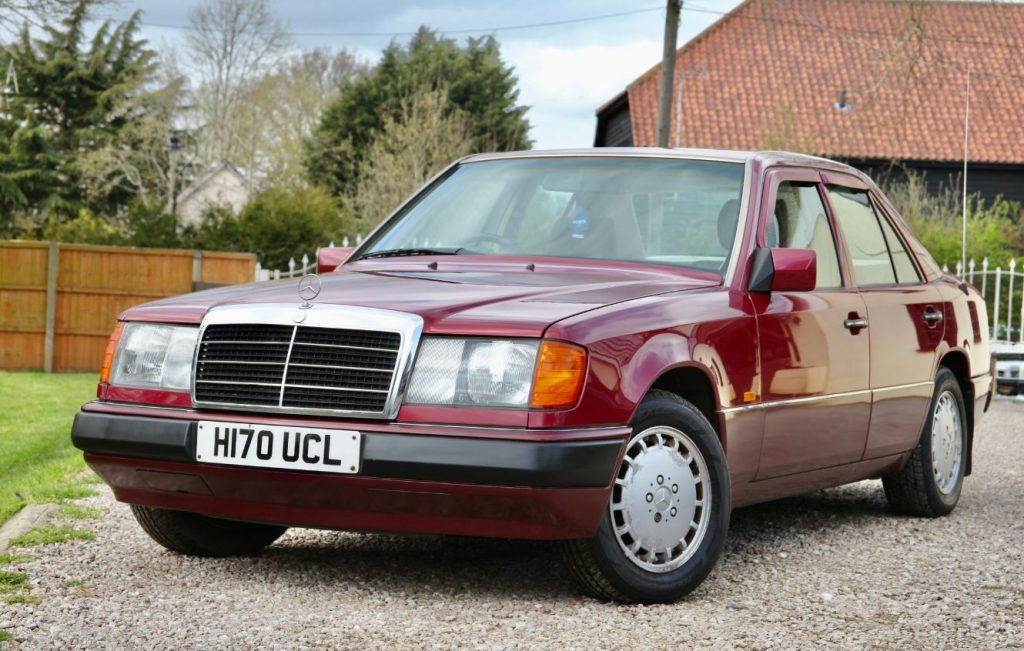
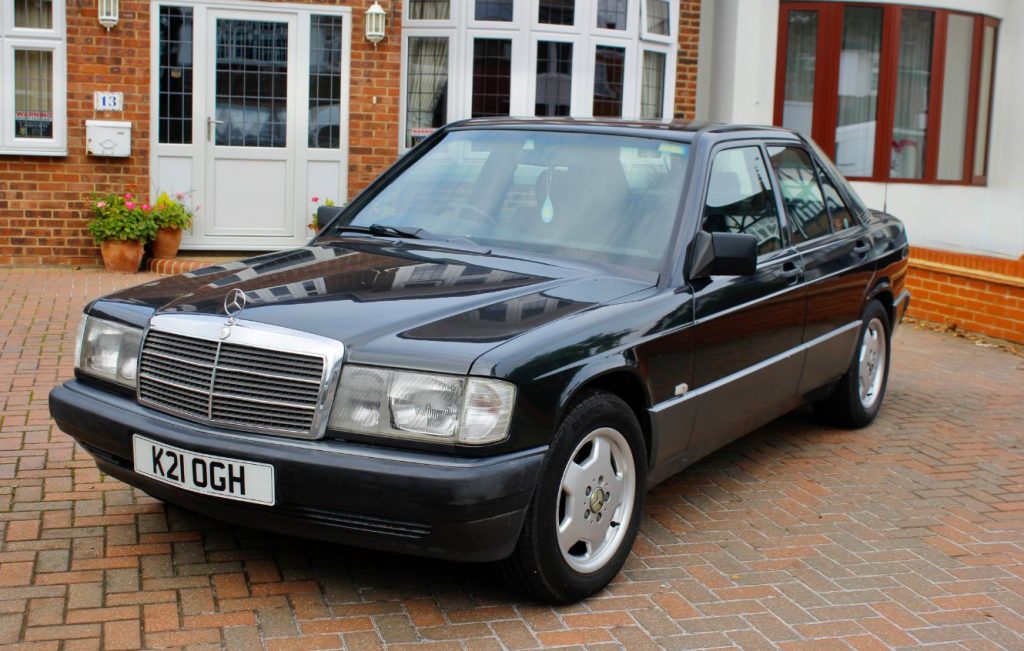
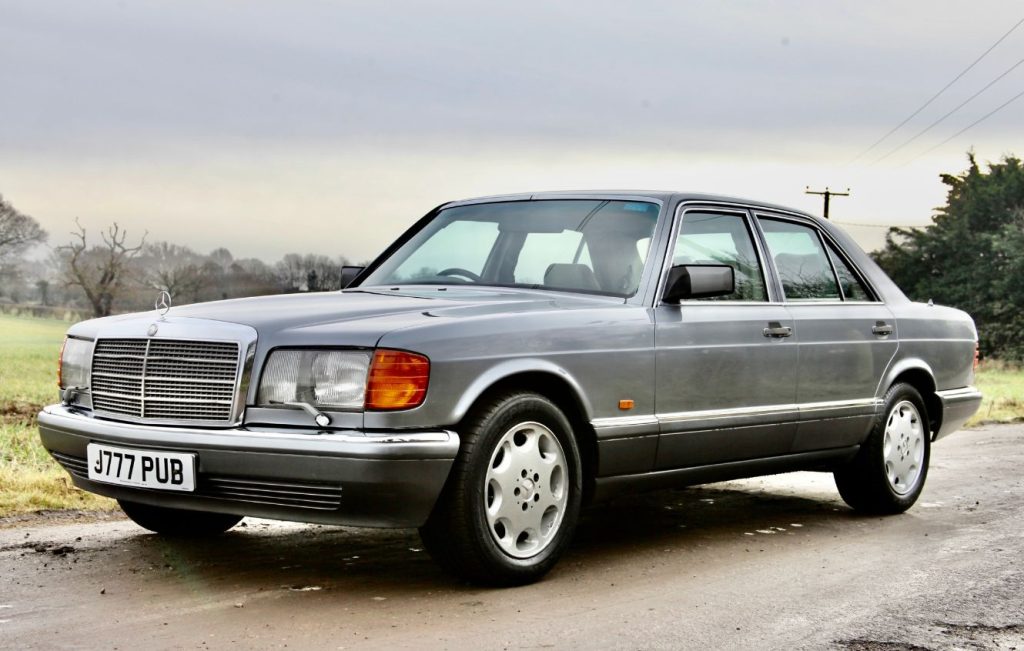
In 1975, aged 42, he was appointed Head of the Styling Department at Mercedes-Benz. In this role, he was responsible for overseeing the design of some of the most iconic vehicles in the brand’s history. The Mercedes-Benz W126 S-Class, launched in 1979, was his first fully-led project, though it was clear that he’s already influenced other recent models such as the W123 saloon and R107 SL.
The W126 was a car that defined functional beauty – clean, sharp and elegant, but at the same time, a technology leader, introducing such features as airbags and anti-lock braking systems.
With his future projects, Sacco’s cars had a greater focus on aerodynamics. The W201 (better known as the 190E) may have looked fairly traditional, but its flush glass areas and tapered rear end served a streamlining process, too. He was also a keep exponent of timeless styling stating that “a Mercedes must look good even when it is old.” He got that one right, didn’t he?
The W124 (E-Class), and the W140 S-Class evolved Sacco’s design philosophy further, each having clean lines, balanced proportions, and a focus on durability and timelessness.
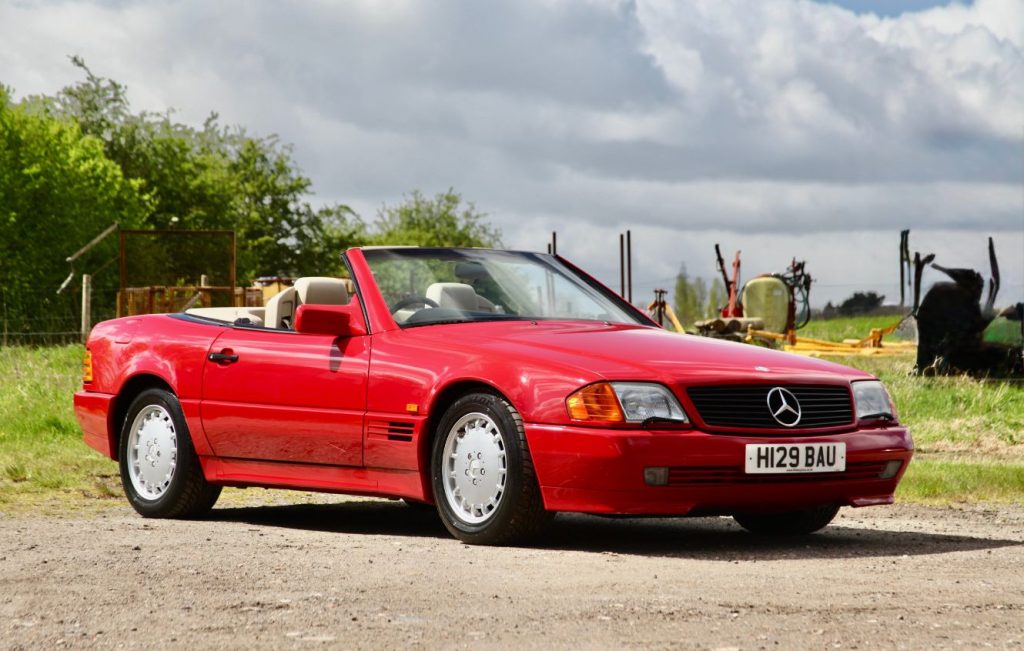
Then there was arguably the prettiest of the lot – the R129, which replaced the long-serving R107 in 1989. The genius of its combined delicacy and solidity was astonishing, favouring subtle sophistication over ostentation.
Throughout his career, Bruno Sacco was dedicated to improving automotive safety and ergonomics. He championed the integration of advanced safety features, such as crumple zones, anti-lock braking systems and airbags into the design language of Mercedes-Benz. Sacco understood that aesthetics and engineering function could not be divorced – thus managing one of the most common arguments in the car industry.
Indeed, Sacco worked closely with engineers, marketers, and other designers, fostering a culture of innovation and mutual respect. Sacco’s leadership style was characterised by mentorship and encouragement, helping to nurture the next generation of automotive designers. Many who worked under him have spoken of his ability to inspire creativity while maintaining rigorous standards.
Sacco’s legacy is further enriched by his contributions to environmental sustainability in automotive design. He recognised early on the importance of reducing emissions and improving fuel efficiency. This foresight influenced the development of lighter materials, aerodynamic bodywork, and efficient powertrains.
Sacco’s designs were not only beautiful but also practical, anticipating the challenges and demands of the future.
In 1999, after more than four decades with Mercedes-Benz, Bruno Sacco retired from his position as Head of Design. His departure marked the end of an era, but his influence continued to shape the company’s design philosophy – and still does in Mercedes-Benz styling to this day.
Upon his passing in 2024, aged 91, car designers globally came together to recognise his work. McLaren F1 designer Peter Stevens said: “What Sacco did for Mercedes was extraordinary. He gave himself two very strong, and strict, rules which he named ‘Horizontal Homogeneity’, [where] all models in a brand should share stylistic cues, and ‘Vertical Affinity’. Models should not be rendered stylistically obsolete by their successors. He achieved both through his great eye for proportion, his simple but strong surfaces, and his attention to restrained detail.
“He was a quiet, charming man who trained as an engineer, called himself an engineer, and was in fact a fine designer who never needed to call himself a designer.”
Former Renault design chief Patrick Le Quément added: “Bruno Sacco was a quiet man whom I much respected for his intelligence and what he had achieved in the quarter of a century spent at the helm of Daimler Benz Design.
“I had several opportunities to meet him; we shared many thoughts and agreed on many points notably, our mistrust of retro design, which appeared as a nostalgic look upon the past and a lack of belief in the future. He once said, “Better to look forward and not dwell on ancient history. If you want history, visit a museum!”…”
Today, quite rightly, Bruno Sacco is celebrated as one of the greatest automotive designers of all time. His vehicles, many of which are now considered classics, still look timelessly beautiful today – and that’s exactly what he set out to achieve.
Which Bruno Sacco-designed Mercedes-Benz is your favourite and do you think his philosophy of timeless design is missing from modern cars? Share your thoughts in the comments below.
Insure your classic with a specialist insurer
If you’re looking for cover for your pride and joy, why not consider Hagerty UK? Not only are we classic car insurance specialists, but we are enthusiasts at heart. Call us for a quote on 0333 323 1138.