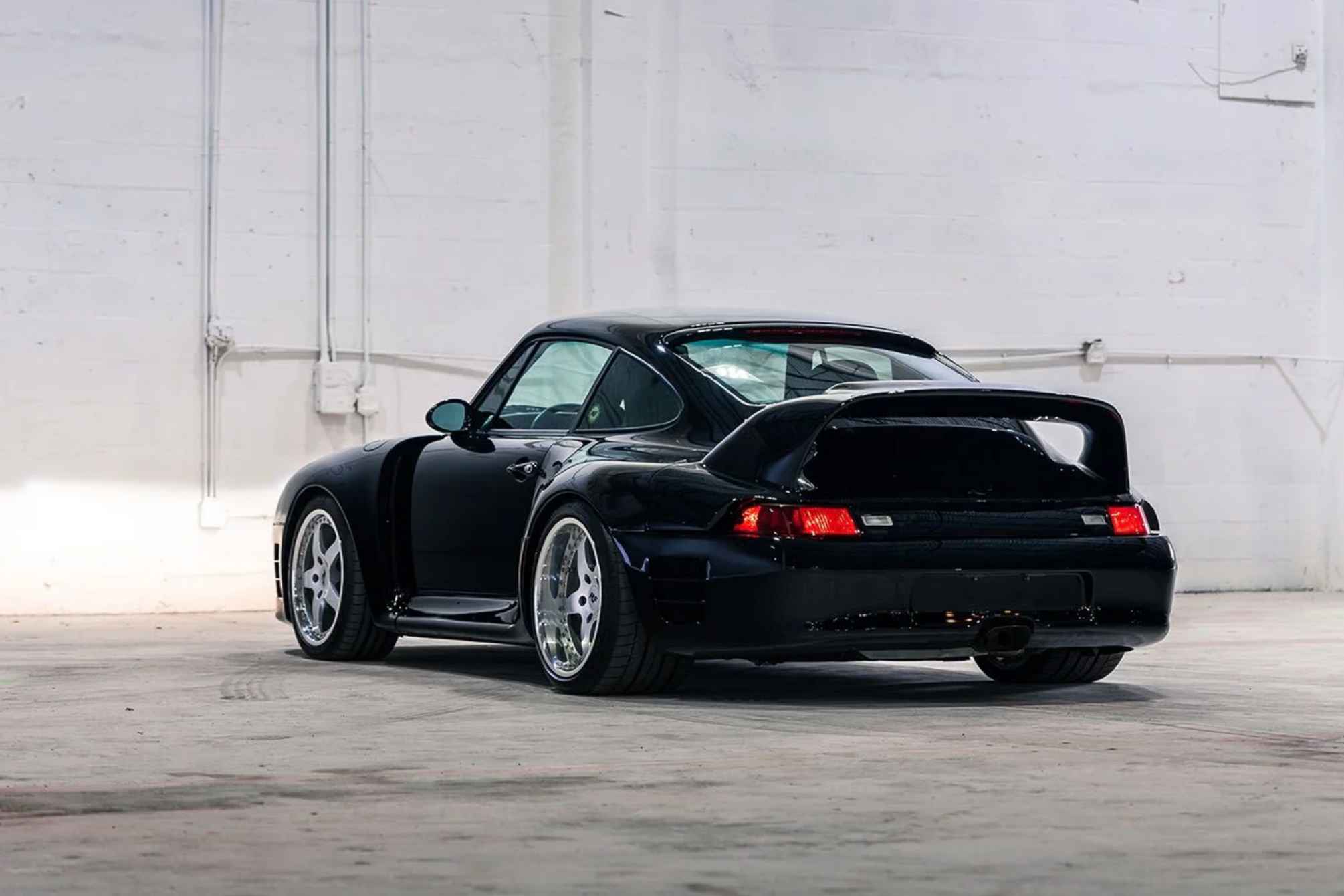
Twin turbos, 217mph and barely any visual restraint made the CTR2 RUF’s wildest air-cooled creation
The original 1987 CTR Yellowbird had made RUF famous by embarrassing the era’s grandest supercars with little more than a narrow 911 body, two turbos and Alois Ruf’s refusal to accept sensible limits. By the mid-1990s, however, the Ferrari F40, Jaguar XJ220 and McLaren F1 had turned maximum speed into an international arms race. The new 993-generation Porsche 911 gave RUF a smoother, more sophisticated starting point, but simply repeating the Yellowbird recipe would not do. The CTR2 arrived in 1995 as its answer: faster, broader, technically richer and still built in Pfaffenhausen rather than approved by committee in Stuttgart.
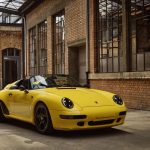
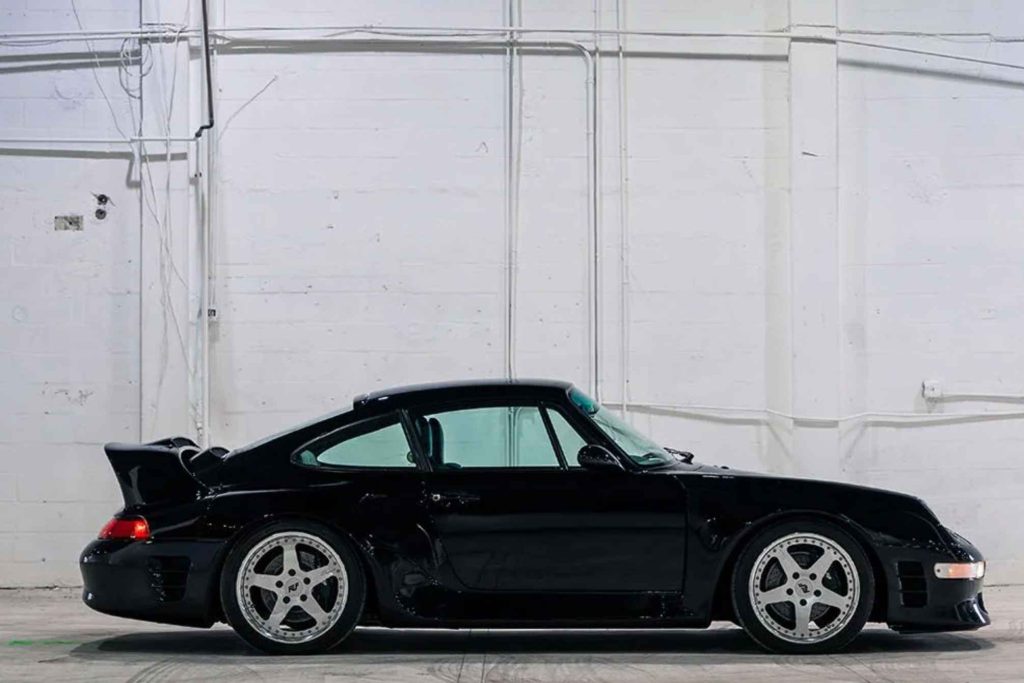
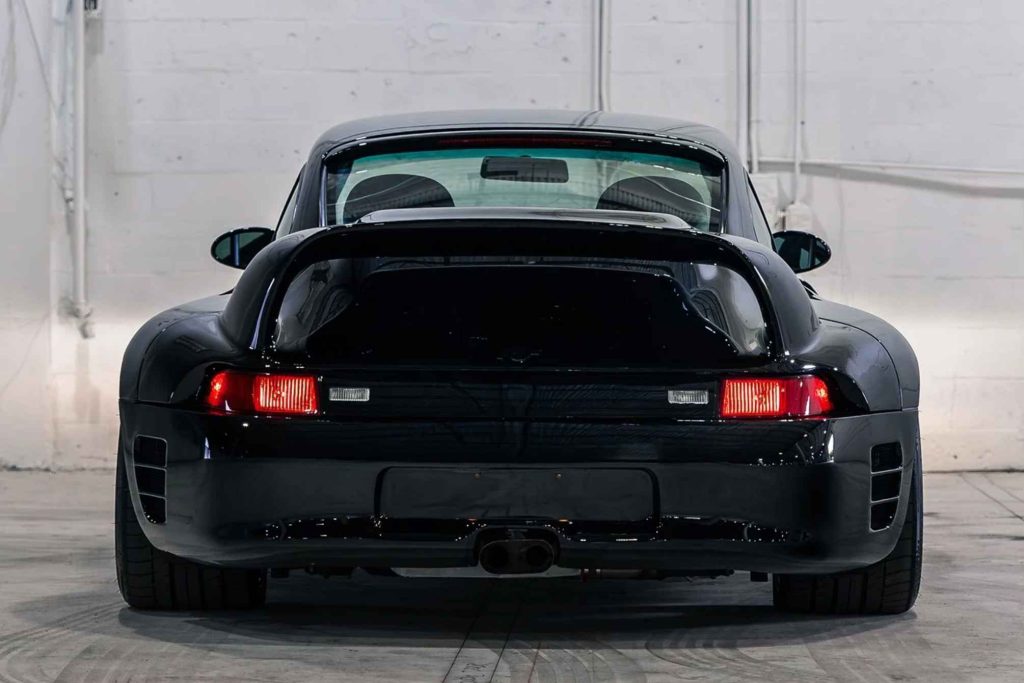
Calling the CTR2 a modified Porsche undersells it before the engine has started. RUF was recognised as a manufacturer in its own right, and cars built from bare bodies carried W09 chassis numbers rather than Porsche identities, although customer 993s could also be converted. The distinction is important to collectors, but the visual transformation is obvious either way. The 993’s delicate front wings and oval lamps remained, while RUF replaced the bumpers, wings, sills and rear deck with cleaner, lighter pieces. The result was familiar enough to register as a 911, yet sufficiently altered to make a Turbo seem underdressed.
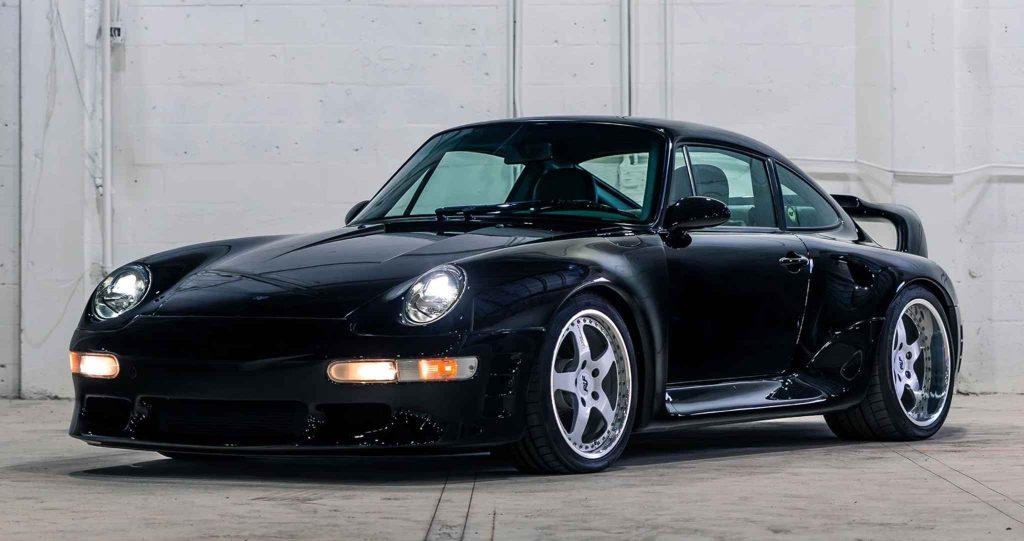
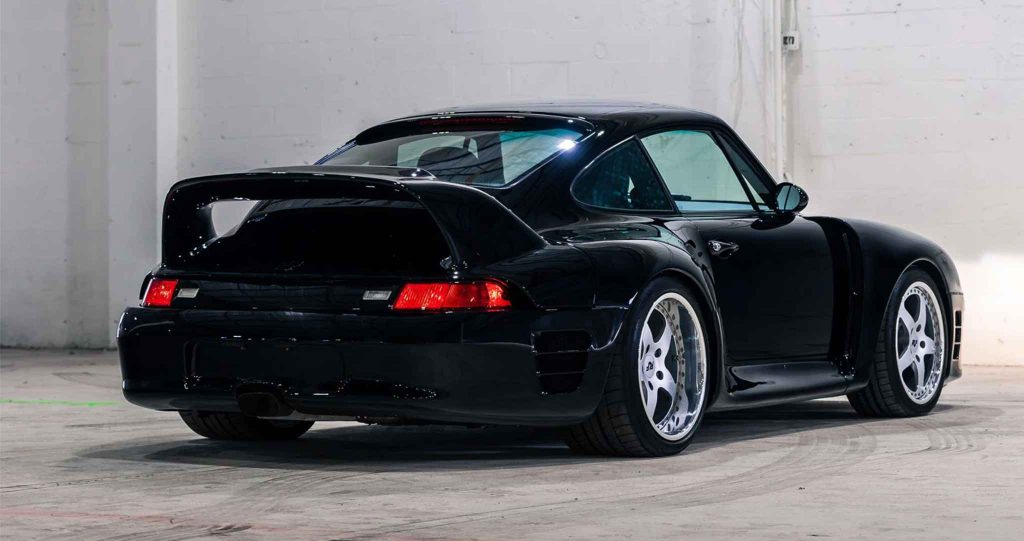
The nose sat low and smooth, pierced by broad cooling apertures rather than decorated with whatever a stylist found down the back of the sofa. Deeper side skirts tied the body together, rear arches barely contained enormous wheels and the tail carried the CTR2’s defining feature: a fixed rear wing integrated into a ram-air intake for the engine. It was not subtle, but neither was it gratuitous. At more than 200mph, aerodynamics stop being showroom garnish and start deciding whether the car points forwards. The rear profile looked like a 993 had swallowed a Group C handbook, then asked for a second helping.
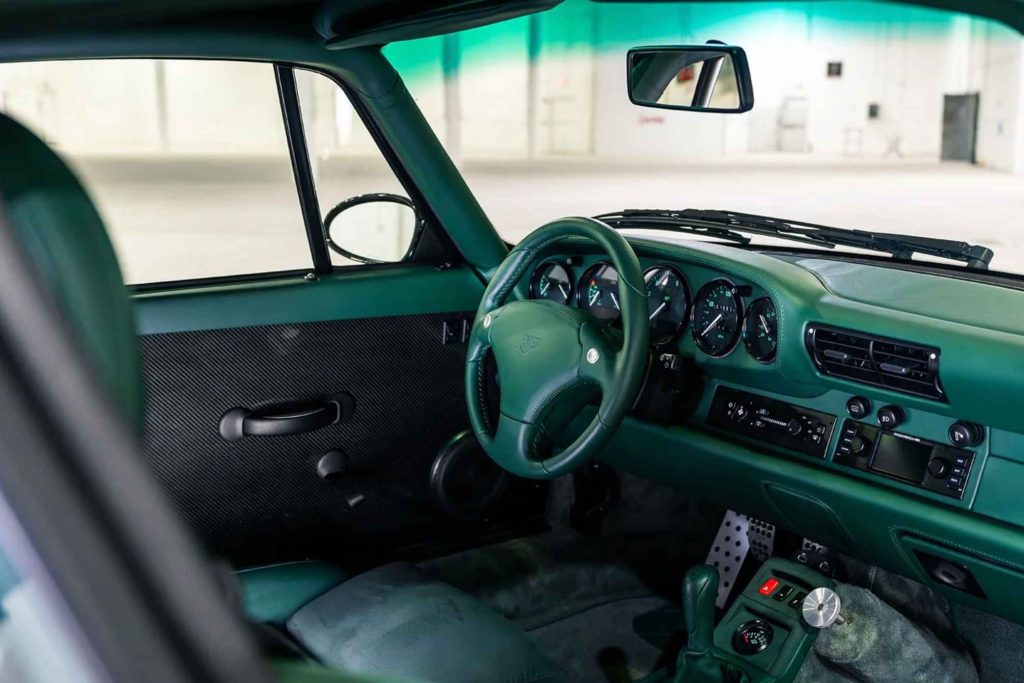
RUF’s five-spoke wheels filled the arches without relying on the stretched-tyre nonsense that later infected modified 911s. Kevlar and composite panels reduced weight, while the planted stance gave the body a muscularity absent from the narrow Yellowbird. Inside, the standard 993 architecture remained because Porsche had already arranged the essentials sensibly, at least by air-cooled 911 standards. RUF added its own green-faced instruments, steering wheel, gearlever, seats and integrated roll cage. Leather, air-conditioning and electric windows could remain, making the cabin less monastic than the body suggested. It was a supercar with manners, just not visual restraint.
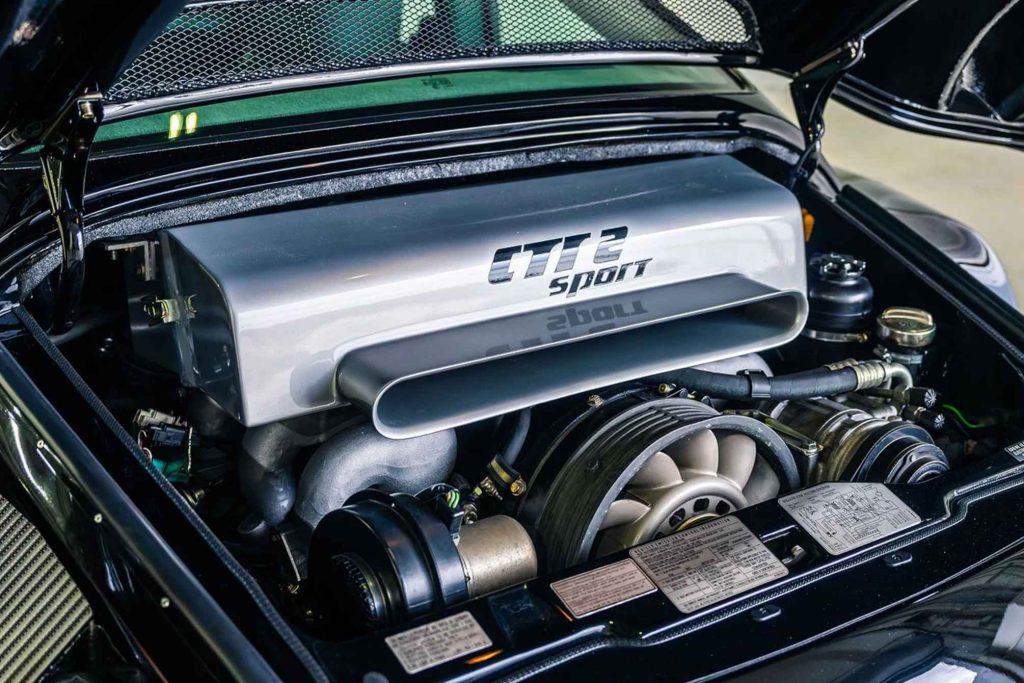
The 3.6-litre air-cooled flat-six began with 993 Turbo fundamentals, then received the sort of attention that made RUF more manufacturer than tuning shop. Larger KKK K26/27 turbochargers, revised camshafts, freer breathing, TAGtronic management and internal work produced 520bhp at 5800rpm. Torque reached roughly 506lb ft, which was plenty in a car weighing around 1380kg and still carrying its engine beyond the rear axle. A six-speed manual transaxle handled the punishment, with a limited-slip differential and either rear-wheel drive or optional four-wheel drive. The latter added security without converting the CTR2 into an electronic chaperone.
RUF quoted 0-60mph in 3.6 seconds and a 217mph maximum, placing the CTR2 among the fastest road cars on earth. The numbers tell only half the story because the delivery remained defiantly turbocharged. There was a pause while the compressors organised themselves, followed by a sustained shove that made long straights look badly measured. Unlike a modern turbo engine, it did not disguise the machinery with torque everywhere and a synthetic exhaust crackle. The driver worked the gearbox, watched the boost gauge and learned not to request full power while still negotiating terms with the steering wheel.
The chassis had to manage speed that Porsche had never intended for a 993 shell. RUF fitted its own springs, dampers and anti-roll bars, along with larger ventilated brakes and tyres. Steering retained the 993’s clarity, while the rear-engined balance demanded respect when commitment exceeded talent. Four-wheel-drive cars could deploy their power cleanly, but neither version was a point-and-squirt appliance. The CTR2 Sport raised output to 580bhp, added further weight-saving measures and supplied an even more focused suspension set-up. Two competition prototypes went further, one finishing second in the Open class at Pikes Peak in 1997. RUF had proved the shape was not merely fast in a brochure.
The CTR2 found a second life in computer games, where rarity and maintenance invoices became somebody else’s problem. Its breakthrough came in 1999’s Gran Turismo 2, which included both the CTR2 and CTR2 Sport. For many players, this was their first encounter with RUF, a manufacturer that could offer something recognisably 911-shaped without carrying a Porsche badge. Which was handy, as the game developers couldn’t use the Stuttgart marque due to a licensing agreement with Electronic Arts and Need For Speed.
The CTR2 returned throughout Gran Turismo 3, Gran Turismo 4, Gran Turismo PSP, Gran Turismo 5 and Gran Turismo 6. Its combination of huge speed, four-wheel-drive traction and rear-engined weight distribution made it devastating in a straight line, yet sufficiently wayward to punish the sort of thumb movement normally reserved for scrolling through television channels.
It later appeared in Forza Motorsport 4, Forza Horizon, Forza Motorsport 5 and Forza Horizon 2, introducing it to another generation of players. Earlier and more obscure outings included BreakNeck and Top Gear: Dare Devil. Game appearances gave the CTR2 a cultural reach disproportionate to its production run. Most enthusiasts never saw one in traffic, but thousands discovered that full boost and an approaching corner were best treated as separate appointments.
Despite this, the CTR2 never became a poster-room staple like the F40 or F1, partly because RUF built fewer than 40 examples across the standard and Sport forms. Its influence was quieter but no less potent. It established RUF as a creator of supercars rather than a workshop that merely improved Porsches, and it bridged the Yellowbird’s hot-rod purity with the engineered complexity of the later CTR3. Porsche eventually produced faster 911 Turbos and GT2s, but the CTR2 retains a delicious outsider quality. It looks like Stuttgart’s familiar sports car after Pfaffenhausen stayed late, ignored the budget and removed the adult supervision.
Is the CTR2 the greatest 911 that Porsche never built? Drop your vote in the comments below.