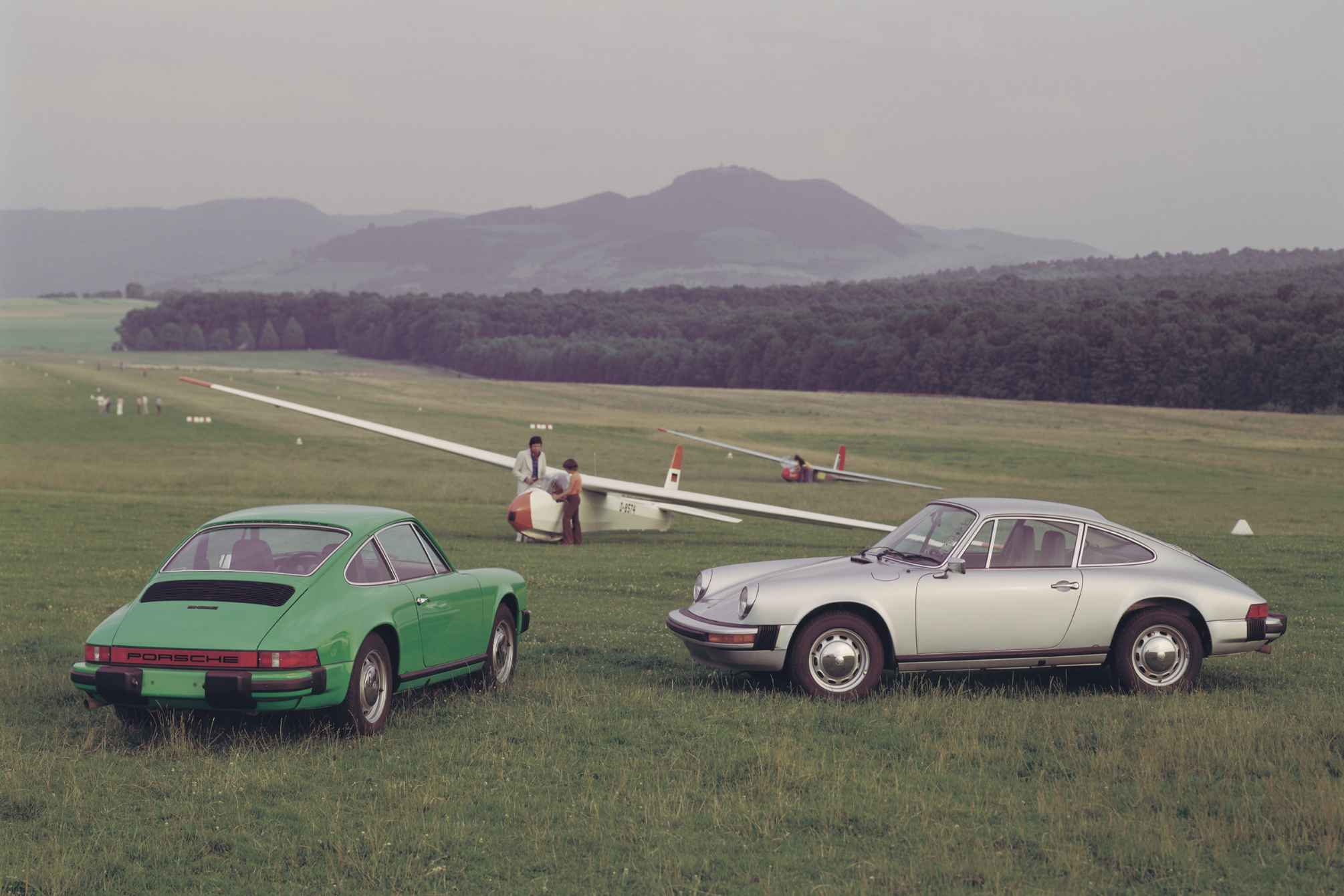
Unquestionably pleasing now, but five decades ago, the G-body would’ve been a complete head-turner
Among its contemporaries, Porsche aren’t exactly shy to delve on nostalgia. The centre stage has nearly always been occupied by the ever-evolving, extremely likeable 911, but with every new iteration, there’s a constant: a throwback. It’s almost customary at this point, and we’re certain it’s not just for the sake of it. And while reviving old badge/models isn’t anything new now across carmakers, Porsche delivered a hint of what was to come in the next few decades way back in the mid-seventies. The car was the 912 E, but unlike its name would suggest, it wasn’t based on the original 912. The E suffix would give away the presence of fuel injection, and the badge suggested that it was still going to play second fiddle to the 911, which by then was already in its second generation (G-body). But weirdly, the arrangement was to last just about a year, and sales were confined to the US alone. Despite that, and limited manufacturing, it found fans across the globe, so it’s hardly a surprise that five decades later, among Porsche enthusiasts, the 912 E is a legit means towards realising that lifelong dream of daily-ing a Porsche.
So, where does the 912 E fit?
Well, it occupies exactly the position that the original 912 had left about half a decade ago in 1969. The original 912 was on sale between 1964 and 1969, and it presented Porsche customers a viable alternative to the 356, especially for those who didn’t want to spend more getting the new 911. It was planned alongside the F-body 911, but instead of the flat-six, the 912 got a flat-four from the 356. This meant lower running costs, slightly different handling characteristics, and most importantly, a unique proposition — even if it looked identical to the 911. It proved to be quite successful, and when the 912 bowed out, it was replaced by a mid-engined model called the 914, which gained quite a following, too, even though it strayed far from the car it replaced.
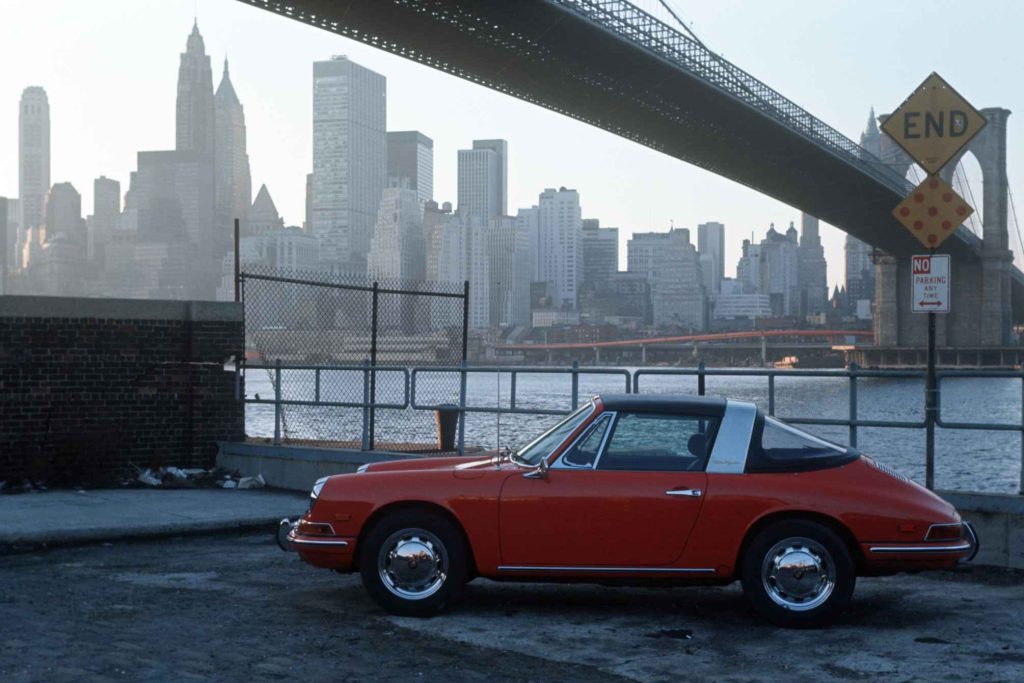
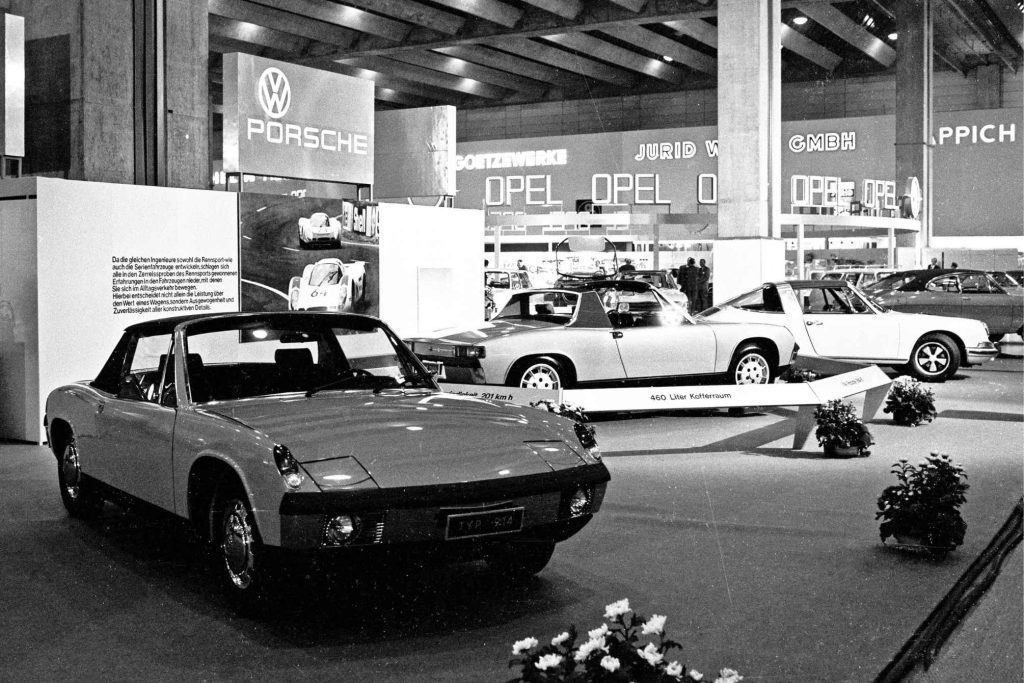
The arrival of a 914 replacement couldn’t have been ill-timed. This was at the peak of global oil crisis, and Volkswagen deemed it unfit to launch a sports car when fuel shortage had become a legitimate concern. We must discuss how that story of the car codenamed EA 425 panned out when we discuss the Porsche 924 (and not VW-Porsche as was the case with the 914) in a feature soon. But with the 914 gone and the 924 yet to arrive, Porsche were faced with a void in the entry-level space, and the 912 E was born as an intermittent solution to that issue.
Like the Porsche 911, the 912 E was also based on the G-modell — replete with a galvanised body, impact bumpers (and those bellows…), a no-spoiler rear look, and steel rims. Like the 912, the 912 E looked exactly like the 911 of its era, especially if optioned with the popular Fuchs wheels. Porsche didn’t skimp on the basics, either; it got a 5-speed gearbox as standard, disc brakes on all four wheels, and chrome plated exterior trim. There’s no denying that the narrow-body G-model’s clean appearance is unquestionably pleasing to the eyes now, but five decades ago, it would have been a complete head turner.
And thus there’s no way that the 912 E seemed any lesser in terms of overall appearance. Things weren’t as straightforward in the engine bay, though, as the lower positioning of the car meant Porsche gave the 912 E a flat-four engine, good enough for just about 86 bhp and 98 lb. ft. of torque. The 2-litre engine from the 914 — essentially a 2-litre iteration of a VW Type IV unit with electronic fuel injection — was what, Porsche maintains, took two years to ‘develop and refine’.
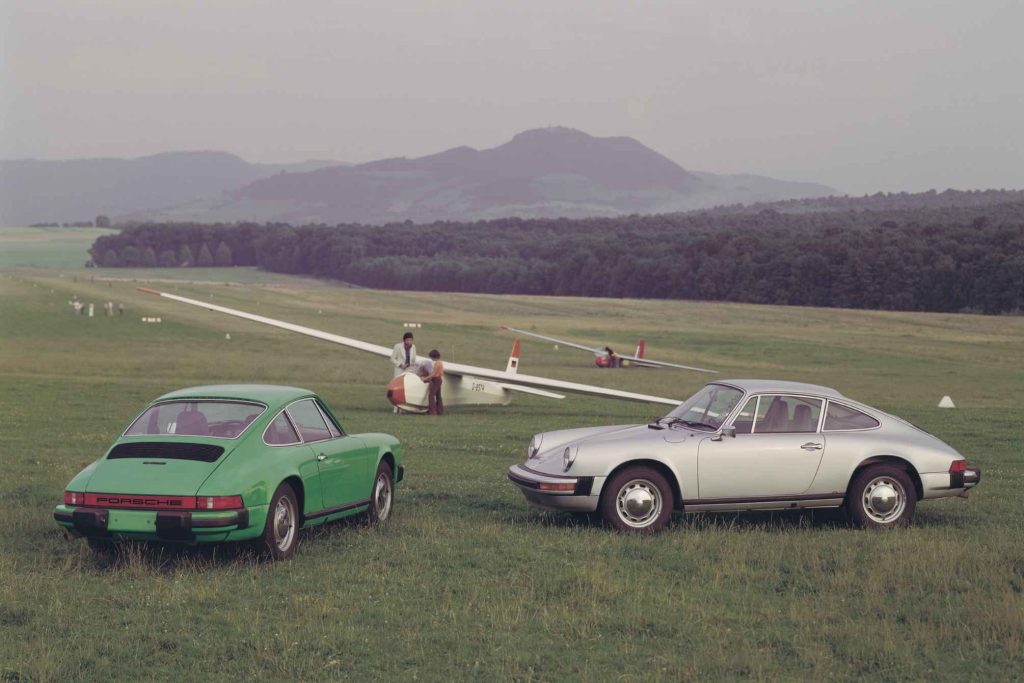
In comparison, the similar-looking 911 was bestowed with an engine that had two more cylinders, a distinctly more sonorous note, and double the power. The resulting 0-62 mph time (Porsche-claimed) for the 912 E was 13.5 seconds, roughly six seconds slower than the 911 S and a massive 8 seconds slower from a standstill than the Turbo (or Turbo Carrera). Which is unsurprising, since the 930, even in its early form, made about thrice as much power.
In totality, Porsche made 2099 examples of the 912 E between 1975 and 1976, all manufactured in Germany. The overall production data is nowhere close to the 914’s nearly 120,000 units or even the original 912’s 30,745 examples, but let’s not forget that the 912 E was there only as a stop-gap model.
When new, it was noted for lacking outright grunt but testers and owners were quick to appreciate the handling balance. Not much has changed now, and it’s safe to say that the 912 E’s appeal as a classic Porsche hasn’t dwindled. It further proves that you don’t always have to have a flat-six to enjoy a Porsche, something that was cemented with the arrival of the new breed of Transaxle models right after the 912 E.
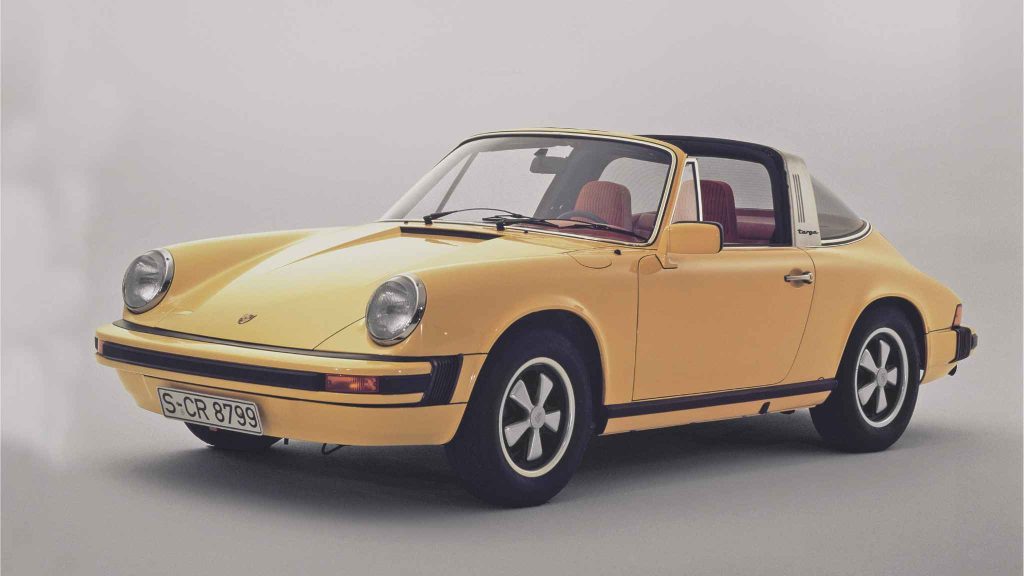
Its rarity hasn’t made the 912 E completely out of reach, and while it’s no longer cheap as chips, the 912’s prices have stabilised over the last few years. Having said that, there’s still going to be a valid point on whether it makes more sense to spend a little extra and get a 911 instead. But then it can also be argued that the 912 E was more than just a bargain 911. It had its unique character, which, despite it being positioned lower in the model hierarchy, didn’t vanish the moment you got behind the wheel. It might have made getting into the Porsche ecosystem a touch easier, but it was more than just a stepping stone. A cool way to spend $11k in 1976? You bet!
Is the 912 E a bargain 911, or something altogether more special? We’d love to hear your take below.
Insure your classic Porsche
If you’re looking for cover for your pride and joy, why not consider Hagerty UK? Not only are we classic Porsche insurance specialists, but we are enthusiasts at heart. Call us for a quote on 0333 323 1138.

It can only be said that the 4-cylinder engine makes the 912E less special, as the original new car price list bears out. Let’s not kid ourselves.
Dear Volk!! The 914, as the Boxter don’t belong on public roads (tricky on tight curves!!, only the 911 & 912, do!!
2-Seats mid-engined ones shouldn’t be allowed on public roads, and the blasted front-engined understeerers must be forbidden, those killers!
The only safe UK-car is the safely oversteering Hillman Imp (and derivates)!!
I had a 2nd-hand orange VW 1302 (I don’t have a car now because of the MIB which tried to “get” me 4 times! [The last time the 20th of July ’26!), but my favorite was the almost new gray VW 1200 (made in 1962) which the church gave to my father, Waldensian Pastor (of blessed memories!!); my dear mother (of blessed memories as well [!!]; I had the luck of having had the absolute best parents of all!!) wanted a 4-door because she was sick & tired to have to get up to let those on the rear seats, out! So the next one was a Simca 1000 GLS which I drove on Crete, in the 80s with a (fascistic) secret agent in a Mitsubishi! We both heel&toed down the whole mountain road, but he couldn’t catch me despite he drove without safety-reserves, ’cause I was in an oversteerer, thanks Goodness!! (I’m now 78)
For correctness: Noticing that “his” new white Mitsubishi pic-up (empty) coudn’t gain 1 m toward “my” orange Simca 1000 GLS (with luggage on the back seat!), after 2/3 of that mountain road with a lot of switch-backs, he gave up the chase!!