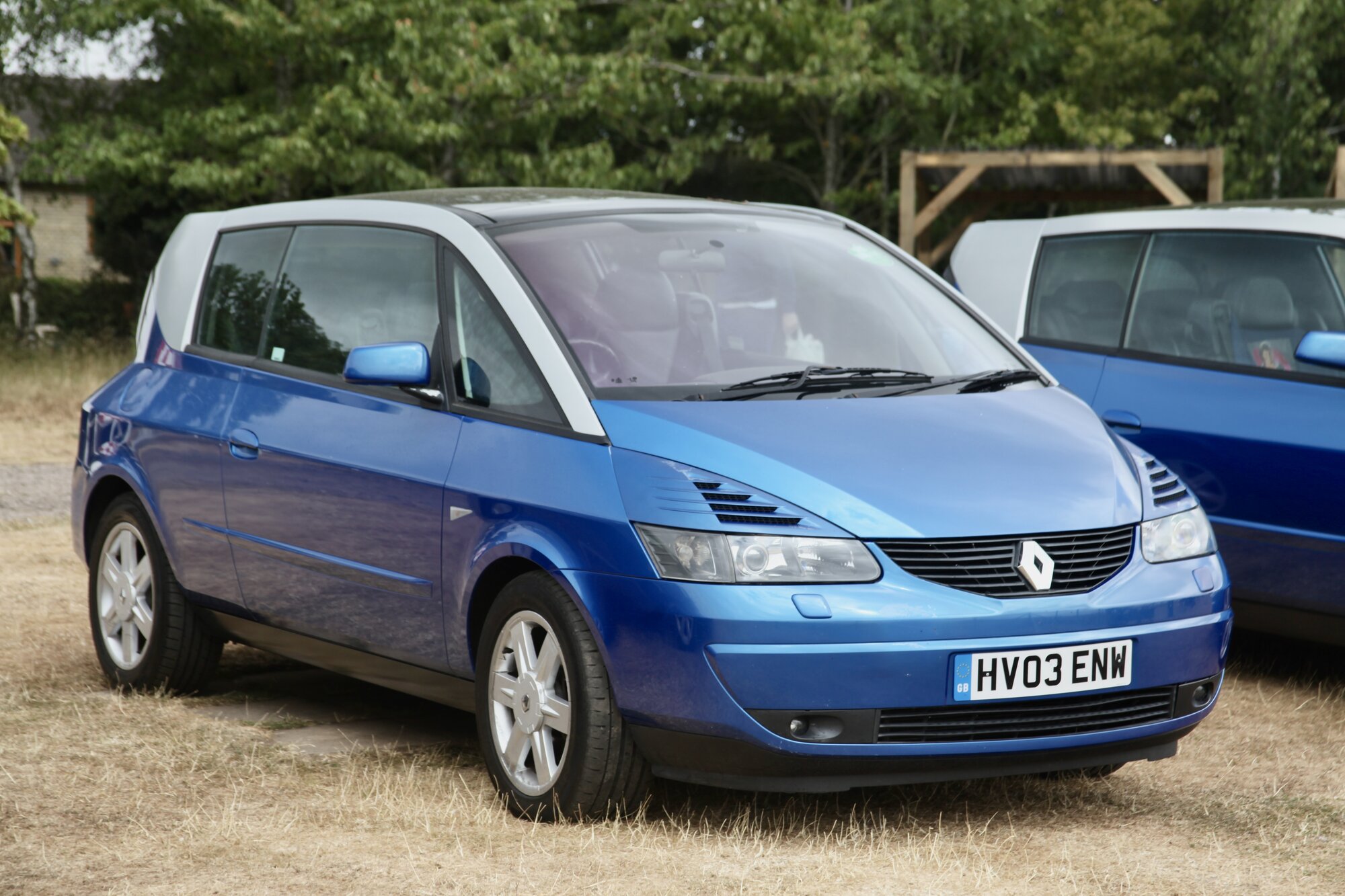
The ultimate car for non-conformists. The most French car ever?
Twenty-five years after it first stunned the automotive world, the Renault Avantime remains one of the most fascinating production cars ever built. Not because it was a commercial success – it emphatically wasn’t – but because it dared to ask a question that virtually no other manufacturer has ever contemplated. What if a luxury coupé could also be an MPV?
On paper, that sounds like the sort of idea dreamt up at three in the morning after a night on the sauce, but in reality, it became one of the boldest automotive experiments of the modern era: a pillarless, three door grand tourer with the height and commanding driving position of a people carrier, wrapped in futuristic styling that looked as though it had escaped from a concept car motor show stand, and based on the platform of a Renault Espace.
The Avantime made its debut in 2001, the name being a portmanteau of ‘Avant’ (before) and ‘Time’. It was launched into a world that simply didn’t know what to make of it. Within two years it was gone, its manufacturer bankrupt and fewer than 9000 cars having found homes.
Today, however, the Avantime enjoys a remarkable second life. Once ridiculed, now revered, it has become an automotive cult hero – a car most admired because it ignored every convention.
To understand the Avantime, you first have to understand the relationship between Renault and Matra. Throughout the 1980s and 1990s, the partnership produced some groundbreaking vehicles. Most famously, there was the Espace, widely credited with introducing the modern European MPV – a Matra concept that was originally designed for Peugeot, who rejected it as it wasn’t seen as commercially viable.
Renault stepped in and it began to own the niche – the Espace was a brilliant family car, and it lay the foundations for a 20-year relationship between the two companies, Renault providing the dealer network and engineering resources, Matra in charge of manufacturing and innovation.
But for its fourth generation, the Espace was brought in-house to cut costs. But that left Matra with a manufacturing contract that needed to be honoured, and Renault with no car to honour it with.
The Avantime was designed and developed in-house by Matra and was conceived by Philippe Guédon, head of its automotive division, who “believed that the children of Espace owners remained loyal to the car even after they had grown up and left home. As a result, the renowned estate was gaining a generation of new drivers.”
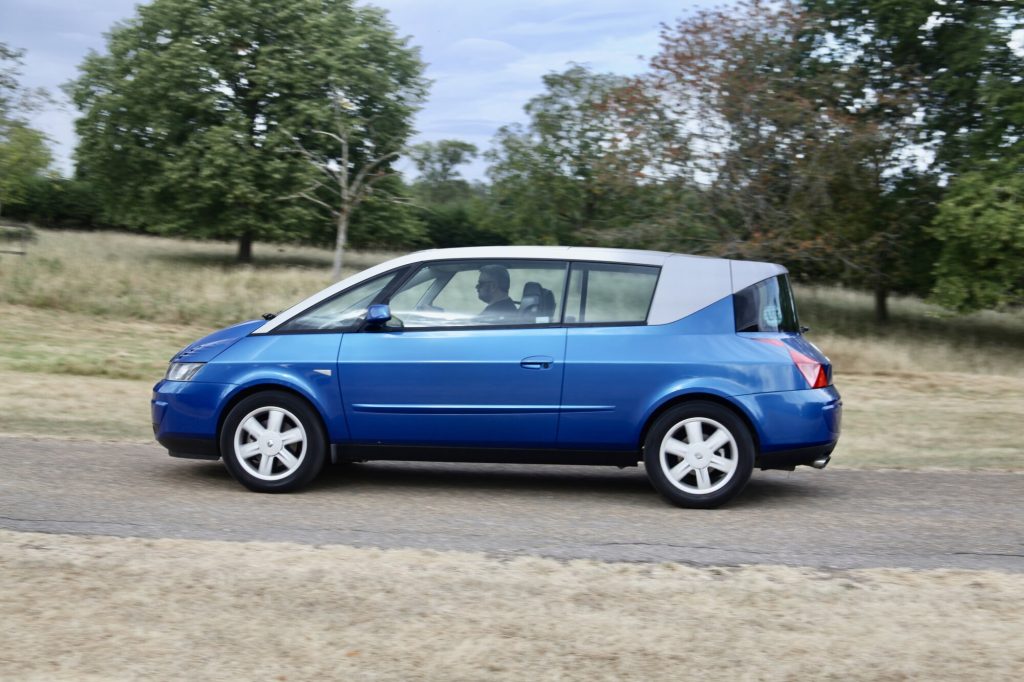
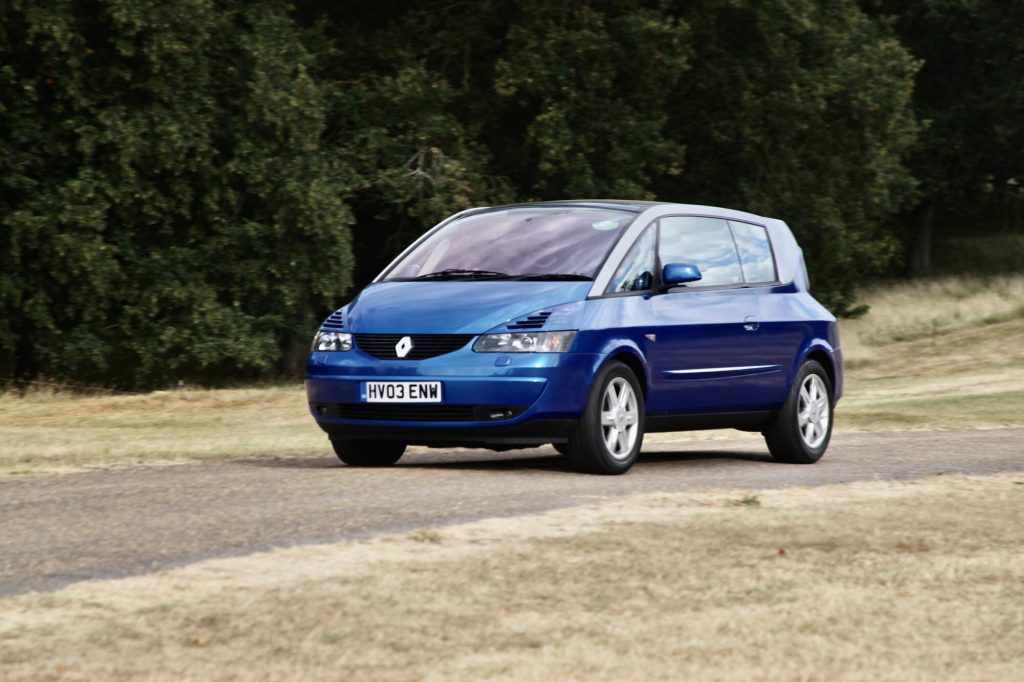
The idea was passed over to Renault’s design chief, Patrick Le Quément, whose team created a shape that rejected virtually every accepted proportion. The bonnet was short, the windscreen dramatically steep, the roofline high, and the rear haunches muscular without being aggressive. One of its most notable features was the diamond-shaped design of the car’s rear lights.
“There are little touches of madness, such as the treatment of the rear lights in the shape of a kite, inherited from the Fiftie concept car,” said Le Quément at the time of the car’s launch. “There are many things on this vehicle that I think are very successful, and I like its interior as much as its exterior. For me, it is a complete project.”
In an industry increasingly obsessed with market research, focus groups and evolution over revolution, the Avantime represented a leap of faith.
The absence of a central B-pillar created an uninterrupted expanse of glass. Lower all four side windows and open both doors, and the entire cabin became open to the outside world in a way few production cars before or since have managed. It was architecture as much as automotive design.
Those vast doors – among the largest ever fitted to a mainstream production car –presented engineers with a unique challenge. How do you make enormous doors usable in ordinary car parks?
Matra’s answer was ingenious. A double-hinged mechanism allowed them to swing both outward and forward, reducing the lateral space required for entry. Even in tight parking spaces, occupants could climb aboard with relative ease. It was typical Avantime thinking: solving problems that only existed because someone had firstdared to create them in the first place.
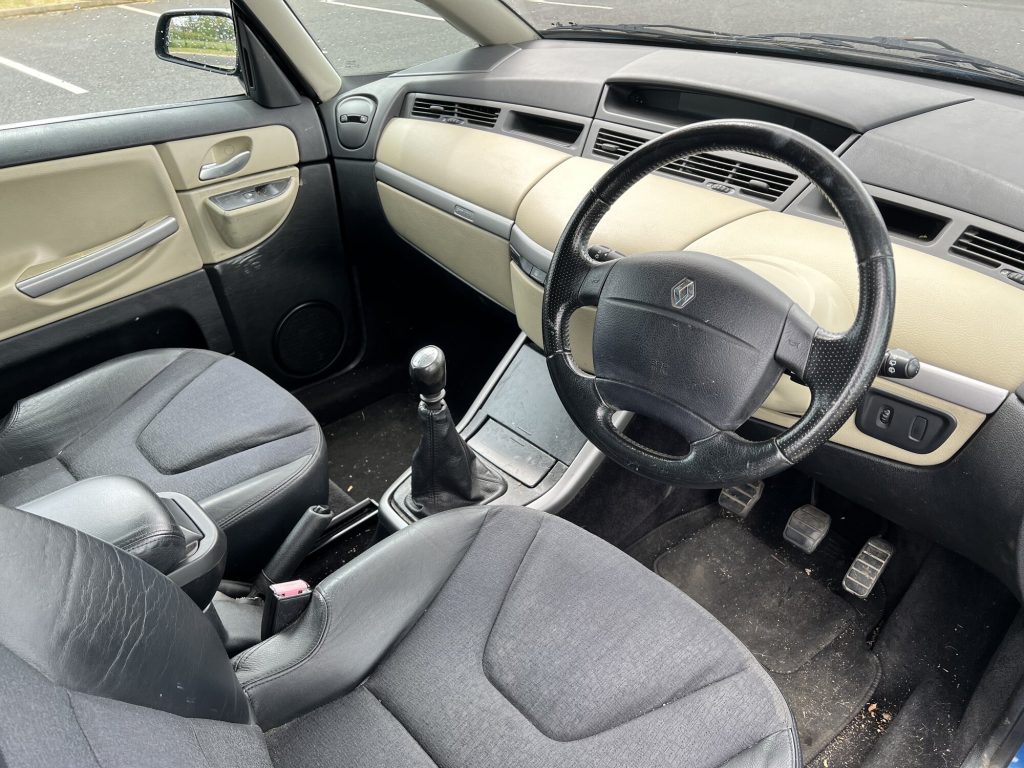
Inside, the Avantime abandoned sporting pretensions entirely. Rather than cocooning occupants in a cockpit, it presented them with an airy, lounge-like environment flooded with natural light. High seating positions offered superb visibility, while the rear seats were higher than the front, the “theatre seating”
allowing those in the back to see out of the front.
The dashboard was clean, modern and elegantly restrained. Sweeping forms replaced angular clutter, while the extensive glazing created an atmosphere unlike anything else.
Perhaps the cleverest feature was what Renault called the “Grand Air” concept. With every side window lowered and the vast electric sunroof retracted, the Avantime delivered something approaching convertible motoring – without sacrificing structural rigidity or requiring a folding roof. And, it all happened at the touch of one button.
It wasn’t quite a cabriolet, it wasn’t quite a coupé, it wasn’t quite an estate. It was simply… Avantime.
Yet underneath its dramatic bodywork, the Avantime was contemporary. It rode on the platform of the Espace 3, with a choice of a 3.0 V6 automatic model or a 2.0 turbo petrol manual.
It occupied a category consisting entirely of itself, and when it arrived in 2001 it was hoped that it would compete strongly in the executive-car market. It didn’t.
The premium market remained deeply conservative. Buyers spending executive-car money wanted established luxury badges, not madcap lunacy from a French mainstream manufacturer.
Production ceased in 2003 after fewer than 8600 examples had been built. Soon afterwards, Matra ended automobile manufacturing altogether. It was the closing chapter of one of Europe’s most inventive automotive partnerships.
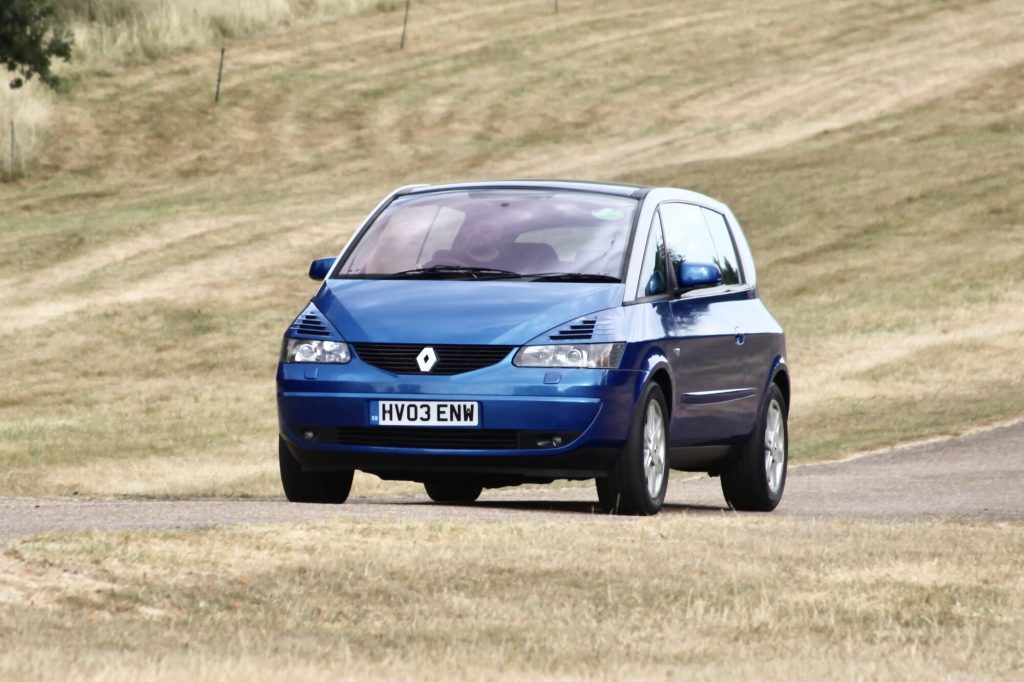
Yet here’s the irony. Walk into any premium dealership today and you’ll find vehicles that challenge convention. Coupés blending conflicting body styles; crossovers routinely ignore traditional automotive categories; manufacturers proudly celebrating vehicles that “can’t be defined.”
The Avantime arrived decades before consumers became comfortable with cars that blurred established boundaries. It wasn’t necessarily ahead of its time in engineering.
It was ahead of the market’s willingness to embrace unconventional ideas.
Commercially, it failed spectacularly. Creatively, it succeeded beyond measure. Nobody walks past an Avantime without looking twice.
Some cars define an era and others predict the future. The Avantime did something far rarer. It created a future that, for a brief, brilliant and fated moment, belonged entirely to itself.