Retro is back, and not just metaphorically but literally too, with a whole range of modern machinery diving in with retro styling cues, to a greater or lesser degree.
Renault alone sells three cars currently that all nod towards historic predecessors, with the Twingo, the 5, and the 4 (and a fourth if you count the recently-departed Alpine A110). The Fiat 500e and the MINI range speak for themselves, while the Honda Super N takes inspiration from the old City Turbo II, the latest Toyota Land Cruiser has several details from its predecessors, and in the US market the Ford Bronco has more than a hint of the 1960s original.
Latest to hit the scene is the Citroen 2CV concept revealed at the Paris Motor Show this month. Citroen has resisted reviving its most famous model in the past, despite a concept coming along that references it every now and then, but the latest concept previews a model that will actually hit the roads in 2028, as a low-priced electric car.
It looks fabulous and is packed with details that give a knowing nod to the 3.8-million-strong selling classic. But as it’s still a few years away, even a projected price of as little as £13,000 doesn’t help us get that retro fix in the here and now. Luckily, there are plenty of used models that had a retro spin to their styling that fit the bill.
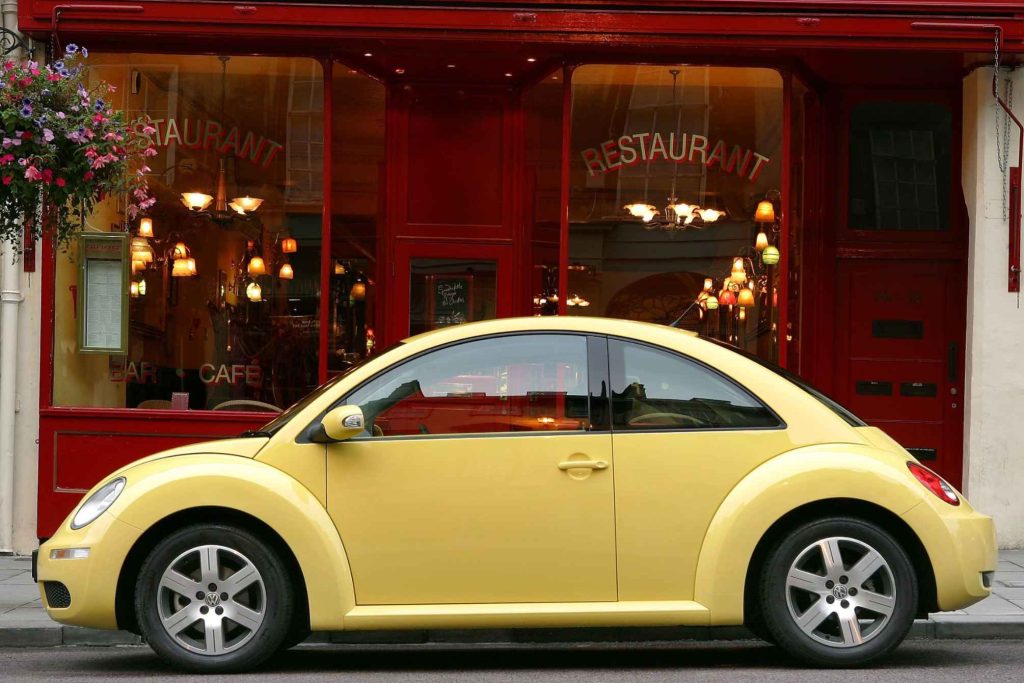
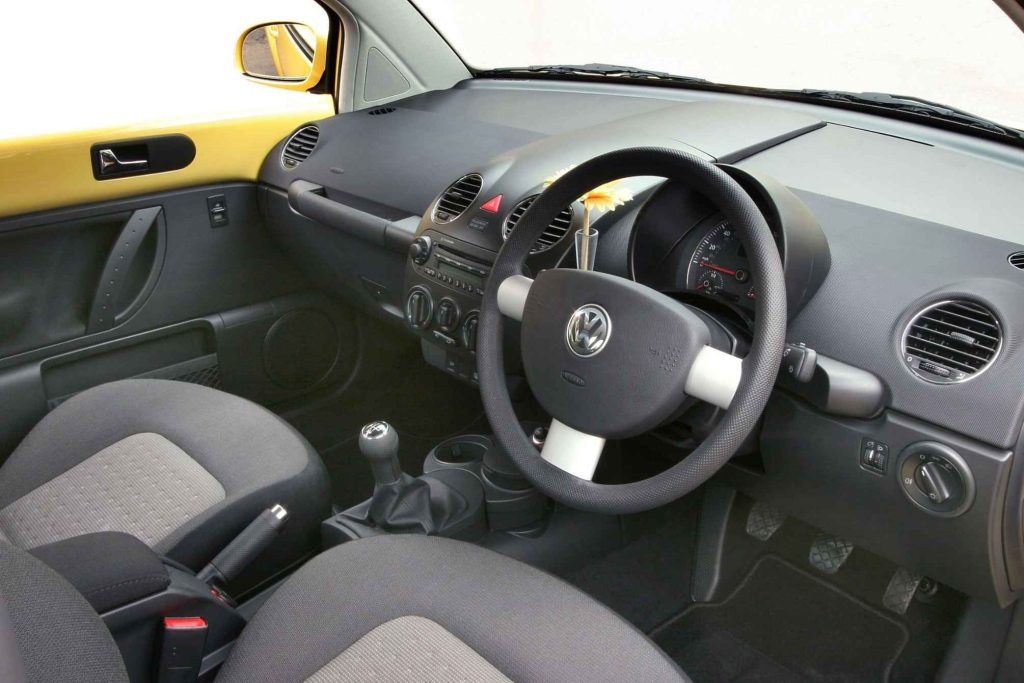
Volkswagen New Beetle
1997’s Volkswagen ‘New Beetle’ – that’s its official name, not simply ‘Beetle’ – didn’t kick off the retro craze in the 1990s, but it was one of the most overt examples of the phenomenon and a sales success that surely convinced the likes of BMW (with MINI) and Fiat to later rustle up their own retro remakes.
The domed body was meant to evoke the original Beetle rather than simply replicate it, and the shape (which made production relatively unscathed from J Mays’ and Freeman Thomas’s 1994 Concept One show car) became one of the most recognisable on the roads, helped by VW offering a broad range of bright colours. The interior too was striking, with an expansive dashboard and a small vase on the centre console into which you could plonk some flowers.
Underneath there was nothing more exciting than a Mk4 Volkswagen Golf, but that platform sharing (something VW became known for in the decades that followed) helped spread the cost of this niche model. It also means parts supply for used buyers is pretty broad, and the New Beetle is one of the most affordable ways into a retro design today, as prices start from under £1000.
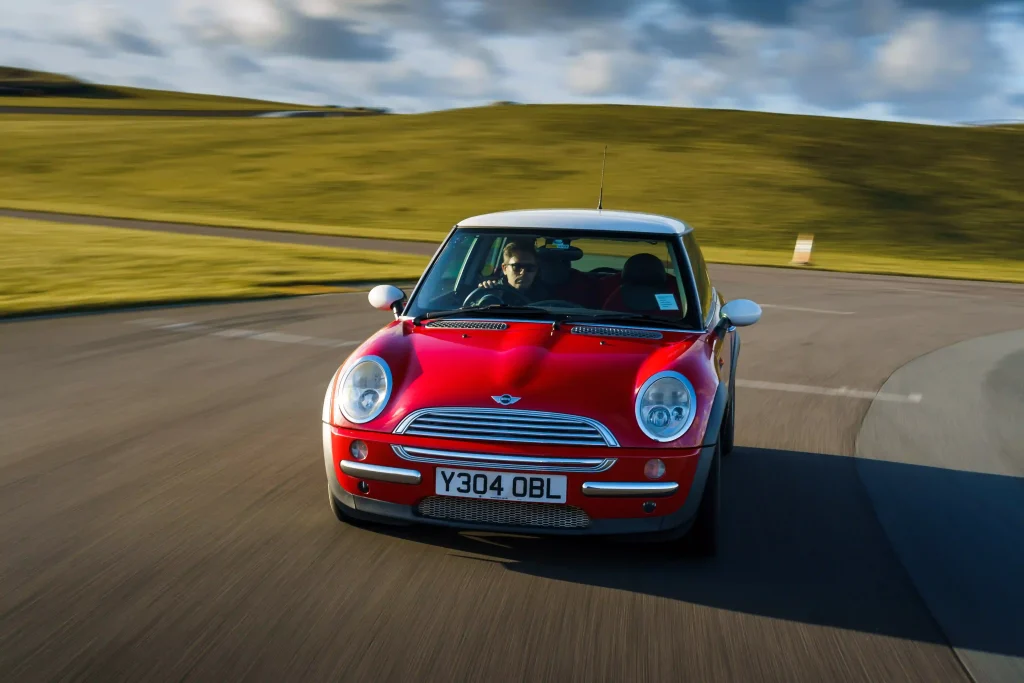
MINI
Another especially affordable member of the retro car club is the ‘R50’ MINI, sometimes known as the BMW MINI. The latter moniker is understandable as it was developed during BMW’s ownership of Rover and released after BMW took the MINI brand with it following the sale of Rover, but credit must go to all the Rover engineers who actually made the MINI the fantastic supermini we know it as today.
The design is credited to Frank Stephenson, who later penned the 2007 Fiat 500, so he clearly has a bit of a knack for these retro reimaginings. While much bigger than the classic Mini, most of the cues are present and correct, and it’s aged much better than the MINIs that followed too, with neat proportions and a real purity to the details. The cabin, with its huge central speedometer, backed up the exterior styling.
What really made the MINI a Mini was the handling, which ran rings around most small cars on its 2001 launch (you needed a sporty Clio, a Puma or a 106 GTI to better it). Even non-enthusiasts could appreciate the nimble driving feel, but it was the look that ultimately sold the car, and it became the biggest fashion statement since the Audi TT. The best are becoming collectable now as genuine classics, but early MINI Ones and Coopers start from under a grand.
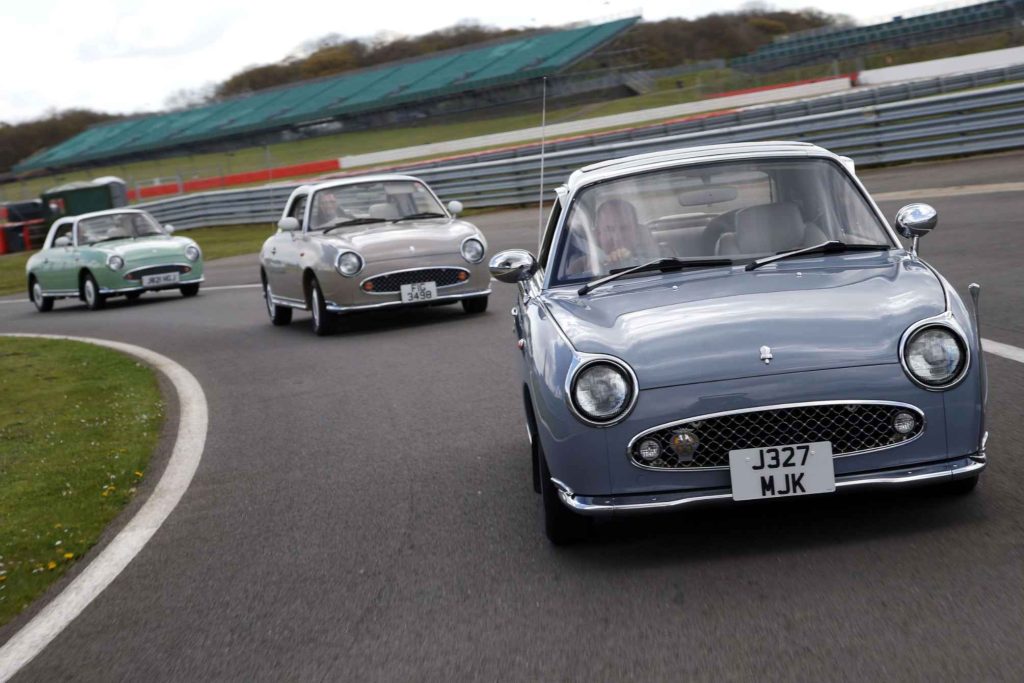
Nissan Figaro
Flush with cash in the 1980s, the Japanese car industry went a bit wild. This was the era that financed the likes of the Lexus LS400, R32 Nissan GT-R, the Mazda MX-5, and the Honda NSX – but it also led to a string of design-led Nissan projects often grouped under the ‘Pike Factory’ name.
As Road & Track wrote in 2021, the Pike Factory name represented design as the “tip of the spear”, though it wasn’t a physical space. The four cars, 1987’s Be-1, 1989’s Pao and S-Cargo, and the 1991 Figaro were all built in various places, but the Figaro has become the most famous of the quartet. It doesn’t reference a particular classic directly, instead combining elements of several – but has become a classic in its own right.
Underneath it’s K10 Micra adjacent, and is powered by a turbocharged 1-litre four-cylinder engine, though performance was never really the goal. The design is packed with gloriously whimsical touches inside and out, from huge classic-looking dials to a Bakelite-style steering wheel, chrome hubcaps and external boot hinges. Today you’re looking at upwards of £3000 for a running Figaro and more than £10k for the very best.
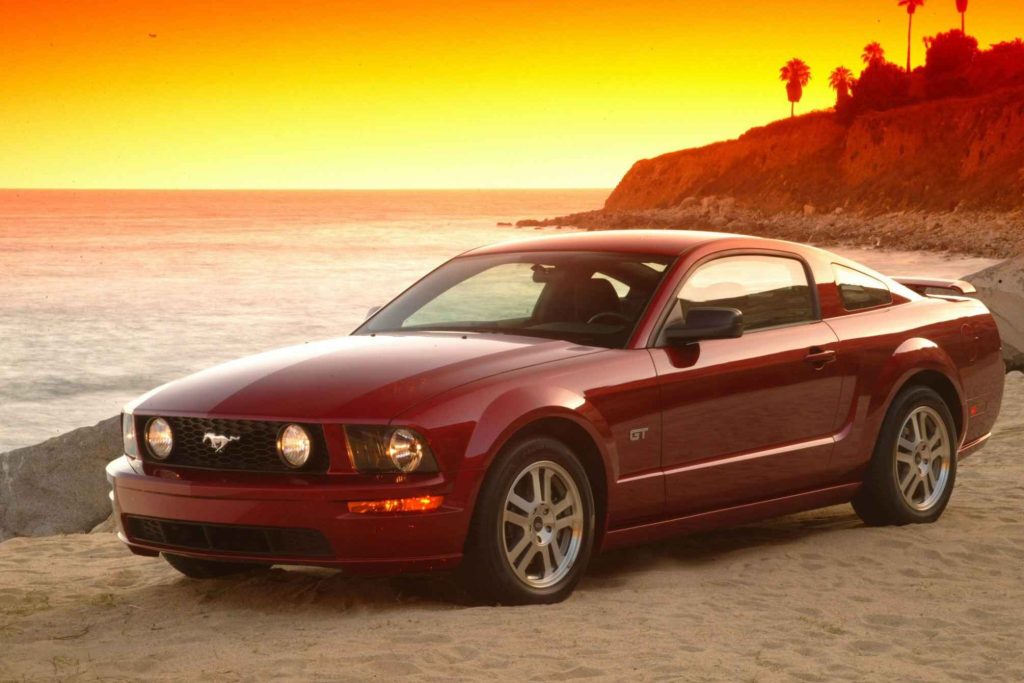
Ford Mustang
Ford began hinting at a Mustang that harked back to the 1960s classic in 2003, with coupe and convertible concepts shown at that year’s Detroit show. The production car, known by the internal S197 code, emerged in late 2004, largely unchanged from the concept – and looking very much like an evolution of an original Mustang fastback.
This is one of those designs that arguably works even better today than it did in period: we now get to enjoy not just the 1960s references, like the sequential tail lights and sharky front end, but also a pleasing 2000s-era chunkiness and an emphasis on bold and relatively unadorned shapes. The interior hasn’t quite stood the test of time so well, though more for Ford’s slightly patchy 2000s material choices than the no-nonsense shapes and details.
Later Mustangs have long eclipsed its power figures – the entry-level 4-litre V6 made 210bhp, the ‘modular’ 4.6-litre V8 a modest 300bhp – but it’s all about the style and character with this one. As a US market car, they’re not exactly common in the UK, but V6s begin at less than £10,000 and a V8 with a manual ‘box is possible for £15k.
Jaguar S-Type
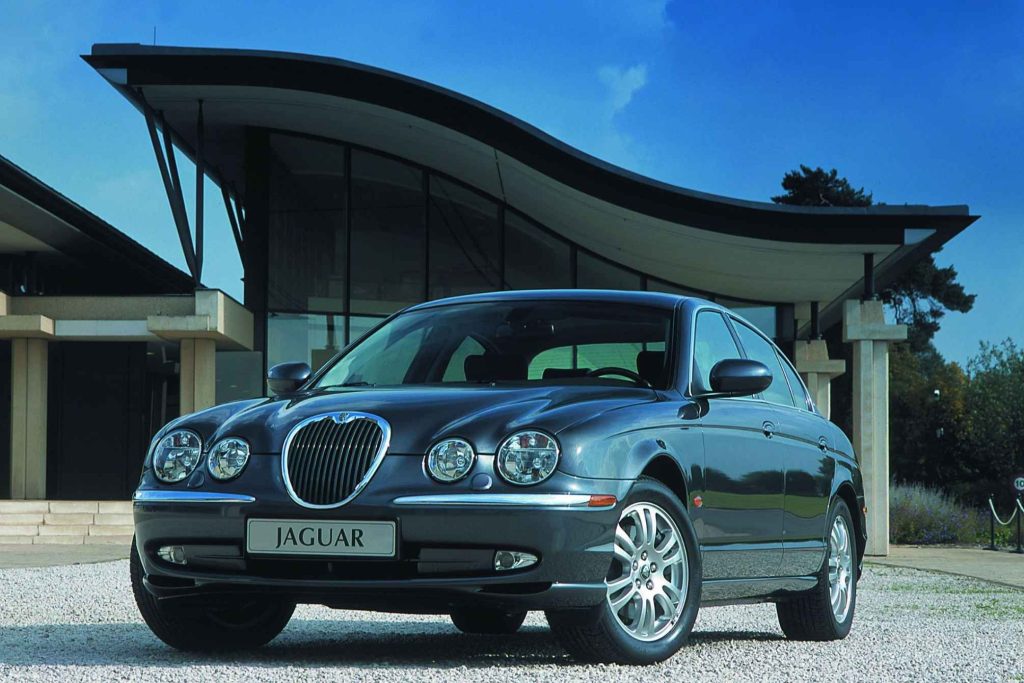
It’s hard to believe given the recent Type 01 reveal, and after a string of smartly-styled and distinctly modern saloons, SUVs and sports cars, but Jaguar once went all-in on retro. The X300 XJ of 1994 was probably the progenitor, returning to the curves of the original XJ after the blocky XJ40, but the XK then arrived with some E-Type cues, and in 1998 came the S-Type – similar in name and styling to the Mark 2’s 1963 successor.
By Jaguar standards, it turned out to be a bit of a hit, with nearly 300,000 finding homes in its ten years on sale, nearly as many as the smaller and more affordable (and also retro) X-Type that arrived a few years after. Customers were surely taken in by the classic oval grille and four headlamps, and the arched waistline that worked better from some angles than others.
The early interiors weren’t quite so hot, though Jaguar soon improved that with a more XJ-like cabin. Their ubiquity though means you can pick one up cheaply today – under a grand, if you’re brave. £2k-£4k gets something reasonably tidy while ten and up is into the realms of a nice supercharged S-Type R – with performance that certainly couldn’t be considered retro.
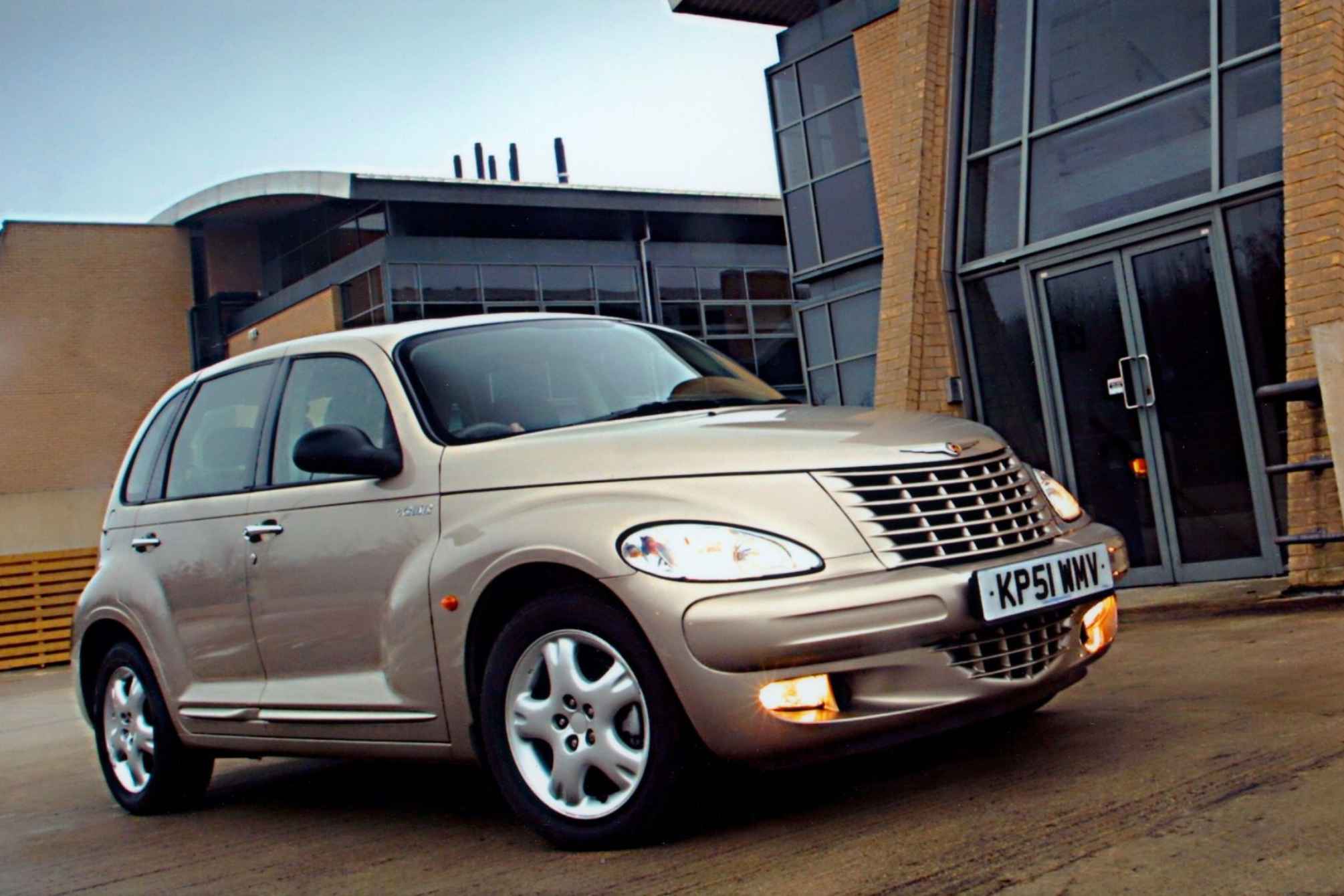
Chrysler PT Cruiser
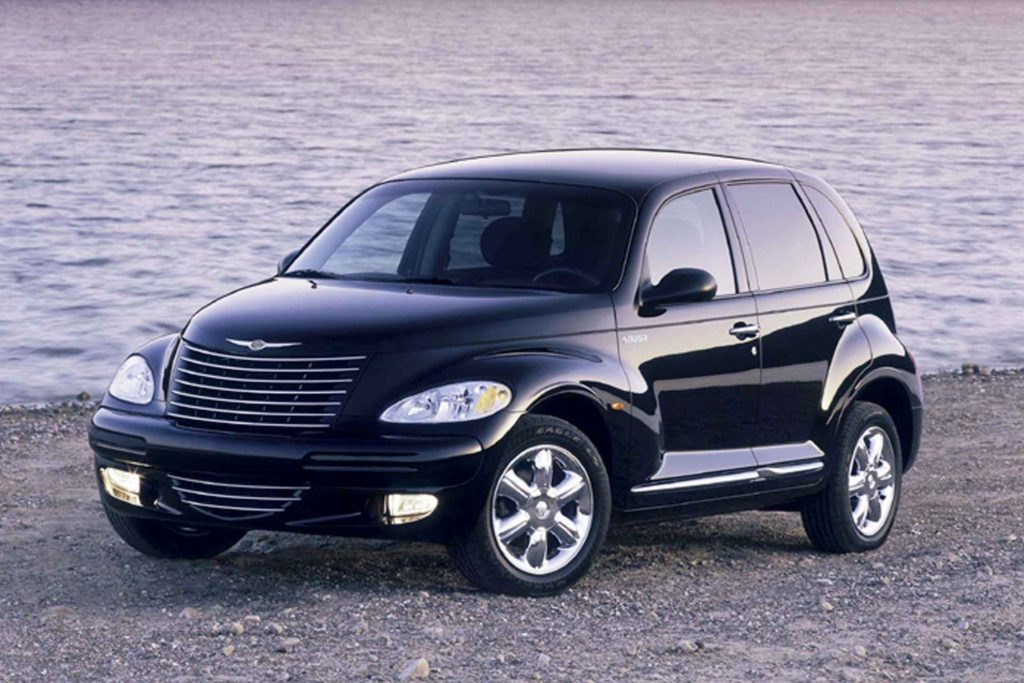
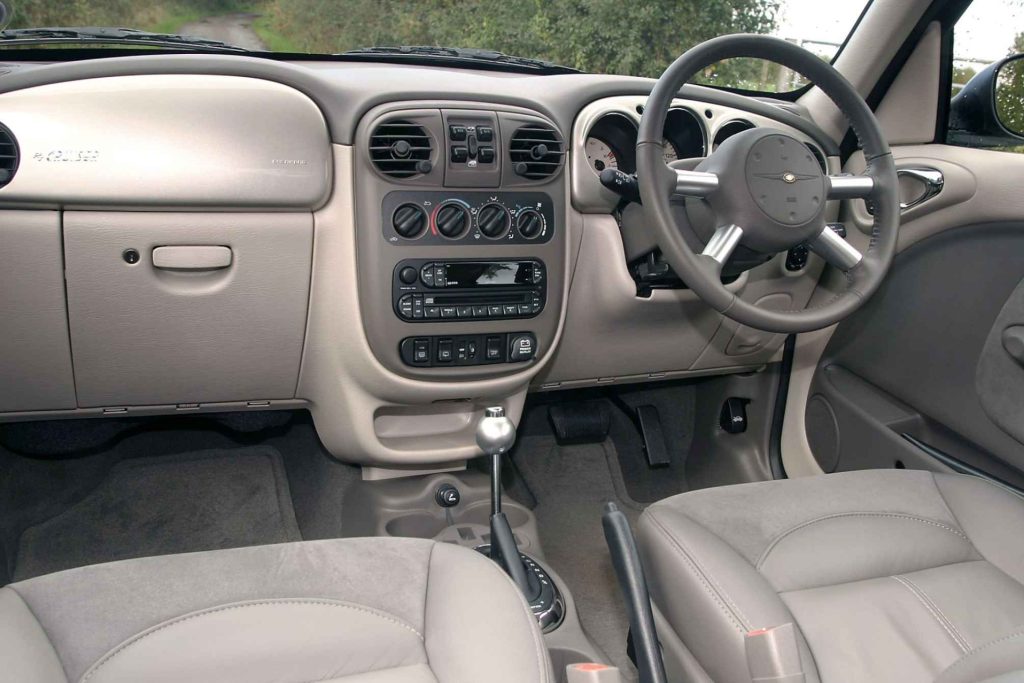
Car enthusiasts love to hate the Chrysler PT Cruiser, but frequently overlook that it was received very well when new – even in Europe, where most American cars have traditionally fallen flat on their faces. Unveiled in the 90s and launched in the UK in June 2000 for £14,995, the PT (for Personal Transportation) was a characterful alternative to the likes of the Renault Megane Scenic and Vauxhall Zafira.
Unlike several others on this list, the PT didn’t evoke one car in particular, but like the Figaro, was a kind of hodgepodge of design cues from a particular era, in this case the 1940s and 1950s. It certainly stood out, with a prominent grille, curving wings and a slightly nose-down, hot rod stance, though the eventual UK engine options – a 2-litre petrol and 2.1-litre Mercedes-sourced diesel – delivered less than the styling promised.
Numbers are thinning these days but there’s a small community keeping the flame lit (sometimes literally, with customisation, including flames, not unusual), and prices start from under £2000. The very best aren’t much more expensive than that, and the unusual convertible version is similarly affordable – those ones really stand out.
LTI TX4
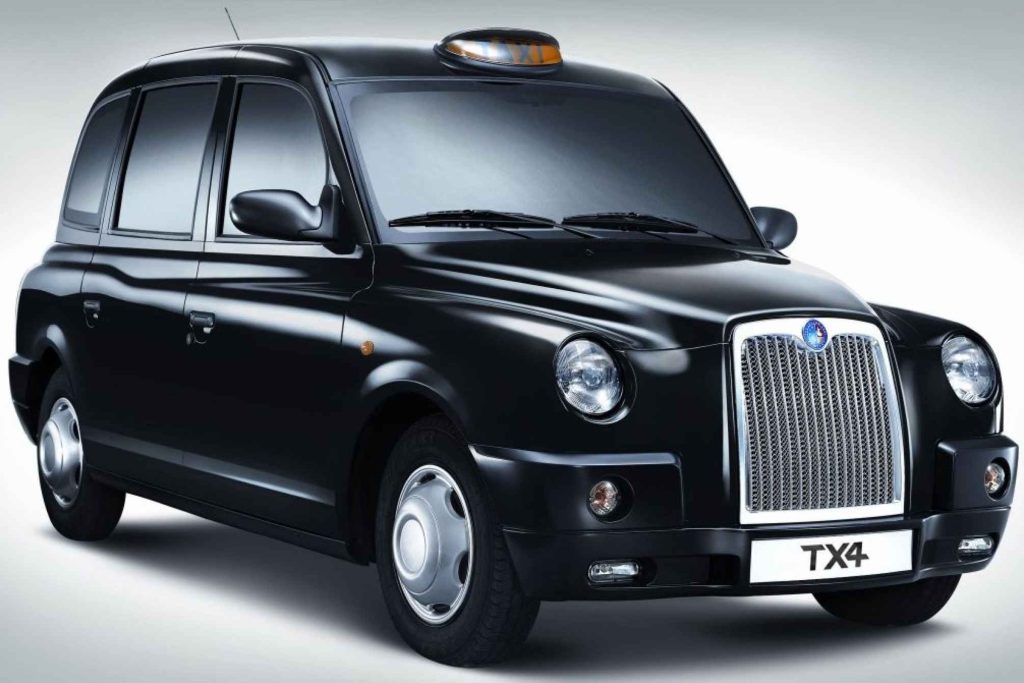
British cities have been full of retro cars for decades now, but you probably haven’t even noticed. That’s because, as a working vehicle, the LTI TX4 launched in 2007 fades into the background in much the same way as a Ford Transit, even though they’re absolutely everywhere. Look more closely though, and the TX4’s inspiration is clear: the Austin FX4 launched all the way back in the 1950s.
The TX4 has since been replaced by another pseudo-retro design, the hybrid LEVC TX, and that means the previous taxi has now become very affordable. You can expect high mileage – taxis are always on the move – but largely tidy examples start at under £3000, and double that gets something effectively brand new.
They make for quirky modern classics. The design brief means they’re better around town than at speed, with gearing very much designed for stop-start traffic, with matching handling. They’re also practical, in a curious kind of way (no passenger seat, but a large rear cabin and plenty of luggage space) and the 2.5-litre VM Motori diesel goes on indefinitely, albeit noisily.
Fiat 500
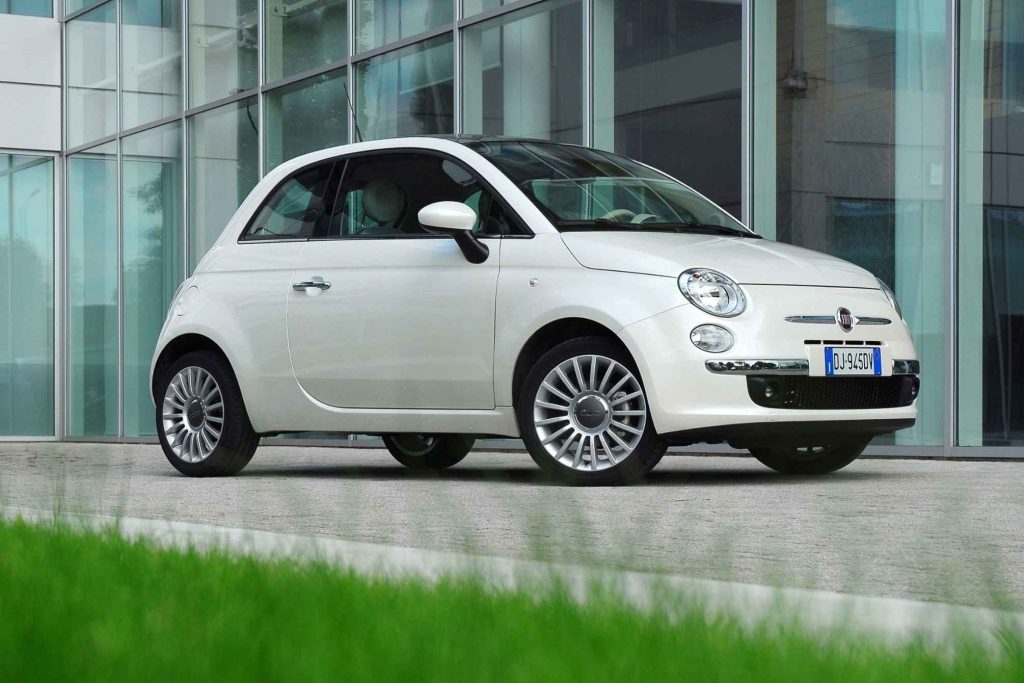
Along with the MINI the 2007-on Fiat 500 is probably the most familiar application of retro styling in recent decades. The same designer, Frank Stephenson, was behind its 1950s-inspired lines – though credit should also go to Italian designer Roberto Giolito, who penned the Fiat Trepiùno concept shown in 2004, which lent much of its styling to the production car.
The new 500 was always going to be a hit. Even those who had no knowledge of the 1957 Nuova 500 (itself successor to the Topolino of the 1930s) could appreciate its cuteness, affordability, and fizzy driving experience, though fizzing is something these 500s don’t tend to do as quickly as older Fiats – build quality is actually pretty decent.
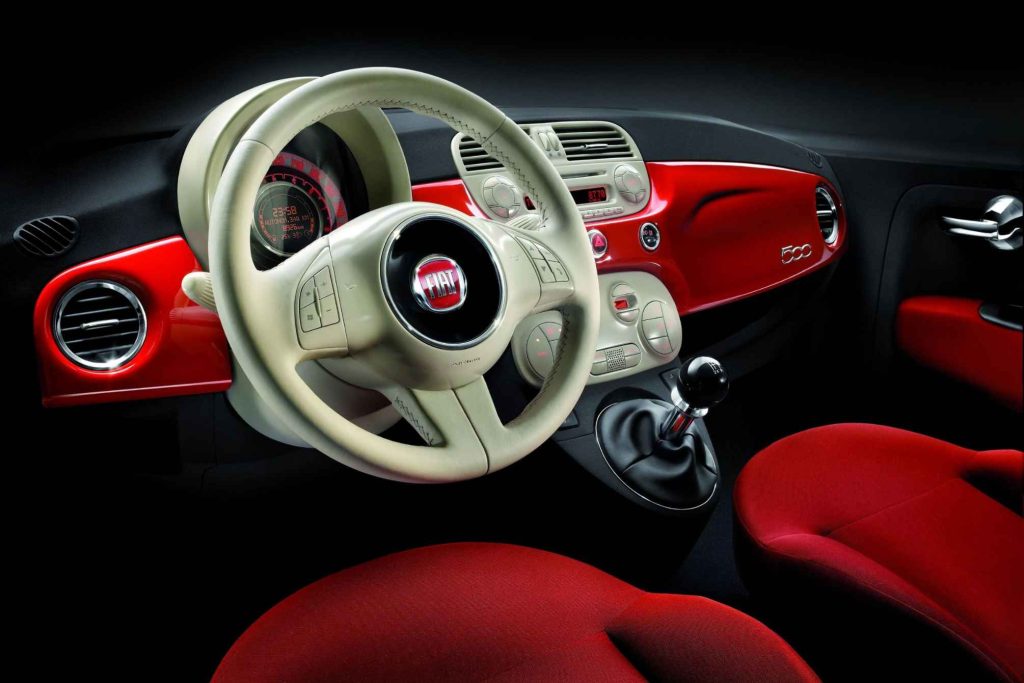
500s are abundant under a grand, making them among the cheapest retro remakes on this list. There’s a huge choice of models too, with naturally aspirated and turbocharged petrol engines (including the bubbly two-cylinder TwinAir), turbodiesels, and a mild hybrid available in later cars. Styling ranges from simple to classical to sporty depending on spec, and the interior styling is just as fun to look at as the outside.
Insure your classic with a specialist insurer
If you’re looking for cover for your pride and joy, why not consider Hagerty UK? Not only are we classic car insurance specialists, but we are enthusiasts at heart. Call us for a quote on 0333 323 1138.