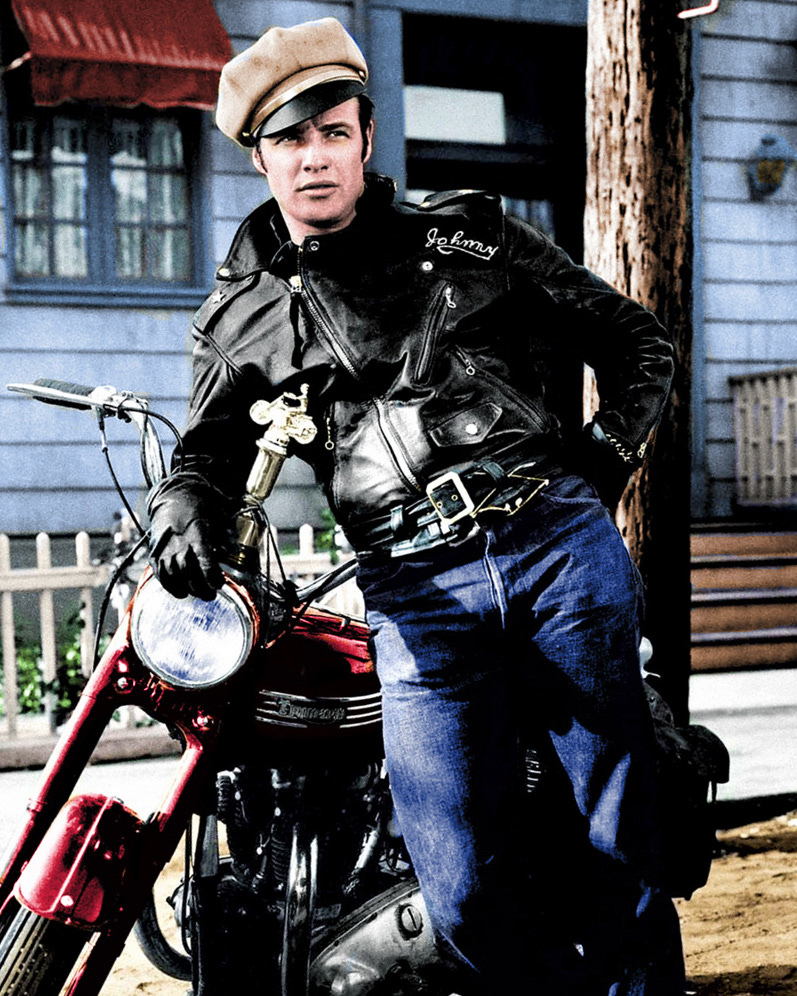
There are few more famous motorcycling images than that of Marlon Brando leaning against the tank of his 650cc Triumph Thunderbird in the 1953 hit movie The Wild One.
Brando’s character Johnny, complete with cap, black leather jacket and racing trophy, was the hero of the film, which was loosely based on events at a rally at Hollister in California, and caused controversy with its portrayal of bikers as beer-drinking hooligans.
Johnny’s hard-riding, hard-fighting character struck a chord with many motorcyclists. Triumph’s fast and stylish “T-bird”, as the bike soon became known – five years before Ford licenced the name for its own iconic model – was the perfect accomplice.
“What are you rebelling against?” a girl asks Johnny in the movie. “Whaddaya got?” he famously replies, summing up a commonly held feeling in the days before the term teenager had even been invented.
More than 70 years later, it’s hard to understand how a film which, by modern standards, is as tame as The Wild One can have been considered violent and “sinful” enough to be banned from British cinemas for 14 years.
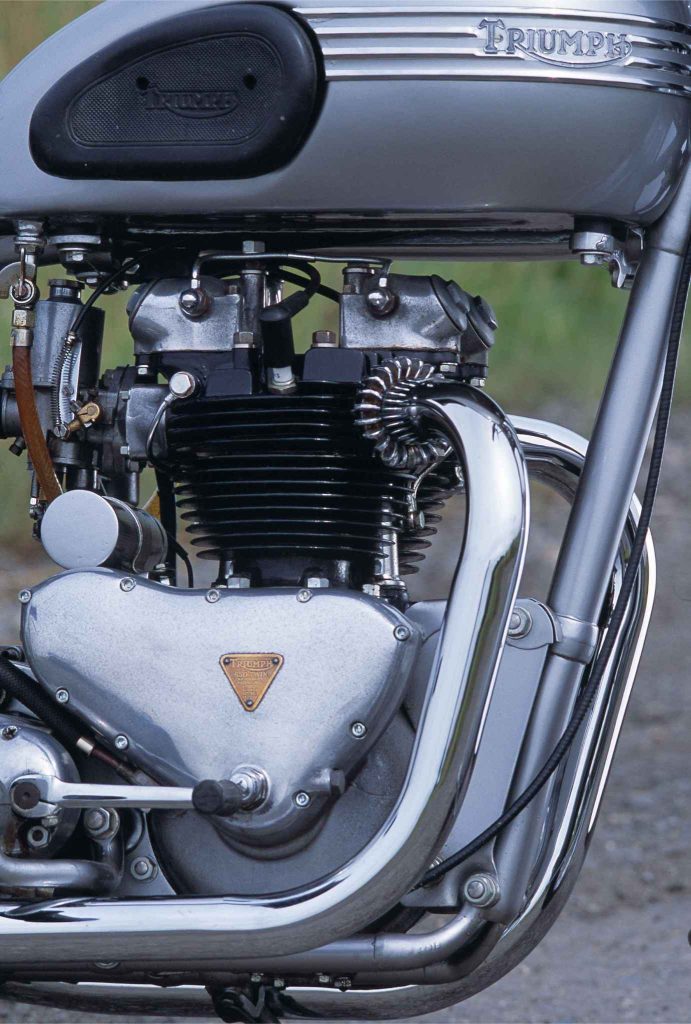
The appeal of the Thunderbird back then, on the other hand, is far easier to comprehend. On its launch in 1950, the Triumph’s new 649cc engine had made it the most powerful and quickest parallel twin on the market.
Before The Wild One, bikes had generally appeared in movies with their badges covered up. But Johnny’s Thunderbird wore no such disguise, and every biker knew it was Triumph’s hotrod twin.
Ironically Bill Johnson, head of Triumph’s US west coast operation Johnson Motors, had been concerned about the movie’s possible impact before its release. Johnson had written to the Motion Picture Association of America’s president to complain that “this film is calculated to do nothing but harm, particularly to a minor group of business people – motorcycle dealers throughout the USA. I urge that you give the foregoing comments your unbiased consideration, with a view of stopping production of this film.”
Director Stanley Kramer went ahead, but Johnson need not have worried. Far from harming his dealers’ business, The Wild One helped sell large numbers of Triumphs across the country.
The US had played a central part in the Thunderbird’s creation, as it would with much surrounding Triumph in the Fifties. With the British home market struggling, the Meriden factory’s boss Edward Turner had been a frequent visitor to the States.
Turner’s trips made him aware of American motorcyclists’ demand for larger engine capacity and more horsepower. This inspired him to create the Thunderbird, essentially a 650cc version of Triumph’s Speed Twin, the sweet-running 500cc parallel twin that had revolutionised motorcycling following its launch in 1938.
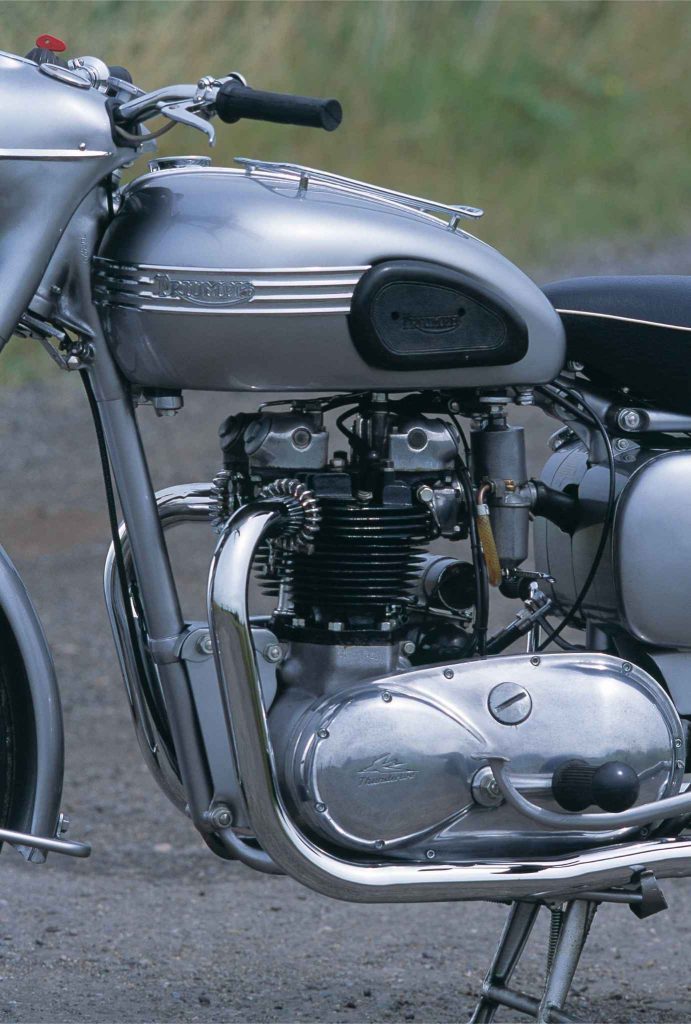
Enlarging the pushrod-operated engine to 649cc gave a peak output of 34bhp at 6300rpm, a gain of 7bhp over the Speed Twin, along with a healthy increase in torque throughout the range. This resulted in a significant performance boost because at 175kg the Thunderbird weighed barely more than the smaller model.
Triumph launched the Thunderbird in September 1949 at the banked circuit of Montlhéry, near Paris. Three bikes, among the first off the production line, and standard apart from rearset footrests and racing tyres, were ridden for 500 miles at an average speed of over 92mph, with a last lap of over 100mph.
This was an impressive introduction, and a valuable one as Turner had arranged for the motorcycling press to be present. Thankfully for Triumph, there had been no witnesses at two previous Montlhéry attempts which, it was revealed years later, had ended in failure; one with a holed crankcase, the other due to clutch and tyre problems.
Triumph’s team added to the publicity value by riding the three bikes back to Meriden, managing to keep secret the fact that one suffered a partial seizure when battling a strong headwind. At the factory, Thunderbirds were already in crates for despatch to the US. The model also went on sale in the UK shortly afterwards, after starring at London’s Earls Court Show.
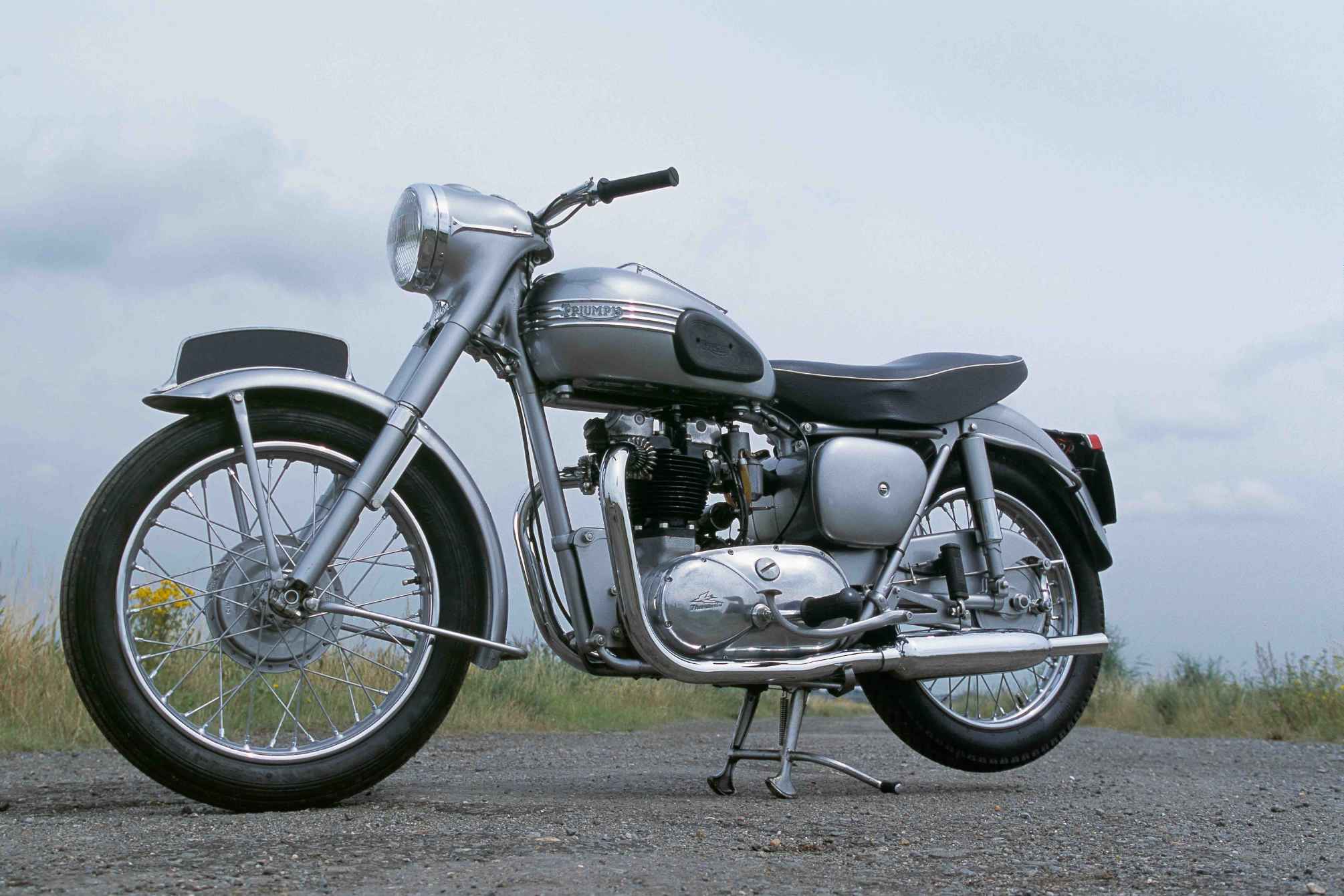
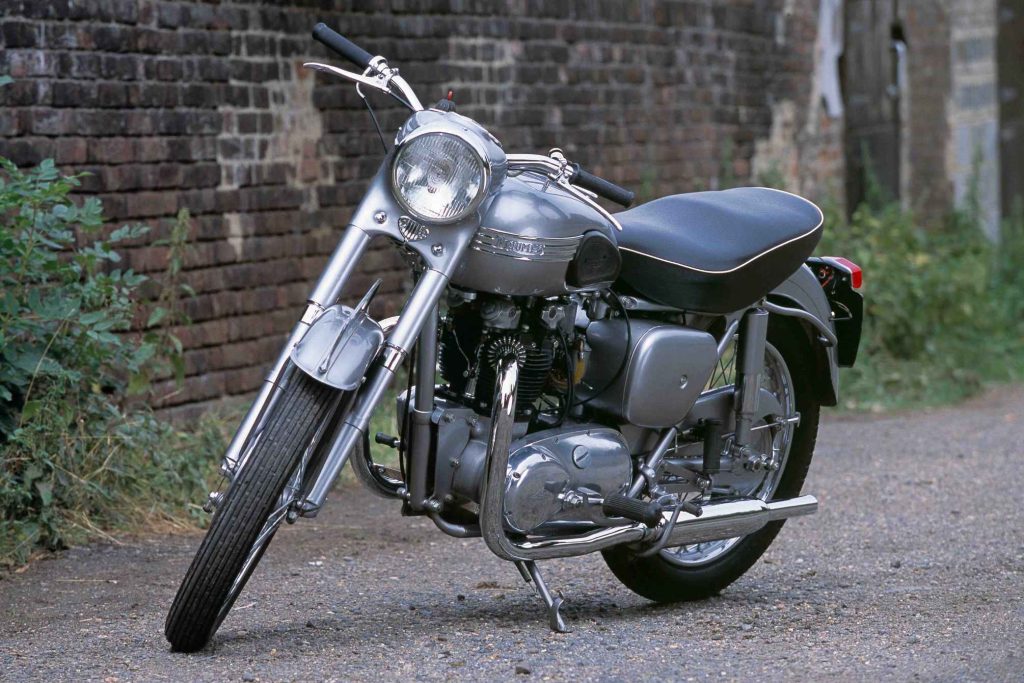
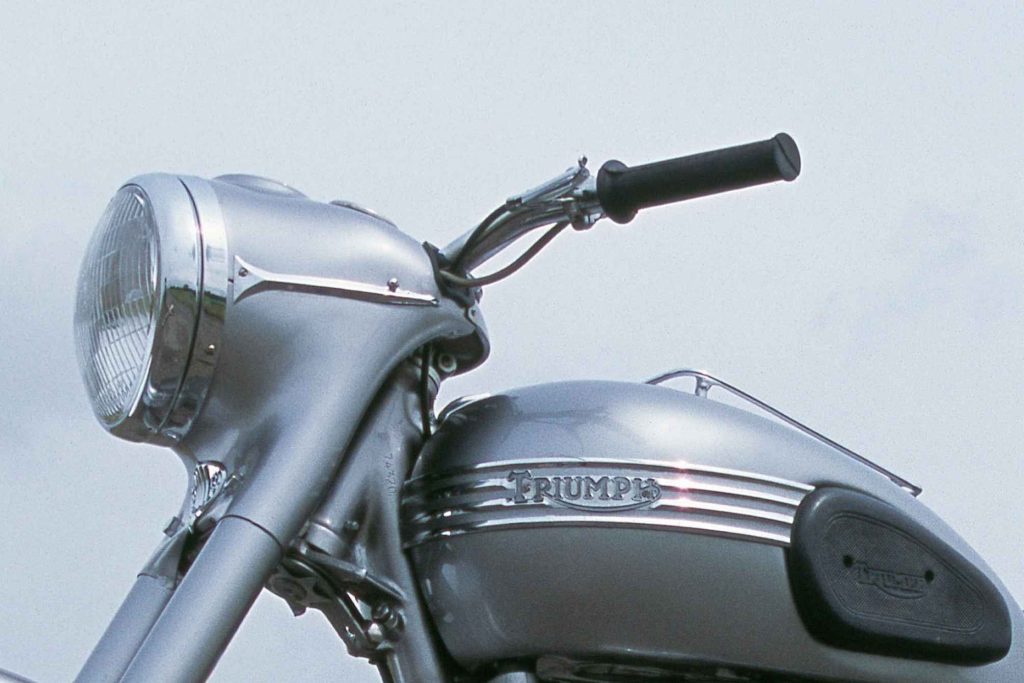
Along with its new engine, the Thunderbird incorporated Turner styling touches including a streamlined headlamp nacelle that housed the speedometer, ammeter, light switch and steering damper knob. The petrol tank featured four chromed bars, plus a chromed grille on its top – useful, if potentially ruinous in the event of an accident.
The Thunderbird’s look was well received, apart from its rather dull Thunder Blue colour (which would be dropped for a lighter, metallic Polychromatic Blue a year later). So was its performance, once eager riders got their hands on the bike. More even than the extra top speed, it was the torquey twin’s ability to maintain a high average that impressed.
“So fast is the Thunderbird that during the test the maximum speed at which the machine could be cruised, without engine fatigue becoming apparent, was never determined,” reported The Motor Cycle. “When road conditions permitted, speeds of 80, 85, 90mph were often held for as long as the rider could withstand the buffeting force of wind pressure.”
In the States, the T-bird was the star of Cycle magazine’s first ever issue in April 1950. Editor Harry Steele declared the model almost faultless, memorably concluding that: “The riding characteristics leave nothing to be desired and if it’s acceleration you crave, there are few stock, fully-equipped machines that could jerk your cork if you’re on a Triumph Thunderbird.”
Triumph’s American advertising also emphasised the performance, screaming: “See the most exciting motorcycle ever!” from the pages of the 1950 New York Show programme. “Why be satisfied with second-rate performance? Choose a Triumph and get ahead.”
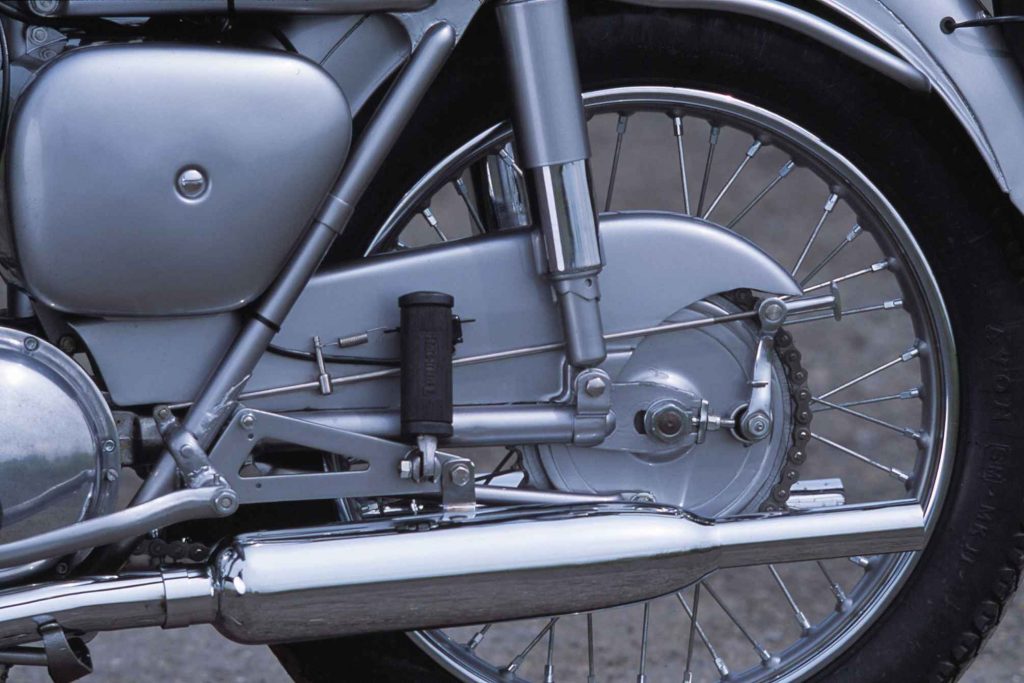
The 649cc engine proved reliable and was changed little for several years. Handling was improved in the mid-Fifties when Triumph introduced a new twin-shock frame, replacing the earlier model’s standard hard-tail or optional sprung-hub rear suspension.
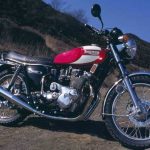
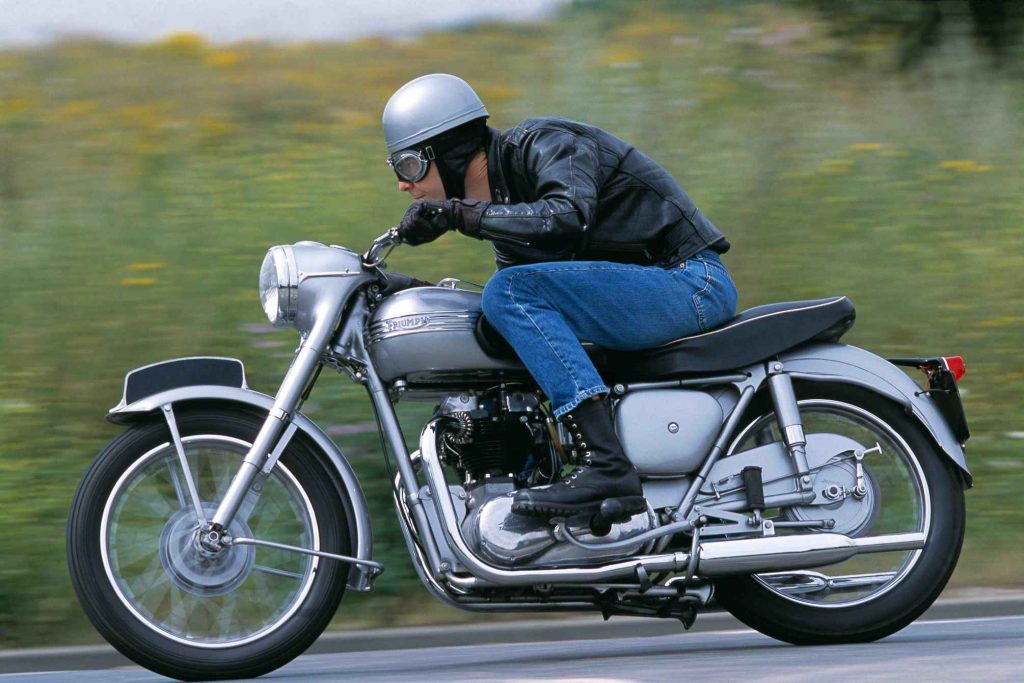
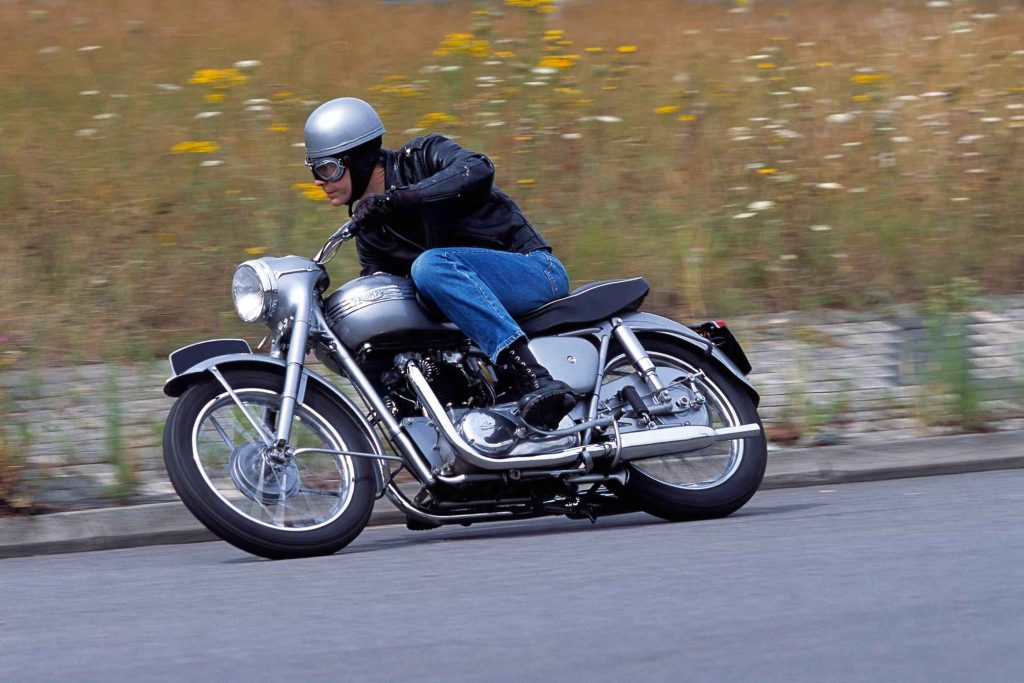
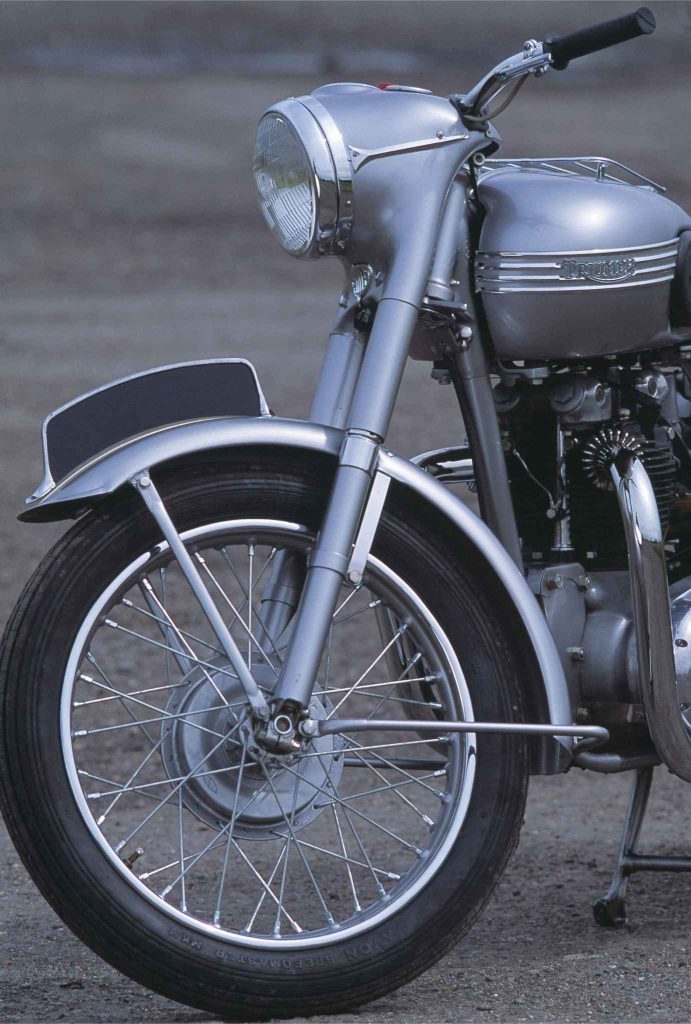
Which brings us to this very clean 1956-model Thunderbird, freshly restored and very attractive in its Crystal Grey paintwork. Its motor fired up easily with a gentle prod of the kick-starter, its 360-degree layout giving a typically tuneful and not particularly loud sound through the twin silencers.
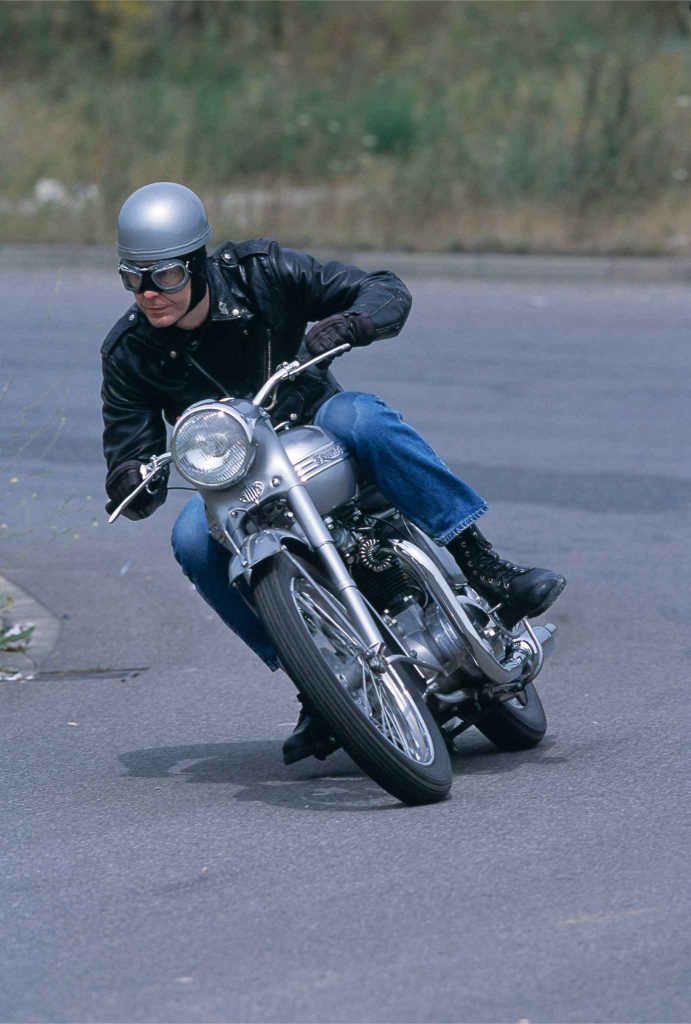
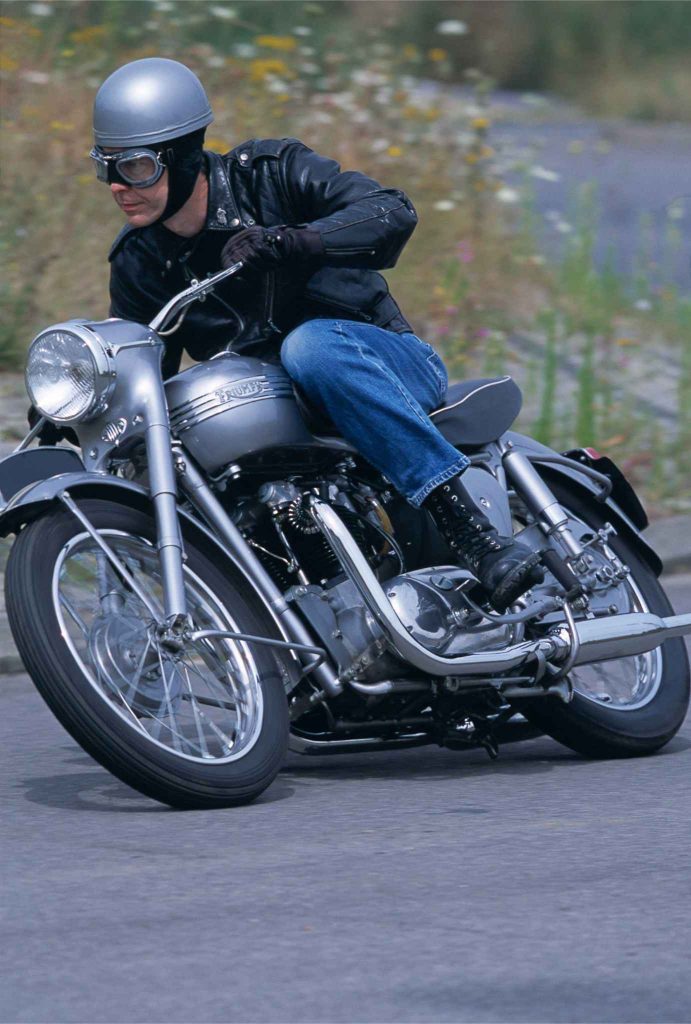
The T-bird felt smooth, light and eager as I let out its clutch to pull away. Vibration levels had not been dramatically increased by the 649cc engine’s 50 per cent enlargement (as would later happen when it grew again to 744cc).
Straight-line performance was sufficiently lively to make me think just how quick this bike must have felt when it was new, especially in the midrange power delivery that would have been the T-bird’s main advantage over the familiar 500cc twins.
From about 40mph upwards the Thunderbird surged forward given a top-gear tweak of its throttle. It impressed me not only with its flexible power delivery but also with its four-speed gearbox, which shifted sweetly, if slowly, in response to my right boot.
Vibration certainly wasn’t a problem at those engine speeds. The only aspect of this engine that was less than impressive was a slight hesitation at times, due to slightly over-rich fuelling. (Its owner reported that this was put right soon after my ride, with a new carburettor needle.)
Due to the motor’s recent rebuild, not to mention the age of the bike in general, I didn’t get carried away in investigating its ability at high revs. The Thunderbird cruised at a seemingly effortless 60mph, justifying The Motor Cycle’s tester’s comment that its quietness and smoothness between that speed and 70mph were “quite exceptional”.
Two-way average speed, as tested by that magazine in 1950, was 97mph, confirming that the T-bird was just about capable of genuine “ton-up” performance in standard form. Perhaps more impressively still, that original test bike proved very reliable despite serious provocation.
“During the days when attempts were made to obtain the maximum speed figures, the engine took such a flogging as is unlikely ever to come the way of a machine in the hands of even the hardest of everyday riders,” the magazine’s tester wrote. “The engine was on full-bore almost continuously for three or four hours at a stretch on four consecutive days. It gave no signs of abuse; and not the faintest trace of oil appeared outside the engine or gearbox.”
Handling with the original Thunderbird’s rigid rear end or sprung-hub layout (literally small springs inside the rear wheel hub) was regarded as good by the standards of the day. Even so, in 1954 Triumph had introduced a new frame with twin-shock rear suspension, also using it for a new T110 Tiger model, powered by a hotted-up version of the 650cc engine.
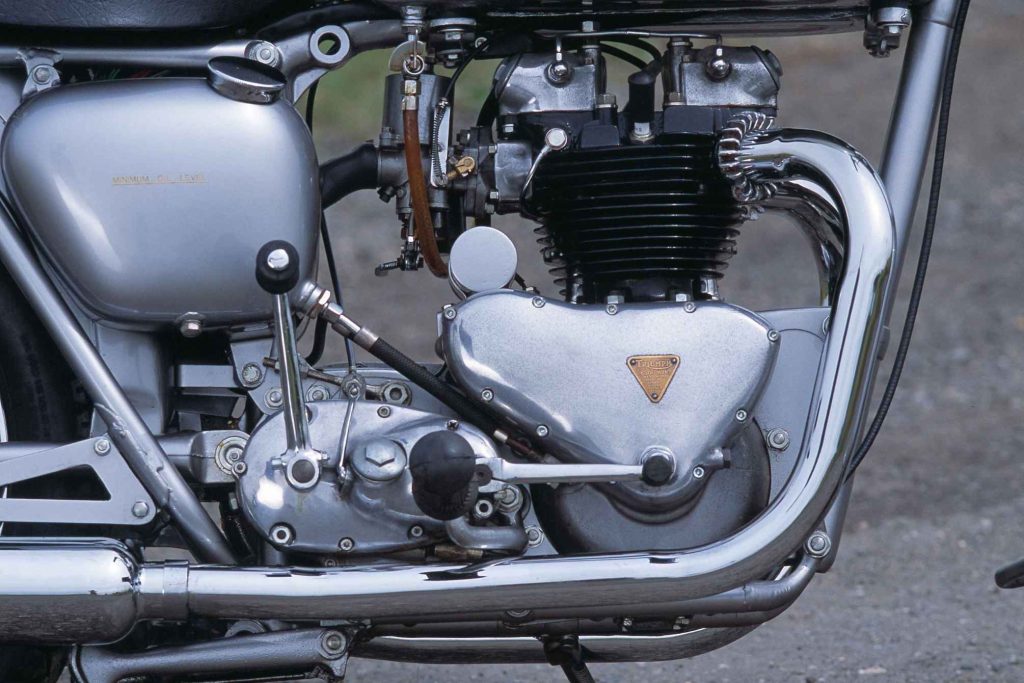
The T110’s arrival relegated the Thunderbird to a less sporty role which, in the days before most people owned cars, often involved pulling a sidecar. This was rather a comedown for a model that had so recently been the range-topping star, though it handled the job pretty well.
Some riders complained that the more powerful Tiger motor could provoke a high-speed weave from the new frame, especially when swing-arm bushes got worn. But most Thunderbird riders were happy enough, as I was with this recently restored machine.
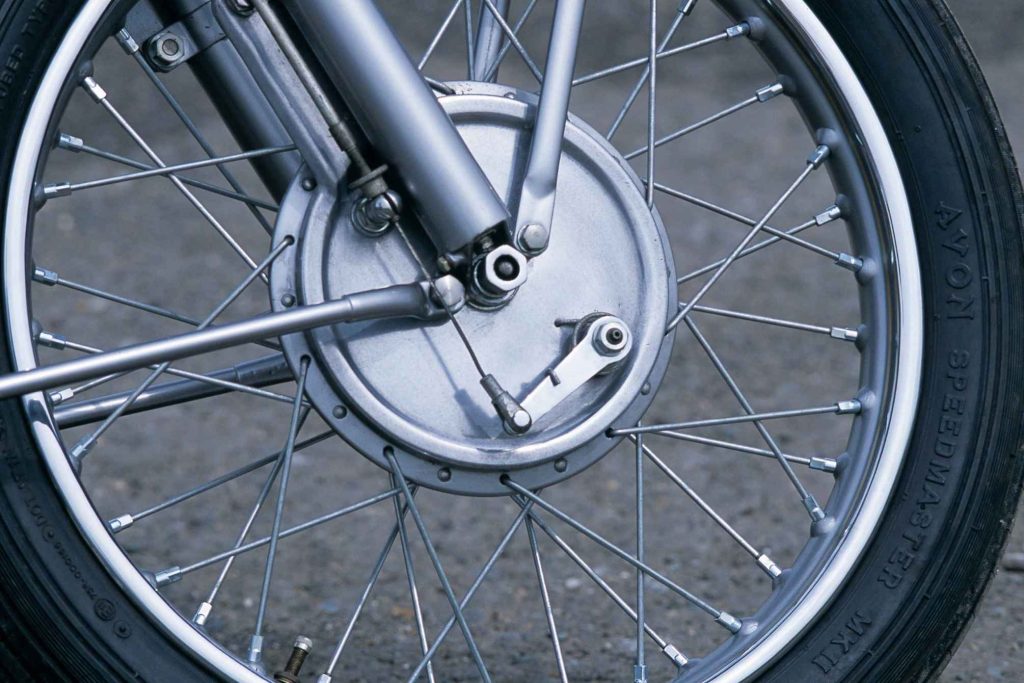
The Triumph was stable at the relatively modest speeds at which I rode it. And it steered with a precise and fairly light touch, despite its traditional large-diameter 19-inch front wheel which, like the rear wheel, wore a respectably grippy Avon Speedmaster tyre.
This bike’s only chassis flaw was a touch of vibration when I slowed using the front brake. This was due, its owner discovered shortly afterwards, to the steering head bearings being slightly loose, which was easily sorted.
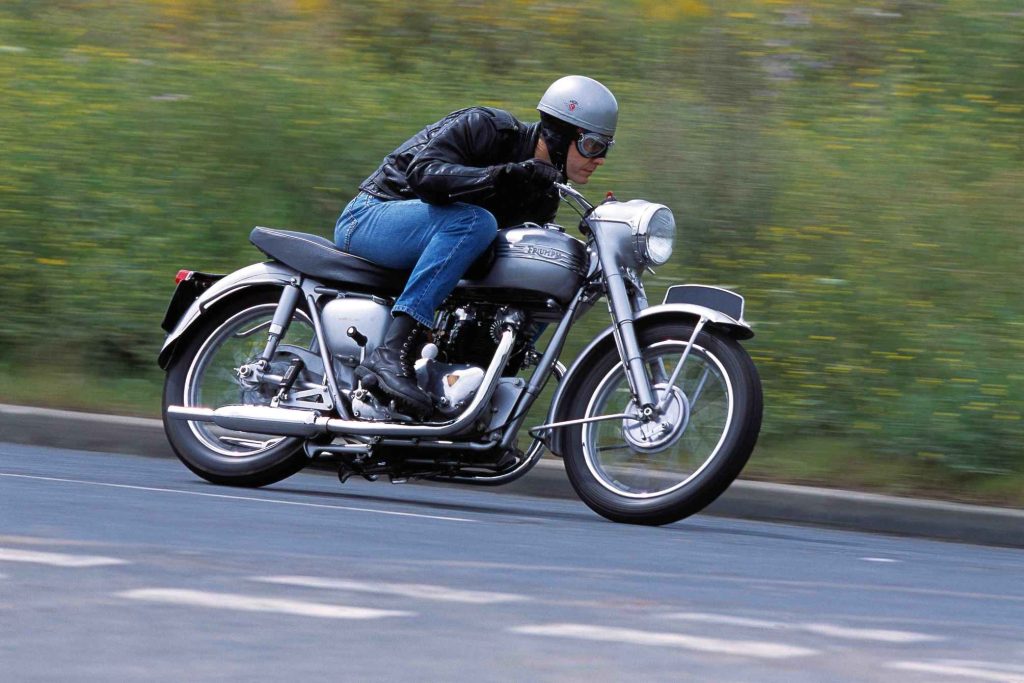
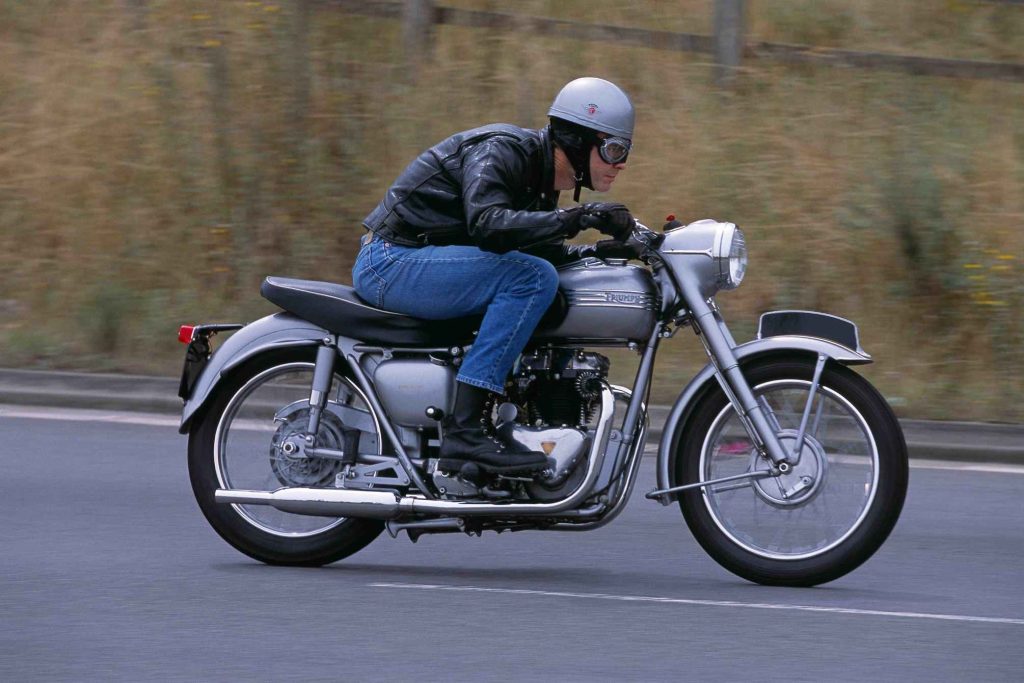
The 178mm, single-leading-shoe drum front brake itself was adequate but no more than that, needing a firm squeeze to have much effect. I wasn’t surprised to learn that Triumph uprated it the following year, 1957, with a full-width hub that incorporated cooling fins.
A bigger boost to the handling came in 1960 with the adoption of a stronger frame with twin front downtubes, but it was that year’s other major introduction that generated more interest. Along with the T110, the T-bird was fitted with Edward Turner’s controversial fully-enclosed rear end, which became known as the “bathtub”.
The bathtub rear end’s bulky appearance emphasised that by this time the T-bird was regarded as a touring twin, outshone not only by the T110 Tiger but even more so by the sporty 650cc T120 Bonneville, with its twin carburettors, which had been launched in 1959.
But if the some of the T-bird’s thunder had been stolen, its significance in Triumph history as the firm’s first 650cc model would live on. So too, thanks to Brando’s exploits on the silver screen, would its starring role in one of motorcycling’s most famous scenes.