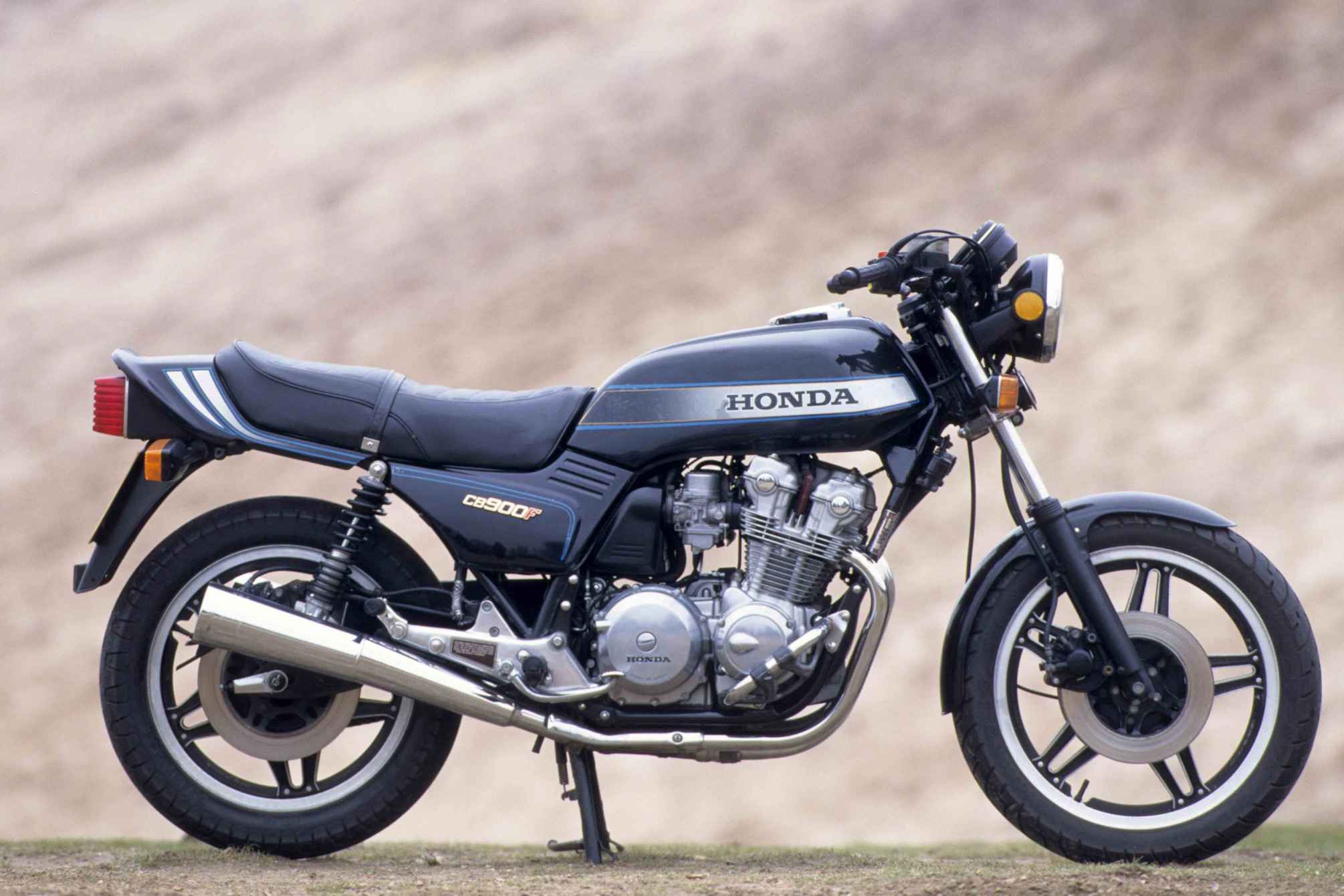
Honda’s latest bike is a retro-themed model called the CB1000F. It’s a naked four-cylinder roadster whose name and angular styling are inspired by the CB750F and CB900F from 1979.
Of that Seventies duo it was the CB750F that earned more glory, at least in the United States. It formed the basis of the high-handlebarred racer on which a young ace named Freddie Spencer took Honda’s first ever national Superbike victories, before heading off for grand prix stardom.
By contrast the CB900F was the sibling that captured the imagination of Europe’s more performance-hungry riders. The larger-capacity model belatedly gave Honda a four-cylinder machine to compete with Kawasaki and Suzuki in the prestigious one-litre superbike class.
The Honda’s historical significance is far from my mind as I ride along an already crowded M25 early on a chilly morning, surrounded by commuter traffic. It’s hardly an ideal time and place to be riding any bike, and the CB900F’s lack of fairing should only be making matters worse.
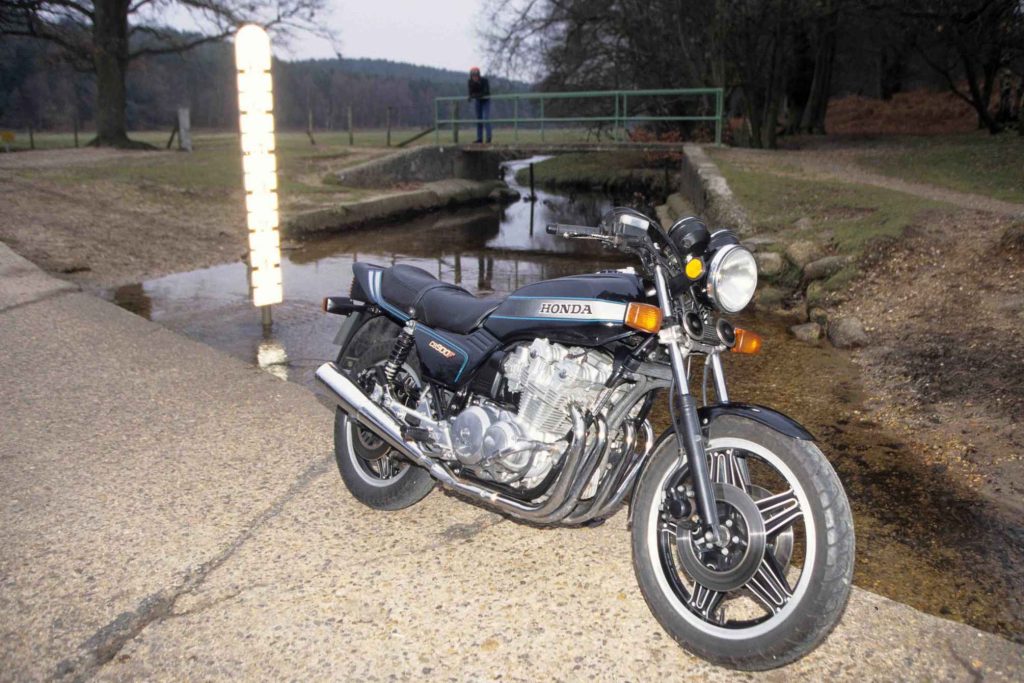
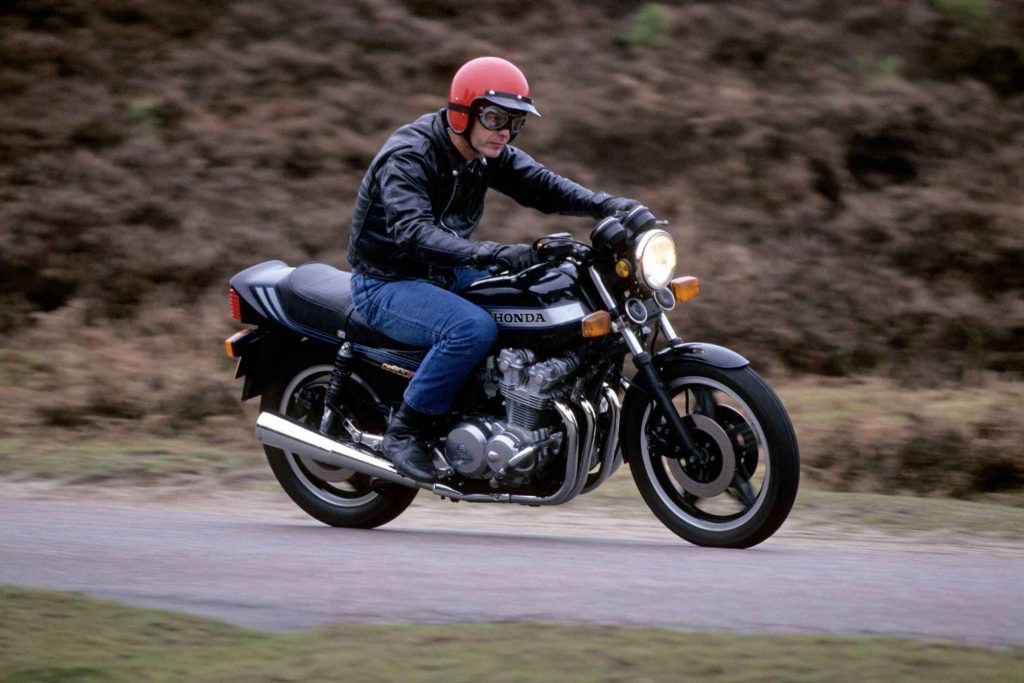
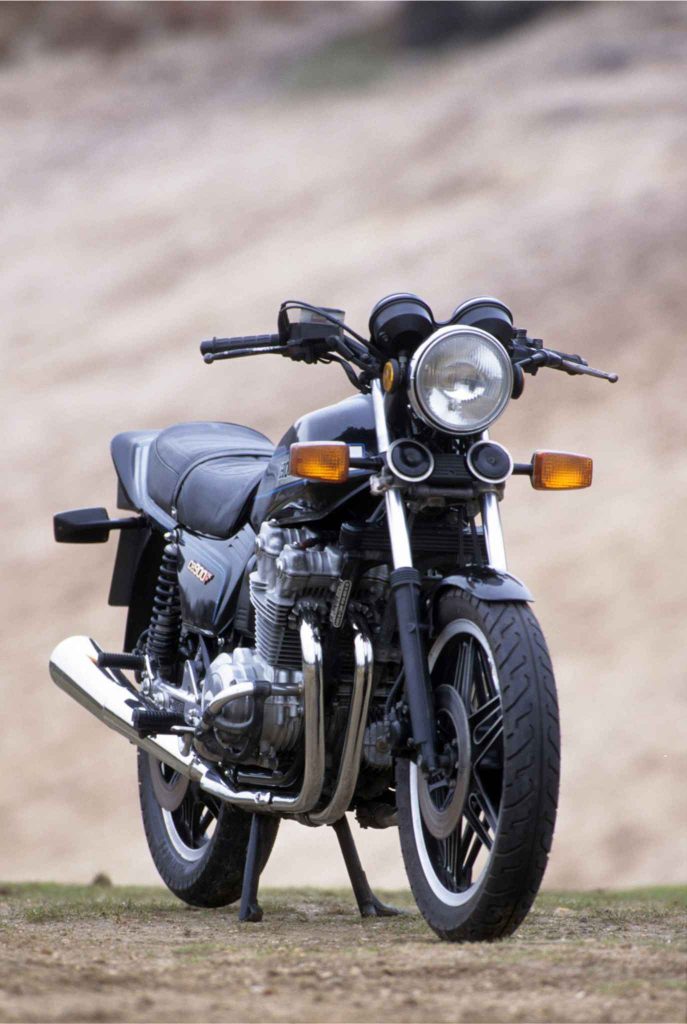
But despite the cold, I’m really enjoying the ride. The big black bike purrs along beneath me, feeling smooth and comfortable. When the traffic slows almost to a standstill, the 900F slips through gaps with an ease that belies its considerable size and weight.
Every time a clear stretch of road appears, a flick of my wrist sends the Honda whirring forward at a thrillingly rapid rate. And when I finally turn off the motorway onto more twisty and less busy roads, it handles sufficiently well to make me glad I made the early start.
Given this elderly CB900F’s ability to feel good in a wide range of circumstances, it’s no surprise that the bike was regarded as a class act back in 1979. At that time, Honda badly needed a four-pot superbike to take on Kawasaki’s popular Z1000 and the sophisticated GS1000 with which Suzuki had arrived on the scene in 1978.
Honda had essentially created the superbike category at the start of the decade with the original CB750, but its single-overhead-camshaft engine had long been outclassed by larger DOHC fours. Meanwhile the firm’s six-cylinder CBX1000 was proving too expensive to sell in large numbers, despite its considerable panache and performance.
The more competitively priced CB900F – which cost £1999 against the CBX’s £2750 in the UK –pitched Honda straight into the hard-fought litre-class battle. It arrived backed by a big promotional campaign based on its race-developed technology.
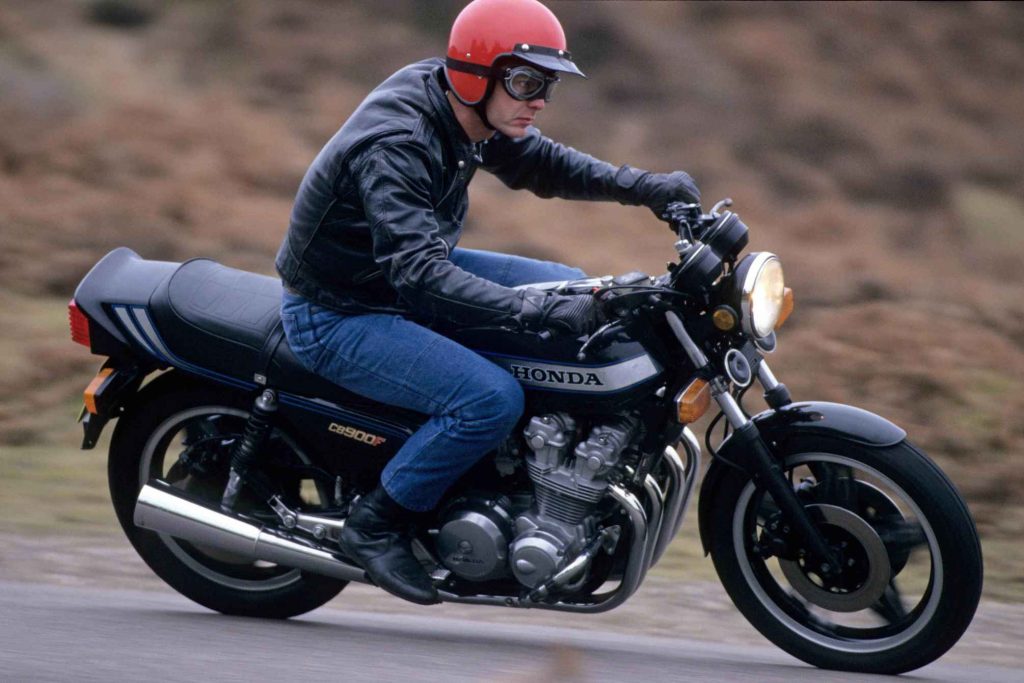
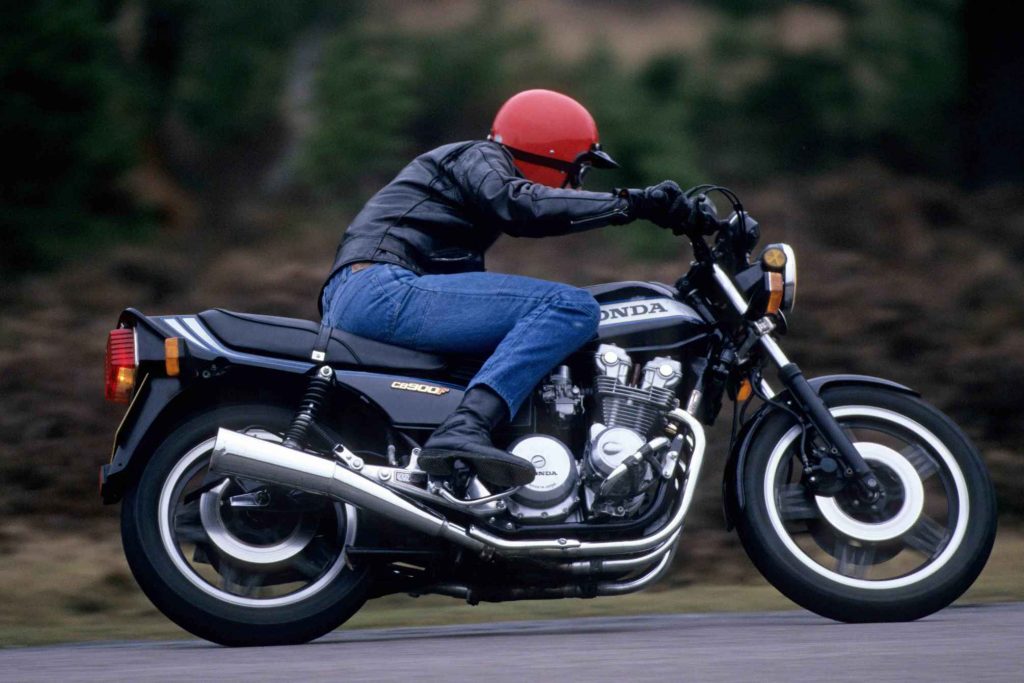
“It’s a powerhouse that has evolved directly from our all-conquering Endurance RCB machine,” ran Honda’s advertising line. “A thundering Super Sports bike with devastating performance and unwavering stamina that will be setting the pace for many years to come.”
The racing references were largely justified. Honda’s 1000cc RCB fours had dominated European endurance races including the famed Bol d’Or 24 Hours in France. The CB900F was no race-replica but its development had clearly been influenced by the RCB.
In contrast to most previous superbikes, which had been designed with the American market in mind, the 900F was aimed mainly at Europe, and initially was not even sold in the States. Its so-called “Eurostyle” shape, with fuel tank blending into sidepanels, was pleasant in an understated sort of way.
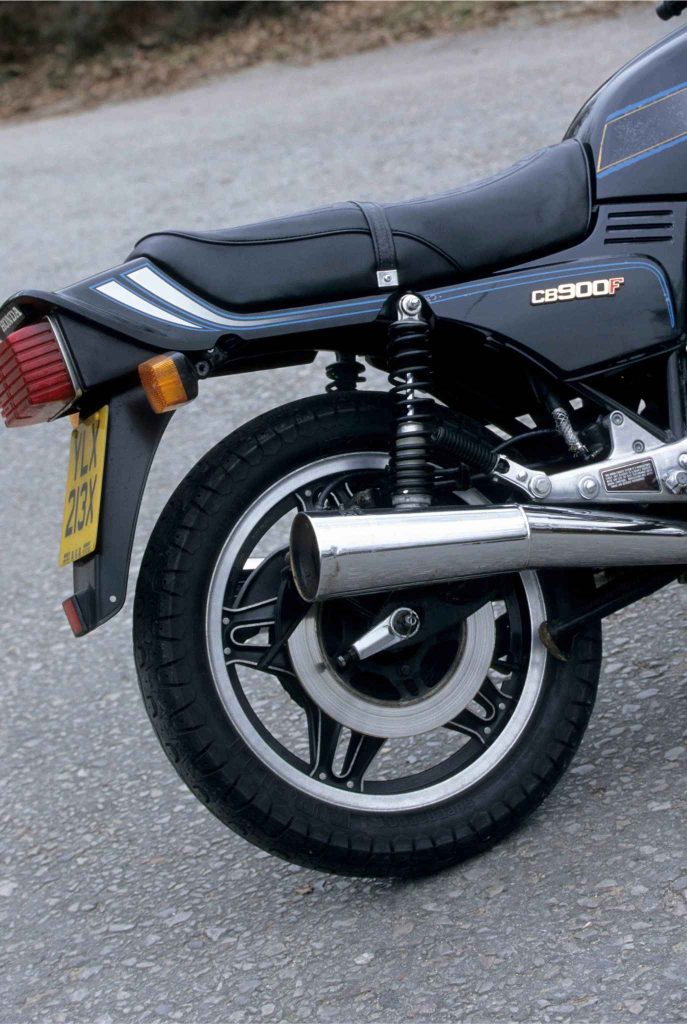
There was very little of the CBX six’s flamboyance here. Instead the 900F, with its modest twin silencers, looked distinctly similar to Honda’s humble CB400 Super Dream – which did the bigger bike no favours.
The 901cc engine was the star attraction, finally giving Honda a big twin-cam powerplant six years after the arrival of Kawasaki’s 903cc Z1. The 16-valve unit had fairly long-stroke dimensions (64.5 x 69mm), and produced 94bhp at 9000rpm – 2bhp up on the by now 1015cc Kawasaki.
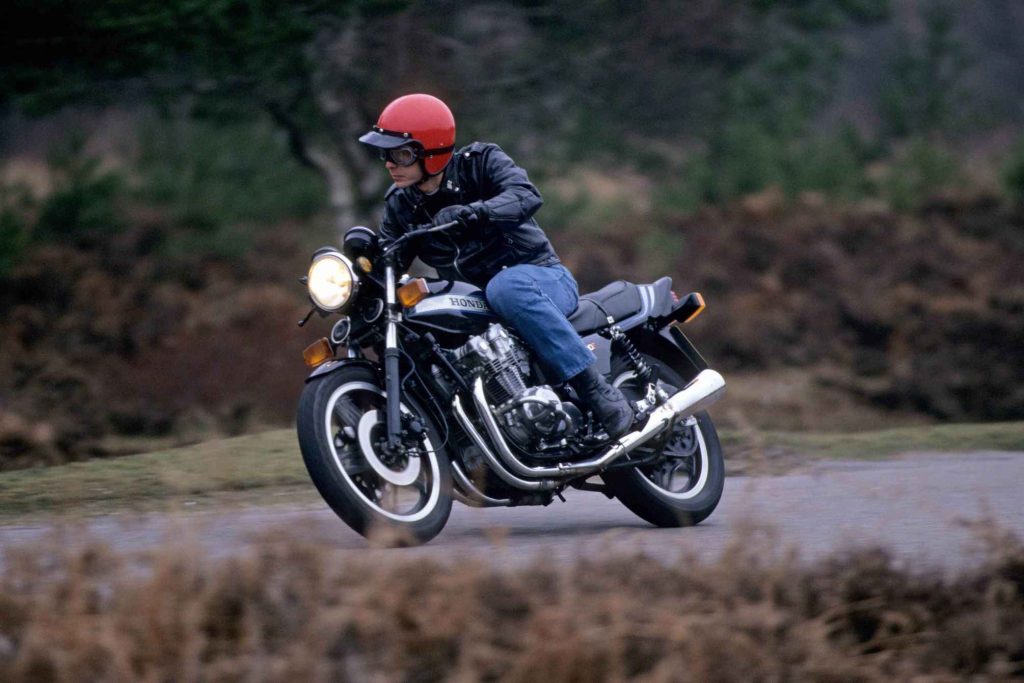
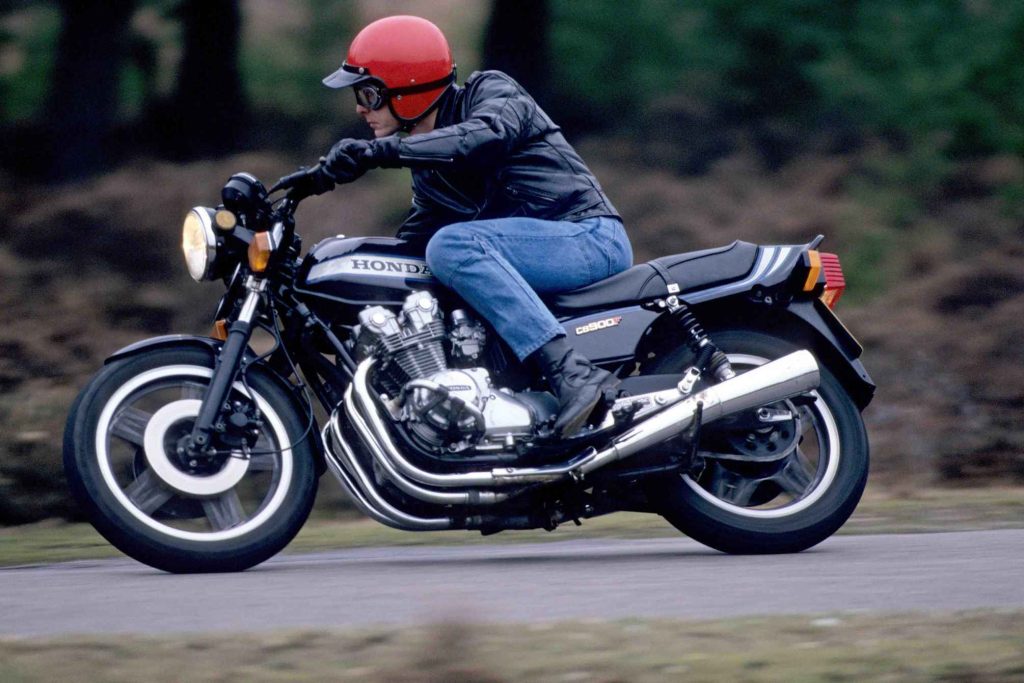
Honda’s engine design generally proved robust, though there were some reports of conrods breaking at very high revs. This well-preserved four seemed in good condition both inside and out. It fired-up with a typical mechanical whirring and whistling of its silencers, and ticked-over as smoothly as the day it first left the showroom.
My first impression was surprise at the riding position. The Honda CB900F has the tall, roomy, heavy feel typical of the superbikes of its era. But its handlebars are quite flat, and the footrests much further back than I’d expected, suggesting a distinctly aggressive character.
Perhaps I shouldn’t have been surprised. Back in SuperBike magazine’s May 1979 issue its tester had enthused that, “This is a sports machine, race bred and with very little in the way of compromise.
“The performance steals your attention, and rightly so because it’s the star of the show, but the improving handling characteristics are continually narrowing the gap between top speed and the ability to control that top speed.
“Be warned, though, this is not a bike for pussyfooting on. Treat it like a lumbering beast and it behaves like one. Ride it keenly and with force and it responds.”
The Honda was criticised in some reviews for its lack of low-rev performance, but that seemed slightly harsh. The row of 32mm Keihin CV carbs delivered a crisp throttle response from just off idle. The bike pulled cleanly in top gear with less than 4000rpm showing on the black-faced tachometer, and delivered arm-stretching acceleration from then on.
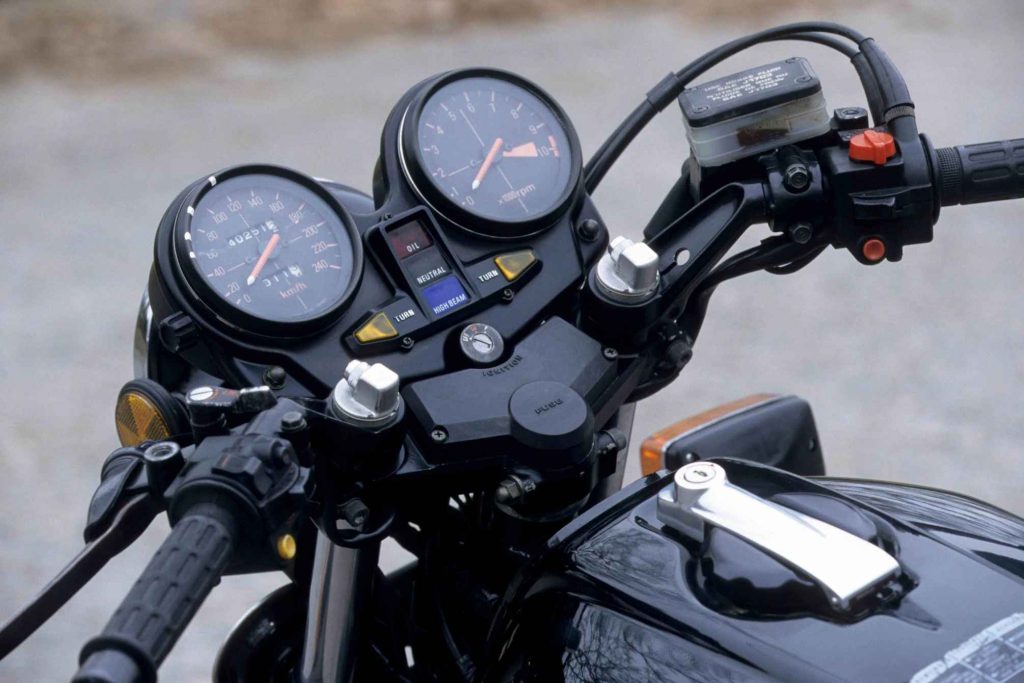
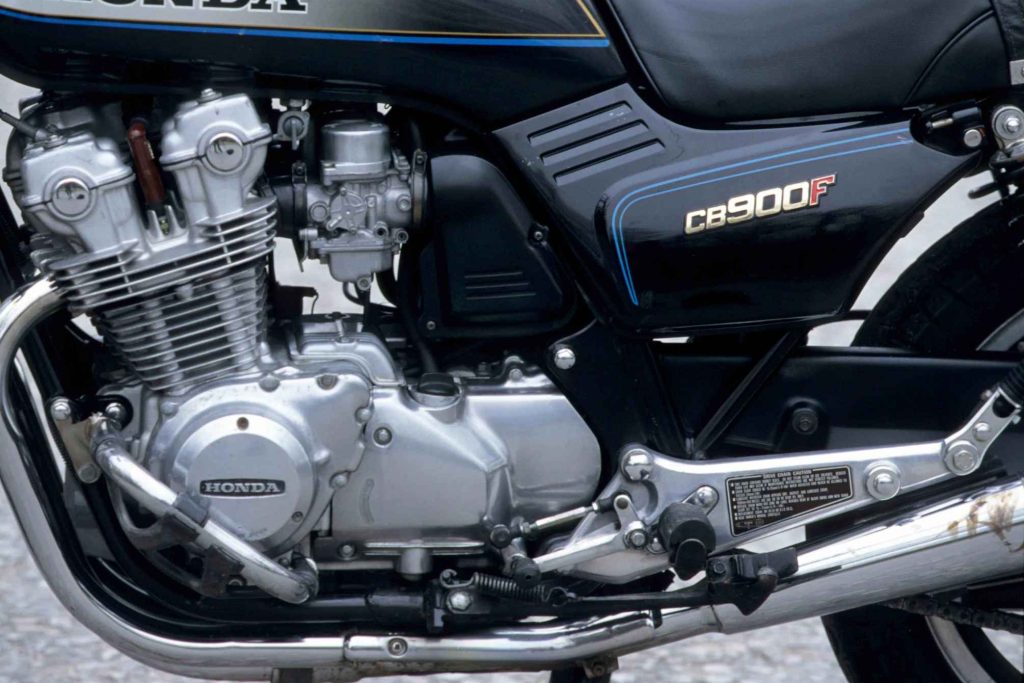
When I needed a quick burst of speed on the crowded motorway that morning, there was no need to drop down a cog in the reasonably smooth five-speed gearbox. Simply winding open the throttle sent the 900F surging forward, picking up impetus as the revs rose towards the 9500rpm redline.
At higher speeds the motor’s slight high-frequency vibration made it feel rather busy. But the leant-forward riding position and broad seat made the Honda comfortable, even if that wouldn’t have remained true all the way to the 130mph top speed.
Better still, when a curve appeared there was no need to slow down to prevent the bike going into a weave – as its Z1000 rival might have done. High-speed stability was very good, so much so that I could understand why one tester described this bike’s chassis as “the best that Honda have ever produced”.
There was nothing obviously special about the 900F’s twin-downtube frame, which featured a top spine of three steel tubes, and had a removable lower rail to aid engine removal. But it was considerably stronger than many of its predecessors.
It was also equipped with suspension of a quality that only Suzuki’s GS1000, of rival Japanese fours, could match. Front forks were air-assisted, and the shocks were adjustable for compression and rebound damping, as well as the normal spring preload.
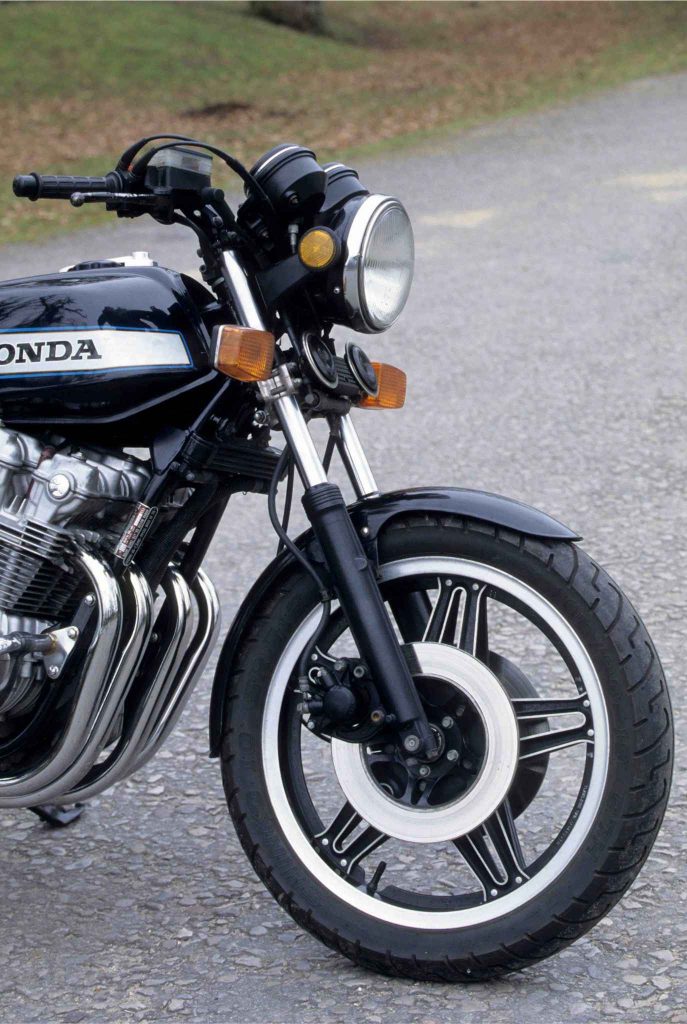
This bike had gained a pair of Koni shocks over the years, and more modern tyres on its distinctive alloy Comstar wheels. Despite the Honda’s old-fashioned geometry and substantial 233kg of weight, it steered reasonably easily and had enough ground clearance to make fast cornering fun.
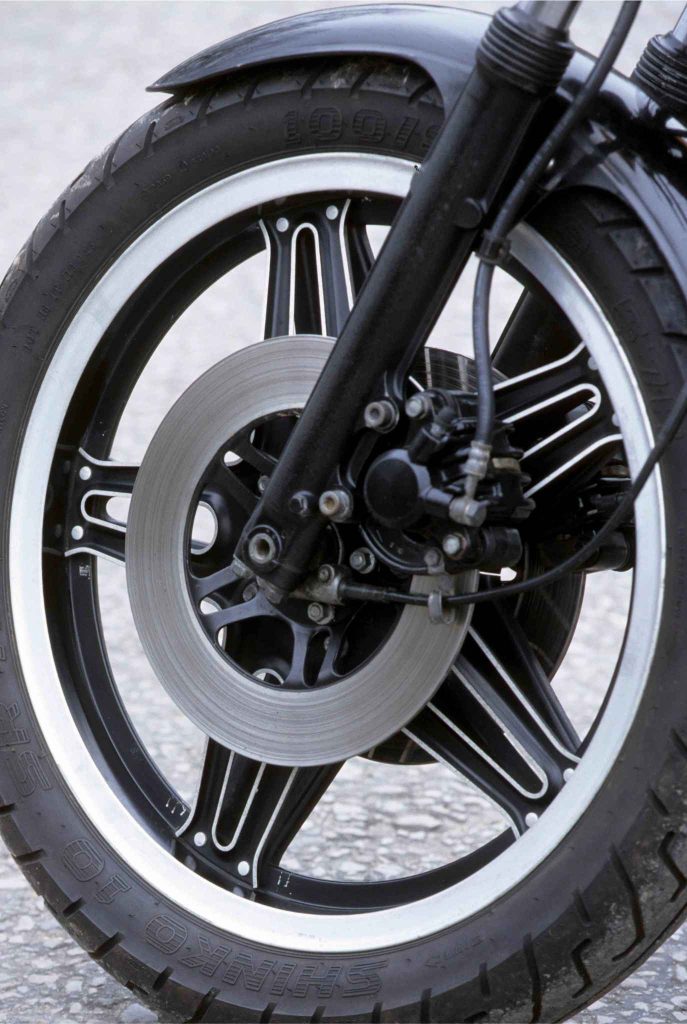
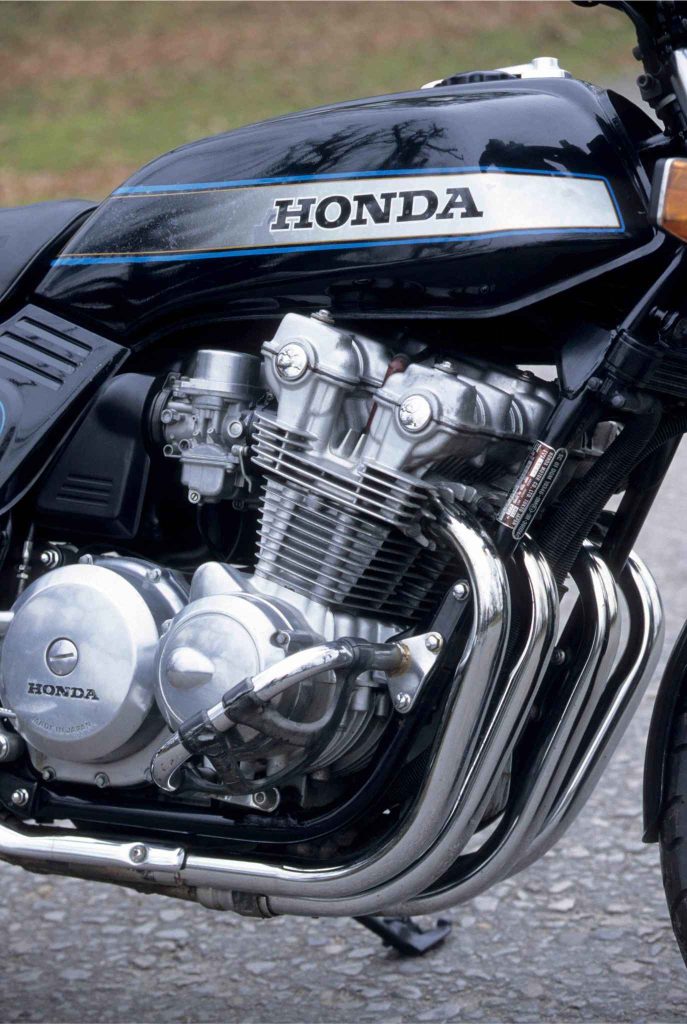
Only the brakes really showed their age. The front combination of small discs and simple single-piston calipers proved to be every bit as feeble as it looked, requiring a very firm squeeze to make the bike stop remotely quickly. And the larger rear disc locked too easily to be of much assistance.
Honda did at least uprate the front brake in 1982, also providing thicker front forks and an 18-inch (instead of 19-inch) front wheel. They also offered an optional fairing, with which the model was called the CB900 F2B, soon nicknamed “Far 2 Big”.
Meanwhile the sporting side of Honda’s superbike challenge had been taken over by the exotic CB1100R, with its sleek full fairing, more powerful engine and uprated chassis. The world’s biggest bike firm was making a huge effort to fend off Yamaha’s challenge to its status.
The Honda CB900F remained in production for a while longer, without ever becoming quite the success Honda had hoped for. Back in 1979 Bike magazine’s tester had been inspired to describe the CB900F as “the nearest any manufacturer has come to producing the Perfect Motorcycle”.
The SuperBike tester had concluded that: “It will never be a drinking buddy like an Italian sportster, varying in mood from day to day, letting you down when you were all geared up for the big one and surprising you unexpectedly.
“Nope, you’ll get a plain friend, a bit short on character but exciting enough in its way: sane, reliable and very fast.”
The CB900F was briefly replaced by the more powerful CB1100F in 1983. But by this time the era of aircooled, twin-shock superbikes was nearing its end, and Honda’s focus had shifted to liquid-cooled V4s and monoshock suspension.
More than 40 years later the CB900F’s style is being revived by the new CB1000F, which blends that familiar angular look with modern performance and refinement. It’s a timely tribute to the old aircooled warrior that gave Honda a competitive litre-class four at last.
Did you ever own or ride a Honda CB900F? How do you remember Honda’s classic 1970s superbike, and what do you make of the new CB1000F reviving its distinctive styling? Share your memories and opinions in the comments.

Rode a nearly new 1981 CB900F, great power, but could speed wobble mid corner, forks would bottom out unless pumped up, and the engine didn’t have a long life span. Ladies liked pillion as it vibrated like a coffee grinder
Had an 82 900f,better wheels,had mazzoki air assisted shocks and a 4 into 1 system with a laser end can,(loud enough to wake the dead,wish i still had it,ps ive had quieter harleys than the 900,happy days
I bought a new CB900F in 1981. Actually an FA – Carnell’s of Doncaster had a dozen prev years bikes at two thirds the price of the FB. No test ride. And shocked how easy and stable it was to ride first off – I’d has a gsx400t! Took it to the Bol D’Or at the end of 81 and again 82. Slightly bemused by all the 1979 cb750 and Spencer talk for the lovely new CB1000F. The CB900F was the seller in Europe. Loved it.