For those of a certain age, the yellowing fields, shrinking reservoirs and hosepipe bans of recent months have sparked recollections of the famously long, hot summer of 1976.
And the memories are especially vivid for those who were lucky enough to be on two wheels 50 years ago.
While most motorists were bemoaning their sticky vinyl seats and lack of air conditioning (as recently detailed by Antony Ingram on this site), motorcyclists were revelling in an unprecedented combination of endless sunshine and equally dazzling machines.
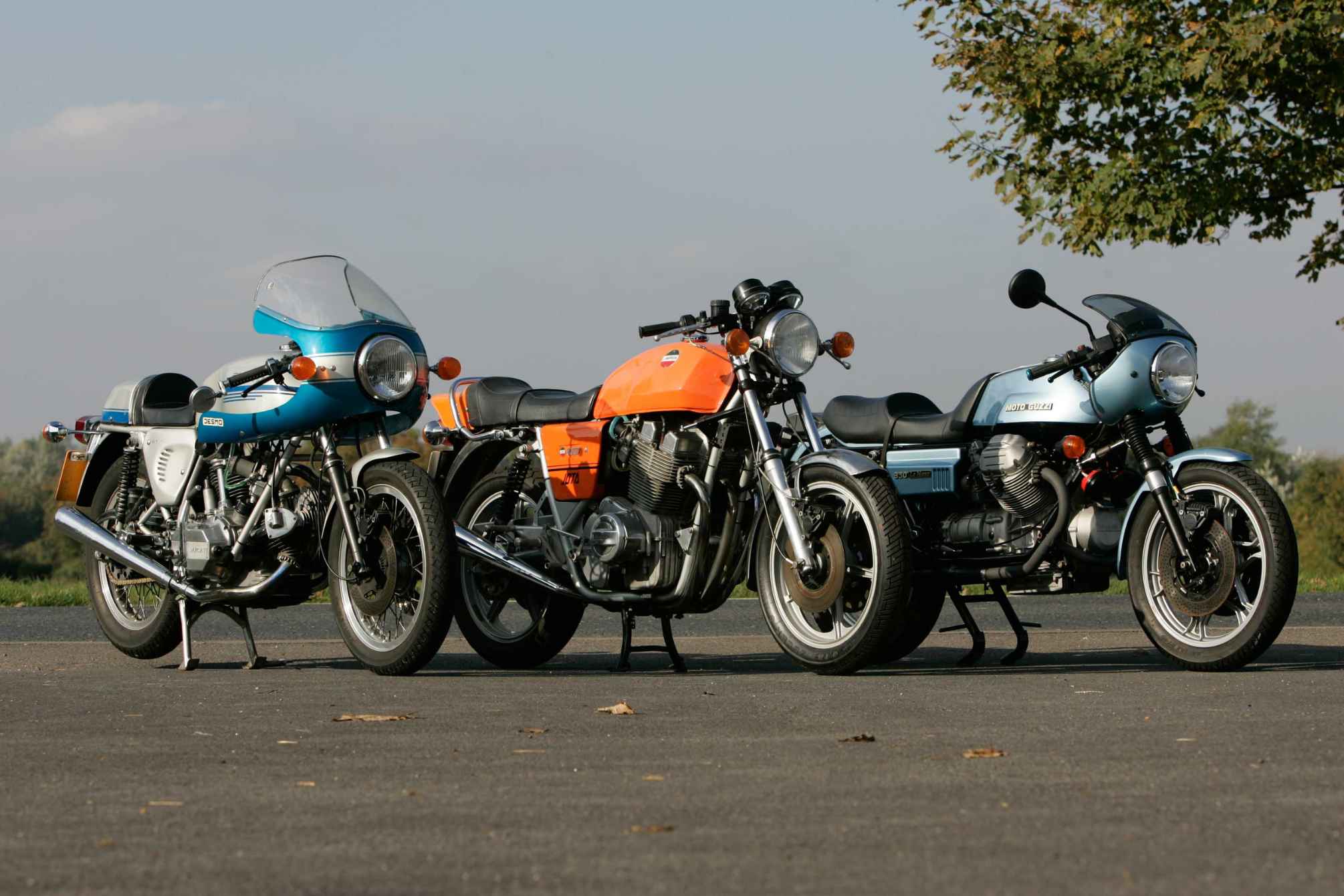
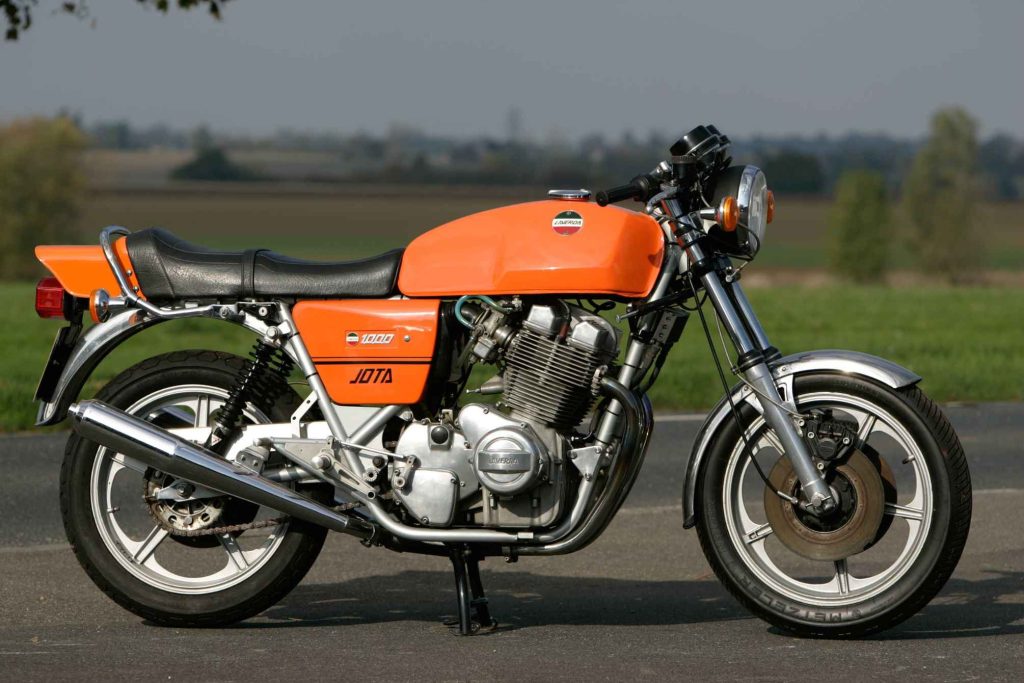
Britain’s roads were a motorcycling playground like never before, for bikes ranging from wasp-like swarms of 50cc mopeds to rocketships including Kawasaki’s Z900, Laverda’s Jota and Moto Guzzi’s 850 Le Mans.
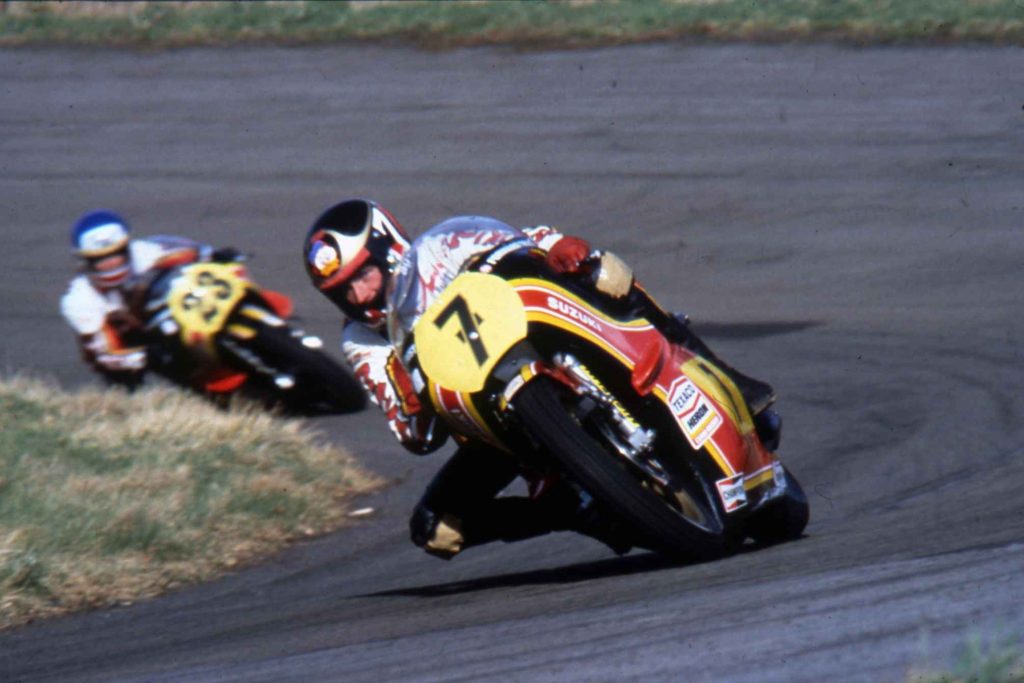
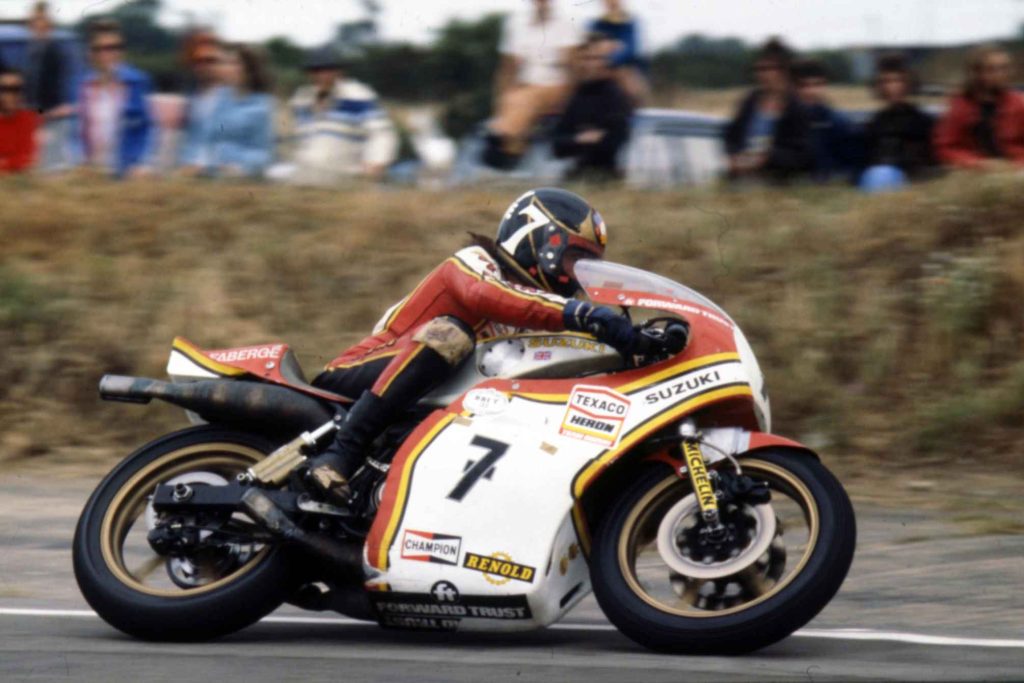
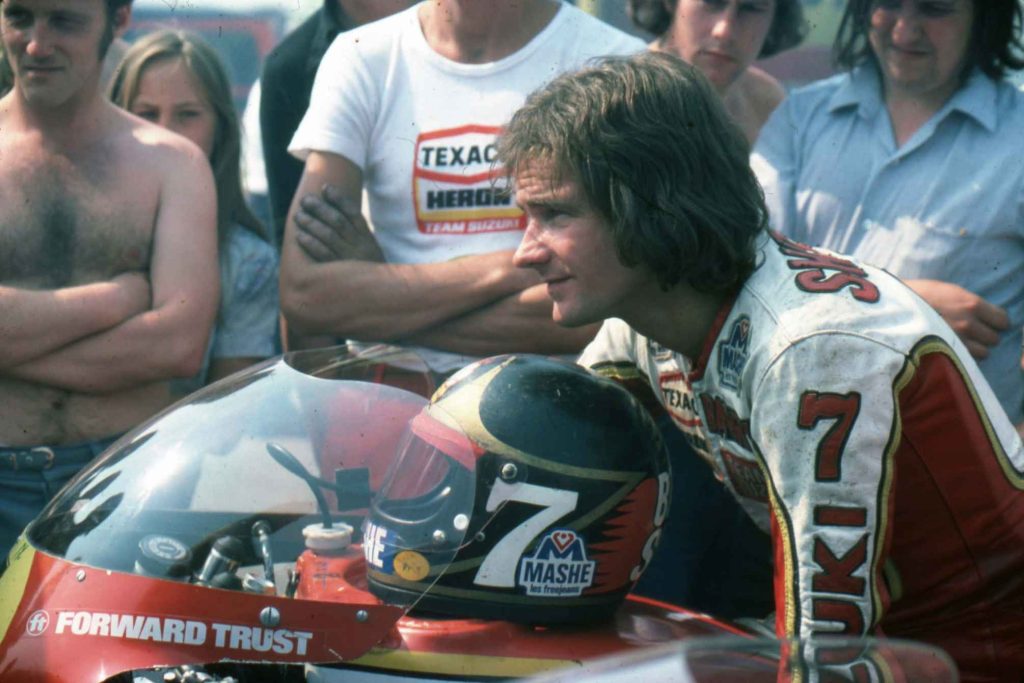
And while eager riders were fuelling a showroom boom that would culminate in a decade high of more than 270,000 bikes sold, on the world’s grand prix circuits Cockney ace Barry Sheene was racing towards his first 500cc world championship.
The excitement levels were perhaps highest of all if, like this writer, you had recently turned 16 and had invested years of paper-round earnings to graduate from pushbike to sports moped – in this case, a low-mileage Candy Gold example of the now legendary Yamaha FS1-E.
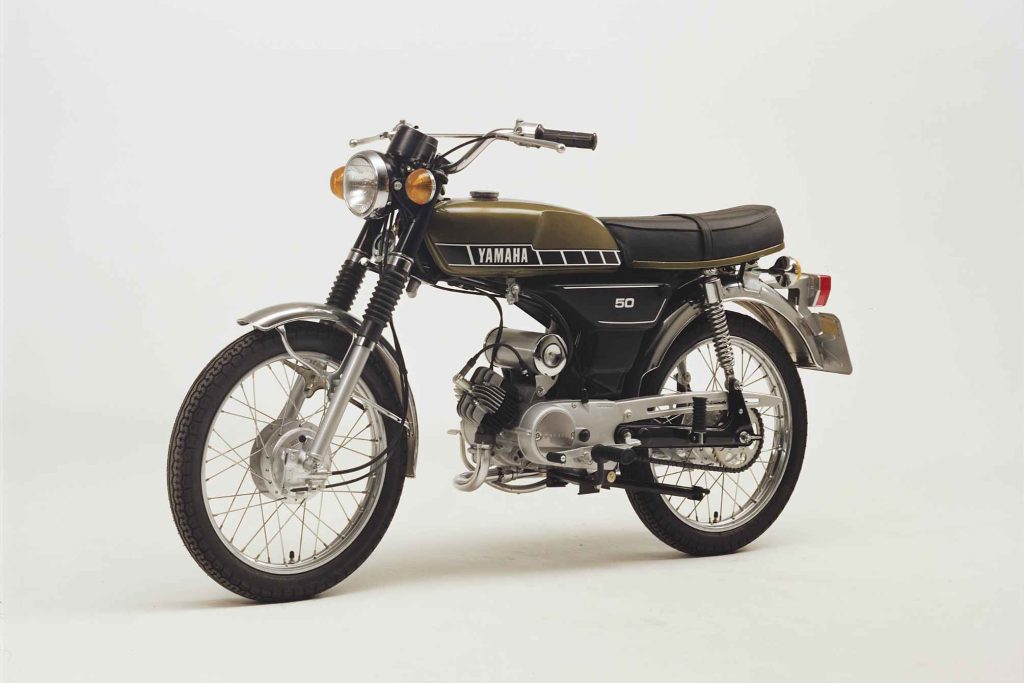
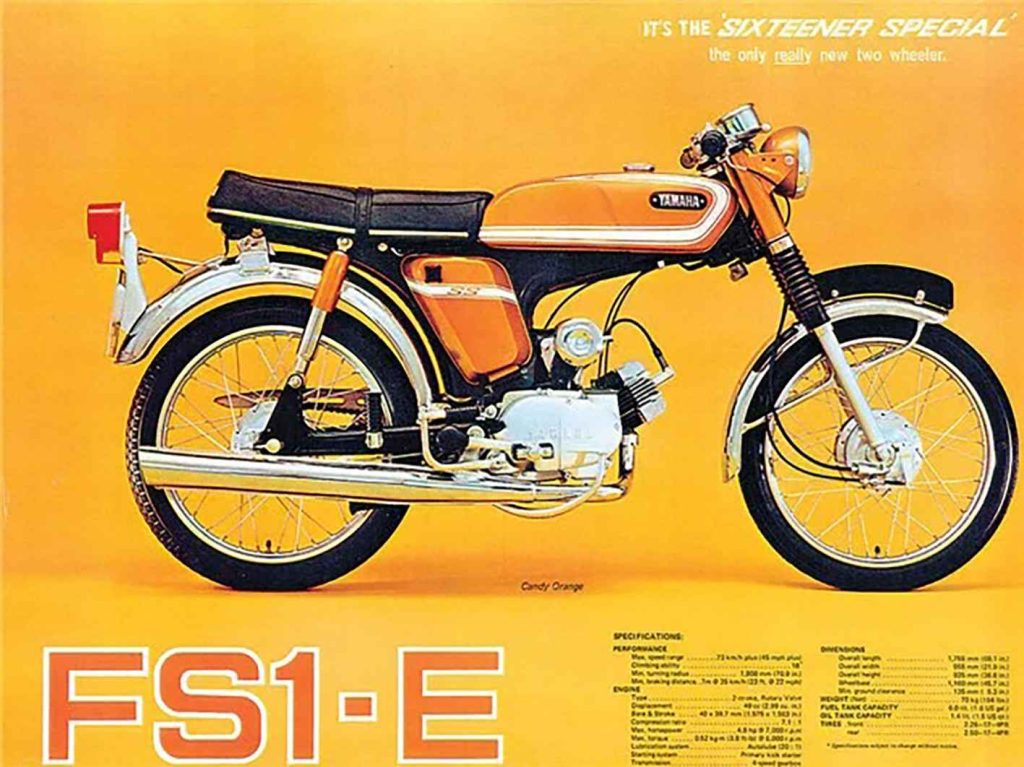
The “Fizzie” was the most popular of the fast-growing breed of mopeds whose origins were in the law change of 1972, which restricted 16-year-old riders to a bike of less than 50cc capacity, “equipped with pedals which must be able to drive the machine”.
Whoever drafted the legislation presumably had in mind the step-thrus with names like Norman Nippy and Raleigh Runabout – feeble motorised bicycles that required pedalling up hills, could barely reach 30mph and were as enticing to prospective teenage speed freaks as grandpa’s pipe and cardigan.
Thankfully the motorcycle manufacturers had other ideas. Austrian firm Puch was first off the blocks with the VS50, which was a small-scale 49cc motorcycle – albeit one whose three-speed gearbox was operated by twist-grip, and whose top speed was only about 35mph.
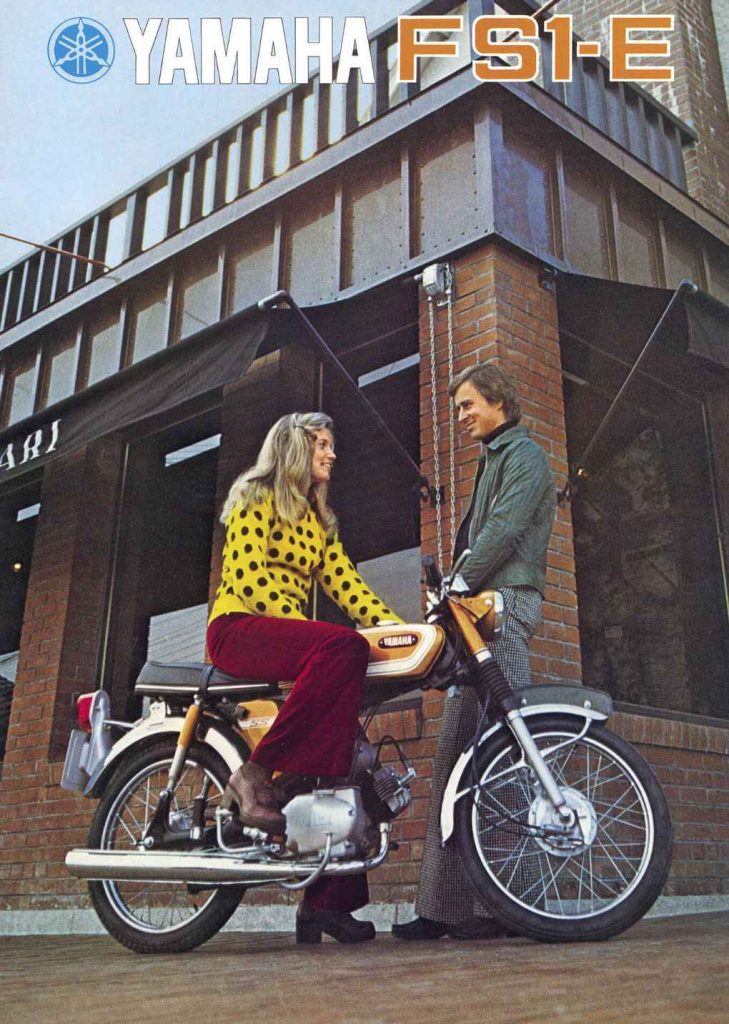
Japanese firms seized the opportunity, led by Yamaha whose FS1 was renamed FS1-E for England, initially with the added initials SS for Sixteener Special. It was skinny but attractive to youthful eyes, powered by a two-stroke engine that made almost 5bhp, had a four-speed gearbox with proper foot change, and was good for about 45mph.
If you spun the pedals like cycling star Eddy Merckx the Fizzy complied with the law by just about moving forward. Instead you simply locked them in place as footrests, kick-started the engine, wound back the throttle and entered a whole new world of two-wheeled thrills – often in company with other juvenile delinquents, as the Yamaha became the UK’s best-selling bike of any capacity.
Rival firms were quick to join the party. Honda’s SS50 was a four-stroke; capable but slow and dull. Suzuki’s AP50 was a two-stroke and – annoyingly – slightly faster than the Fizzy, or Fizzler as it was apparently called in some northern parts.
Just as with the superbikes whose brochures covered my bedroom wall, Italy offered rivals that were rapid and glamorous if unreliable and expensive. My mate Dave had a stylish blue Fantic GT. Another pal, Kevin, had a proper job and a flashy Garelli Tiger Cross with yellow-and-black tank and high-level exhaust.
In that first magical summer of powered riding my Fizzy seemed quite exciting enough. With the chinpiece of my plastic full-face helmet resting on the tank (lids having been made compulsory only three years earlier), it occasionally reached 50mph downhill, at least on the clock.
Along with speed it brought intoxicating freedom and adventure. One scorching day was spent thrashing around the home counties, completely lost and without a care in the world. At one point the Yam slowed suddenly with what was presumably a seized piston. After cooling down it restarted and ran as well as ever.
It was fun in the corners too, though with vastly more enthusiasm than experience I crashed it three times in the first fortnight. At least weighing just 70kg it was easy to pick up, and the only damage apart from skinned knees was a scraped exhaust.
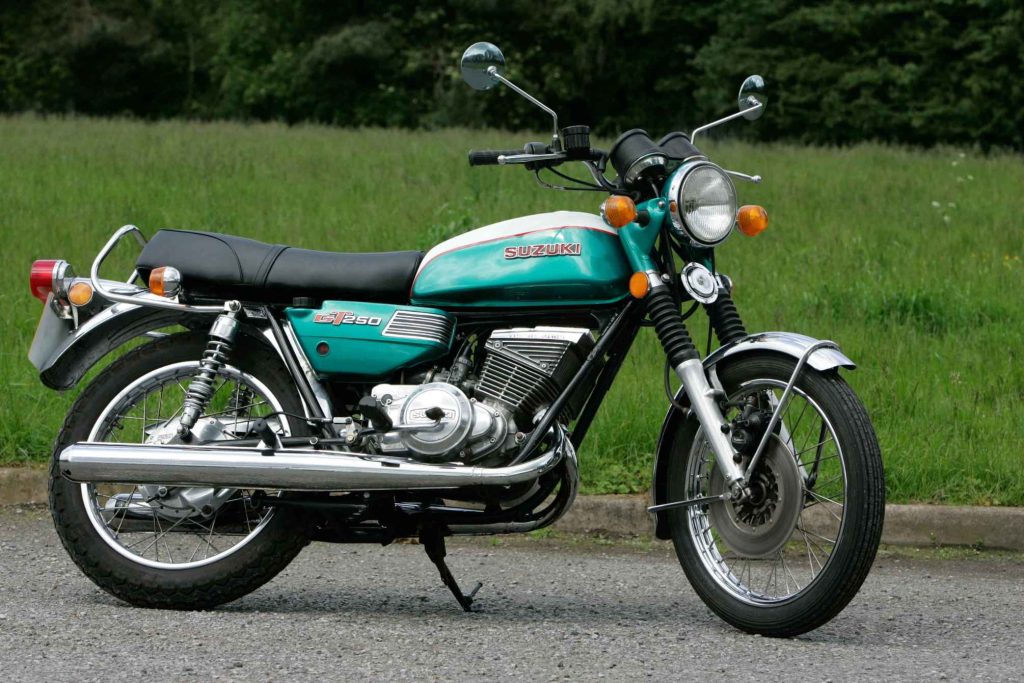
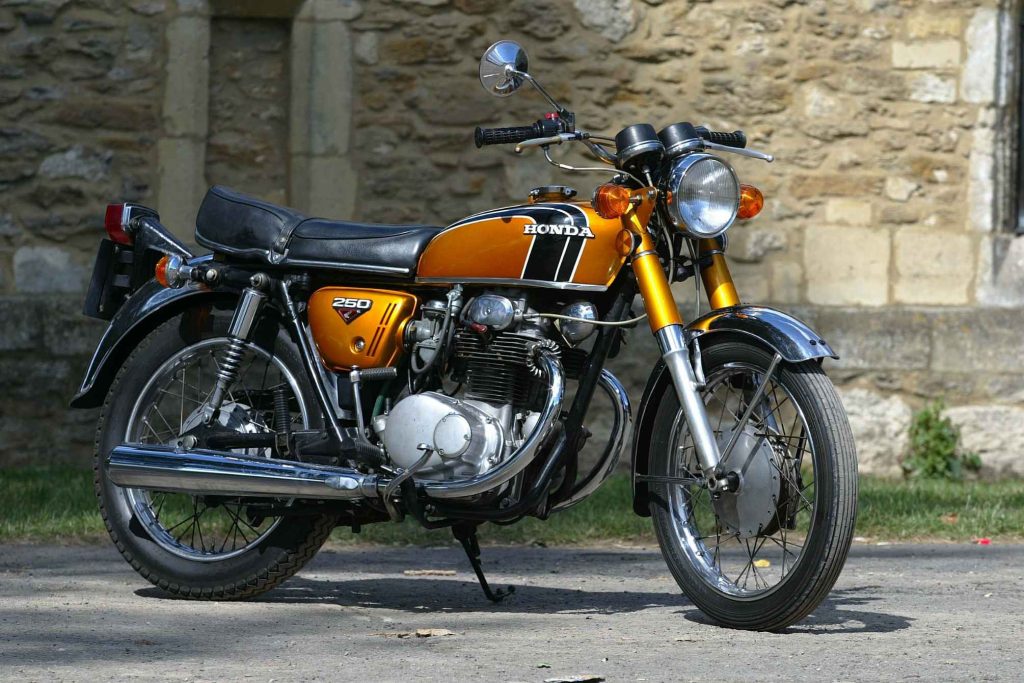
Older riders were having faster fun in the sun as the manufacturers, led by Japan’s big four, launched new models at a furious pace. At 17, a provisional licence required no training or test, and gave access to 250cc bikes led by Suzuki’s GT250 and Yamaha’s RD250 – two-stroke parallel twins that produced 30bhp-plus and screamed to 90mph. Honda’s four-stroke CB250 was relatively staid but could still top 80mph.
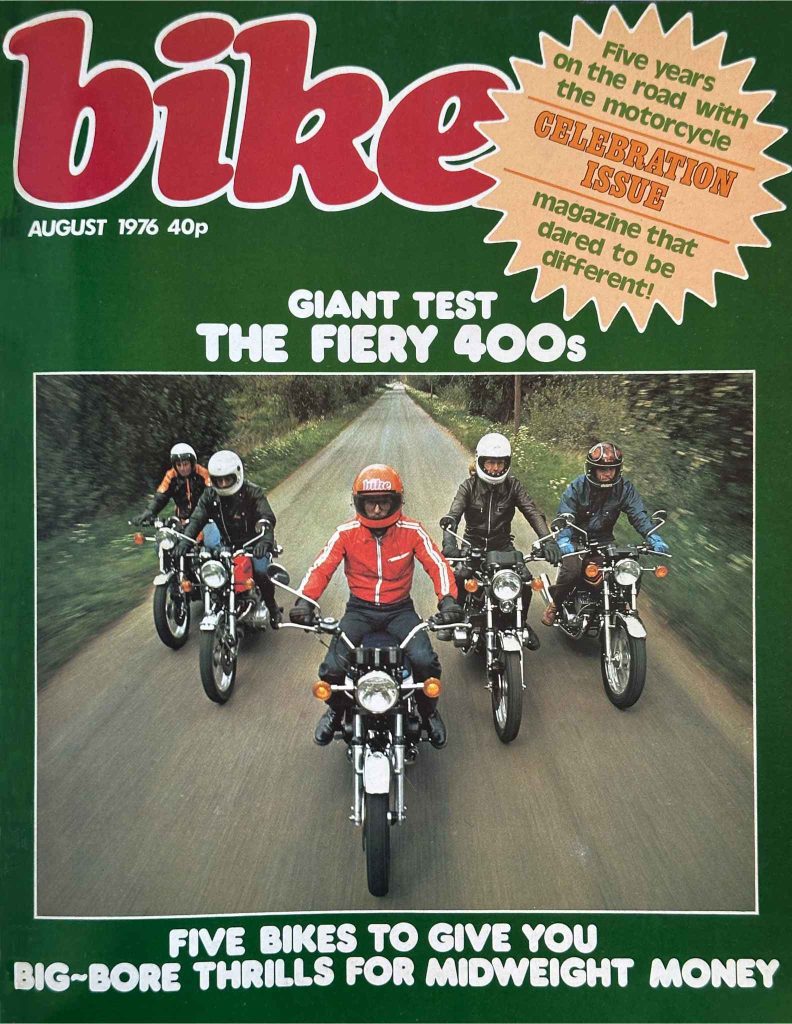
The most closely contested class was arguably the next one up. The August issue of Bike celebrated the magazine’s fifth birthday with a giant test of the “Fiery 400s – Five Bikes To Give You Big-bore Thrills For Middleweight Money”.
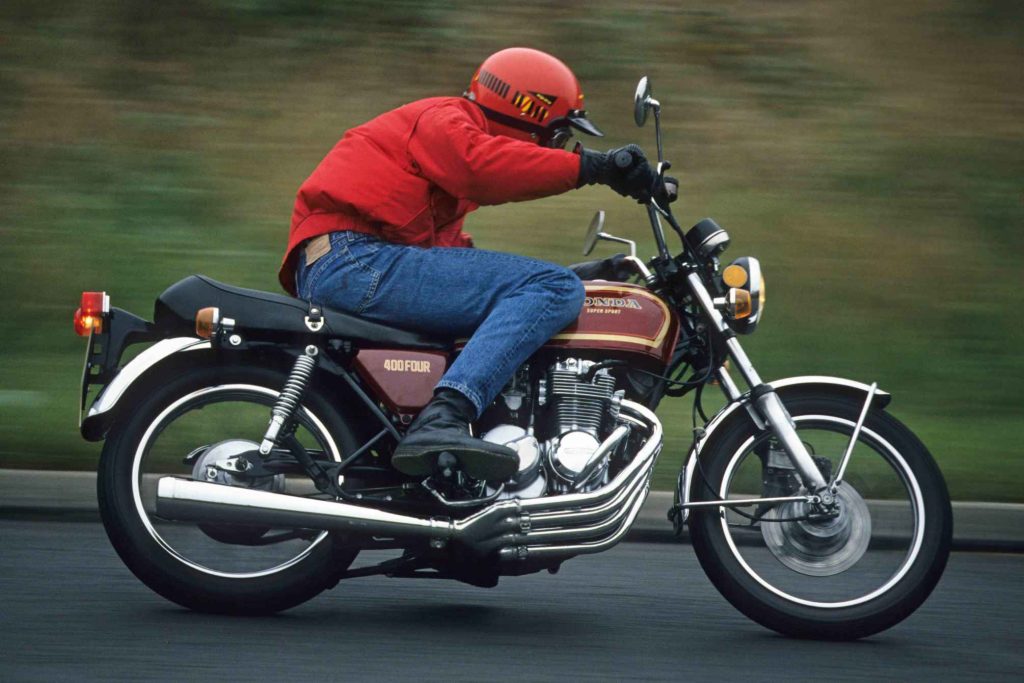
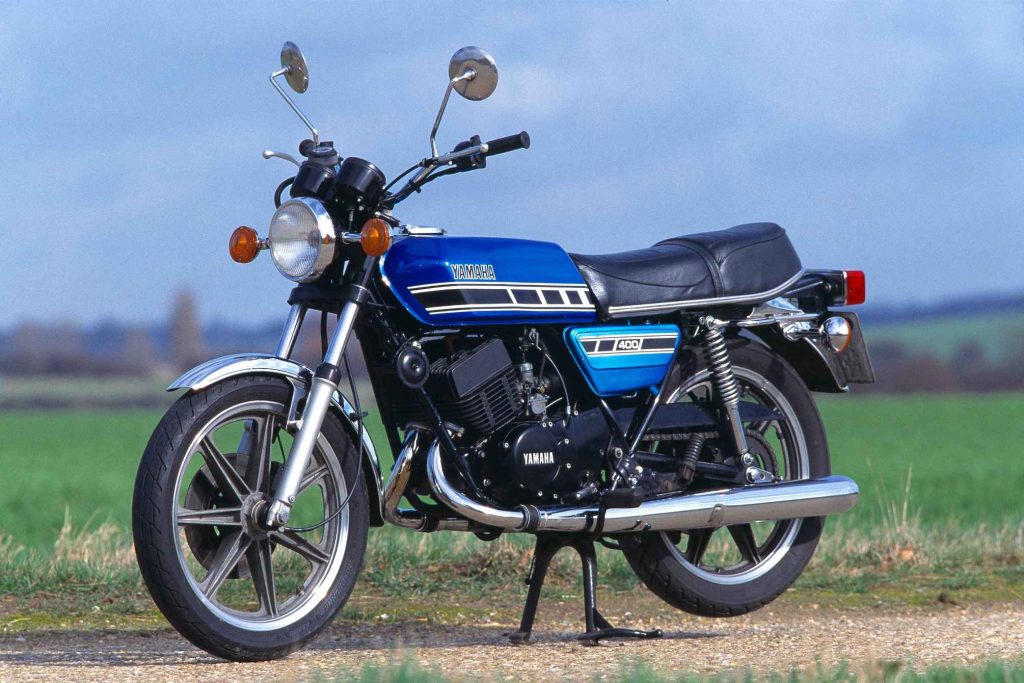
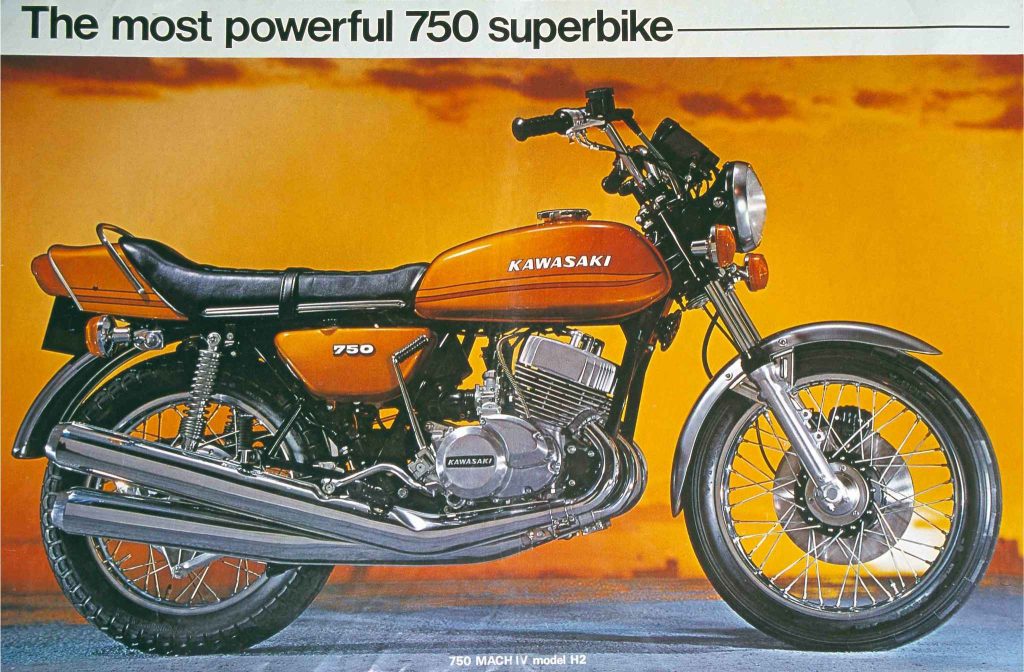
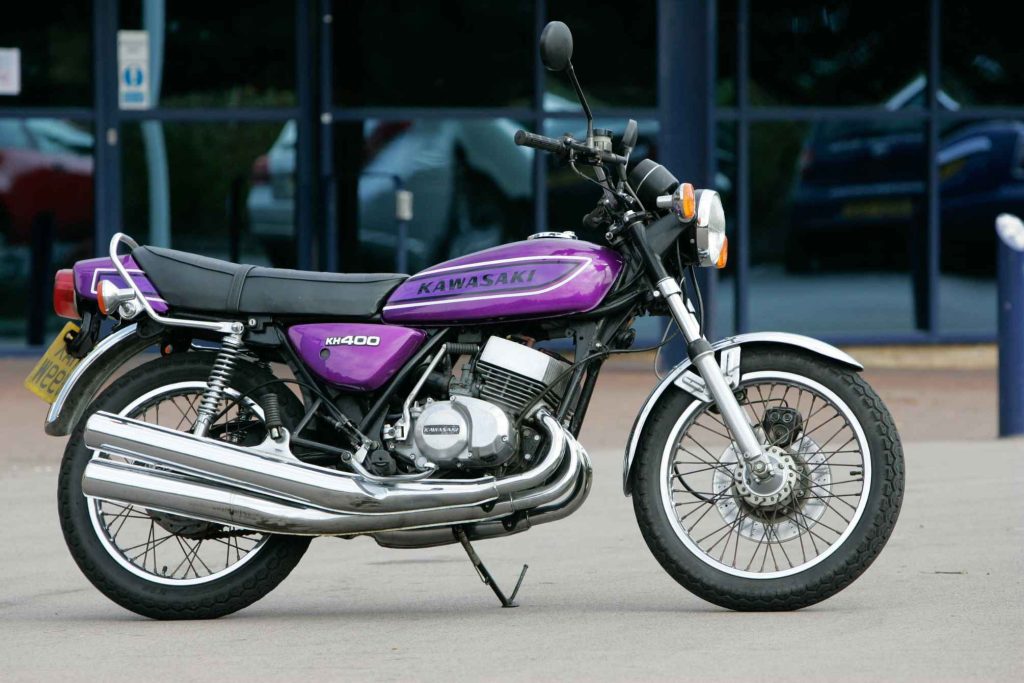
Honda’s stylish CB400F, a four-stroke four popular since its launch the previous year, took on Kawasaki’s Z400 four-stroke twin plus Yamaha’s RD400C and two-stroke triples in Suzuki’s GT380 and Kawasaki’s new KH400. All bar the Z400 managed just over 100mph, and only the Honda cost more than £650.
They also handled respectably well and had disc front brakes, highlighting the chassis advances that the Japanese had made in recent years. Bike’s testers sat on the fence, concluding that a buyer’s choice could come down to preferred paint colour; and that “no longer do you need a 750 for ‛real’ biking”.
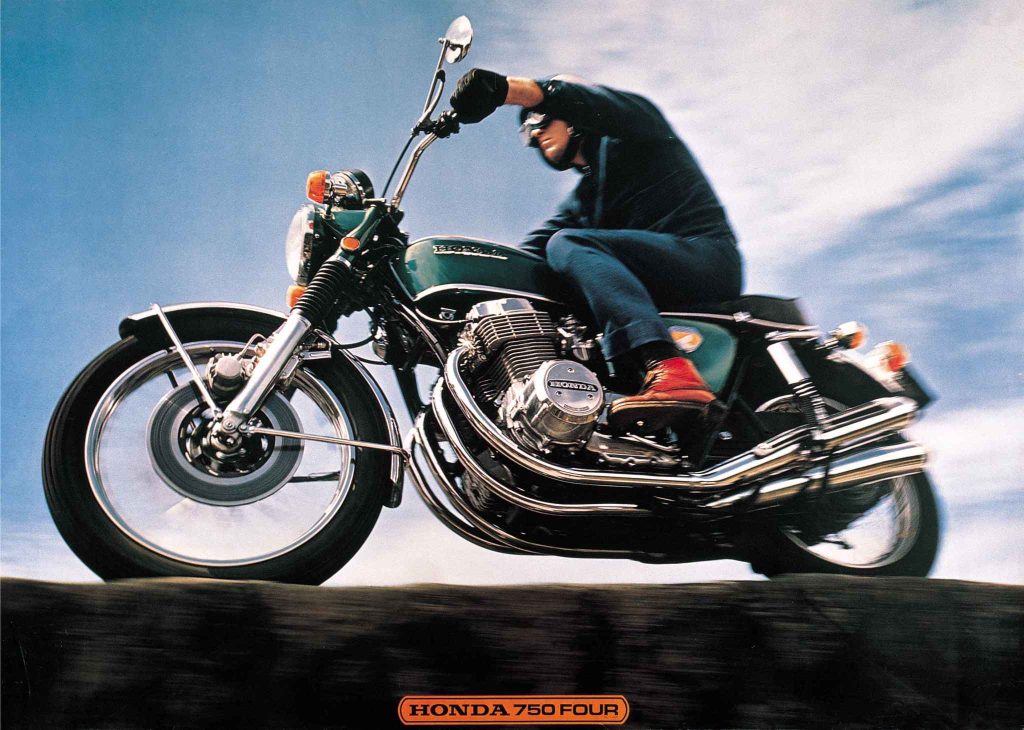
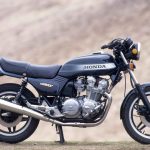
The 750cc class was no longer the pinnacle of aspiration that it had been at the start of the decade, when Honda had begun the superbike era with the CB750 four. For ’76 the slightly tired looking sohc Honda was revamped as the CB750F to compete against models including Suzuki’s GT750A, latest version of the liquid-cooled two-stroke triple.
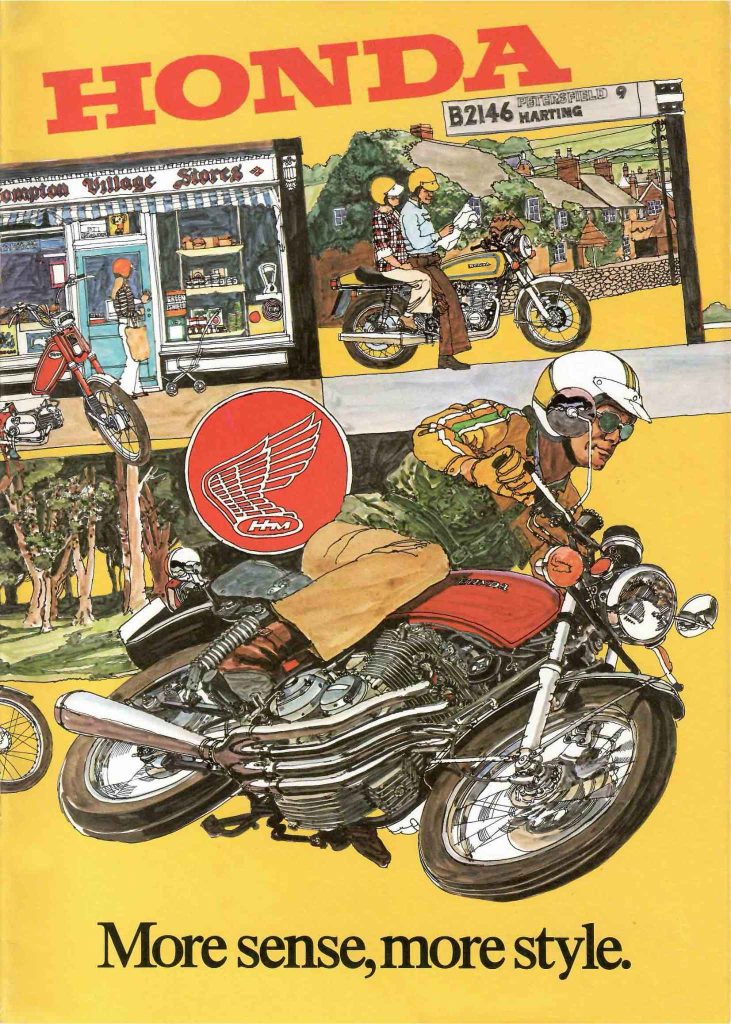
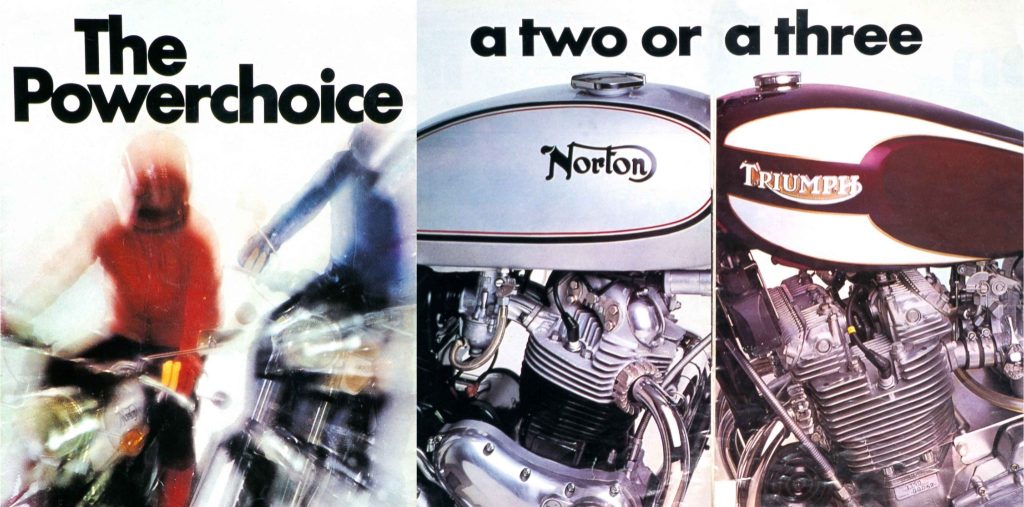
Other rivalries included the “Powerchoice” – as described on the brochure advertising Britain’s twin-cylinder Norton Commando 850 and the three-cylinder, 750cc T150 Triumph Trident, both produced by Norton Villiers Triumph.
Sadly Britain’s recent status as a motorcycling powerhouse was over. Both Commando and Trident were decent but dated; nearing the end of production as the home industry continued its terminal decline. Only Triumph’s long-running 750cc Bonneville twin would make it into the Eighties.
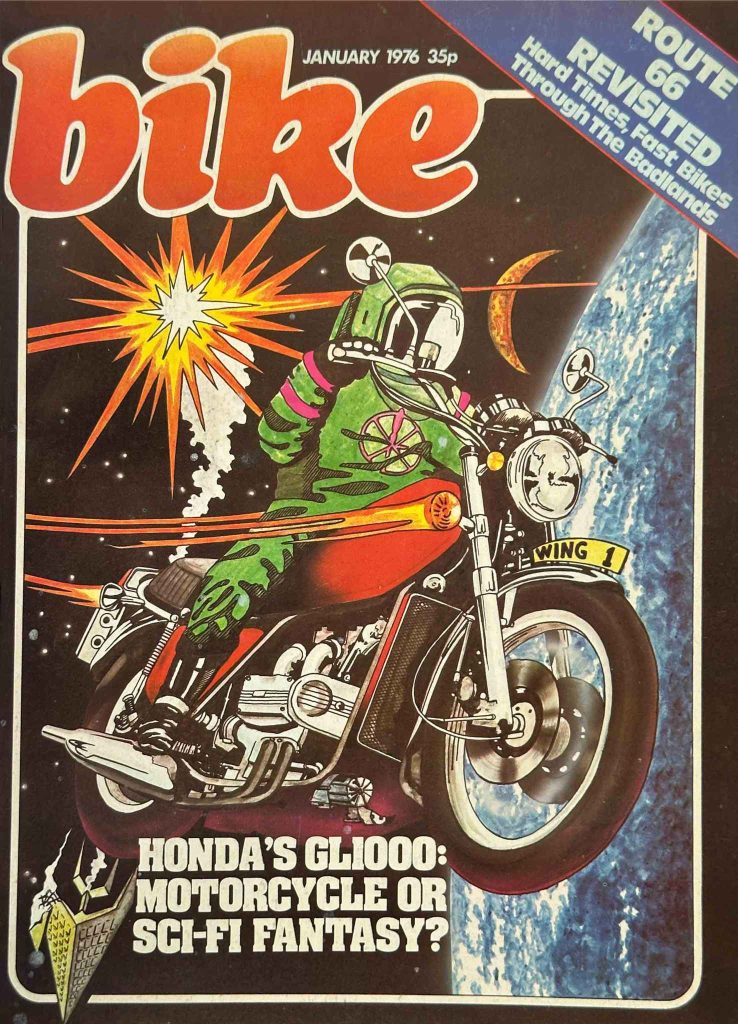
By contrast the large-capacity class was exploding into life with fresh Japanese and European models in an enthralling variety of styles and engine configurations – not all of them universally welcomed. The year had begun with Bike’s January 1976 cover featuring the recently released Honda GL1000 Gold Wing, asking whether the liquid-cooled flat four was a “motorcycle or a sci-fi fantasy?”
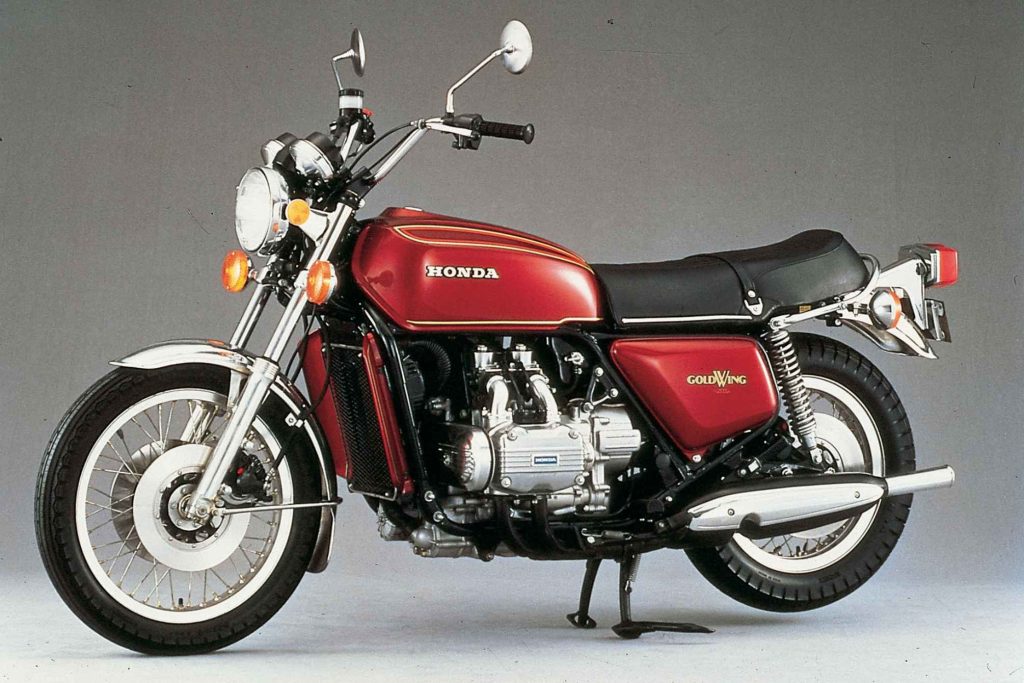
Inside, under the headline “Two-Wheeled Motor Car”, the review of the “muted, muffled, de-toxed, idiot-proofed motorcycle” was sufficiently critical to lose the magazine Honda’s advertising for a year. Meanwhile the Wing was earning admirers in the States, where almost 100,000 would be sold by the end of the decade.
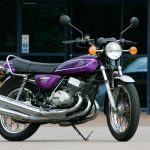
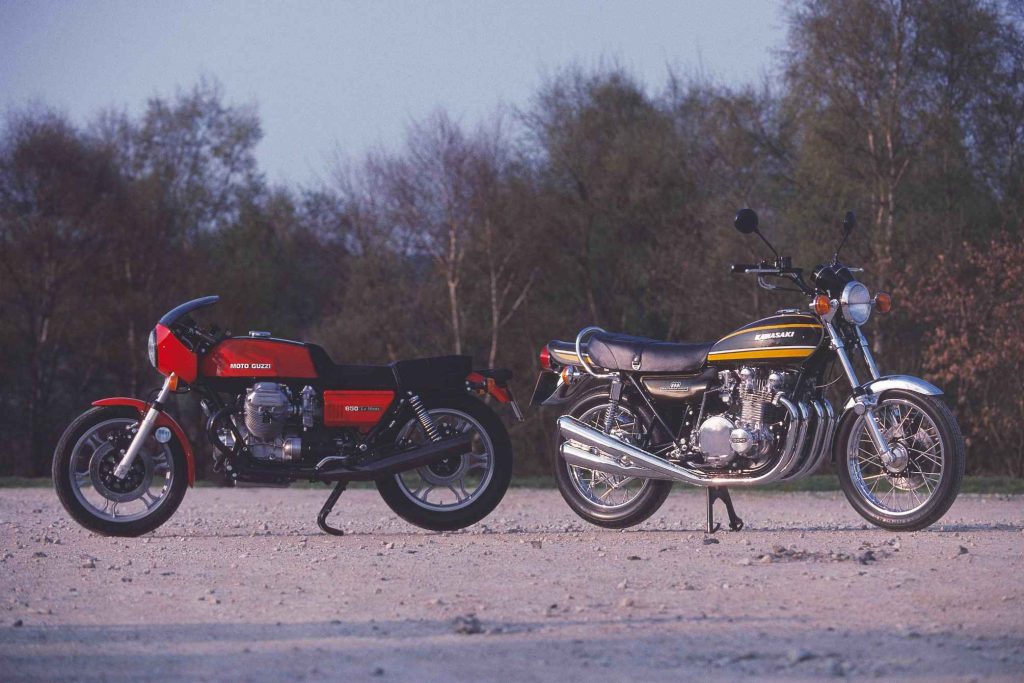
These days it seems strange to recall that two of Japan’s Big Four still had no four-stroke superbike, though Suzuki’s GS750 four and Yamaha’s XS750 triple were set for unveiling before year’s end. Kawasaki’s new star was the Z900: essentially a renamed and modified version of the Z1 whose mighty 903cc, dohc straight-four engine had had made it king of the road three years earlier.
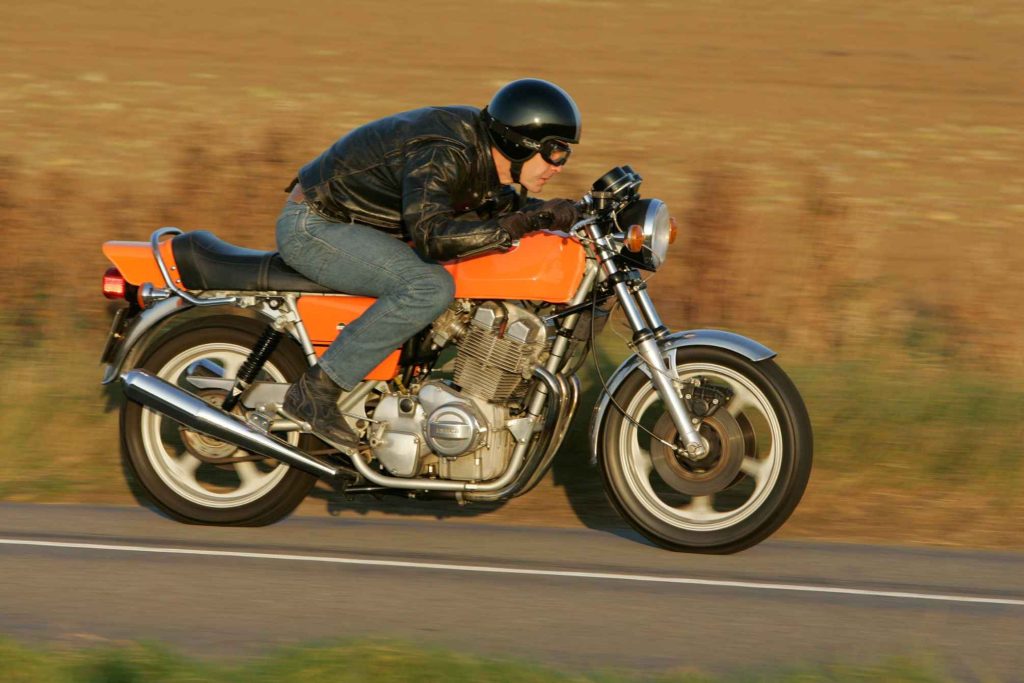
Now, though, the Zed had a serious rival. Laverda was a small firm from northern Italy that had earned a reputation for its rapid SFC750 production-race twin and for a handsome 981cc three-cylinder roadster, the 3C, that was fast in standard form and even more so when tuned by Herefordshire-based Slater Brothers, its enthusiastic UK importers.
For 1976 the Slaters collaborated with Laverda to create a new triple, the Jota, featuring racing cams and exhaust, clip-on bars and rearset footrests. It looked and sounded magnificent, produced an impressive 90bhp, was more stable than Japanese bikes at high speed and, at £2465, cost 80 per cent more than the Z900.
An even more important number was 140.4mph – the one-way top speed recorded by Motor Cycle magazine’s tester in August, allowing Laverda to claim World’s Fastest Streetbike status. Meanwhile Slaters’ racer Peter “PK” Davies was wrestling the Jota to the first of his and the triple’s three UK production race championships.
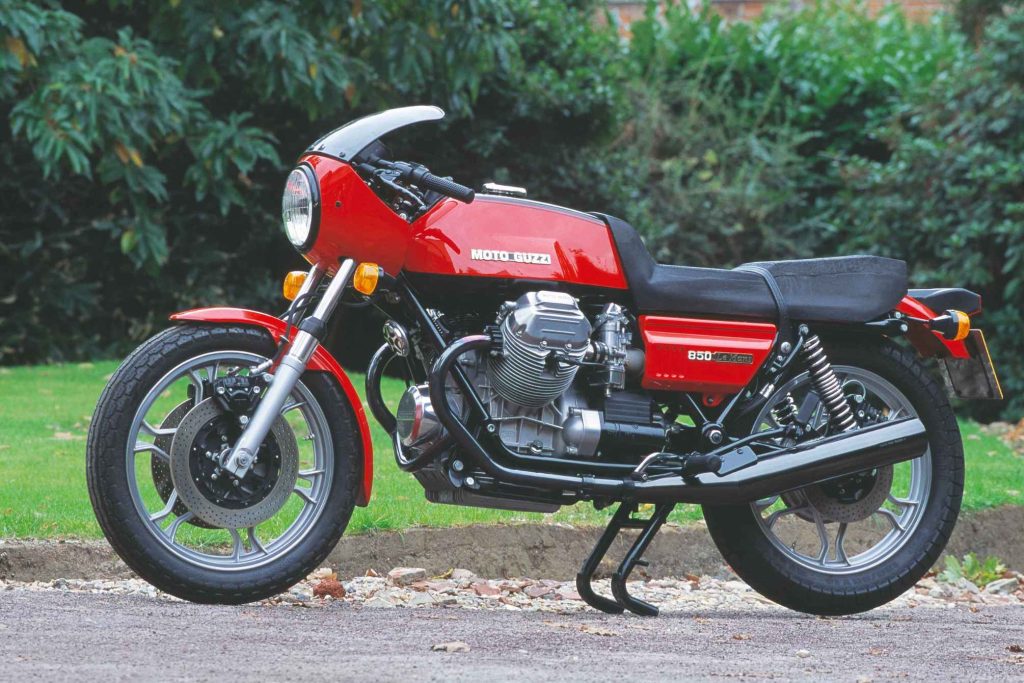
In the same month, Bike tested Moto Guzzi’s sleek and stable-handling new 850 Le Mans sportster, this time with a distinctly more positive headline of “Falling In Love Again”. Moody photos of the V-twin with a sultry brunette were by rising star Bob Carlos Clarke, who would later be described as Britain’s Helmut Newton.
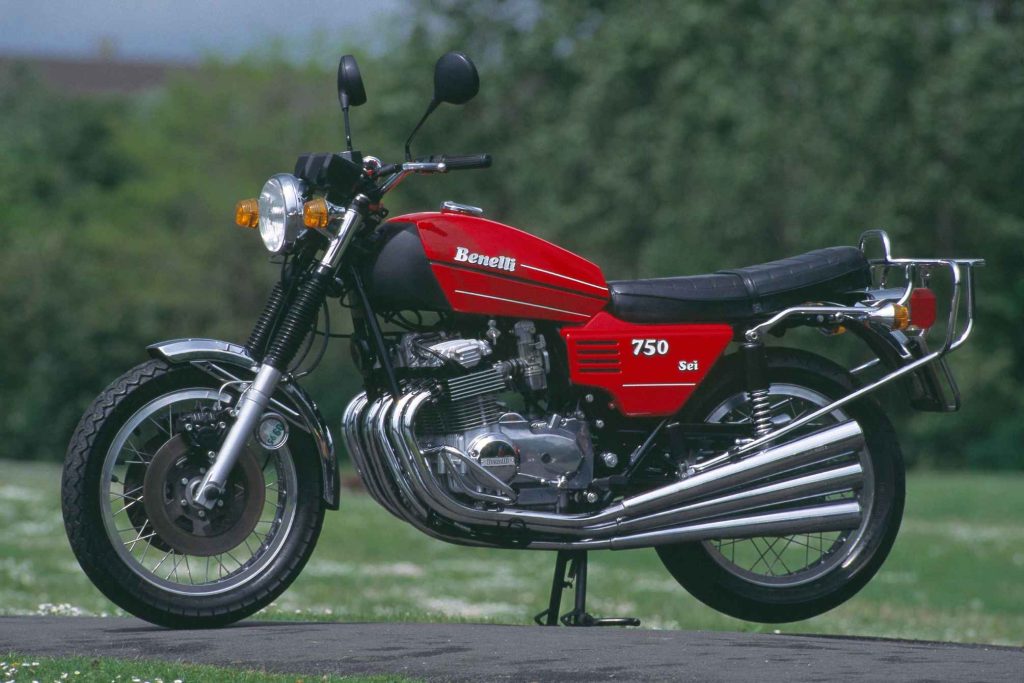
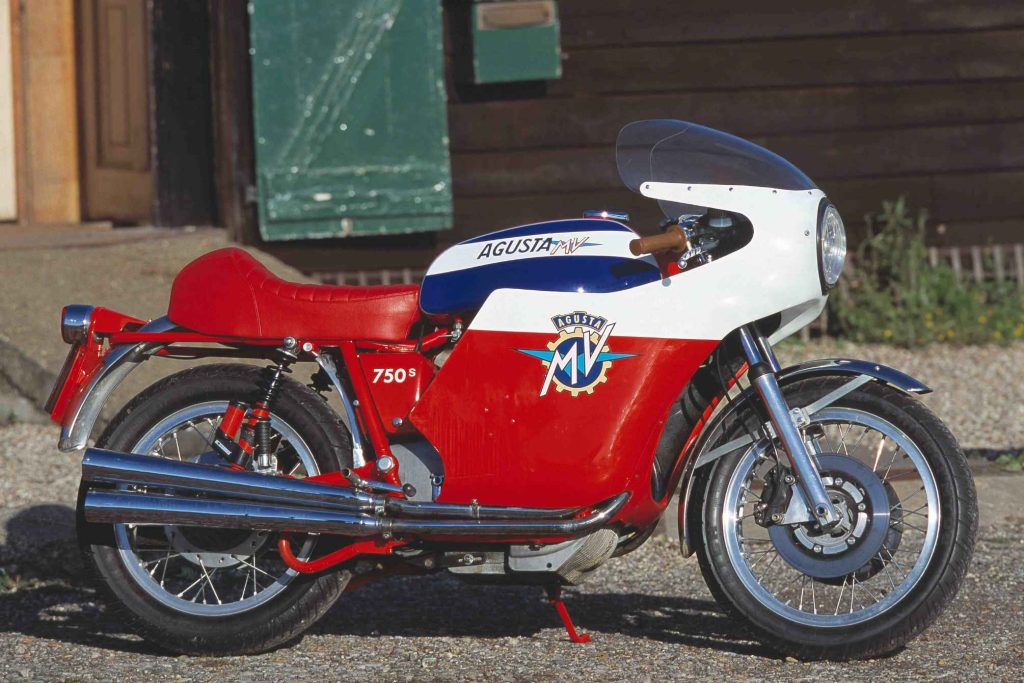
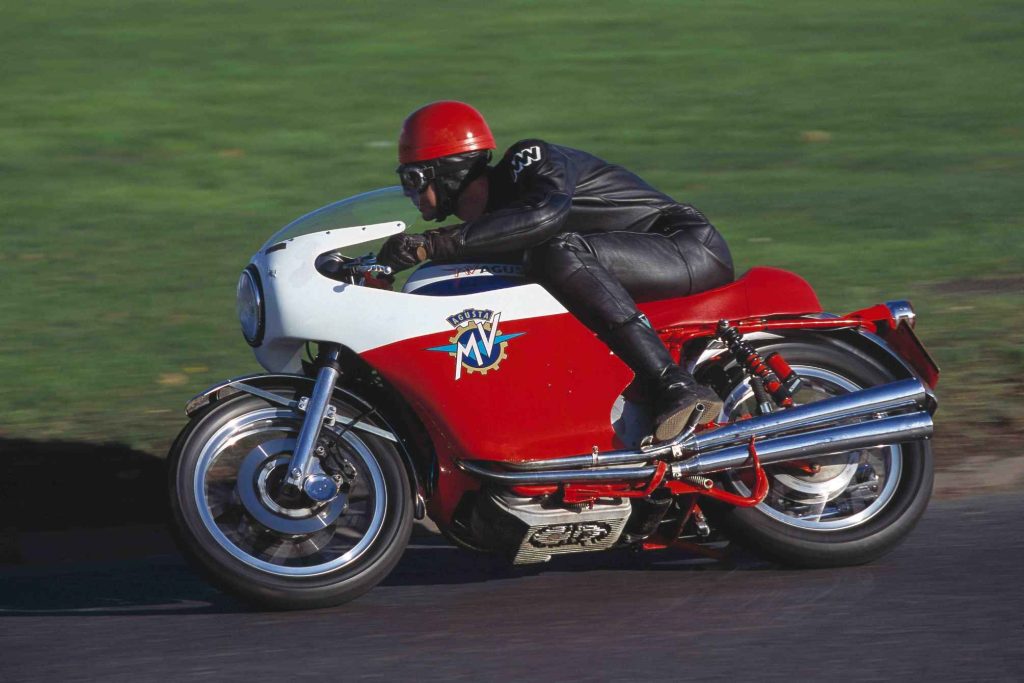
The superbike choice from Italy alone was mouth-watering. MV Agusta had recently seen its decades of grand prix domination ended by Yamaha but had an exotic race-inspired four-cylinder roadster, the 750 Sport. Benelli’s 750 Sei made up for conservative styling with a six-cylinder engine that was essentially one-and-a-half Honda CB500 four units.
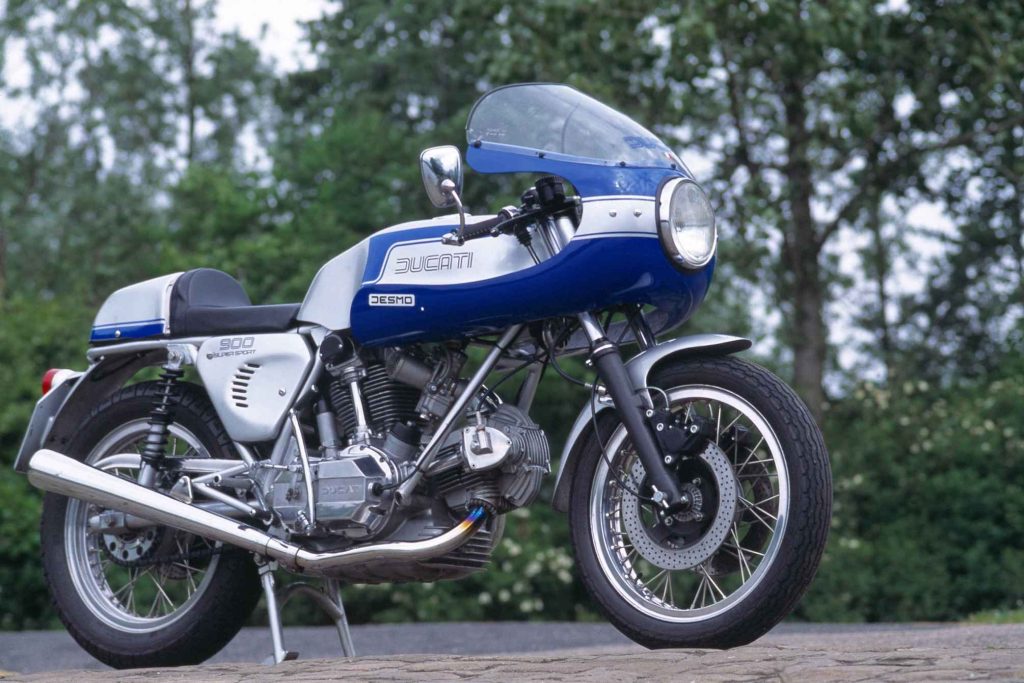
The most singleminded was Ducati’s 900 Super Sport, a beautiful, elemental V-twin with half-fairing, clip-on bars, booming exhaust note and unmistakably take-no-prisoners attitude. Along with the Jota and Le Mans it made a magnificent triumvirate that represented the high point of Italian superbike influence.
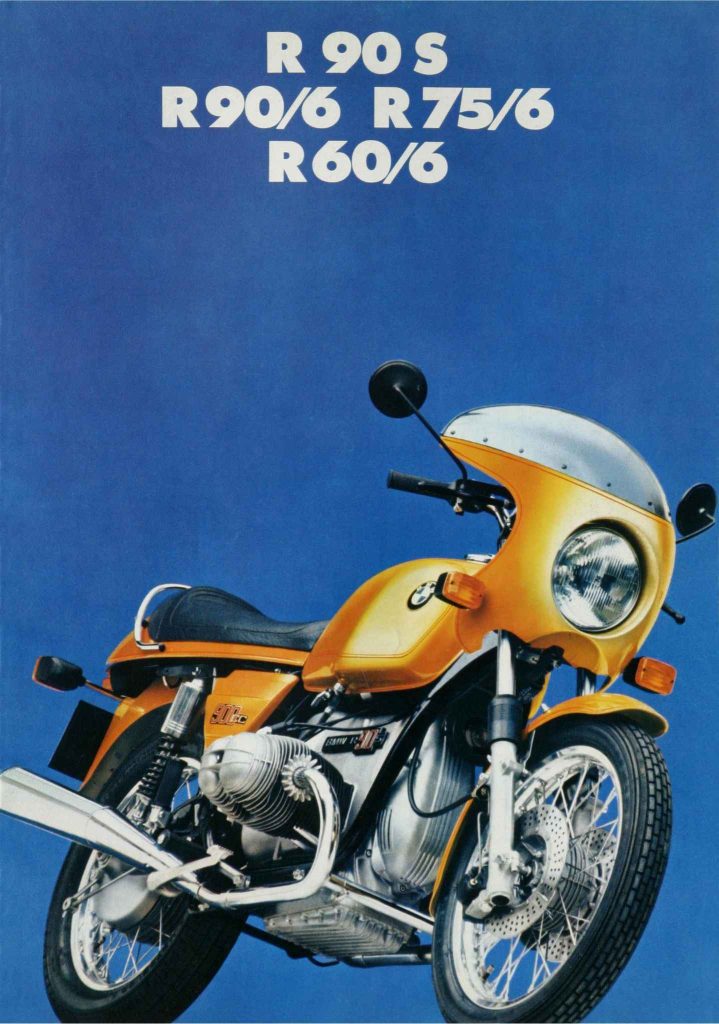
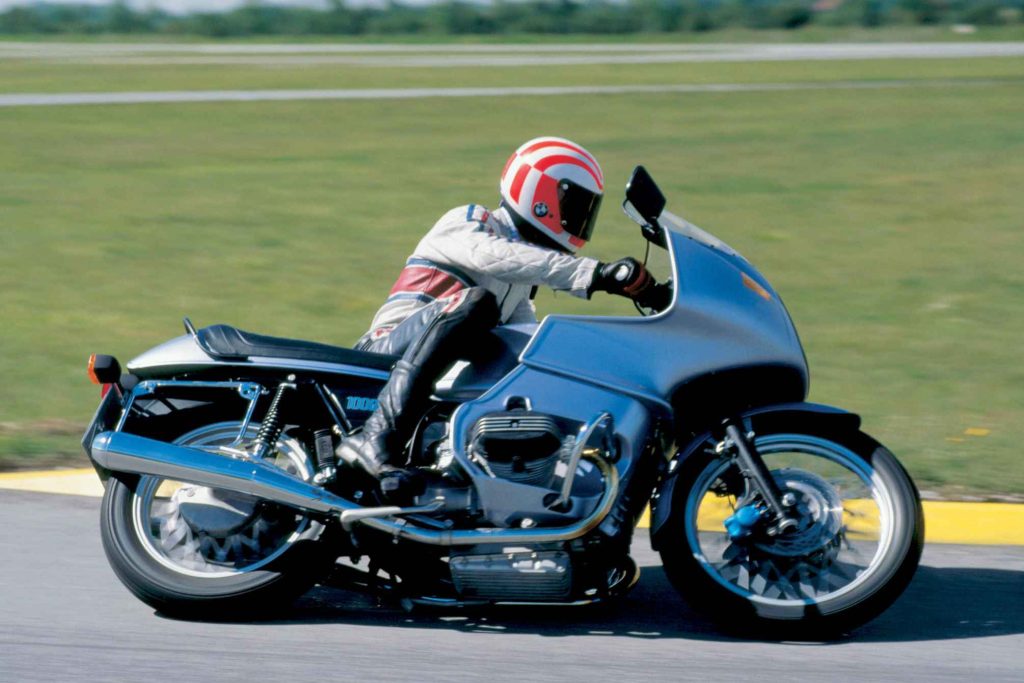
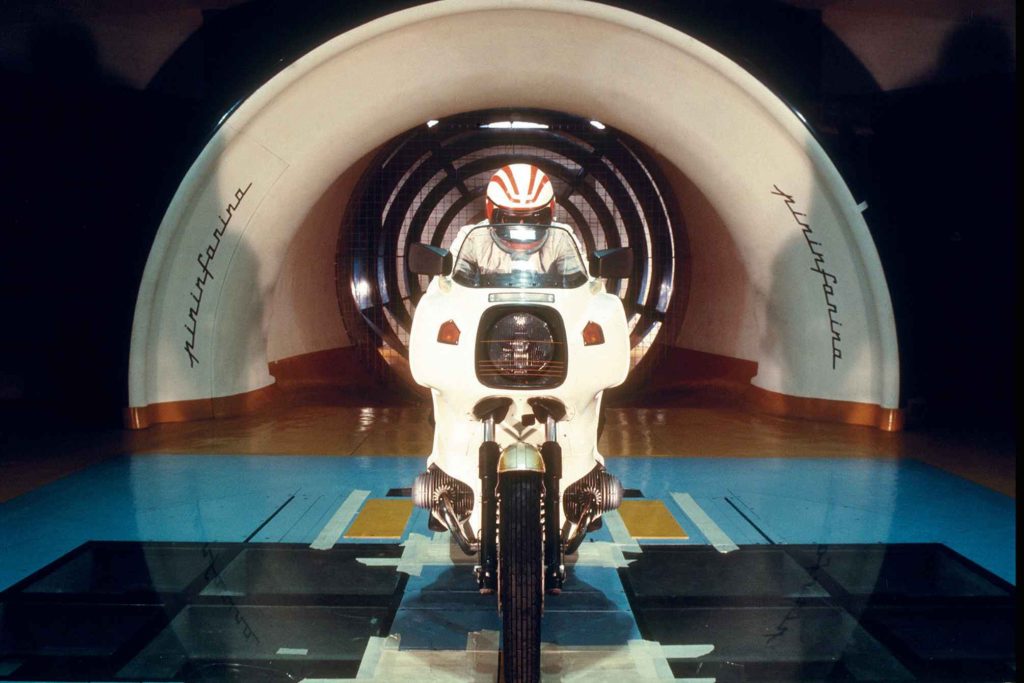
Another outstanding twin was BMW’s R90S, the sporty and sophisticated boxer that had established a fine reputation following its introduction two years earlier. Such was the pace of change that by autumn the German firm had unveiled an even more impressive sports-tourer in the R100RS, whose wind-tunnel developed full fairing would put it in a league of its own for comfortable high-speed travel.
The motorcycle world was changing fast, and would continue to do for the rest of the decade, culminating by 1979 in Suzuki’s sublime GS1000 four, Yamaha’s hefty XS1100, and a pair of sixes in Honda’s sporty CBX1000 and Kawasaki’s gargantuan Z1300.
The racing scene had changed too, with two-strokes now firmly on top. Barry Sheene and Suzuki would retain the 500cc world championship in 1977, meaning British riders had won 17 of the 29 titles so far. Few fans back then would have believed that we’d still be waiting for the next premier class champion 49 years later.
Not all the changes were welcome. In August 1977 the Sixteener Special loophole was ended by new legislation restricting mopeds to 35mph – though existing unrestricted ’peds could still be ridden, which prompted dealers to register more than 25,000 in July, ahead of the ban. The 250cc two-stroke era lasted longer but in 1983 learners were limited to 125cc and 12bhp.
This was sad for those riders affected (if not their relieved parents) but by then the teenage tearaways of 1976 had moved on to bigger and faster stuff. All these years later most have owned many more bikes, some of which have long been forgotten.
But ask anyone who rode through that memorably long, hot summer of half a century ago, and you can be sure they’ll have some stories to tell.