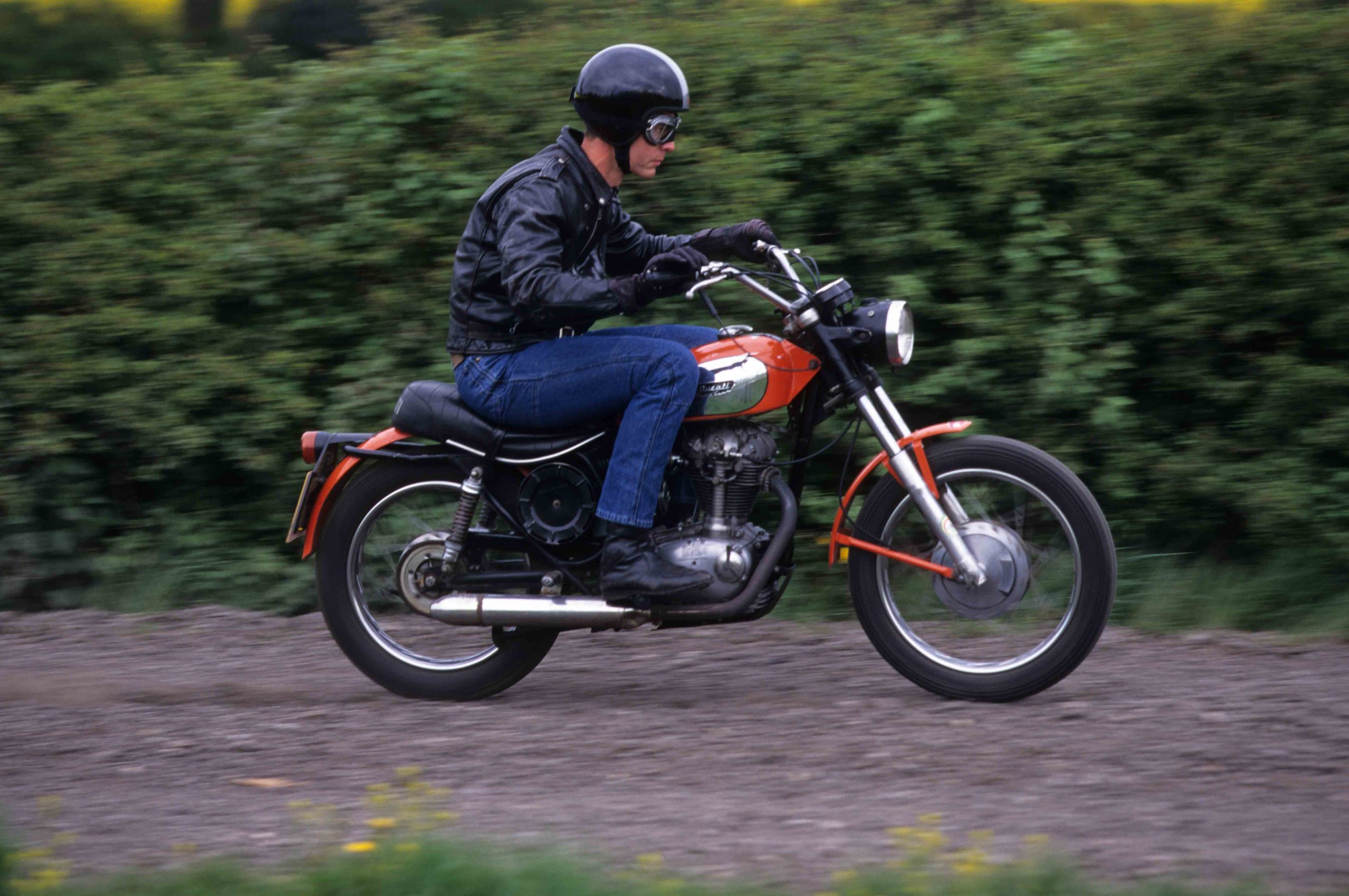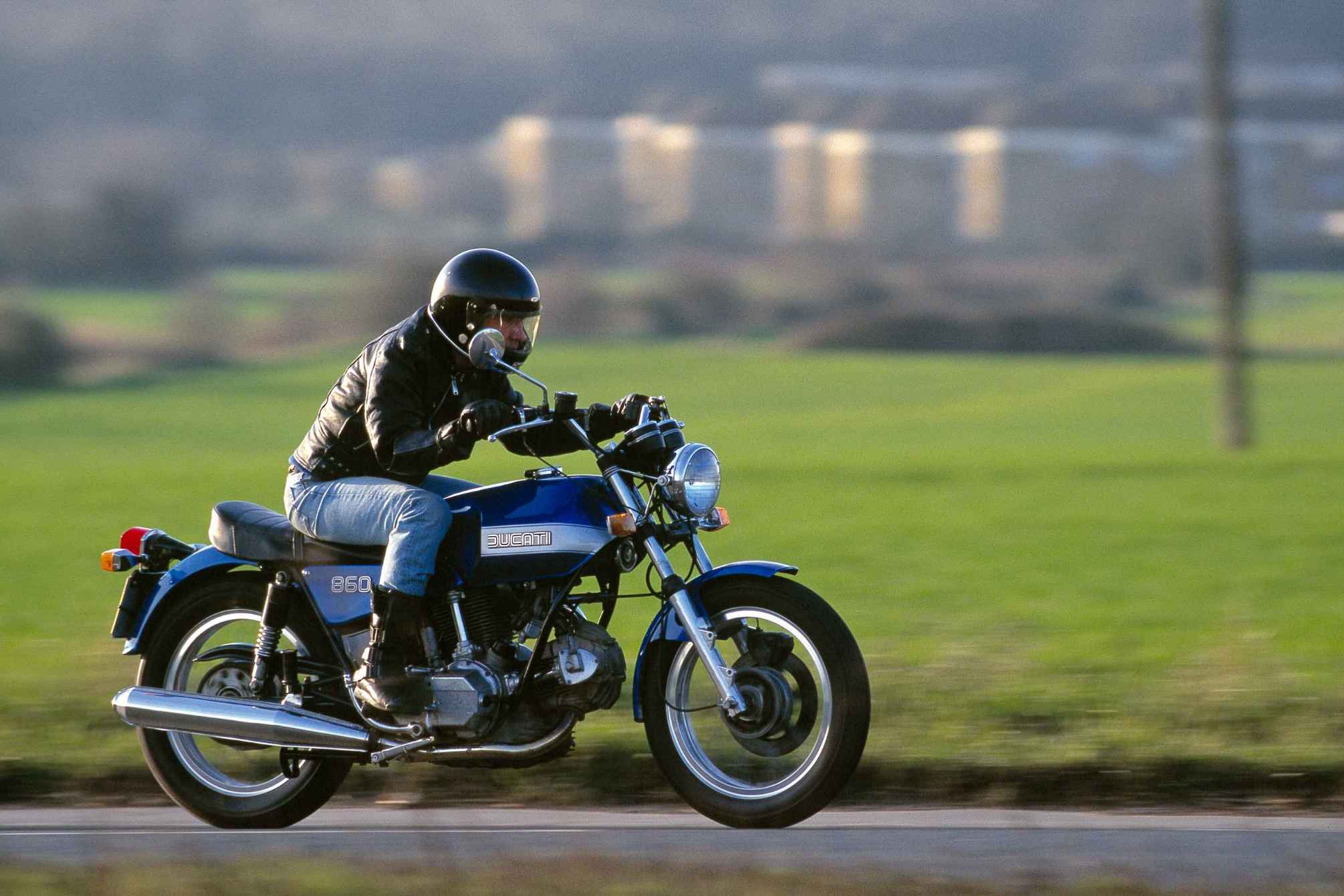
This should not be happening! There I was, banking through a gentle dual-carriageway curve with the 860GT’s speedometer reading somewhere near the legal limit, when a twitch of the handlebars announced the start of a gentle weave.
The bike settled down again when I slowed slightly – but even so! Back in the mid-Seventies, when this bike was released, Ducati’s reputation for high-speed handling and stability was second to none.
My first thought was that the GT’s tendency to get slightly light-headed at speed was due to this particular bike’s age and condition. But a look through some old magazine tests revealed that I shouldn’t have been surprised, because the 860GT was criticised for exactly the same thing when it was new in 1975.
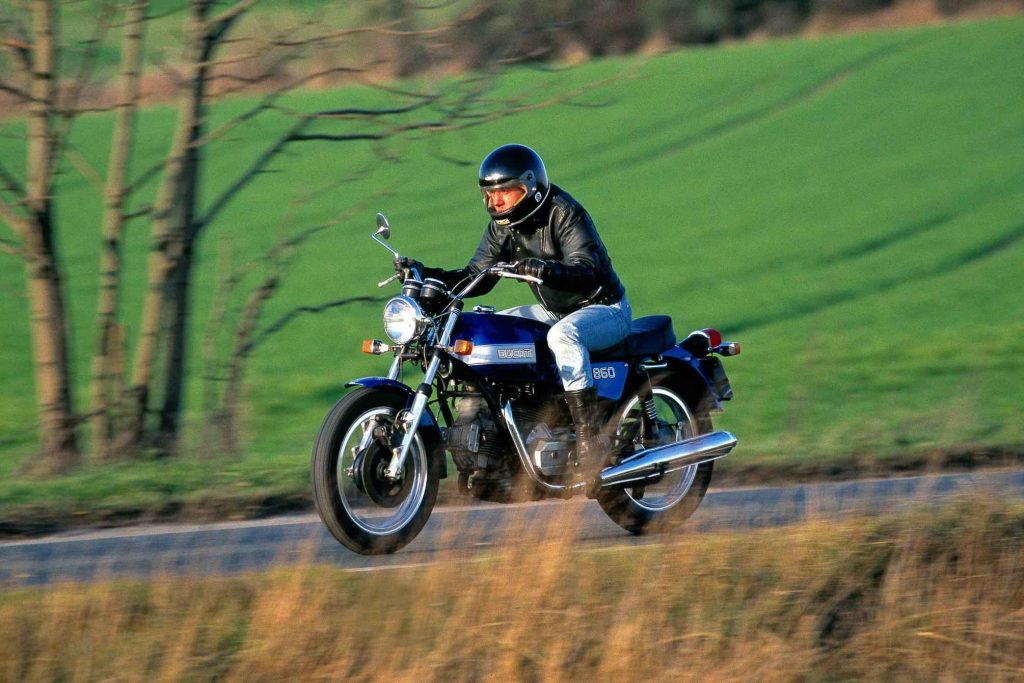
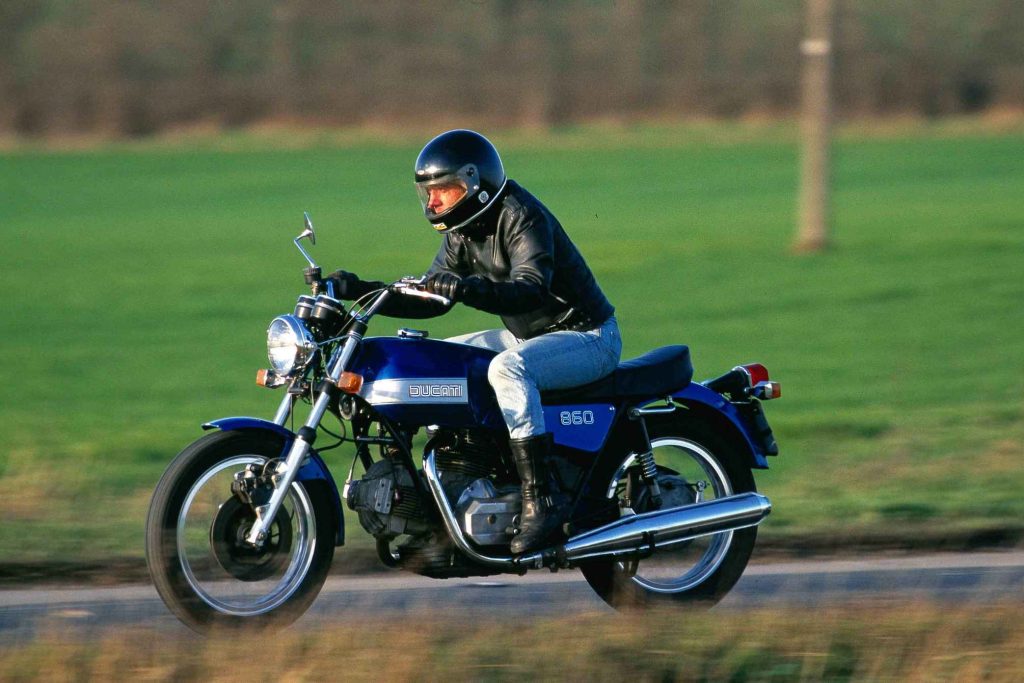
The tester from Motorcycle Mechanics found that the GT got “a bit upset” by a gusting cross-wind on a dual-carriageway, and that “at 90mph it would, if something provoked it, go into a long series of weaves, not violent enough to be frightening but there all the same”.
Bike magazine’s tester was “sure that it’s the bike’s wide bars which lead to a slight high-speed weave over rippled surfaces”. In normal riding it never got worrying, he wrote, but when crouched over the tank at 90mph plus on the test strip, his left hand gripping the fork leg in US flat-track racer style to cheat the wind, the Ducati “broke into a serious yawing motion”.
In the States, Motorcyclist magazine’s tester Jody Nicholas, himself a former top dirt-track racer, was generally positive about the Ducati’s handling. But he noted that the rear shock units lacked rebound damping and noted that “the machine tends to wallow somewhat when cornering hard over bumpy surfaces”.
Words like “weave”, “yawing” and “wallow” had not been necessary when testing previous Ducatis, such as the 750GT, this bike’s predecessor, or the lean and racy 750 Super Sport. But they were used about the 860 by testers who were even more surprised than I was all these years later.
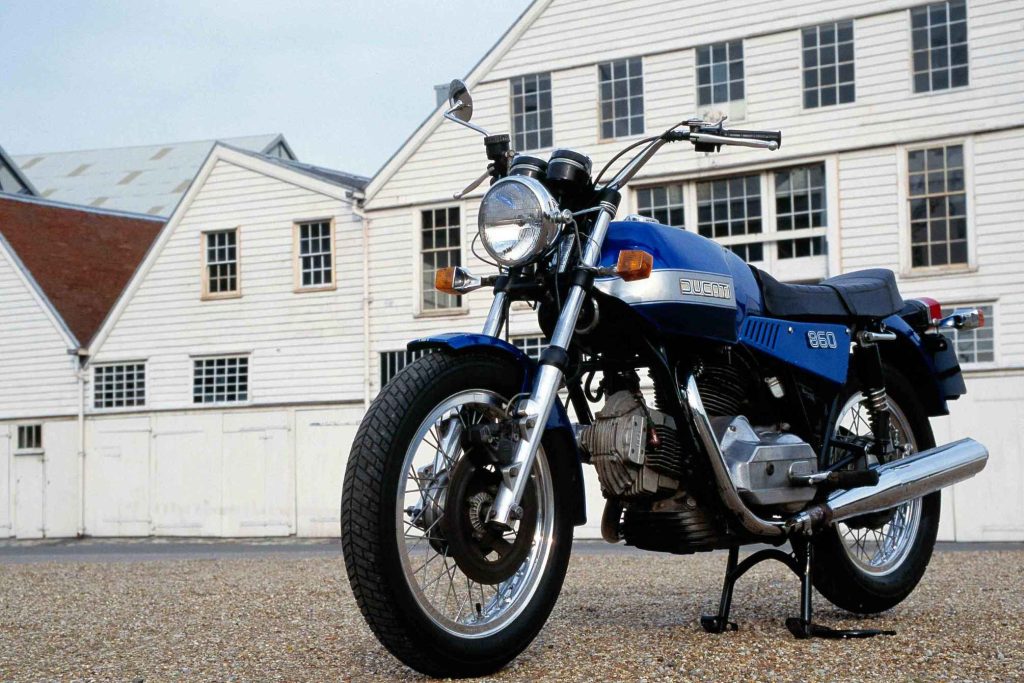
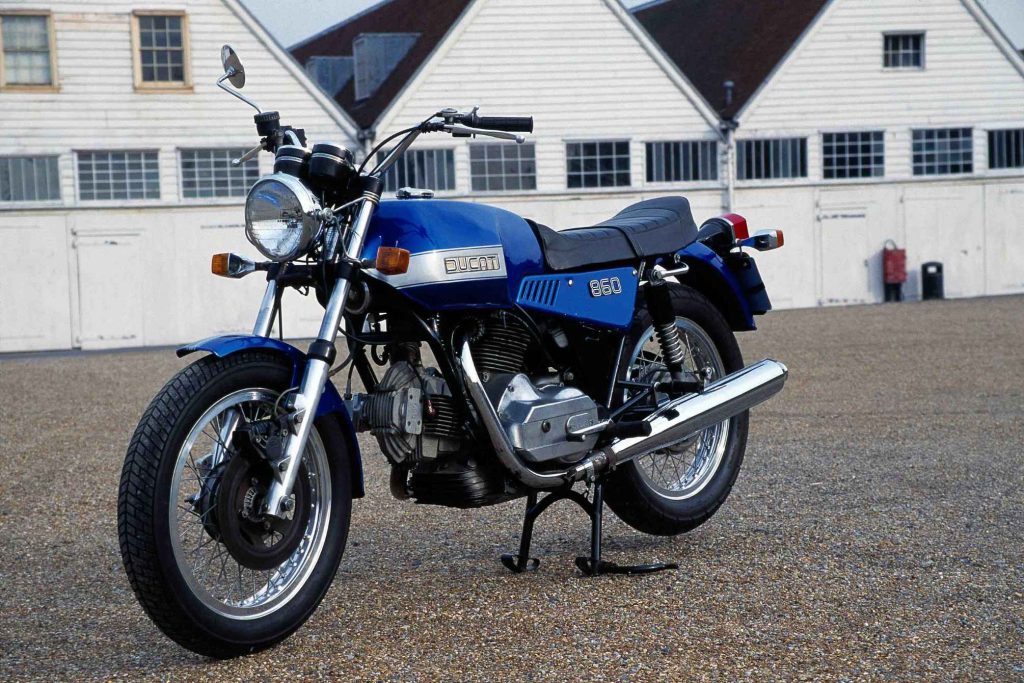
To be fair to the GT, not all the contemporary reviews mentioned instability; in fact several lavished praise and regarded its handling as among the bike’s best attributes. And the issue was relatively easy to sort, because it did seem to be caused by the high, wide handlebars, which generated disruptive steering forces that even the Ducati’s basically sound chassis could not always control.
The high bars were also controversial because the resultant upright, wind-blown riding position inevitably hindered the 860’s high-speed cruising potential, and gave a laid-back image that contrasted with those of previous Ducatis.
As the 860’s GT designation made clear, there was a good reason for that, in the era before fairings became standard fitment even on touring models. Ducati was attempting to broaden its reputation as a pure sporting brand, with the lucrative US market particularly in mind.
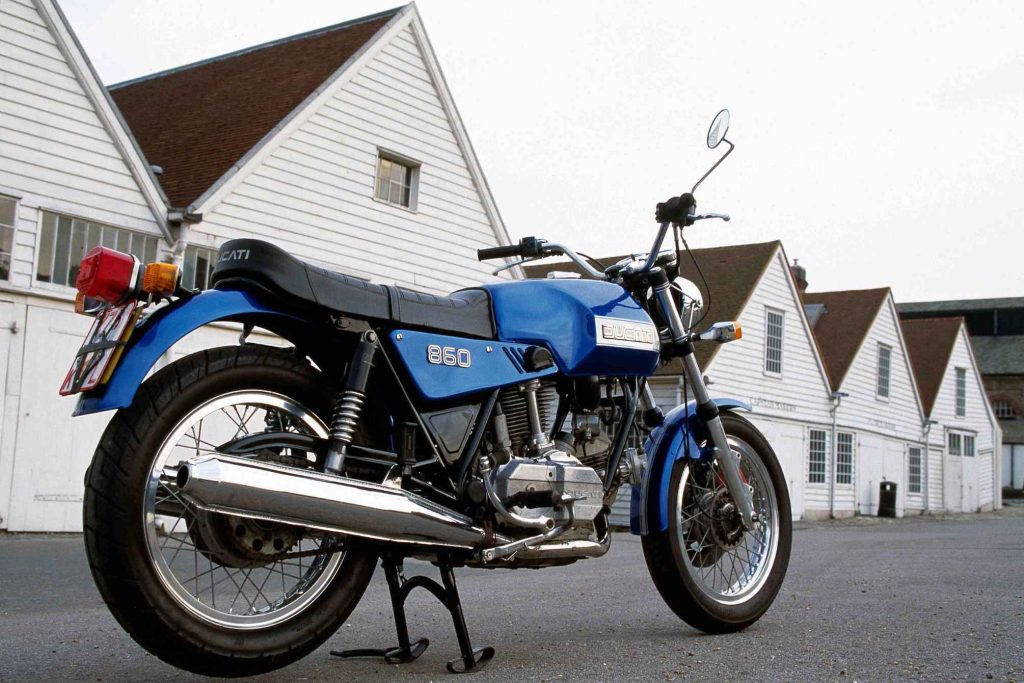
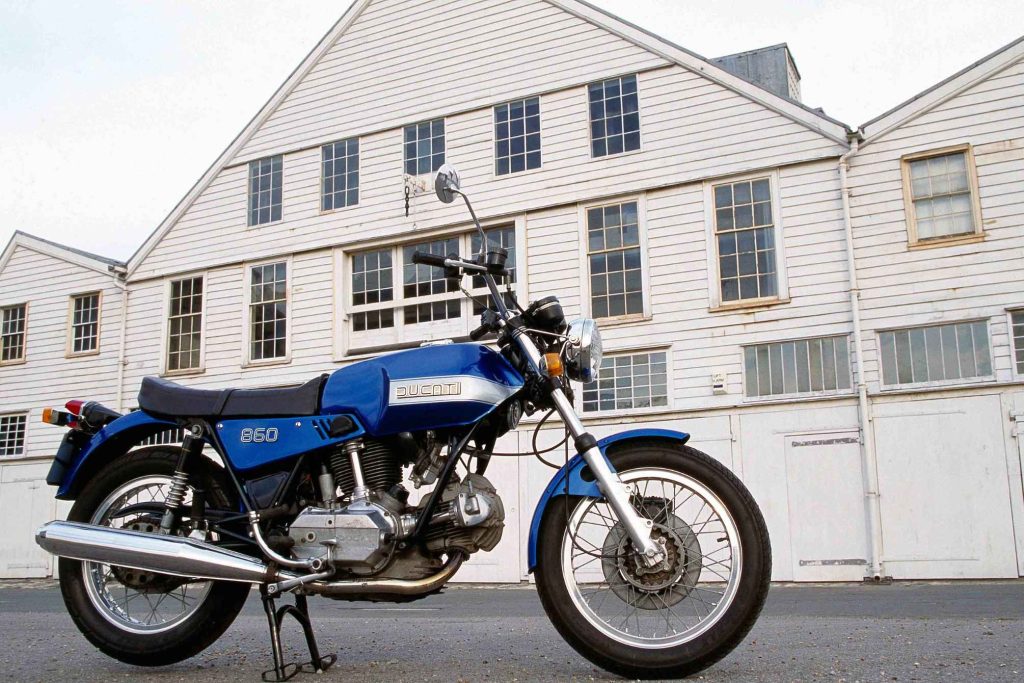
The 860’s look was the work of none other than Giorgetto Giugiaro, already an auto industry star. His Italdesign house had recently created the Maserati Bora and first VW Golf, much praised for its sharp “origami” shape, and was already working on the even more angular Lotus Esprit, due for launch in 1976.
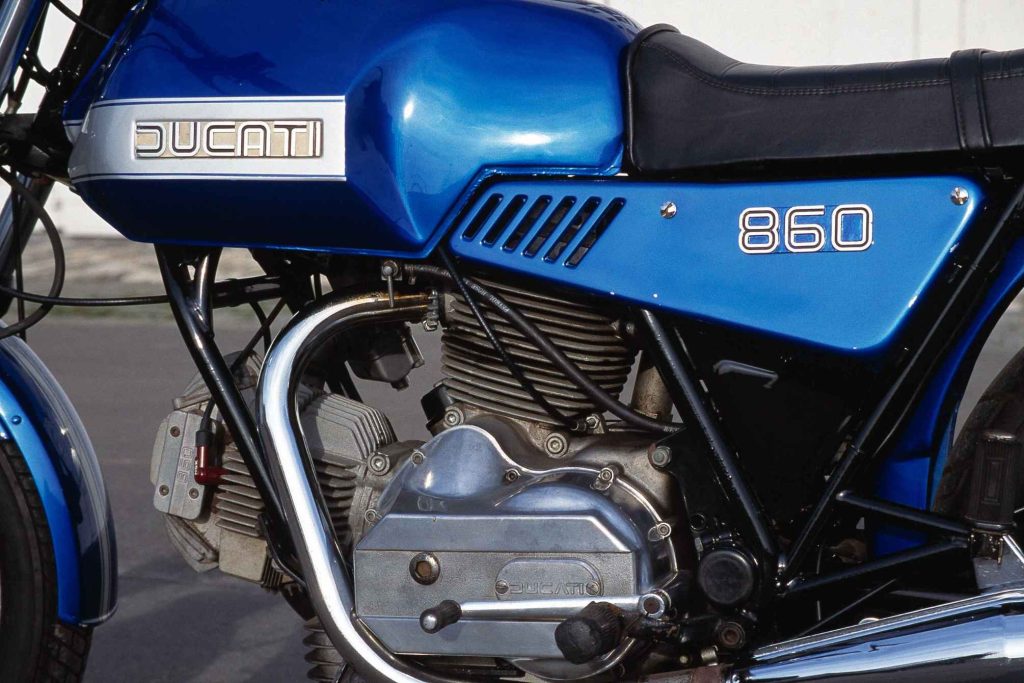
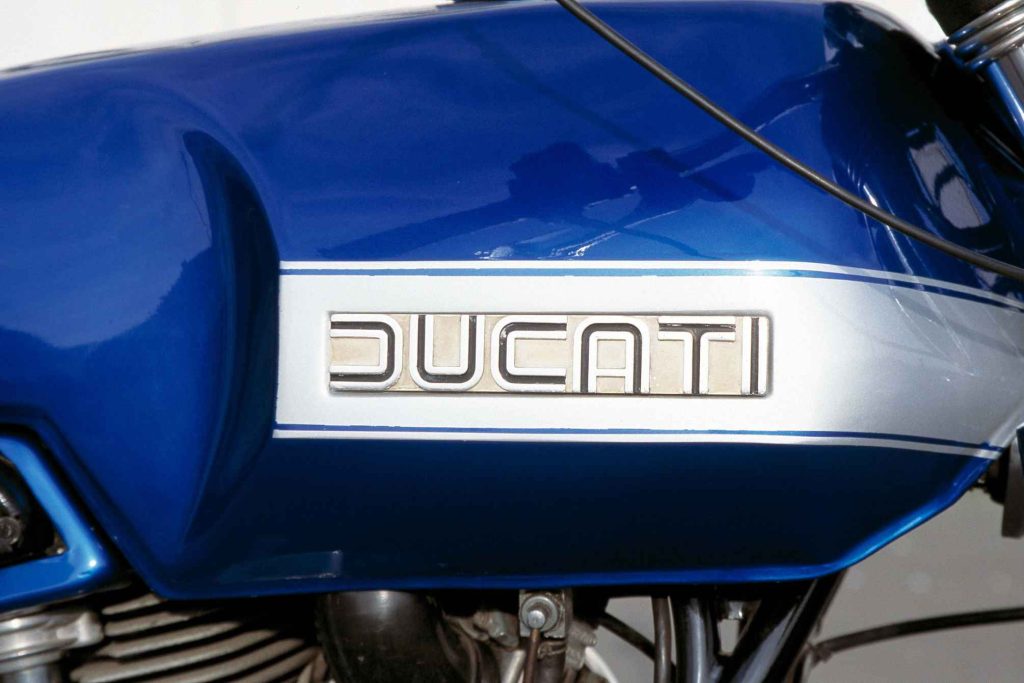
Giugiaro gave similarly hard-edged shapes to the Ducati, his first major motorcycle project along with Suzuki’s RE-5 rotary. The 860’s fuel tank and long, slim sidepanels contributed to a striking machine that was a very obvious departure from the soft curves of the 750GT and Super Sport.
Response from the motorcycling press was varied. In the States, Cycle World enthused: “Enter the 860GT, a Grand Touring bike. One that is built for the masses. One that is built to go fast … and will propel rider and passenger down the road in comfort. It is a far cry from previous models and opens up a new dimension for Ducati.”
But Motorcyclist’s Nicholas was scathing of the styling: “A couple of magazine staff like the approach taken by Mr Giugiaro, and many current Italian automobiles are following the same design ideas. But the sharp corners, assorted angularities and stark, bold lines impart a largeness (chunkiness?) to the motorcycle that it doesn’t deserve. Those of us who were weaned on motorcycles that followed another design philosophy are chagrined beyond words.”
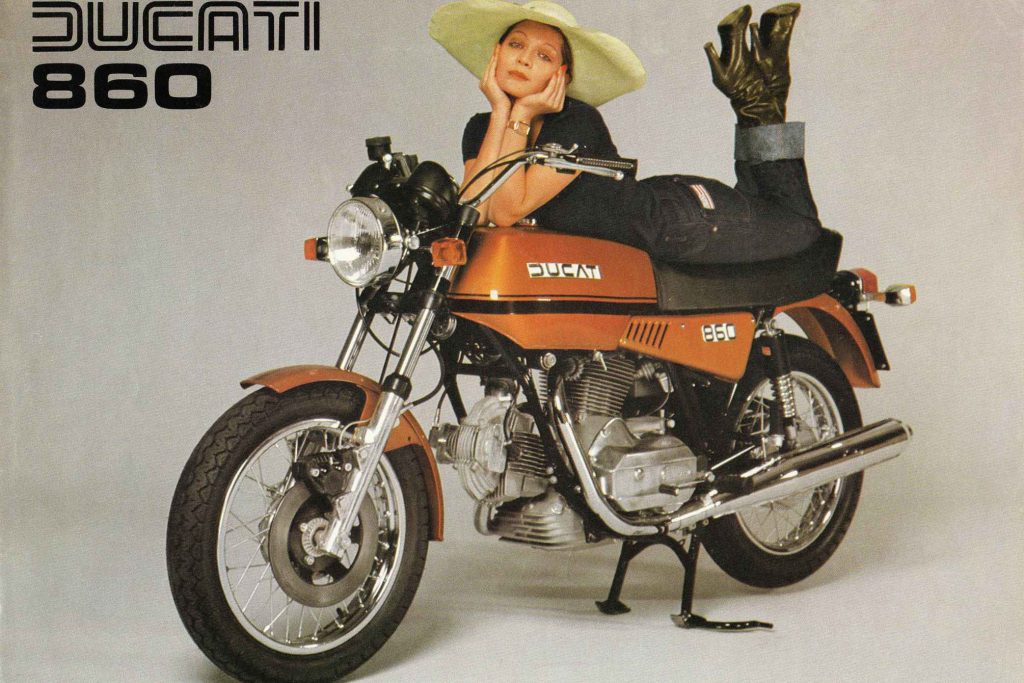
The concept of a naked touring Ducati caused confusion in the UK, where Bike’s tester suggested the GT suffered from an identity crisis. “Here we have a machine that is potentially among the very best of high speed, gran turismo, long-distance motorcycles. Yet it doesn’t appear to know what it is, or what market segment it is expected to fill.”
Either way, the 860GT’s bold design did at least generate plenty of attention. Ducati’s largest-capacity roadster yet also promised plenty of performance, at a significantly lower price than that of the racy 900 Super Sport that would follow it into showrooms a few months later.
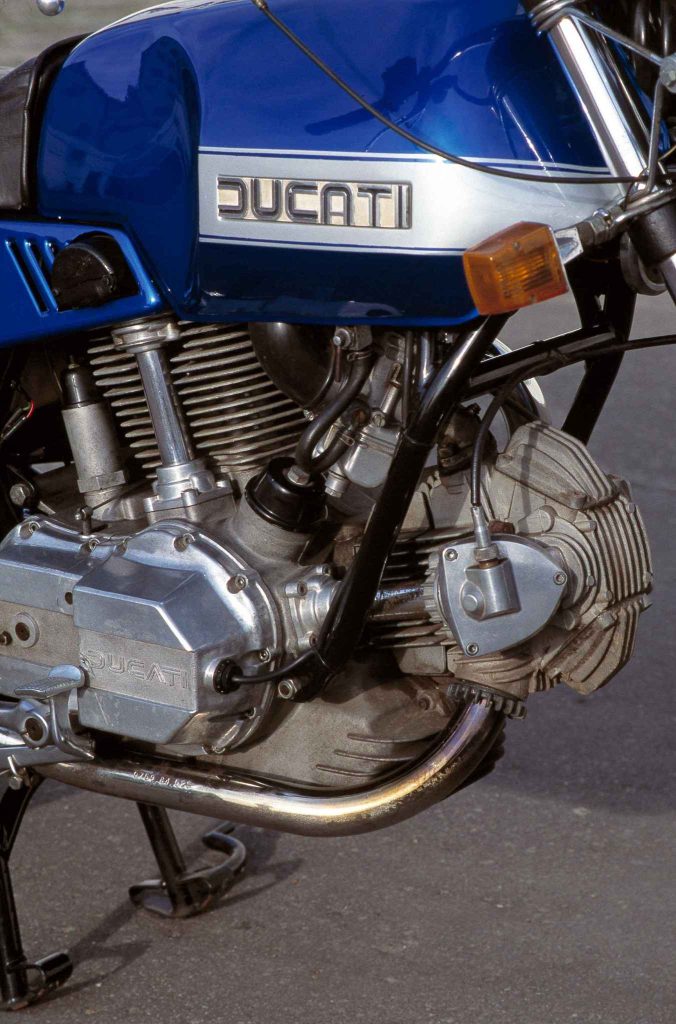
Its aircooled, 864cc V-twin motor was essentially a pair of Ducati’s 450 single-cylinder motors on a common crankcase. Cylinder angle was the the firm’s by now familiar 90 degrees, with drive to the single overhead camshafts by bevel gear. The GT used conventional valve springs rather than chief engineer Fabio Taglioni’s desmodromic system, as used for the Super Sport models.
Ducati revealed that peak power was produced at 6900rpm. The factory didn’t quote the output, but the tuned Super Sport produced a claimed 79bhp, so the GT’s figure would have been a little under 70bhp at the crankshaft.
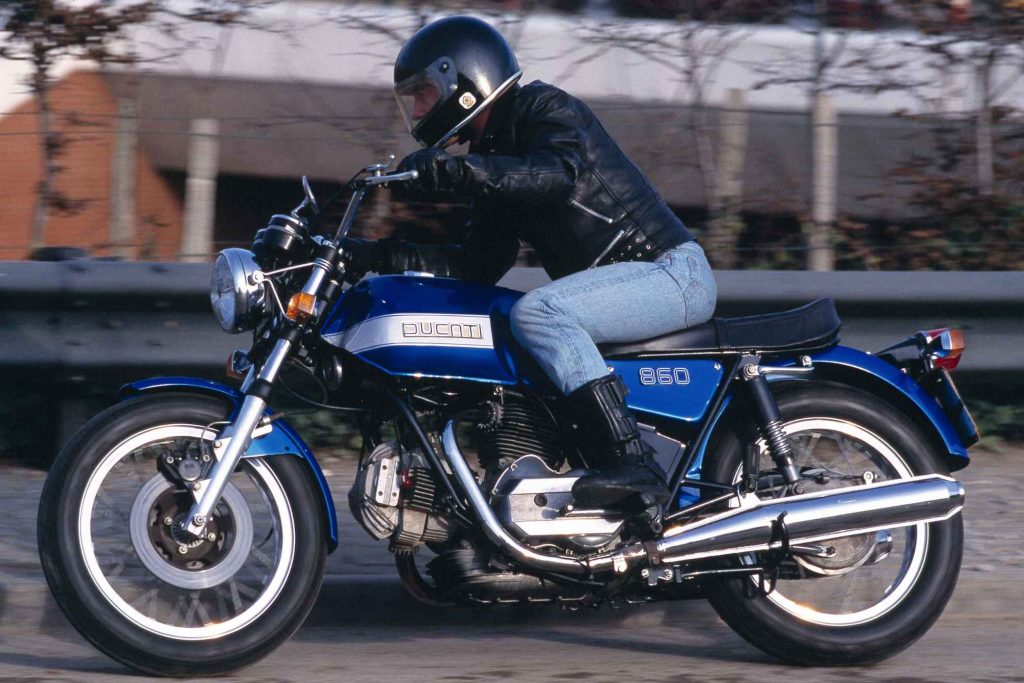
This softly-tuned motor might not have had the desmo valvegear or high-revving horsepower of the SS, but by mid-Seventies standards it was still an impressive powerplant. “As anyone who has done so will tell you, the only thing that beats riding a good 450 MkIII single is riding two,” one reviewer gushed.
“The 860 engine has all the single’s virtues of endless torque, mechanical refinement and sheer force of character – squared. The 860 motor is undoubtedly one of the world’s finest motorcycle engines.”
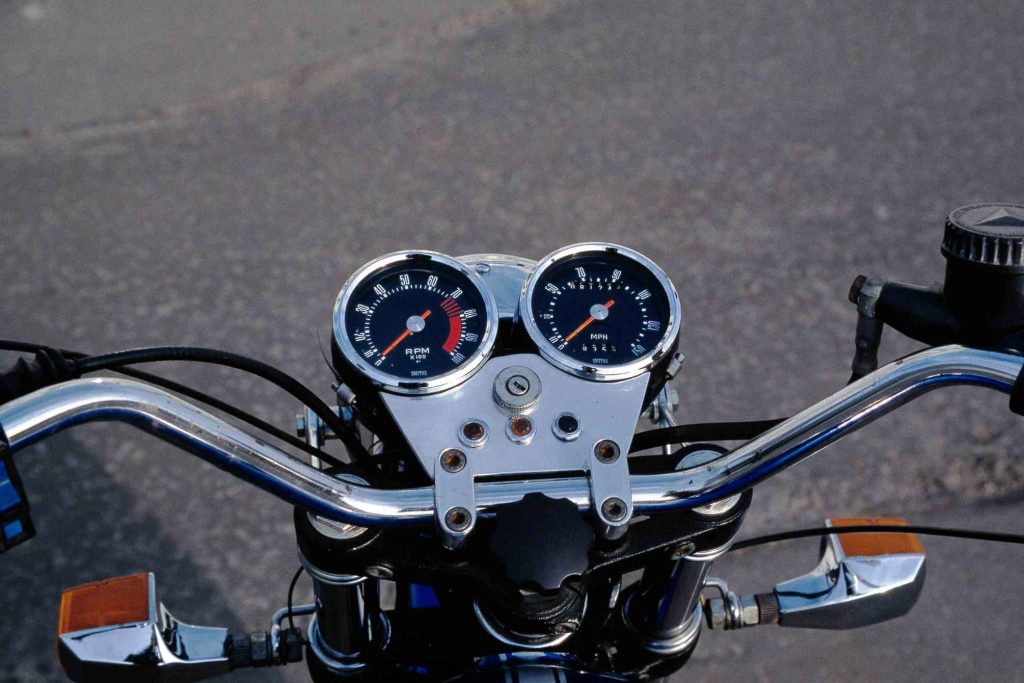
Beneath its bold blue bodywork the Ducati’s chassis was a typical Bolognese blend of tubular steel frame and firm, Italian-made forks and shocks, supplied by Ceriani and Marzocchi respectively. This bike was in good condition, especially considering Ducati’s reputation for mediocre finish. It was standard apart from its instruments and seat, which were from the following year’s 860GTS.
The later seat was slightly thinner, to reduce the GT’s lofty seat height slightly. That didn’t stop the bike feeling tall when I climbed aboard, quickly becoming conscious not just of the pulled back bars but also the forward-set footrests.
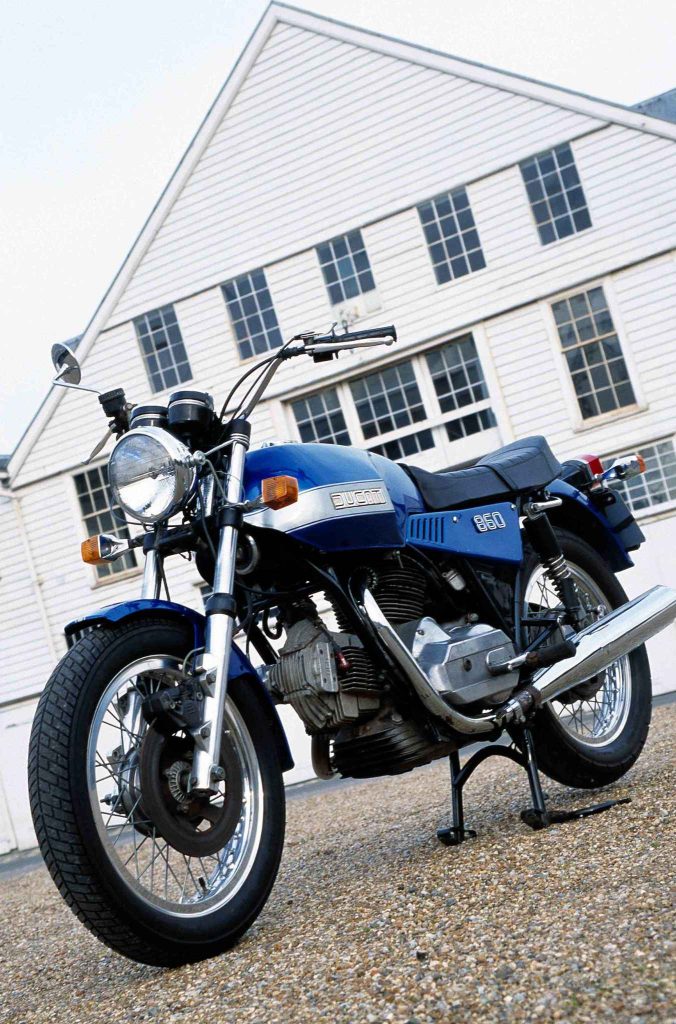
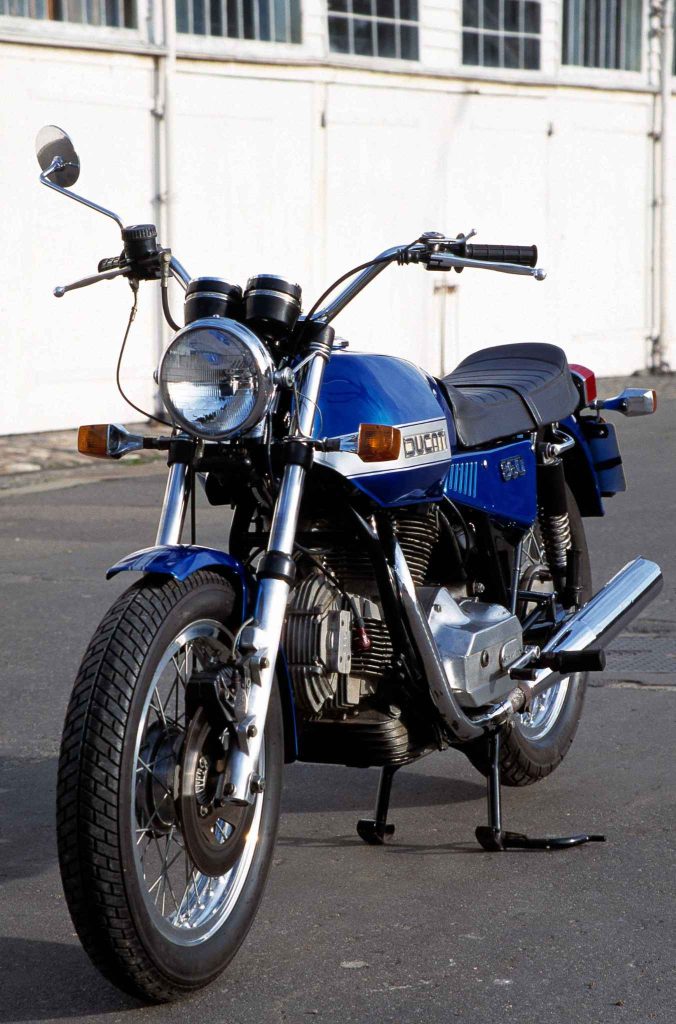
The right footpeg made itself felt almost immediately. Because this GT was lacking the electric starter that had been available as an optional extra, I had to kick-start it. I soon discovered that the footrest was perfectly placed to come into contact with a kick-starting leg, and took a lump out of my shin – just as several testers, and doubtless customers, had done decades earlier.
Such inconveniences were forgiven when the big V-twin lump burst into life with a fairly restrained V-twin rumble, and proceeded to show just why it was such a good device for a sports-tourer. Thanks partly to its low state of tune the engine was superbly responsive through the midrange.
This bike’s pair of conventionally filtered 32mm Dell’Ortos looked ordinary compared to the gaping 40mm units of the 900 Super Sport, but when tugged open they sent the bike surging forward with plenty of urgency. Like many other big Ducatis the V-twin was snatchy below about 3000rpm, but smoothed out from then on.
Vibration wasn’t a problem even up near the 7000rpm redline, although the big lump felt best between 3500rpm and about 6000rpm, and its midrange torque meant there was little incentive to use all the revs. Generally it was much better to change up early through the five-speed box, which shifted smoothly enough to make me forgive the neutral light’s occasional duplicity.
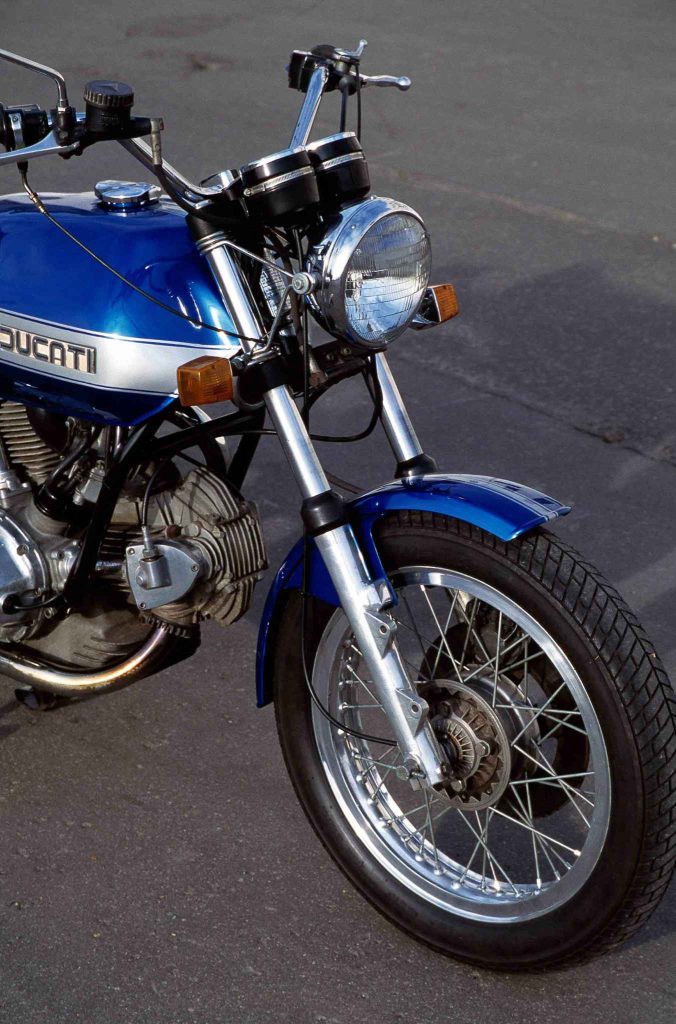
Given the slightest opportunity the Ducati accelerated pretty rapidly towards an indicated 90mph, beginning to feel slightly unsteady by that speed even in a straight line, and would have gone on to a maximum of about 115mph. Those high bars meant you’d have to be both brave and strong-necked to hold high speeds for long, though, and even my steady cruising speed of a little over 70mph became tiring after a few miles.
That slight high-speed weave gave Ducati’s reputation for unbeatable stability a knock but never threatened to get bad enough to cause a problem. And the bike regained some points with its handling in slower bends.
The GT’s rigid chassis and high-quality suspension gave cornering power that few bikes could match in 1975. Chassis geometry was chosen for stability, and the good thing about the wide bars was that their leverage made for easy steering.
Once into a turn the 860 sailed round in style, its firm suspension letting the rider know just what was going on. Only the incongruous tyre choice – surely a classic Ducati should wear Pirelli Phantoms, not Chen Shins from Taiwan – prevented me from doing the footrests more damage in the corners.
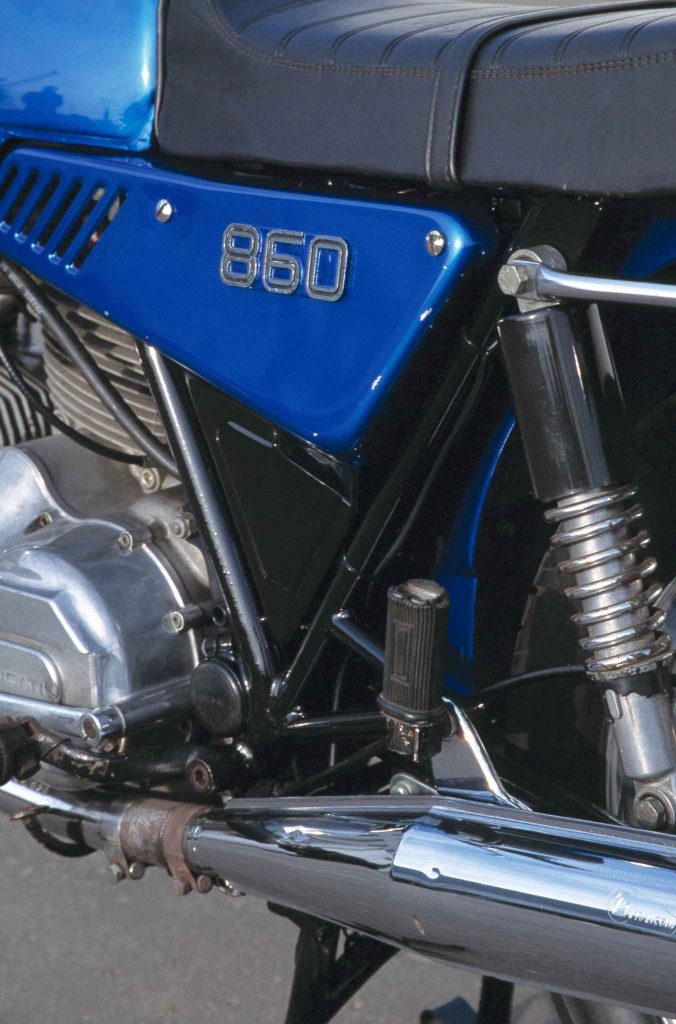
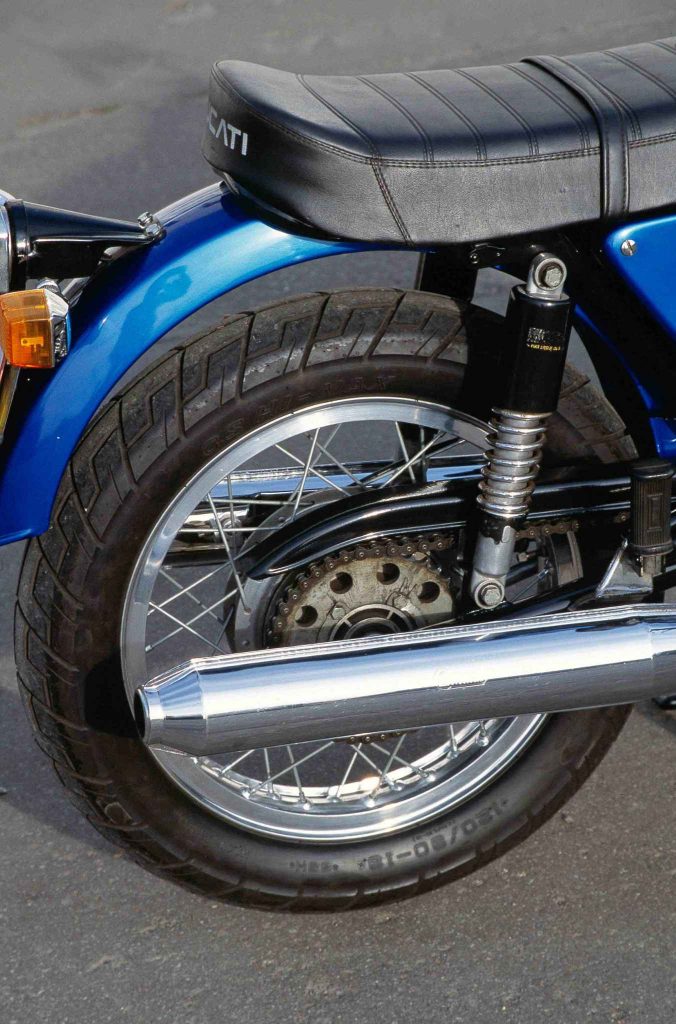
In a way, the subject of ground clearance helps explain the 860GT’s differing reception on either side of the Atlantic. Cycle World’s review enthused that: “As if you were on a racer, nothing drags when you bend the twin into a curve. And there isn’t the slightest hint of a wiggle.”
British magazine Motorcycle Mechanics’ tester John Robinson, on the other hand, headed for the test track where he rode sufficiently hard to drag both footrests and, over one bump, the rear brake lever, “which lifted the machine enough to cause a minor slide”. If that sounds like a flaw, Robinson then changed his line to avoid the bump, “which solved the problem and the Ducati whistled round faster than any other stock roadster we’ve tried”.
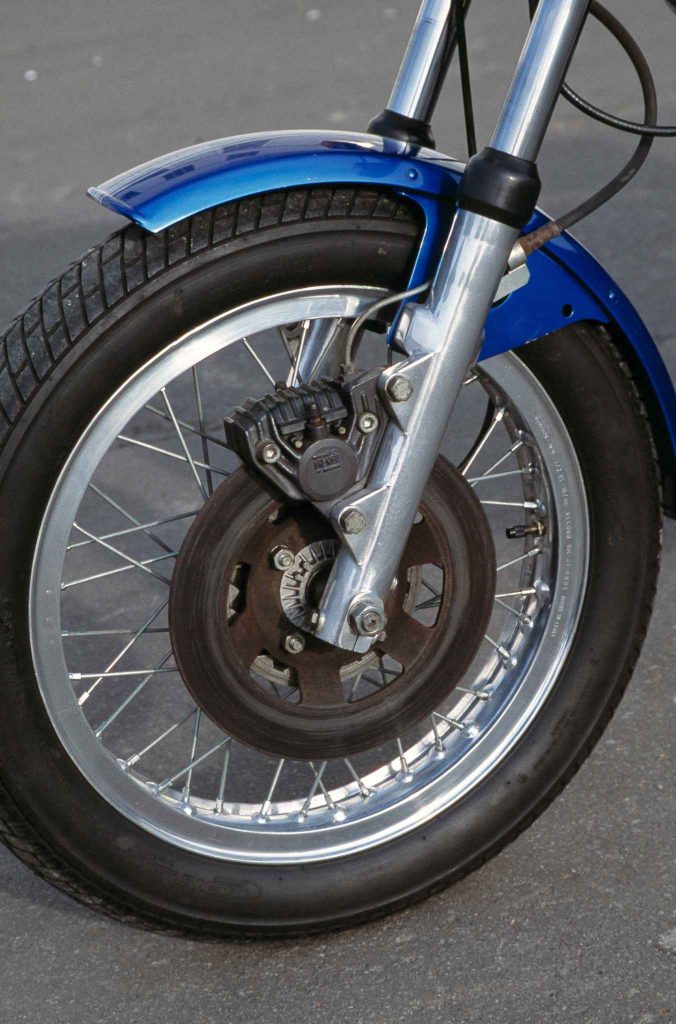
Opinions on the 860’s braking performance were also varied, with some testers praising the bike’s stopping ability but others bemoaning the single 280mm Brembo front disc’s wooden feel at the lever. I’m in the second camp, on the evidence of this elderly bike.
At least this meant I didn’t need to worry about the front tyre’s lack of grip. A second disc was available as an optional extra, and would have been well worth paying for. At £1369 the GT cost almost £700 less than the 900SS and BMW’s similarly glamorous R90S, though it was £400 more expensive than Honda’s CB750 four.
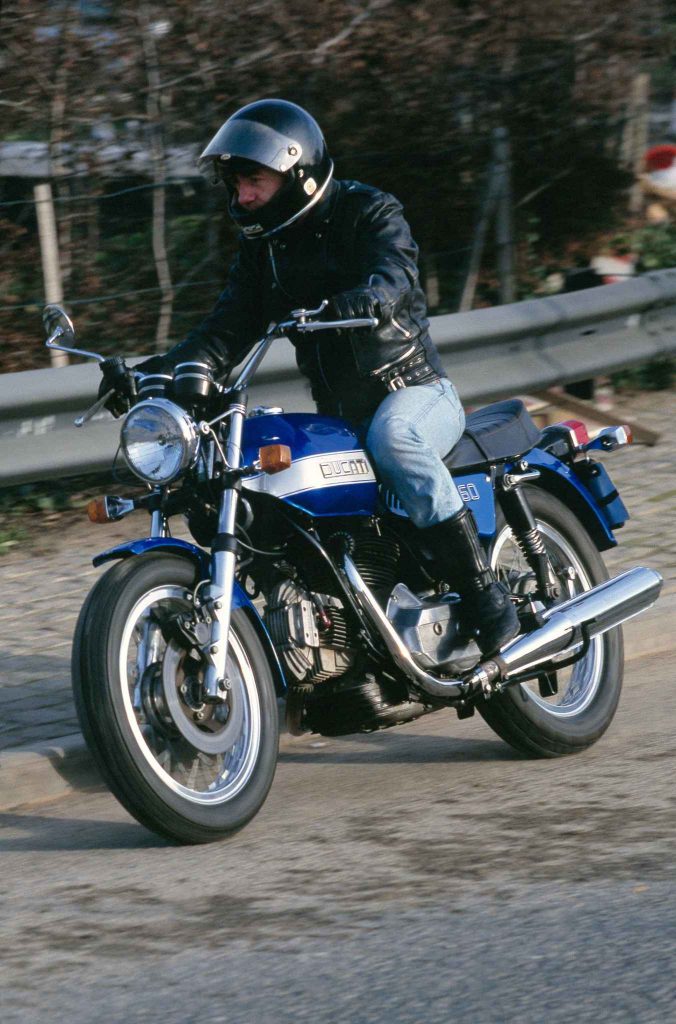
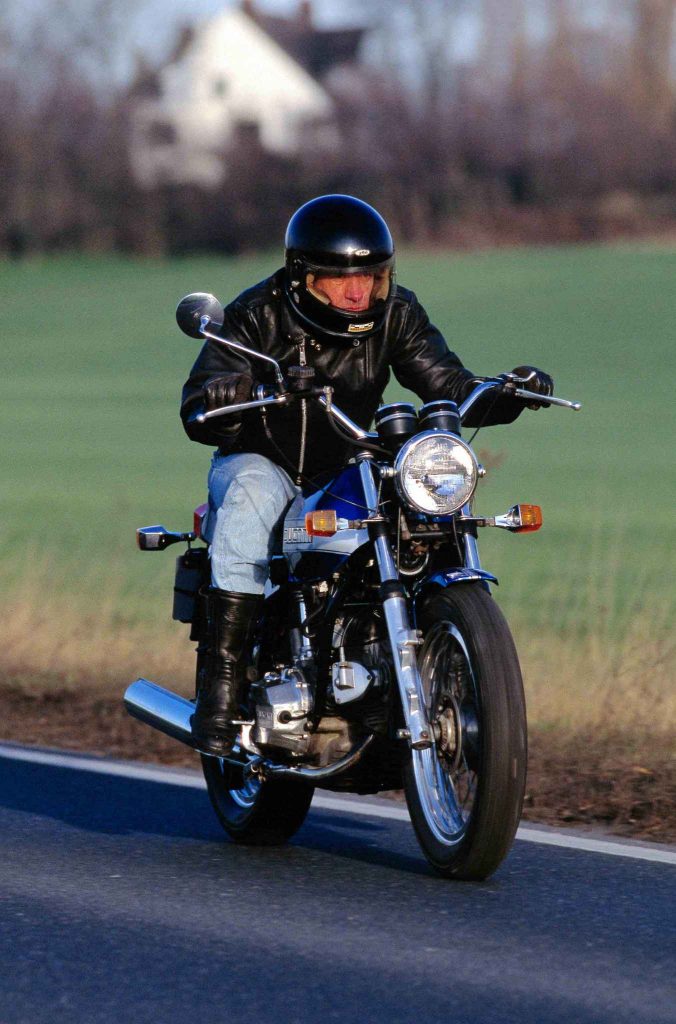
Ducati did at least demonstrate a willingness to listen to criticism. The following year the firm launched the 860GTS, featuring not just the GT’s optional second front disc and electric starter as standard, but also flatter handlebars and a subtly reshaped fuel tank that gave it a softer look.
For European riders the GTS was basically the Gran Turismo machine that the GT should have been all along. It started effortlessly and was well braked. And its high-speed stability was impeccable, confirming that the GT’s problem came from its bars and wind-blown riding position.
Being a Ducati, it still had a few annoying faults, particularly the corrosion-prone paint finish and switchgear that made it easy to plunge yourself into darkness when trying to operate the headlight’s dipswitch. But with a sportier riding position the performance could be more easily used, and the essential quality of the original 860’s engine and chassis shone through.
Half a century later, Giugiaro’s striking angular lines have aged well, making Ducati’s first 864cc V-twin stand out among its Seventies stablemates. The 860GT had its issues but fully deserves a place in the Bologna hall of fame.