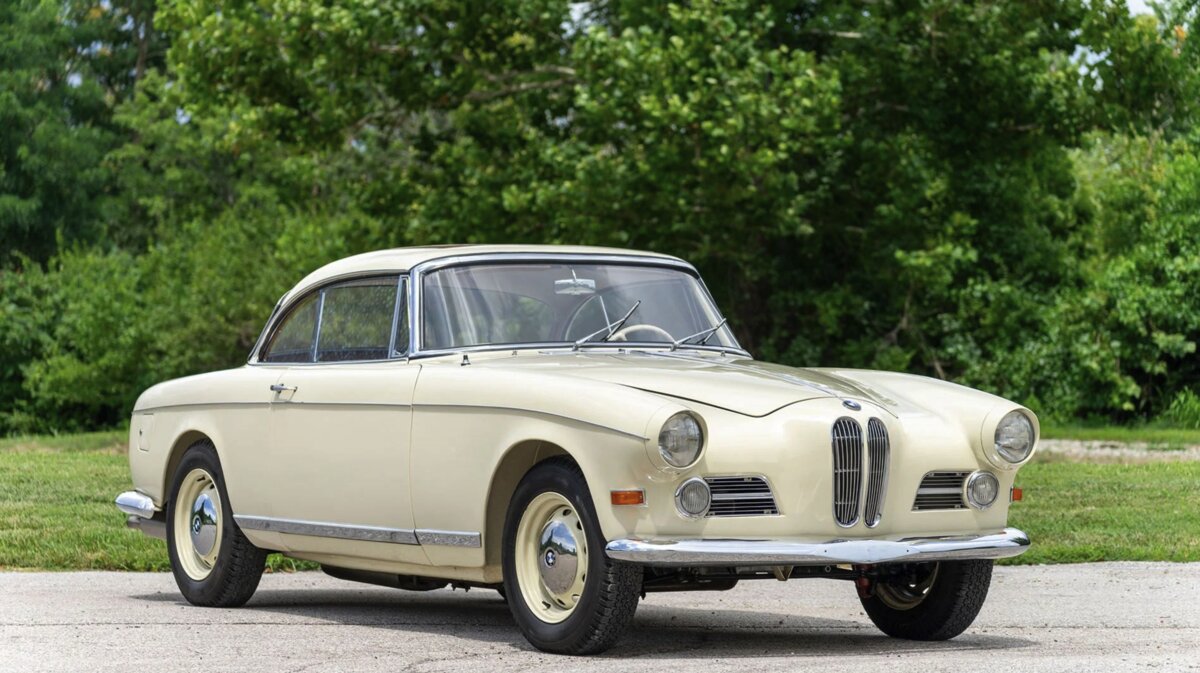
In the early 1950s BMW was rebuilding more than cars. Its post-war range centred on the imposing 501 and 502 saloons, magnificent in the manner of a municipal building with chandeliers. Sales chief Hanns Grewenig wanted a slimmer, more glamorous car to carry BMW back into the company of Europe’s grandest marques. The 3.2-litre aluminium V8 supplied the mechanical foundation, while American importer Max Hoffman encouraged BMW to think beyond domestic transport. Presented beside the 507 at Frankfurt in 1955, the 503 was the grand touring answer: four seats, hand-built bodywork and a price ambitious enough to alarm an accountant.
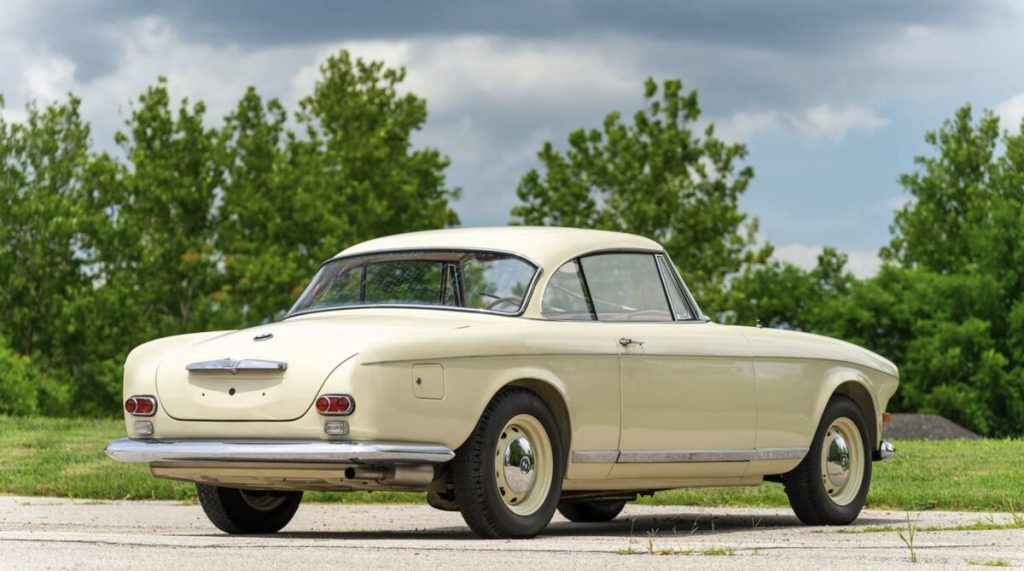
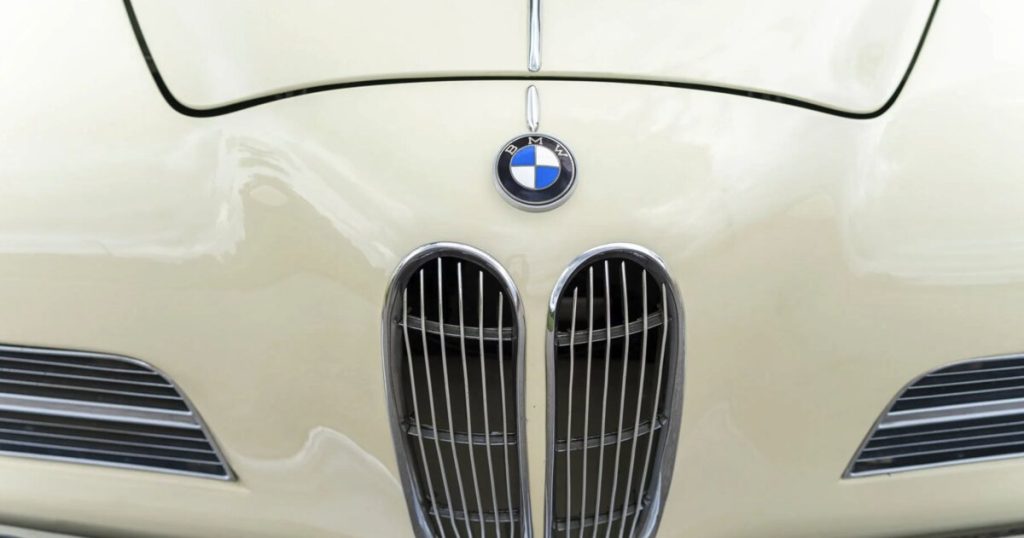
Albrecht Graf Goertz gave the 503 none of the visual swagger that made its 507 sibling a poster car. Instead, he drew a long, elegant coupé whose confidence arrived gradually. The bonnet stretched towards small kidney grilles, front wings rose around round headlamps and the roof looked delicate above the broad body. The waistline and glass kept the mass from becoming ponderous, while rear haunches narrowed into a restrained tail. Beside a contemporary Mercedes-Benz, the BMW looks less like transport for a cabinet minister, more like something his irresponsible brother might borrow for Cannes.
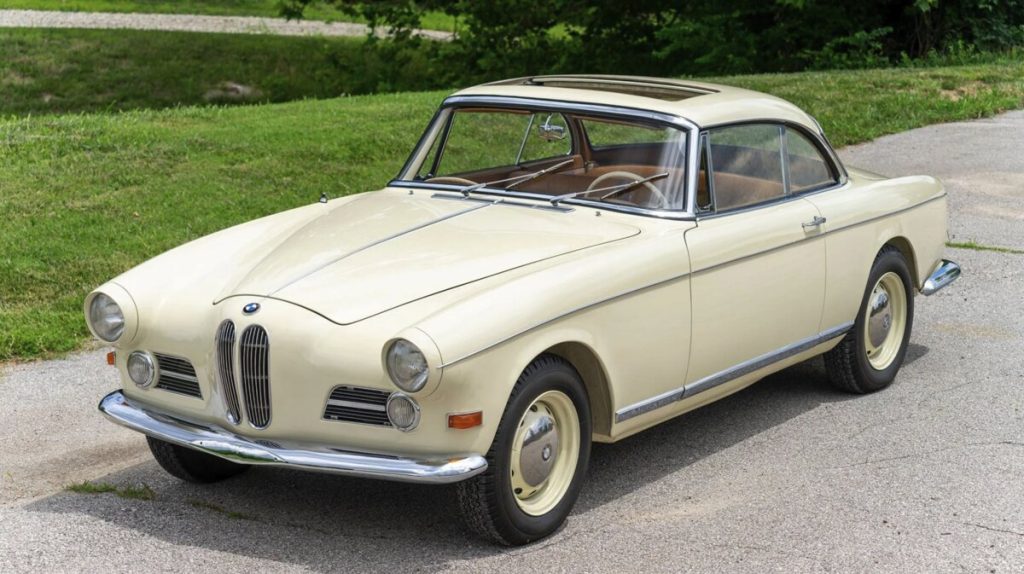
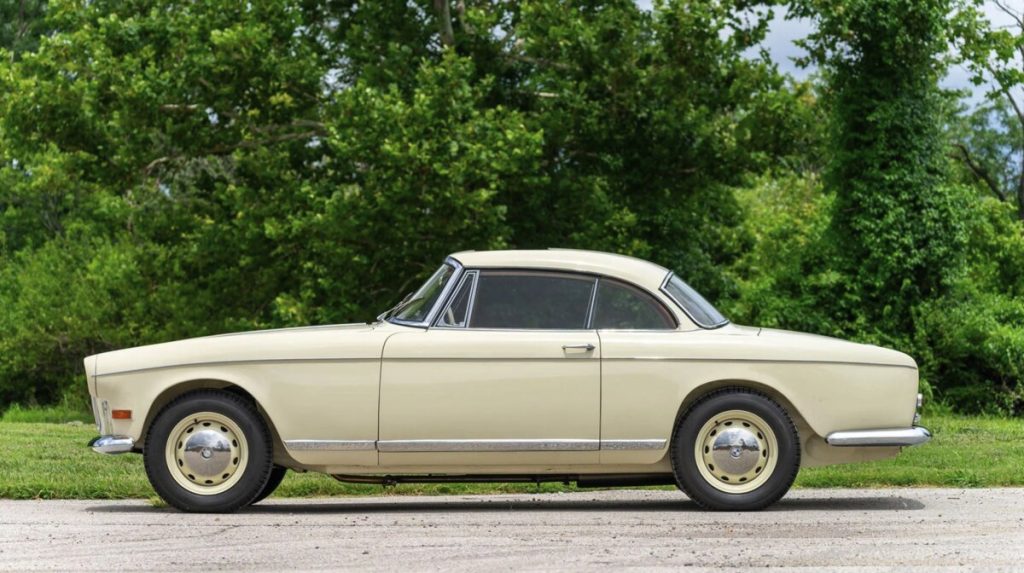
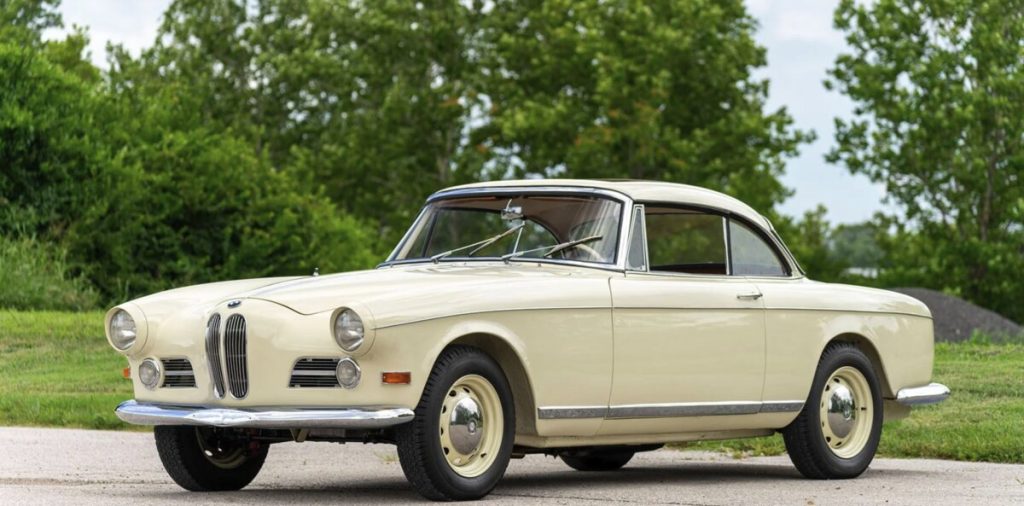
Its proportions owed much to the 502 beneath, yet the 503 concealed that ancestry remarkably well. There were no separate wings, upright radiator or Baroque Angel upholstery bulging through the metal. Smooth flanks and subtle curvature looked clean without becoming plain. Goertz understood that expensive cars did not need to announce the invoice from three streets away. Chrome framed the glass, traced the body sides and picked out the bumpers, but decorated the shape rather than attempting to rescue it.
The coupé’s pillarless side opening was the masterstroke. Lower all four windows and the cabin became an uninterrupted aperture, giving a closed car the airiness of the cabriolet. Huge doors eased access to the rear seats and required hinges of corresponding seriousness. The convertible was equally neat, its powered hood folding beneath a tidy cover rather than gathering behind the occupants like camping equipment.
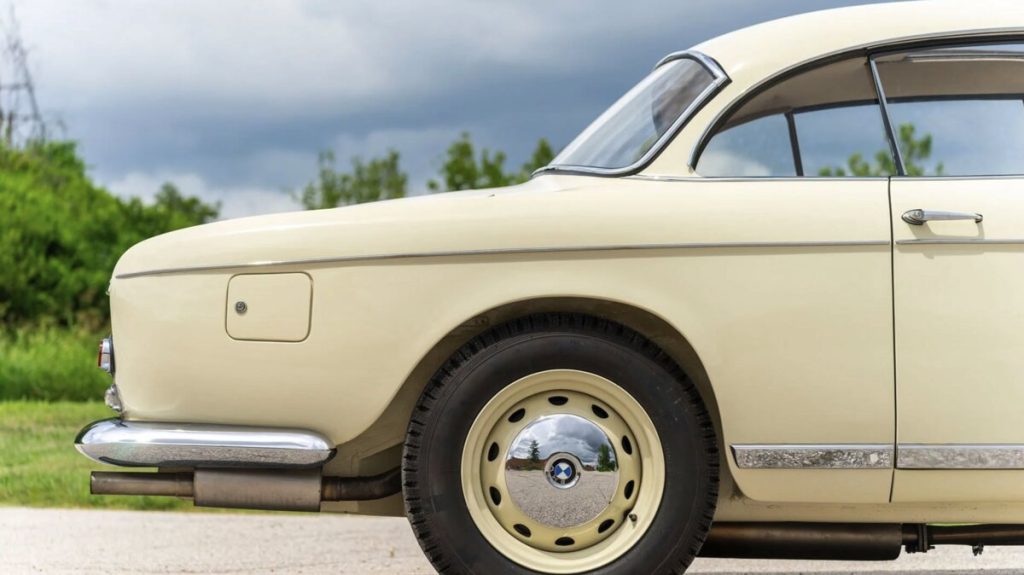
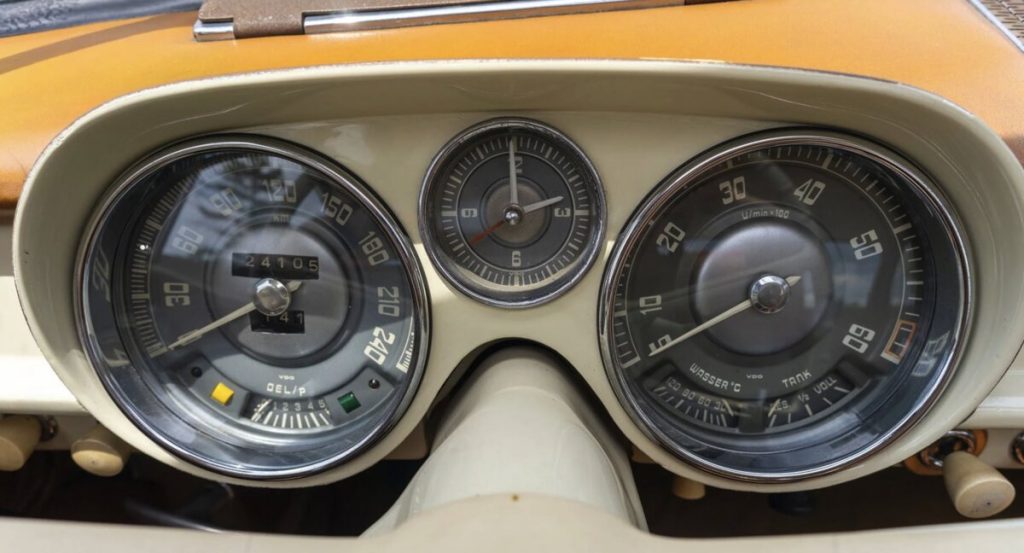
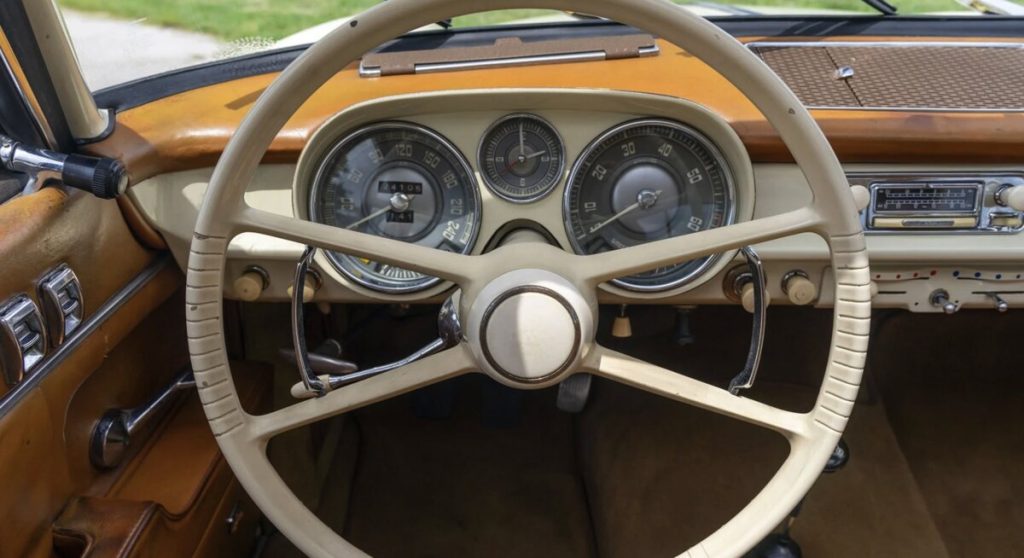
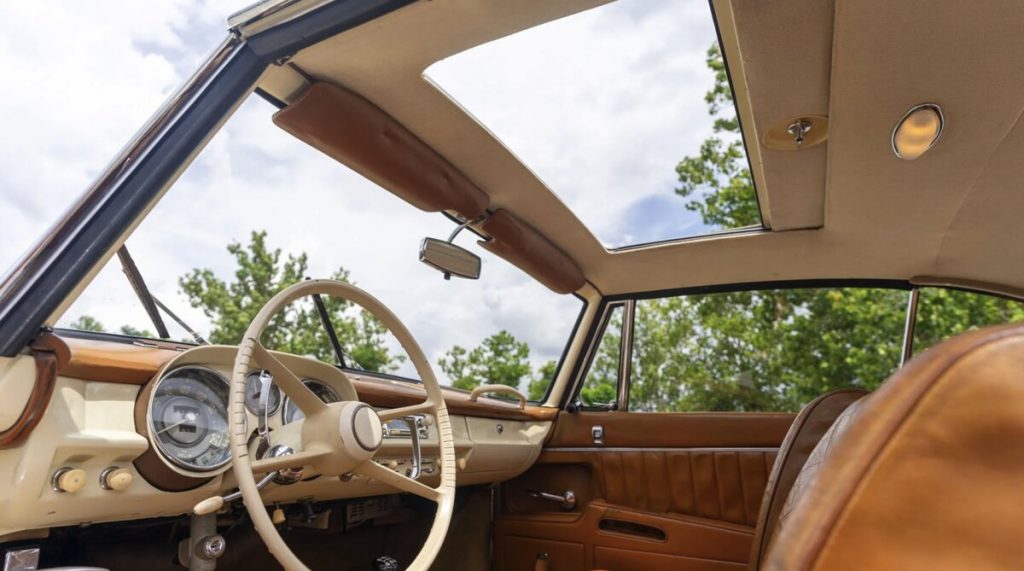
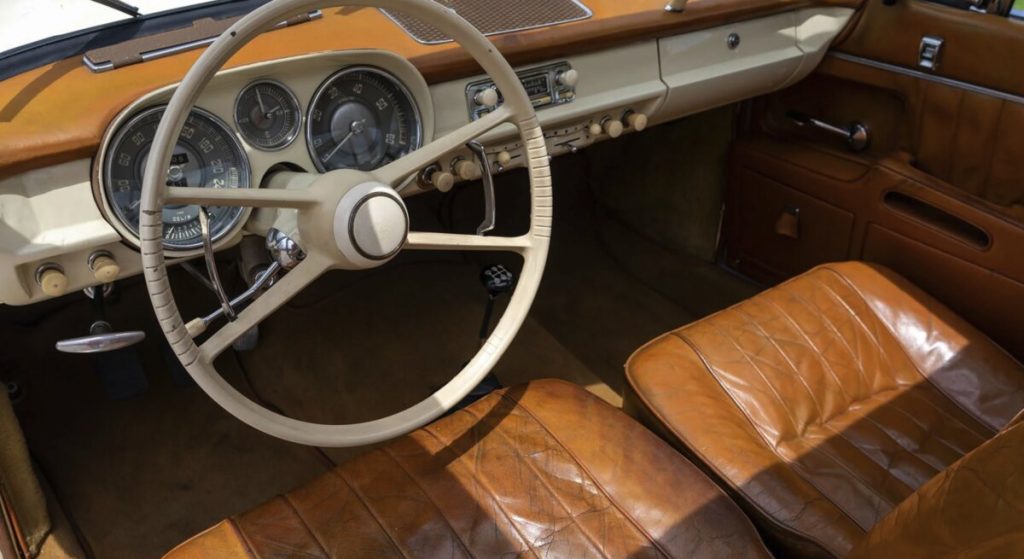
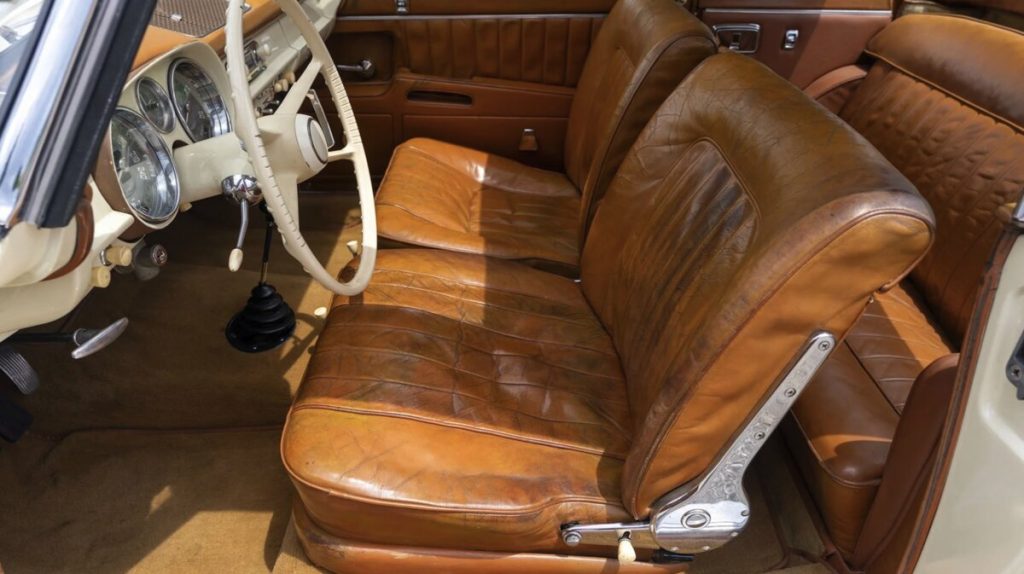
Inside, leather, polished timber and instruments provided luxury without theatrical clutter. The steering wheel was vast, the seats resembled club furniture and the dashboard placed slender controls across a horizontal plane. Each car was built largely by hand and could vary in detail, making standardisation more aspiration than production method. The 503 felt expensive because every visible part had required somebody’s time.
Beneath the aluminium skin sat more convention than the shape suggested, though BMW’s foundations were respectable. Fritz Fiedler developed the 503 around a perimeter frame derived from the 502, with box sections and tubular crossmembers. The body structure, bulkhead and inner wings mixed steel with light-alloy outer panels, which saved weight but also created a material marriage that keeps restorers awake. At 1500kg the BMW 503 was no featherweight, yet it was less ponderous than its limousine ancestry implied.
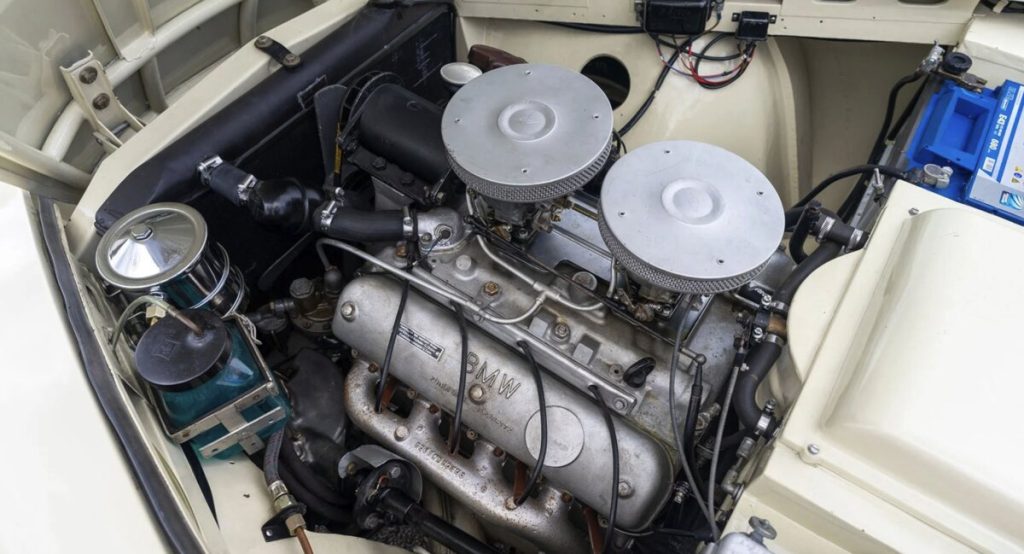
The engine supplied charm. BMW’s 3168cc overhead-valve V8 used an aluminium block and heads, twin Zenith carburettors and a revised lubrication system to produce 140bhp at 4800rpm. That sounds modest now, but post-war Europe was not exactly awash with light-alloy V8s. The unit was smooth and willing, carrying the 503 to 118mph while producing a cultured burble appropriate for crossing a border without showing one’s papers twice.
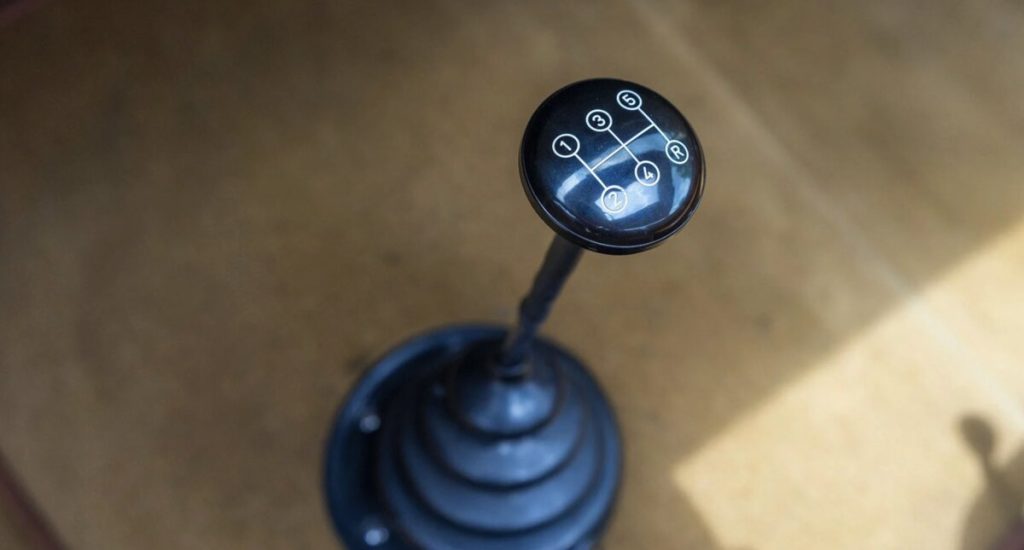
Early Series I cars retained the 502’s remotely mounted four-speed gearbox and column change. From late 1957, Series II cars placed the gearbox directly behind the engine and moved the lever to the floor, shortening a linkage that had travelled through postal districts. Drive went to a live rear axle. Independent front suspension used double wishbones and torsion bars, while the rear axle was also located and sprung by torsion bars. The set-up favoured suppleness and stability over cornering theatrics.
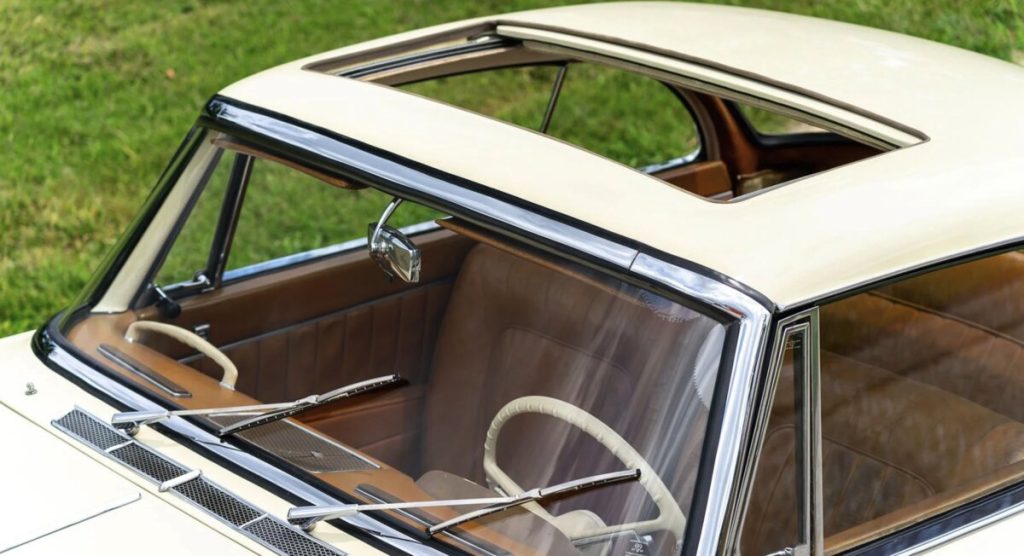
Servo-assisted drum brakes were standard, with front discs appearing on some later cars. Steering was low-geared and deliberate, but the long wheelbase and track made the BMW 503 an accomplished high-speed tourer rather than a sports car wearing evening clothes. Electrohydraulic window lifts added theatre, while the cabriolet’s powered hood could disappear in around 15 seconds. In an era when many owners still regarded a heater as indulgent, BMW had effectively motorised the drawing room curtains.
The 503 attracted precisely the clientele BMW had imagined, if not in sufficient numbers. Owners included actor Curd Jürgens, Yugoslav president Josip Broz Tito and Count Roland von Faber-Castell. John Surtees kept a right-hand-drive cabriolet alongside his 507 until his death, appreciating the mixture of comfort and sporting character rather more than BMW’s accountants appreciated its construction costs.
The problem was not desirability but arithmetic. Max Hoffman had envisaged a car costing around $5000, yet the hand-built aluminium body, expensive V8 and labour-intensive production pushed the 503 to roughly twice its intended price. American volume never materialised and BMW lost money on every example. Production ended in 1959 after 412 cars, with the equally costly 507 helping to drag the company towards its financial crisis that year.
Munich shifted its survival strategy towards cars that could be built profitably, first the 700 and then the Neue Klasse. The BMW 503’s elegance survived in spirit, but its hand-built extravagance became a warning label attached to the balance sheet.
Yet its influence runs deeper than its fame. It re-established the idea of a BMW grand tourer, a line continued by the 3200 CS, E9 coupés and the 6 Series. It also proved that Munich could combine V8 performance, four-seat comfort and elegant understatement long before those ingredients became familiar. The 503 was commercially disastrous, magnificently expensive and wonderful, which is a legacy few balance sheets can properly record.
Would you have chosen the elegant BMW 503 over its more famous sibling, the 507? Tell us in the comments below.
Insure your classic with a specialist insurer
If you’re looking for cover for your pride and joy, why not consider Hagerty UK? Not only are we classic car insurance specialists, but we are enthusiasts at heart. Call us for a quote on 0333 323 1138