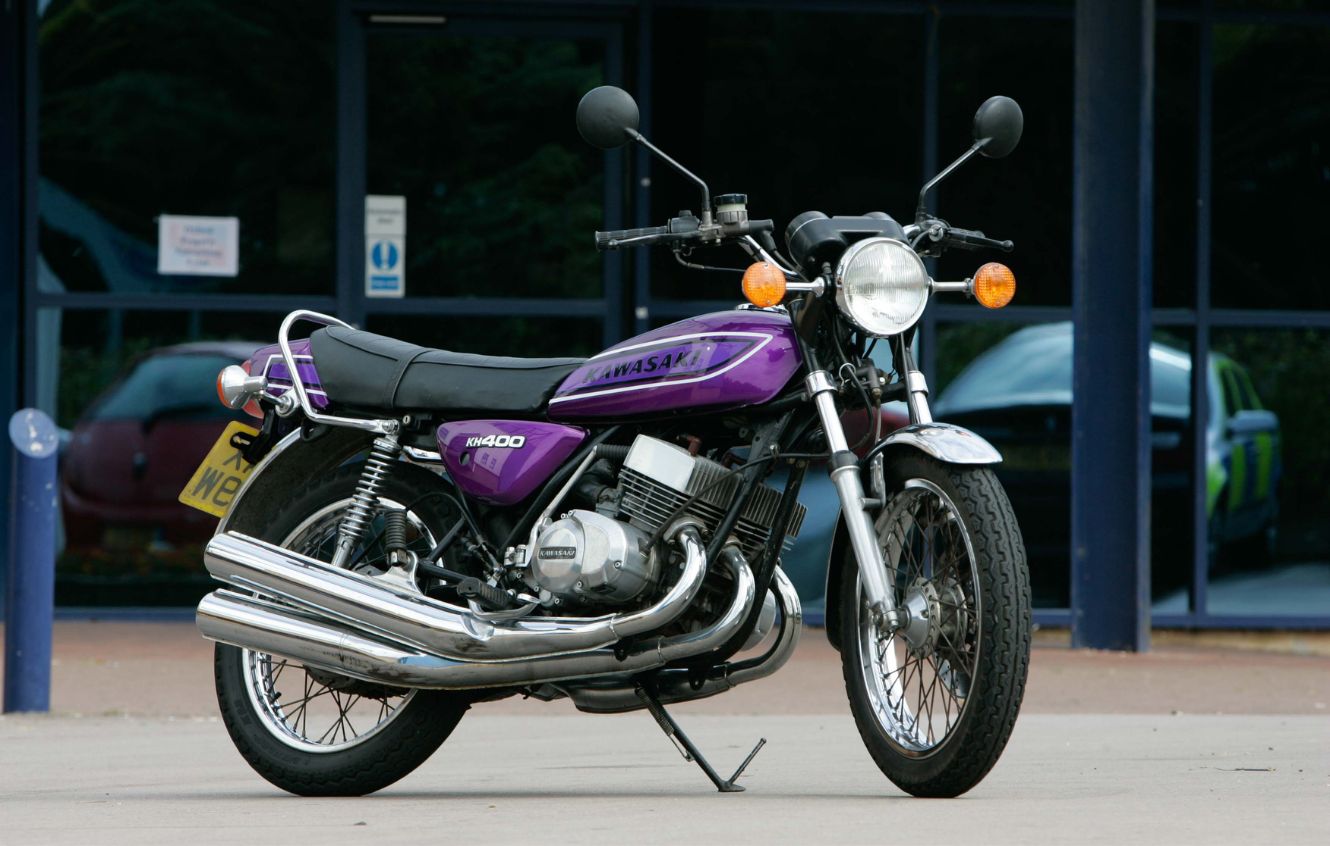
Words and Photography: Roland Brown
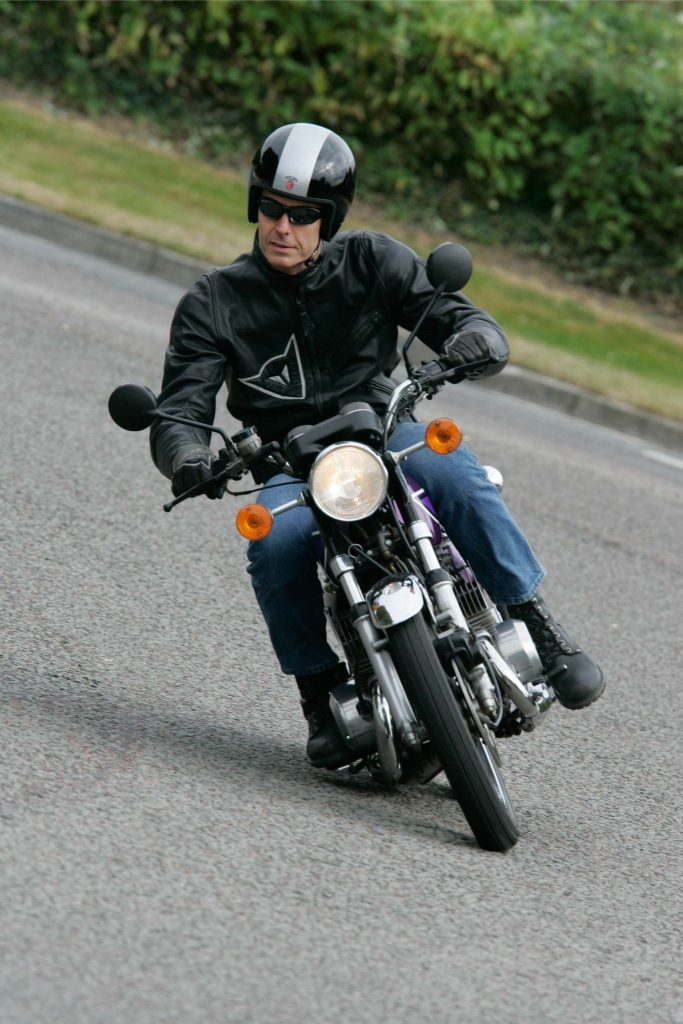
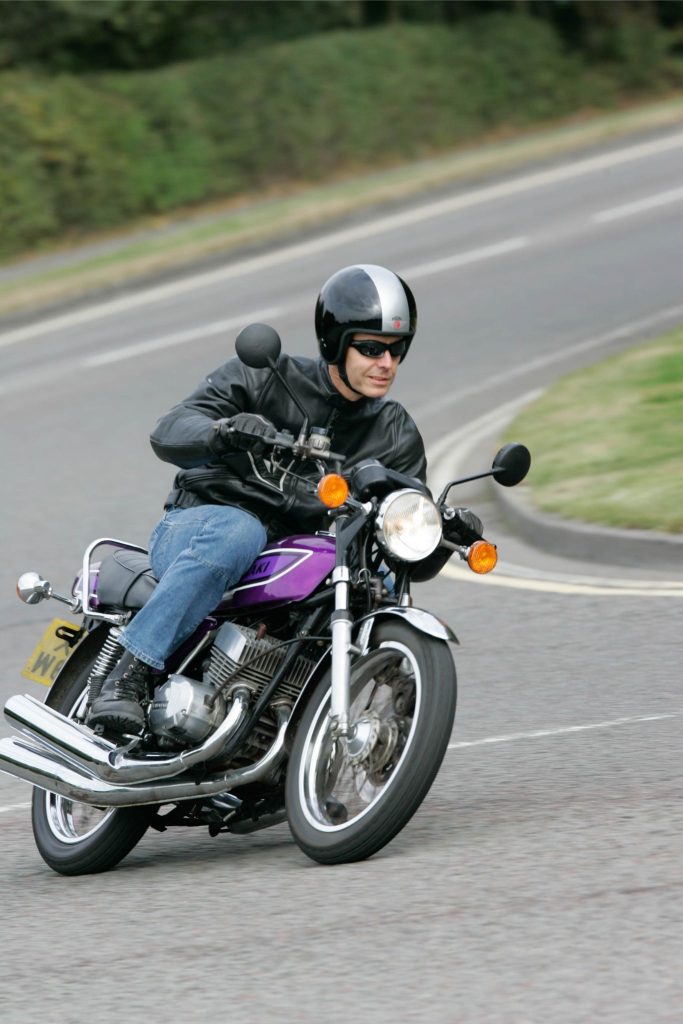
“Nice bike,” I thought as the pretty purple Kawasaki KH400 triple flicked through a bend and accelerated smoothly down the following straight, feeling pleasantly quick, sweet-handling and rider-friendly.
That was also the verdict when the KH was new, half a century ago. And was arguably its biggest problem.
Pleasant? Friendly? Nice?! Back then, Kawasaki’s two-stroke triples weren’t supposed to be described like that.
The KH’s larger-capacity three-pot predecessors, the 500cc H1 and 750cc H2, were the famously fast, loud, ill-handling brutes on which Kawasaki had built its reputation for performance in the early Seventies.
But the KH, launched in 1976, was too soft and civilised to live up to that reputation. Which, to be fair, wasn’t really Kawasaki’s fault.
Those earlier aircooled triples had been hugely popular in the US, in particular, where their blend of power and light weight had given them unbeatable acceleration.
On the H1’s launch in 1969 and the H2’s arrival three years later their mediocre handling and braking had not been deemed serious flaws. Especially in the States, where straight-line performance, from stop-lights in particular, was all important.
Nor was the two-strokes’ horrendous thirst a big drawback in that market, where “gas” was so cheap. On the contrary, the triples’ bad-boy image was a big part of their appeal.
But public attitudes had shifted in the mid-Seventies even in the US, and the smoky strokers’ noise and thirst had alerted the powerful Environmental Protection Agency.
Emission laws were tightened, and 1975 had been the final year for the mighty H2 750. In that year it still managed to earn a Cycle World magazine test headline of “Evil, Wicked, Mean and Nasty”, despite having been detuned.
Kawasaki’s smaller triples suffered a similar fate. The 250cc S1 and 350cc S2 had been introduced alongside the H2 in 1972. Both were fast and fiery little machines.
But when the 350cc model was replaced, in 1974, by the 400cc S3, the new model’s 42bhp output was slightly down on that of the S2, despite its extra engine capacity.
The S3 – known as the Mach II in the States – was still a rapid bike; described by one tester as “outrageously fast for a mere 400 even by Kawasaki triple standards”. But it too became a victim of tightening emission laws.
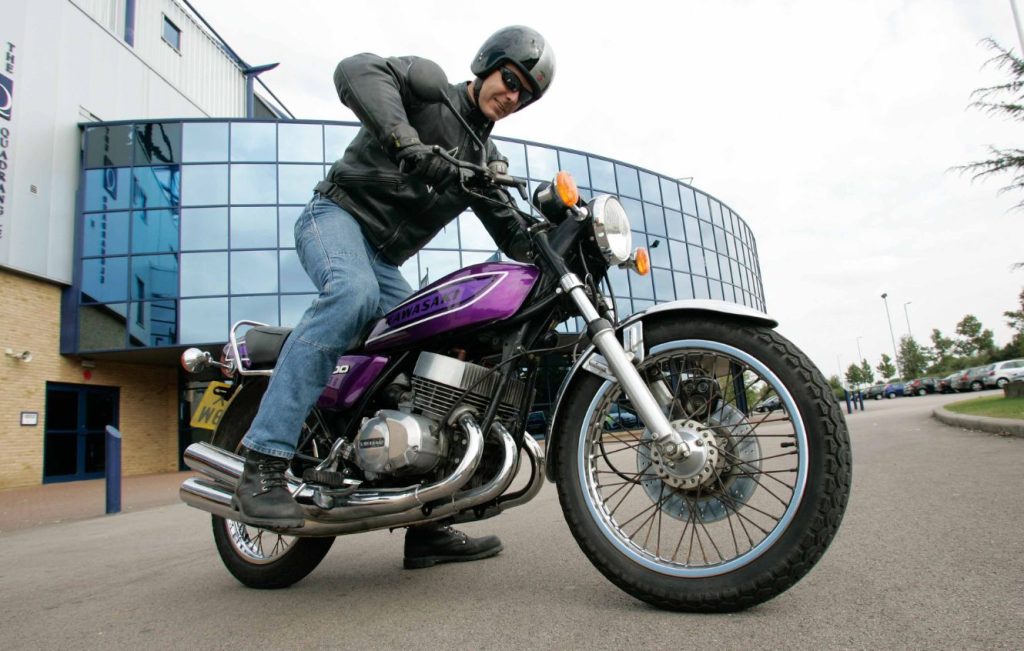
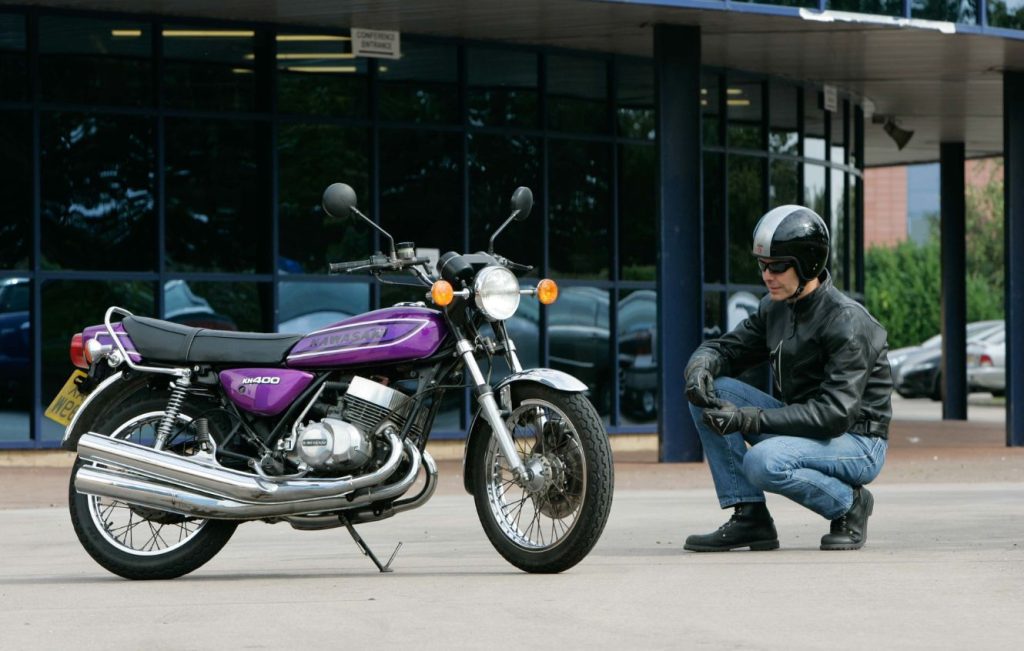
Kawasaki’s hands were tied. The KH400, which replaced the S3 for 1976, was less powerful and more civilised.
Its 400cc, piston-ported engine was mechanically unchanged but had electronic ignition, instead of points. New baffles in the intake system reduced the noise when the 26mm Mikuni carbs were wound open.
The KH also had new, more efficient exhaust silencers. Both these things combined to knock 4bhp from the peak output, giving a maximum of 38bhp at 7000rpm. (German riders fared even worse: their even tighter emission laws robbed a further 2bhp.)
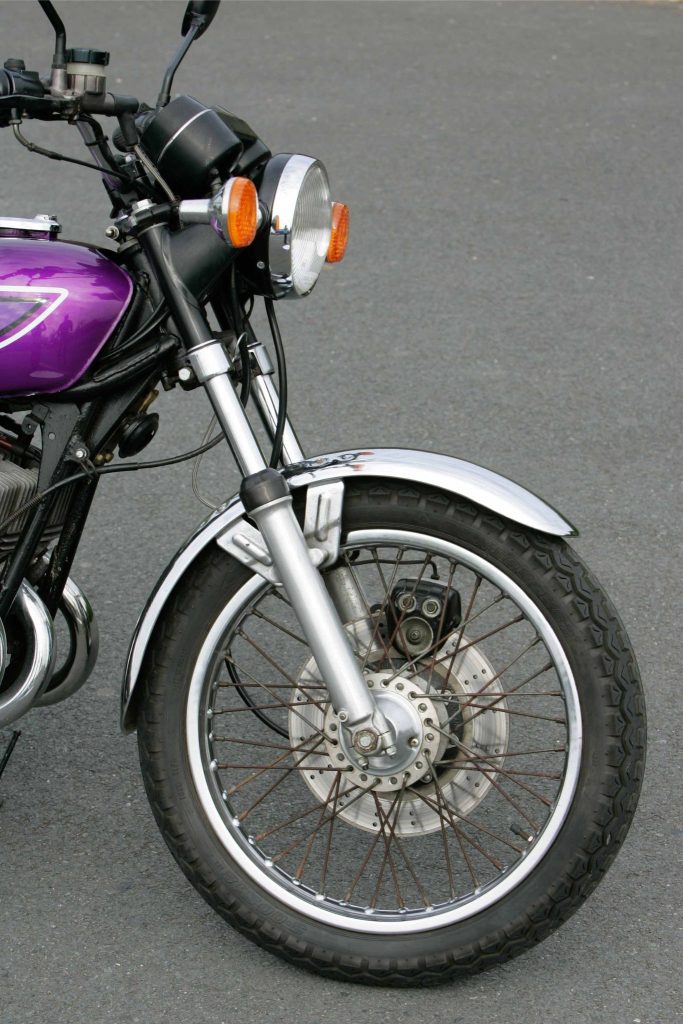
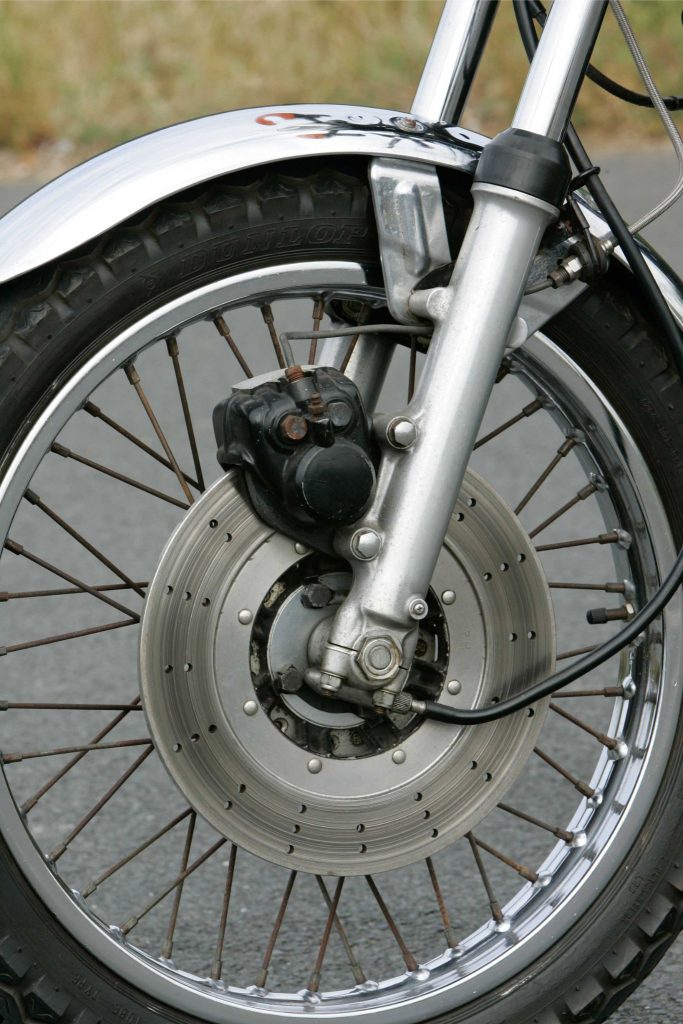
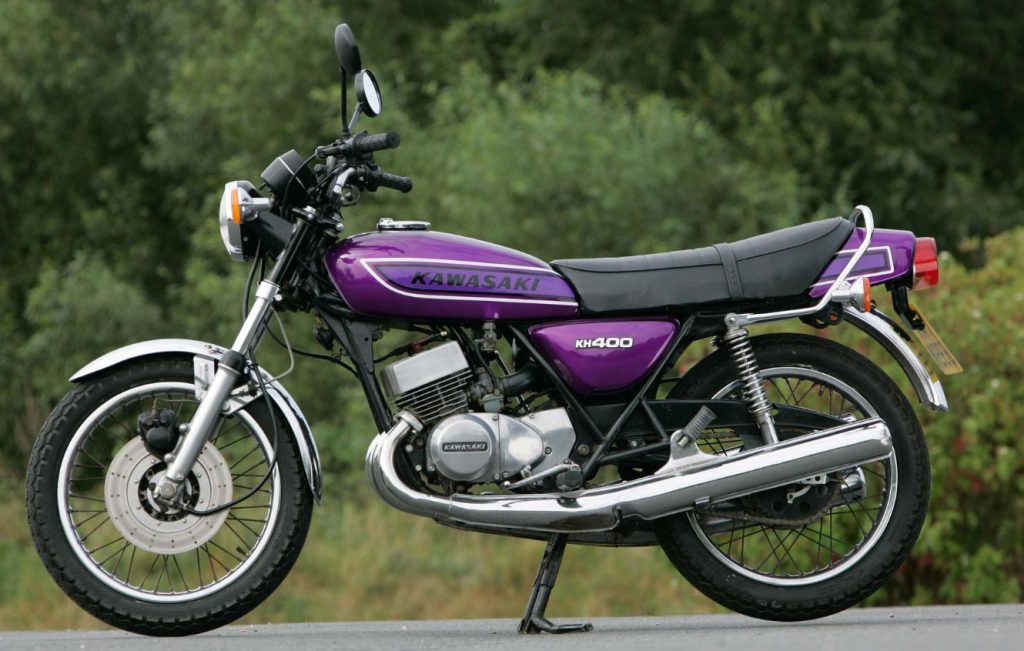
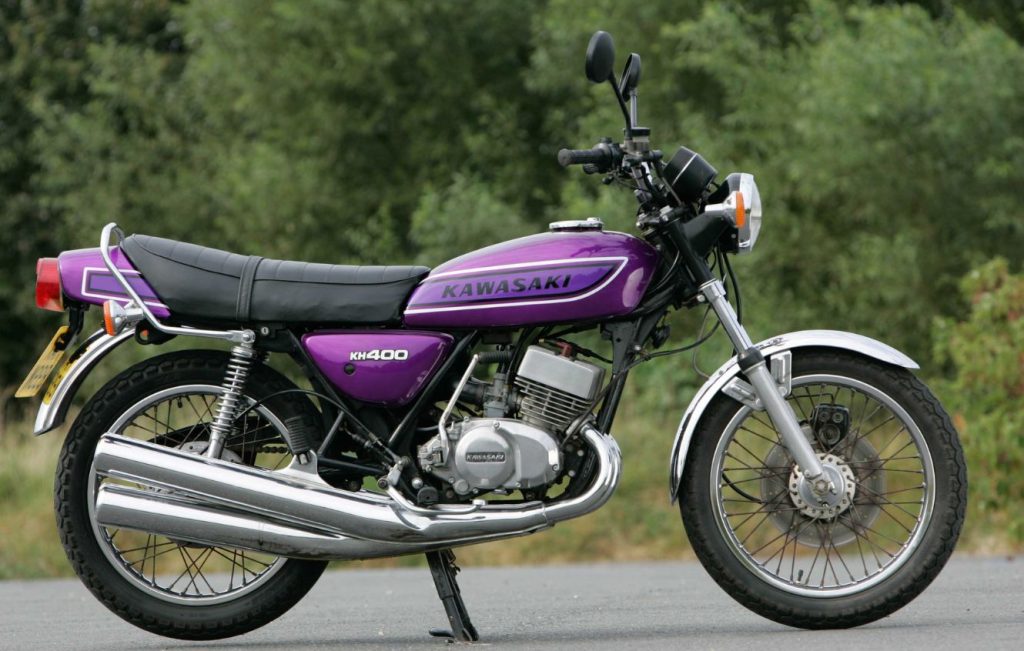
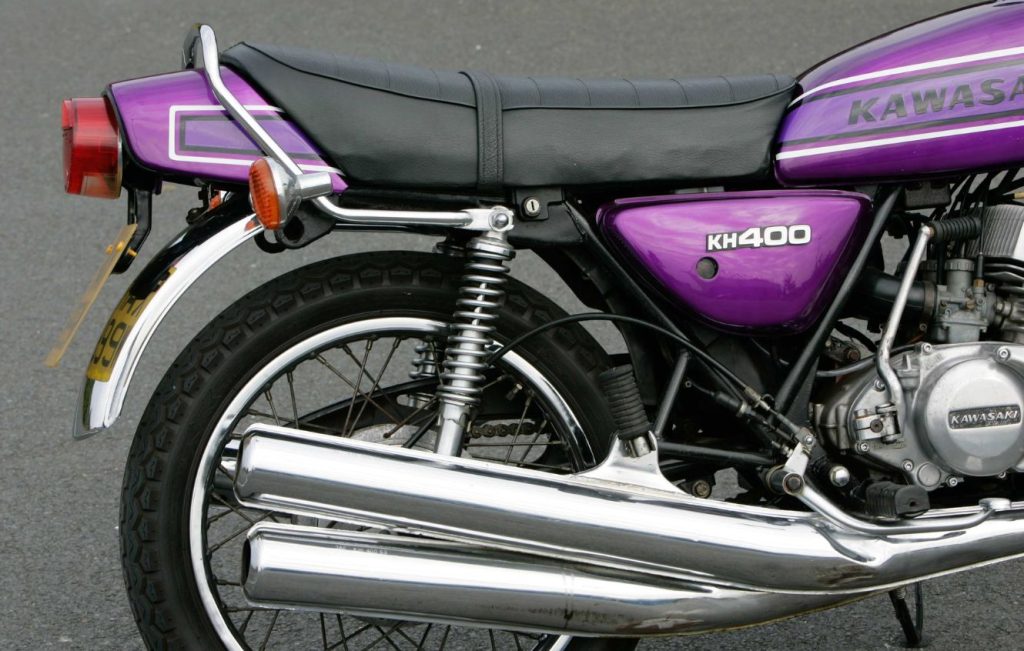
Styling and chassis layout were unchanged, so the Kawasaki KH400 retained the S3’s rounded fuel tank and asymmetrical exhaust system, with two pipes on the right and one on the left.
The KH also kept the S3’s twin-downtube steel frame but its forks and rear shocks had softer springs and revised damping. The single disc front brake was uprated to match that of Kawasaki’s 903cc four-cylinder flagship the Z1, though the KH had a drum rear brake rather than a disc.
Cycle World was in no doubt about the direction in which the triple had evolved. “Kawasaki has taken much of the sportiness out of the KH400 (its new designation) and blanded it down to a milder state in order to make its appeal broader,” the magazine’s tester wrote.
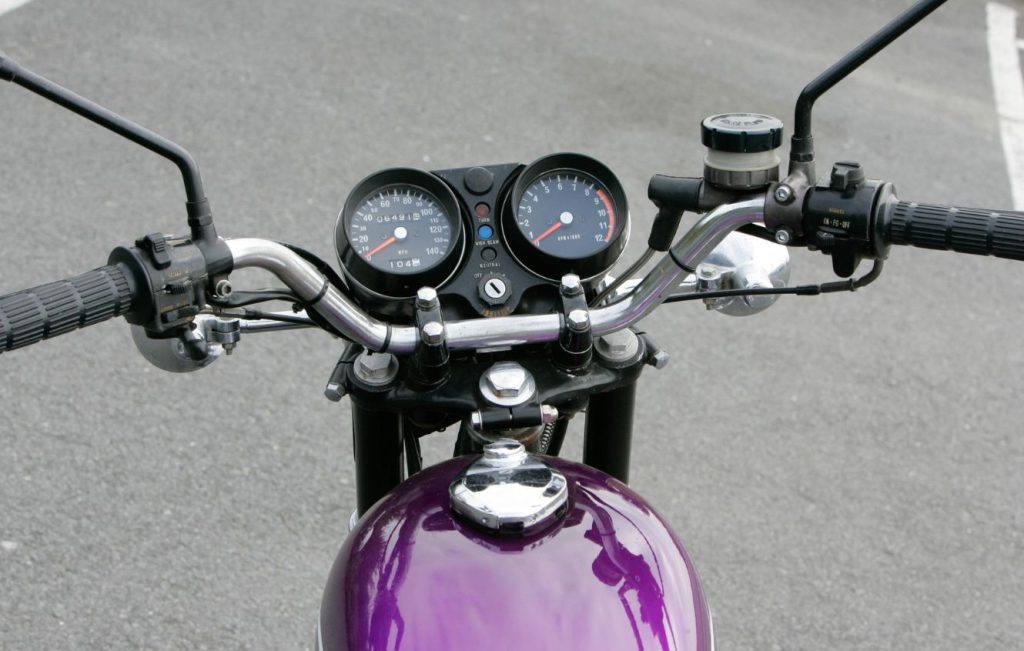
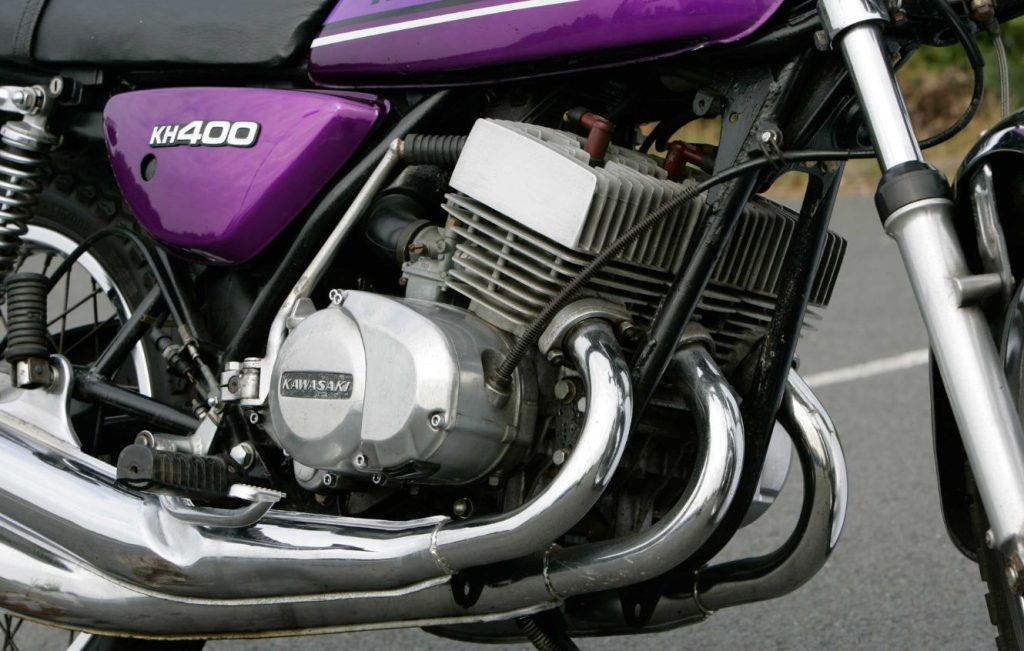
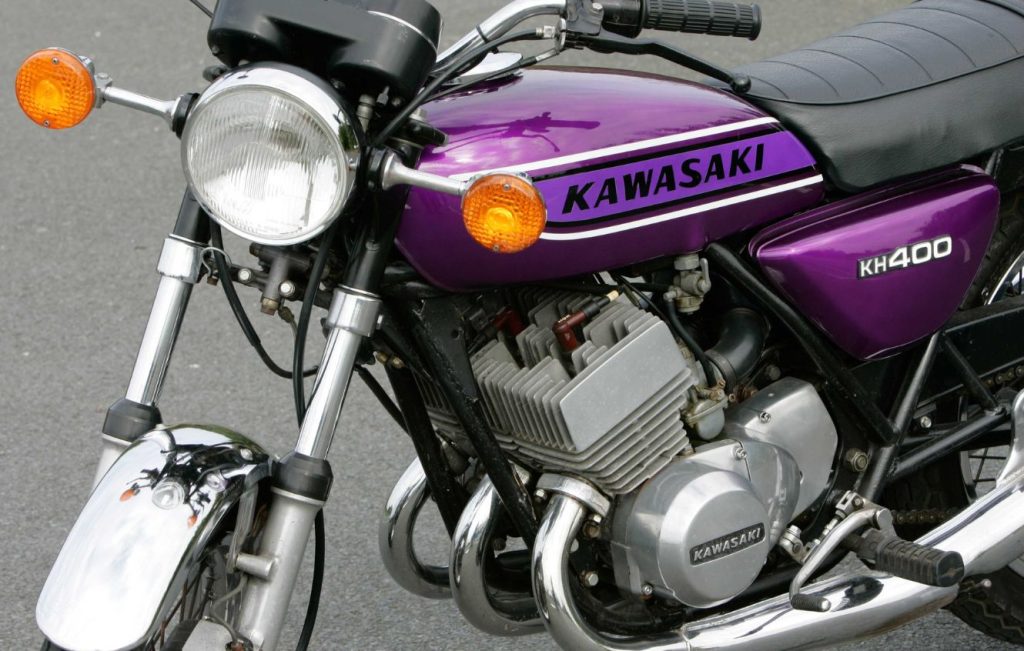
That seems distinctly harsh, because it’s difficult to see what else the firm’s engineers could have done in order to get the two-stroke through the new emissions regulations.
Alternatives or not, it was easy to understand the testers’ disappointment. Cycle World failed to crack the 100mph mark in top speed testing, recording a 98mph maximum. And though UK mag Bike recorded 100.33mph, that was a hefty 8mph down on the figure they’d managed with the S3 a year earlier.
At least the Bike testers were generally impressed by the Kawasaki KH400, when it was set against its four main rivals. “The good news is that the softening-up process hasn’t really affected the 400’s performance that much on the road,” one wrote. “It remains a dramatic and exciting motorcycle oozing with flash machismo, and it’s capable of easy cruising rates higher than any speed limit.”
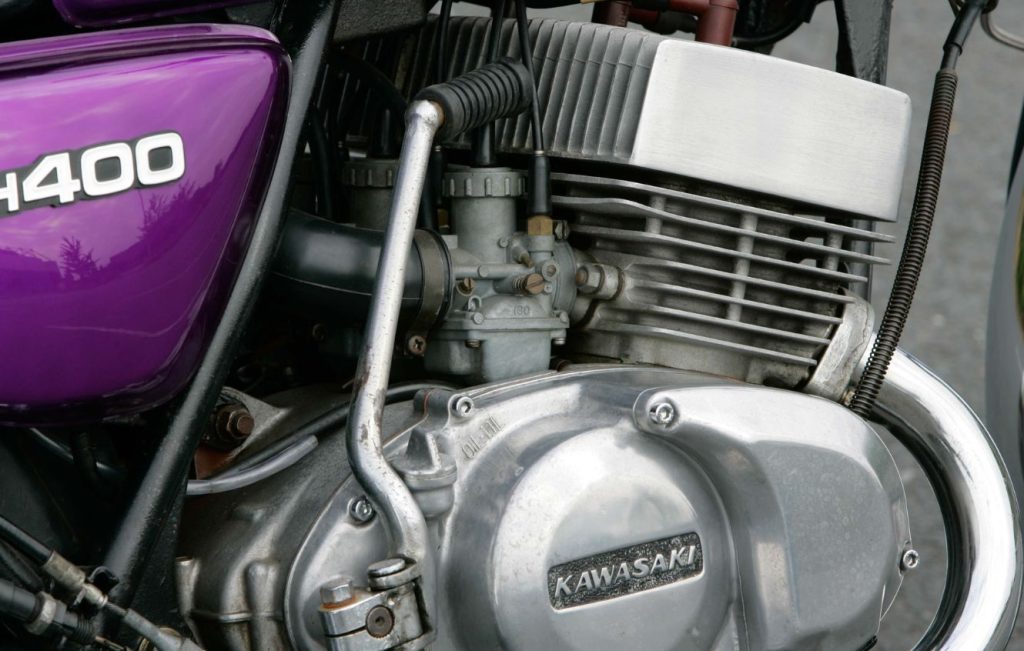
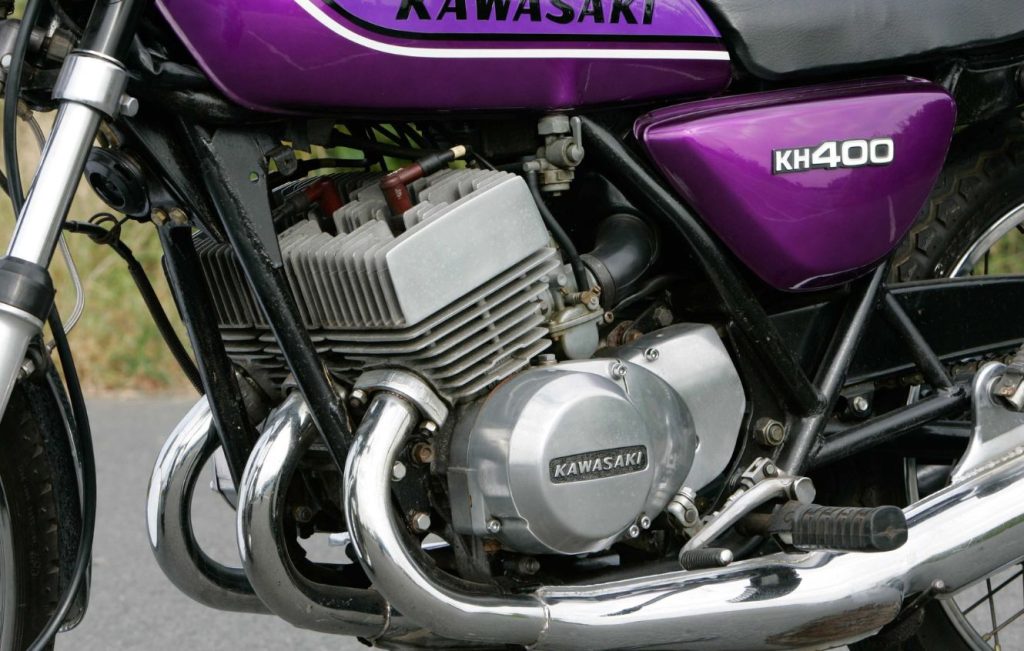
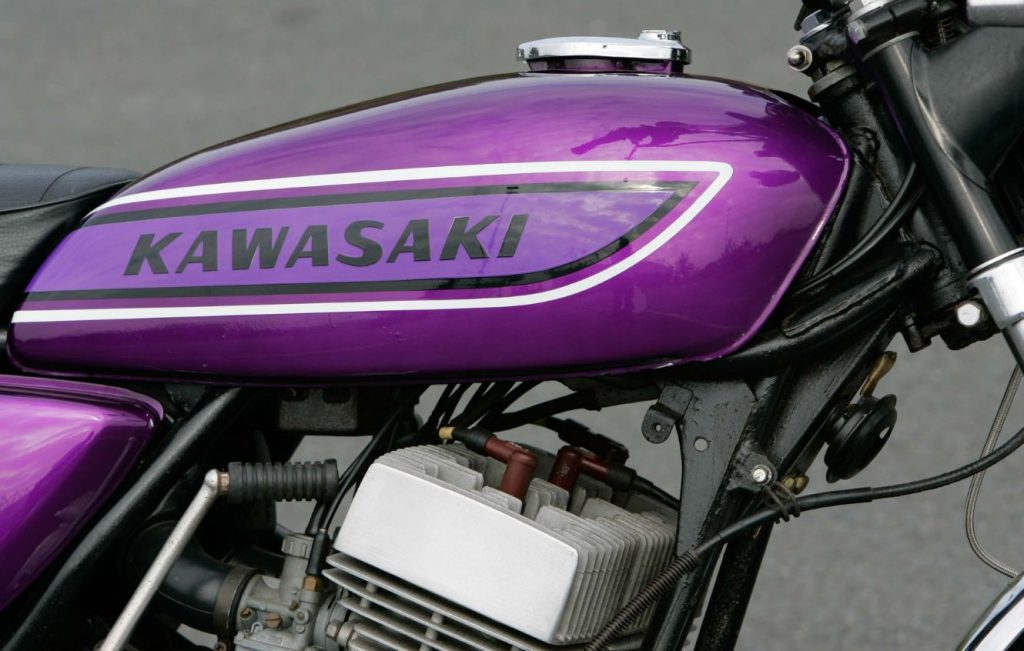
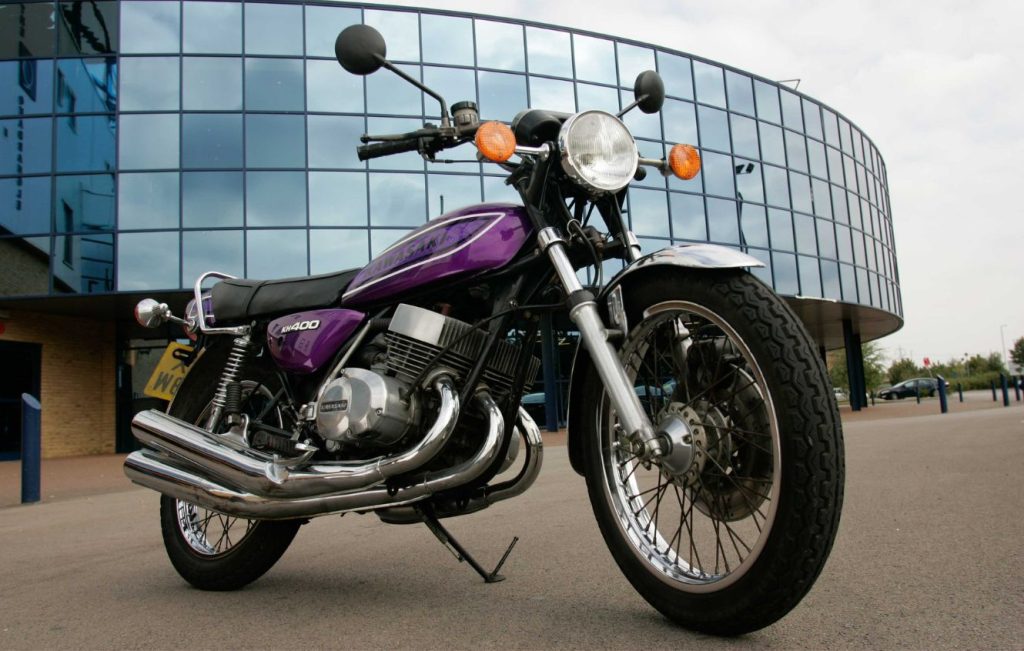
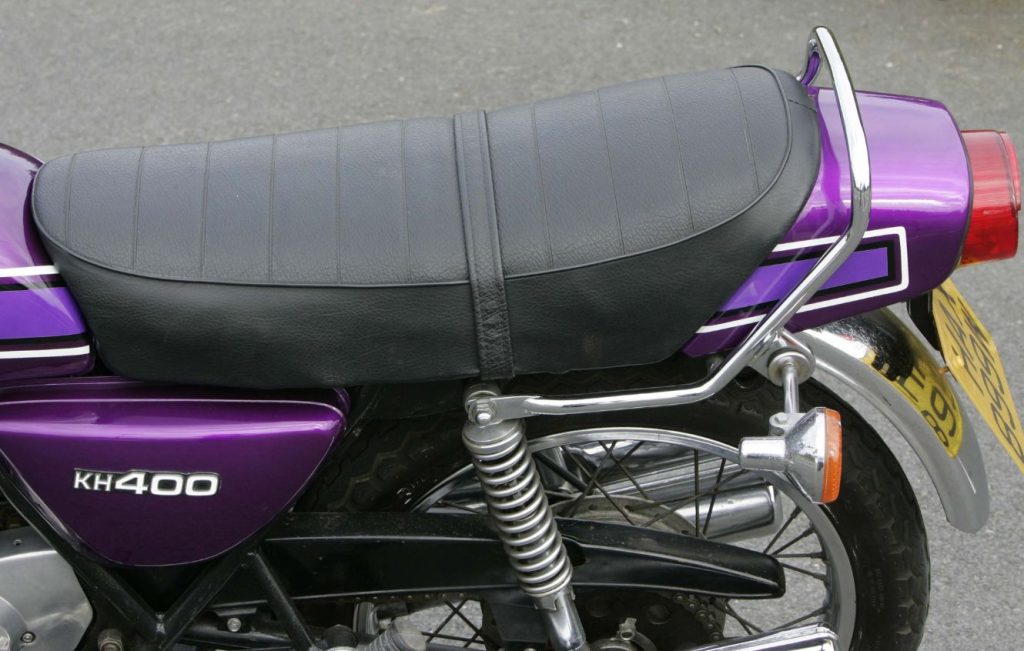
This very clean 1980-model KH certainly looked pretty flashy, with its bold purple paintwork and sparkling exhaust system. Its paint and chrome were in excellent condition, as was the aluminium of its engine.
The Kawasaki started very easily, too, once I’d put it in neutral and turned over the engine with a gentle prod of the kickstarter. It came to life with a familiar ring-ding exhaust note, and a similarly nostalgia-evoking pong of two-stroke oil.
Inevitably the Kawasaki KH400’s performance didn’t match that of its feisty forebears. But it was still quick enough to be fun as well as very manageable, helped by the relaxed, near-upright riding position provided its the raised bars, reasonably forward-set footrests and large dual-seat.
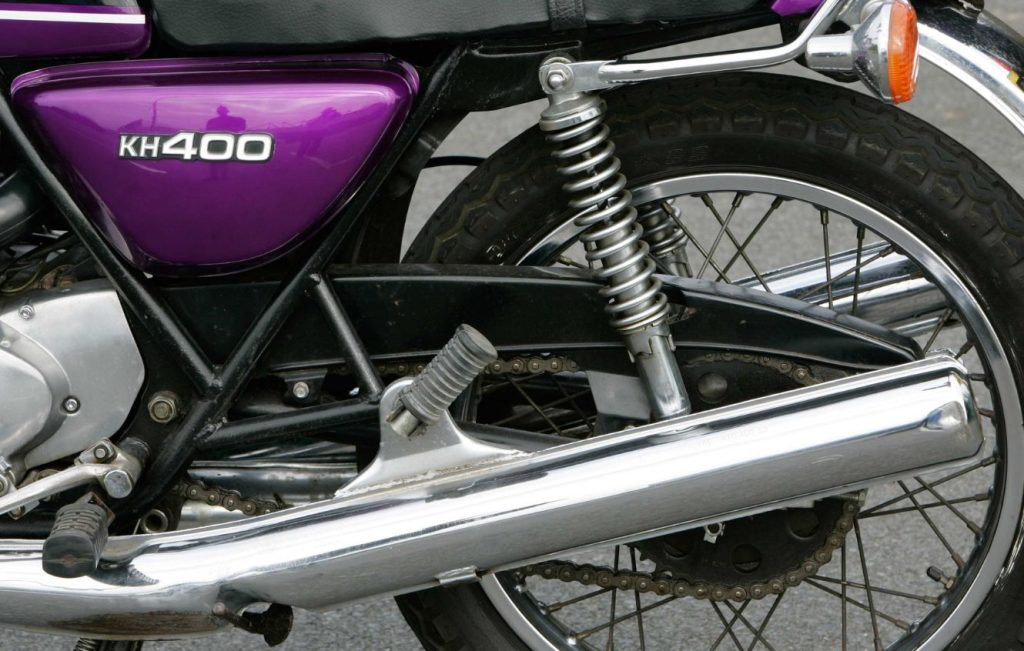
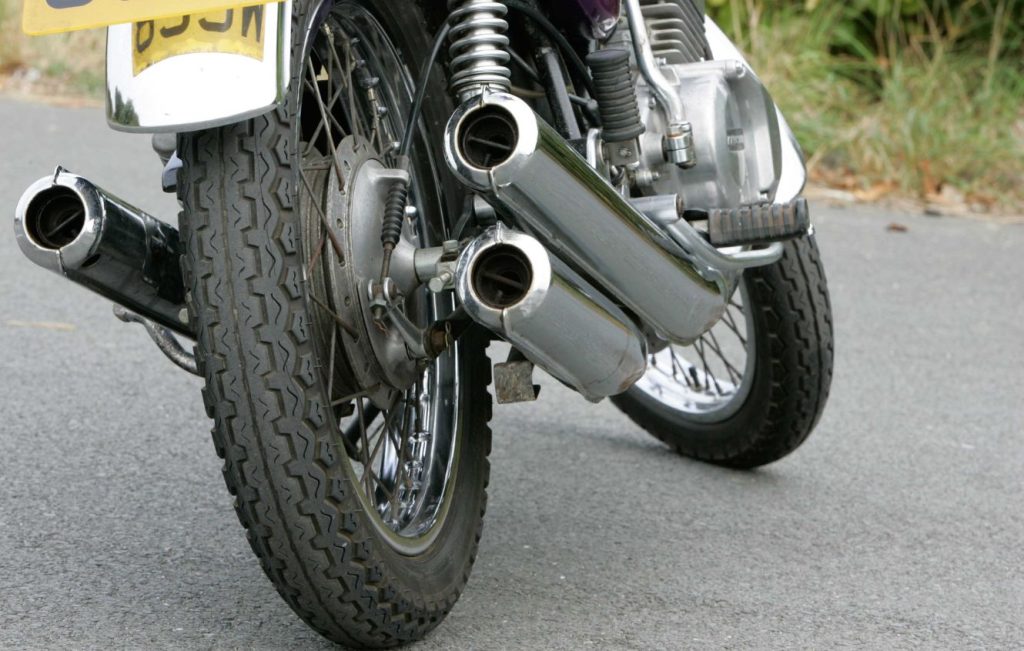
Low rev performance was efficient, if not very strong. The Kawa responded obediently to a twist of the throttle, without coughing or spluttering as some more highly tuned strokers would have done.
I wouldn’t describe it as “amazingly tractable”, as one contemporary tester did, but the KH pulled crisply enough to make the fairly smooth-shifting gearbox’s five ratios adequate.
Getting it moving fast still meant keeping the rev-counter needle above 5000rpm, though. That was the point at which the exhaust note hardened, the Mikunis started swigging fuel freely, and the Kawasaki leapt forward more urgently – albeit with none of the thrilling surge of its infamous H1 ancestor.
From there to the 8500rpm redline the KH was quick enough to tweak my shoulders, though by the time it reached an indicated 80mph it was starting to run out of breath, as it inched towards a sitting-up top speed of just over 90mph.
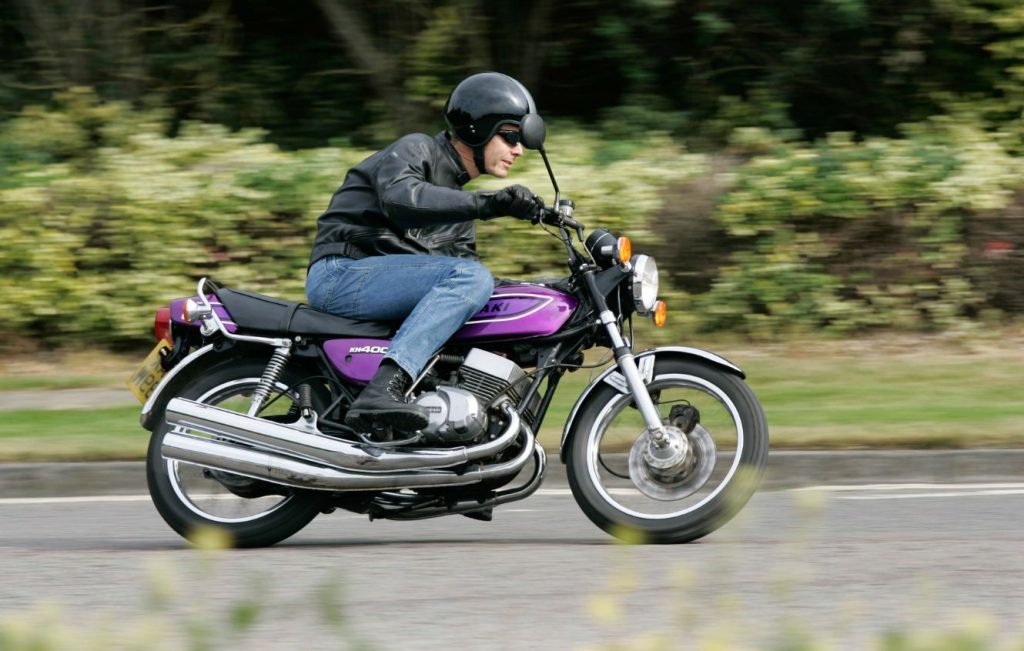
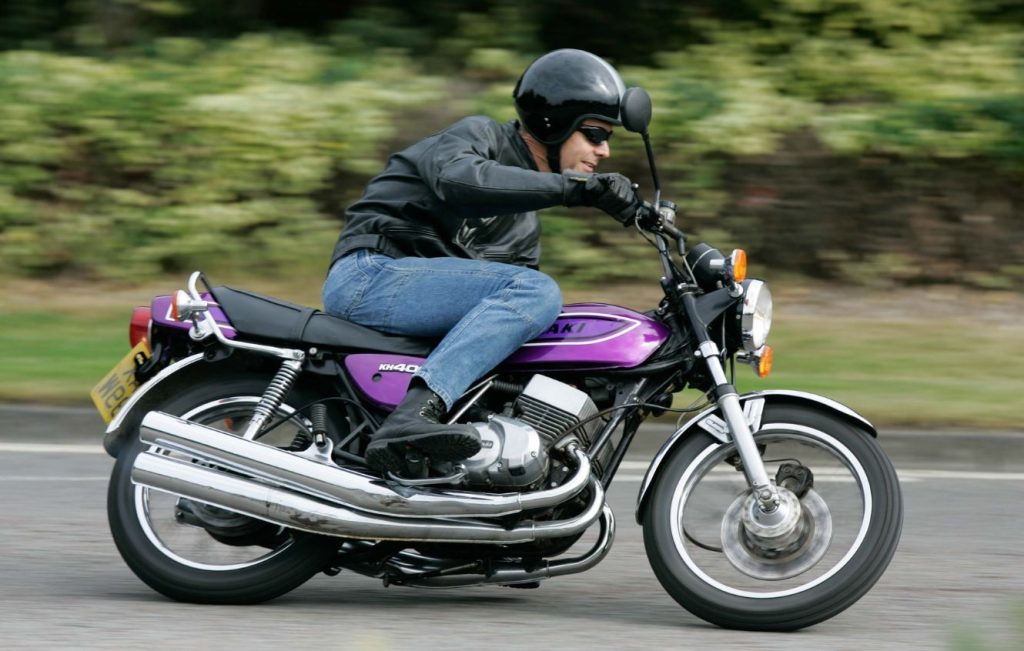
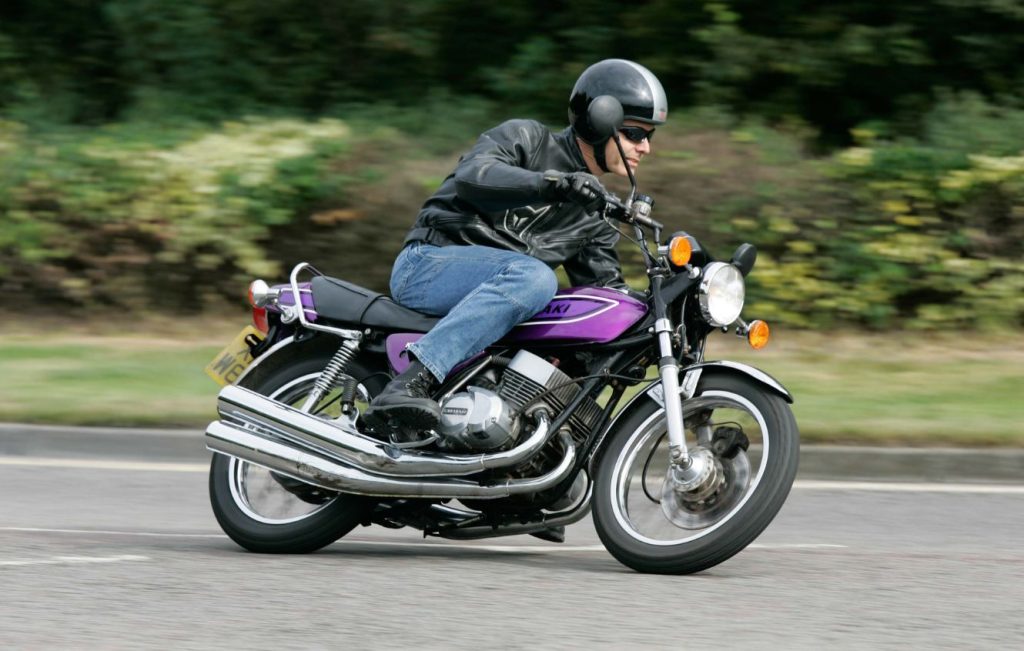
The KH stayed smooth enough to encourage plenty of revs, thanks partly to its engine’s rubber mountings. And its chassis did a good job too, showing none of the H1’s notorious tendency to wobble as the power cut in suddenly.
For an elderly bike it handled well, though the testers of the day had been unconvinced. Its suspension seemed designed for comfort as much as cornering ability, with the result that the KH soaked up bumps but felt soggy when ridden hard.
As the Bike tester complained, “on rough roads the handling becomes less than reassuring. The under-damped rear end pitches and wags, and some fairly intense concentration is required if you’re going to keep it between the trees when travelling fast under such conditions.”
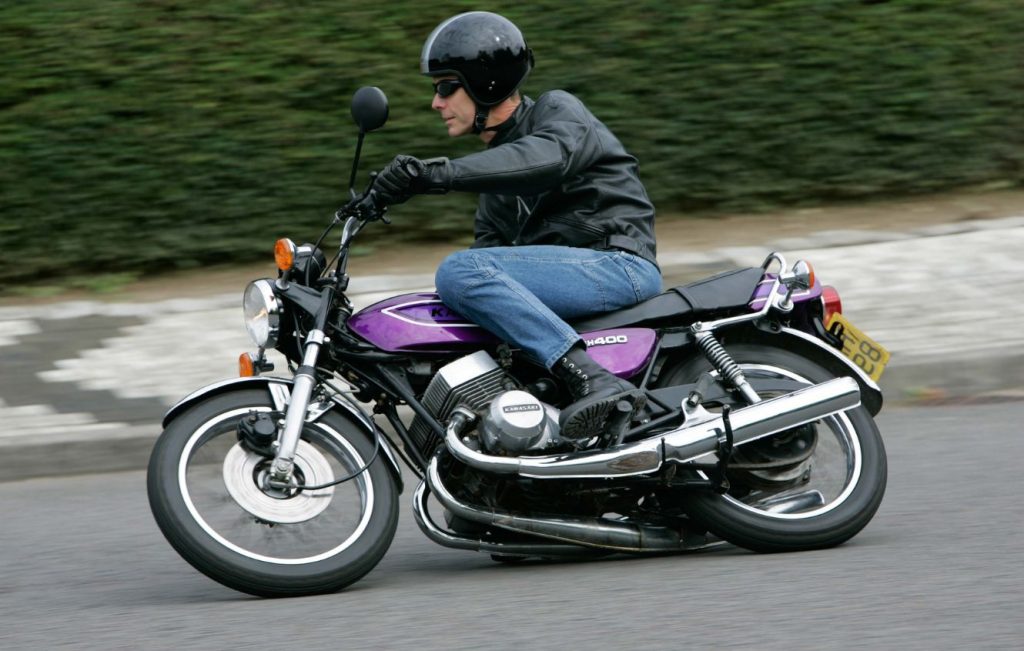
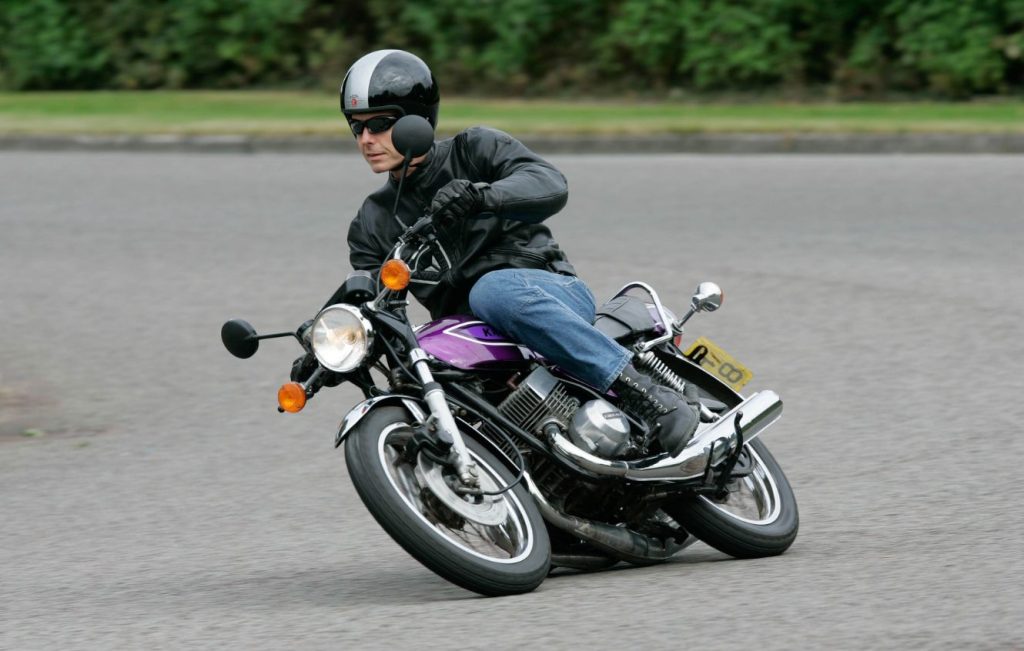
Back in 1976, testers also complained about ground clearance. So it was no surprise that on dry roads this bike dragged its pipes before its narrow Dunlops approached their limits.
At least I had no complaints about the stopping power generated by the single front disc. It required a firm squeeze of the lever but in conjunction with the rear drum was adequate for slowing a bike that was light at 171kg with a gallon of fuel.
Ah, fuel. Talk of that brings us to the triple’s Achilles heel because, unfortunately for Kawasaki, the one area in which this model’s engine performance was not particularly different from its predecessors’ was its fuel consumption.
The KH was shockingly thirsty even compared to Suzuki’s rival GT380, itself a two-stroke triple. When Bike tested the Kawa against its main competitors, it averaged just 31mpg, against the GT’s 43mpg and the Yamaha RD400 twin’s 45mpg.
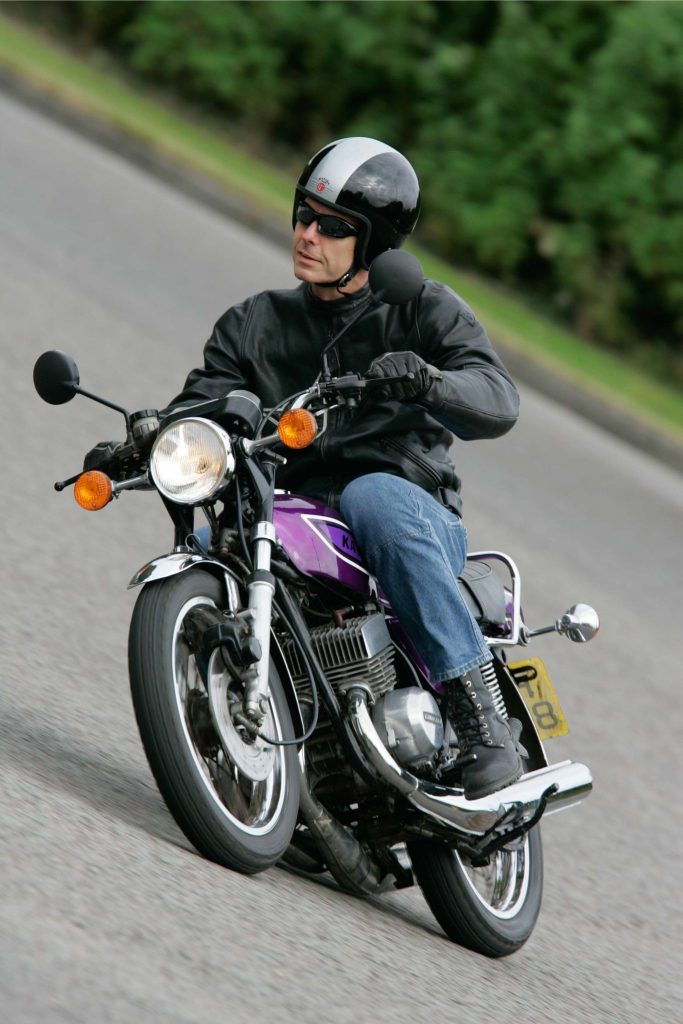
When ridden hard the Kawa’s figure dropped to a 26.3mpg average which, coupled with its tank’s capacity of barely over three gallons, brought range below 70 miles. That was a distinct disadvantage, because both rival two-strokes were otherwise very similar in both performance and price.
The Kawasaki triple’s thirst hadn’t been a major issue when the H1 and H2 were kings of the street. But given the KH400’s more rounded and civilised personality, its drinking was no longer just a habit but a serious problem. And there was seemingly nothing that Kawasaki’s engineers could do to cure it.
Even so, the Kawasaki KH400 was generally well received, being described by one tester as “dramatically fast” and “beautifully smooth with an unmistakable pedigree of refinement”. It sold in reasonable numbers and stayed in the range until 1981, when the two-strokes were finally dropped for good.
By then Kawasaki’s pleasant, rider-friendly triple had earned a loyal following. But it hadn’t made anything like the impact of its meaner, nastier forebears.
Let us know if you enjoyed this article and what you’d like to see from us next.

We were very lucky that Kawasaki and Yamaha competed with the KHs and RDs, otherwise there’d be no history of bikes that could thrash any sports car in two seconds flat for us to reminisce about.
What about Suzuki with the GT250A and X7. The GT250A was a proper two stroke, no fancy valves but with some pretty wild porting , hit 6000rpm and wow.