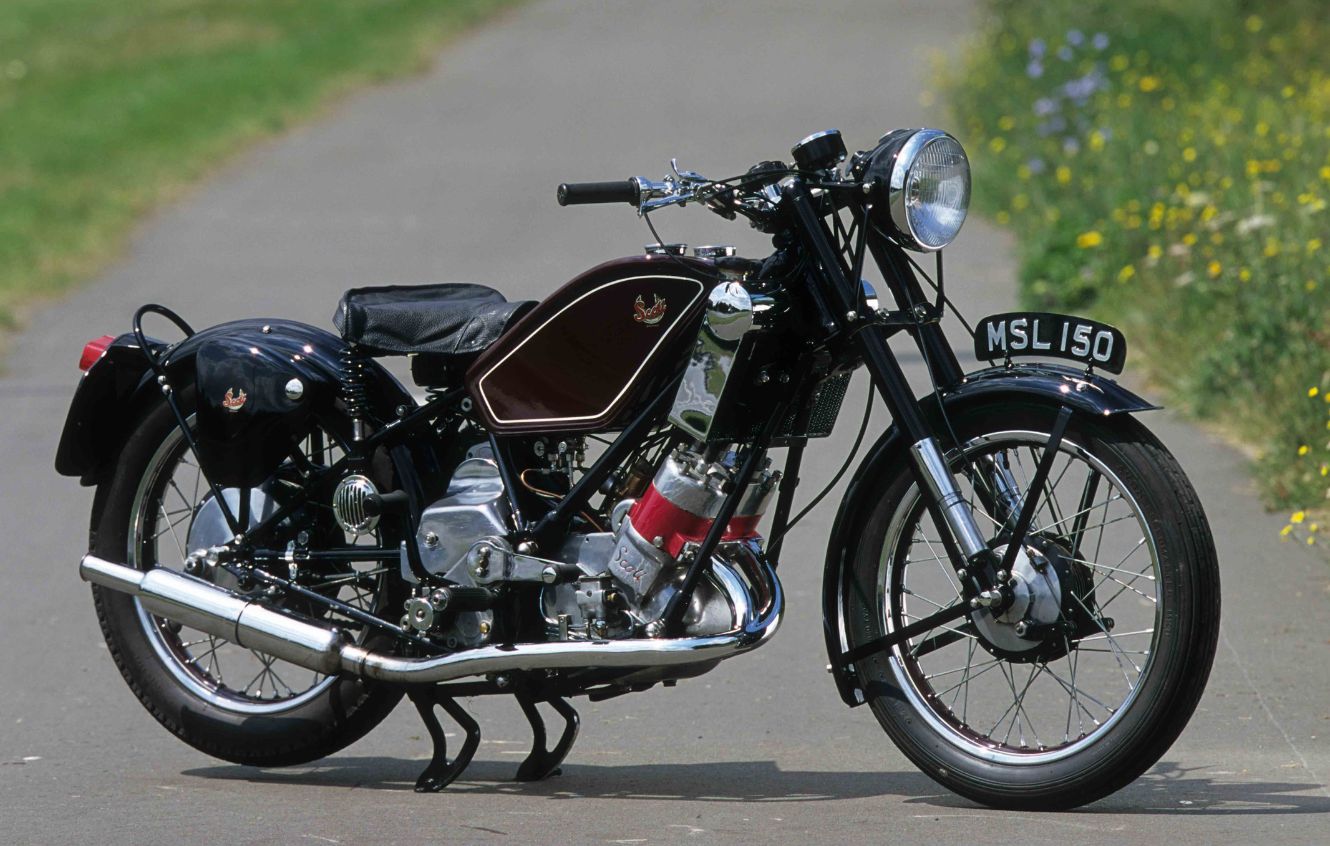
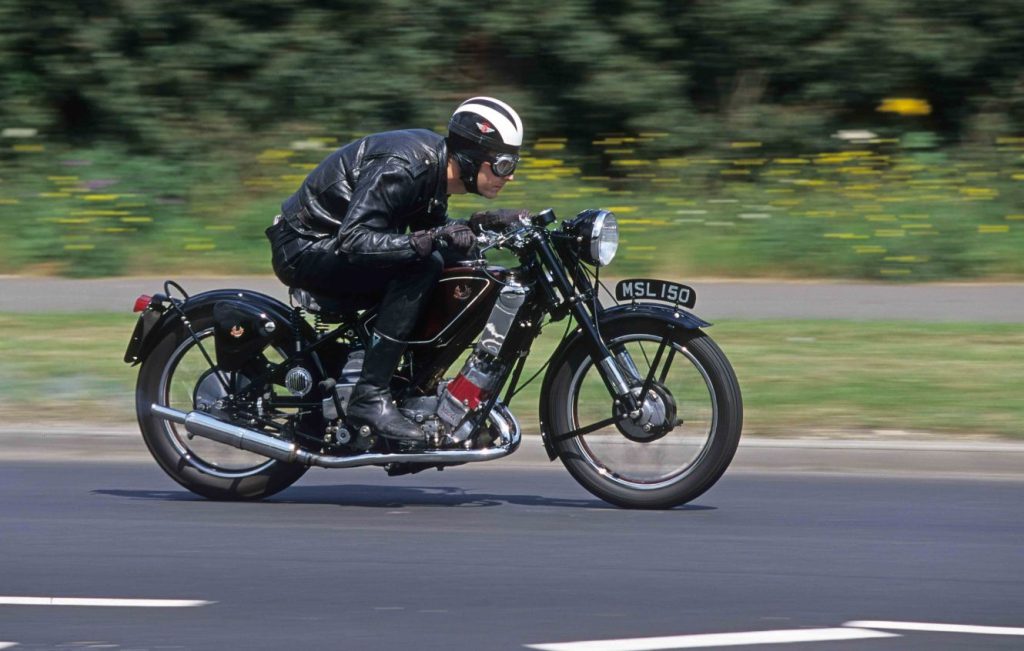
It fires up with a defiant snarl: a loud, aggressive, high-pitched, cackling two-stroke cacophony that has more in common with a grand prix racebike from the Nineties than with a roadster built shortly after the end of World War II.
Underestimate me at your peril, the Flying Squirrel seems to be spitting. I’m one of the famous Scotts – a descendant of the bike that first won an Isle of Man TT as long ago as 1912.
Once you get under way on this 1947-model Flying Squirrel, though, it doesn’t take long to discover that it’s personality is very different from the racy image that its raucous exhaust note and its family’s distinguished competition history might suggest.
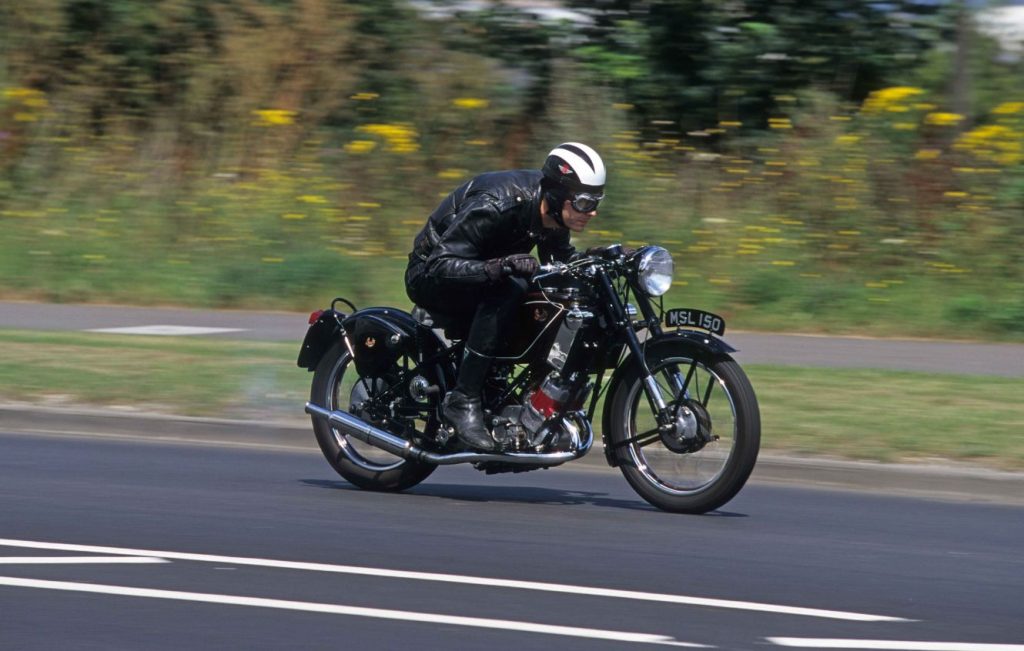
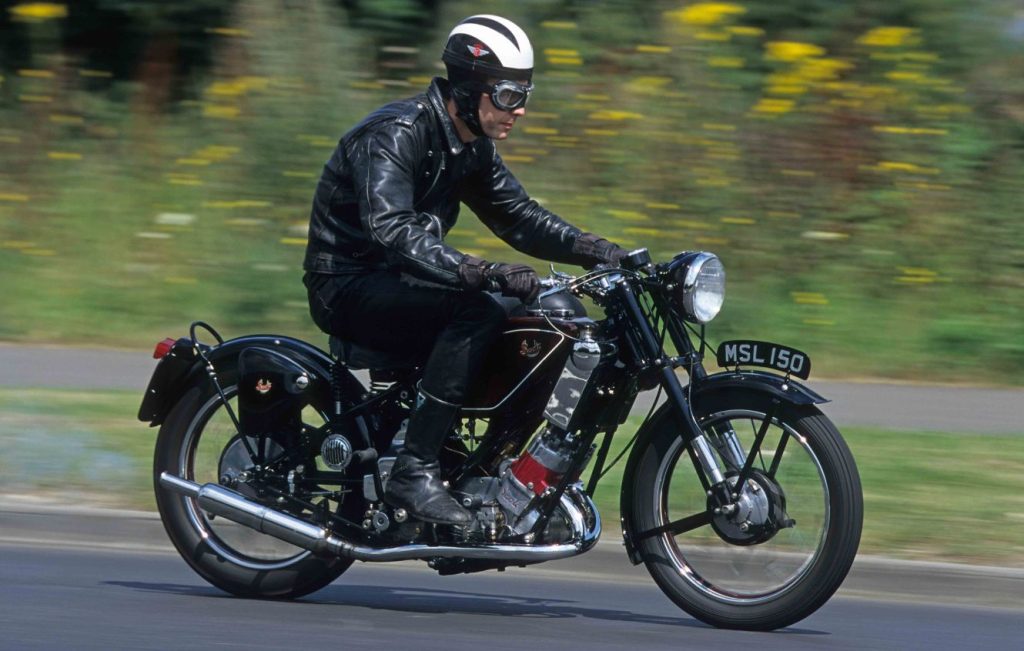
The Scott accelerates reasonably briskly, and cruises at a steady 55mph with a fair bit of speed to come, but this bike’s bite doesn’t come close to matching its fearsome bark.
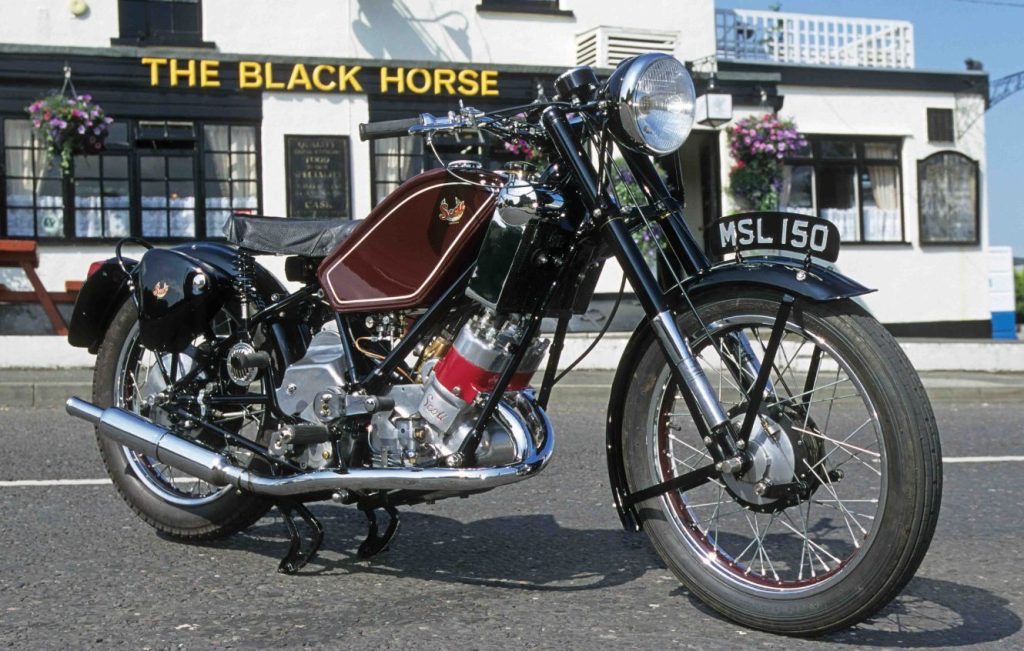
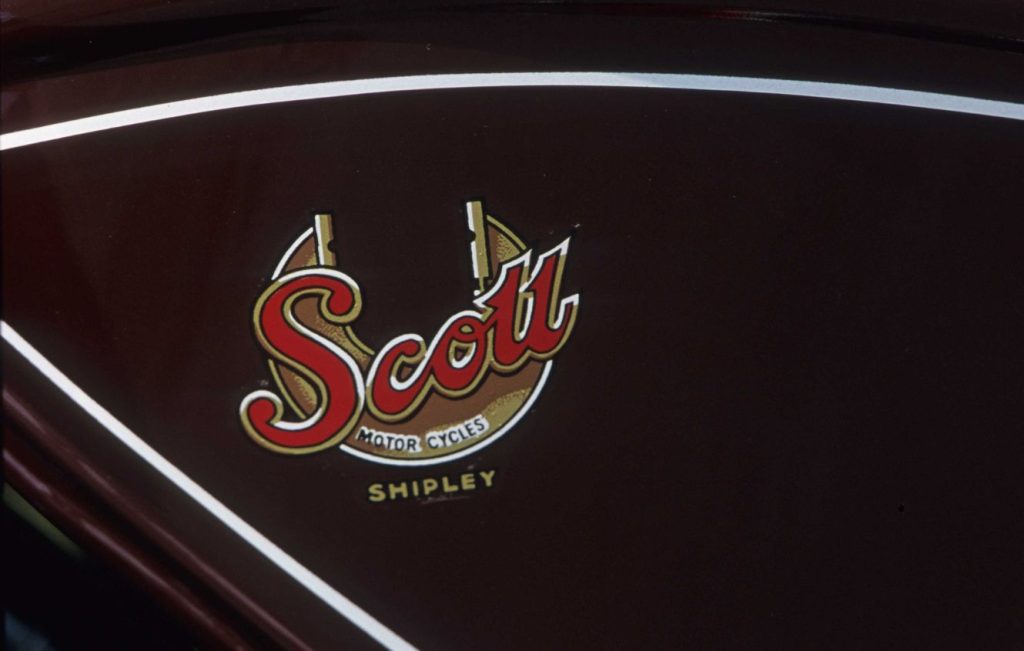
Far from being typical racy two-stroke with all its power at high revs, the Flying Squirrel is a gentle, softly tuned machine that revs to only 5000rpm and is pleasantly smooth, particularly by parallel twin standards. Rather than being especially light, agile and sporty, the twin from Shipley in Yorkshire has a solid, touring feel.
The Flying Squirrel’s gentle personality should not really come as a surprise, for this bike was built more than three decades after its TT-winning forebears. In that time the Scott chassis format had changed considerably, from the open-framed, almost bicycle-style layout of the original machines to a more conventional motorcycle set-up that resulted in a bike weighing twice as much.
Scott was one of the outstanding marques of motorcycling’s early years; and its founder Alfred Angas Scott one of the era’s most inspirational figures. As well as creating the two-stroke parallel twins for which he is best remembered, the Yorkshireman was responsible for innovations including kick-starters, rotary induction valves, triangulated frames, unit-construction engines, and the caliper brake for which, in 1897, he was granted the first of more than 50 patents.
Scott’s first engine was a two-stroke parallel twin that he fixed to a bicycle, and in 1904 he began production of a motorcycle that held a 333cc unit in his triangulated frame. Apart from their unusual engine design and kick-start, Scott’s early models were notable for their telescopic forks and two-speed gearbox with foot change.
The simple and light two-strokes provided excellent performance, especially when capacity increased to 486cc. Scotts earned a strong competition reputation, as wins in hill-climbs and trials events were capped by victories in the Isle of Man’s Senior TT in 1912 and ’13, ridden by Frank Applebee and Tim Wood.
When the World War I began a year later, the factory began production of a three-wheeled car and a gun-carrying sidecar outfit. After the War, Alfred Scott sold his interest in the bike firm to concentrate on producing the Scott Sociable, a civilian version of the three-wheeler. But it sold poorly, and Scott died of pneumonia in 1922 at the age of 48.
Meanwhile the Scott Engineering Co continued producing bikes, notably a sports model called the Squirrel, and in 1924 the Super Squirrel, whose new 498 engine featured a liquid-cooled cylinder head as well as barrel.
The Flying Squirrel followed in 1925, featuring a new three-speed gearbox and other upgrades. In the next few years it was updated several times, with capacity increasing from to 596cc, and power output to 30bhp. But production fell with the Depression of 1930, and the firm’s finances never really recovered.
Scott’s development was minimal during the Thirties, and halted when the World War II began in 1939. When production restarted after the War the ageing Scott Flying Squirrel lacked its ancestors’ competitive performance but had inherited their distinctive family feel and two-stroke sound.
The model’s sales brochure of the period made the most of the marque history: “The Scott has ever been known as the ‘different’ motorcycle,” it said. “Silence, performance, simplicity and smoothness give the Scott an individuality which cannot be rivalled by any other make of machine.”
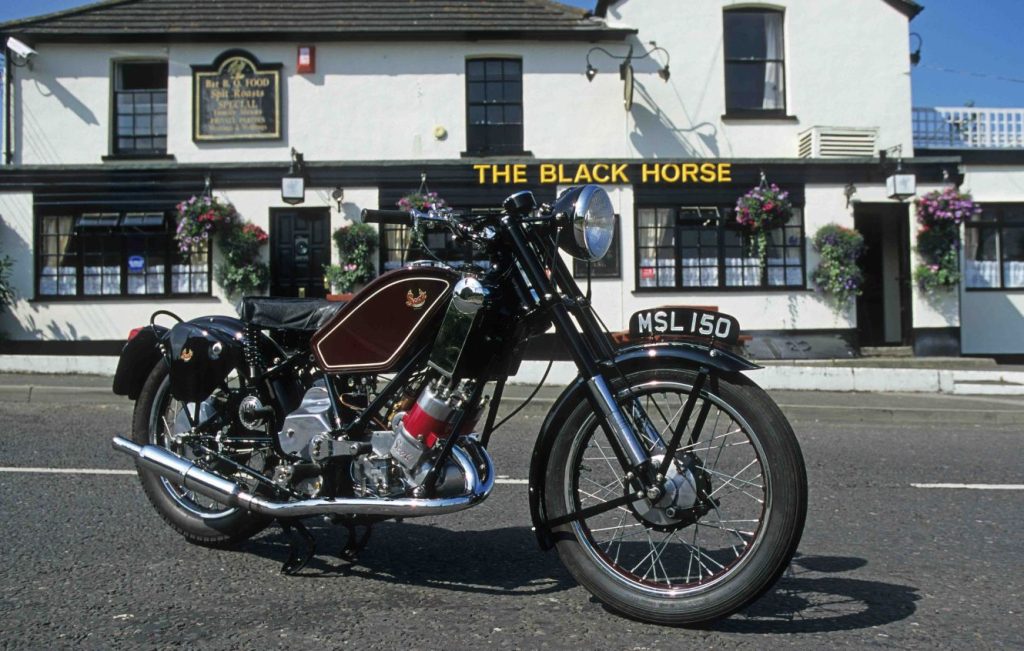
The Scott’s distinctive personality was both a strength and a weakness. Owners appreciated its unique character, and the marque continued to inspire great loyalty – but from fewer riders than in the past.
As the brochure continued, “Not until you ride a Scott does the full significance of its happy difference, and the reason for the unique spirit of camaraderie which exists among Scott riders, become evident. It transforms a commonplace ride into an inexplicable thrill.”
One problem for Scott was that the idiosyncratic two-stroke required very regular maintenance. It was said of early machines that riders needed to serve a three-year apprenticeship before they were fully tuned-in to the engine – and those three years were likely to involve plenty of time and money spent replacing a variety of parts such as pistons and bearings.
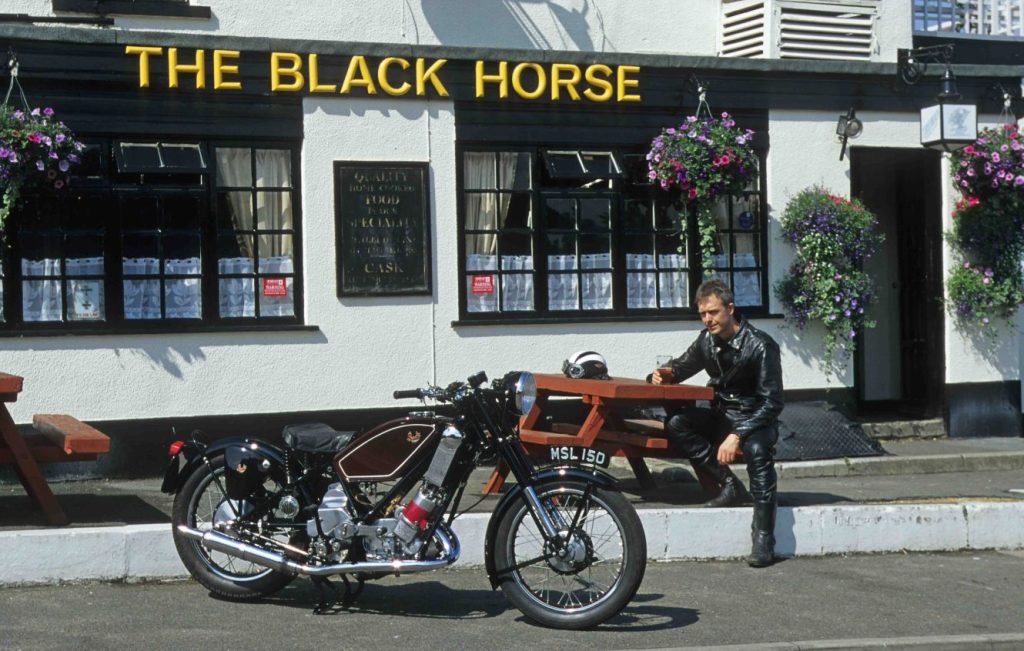
When it was running well, though, a Flying Squirrel had a sophisticated feel, and that was certainly true of this nicely restored bike. Its engine might have surprised me with its volume through that single silencer – why that brochure had mentioned “silence” as one of its attributes I’ve no idea – but the bike started easily, idled reliably, pulled away crisply and was generally well behaved.
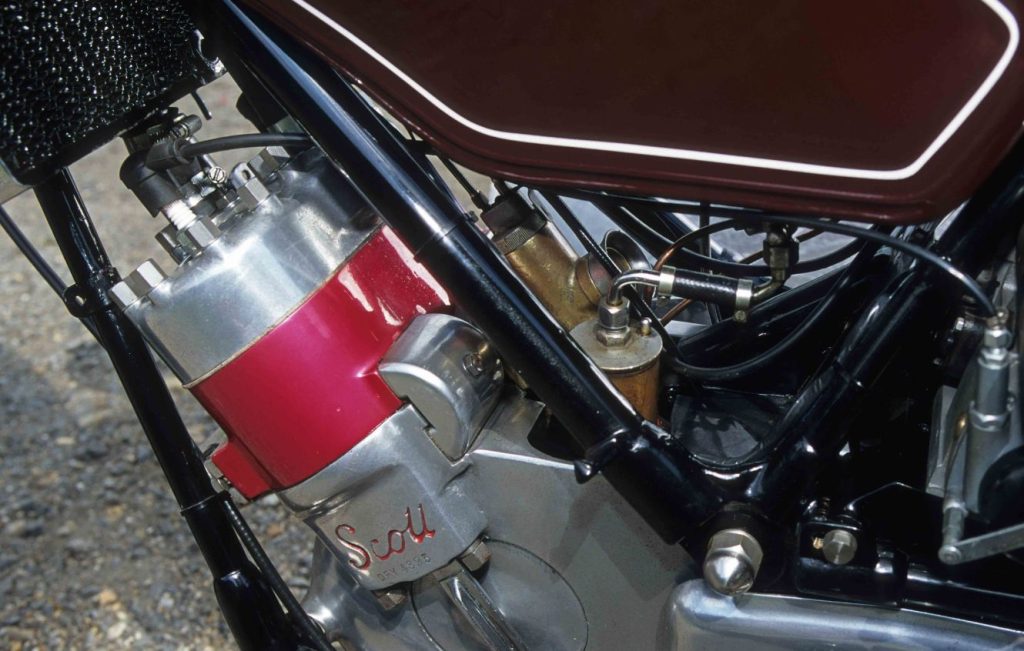
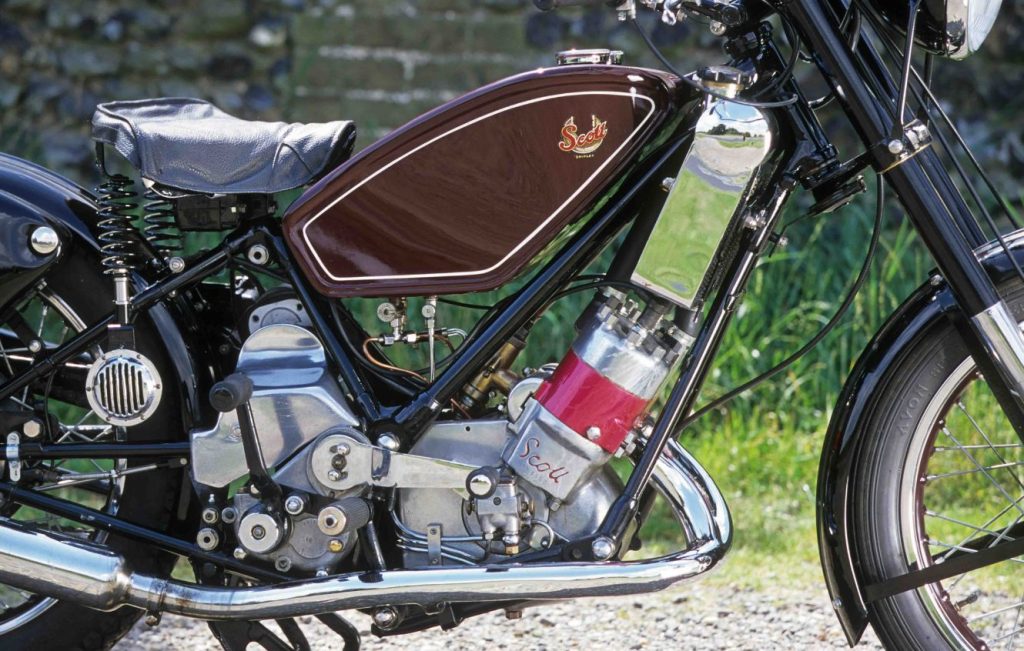
Its owner, Kent-based classic dealer Phil Clarke, had carefully calibrated the notoriously fickle oil pump, setting it on the generous side for the recently rebuilt engine. This meant I left a light trail of blue smoke as I set off, after hooking the large, chromed gearlever into first with a firm movement of my right boot.
Straight away, the Squirrel impressed with its effortless low-rev torque, even though its three-speed gearbox meant that the bottom ratio was unusually tall. Scott never got round to fitting a fourth cog, perhaps partly because the three-speed unit shifted so well.
Despite the widely-spaced ratios the bike pulled respectably hard when I reached the open road and wound back the throttle, its generous midrange performance making for an effortlessly crisp response. The old Scott was certainly a bike that I’d happily have ridden for a good distance, and I could see how it appealed to riders looking for something a bit different.
Scott’s brochure copywriter certainly thought so, praising “the effortless power of the two-stroke twin; the smooth acceleration; its carefree stability; its insatiable thirst for hard work; its never tiring glide; no vibration; no clatter; no fuss; just the powerful yet pleasing musical purr of the exhaust.”
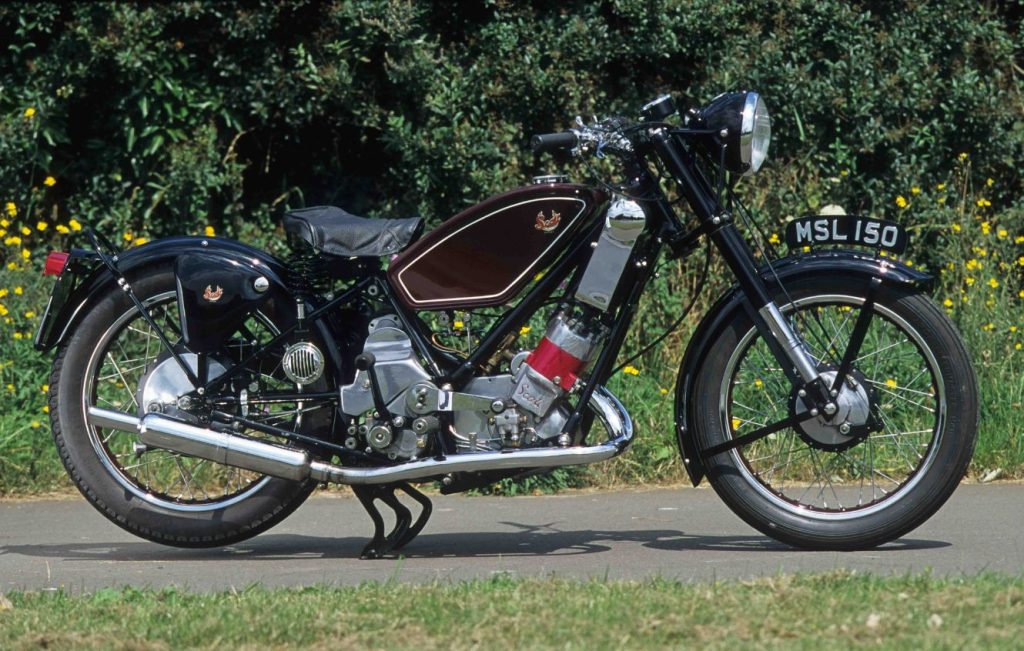
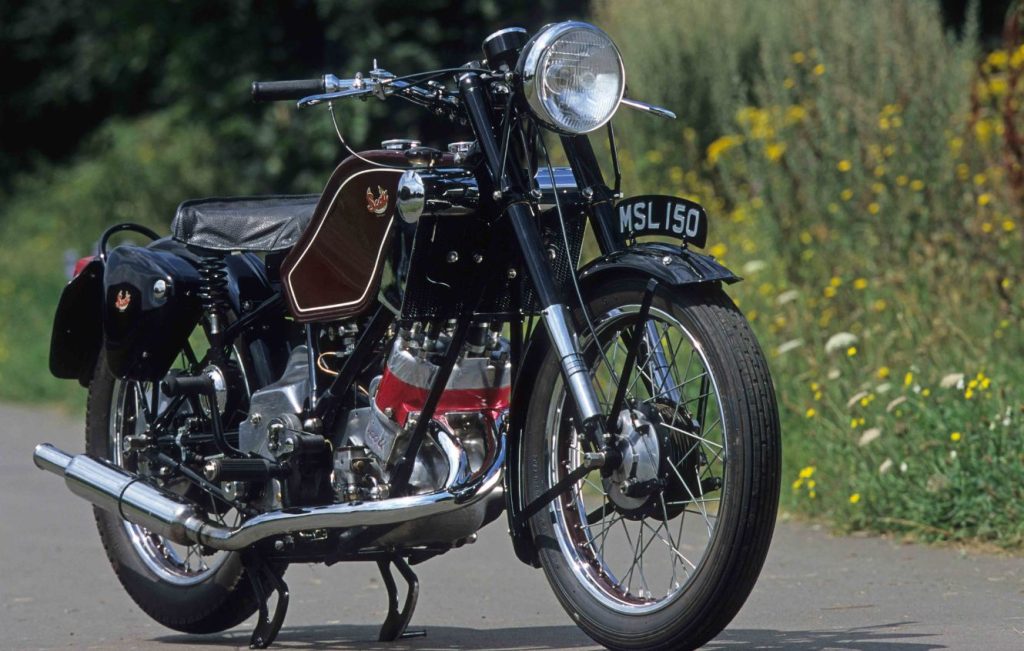
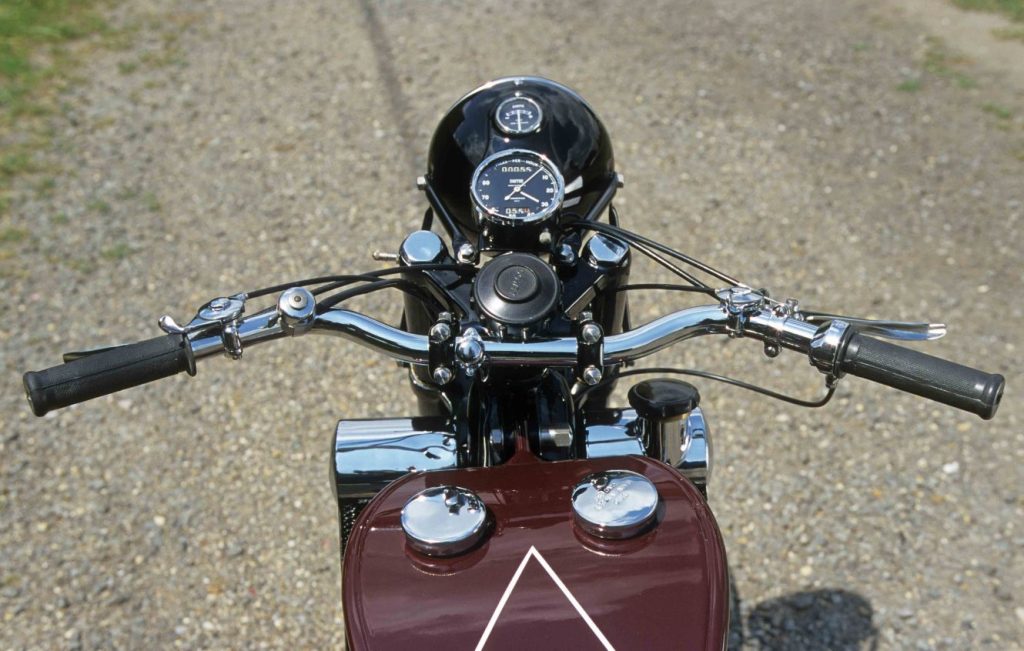
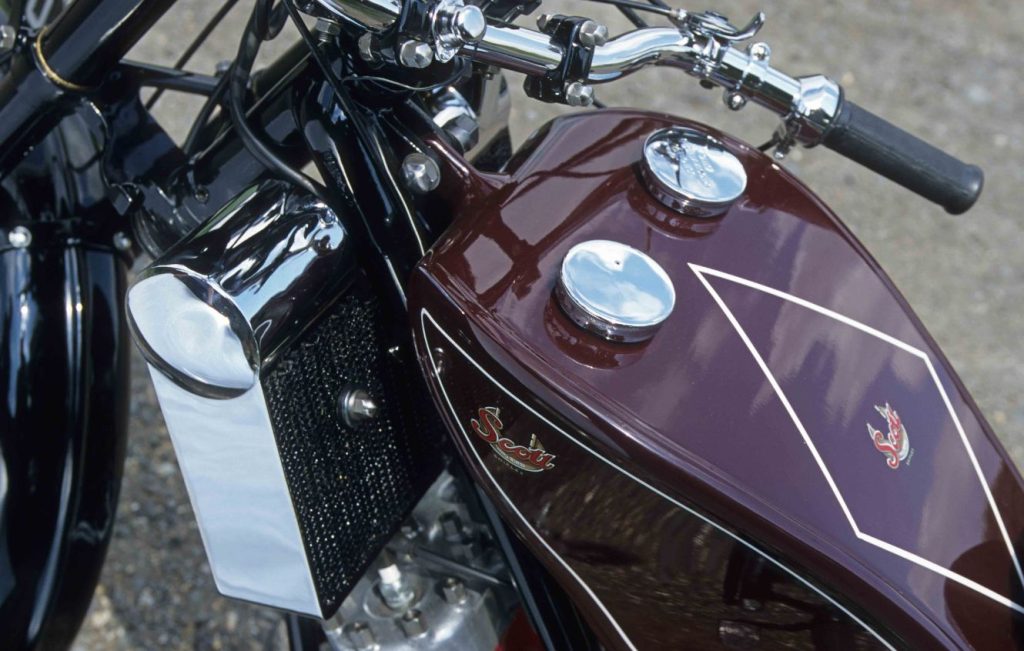
Back in the real world, with its rider tucked down over the tank with its twin filler caps (one for petrol, the other oil), a fully run-in Flying Squirrel would hit the 80mph maximum mark on its Smiths speedometer. But this bike’s recent rebuild meant that the extra burst of acceleration that should have been waiting above 70mph was out of bounds.
So I never got to hear the famous high-revving “yowl” that was a big part of the two-stroke’s appeal. Mind you, such thrashing was not good for the health of the engine anyway, with crankshaft failure a particular risk when the bike was revved hard on a regular basis.
This particular Flying Squirrel had a handling advantage over its predecessors, as 1947 was the year that Scott replaced the model’s girder forks with the new Dowty Oleomatic air forks. These were oil-damped but contained no springs, relying on air that was introduced via a valve on the left leg.
Performance deteriorated badly when the forks’ rather crude seals wore. But this bike’s freshly rebuilt and refilled units worked reasonably well, apart from a rather juddery feel in corners.
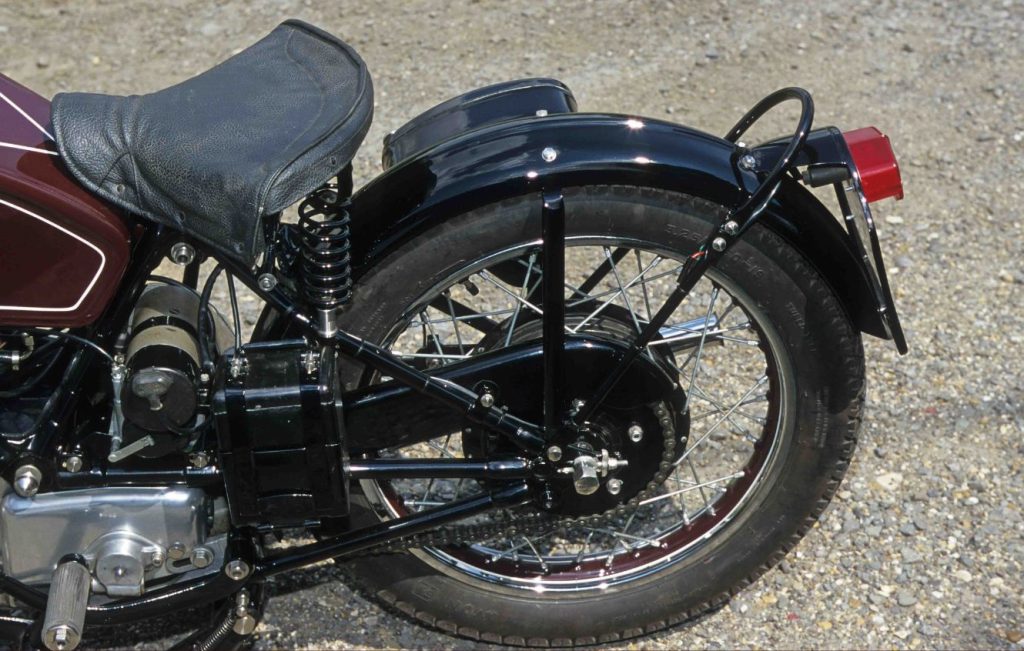
The Scott’s ride was hardly luxurious, as the rigid frame left only the sprung saddle and rear tyre to absorb bumps, but it was fine provided I stayed sufficiently alert to avoid the biggest potholes. Handling was stable and steady, needling little help from the friction damper.
At about 185kg the Flying Squirrel was not particularly light, and its blend of 19-inch wheels and period geometry meant it steered slowly. The wide bars gave plenty of leverage, though they tangled with my knees on full lock during slow-speed manoeuvres.
Another recent chassis update in 1947 was this bike’s dual-sided front drum brake, operated from the normal handlebar lever via a self-compensating balance box. Despite its modest six-inch diameter this brake should have given stronger performance than a single drum, but was regarded as mediocre in its day.
This was easy to understand, because even a hard squeeze of the lever had little effect. Thankfully, the Scott’s conventional and larger rear drum was considerably more powerful.
Scott continued to make modest improvements to the Flying Squirrel, notably in 1949 when it gained a coil ignition system in place of its unreliable magneto. But sales had been very slow for some time, and in the following year the Yorkshire firm went into liquidation.
The marque was bought by entrepreneur and long-time Scott enthusiast Matt Holder, who moved production to Birmingham. Holder oversaw some improvements, including a new frame with twin shock absorbers, but the engine remained almost unchanged.
Given the lack of development it was perhaps inevitable that demand was limited and production levels remained very low; fewer than 300 machines were built over the next 25 years. The final Scott Flying Squirrel was produced in 1978 – still bearing a close resemblance to its earliest namesake of more than half a century before.
Have you ever ridden or owned a Scott Flying Squirrel or another classic two-stroke motorcycle? What’s your favourite forgotten British bike? Share your stories, memories and opinions in the comments below.
Read more:


Ah, the Yowling 2 stroke. Very underestimated.
What about the Silk Scott?
What a dignified looking bike! Daft name, but why argue with a Yorkshireman?