The curvy Dauphine brought style to the masses – here’s to 70 years
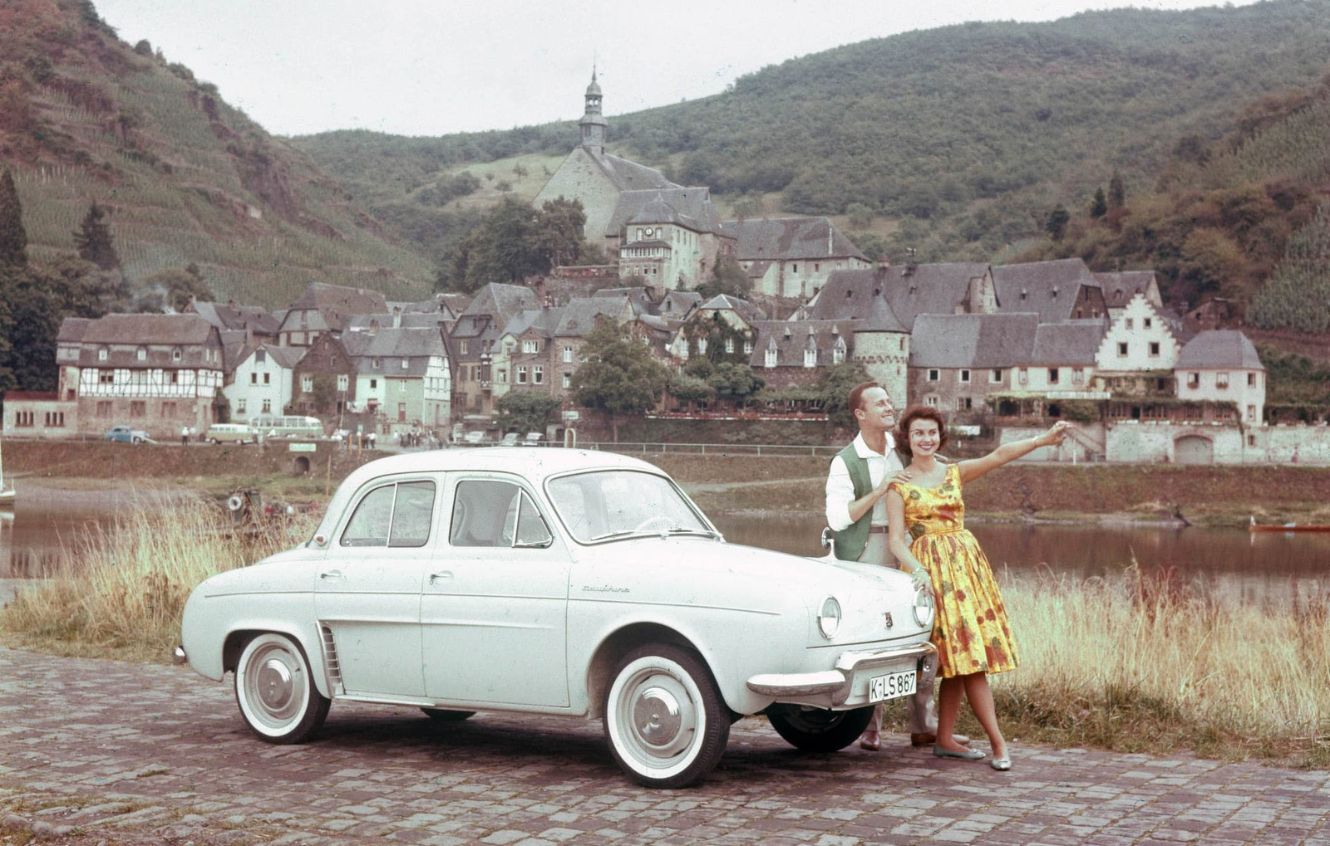
It’s a shape that charmed not only its home nation, but the world – the Renault Dauphine celebrates 70 years this year.
The Dauphine’s design story begins in the aftermath of the Second World War, when Renault was tasked with creating an affordable, practical motor for the masses. This was a pivotal moment for the French marque, as it sought to redefine its product line-up and cement its position in the post-war automotive landscape. Renault’s chairman, Pierre Lefaucheux, and engineer Fernand Picard believed that while the 4CV was fine for the immediate post-war struggle, growing prosperity and the rapid expansion of the French Autoroute network required a car more comfortable and capable.
Fernand Picard envisioned a car that would be simple, economical and easy to maintain. His team set out to craft a car that would maximise interior space and efficiency within a compact footprint. This led them to the rear-engine, rear-wheel-drive layout – and a set of design challenges. Firstly it must have a top speed of 68mph, achieve 40mpg and seat four people. Developing the Renault Dauphine took five years, and the car’s streamlined, aerodynamic shape was the result of extensive wind tunnel testing and meticulous attention to detail. The Dauphine’s rounded front end, sloping roofline and tapered rear gave it a distinctive silhouette that was both stylish and functional. This design approach not only improved the car’s fuel efficiency but also enhanced its stability and handling characteristics. However, there’s more than a little Italian flair involved – Luigi Segre of Carrozzeria Ghia was brought onboard in 1953 to help integrate the engine’s air intake at the rear doors.
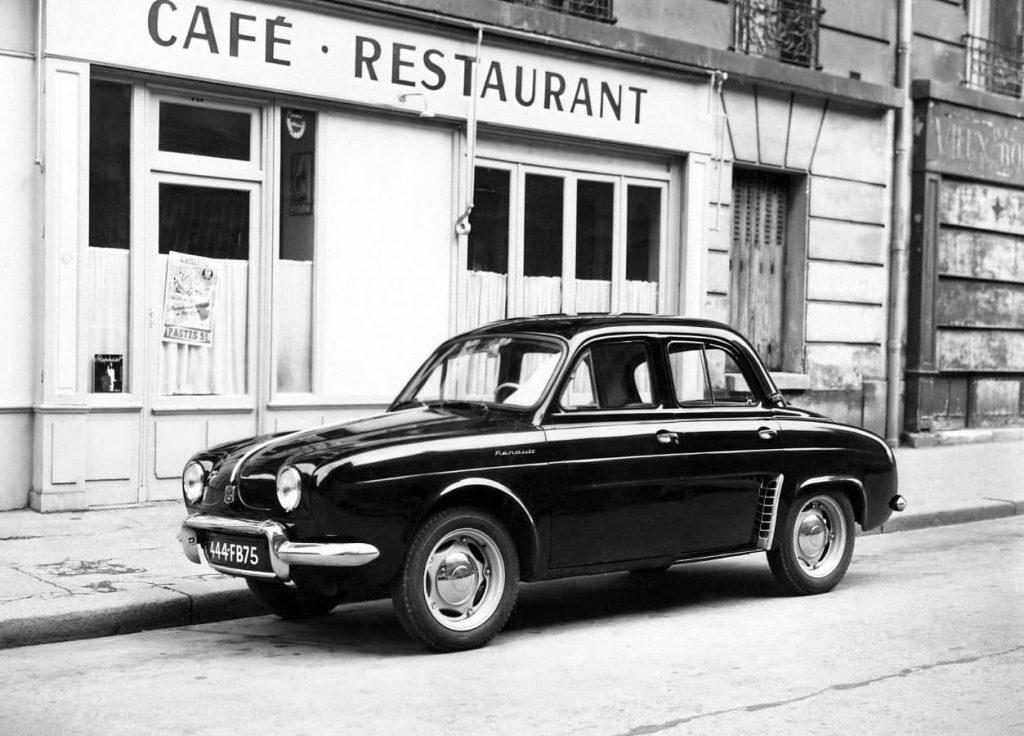
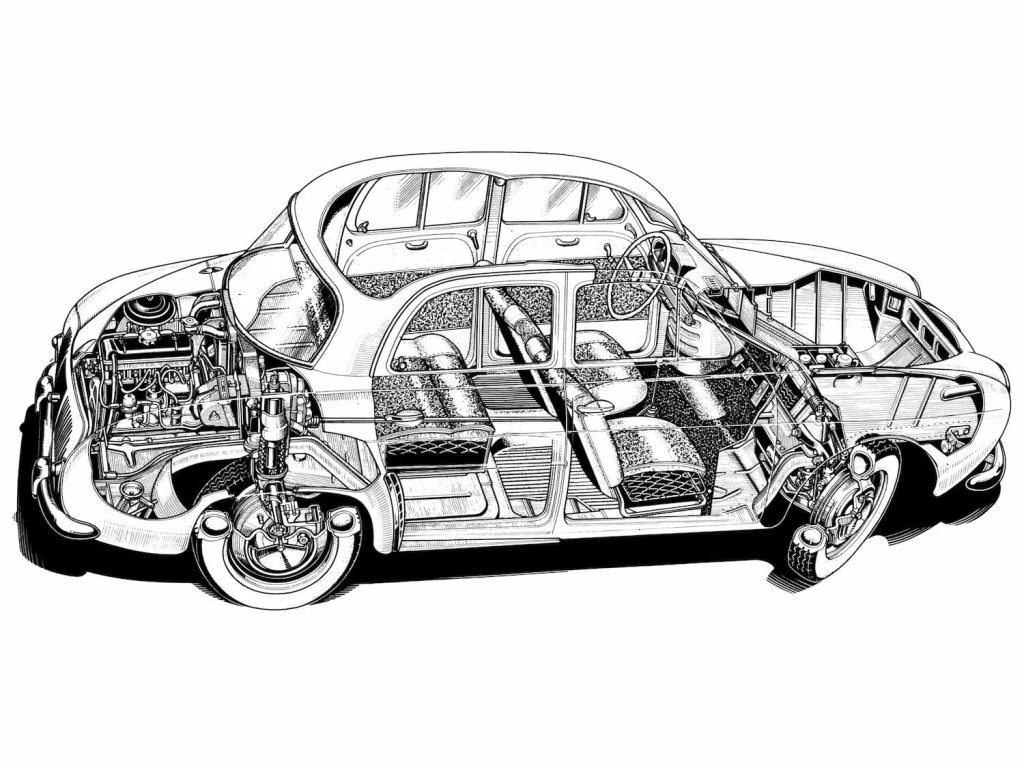
Renault’s focus on simplicity and affordability was evident in the Dauphine’s construction. The body was designed to be lightweight yet robust, with the use of thin-gauge steel and innovative manufacturing techniques. This allowed Renault to keep production costs down without compromising the car’s structural integrity.
Beneath its curvaceous bodywork, the Dauphine’s engineering was equally impressive. Its rear-mounted 845cc four-cylinder engine drove the rear wheels through a four-speed manual gearbox, while independent front suspension and rack-and-pinion steering gave the compact saloon surprisingly nimble handling..
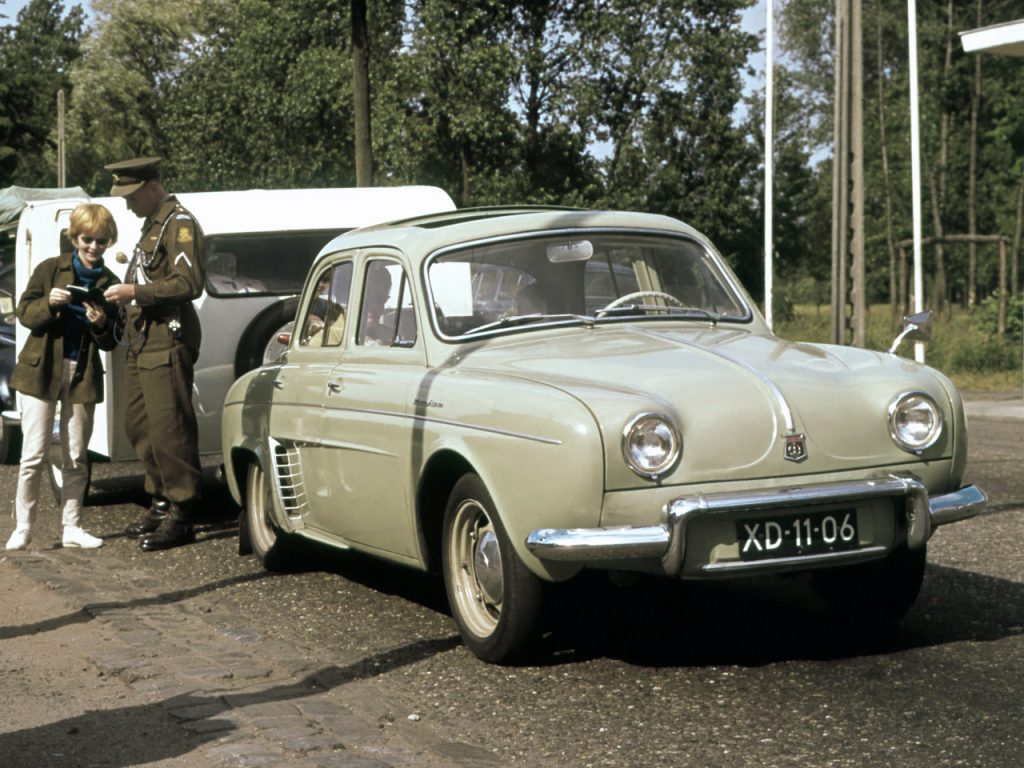
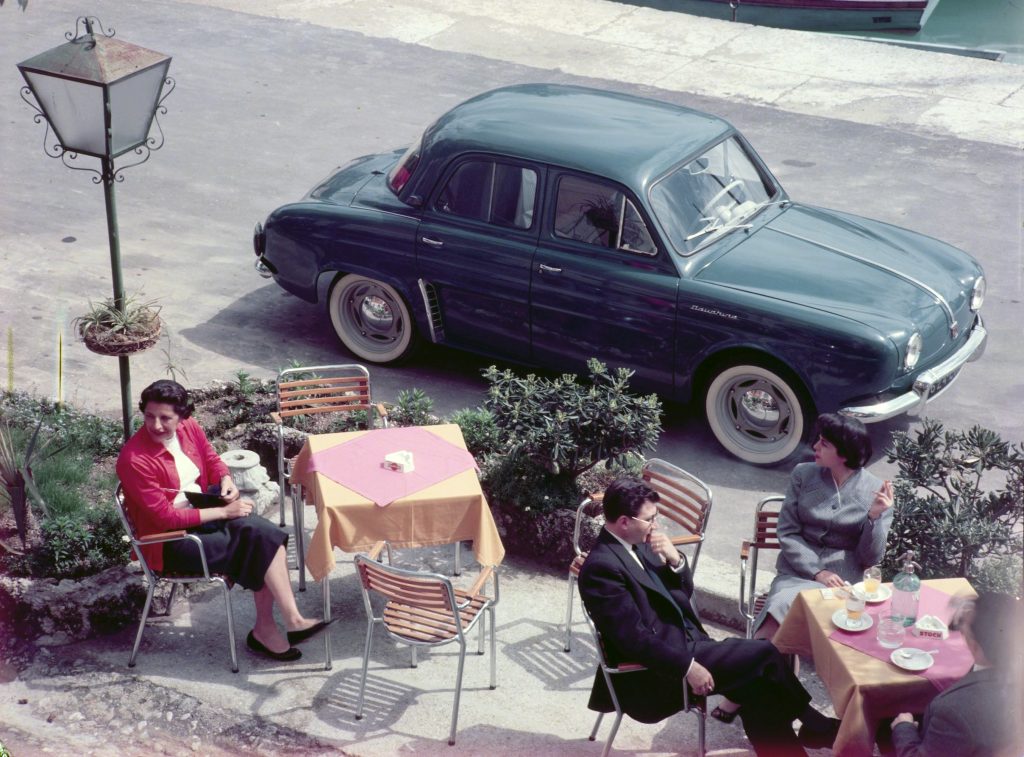
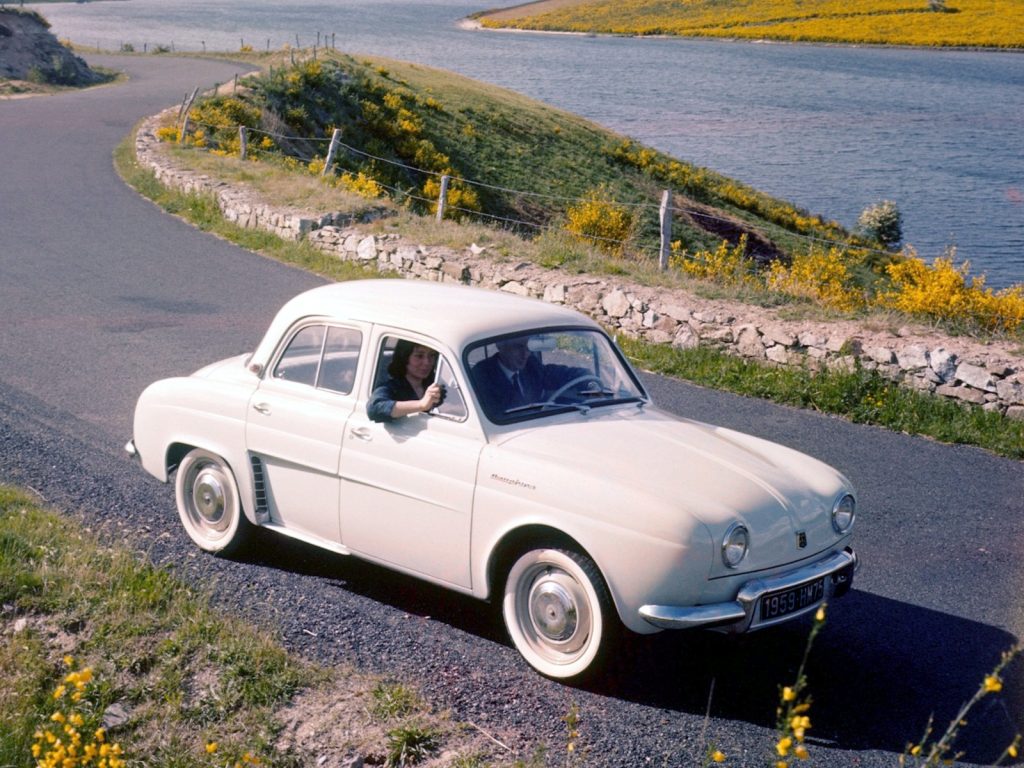
Under the cloak of night on July 24, 1952, the first Renault Dauphine prototype embarked on its journey, with engineers meticulously measuring every performance metric – from top speed and acceleration to braking prowess and fuel efficiency – over three years. Testing began at Renault’s Lardy facility but soon expanded across Europe, from the sun-baked roads of Madrid to the frozen reaches of northern Norway. By the time the first production car appeared in December 1955, the Dauphine had covered more than two million kilometres in testing.
Tragically, the visionary behind the project, Lefaucheux, did not live to see his creation reach production. He was killed in a road accident in 1955, but his successor, Pierre Dreyfus, carried the torch, overseeing the final stages of development and refinement.
On March 6, 1956, the Renault Dauphine made its grand debut at the Palais de Chaillot in Paris, drawing a crowd of more than 20,000 eager onlookers. This preview came just two days before the car’s official introduction at the 1956 Geneva Motor Show.
It was originally dubbed the 5CV, and was at one stage going to be called the Corvette. Instead, the name emerged during a dinner at l’Auberge de Port-Royal, chaired by Fernand Picard. The accounts differ on the precise source, but it was either Jean-Richard Deshaies or Marcel Wiriath who said: “The 4CV is the Queen of the road, but the new arrival can only be the Dauphine.” Dauphine is the feminine form of the French feudal title of Dauphin, the heir apparent to the throne.
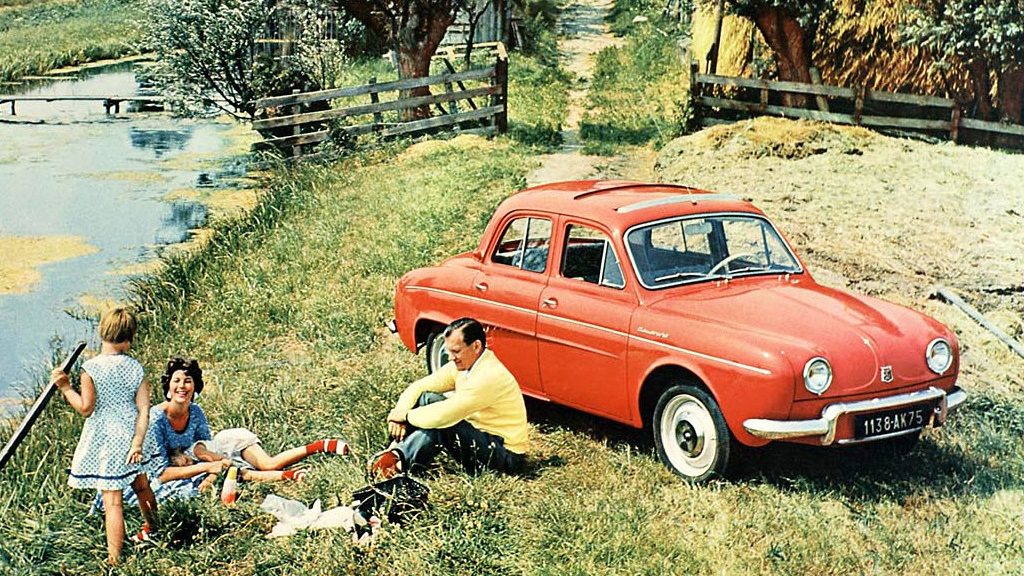
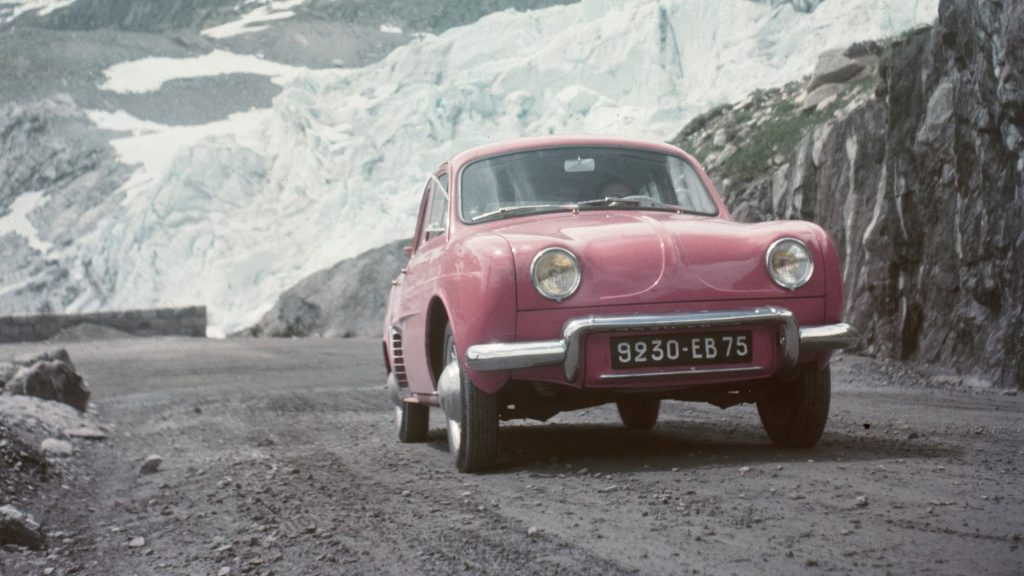
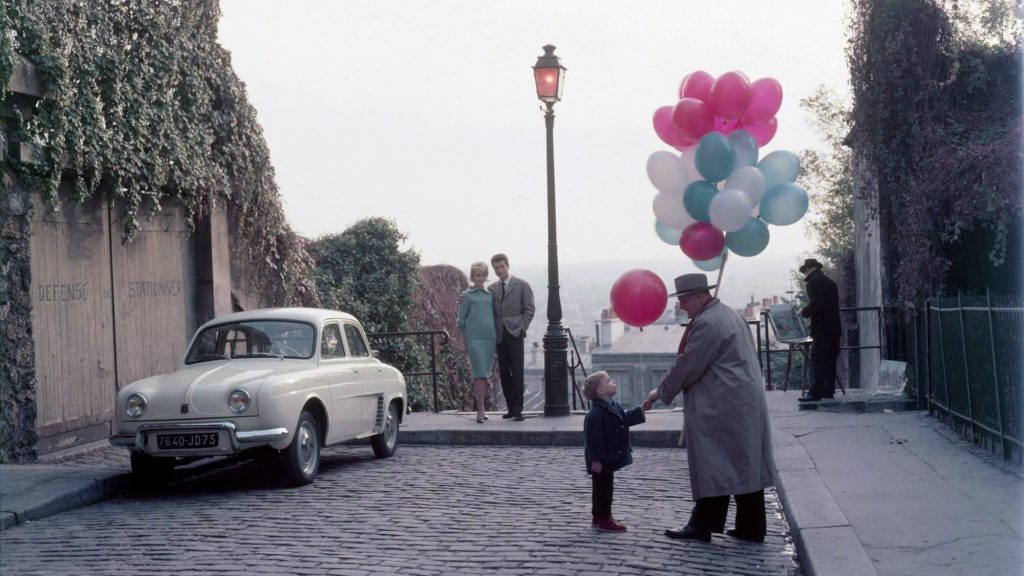
However, it was feminine influence of another kind that elevated the Renault Dauphine from being a car to a style icon. Renault’s own market research had revealed an intriguing insight: women often cared more about a car’s colour than its mechanical specification. Around the same time, Parisian textile artist Paule Marrot wrote to Renault suggesting that the drab cars of post-war France could benefit from an artist’s eye.
The idea resonated. Marrot was invited to collaborate on the Dauphine’s colour schemes and interior finishes, helping transform the car into a style statement as well as practical transport.
The company recognised the importance of appealing to female customers, who were increasingly becoming key decision-makers when it came to household transportation.
Paule Marrot’s expertise in textiles and colour theory made her an ideal collaborator for Renault. She worked closely with the team of designers and engineers to ensure the Dauphine’s interior and exterior hues would captivate the target market – a move that would ultimately contribute to the model’s widespread popularity and success over the more drab Peugeot 203 and Simca Aronde. Marrot also developed the Dauphine’s emblem – three dolphins over a crown, and another of Marrot’s key contributions was the design of the Dauphine’s dashboard. She envisioned a clean, uncluttered layout with clearly marked controls.
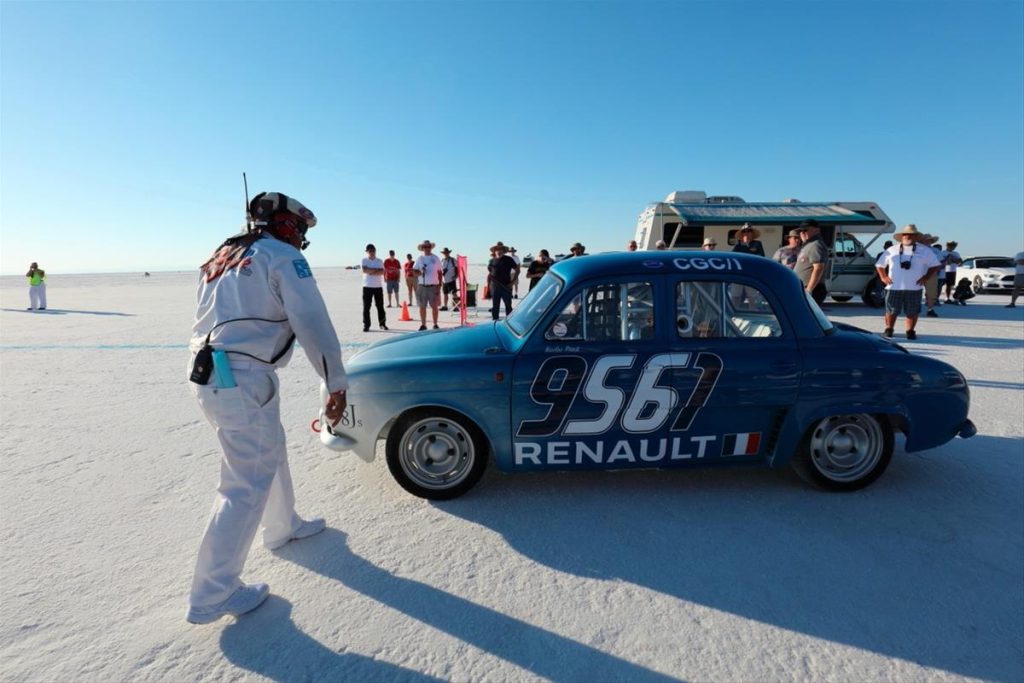
The Renault Dauphine quickly carved out a place in both motorsport and popular culture. Its light weight and nimble handling made it a popular choice for rallying and racing in the late 1950s and early 1960s. Notably, the Dauphine secured several triumphs in events like the Monte Carlo Rally, while it made memorable appearances in films such as The Pink Panther and Alfie.
Globally, the Dauphine found success in various markets. In the United States, for example, it was marketed as a compact, economical alternative to larger American cars, and served as the basis of the electric Henney Kilowatt. Versions of the Dauphine were built under licence in Argentina, Australia, Brazil (as Willys-Overland), Israel, Italy (as an Alfa Romeo), New Zealand, Japan (as the Hino Contessa 900) and Spain. By the time production ceased in 1967, Renault had manufactured over 2 million units, with numerous variants tailored to different markets, including the more luxurious Renault Ondine and the sportier Dauphine Gordini.
The Dauphine’s legacy is a complicated one – it did not go down well with American critics, and its corrosion problems didn’t help. Nevertheless, one enterprising Texas mechanic drove his 1959 car to Alaska and back.
In Europe, the reaction was much better – one million were built in four years, quicker than any other European car, and it was among the first of the non-British-built cars to sell in any great number in the UK. Nowadays few survive – and if you want one, you’ll need to budget between £4,000 to £15,000 for a well-maintained example.
Have fond memories of a Renault Dauphine? We’d love to hear all about them in the comments below.
Insure your classic with a specialist insurer
If you’re looking for cover for your pride and joy, why not consider Hagerty UK? Not only are we classic car insurance specialists, but we are enthusiasts at heart. Call us for a quote on 0333 323 1138.