Think French performance and your mind will drift – or snap oversteer – to such icons as the Peugeot 205 GTI or any number of hopped-up miniature Renaults, from the 5 Turbo to any number of Clios and Meganes.
It’s understandable that the French love hot hatchbacks. The Le Mans 24 Hours is obviously France’s most important motor race but the madcap wheel-twirling tarmac rally action of a certain Monsieur Ragnotti arguably has had more influence on everyday automotive aspiration. After all, this is the nation that gave us the Peugeot 106, 205 and 306 in GTI and Rallye form, while hot Renault hatches spanned nearly 50 years, from the 5, to the 11 and 19, through to the Clios, Meganes and even the Twingo. Citroën got in on the action too, with the Visa 1000 Pistes, AX GTI, Saxo VTR/VTS and ZX Volcane.
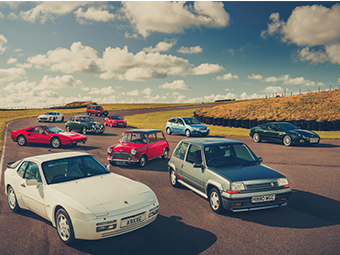
However, there is far more to French performance than such small but mighty machines. Wind back to the 1980s and ‘90s, and its sports saloons were some of the hottest on the planet, and its sportscars offered something distinctively different, and all the better for it. Here are some of our favourites – what about yours?
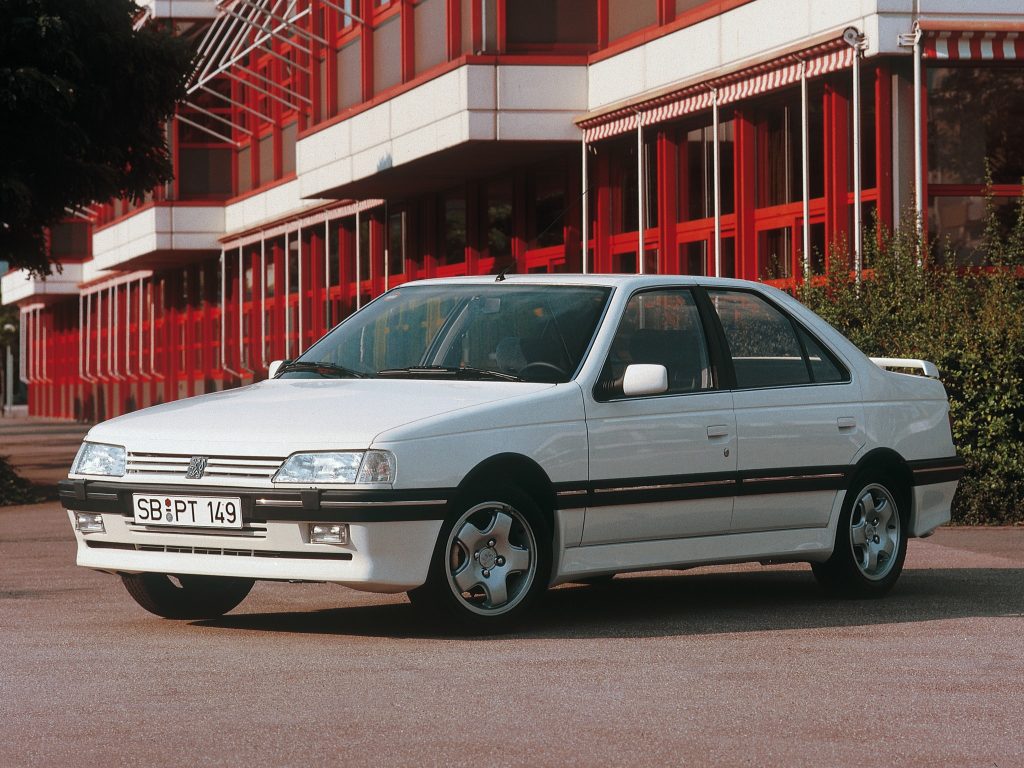
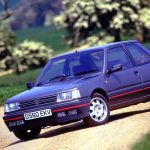
Peugeot 405 Mi16
The 405 MI16 is arguably one of the most influential sports saloons of its era, but it’s largely lost to the mists of time now. Wind back to the 1980s, and long before the modern YouTube aspiration to drift absolutely everything (apparently), rear-wheel drive was largely seen as old-hat for most cars.
The modern front-wheel-drive car of the late 1980s offered lightweight four-cylinder 16v engines, which when combined with advanced rear suspension design, meant that you could beat a heavy, six- or eight- cylinder rear-wheel-drive car point to point.
The 405 Mi16 was at the pinnacle of this, thanks to its light platform, shared with the Citroën BX though the 405 used MacPherson struts and semi-trailing arms. Nothing radical, but Peugeot’s chassis department tuning was a masterclass in compliance, grip and sheer fun. So much so, that it’s alleged that Nissan and Alfa Romeo bought 405s to help them to develop the plaudit-winning Primera and 156 respectively.
While most 405s are great fun (the unassisted-steering base models notwithstanding), the Mi16 was the hero. The subtle bodywork showed off the refined Pininfarina styling, but it was what was under the bonnet that really mattered – a 160bhp 1.9-litre four-pot that was good for 160bhp, 137mph at the top end and 0-60mph in around seven seconds.
Sadly, despite extensive galvanisation most 405 Mi16s have disappeared – crashed, thrashed or harvested for 205 Mi16 conversions.
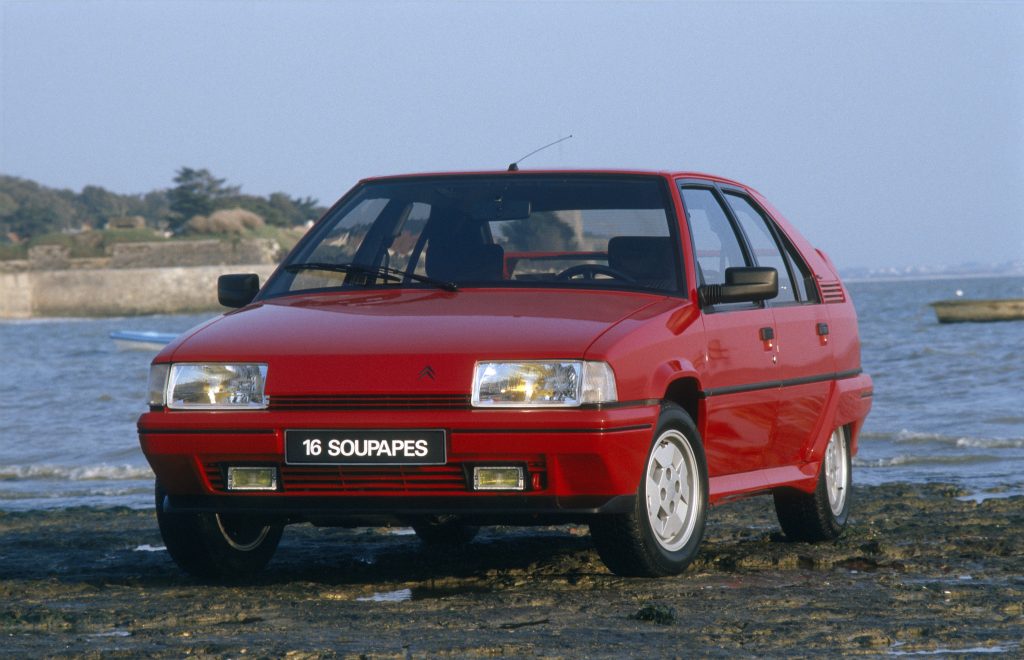
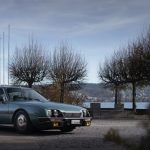
Citroën BX 16v
Though the BX 16v was closely related to the 405 via its engine and platform, the two cars couldn’t be more different – not just to look at, but also to drive.
The BX’s origins actually lie in two Marcello Gandini prototypes built for Reliant and Volvo in the late 1970s, yet when the BX was unveiled under the Eiffel Tower in October 1982 it was still a shock. Compared to the curvy CX, SM and DS, the BX was truly different – it looked like something from Blade Runner, launched the very same year.
We Brits didn’t get the early Sport model, but we did get the GTI, which had an eight-valve 1.9-litre four-cylinder engine that was good for around 120bhp. The best was yet to come in 1987, with the 16-valve version of the same engine – indeed, it was the first French mass-produced car to receive a 16-valve engine. Add in chunky bodywork that made it even more like a Blade Runner refugee, and it certainly had presence.
However, it was the hydropneumatic suspension that truly made the difference. All Peugeots of the era have fantastic ride and handling, especially on bumpy roads, but the BX was another level – smoothing out even the most corrugated tarmac as the 160bhp engine screamed to the redline.
A thicker anti-roll bar and harder suspension helped give the BX 16v the edge on the 405 Mi16, with Swedish testers proving it to be faster in track testing.
Like the 405, many BXs were harvested for their 16v engines for 205 GTI projects. Still, at least more BXs have survived, though don’t hold out for a huge reunion.
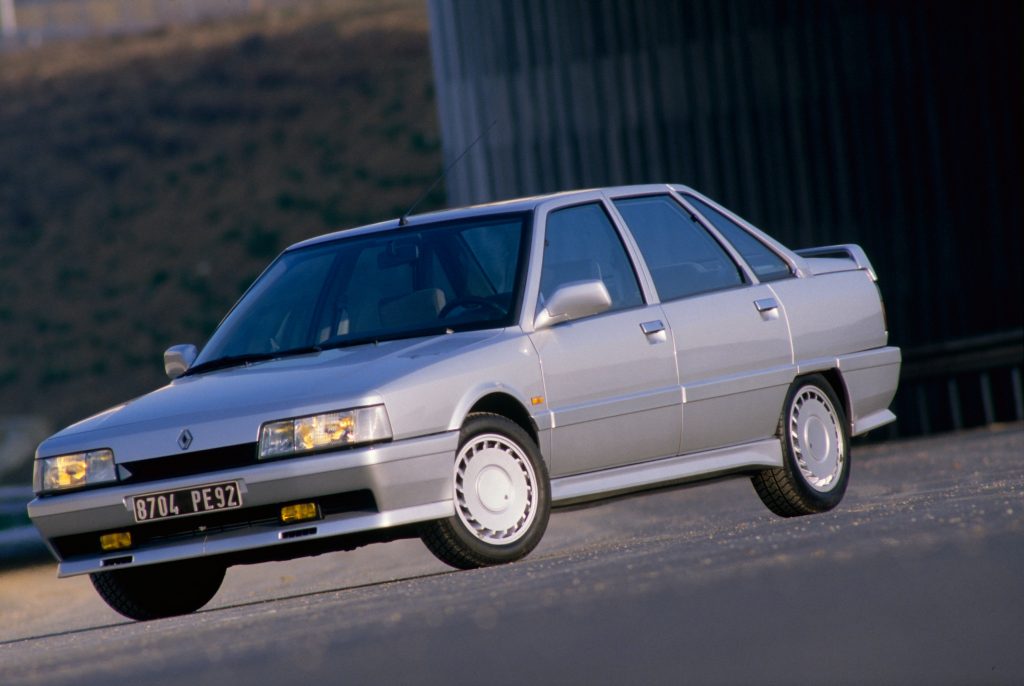
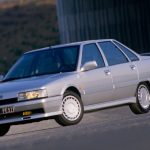
Renault 21 Turbo
Away from the in-house battle between Peugeot and Citroën, Renault forged the turbocharged path from the very beginning. Admittedly it was somewhat more expensive, and certainly more luxurious, but it was also more potent.
The 21’s Giorgetto Giugiaro-penned styling might not have been truly extroverted compared to the BX, but it was certainly different from the Cavalier and Sierra of the time, and its sharp lines in 21 Turbo form have only got better.
Though the 21 wasn’t the most profitable car for its maker – having to build two different engine bays for longitudinal and transverse units due to a lack of suitable gearboxes for the latter – the 21 Turbo became a legend on the autoroute (or an annoyance for any Brit pulled by one on the thrash to Le Mans). It was powered by a turbocharged 2.0-litre Douvrin four-cylinder engine. Though the design could trace its design back to the early 1970s, and had a solitary overhead camshaft when most of its rivals had a brace, it produced 173bhp. That was enough to blast to 60mph in the mid-7s and on to an 140mph+ top speed. Like the 405 and BX, a four-wheel-drive version was added, though the 21 had the coolest name: the Quadra.
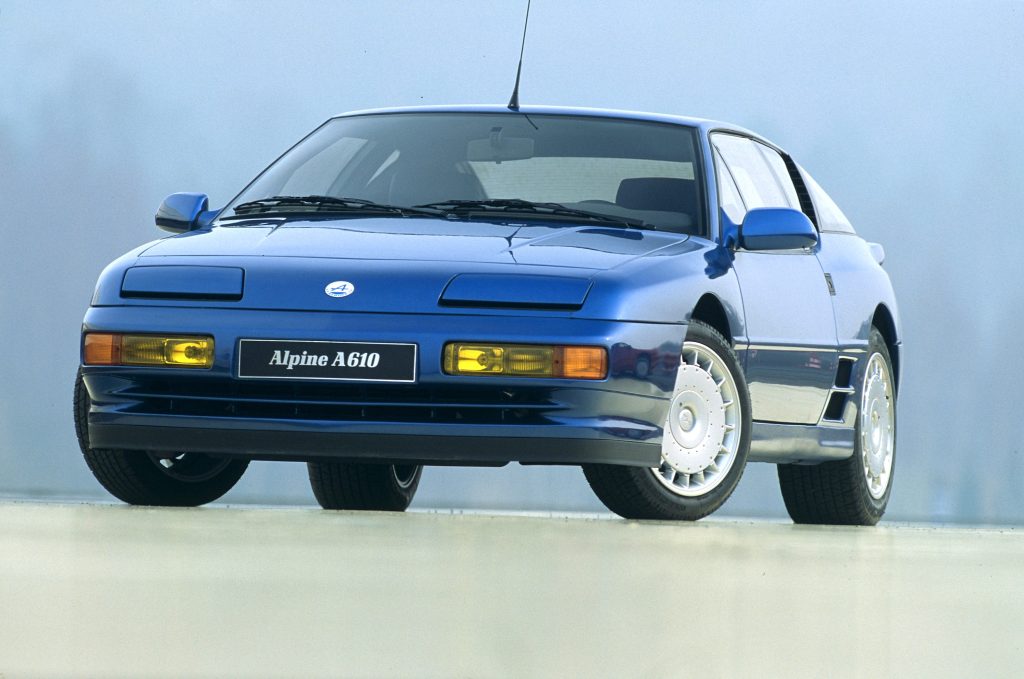
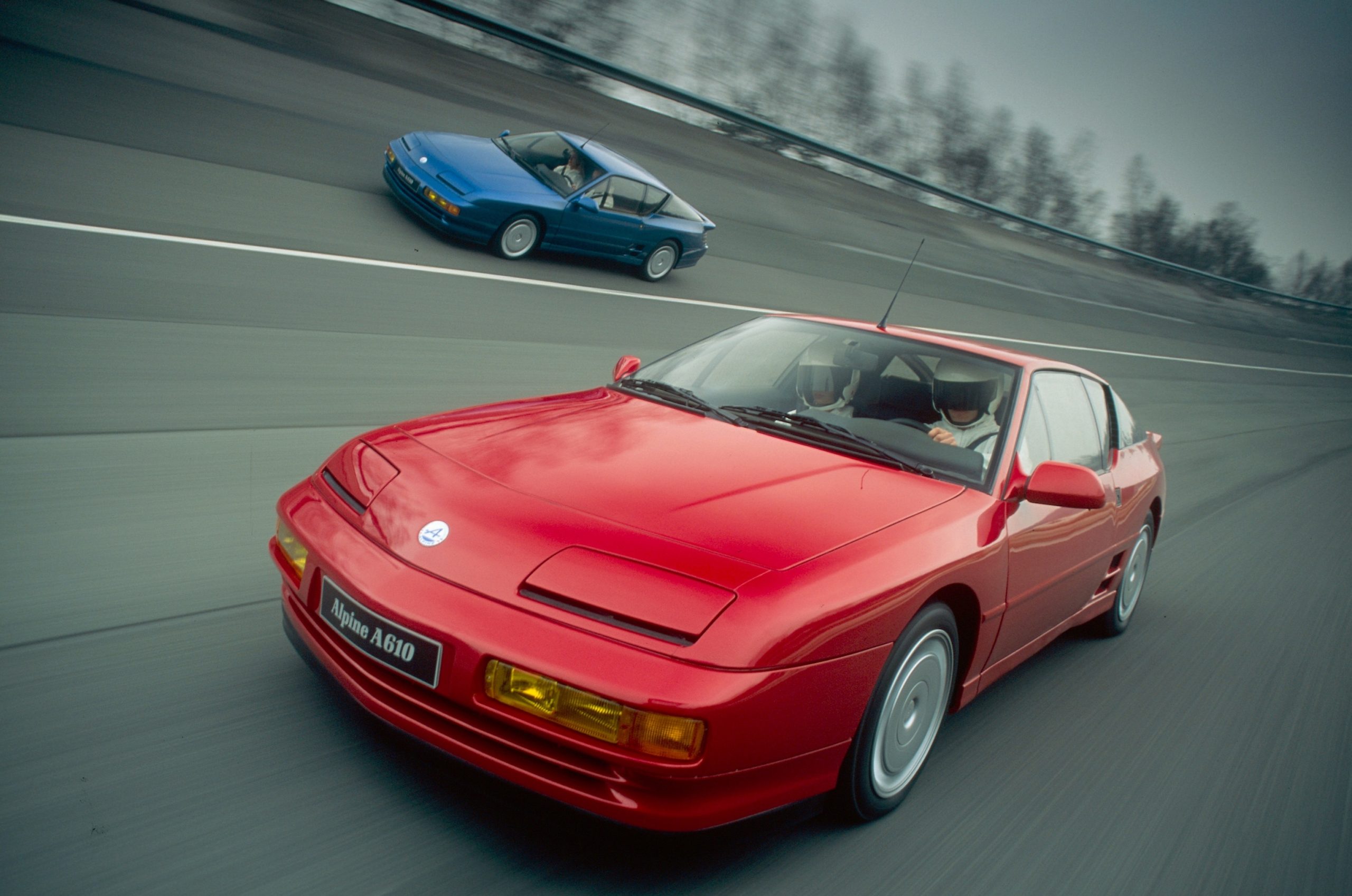
Alpine A610
Alpine’s recent revival has very much been centred on evoking memories of the tiny A110, a miniature sportscar that proved magnificent on rally stages. Wind forward to the 1980s and the Alpine, then known as the GTA, had morphed into a rear-engined GT car. Though it was never a huge seller – yuppies didn’t fancy having to explain why they didn’t have to buy a Porsche 944, apparently – it still sold well enough to be well remembered.
The A610, the last evolution of that car, really didn’t make much of a splash when it was launched in 1991. Sales weren’t great even in its homeland. This was a true shame, as the 3.0-litre turbocharged PRV V6 was good for 247bhp and a meaty mid-range 248lb ft of torque. Despite good reviews, it appeared that tastes had changed – 1990s yuppies-in-hiding preferred Boxsters. When it went off sale in 1995, the Alpine name lay dormant until 2017 with the release of the new A110.
Just finding one in the UK will be the biggest challenge – not many were sold, and Jeremy Clarkson flinging a mint one into a concrete barrier to help flog a DVD didn’t help matters, which means they’ll always be scarce. Any survivor should be cherished, and you can probably expect to pay rather more than either a Boxster or 944 – the last one we saw for sale in the UK was up for grabs for £49,995. In fact it’s so rare, howmanyleft.co.uk doesn’t compute.
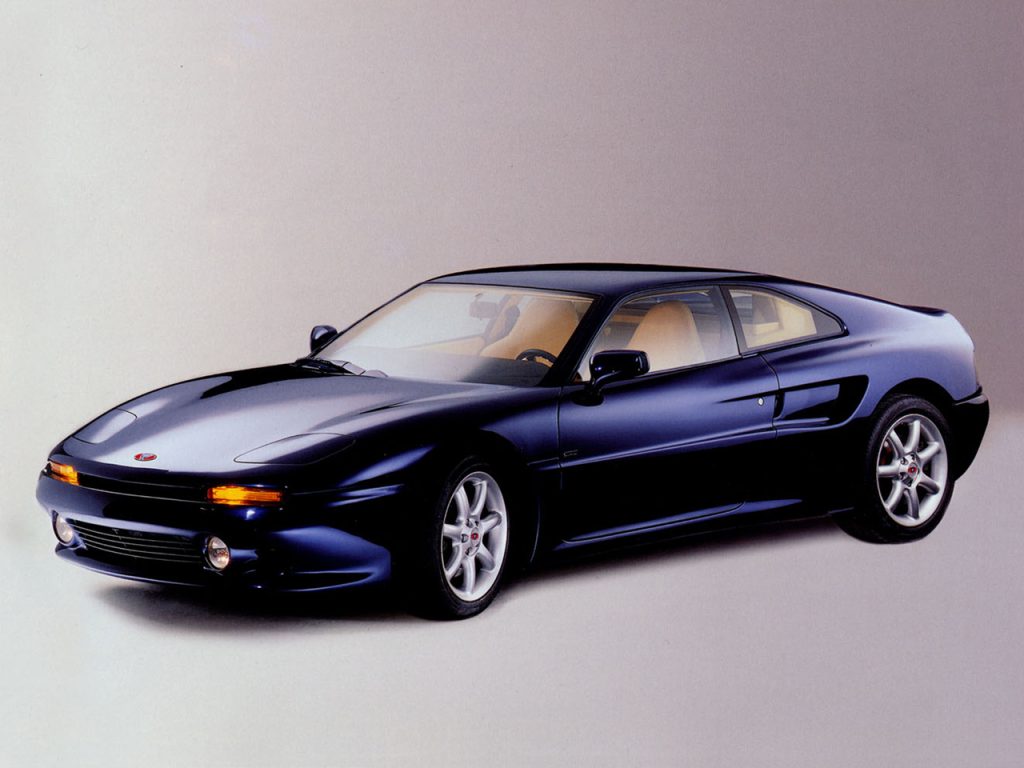
Venturi Atlantique 300
For a country with such a fine history in motor racing, its supercar-manufacturing quotient is staggeringly small – though that largely depends on your definition of Bugatti’s relative Frenchness over the years.
Venturi celebrates 40 years in 2024, but the current company has little to do with the original company set up by former Heuliez engineers Claude Poiraud and Gérard Godfroy, and more to do with lunar all-terrain vehicles for NASA. However, we rather like them for their out-of-this-world lightweight creations from the first 16 years of operation.
Often compared to Lotus due to their lightweight glassfibre bodies and Renault gearboxes, Venturis were based on the PRV V6 in naturally aspirated and turbocharged form. The most exciting of these would be the Atlantique 400 GT, with its twin-turbocharged 402bhp, F40-aping looks and 181mph top speed. These cars were often seen battling in the early days of the BPR Global Series racing series, conquering Porsche and Ferrari before the McLaren F1 moved the game on
However, such 400GTs are very rare – the Atlantique 300 pictured above was at least sold in the UK in right-hand drive, and we have Scotsman Hubert O’Neill to thank for that. He bought the company in 1994 and developed the Atlantique 300, which offered 207bhp sans turbo, and 277bhp with a turbocharger attached – quite potent in a car that weighed in at 1110kg.
Even more was to come with 1998’s Atlantique Biturbo which added another turbo to deliver 306 bhp, a 0-60mph time of 4.5 seconds and a top speed of 171mph. It was a little bit heavier though – a still light 1250kg compared to the 1388kg Lotus Esprit V8. Sadly just 14 Atlantique Biturbos were ever made, and we’re only aware of one UK example, and the last we heard it had been awaiting love for some time. As for single-turbo Atlantiques? Well, they’re not much more common – figures vary depending on who you talk to, but it’s believed around just six were sold in the UK and at the last count, two are taxed in 2024.
Which cars spring to mind when you think of French performance? Let us know below.
Insure your classic with a specialist insurer
If you’re looking for cover for your pride and joy, why not consider Hagerty UK? Not only are we classic car insurance specialists, but we are enthusiasts at heart. Call us for a quote on 0333 323 1138.



Brings back memories! After writing my Lancia off against a Hawthorn hedge ,I bought an 8v 405 4×4 of a freind who was a dealer.It wasn’t the fastest,but had suberb handling and brakes,so could be hustled at BMW pace. It died of a broken transfer box and lack of bits for the Citroen gas suspension at the rear.Nothing at all around!