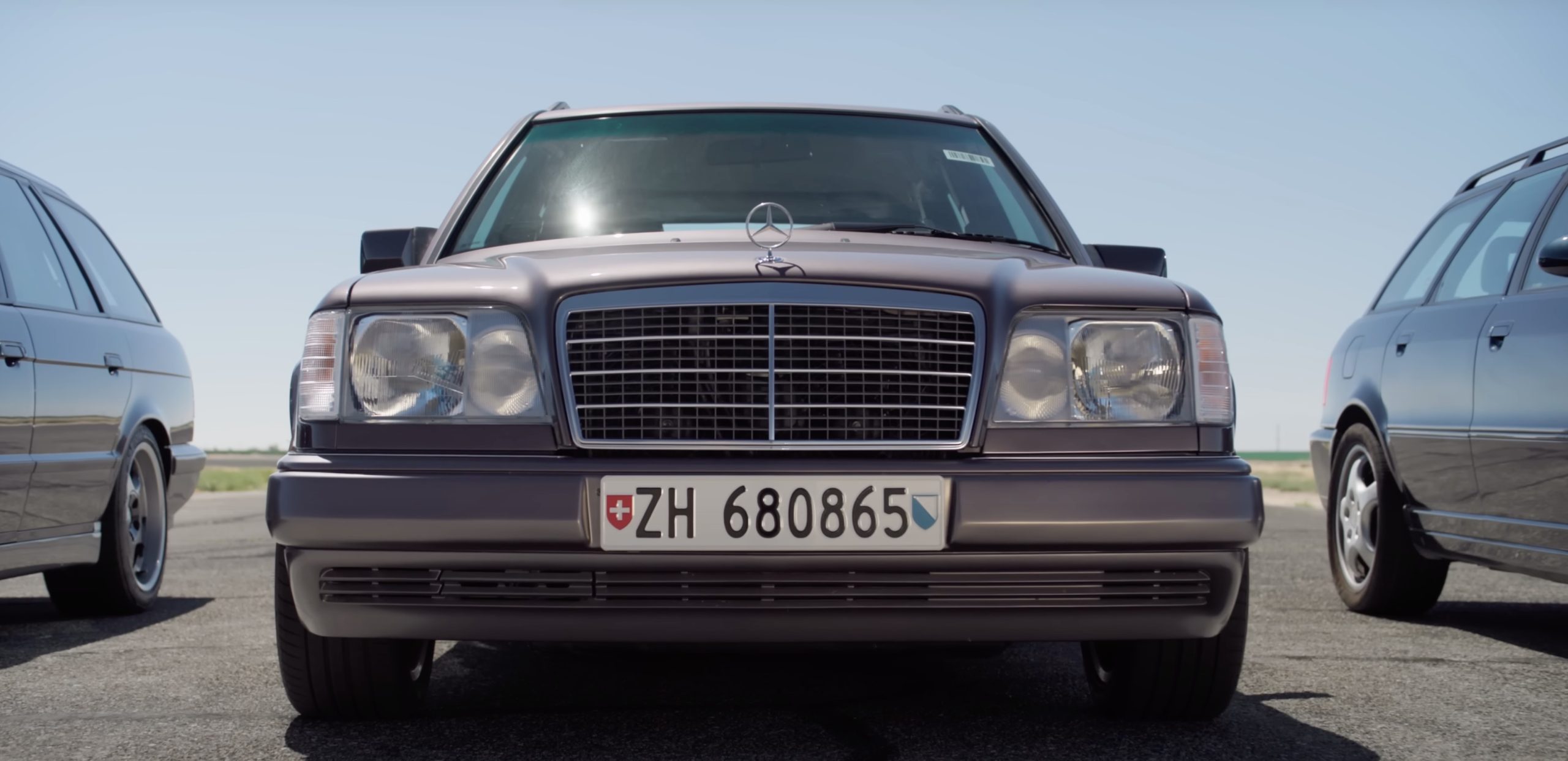
Before SUVs took over, these six estates proved family cars could get their boots dirty
Today, if you want an estate car that can deal with a muddy field, snowy lane or slightly overambitious camping trip, there are still manufacturers who will happily sell you one with plastic arches, raised suspension and four-wheel drive.
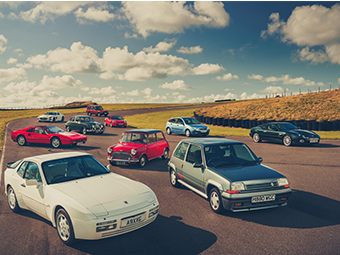
Once upon a time, though, this was a genuinely peculiar idea. Estates were for families, Labradors and flat-pack furniture; proper off-roaders were for farmers, soldiers and people with winches. Somewhere along the way those worlds collided. The result wasn’t quite an SUV and wasn’t quite a normal estate either. These six cars chart how the off-road estate went from oddball experiment to premium-car staple, before being put in peril by the rise of the SUV.
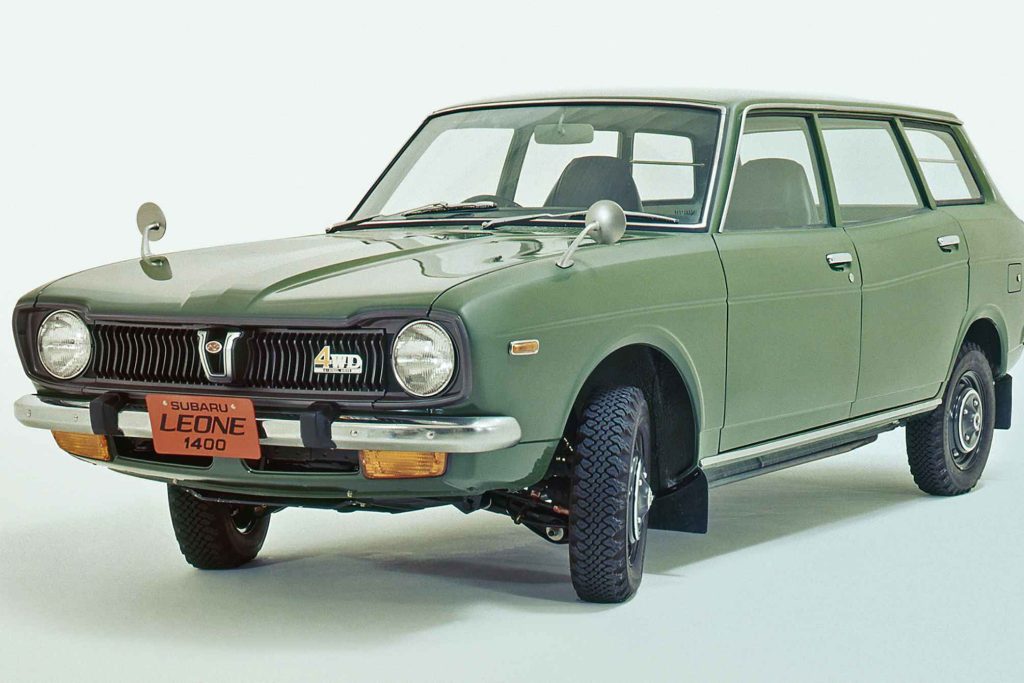
Subaru Leone 4WD Estate Van
In September 1972 Subaru launched the Leone 4WD Estate Van, which the company describes as Japan’s first mass-produced all-wheel-drive passenger car. There had been four-wheel-drive cars before, of course, but marrying the hardware to something shaped like an ordinary family estate was still deeply unconventional. And no, a Jensen FF’s load bay doesn’t quite count.
The original Leone wasn’t trying to look rugged. There were no black wheelarch extensions, aluminium-look bash plates or lifestyle brochures featuring suspiciously clean mountain bikes. It largely looked like a normal Subaru estate, because that was the point. You could have car-like manners and useful luggage space, then engage four-wheel drive when snow, mud or a badly maintained road intervened.
That idea became Subaru’s calling card and established the philosophy behind every car here: you didn’t need a lumbering traditional 4×4 simply because your life occasionally involved more gravel than the average mock-Tudor driveway. It looks modest now, but the Leone quietly changed what an estate car could be, and started a chain of ideas that is still highly desirable today.
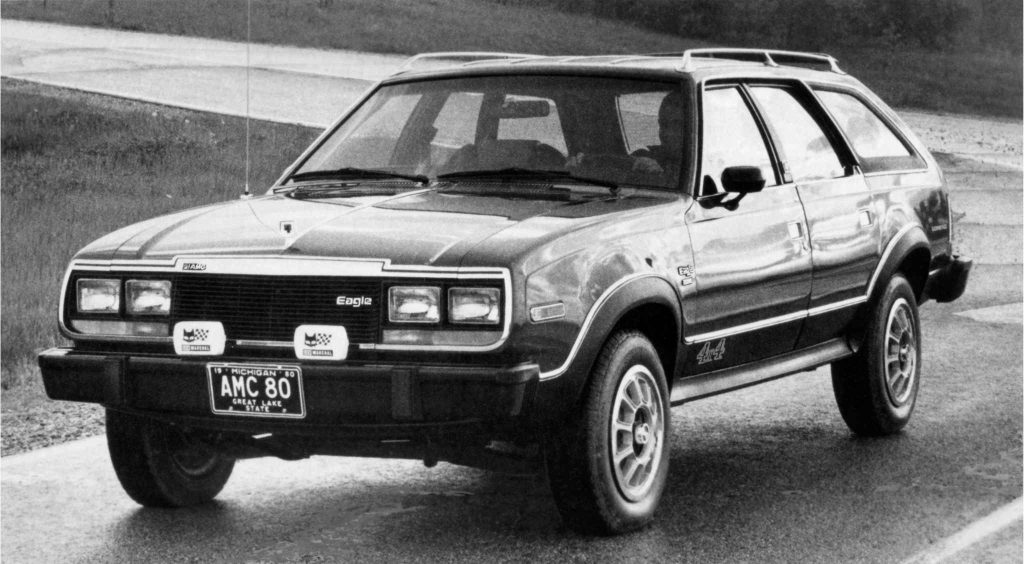
AMC Eagle Wagon
For the 1980 model year, American Motors took its Concord passenger-car range, added extra ride height and four-wheel drive and created the Eagle. The wagon built on Subaru’s foundations and set the visual DNA, because seen with modern eyes it is astonishingly familiar: a normal estate body sitting slightly higher, chunky tyres underneath and a smattering of visual toughening to distinguish the owner as someone whose vision of off-road stretches further than the pub overspill car park.
Early Eagles used a full-time four-wheel-drive system with a centre differential, while later cars gained selectable systems in search of better fuel economy. Underneath all that outdoorsiness remained the unibody construction and independent front suspension of AMC’s ordinary road cars.
‘Ordinary cars’ sounds like a slight but it’s the key part of what makes these tough estate cars so popular. The Eagle wasn’t an off-roader reluctantly civilised for road use; it was a road car given enough extra ability to go, if not completely off the beaten track, then at least some way into the big outdoors. The first true SUV in the modern sense? It has a big claim.
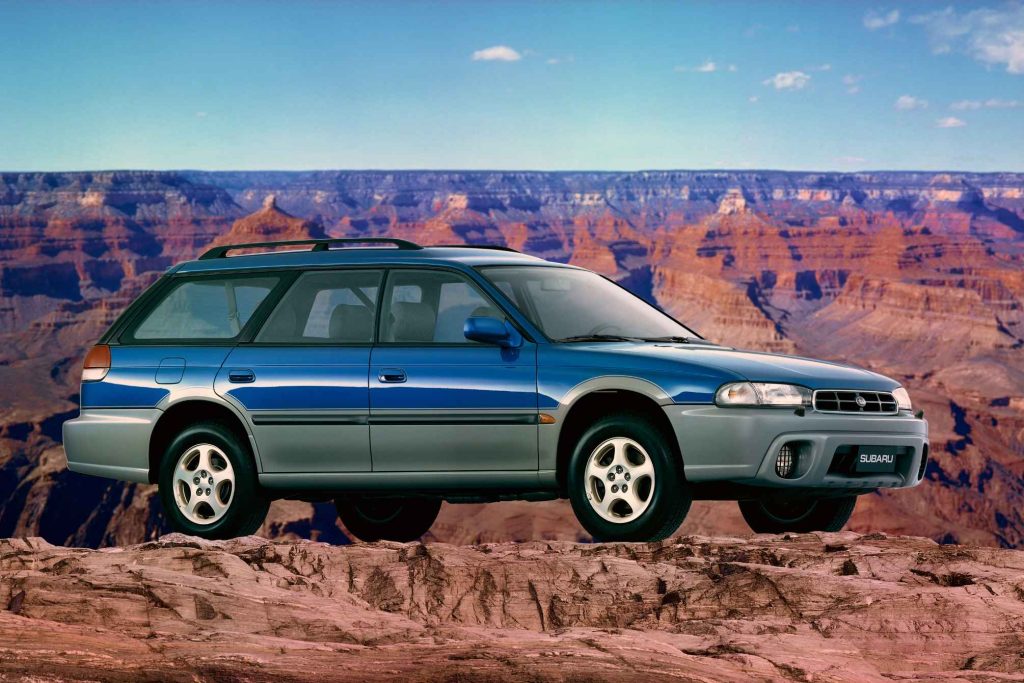
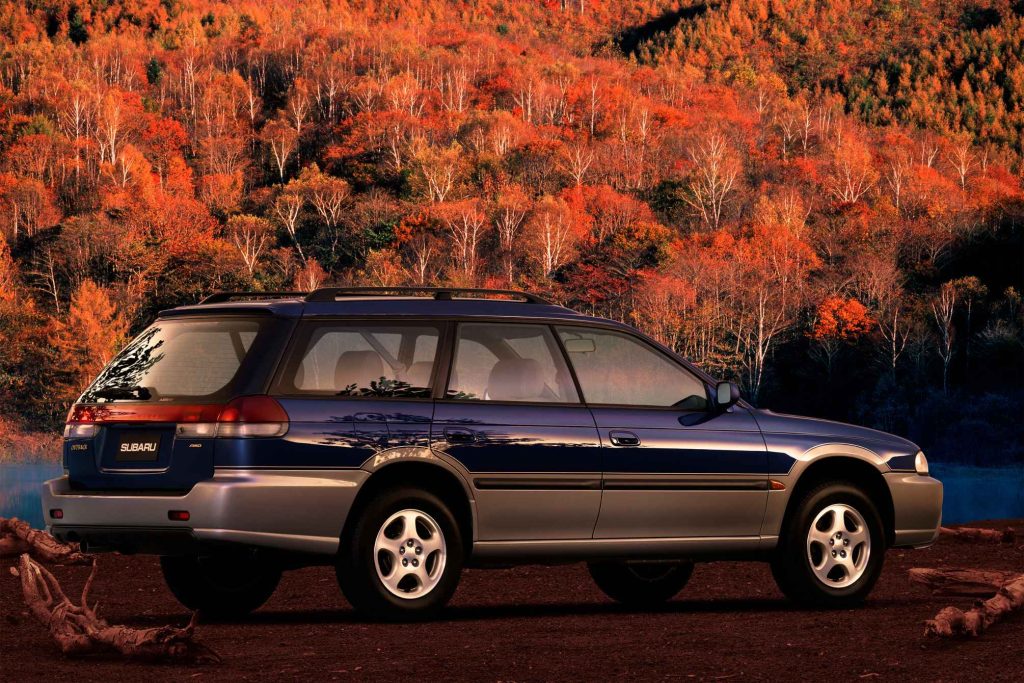
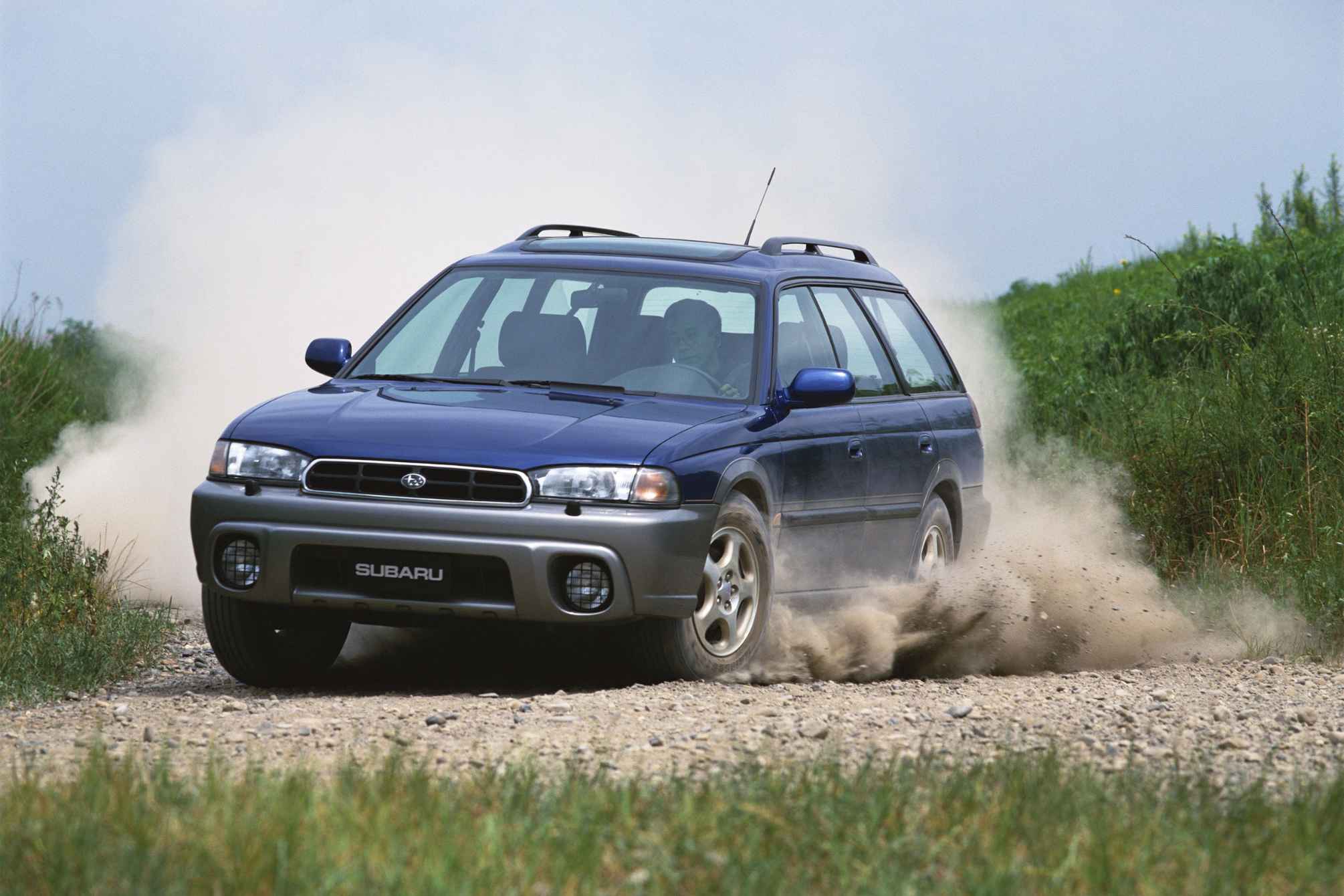
Subaru Legacy Outback
Subaru returned to the idea in the 1990s and, this time, found the cultural moment waiting for it.
The Outback appeared in North America in 1995 as a version of the Legacy estate car. The very earliest cars were largely an image exercise, but for 1996 Subaru got serious: the ride height went up, chunky body cladding appeared and larger fog lamps helped create the slightly pugnacious look that became the model’s signature.
This was when the off-road estate eased out of its engineering first and foremost phase and became a lifestyle statement. Subaru famously employed Crocodile Dundee star Paul Hogan to sell the idea to Americans who liked SUVs but who preferred something that still drove like a car.
Underneath, the formula was straightforward: the spacious Legacy estate, Subaru’s established all-wheel-drive hardware and plenty of extra ground clearance.
It worked spectacularly well. Subaru credits the Outback with combining passenger-car comfort with SUV versatility. More importantly, rivals noticed. The raised, cladded estate had moved from eccentric niche to something people actively aspired to own today.
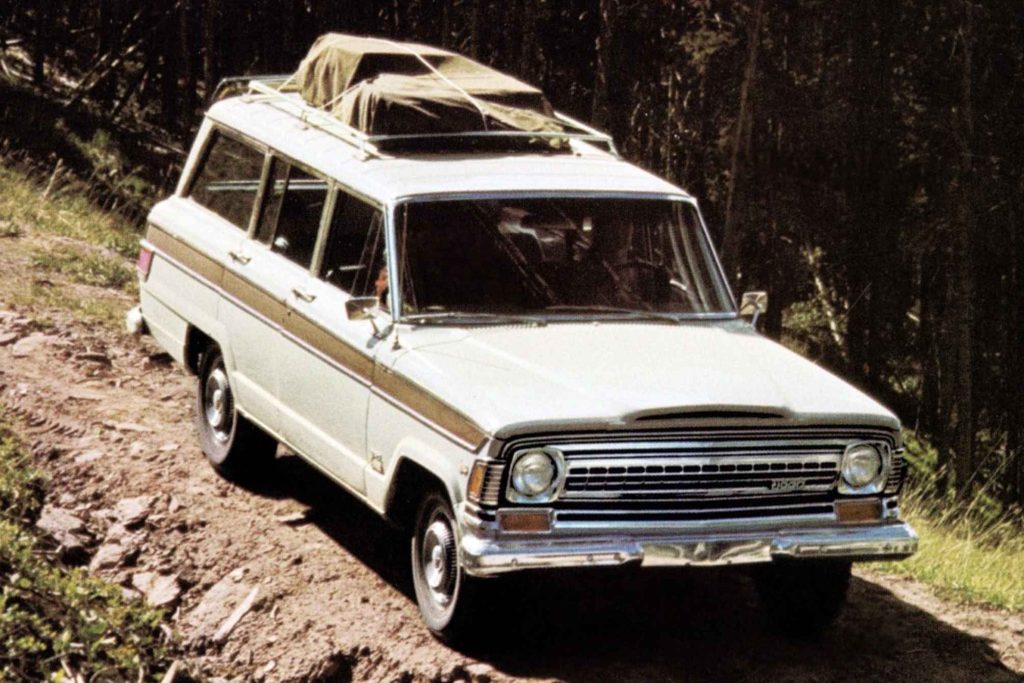
Jeep Wagoneer/Grand Wagon
Imagine walking into an American Jeep dealership in 1991 and buying something whose platform dated from 1963. Not a retro car. Not a continuation model. Just the same thing, still there. Even the Land Rover had evolved over the years.
The Wagoneer SJ was launched for 1963 with Brooks Stevens styling and, remarkably, remained on the same platform for more than 28 years. Jeep itself says that when production ended it had enjoyed the longest continuous run on one platform in US automotive history.
Engines, drivetrains and interiors came and went, Quadra-Trac four-wheel drive arrived during the 1970s and the Wagoneer became the Grand Wagoneer in 1984. But the body shape endured, eventually gaining enough fake wood, leather and chromed ornamentation to resemble a country club with chunky tyres. By 1991 it was gloriously out of time. The aerodynamic revolution had happened elsewhere; the Grand Wagoneer was busy watching its owners hiking, fishing and enjoying the great American outdoors.
That was precisely the appeal. What began as one of the first civilised 4x4s ended as an American luxury icon, still selling the same essential idea nearly three decades later – but a lot more comfortably than a Land Rover.
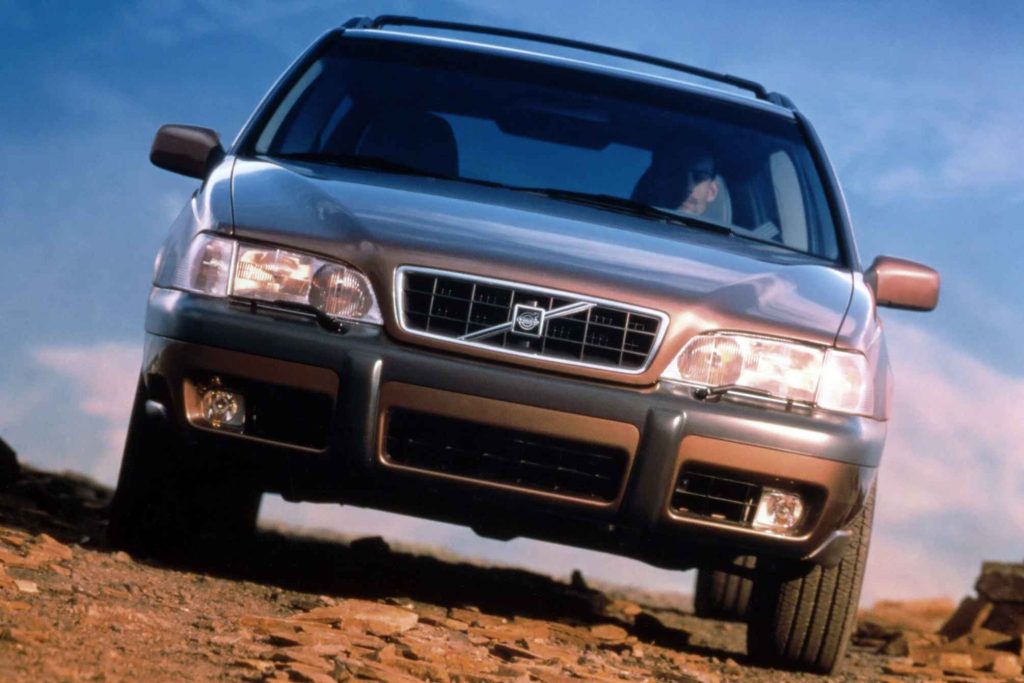
Volvo V70 Cross Country
The V70 Cross Country arrived in 1997, developed from the first-generation V70 and ultimately the 850 AWD beneath it. Volvo raised the ground clearance, added all-wheel drive, tougher-looking two-tone bodywork and protective cladding, and turned one of the world’s most sensible estates into something that appeared ready to cross a frozen lake in search of artisanal firewood.
This was an important change in tone. Earlier four-wheel-drive estates tended to sell themselves on utility; the V70 XC mixed that usefulness with premium-car comfort and deliberate visual theatre. You bought one because you genuinely needed traction on a Swedish winter road (or get to the supermarket in Guildford) but also because it looked rather good parked outside a restaurant.
Volvo produced nearly 54,000 of the first-generation V70 XC between 1997 and 2000, enough to prove this wasn’t some curious trim-level dead end.
The Cross Country name survived and helped establish a formula manufacturers still follow: estate-car usefulness and SUV attitude, without quite surrendering to an SUV.
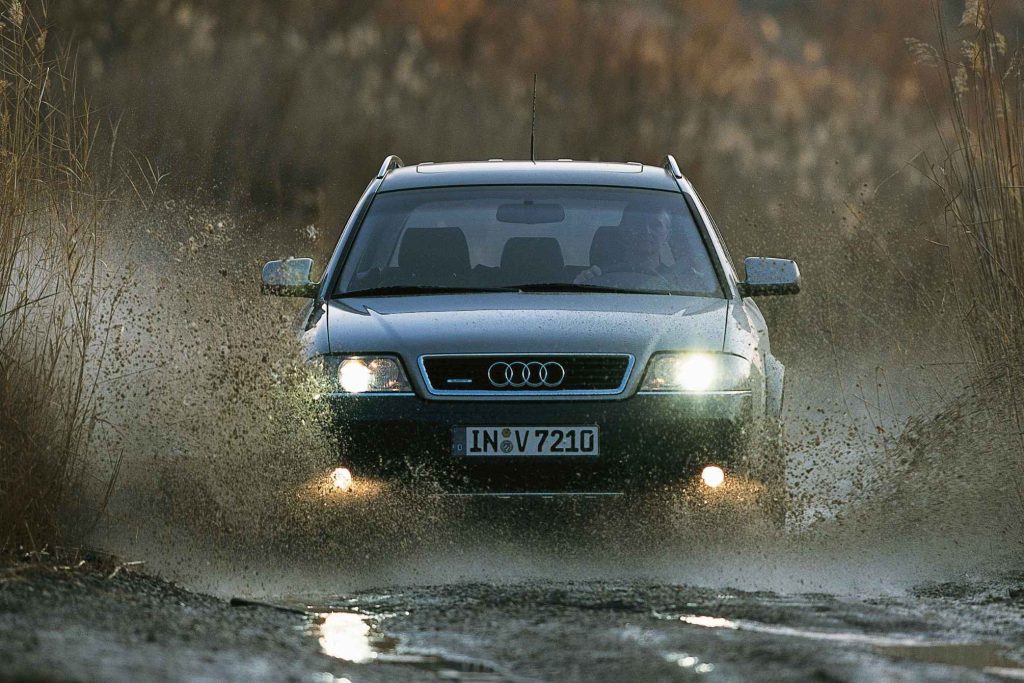
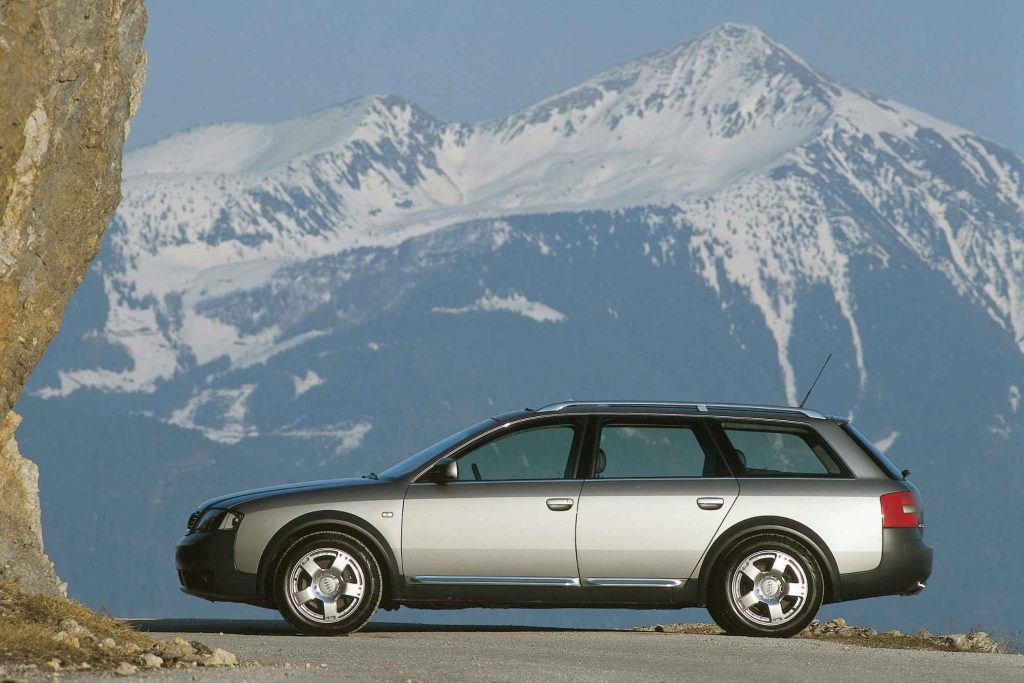
Audi allroad quattro
Previewed as a concept in 1998 and launched in production form in 2000, the original allroad quattro was based on the C5 A6 Avant. The body was broadly familiar, but underneath Audi went much further than merely fitting taller springs and some grey plastic.
Four-level height-adjustable air suspension allowed the driver to raise the car for difficult terrain and lower it again for faster road driving. Quattro four-wheel drive was standard, there was proper underbody protection and manual versions could even be specified with a low-range gearbox – so it could actually be used off-road properly.
Naturally, most didn’t. These cars became fixtures of ski resorts and school runs. The allroad could do an impression of a serious 4×4 without forcing its owner to tolerate the way many serious 4x4s drove in 2000.
By then the transformation was complete. What began with the humble Leone had become a leather-lined premium niche of its own – but the march of the SUV threatens its future. Maybe Subaru needs to bring it back to first principles again…
Which of these rugged estate cars would you park on your drive, and have we missed your favourite? Tell us in the comments.
Insure your classic with a specialist insurer
If you’re looking for cover for your pride and joy, why not consider Hagerty UK? Not only are we classic car insurance specialists, but we are enthusiasts at heart. Call us for a quote on 0333 323 1138.