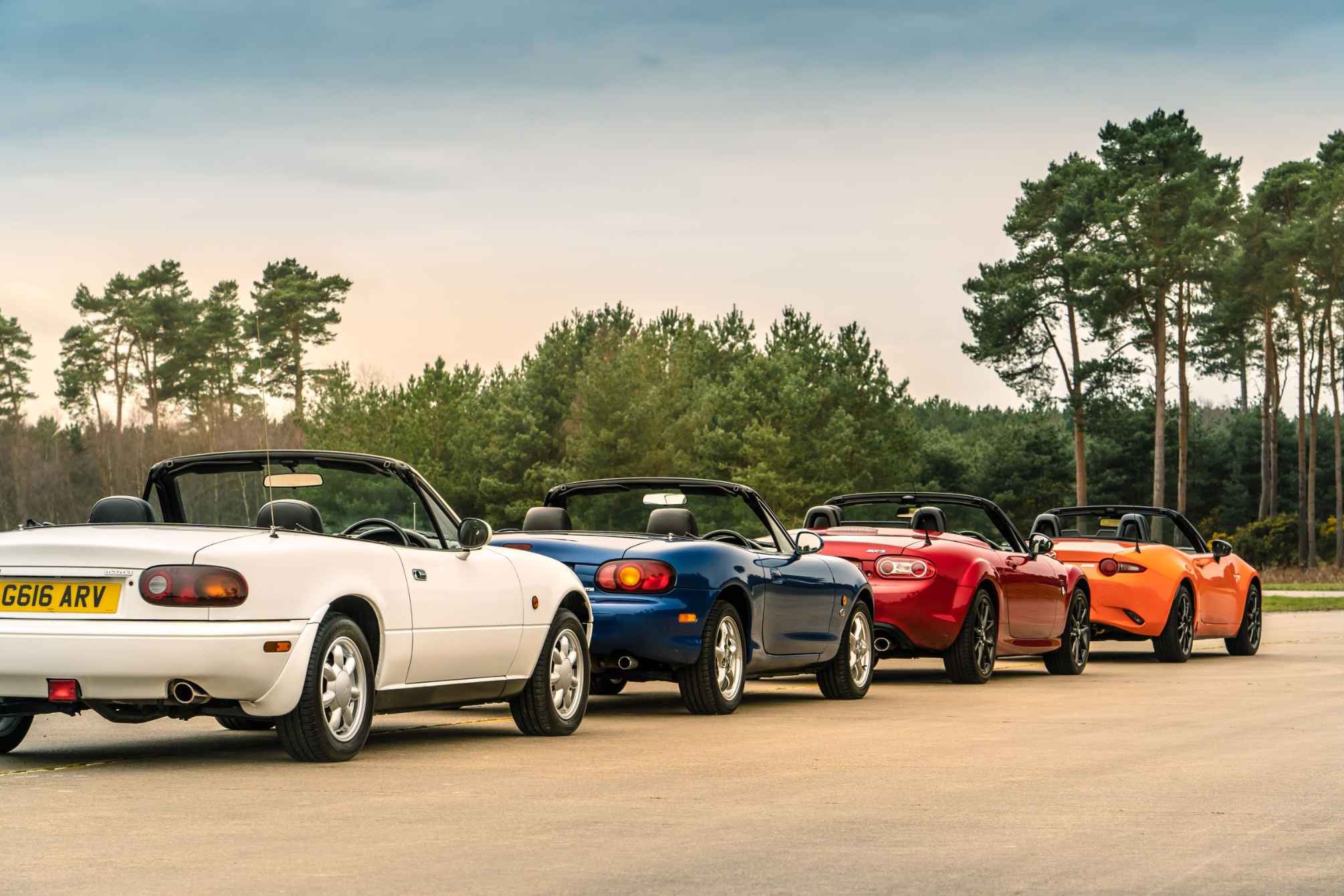
The world’s best-selling roadster has been with us for nearly four decades now, following its debut in 1989. For car enthusiasts it’s nearly as recognisable as other long-running nameplates such as the 911, Mini, and Mustang, but with such a long production history over four model generations, it isn’t always clear at first glance what model you’re looking at.
That’s where our spotter’s guide comes in. We’ll cover some of those other popular cars in future but we’re kicking off with Japan’s affordable drop-top. Conceptualised in the 1970s, designed in the 1980s and a sales sensation in the 1990s, below is our no-nonsense guide to the models, updates, and special variants of the Mazda MX-5.
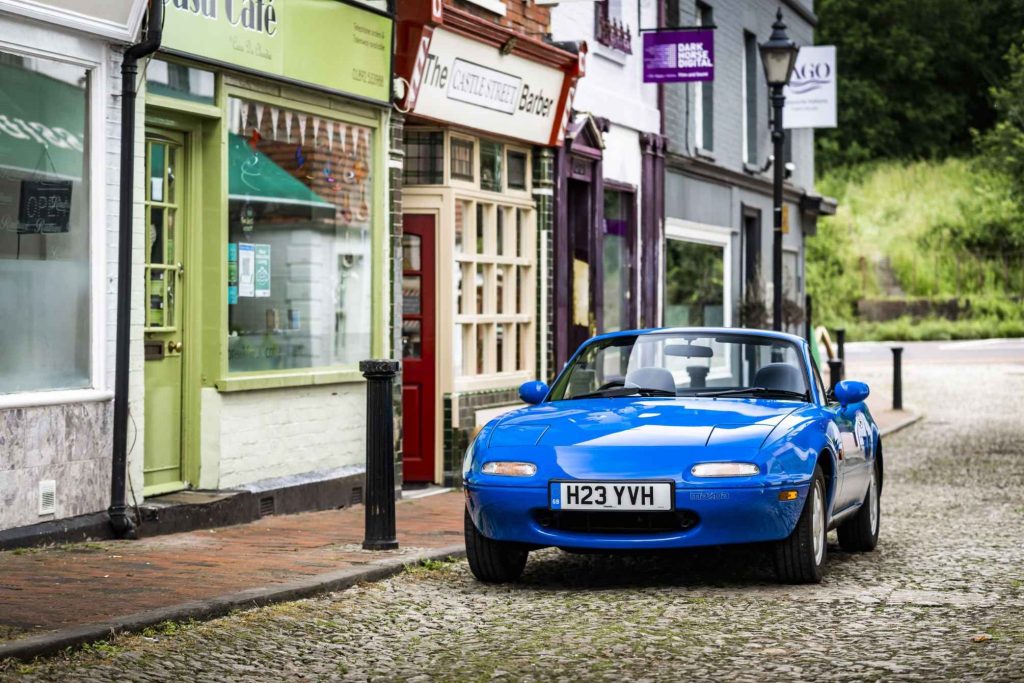
MX-5 Mk1 (NA)
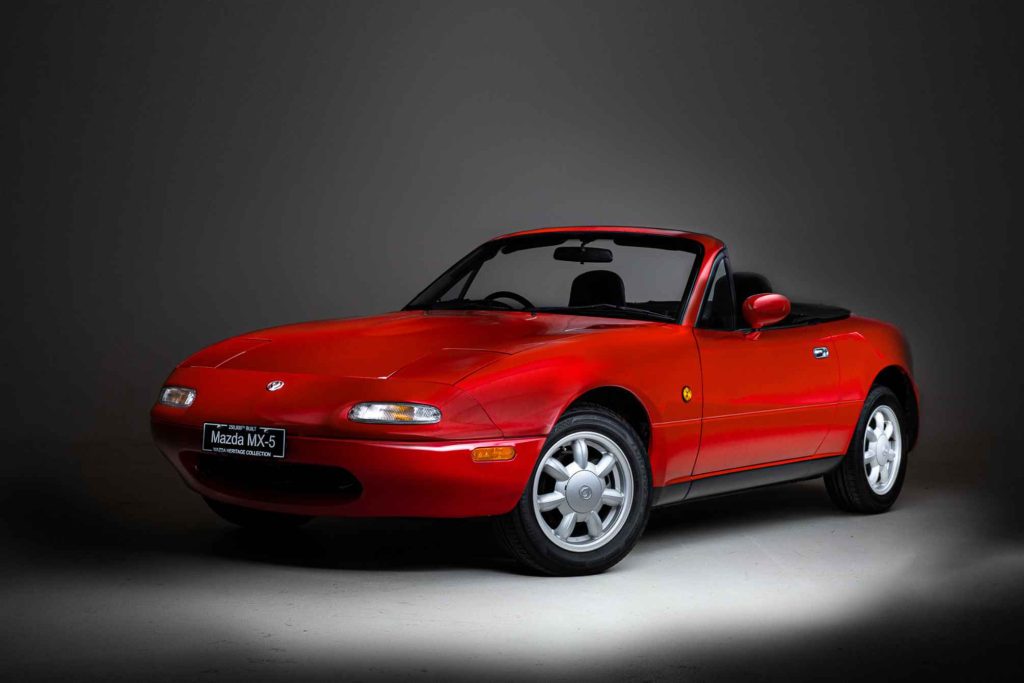
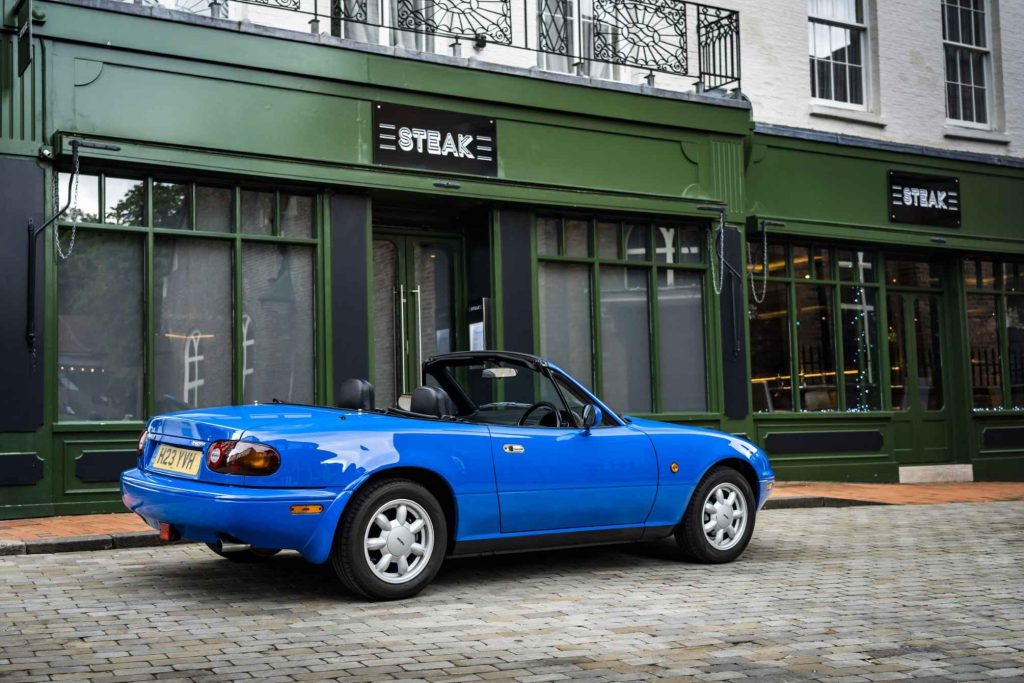
This is where it all started. Launched at the Chicago auto show in 1989, the first-generation MX-5, often known as the NA from the identifying letters in its VIN (UK cars start with JMZNA), arrived in the UK in spring 1990. Early cars were all powered by a 1.6-litre inline four making 114bhp, powering the rear wheels through a five-speed manual gearbox – proper sports car stuff. But the defining characteristic of the original MX-5 today is its retractable headlamps.
Colour choice was initially between Chaste White, Classic Red, Mariner Blue, but silver soon joined, as did British Racing Green (BRG) with the launch of the Limited Edition in 1991. Likewise, the original wheel choice was a lightweight seven-spoke 14-inch design, resembling old Minilites and called ‘daisies’ within MX-5 circles. UK cars can be identified by their wide rectangular numberplate recess at the back, designed for a standard UK plate – if you’re looking at one with a squarer recess, it’ll likely be a Japanese import.
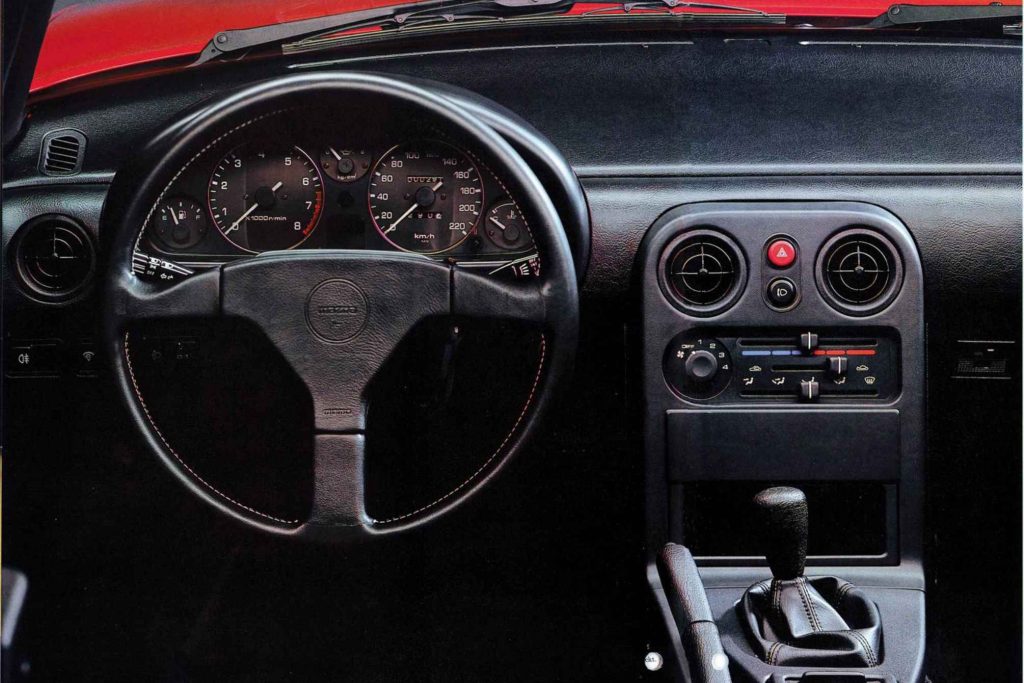
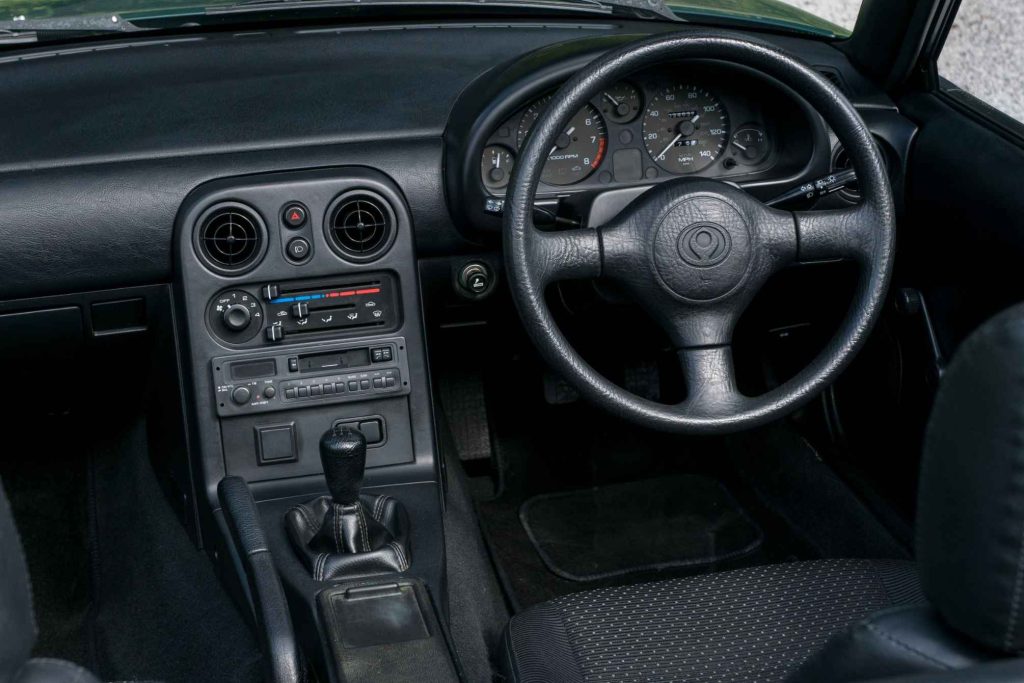
Mk1 updates: The first and only notable change to the NA MX-5 came in 1993. Mazda wisely didn’t touch the metalwork, but mechanically the car was offered with a larger 1.8-litre engine good for 132bhp in UK trim, with greater torque. To ensure a suitably low entry price, the 1.6 was retained but in detuned form, making 90bhp. Base models now came without power-assisted steering and featured steel wheels, but a range-topping 1.8iS had more equipment than before. New wheel designs, and seats with separate headrests were among the visual tweaks.
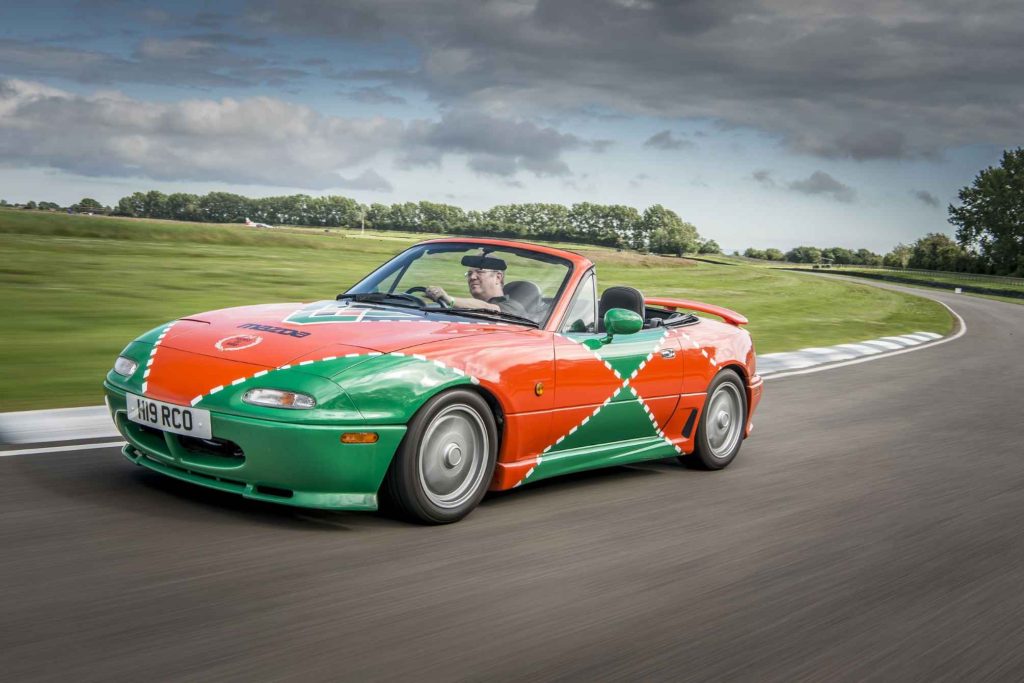
Special versions: How far down the rabbit hole are you prepared to venture? The most memorable special editions of the NA were probably Japan’s V-Special, with its BRG paintwork (officially Neo Green), tan leather cabin and wood-rimmed Nardi wheel, 1991’s UK-only Le Mans in full 787B orange and green warpaint, and 1995’s California, the first time yellow paintwork had been offered on the MX-5 to UK buyers. Other desirable Mk1s though include the RS-Limited (Montego Blue paint and Recaro kevlar bucket seats), Japan’s limited-run M2 Incorporated cars, and the ultra-rare Mazdaspeed C-Spec with its clamshell bonnet and highly-tuned engine.
MX-5 Mk2 (NB)
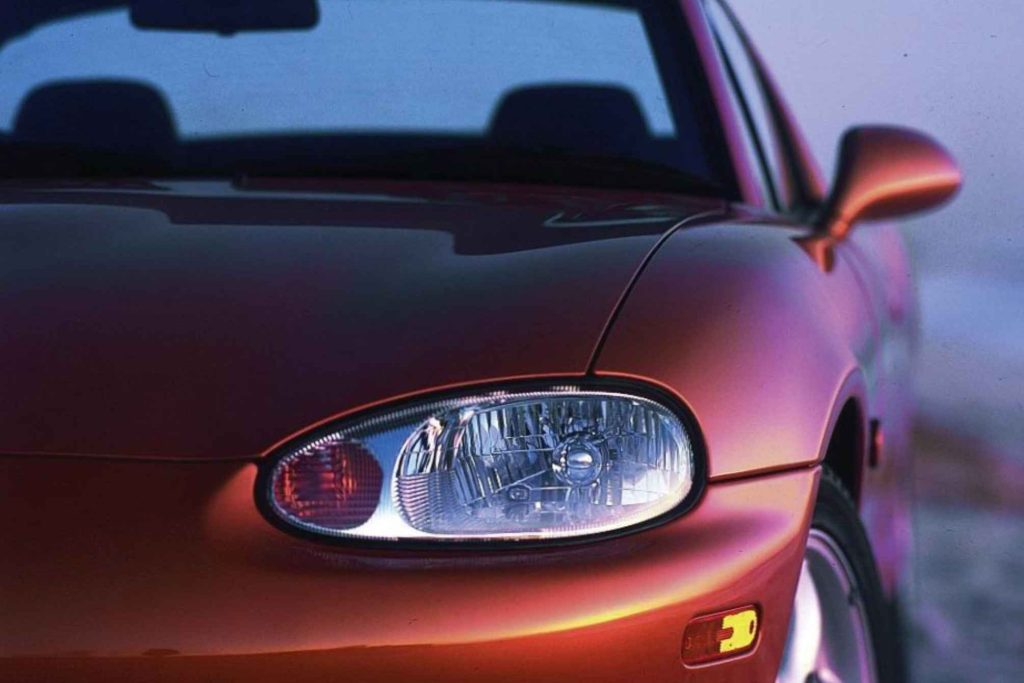
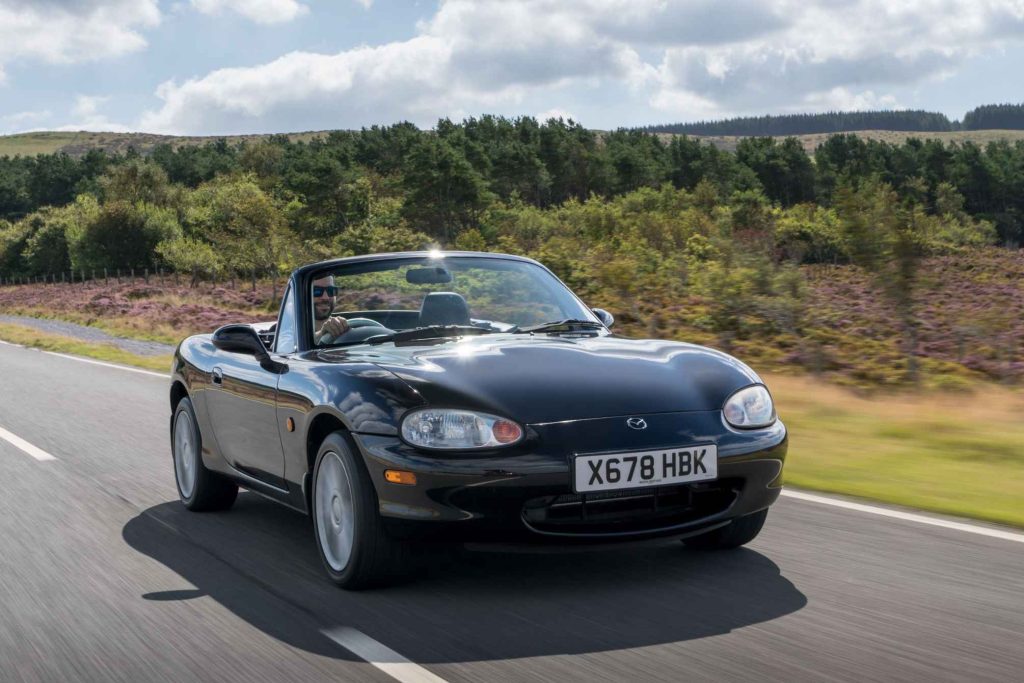
Under the skin the Mk2 MX-5 (now using the NB chassis code) is mechanically similar to the NA, but launched at the Tokyo motor show in 1997, the most striking difference is the swoopier bodywork with faired-in headlights. Mazda dropped the pop-ups for a new style, to save weight, and for better aerodynamics – not for pedestrian safety regulations as we’re so often told.
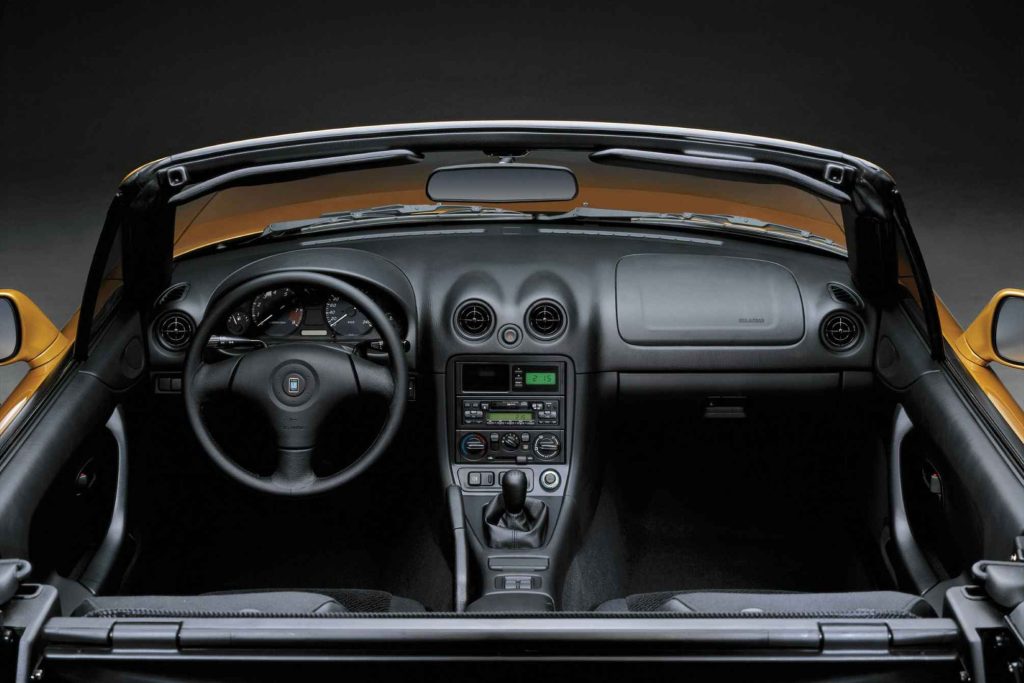
1.6 and 1.8 engines were still available, the smaller unit now making 110bhp and the 1.8 capable of 140bhp. A stiffer structure reduced some body shimmy, the redesigned cabin was familiar but more modern than before, and wheels grew to 15 inches on the 1.8. The larger engine cars also came with ABS, while top-spec 1.8iS versions were available with a limited-slip differential. Another now-standard feature was an airbag: most models came with a slightly bulky four-spoke steering wheel, but opt for the 1.8iS and that was swapped for a more elegant three-spoke airbag wheel by Nardi.
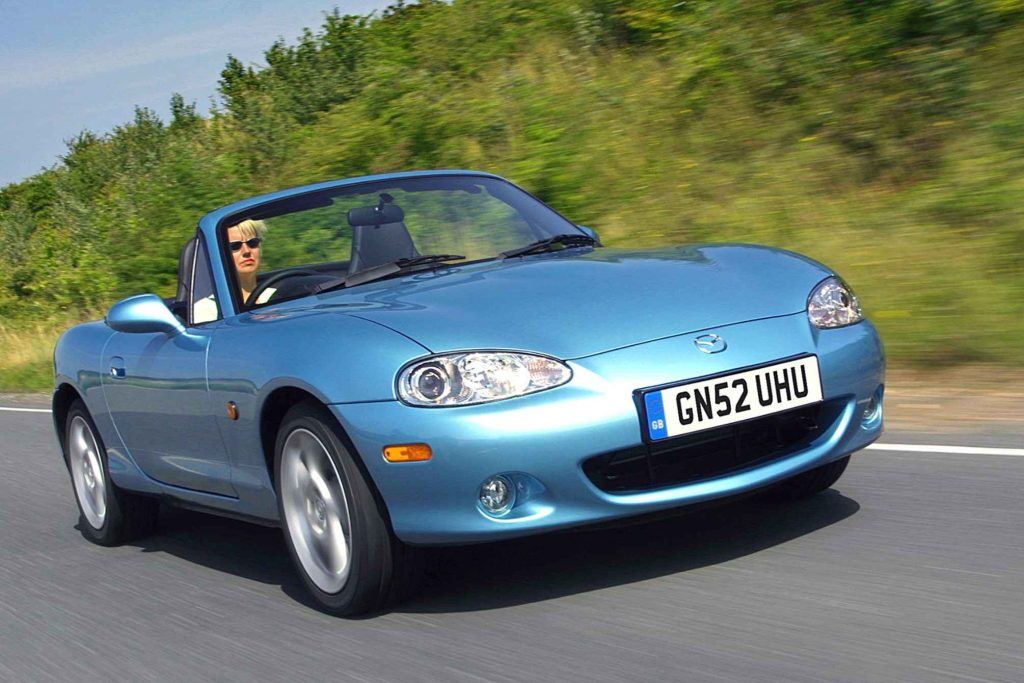
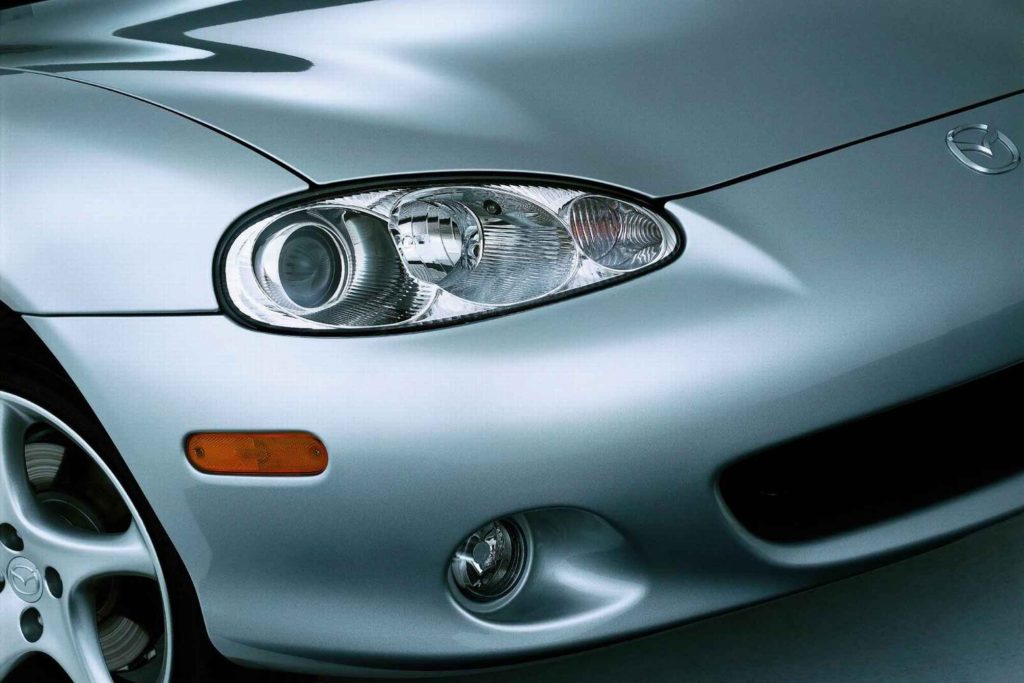
Mk2 updates: The NB underwent a significant revision in 2001, such that these cars are often referred to as the NB2, or Mk2.5. Visually you can spot these for the slightly pointier headlights and the more defined crease they leave in the front bumper, while the amber tint to the rear indicators made way for an in-vogue clear version. Mechanically, the big news was variable valve timing, which improved driveability even if power only increased to 144bhp in the UK. Mazda introduced 16-inch wheels to the range, and as well as a limited-slip diff, Sport models also got a six-speed manual transmission and Bilstein dampers.
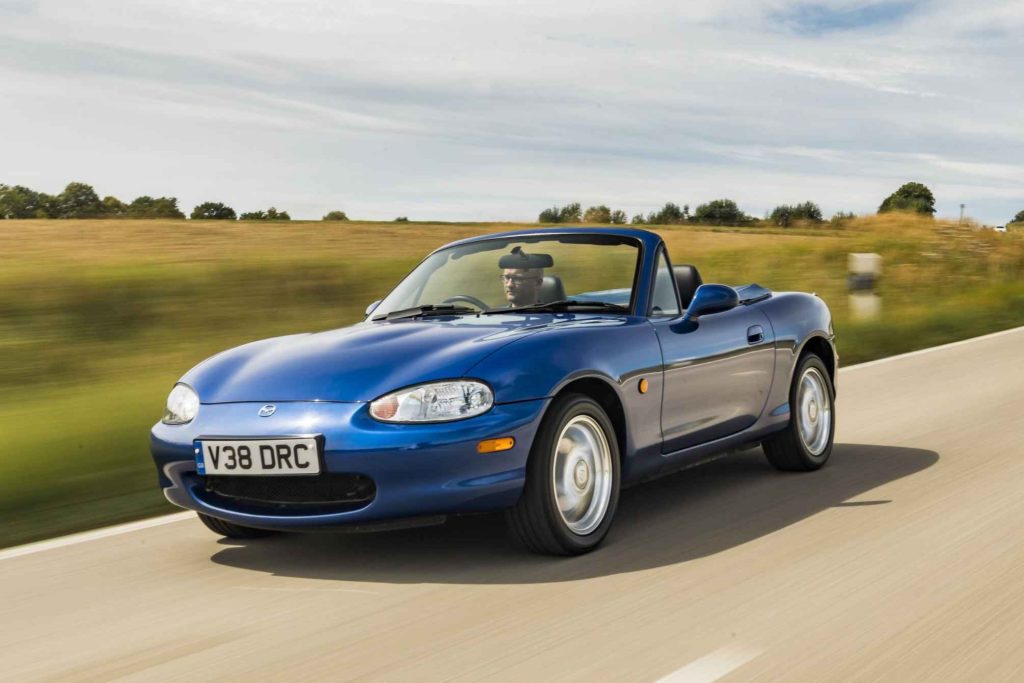
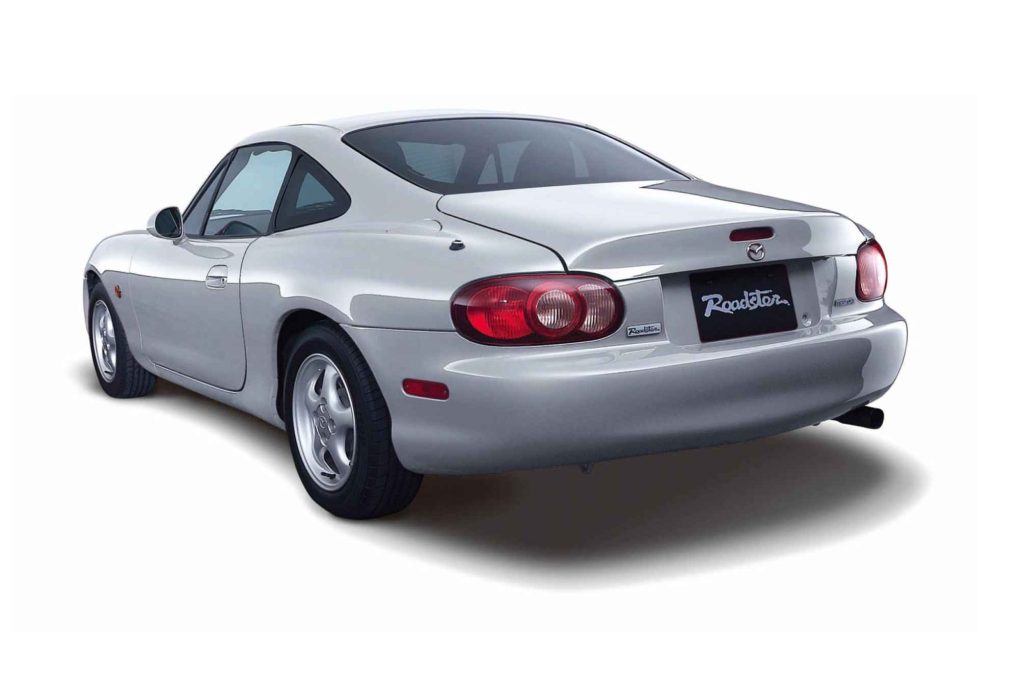
Special versions: The best-known NB special edition is 1999’s 10th Anniversary Edition, celebrating the MX-5’s first major production milestone. They’re easy to spot: Innocent Blue Mica paintwork, chrome-finish 15-inch five-spoke alloy wheels, and a cabin trimmed in blue Alcantara. They were also the first Mk2s to get a six-speed manual gearbox as standard, in the UK at least. Other NBs of note include the fashionable Jasper Conran (2000, pre-facelift), while the US market got the turbocharged 178bhp Mazdaspeed in 2004, and that same year, Mazda produced a very limited run of fixed-roof Roadster Coupés in several specifications for the Japanese market only – to date, the only factory coupé MX-5 ever made.
MX-5 Mk3 (NC)
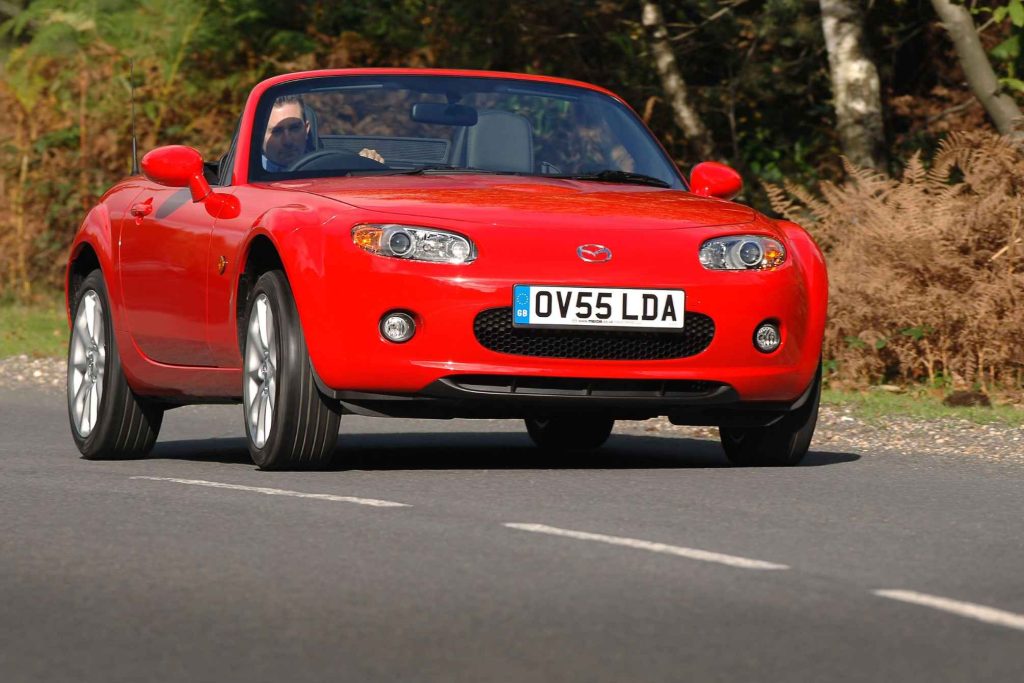
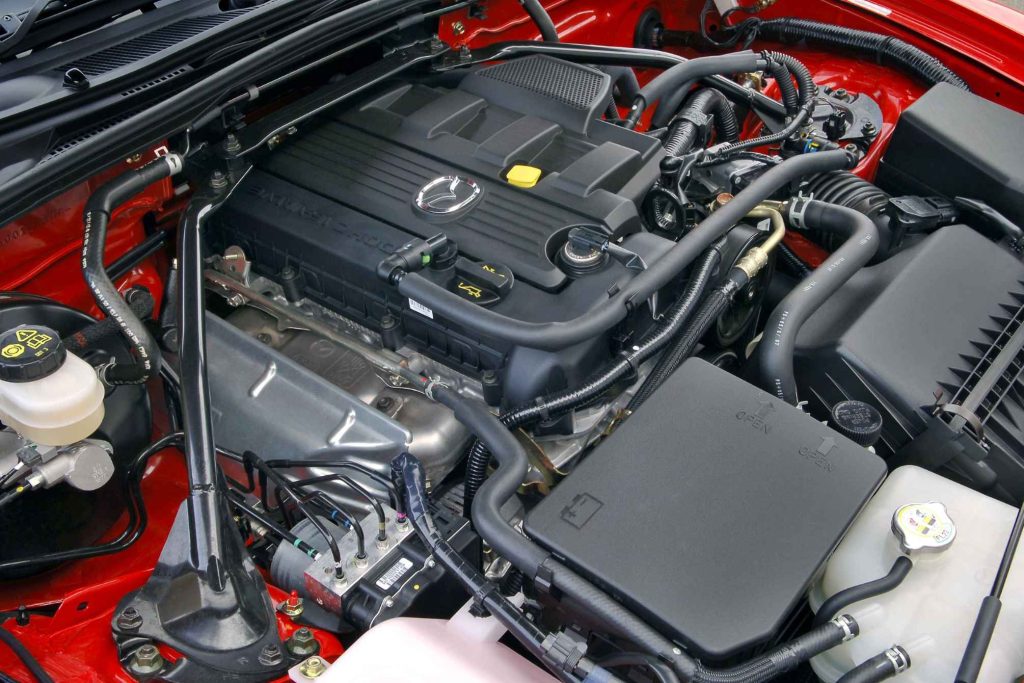
The Mk3 MX-5, or NC as fans know it, was the first significant departure for the model. It was an all-new platform, derived from the larger, rotary-powered RX-8, and physically bigger and heavier than its predecessors – though still small and light by most standards. Engine choice was now between 124bhp 1.8 and 158bhp 2.0-litre four-cylinder ‘MZR’ engines, closely related to the equivalent Duratec engines used by Ford at the time.
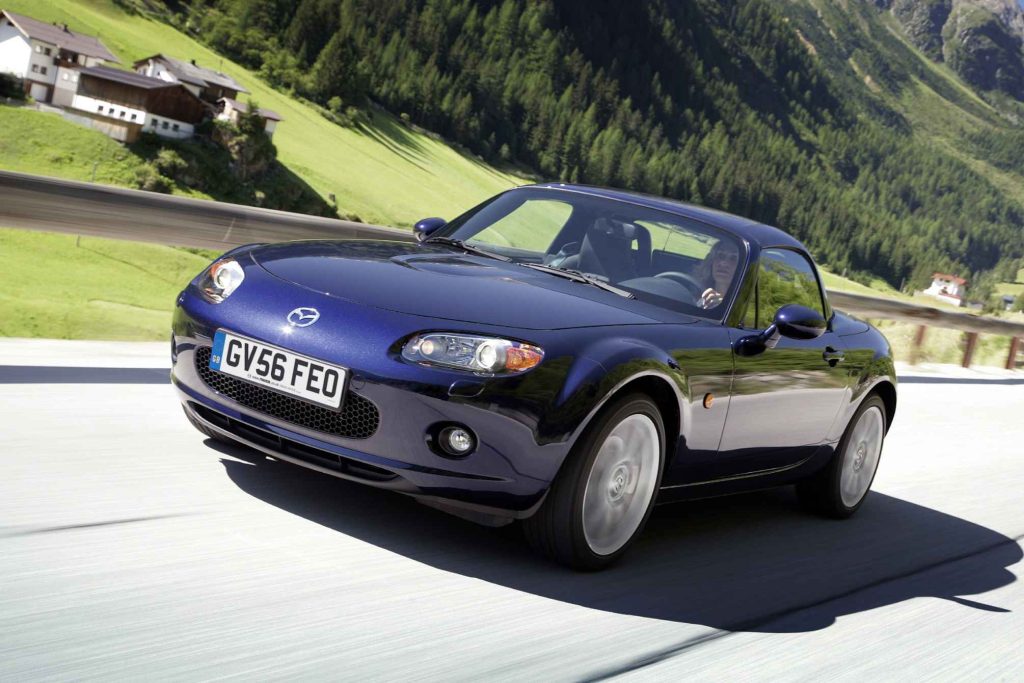
The most striking visual aspects of the NC are its prominent wheel arches, slim pill-like headlights, and to the rear, its fashionable-for-the-time crystal tail lights, as well as twin exhaust outlets. Inside it was all-new too, with a much more grown-up cabin design, and importantly for larger drivers, a lot more space than the earlier cars. In 2006, a folding hardtop joined the manual soft-top, with UK models given the Roadster Coupé moniker (in the US, it was known as the PRHT, or Power Retractable Hard Top).
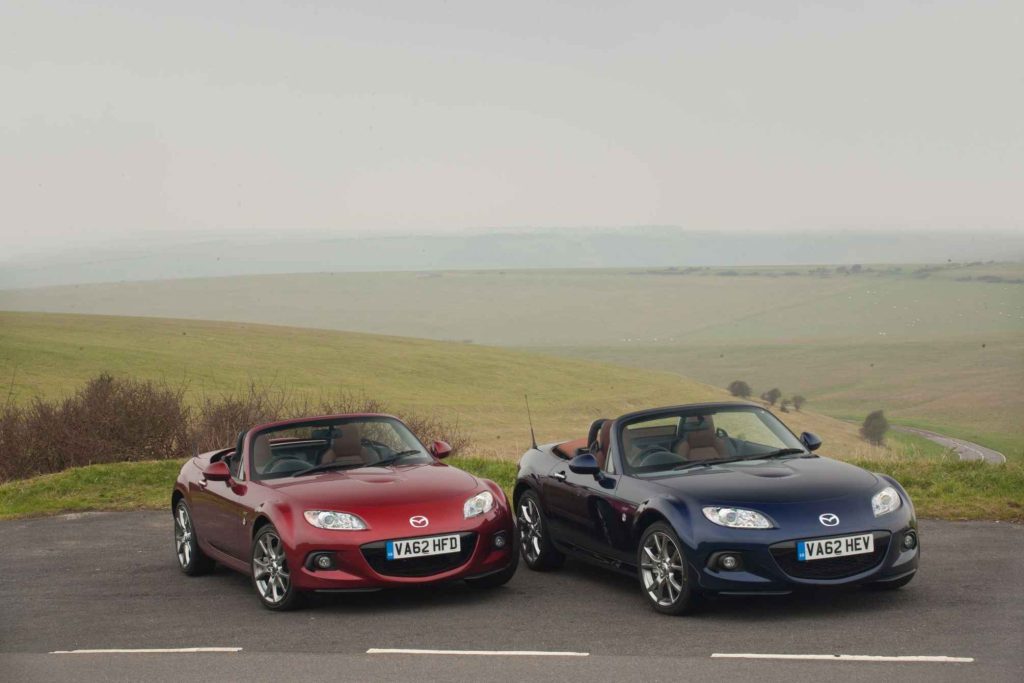
Mk3 updates: Mazda facelifted the NC in late 2008, with cars going on sale in various markets from late 2008 to late 2009. The distinguishing feature of this new ‘NC2’, sometimes called the Mk3.5, was a sharper headlight design and a new ‘smiley’ grille matching other Mazdas of the day. Internal engine revisions liberated more power in some markets but UK cars maintained their quoted 158bhp, albeit with a higher redline and due to stronger engine internals, more tuning potential. In 2012, the MX-5 received a smaller update (dubbed NC3 or Mk3.75), with another grille and front bumper redesign, and new alloy wheel and colour options.
Special versions: The UK’s 20th Anniversary Edition arrived in 2010, a little after the rest of the world, coinciding with the NA’s 1990 introduction here. It was more basic too, based on the 1.8-litre car as an homage to the simplicity of the original, though you could option striking red and blue graphics. Other notable NC specials were the 2011 Sport Black – not actually offered in black, but green, red, or white with black accents and hard top – and the 2013 Sport Graphite, most notable for coming with an artist’s pencil drawing of the car.
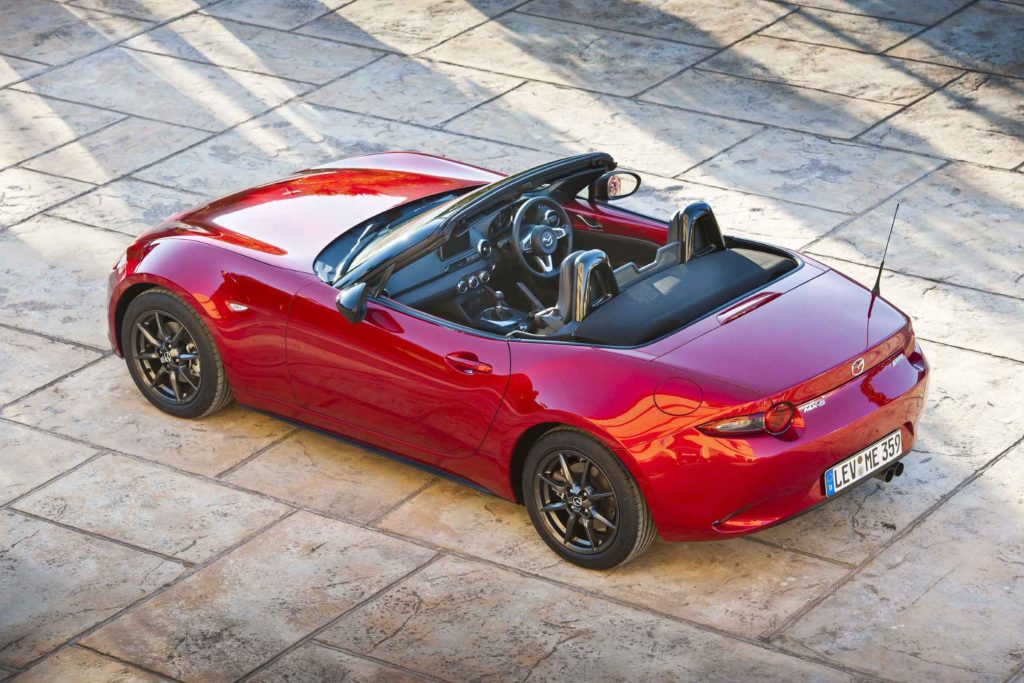
MX-5 Mk4 (ND)
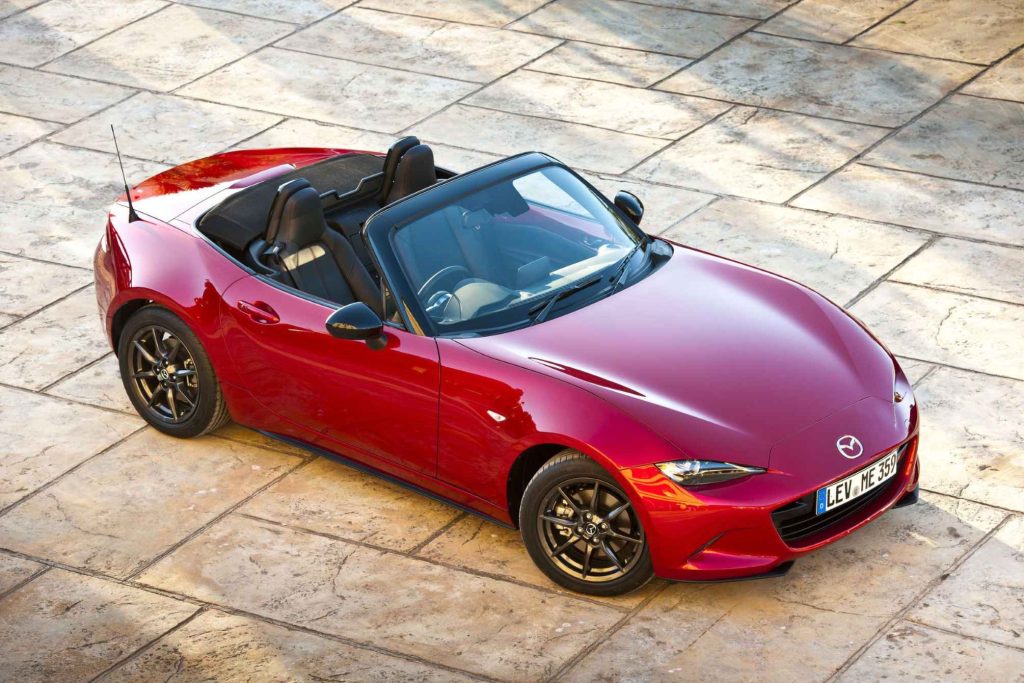
The wait for the fourth-generation MX-5 (Mk4 or ND) ended in September 2014, with the new model launched simultaneously in the US and Spain. The new car was smaller and lighter than its predecessor, and actually shorter than the original car. Some models even clocked in at under a metric tonne. The styling had changed too – exotic, sweeping lines were from Mazda’s ‘Kodo – Soul of Motion’ design language, and best appreciated in Mazda’s signature colour, Soul Red.
Light weight allowed Mazda to downsize the entry-level engine to 1.5 litres and 129bhp, though it also offered a 158bhp 2.0-litre in most markets outside of Japan, the extra capacity and power mainly aimed at pleasing the US market. A manual soft-top was again part of the standard spec list, but in 2016 Mazda added the Retractable Fastback or RF to the lineup, with a folding hard-top in the guise of a coupé-style roofline. Unlike its predecessor, only the centre section of the roof fully disappeared.
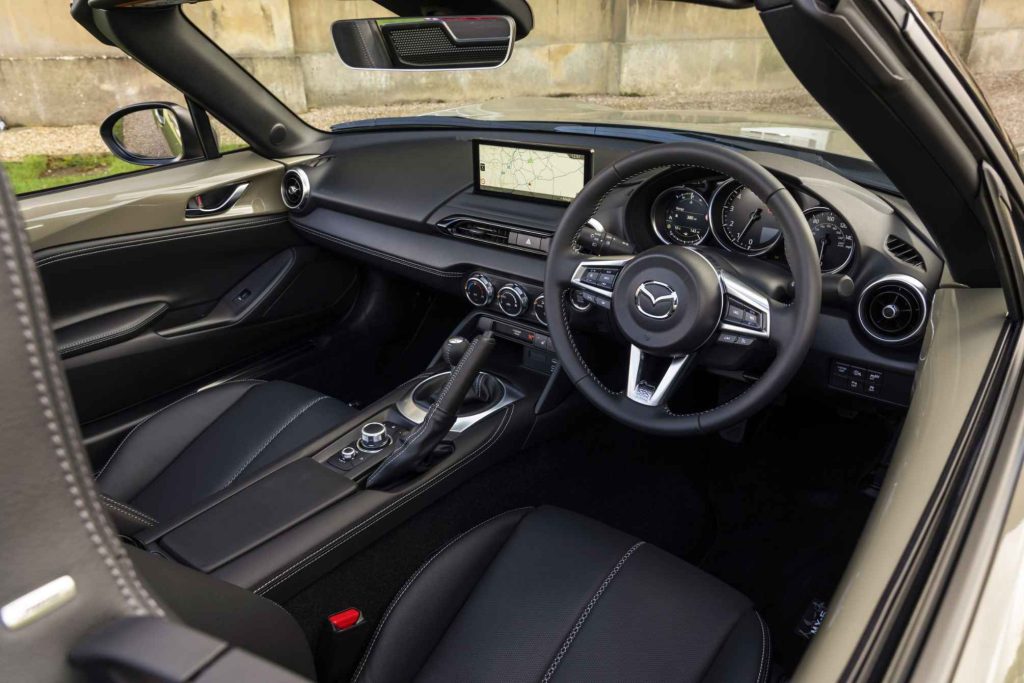
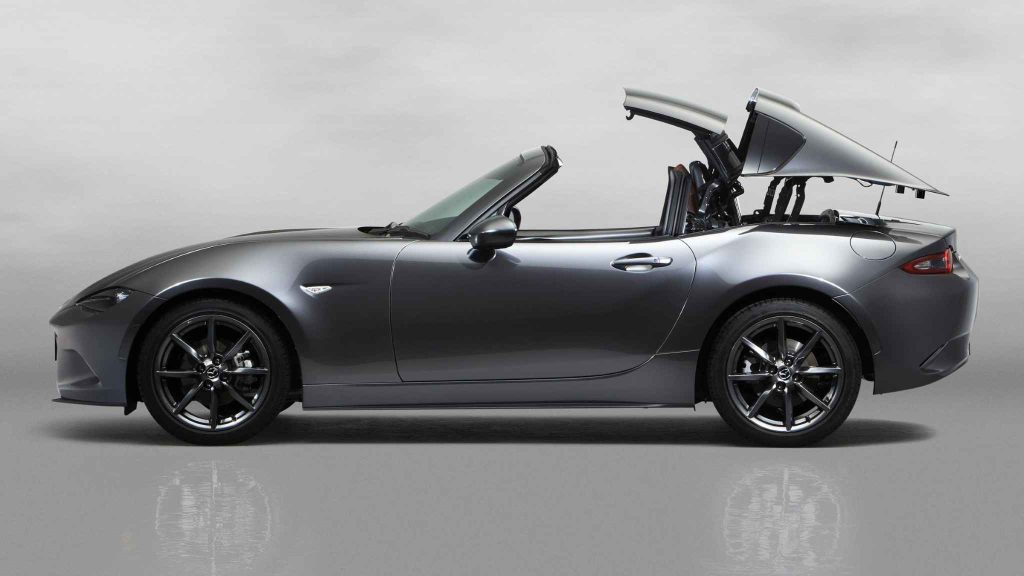
Mk4 updates: You won’t find many visual changes with the ND, but there have been some significant mechanical ones. The first came in 2018 when significant revisions to the 2.0-litre engine liberated 181bhp and a much revvier character, though ND2s can also be identified by features such as Apple CarPlay integration and even deeper Soul Red Crystal paintwork joining the range. In 2024, the car was improved again, with small detail improvements (daytime running lights were now incorporated into the LED headlight units) but also a real boost to its handling. The steering gained much better feedback and the differential was tuned for more predictable responses. Fans refer to this version as the ND3.
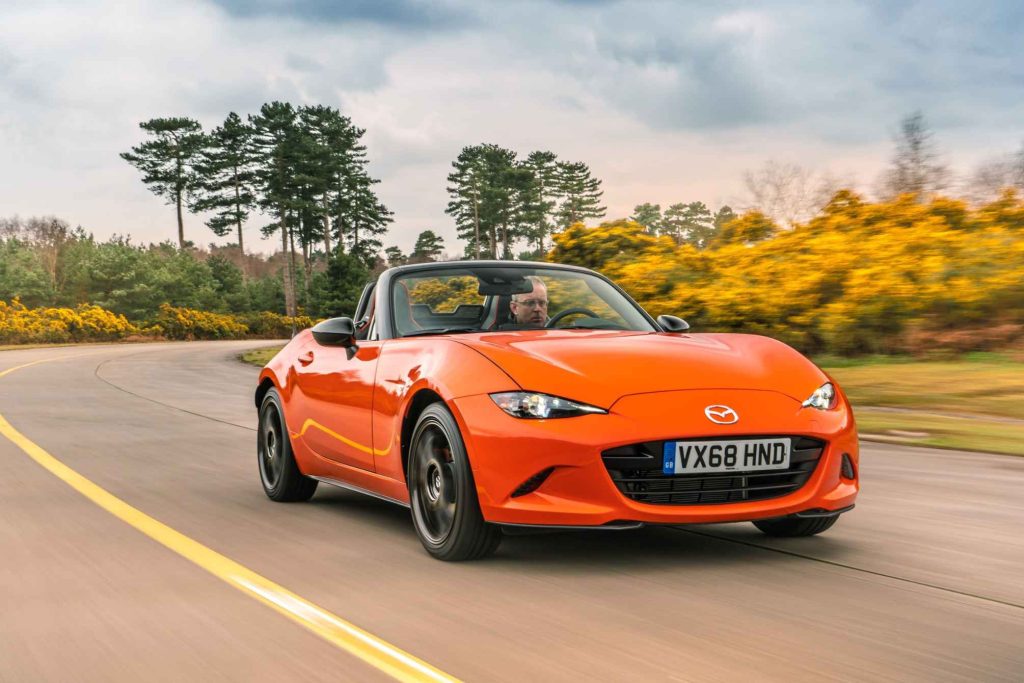
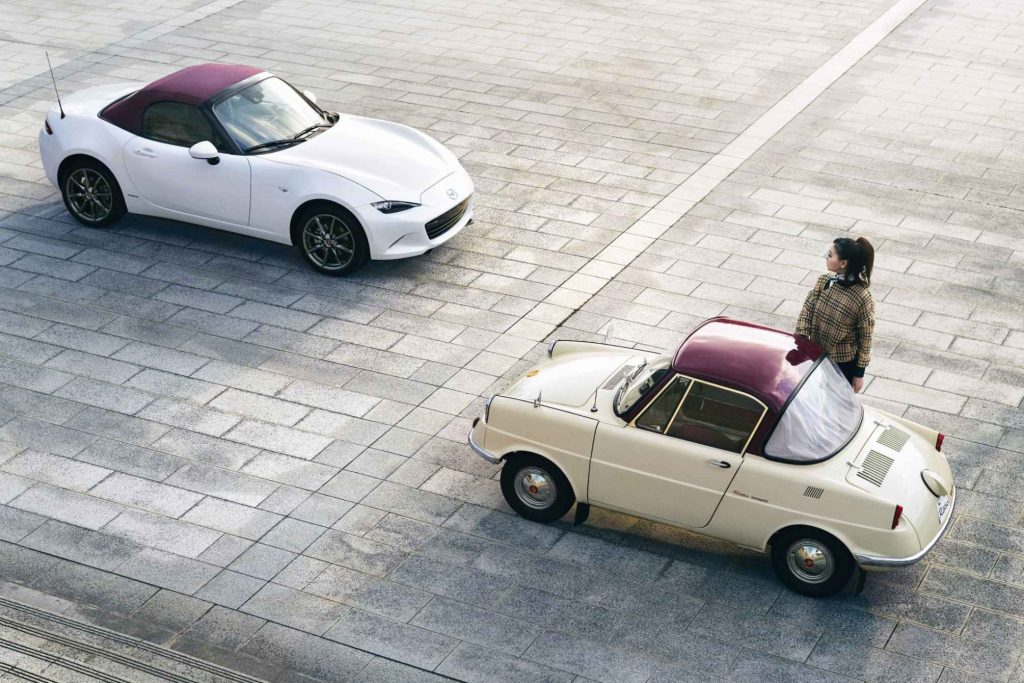
Special versions: The key model here is 2019’s 30th Anniversary Edition, instantly recognisable for its Racing Orange paintwork, as well as Recaro seats and Rays alloy wheels. In 2020, Mazda also launched the 100th Anniversary, celebrating the company’s own centenary – these came in white with a dark red soft top and dark red leather interior. Japan’s 990S model in 2021 was also interesting, with lightweight 16-inch Rays wheels and the removal of some equipment, for a kerbweight of only 990kg.
Which Mazda MX-5 generation is your favourite, and have you ever owned one? Let us know in the comments below.
Insure your classic with a specialist insurer
If you’re looking for cover for your pride and joy, why not consider Hagerty UK? Not only are we classic car insurance specialists, but we are enthusiasts at heart. Call us for a quote on 0333 323 1138.