Overshadowed by the Daytona, the Ferrari 365 GTC/4 is the underdog 1970s V12 GT that makes a stronger case from behind the wheel.
Let us be brutally honest: the classic car world can be fundamentally shallow. It is a place where a single styling quirk or lack of cinematic provenance can banish a genuinely brilliant motor car to the shadows. For more than 50 years, the Ferrari 365 GTC/4 has been the victim of this superficiality. It is the perennial bridesmaid, the other 1970s V12, dismissed by purists who affectionately refer to it as Il Gobbone, the hunchback. Its crime? It dared to follow the 365 GTB/4 Daytona. And, perhaps more fatally, it dared to wear a rubber nose.
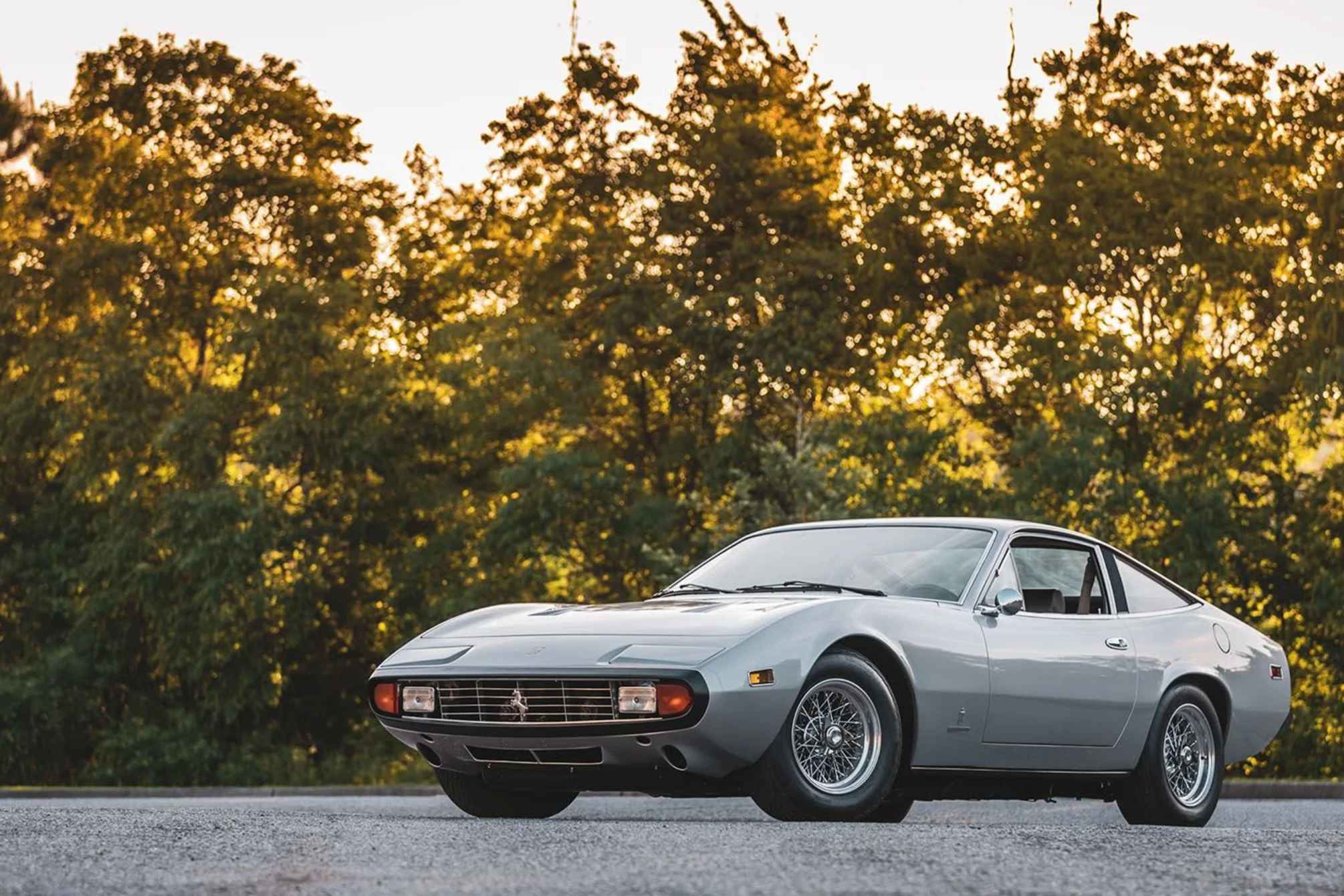
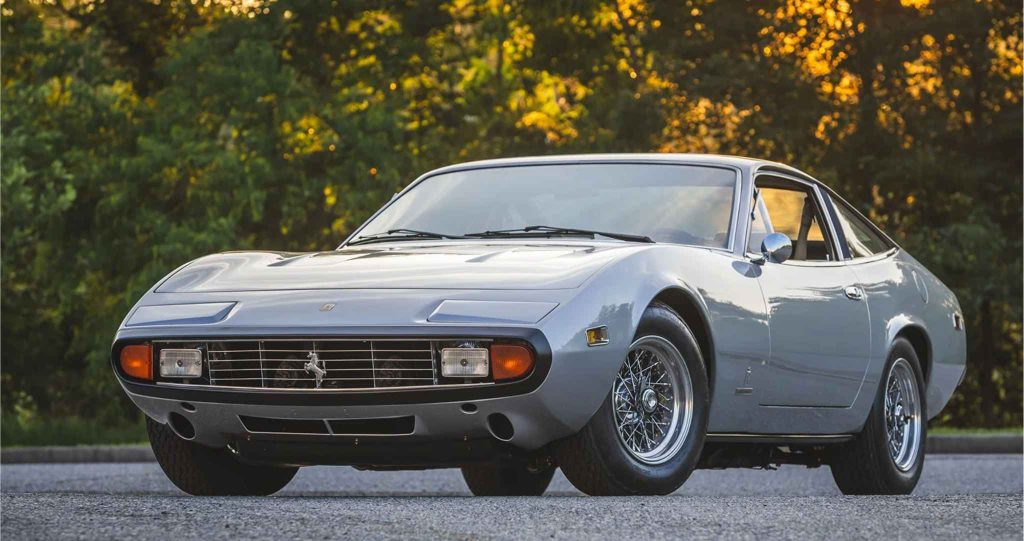
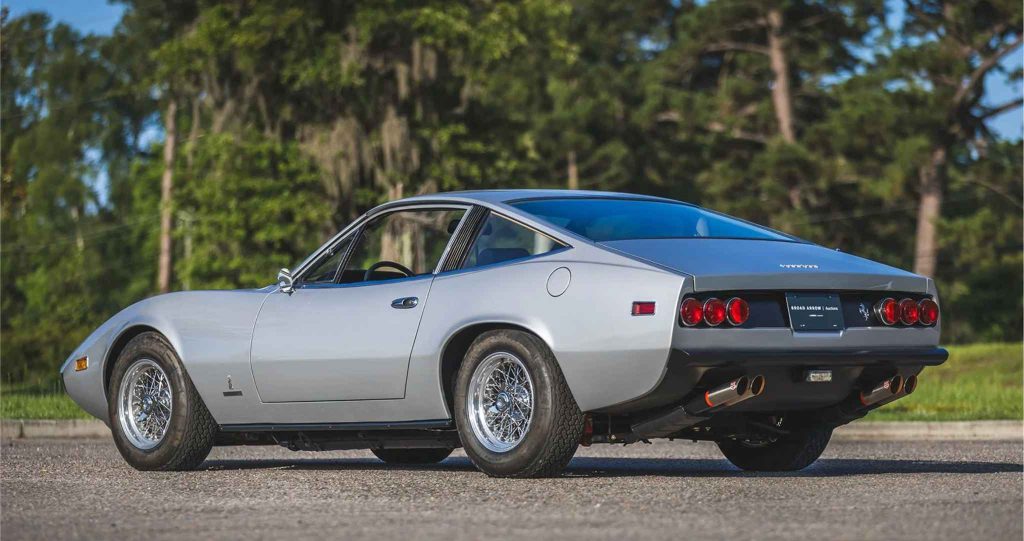
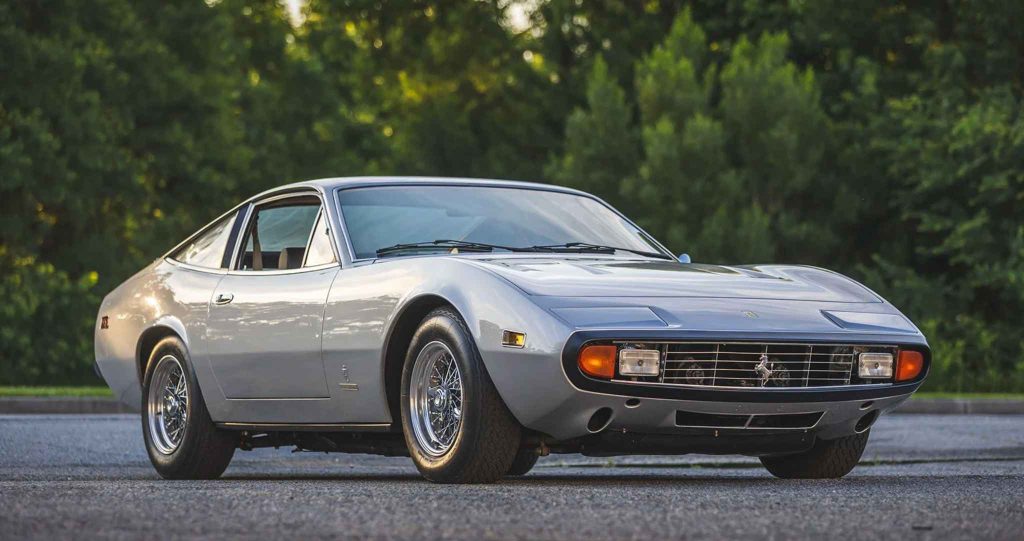
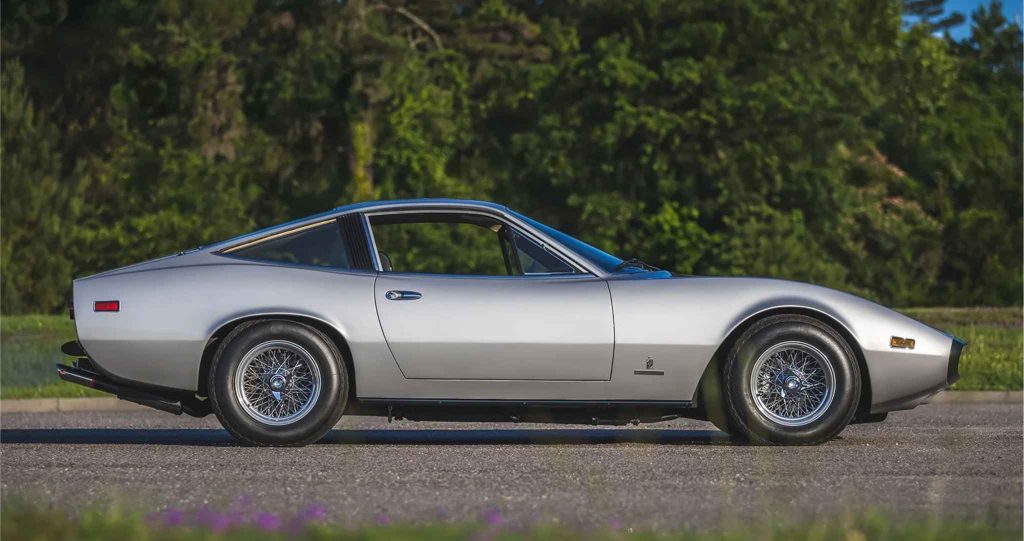
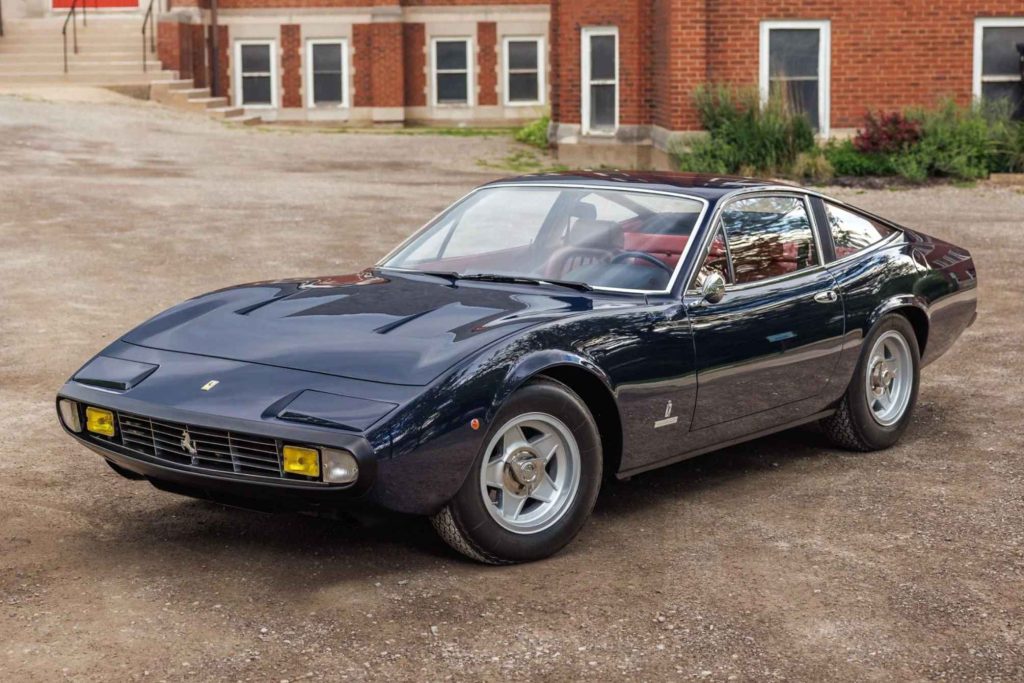
But the accepted narrative that the GTC/4 is the ugly, softer sibling is utter nonsense. Specified in the right hue, ideally Blu Sera, Pino Verde or a brooding Grigio that camouflages that contentious matt-black front bumper, the GTC/4 reveals itself as a masterpiece of 1970s wedge design. Stripped of the aesthetic clash, it possesses a more cohesive profile than the Daytona. More importantly, if you actually want to drive your classic Ferrari rather than brag about it, the GTC/4 is comfortably superior.
Rewind to the 1971 Geneva Motor Show. Ferrari had a problem. The Daytona was a spectacular piece of theatrical violence, a 170mph-plus hammer for the autostrada. But Ferrari’s core clientele, the wealthy industrialists who kept the lights on in Maranello, wanted something more civilised. They wanted a replacement for the 365 GTC and 365 GT 2+2 lineage, a genuine Grand Tourer with long legs, acceptable luggage space and everyday civility.
The task fell to Pininfarina, with the shape credited to Filippo Sapino. He brought Maranello kicking and screaming into the 1970s, swapping the voluptuous curves of the previous decade for sharp creases, a fastback silhouette and an incredibly low bonnet line. Bodies were fabricated by Pininfarina in Turin, using steel, save for an aluminium bonnet and boot lid, before being shipped to Modena for final assembly.
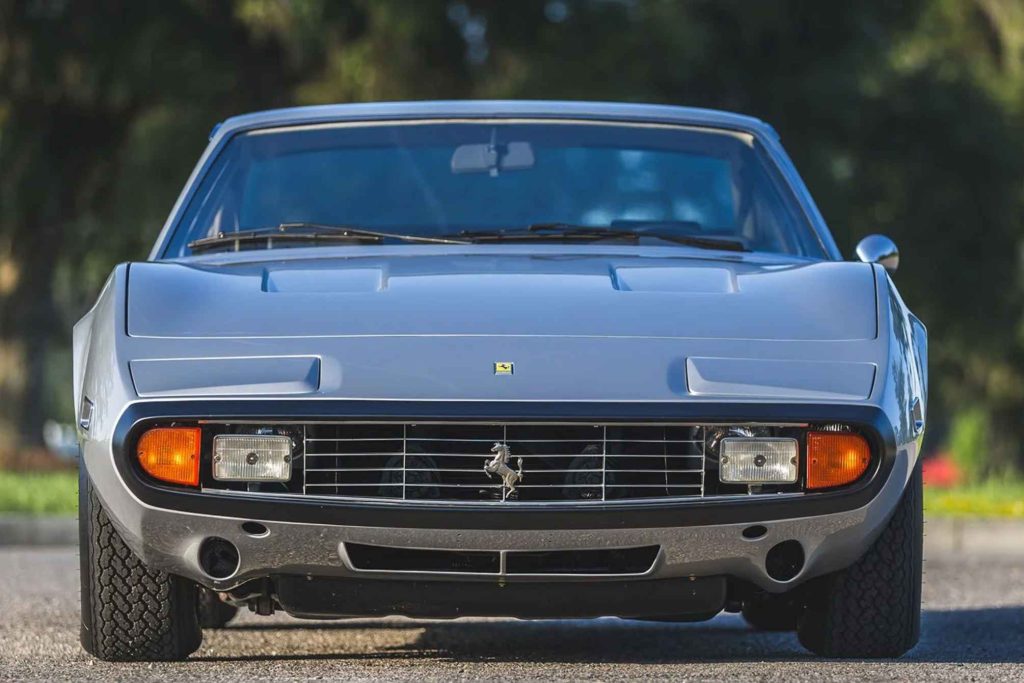
The most contentious element was that front bumper. An early concession to changing impact expectations, especially in the US, Sapino integrated it as a wraparound ring housing the grille, sidelights and indicators. Contrasted against resale red, it can look faintly ridiculous. Paint the car in a dark hue, though, and the bumper recedes, leaving a shark-nosed profile punctuated by pop-up headlamps and neatly blistered arches housing five-spoke Cromodora alloy wheels and suitably chunky Michelin rubber.
To achieve that aggressively low prow, Ferrari’s engineers engaged in some gloriously Italian mechanical gymnastics. Underneath, the C/4 uses a tubular steel chassis closely related to the Daytona’s, with the wheelbase stretched by 100mm to accommodate two hilariously cramped rear seats that effectively serve as a heavily upholstered parcel shelf.
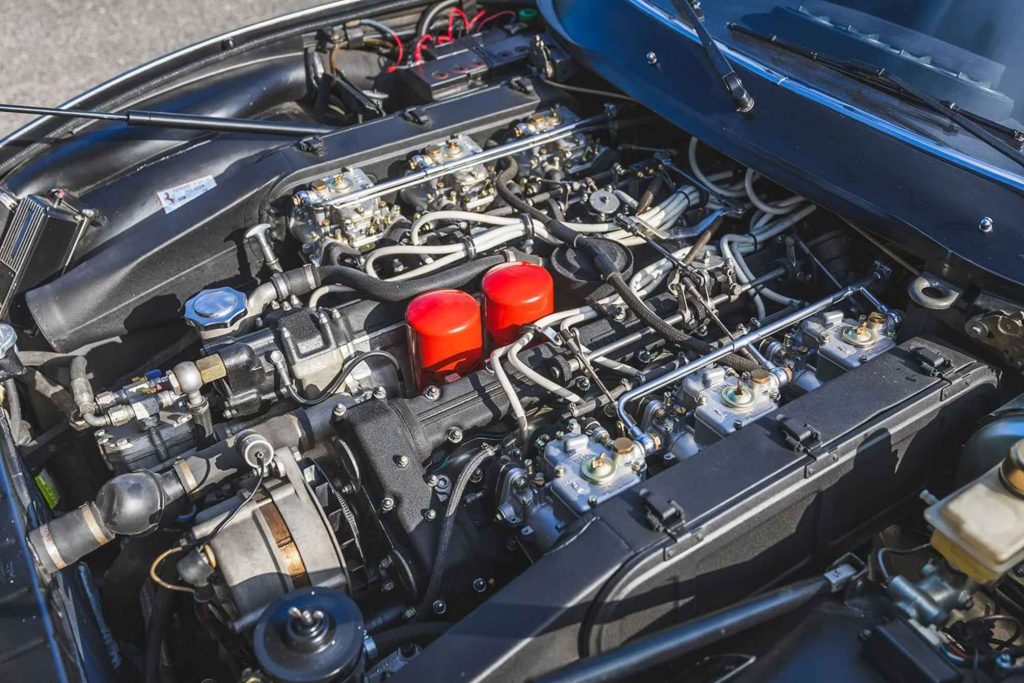
But the Daytona’s towering downdraught carburettors would not fit beneath Sapino’s rakish bonnet. Consequently, Ferrari binned the downdraught arrangement and fitted six twin-choke side-draught Weber 38 DCOE carburettors. This pragmatic workaround accidentally created the C/4’s greatest party trick. With the intakes breathing against the bulkhead, the induction howl is piped straight into the cabin. A Daytona sounds magnificent from the pavement, but from the driver’s seat, the GTC/4 has a strong claim to being the best-sounding front-engined Ferrari road car of its era.
Mechanically, the C/4 was a radical departure aimed squarely at grand touring usability. Where the Daytona used dry-sump lubrication and a rear-mounted transaxle, the C/4 adopted a wet-sump system with a five-speed manual gearbox mounted conventionally behind the engine. Despite abandoning the transaxle layout, Maranello still achieved an excellent weight distribution by pushing the V12 deep into the chassis. Output was eased back from the Daytona’s 352bhp to 340bhp in European specification, or around 316bhp for federalised US cars.
On the road, the C/4 makes its ultimate case. The Daytona is famously a physical ordeal. It has unassisted steering that requires Popeye forearms at parking speeds, a heavy clutch, a dog-leg gearbox and a ride that can feel punishing on poor roads. You exit a Daytona after three hours feeling like you have been in a pub brawl.
The C/4, by contrast, is a revelation. Ferrari fitted beautifully weighted ZF hydraulic power steering that retains feedback without the wrestling match. It features a conventional H-pattern gearbox, alongside a self-levelling hydro-pneumatic rear suspension system. It also came with electric windows and standard air conditioning, which matters enormously if your fantasy of 1970s Ferrari ownership involves more than polishing it under strip lights.
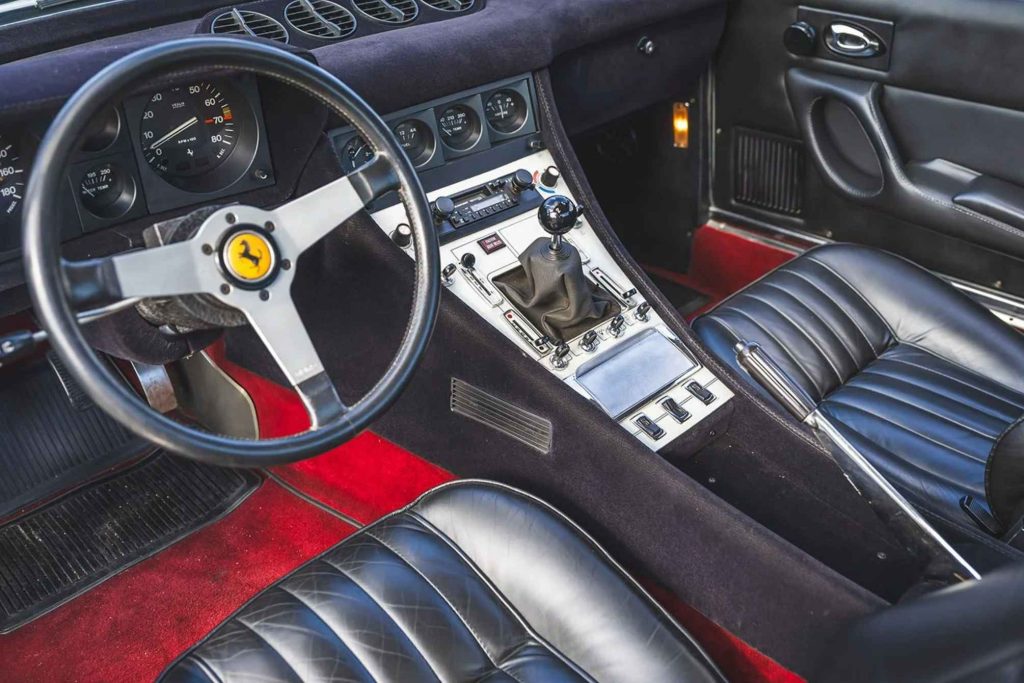
The driver-focused cockpit could be trimmed with the model’s distinctive tartan cloth inserts, known as Panno, which look magnificent in the correct period context and grip you properly through corners. Full leather was available, but the cloth suits the car’s faintly louche character better. It says you are there to drive, not merely to pose.
Period road tests had the GTC/4 reaching 60mph in around seven seconds, with 160mph within reach. More importantly, it does that without making you sweat. Motor Trend called it the most refined, flexible and comfortable car Maranello had built to date, and Road & Track praised its lighter controls, reduced mechanical thrash and delicious ease of use. They were bang on the money.
So why the massive disparity in the classifieds? Why is a car that is rarer, better sounding and infinitely nicer to drive worth a fraction of its sibling?
The reality of ownership provides the grim, wallet-emptying answer. Remember those glorious side-draught Webers? They sit exactly where your mechanic does not want them. When the time comes to adjust the valve clearances, and on a Colombo V12 that time is never as far away as you would like, the carburettors, linkages and associated plumbing have to come off. Furthermore, the twin Marelli distributors are buried at the back of the camshafts, hard against the firewall. It is a labour-intensive nightmare involving hours of swearing, skinned knuckles and back-breaking contortion. The Daytona, with its central downdraught arrangement, is easier by comparison. Throw in the cost of expensive Michelin XWX rubber and maintaining that Koni self-levelling rear suspension, and bills mount rapidly.
This terrifying maintenance reputation spooked buyers in the 1980s and 1990s, suppressing values and leading some C/4s into the hands of owners who could not afford to run them properly. But today, the market has matured. We have collectively accepted that running a 1970s V12 Ferrari requires deep pockets regardless of the badge. The running costs are a known quantity.
Looking at the financials, the C/4 starts to resemble one of the more interesting buys in the classic Ferrari world. Ferrari built 1284 Daytona coupés. By comparison, only around 500 365 GTC/4s were made during its brief production run. If you want a UK-supplied right-hand-drive car, you are looking at one of just 31 delivered to Britain. It is properly, wonderfully rare.
Yet a good, usable Daytona will typically relieve you of roughly £450,000 to £650,000 in the UK, with stronger cars and exceptional examples often higher. The Ferrari 365 GTC/4? A solid left-hand-drive car is more commonly £150,000 to £200,000 territory, with the very best, rarest or most interesting examples climbing beyond that. In the US, regular auction results tend to sit in the high-$100,000s to mid-$200,000s, although exceptional cars have broken through higher.
For roughly a third of the price of a Daytona, you get a much rarer car, a vastly superior driving experience, the greatest induction noise this side of a 1960s Formula One grid and a wedge-shaped profile that is finally getting its due recognition. It is the thinking enthusiast’s classic V12 Ferrari.
Just buy a dark blue one, and never mention the words rubber nose.
Do you think the Ferrari 365 GTC/4 is the most underrated Ferrari ever made, or is there another overlooked classic that deserves the title? Let us know in the comments below.
Insure your classic with a specialist insurer
If you’re looking for cover for your pride and joy, why not consider Hagerty UK? Not only are we classic car insurance specialists, but we are enthusiasts at heart. Call us for a quote on 0333 323 1138.