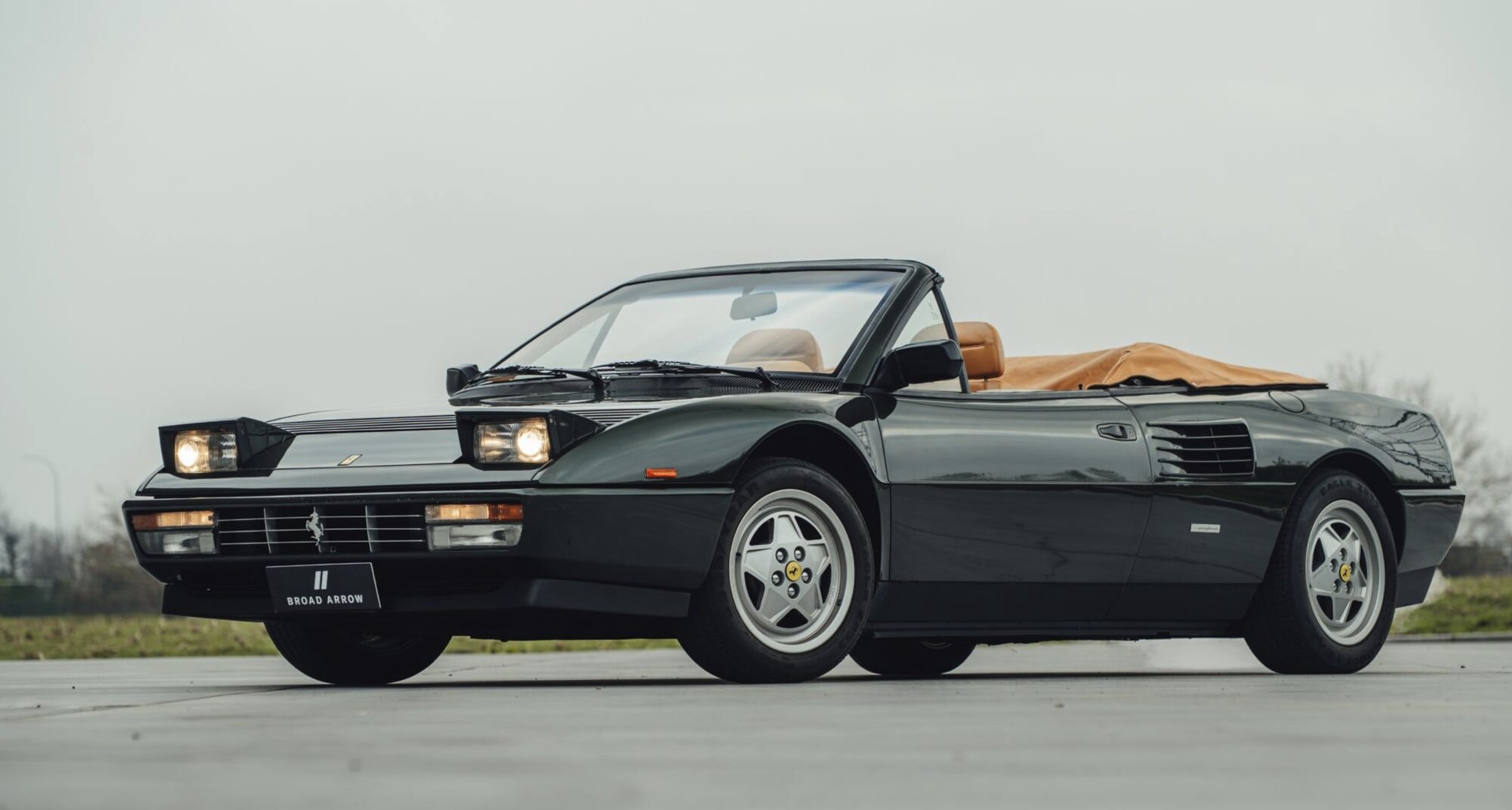
Practical, pretty and flawed: why the Mondial is much more than the poor man’s Ferrari cliché today
The recent unveiling of the Ferrari Luce has been no exception. Inevitably, the usual Mondial jokes resurfaced: awkward, slow, unloved, the Ferrari you bought when you could not afford the one you really wanted. It is a remarkably lazy comparison, a thoroughly unfair slight on a fascinating classic and a statement that drastically misunderstands the Mondial’s true appeal. To get under the skin of this much-maligned machine, we need to look past the old road-test grumbling about its initial lack of pace and examine exactly why it came to be.
Let us get the history straight from the off. In the late 1970s, Ferrari needed to replace the angular Bertone-styled 308 GT4. Enzo Ferrari was a pragmatist when it came to road cars. He recognised growing demand for a mid-engined sports car that could offer more everyday usability than a pure two-seat exotic, without losing the drama of a Maranello V8. The aim was to build a more accessible, more practical Ferrari that could broaden the company’s appeal while still feeding the mystique that made the badge so powerful in the first place.
To achieve this, the engineering team developed a lengthened and reworked tubular-steel chassis related to the 308 family, with detachable subframe thinking that made the car more serviceable than its mid-engined layout might suggest. It was an ambitious attempt to make a four-seat Ferrari easier to build, easier to maintain and easier to live with. This was not a stripped-out homologation special built to chase lap times at Fiorano. It was conceived as a long-legged grand tourer designed to cover serious mileage in comfort.
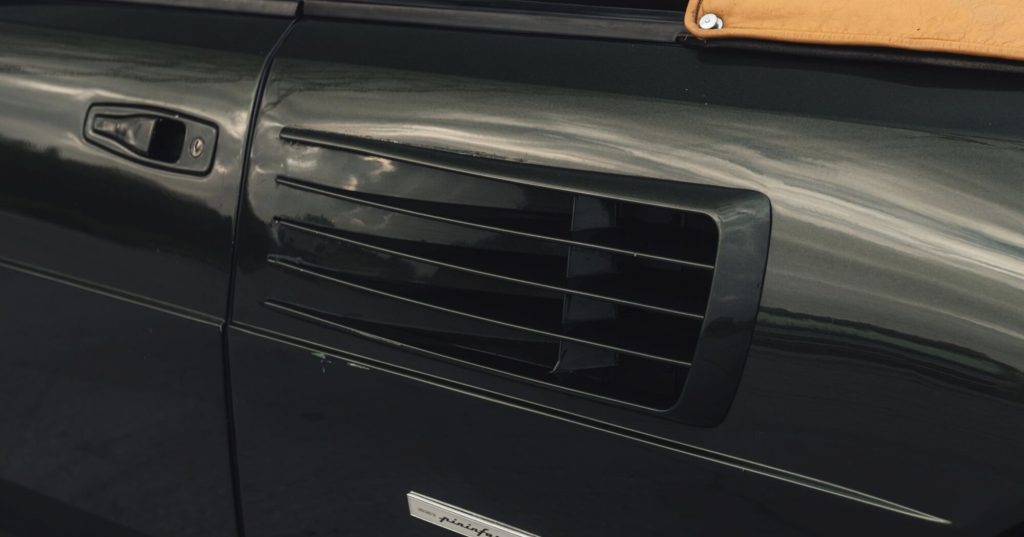
The design task was handed back to Pininfarina, which was given one of the hardest packaging briefs in automotive design. Try wrapping a mid-mounted V8 and four human beings in a shape that still looks like it belongs on a teenager’s bedroom wall. The original Mondial 8 shape is usually credited to Pierangelo Andreani at Pininfarina, with later evolution and the wider Pininfarina house style carrying the influence of the Fioravanti era. The resulting profile, with its prominent side louvres, stretched roofline and long cabin, was always going to polarise opinion. Yet today those very details look gloriously evocative of 1980s excess.
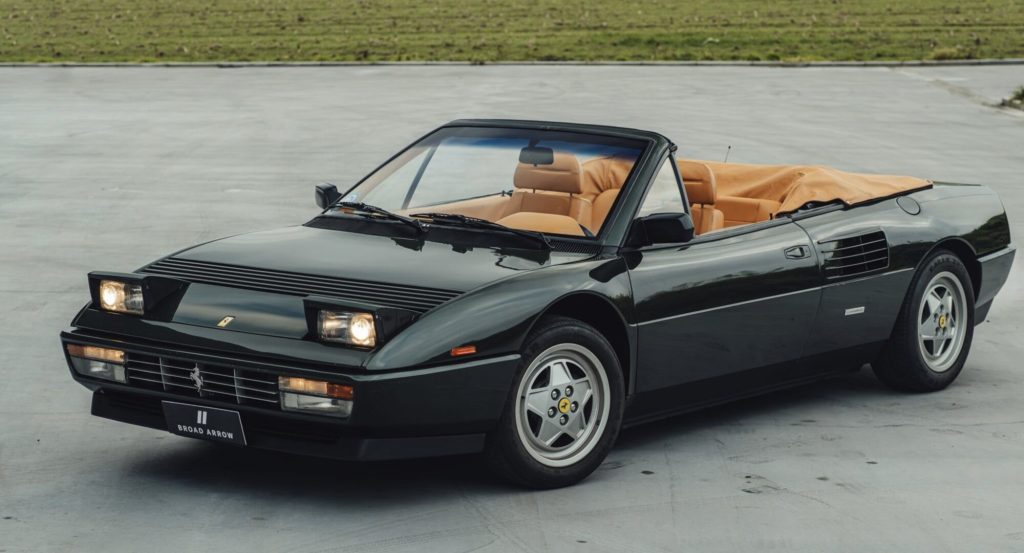
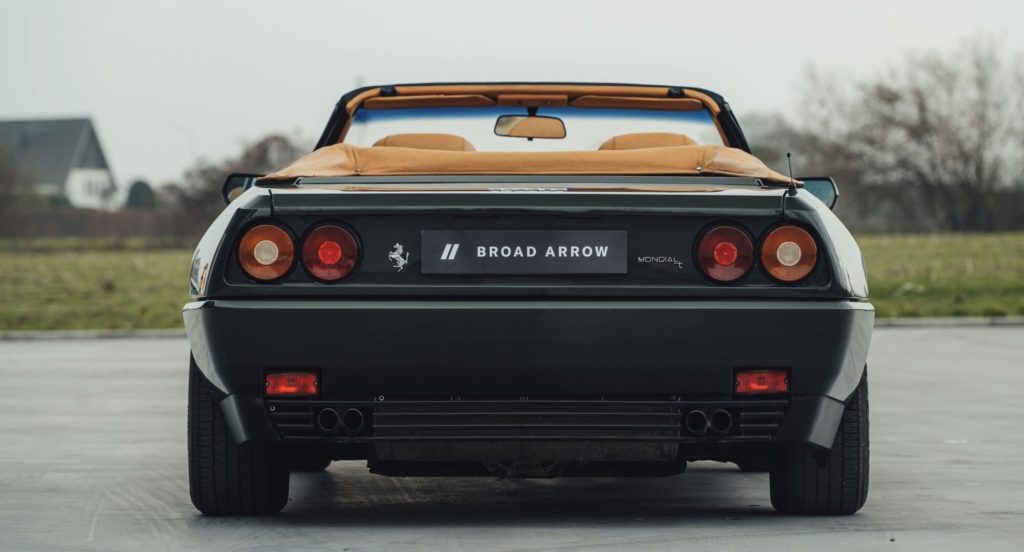
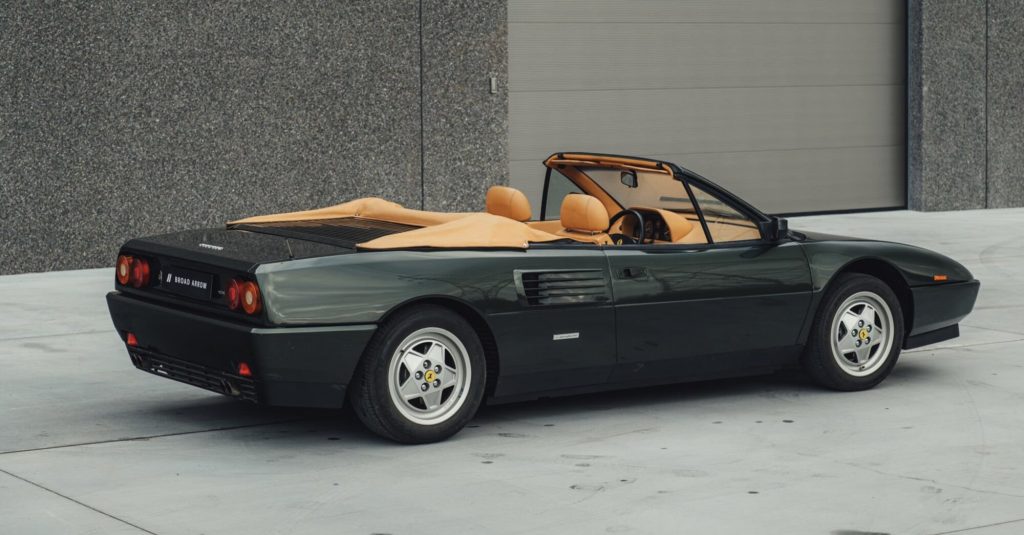
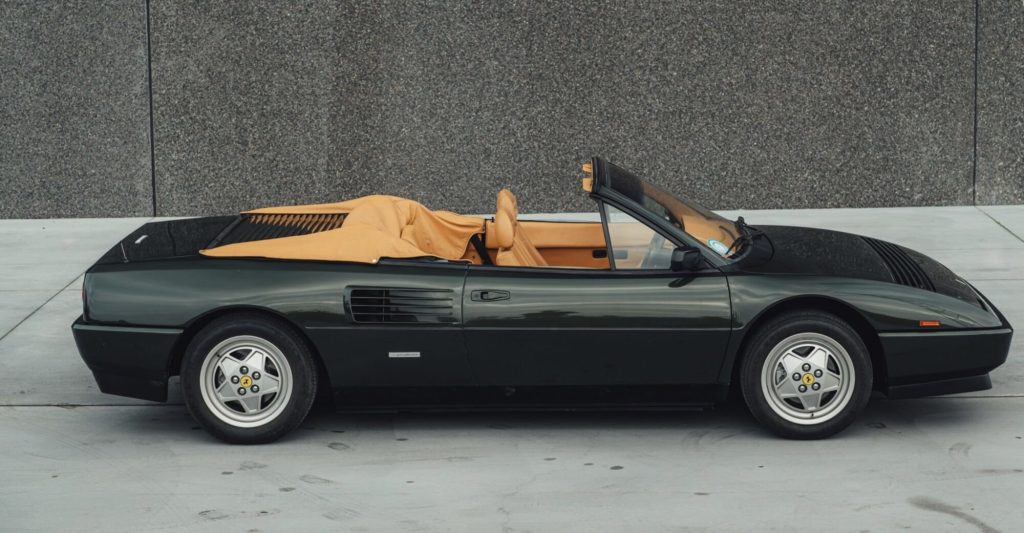
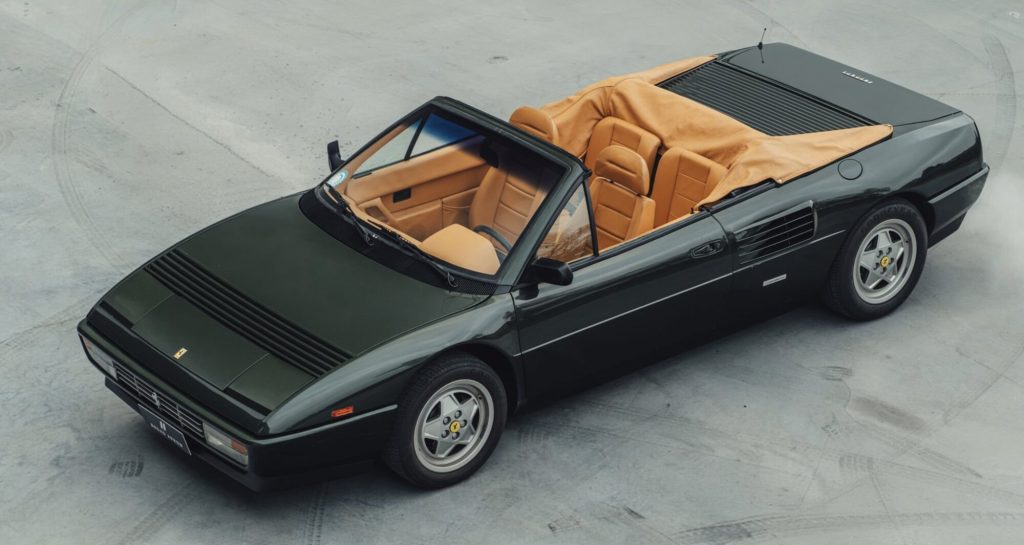
Beneath the skin, the Mondial was on a constant journey of evolution. Yes, the initial 1980 Mondial 8 was undeniably sluggish by Ferrari standards. Its 3.0-litre V8 had to carry a relatively heavy 2+2 body, and contemporary expectations of what a Ferrari should feel like did it few favours. However, Maranello moved quickly. The Quattrovalvole introduced four valves per cylinder and much-needed urgency. Then came the 3.2-litre version, which brought stronger performance, cleaner styling and a much more rounded personality. The final act was the Mondial t in 1989, which represented a major engineering shift. Its V8 was mounted longitudinally, while the gearbox sat transversely, a layout that helped lower the centre of gravity and previewed the thinking used on the 348.
Get behind the wheel of a good car and the old jokes start to feel very thin indeed. Earlier non-assisted cars can be heavy at parking speeds, but once moving they offer direct, talkative steering. The later Mondial t gained power assistance, but it also brought a more modern chassis feel and considerably more performance. You slot the heavy gear lever through the classic metal gate, pin the throttle and that flat-plane-crank V8 sings its mechanical symphony behind you. It offers an interactive, analogue and forgiving driving experience that modern supercars, for all their absurd ability, simply cannot replicate.
Here in the UK, the Mondial occupies a unique space in our collective motoring culture. Throughout the 1980s and 1990s it became a symbol of accessible aspiration. As the City of London boomed and the yuppie era took hold, the Mondial was the Ferrari for people who had made some money but perhaps could not stretch to a poster-boy Testarossa. Its relative visibility led to a serious image problem. It became widely labelled the poor man’s Ferrari, mocked by pub experts who had never even sat in one and dismissed as the exotic you bought when you cared more about the badge than the dynamics.
Yet that specific cultural footprint is precisely why it resonates today. The Mondial is intrinsically linked to a vivid, optimistic and occasionally ridiculous era of British history. It appeared in magazines, television backdrops, city streets and suburban daydreams. For a generation of enthusiasts who grew up watching these angular shapes burble through Chelsea, Kensington or Manchester, the Mondial was not a failure. It was their first real exposure to Maranello magic. It brought the dream of Ferrari ownership out of the exclusive realm of the ultra-rich and parked it directly on British high streets.
Of course, viewing the Mondial through misty-eyed nostalgia does not mean we should ignore its very real faults. If you enter the market today without doing your homework, you can still bankrupt yourself. Corrosion is the first worry. Later cars benefited from better protection, and structural rot is not automatically inevitable, but early cars in particular need proper inspection. Check the sills, door bottoms, wheel arches, lower panels and chassis areas carefully. Cosmetic rust can become expensive quickly, and any corrosion around structural points should be treated with extreme suspicion.
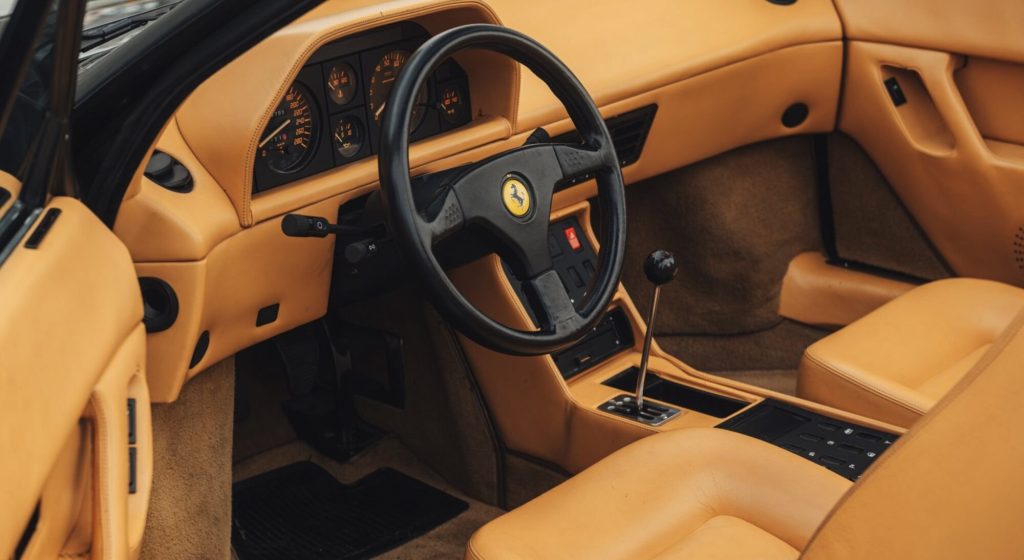
Then there are the electrics. The fuseboxes on earlier cars are notoriously fragile and can suffer from heat damage, leading to a cascade of infuriating gremlins. Windows, wipers, lights and pop-up headlamps can all become bargaining chips if the wiring has been neglected. Dashboards, switches and interior plastics are also ageing, and replacement parts can be costly or difficult to source.
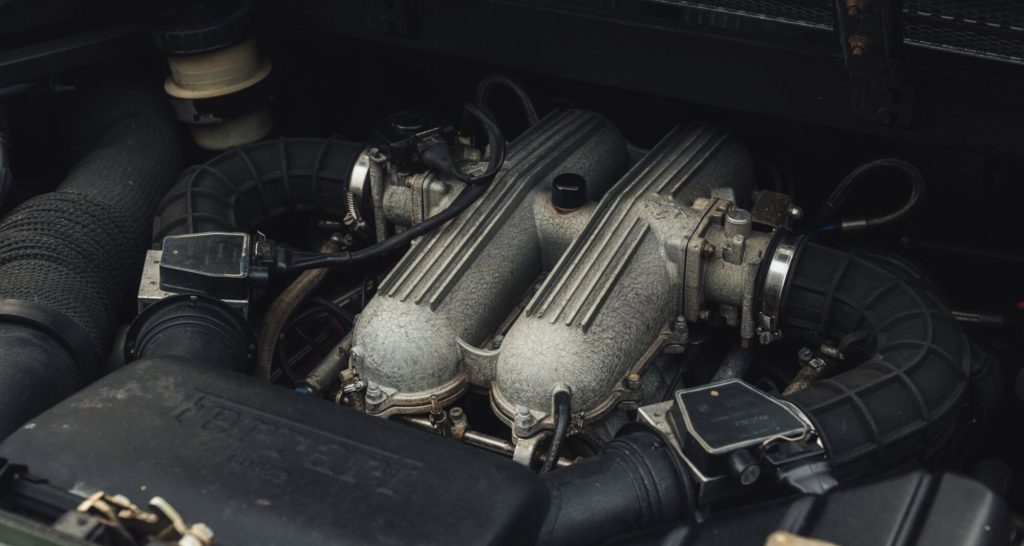
Mechanically, the engines are remarkably robust if serviced regularly by someone who actually knows what they are doing. However, the maintenance bills differ wildly depending on the specific model. On the earlier transverse-engined cars, cambelts can be changed with the engine still in the car, which makes routine major servicing less terrifying than many people assume. The Mondial t is a different proposition. Its longitudinal engine and transverse gearbox layout usually means a much more involved major service, often requiring the engine/subframe assembly to be dropped, which brings a wallet-wilting bill. Suspension bushes are another common wear item, and tired examples can feel vague and wandering at higher speeds. Finally, beware of early cars sitting on original metric TRX wheels, because replacing those tyres remains painfully expensive.
Despite the lingering pub-talk stigma, the UK market has finally woken up to the Mondial’s enduring analogue charms. It remains one of the more attainable routes into a classic, mid-engined V8 manual Ferrari, but it is no longer the cheap joke it once was. Scruffy projects and needy Mondial 8s can still appear around the £20,000 mark, but buying the cheapest one is rarely clever. By the time you have dealt with rust, electrics, recommissioning and deferred servicing, the bargain can evaporate very quickly.
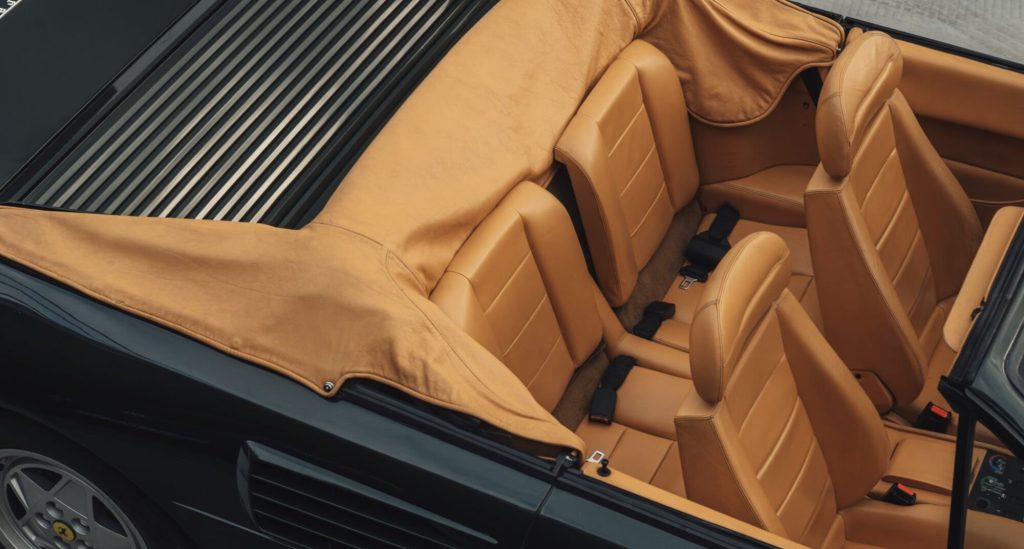
For usable cars, the market now sits in a broader and firmer band than it did a decade ago. Presentable Mondial 8 and Quattrovalvole coupés often live in the mid-to-high £20,000s and low £30,000s, but genuinely well-maintained QV and 3.2 coupés are more realistically a £35,000 to £45,000 proposition. Cabriolets add a noticeable premium, and the best open cars or Mondial t examples can push well beyond that. Strong Mondial t Cabriolets and exceptional low-mileage cars may sit closer to £50,000 to £70,000, especially with the right history, specification and condition.
At that price point, the Mondial no longer survives purely as the cheap Ferrari. It has to be judged on what it actually offers: a genuine Ferrari V8, a gated manual gearbox, Pininfarina styling, four-seat flexibility and a very particular kind of unashamed character. It is not the sharpest, fastest or easiest classic Ferrari to own. But it is one of the most interesting.
The tragedy of the Mondial is that people spent decades laughing at what it was not. It was not a Testarossa. It was not a 308 GTB. It was not a stripped-out road racer. But it was never trying to be any of those things. It was a civilised, usable, mid-engined Ferrari with room for children, luggage and long weekends away. That made it vulnerable to cheap jokes in period, but today, it makes it fascinating.
Could the Mondial actually be the most underrated Ferrari ever? Let us know in the comments below.
Insure your classic with a specialist insurer
If you’re looking for cover for your pride and joy, why not consider Hagerty UK? Not only are we classic car insurance specialists, but we are enthusiasts at heart. Call us for a quote on 0333 323 1138.