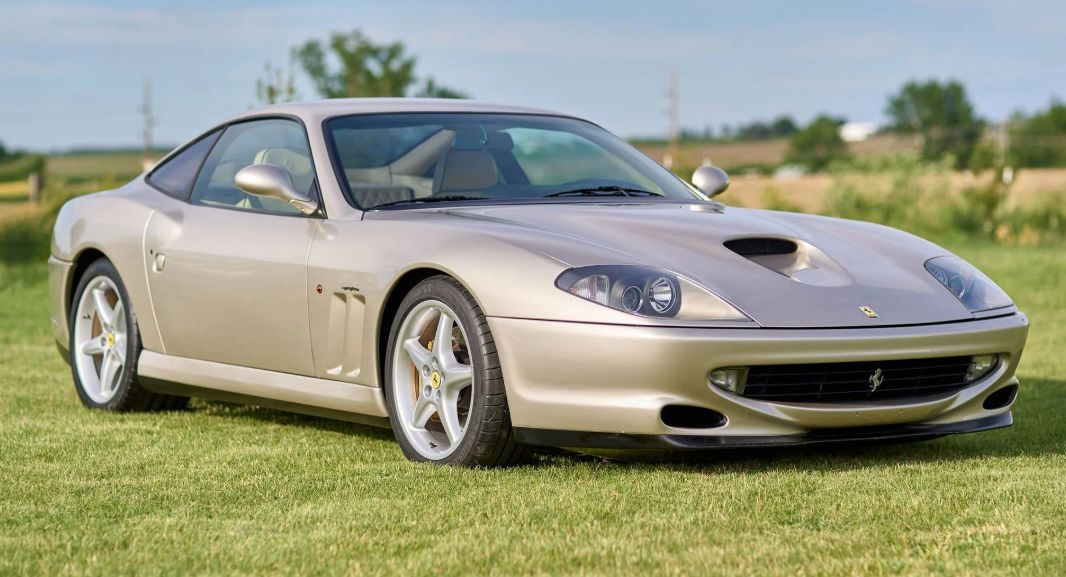
The Ferrari for people that don’t like to shout about owning one
Some Ferraris shout, some terrify, and some seem designed purely to decorate teenage bedroom walls. Then there are Ferraris like the 550 Maranello – machines that quietly remind you Maranello knows exactly how to build a grand tourer when it chooses to.
When it arrived in 1996, the 550 was not merely another V12 Ferrari. It represented something rather more profound: a philosophical reset. After two decades of mid-engined V12 flagships such as the Berlinetta Boxer and Testarossa lineage, Ferrari returned to a front-engined layout for its two-seat flagship – something it hadn’t done since the 1973 Daytona. And as it turned out, the return to tradition was precisely what Ferrari needed.
By the early 1990s Ferrari’s range was beginning to feel somewhat fragmented. The Testarossa and its derivatives were spectacular but ageing, and increasingly ill-suited to the kind of long-distance GT motoring that wealthy customers actually wanted.
The answer was radical in its conservatism: build a proper front-engined V12 grand tourer again.
The 550 Maranello was developed alongside the four-seat Ferrari 456 GT, borrowing key architecture but sharpening the concept into a two-seat flagship. Ferrari engineers believed that moving the V12 ahead of the cabin – and pairing it with a rear-mounted transaxle– would create the sort of balance that suited high-speed continental travel. There was an element of cost-saving too – a mid-engined proposal existed, but the early-1990s recession meant development costs had to be shared between the 456 and 550.
The mechanical layout was deceptively sophisticated. The engine sat well behind the front axle, creating an almost front-mid-engine configuration, while the six-speed gearbox lived at the rear as part of the transaxle assembly. The result was improved weight distribution and greater stability at speed.
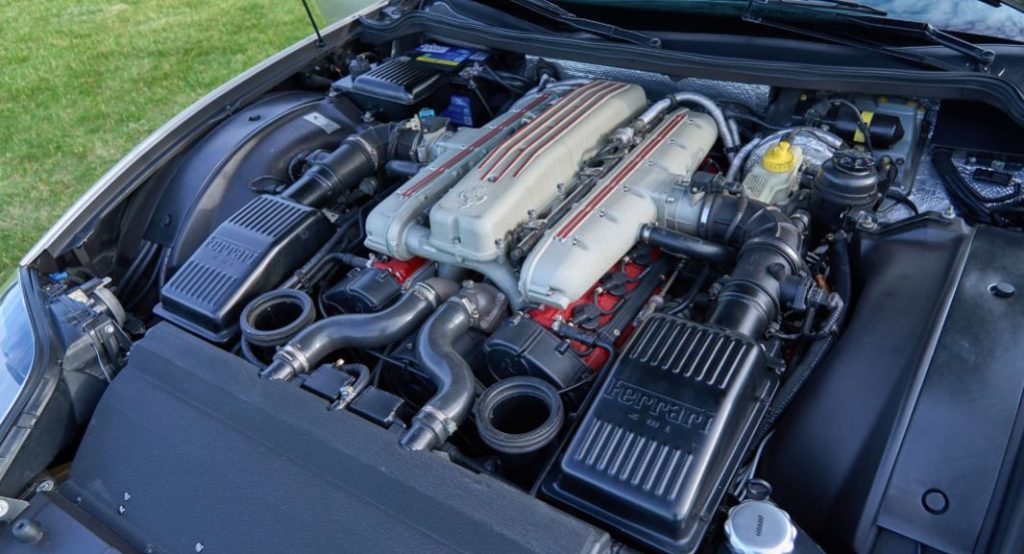
At the heart of the car lay the F133A V12, a development of the engine introduced in the 456 GT. Displacing 5.5 litres, it produced around 485bhp at 7000rpm and 419lb ft of torque, giving the big GT a claimed 0–62mph time of roughly 4.4 seconds and a top speed approaching 200mph.
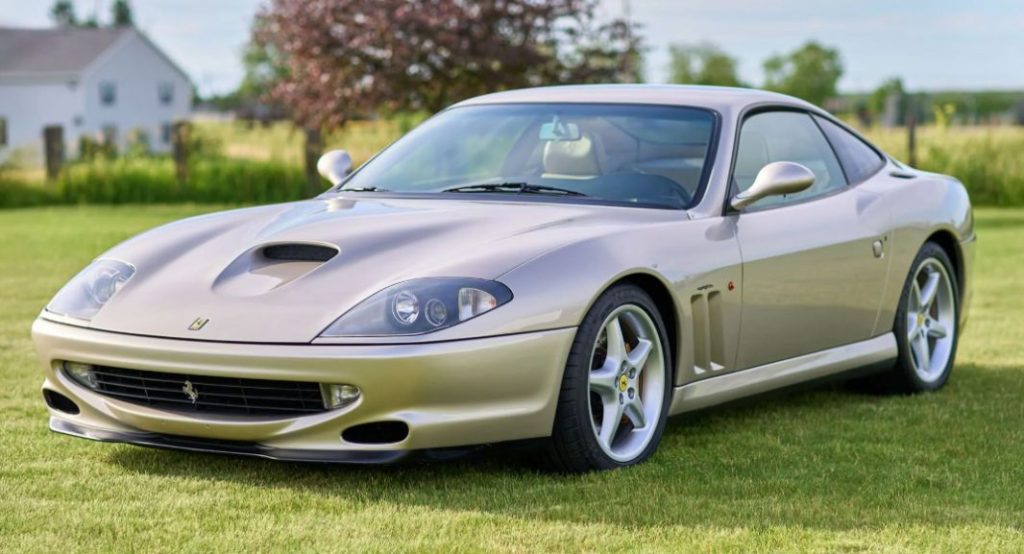
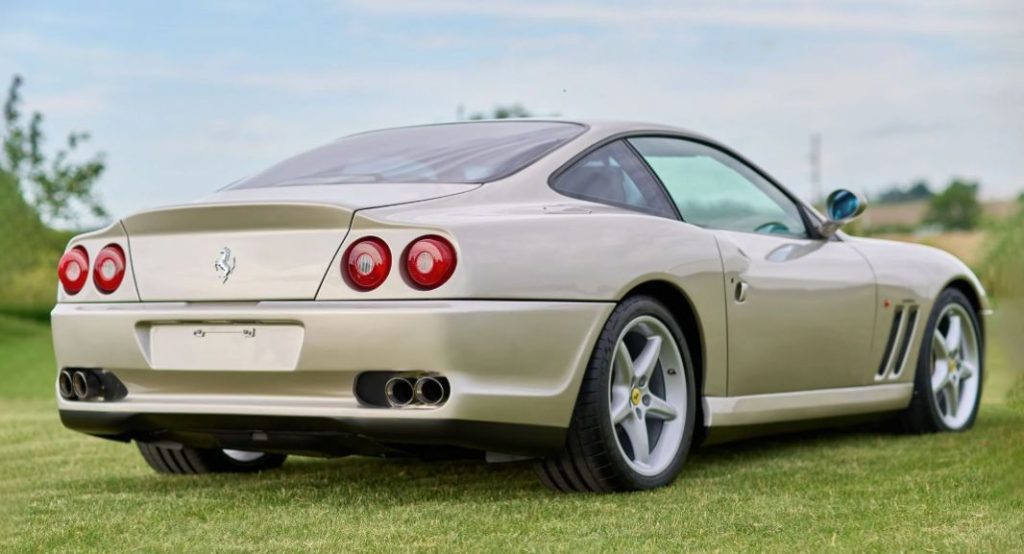
What made the engine special wasn’t merely the numbers – it was the character. Not the shrieking, operatic sort you might expect either, but something subtler. Ferrari redesigned the cylinder heads and introduced a variable-length intake system with twelve individual throttle valves, creating a motor that delivered both low-speed torque and the screaming top-end expected of a Maranello V12. Well, kind of – those expecting something shouty might like to look elsewhere. It’s a tuneful unit, but not one that will excite teenage boys from four miles away.
Structurally, the 550 used a tubular steel spaceframe chassis clothed in aluminium bodywork, with double-wishbone suspension at each corner and coil springs paired with telescopic dampers.
Aerodynamics were carefully managed as well. Ferrari claimed a drag coefficient of around 0.33, while the body generated useful downforce without resorting to the sort of extravagant wings that might upset the delicate aesthetic balance.
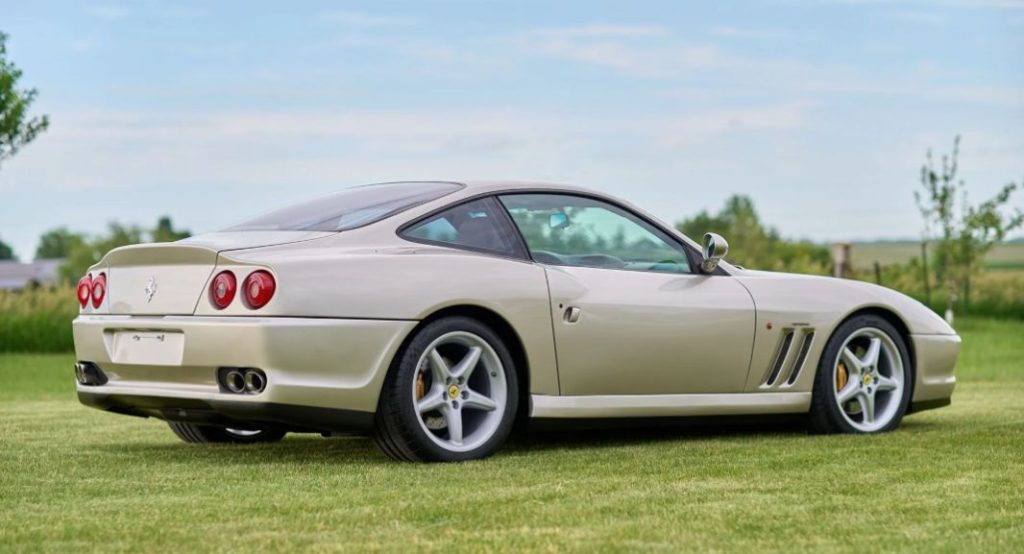
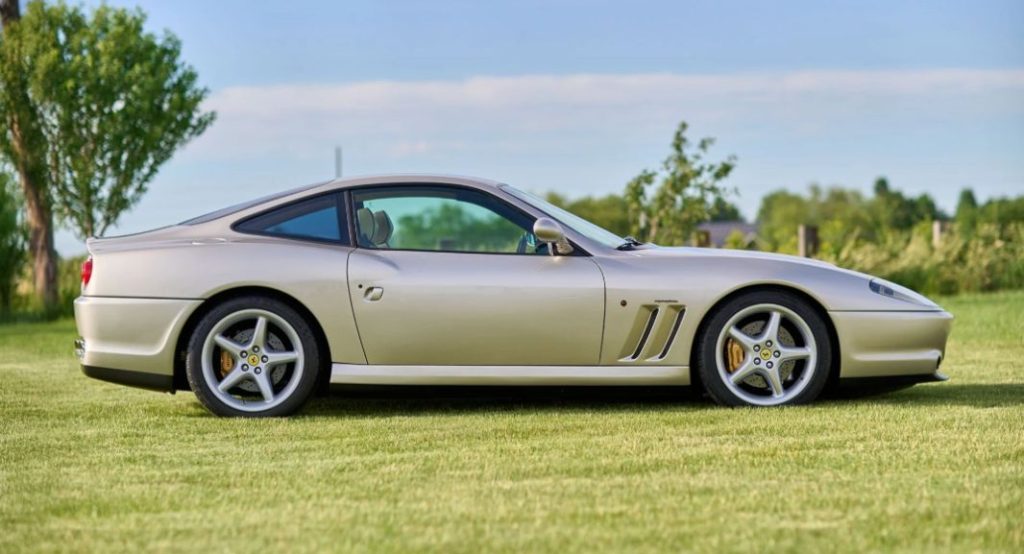
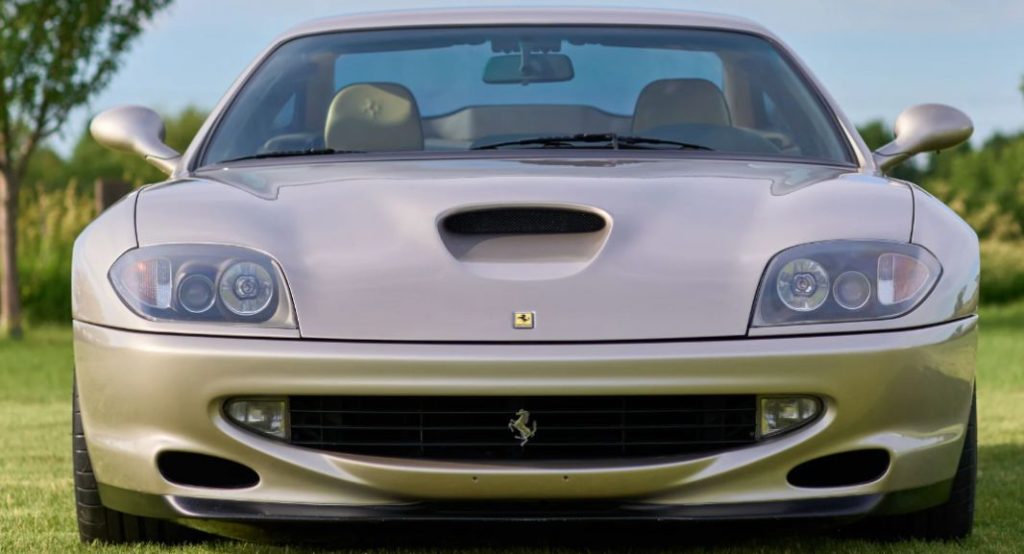
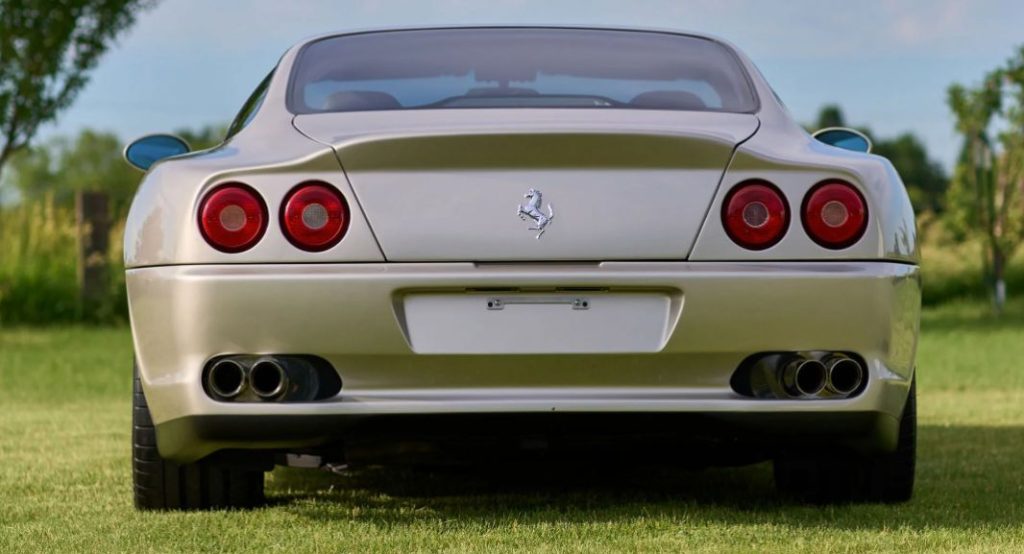
Visually, the 550 marked a shift away from the flamboyance of the Testarossa era. Styled by Pininfarina under the direction of Lorenzo Ramaciotti, the car’s proportions were almost classical: long bonnet, cab-rearward stance, muscular rear haunches and discreet detailing. The company wanted elegance rather than shock value – something that would look as appropriate outside the Hotel de Paris in Monaco as it would blasting through the Apennines.
Compared with the Testarossa and 512TR/M it replaced, the new car felt far more coherent. It was easier to drive quickly, more comfortable over distance and dramatically more refined. The front-engine layout meant improved stability and predictability, which suited its grand-touring remit.
Yet the 550 did not escape criticism. Some journalists felt that the styling lacked the outrageous drama expected of a Ferrari flagship. After the wide-hipped Testarossa, the Maranello seemed almost understated. Some even likened it to a Toyota Supra.
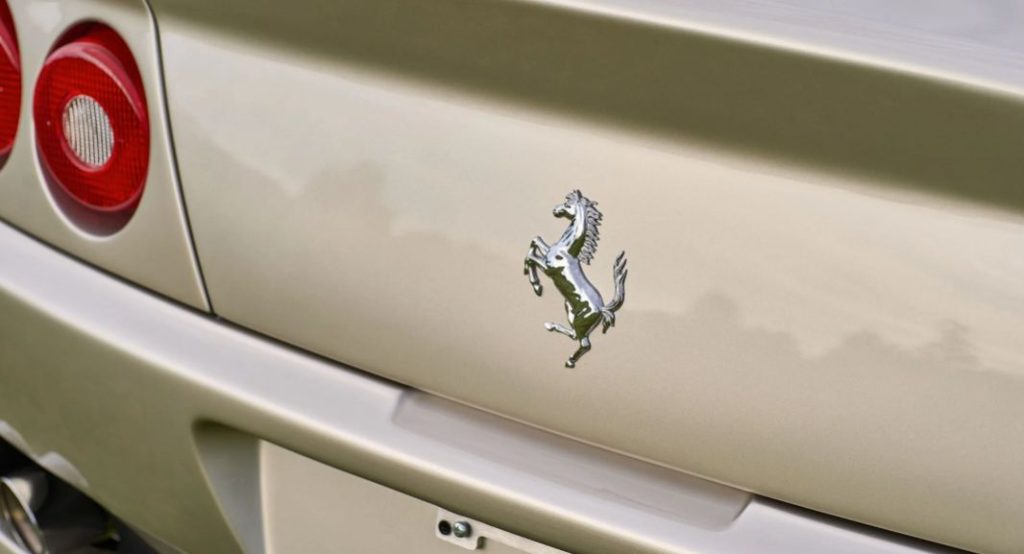
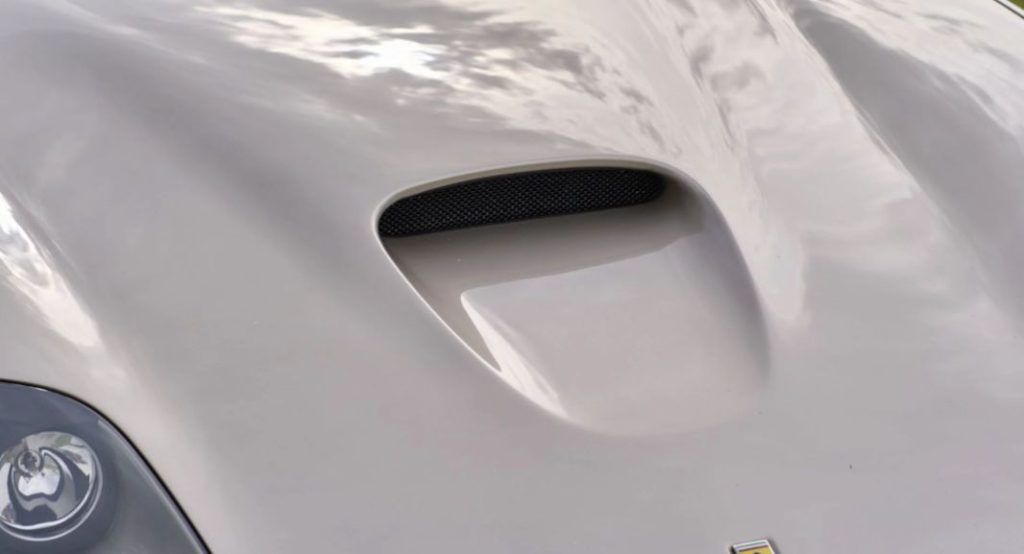
Others argued that its long-distance refinement came at the expense of razor-sharp handling. It was devastatingly fast, certainly, but perhaps not as visceral as Ferrari’s mid-engined supercars.
That said, the 550 quickly developed a reputation as one of the most usable Ferraris ever made. It could cross Europe at immense speed while still delivering the spine-tingling experience of a naturally aspirated V12.
In motorsport circles the model achieved an unexpected afterlife. Private teams developed racing versions – most notably the Prodrive-built 550 GTS – which went on to win major endurance races in the early 2000s.
And culturally, the 550 helped re-establish the front-engined Ferrari GT as a core part of the brand’s identity. Its successor, the 575M Maranello, followed the same formula, as did later cars such as the 599, F12, 812 and the 12Cilindri. The Maranello, then, became something of a template.
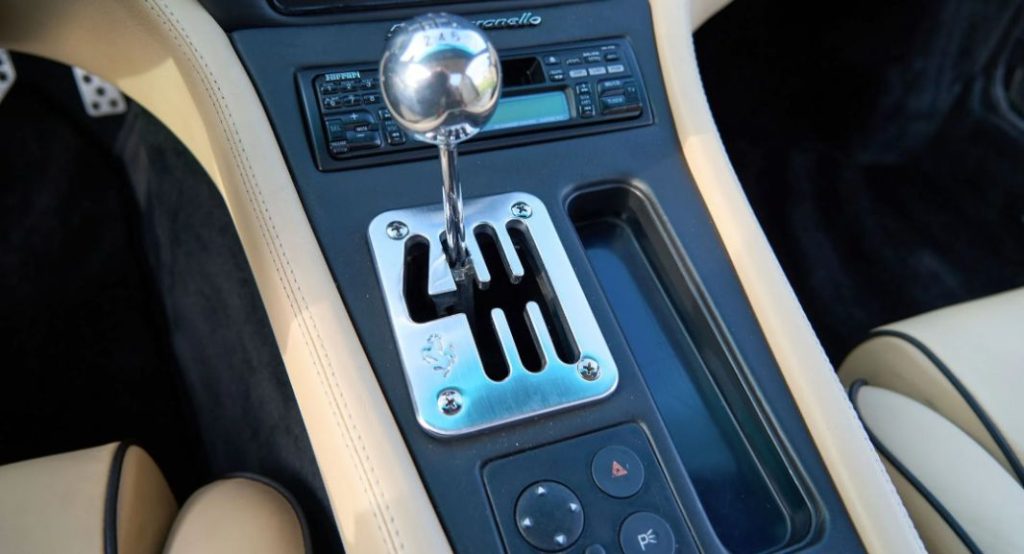
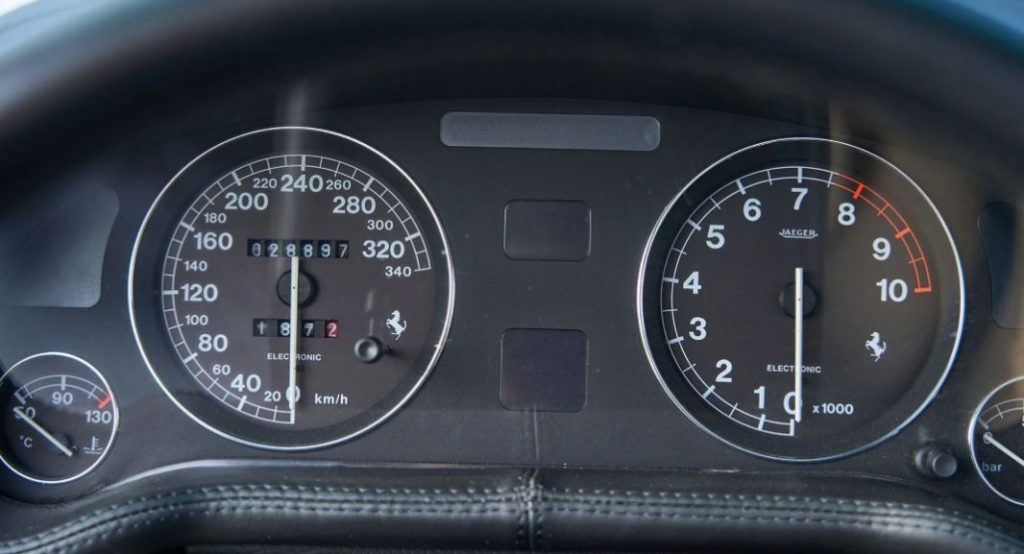
As Ferraris go, the 550 has developed a reputation for being relatively robust – but “relatively” is doing a lot of work there.
The V12 itself is fundamentally strong. The engine uses a dry-sump lubrication system and durable internal architecture, meaning that high mileages are possible provided servicing is meticulous. Regular belt changes, fluid services and attention to cooling components are essential.
Clutches and suspension components can wear, particularly if the car has been driven enthusiastically. The six-speed manual gearbox is generally durable, but tired synchromesh isn’t unheard of on heavily used examples.
Electrics can also present occasional irritations. Window regulators, switchgear and ageing wiring looms are common areas requiring attention.
Rust is less of an issue than on earlier Ferraris thanks to the aluminium bodywork, though corrosion can still appear in hidden structural areas or around fixings.
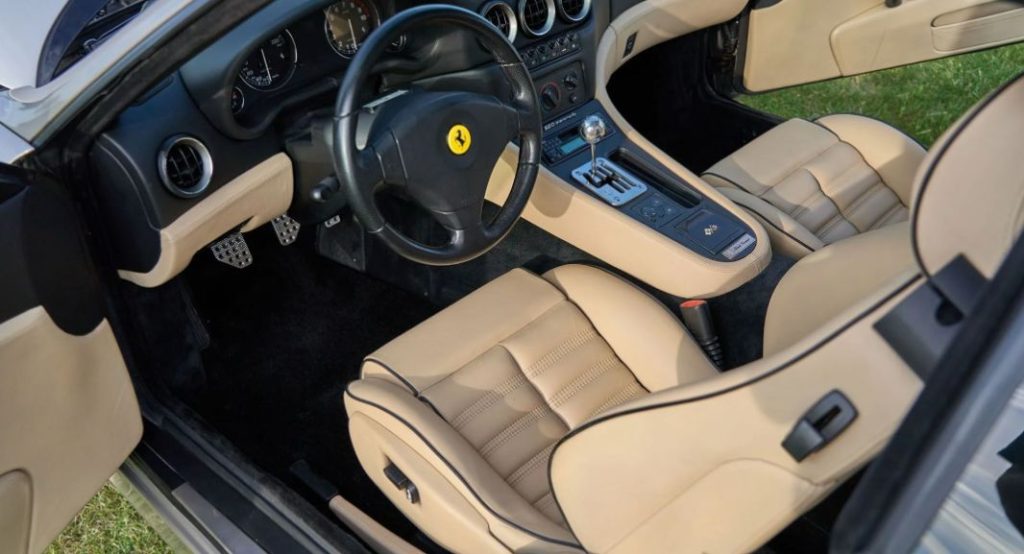
Interior wear is another tell-tale sign of neglect. Ferrari leather of the era can shrink or become sticky as the surface coatings degrade, and dashboard trim often shows its age.
The key advice, as ever with classic Ferraris, is simple: buy the best example you can find, preferably one with extensive service documentation and evidence of regular maintenance. According to Hagerty UK, good examples can be had for around £110k-£120k, with excellent and concours examples significantly north of that.
It’s a reflection that the 550 Maranello is perhaps one of the most important cars Ferrari made. While the F355 took much of the limelight – and bedroom wall space – the Ferrari 550 Maranello proved that performance and usability could coexist, and laid the groundwork for an entire generation of modern Maranello grand tourers.
If you had garage space for one front-engined Ferrari V12, would the Ferrari 550 Maranello make the cut? If not, what would? Let us know below.
Insure your classic with a specialist insurer
If you’re looking for cover for your pride and joy, why not consider Hagerty UK? Not only are we classic car insurance specialists, but we are enthusiasts at heart. Call us for a quote on 0333 323 1138.





Not keen on the bonnet scoop so has to be the 456 for me. I had a scale model when I was a kid and loved the beautiful simplicity of the lines that echoed cars of the 60s. If a lottery win then 330GT2+2 lol!
Still stunning after 30 years.