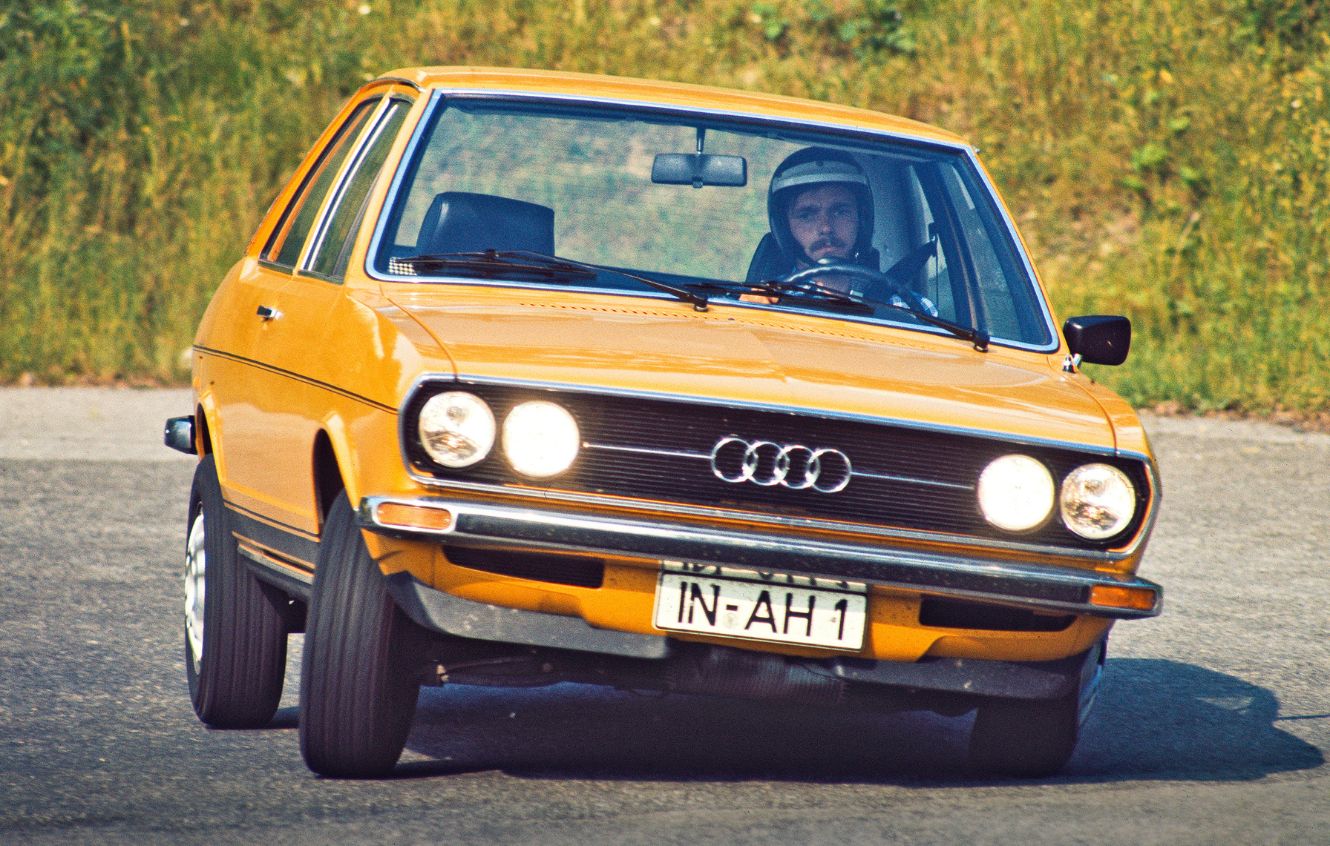
Before quattro and laser headlights, Audi rebuilt itself with one sensible saloon
Audi today trades on a very particular image. Crisp LEDs tracing elaborate signatures through the night, interiors that look like minimalist architecture projects and performance figures that tend to arrive attached to the word quattro. It’s a brand that sells technology almost as much as it sells cars. Spend five minutes in a modern Audi showroom and you’ll quickly encounter phrases like “digitalisation”, “matrix lighting” and “virtual cockpit”, usually delivered with the kind of enthusiasm once reserved for moon landings.
Sixty years ago, however, Audi’s future rested on something far less glamorous: a modest family saloon called the Audi 80. It didn’t have dramatic styling, it didn’t have motorsport pedigree and it certainly didn’t have illuminated grille bars. What it did have was sensible engineering, low weight, good fuel economy and a quiet competence that proved exactly what the company needed at the time. Without it, the Audi we know today might never have existed.
To understand why the 80 mattered so much, you have to rewind to the mid-1960s, when Audi itself was still something of a resurrection project. The four-ring logo belonged originally to Auto Union, a conglomerate of German manufacturers whose history had been rather dramatically interrupted by the Second World War. After the conflict the company effectively restarted in Ingolstadt, building small cars under the DKW name, most of which were powered by two-stroke engines. That might have been acceptable in the austere years immediately after the war, but by the early 1960s it was starting to look distinctly old-fashioned.
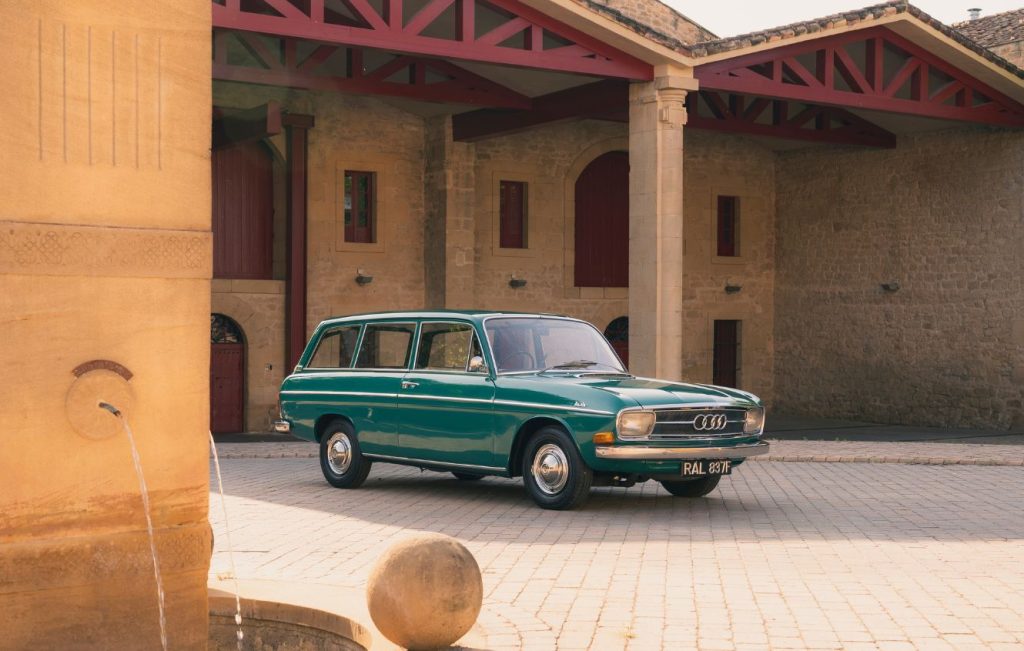
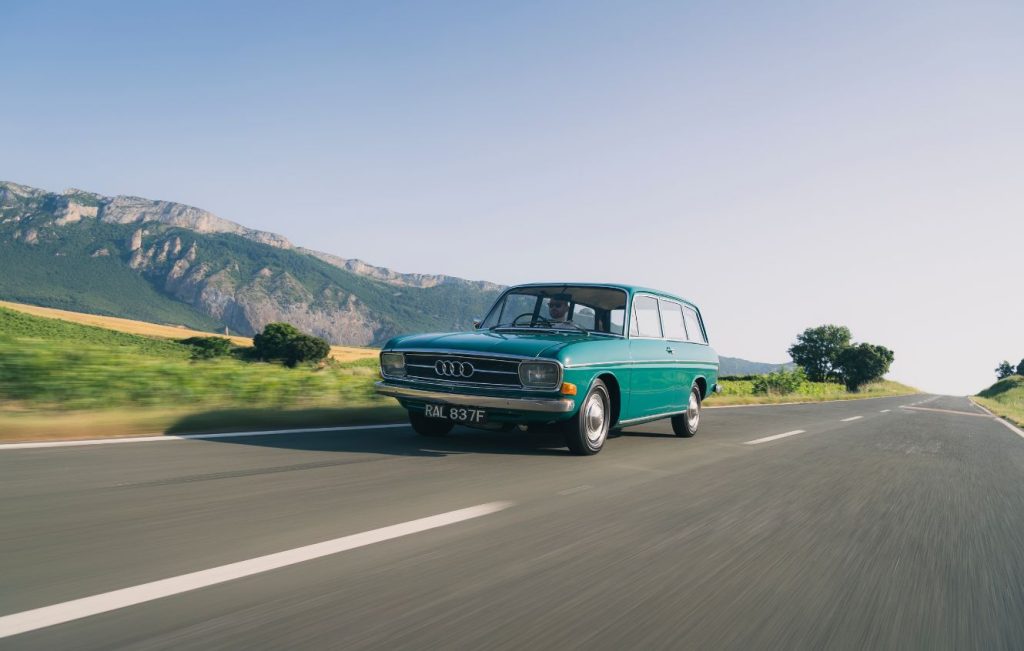
Volkswagen had acquired Auto Union in 1964, and the prevailing wisdom in Wolfsburg was that the Ingolstadt factory would simply continue producing small, inexpensive cars to complement the Beetle. What Volkswagen hadn’t entirely anticipated was that a group of engineers inside Auto Union were already working quietly on something rather more ambitious. At the centre of that effort was Ludwig Kraus, an engineer who had previously worked for Daimler-Benz and who believed the company needed to abandon two-stroke engines altogether if it wanted to compete seriously with the rest of the European market.
Kraus oversaw the development of a new generation of four-stroke engines and a modern front-wheel-drive platform that would form the basis of a fresh range of Audi saloons. The first of those cars appeared in 1966. It was called the Audi 80, and although it looked modest enough at first glance, it represented a turning point for the company.
The engineering philosophy behind the car was simple but effective. The Audi 80 used front-wheel drive, something Auto Union had plenty of experience with, combined with a longitudinally mounted four-cylinder engine sitting ahead of the front axle. That arrangement might sound familiar today because Audi still uses variations of it across much of its range, but in the mid-1960s it was unusual enough to give the car a distinctive layout.
Power came from a range of overhead-valve four-cylinder engines producing between 55 and 75 horsepower depending on specification. Those figures were entirely respectable for a compact family car at the time, particularly when combined with one crucial detail: weight. Audi’s engineers had paid careful attention to keeping the car light, with early versions tipping the scales at roughly 835kg. The result was a saloon that felt lively enough in everyday driving while delivering the kind of fuel economy European buyers were becoming increasingly interested in.
The rest of the chassis followed the same philosophy – independent suspension at the front, a simple but well-located rear axle and steering that prioritised stability rather than excitement. There were no grand engineering flourishes here, no attempt to reinvent the idea of the family car. Instead the Audi 80 simply executed the formula extremely well.
That approach extended to the styling. Early Audi saloons had often looked faintly awkward, caught somewhere between post-war austerity and tentative modernism. The 80, by contrast, appeared clean and balanced. The proportions were neat, the surfacing tidy and the overall effect quietly contemporary without trying to shout about it. It was exactly the sort of design that tends to age gracefully, which is perhaps why the car still looks pleasingly coherent six decades later.
As the years passed the Audi 80 evolved through several generations, each reflecting the changing tastes of its era while retaining the same underlying philosophy. The second generation arrived in 1978 with sharper lines and a slightly more substantial presence, reflecting the boxier styling trends of the late 1970s. The mechanical layout remained broadly familiar, but refinement and build quality improved steadily.
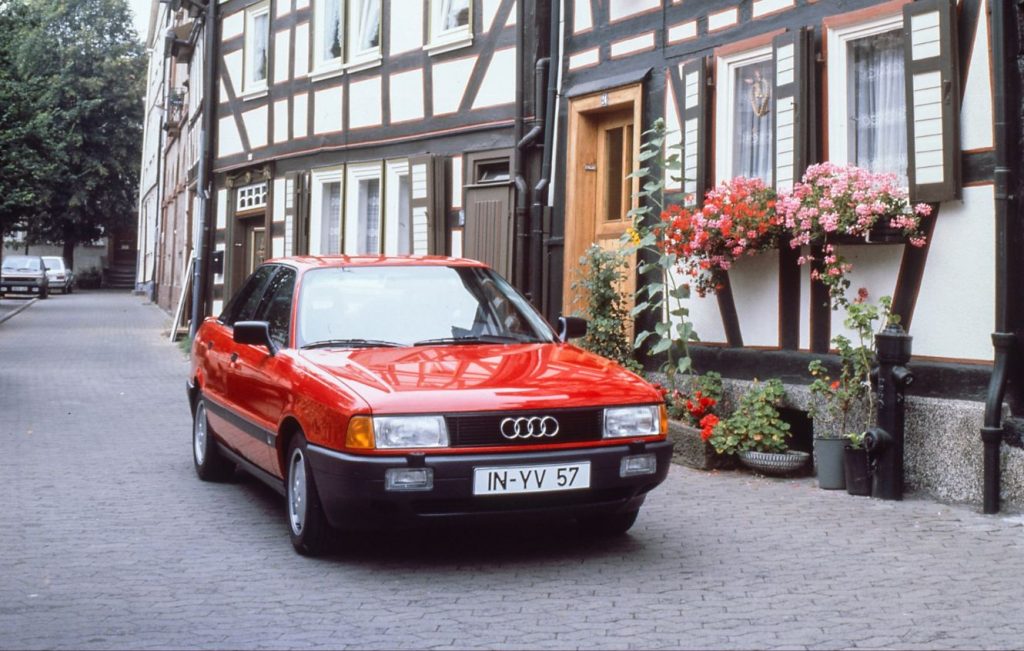
By the time the B3 generation arrived in 1986 the car had undergone perhaps its most significant transformation. The styling became smoother and more aerodynamic, but the real innovation lay in the body construction. Audi introduced fully galvanised steel for the entire shell, dramatically improving corrosion resistance and establishing a reputation for durability that would serve the brand extremely well in the decades that followed. It might not have been the most exciting technological breakthrough in automotive history, but anyone who owned a rust-prone car in the 1980s quickly appreciated the significance.
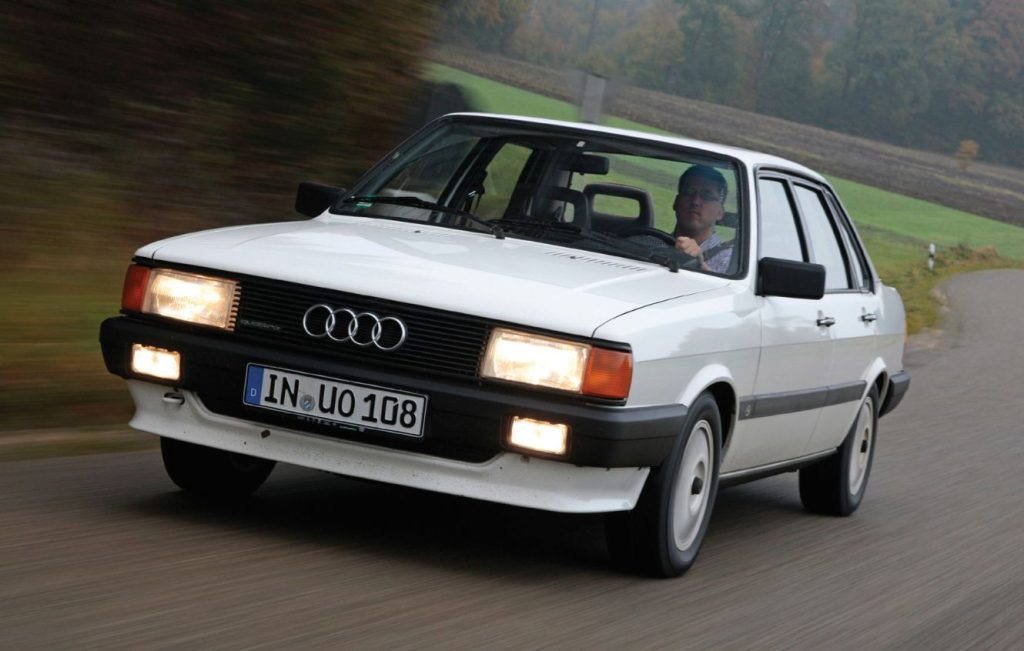
Around the same time another development was quietly reshaping Audi’s image: quattro. Introduced earlier in the decade on the now legendary Audi Quattro coupé, the company’s permanent all-wheel-drive system soon began appearing across the broader model range, including versions of the Audi 80. The result was a family saloon that could deliver levels of traction and stability few competitors could match, particularly in poor weather. It also changed the way people thought about the brand. Audi was no longer simply producing sensible front-wheel-drive cars; it was building technically sophisticated ones.
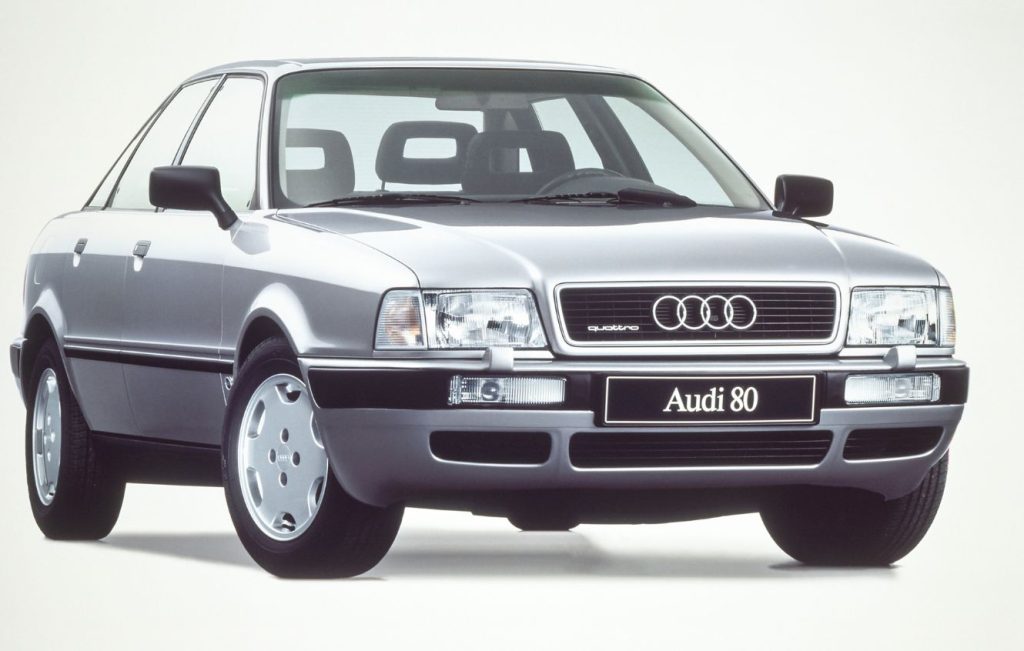
By the early 1990s the Audi 80 had matured into something very close to the formula Audi still uses today. The B4 generation introduced more powerful engines, improved interior quality and understated executive excellence rather than bombastic theatrics (oh, how things have changed). It was, in essence, already halfway to becoming the modern Audi A4.
Which is exactly what happened in 1994, when the Audi 80 name quietly disappeared and the Audi A4 took its place. The change marked the beginning of Audi’s modern naming system, but beneath the new badge the philosophy remained the same: primarily front-wheel-drive architecture, high build quality and a focus on technology.
Looking back from the perspective of modern Audi – with its laser headlights, vast infotainment screens and performance estates capable of embarrassing supercars – the original Audi 80 can seem almost disarmingly straightforward. There are no digital dashboards, no configurable drive modes and certainly no animated lighting sequences. In many ways it was the complete opposite of the modern performance car. No Nürburgring lap times to boast about, no aggressive styling, no sense that it had been created primarily for the benefit of the CCTV camera watching it slotted into the disabled parking bay at the gym.
It was just a very well-sorted saloon that arrived at exactly the right moment and quietly did everything asked of it.
Have memories of an Audi 80? We’d love to hear all about them in the comments below.
Insure your classic with a specialist insurer
If you’re looking for cover for your pride and joy, why not consider Hagerty UK? Not only are we classic car insurance specialists, but we are enthusiasts at heart. Call us for a quote on 0333 323 1138.







I’m looking forward to driving my B3 after finding it 25 years since it was last used on the road. It has undergone a very comprehensive recommission.