Words: Alex Wakefield
Pictures: Toyota UK/Wikipedia/Car From Japan/Alex Wakefield
The majority of the world’s new car buyers prioritised efficiency, practicality and dependability
The Toyota Corolla celebrates its 60th birthday in 2026. A remarkable achievement, for the most unremarkable, unassuming of cars. It’s hard to imagine a vehicle which is more ubiquitous, but here’s one that has racked up milestone after milestone without anyone ever really noticing.
November 1966 saw the first Toyota Corolla roll off the production line at Takaoka, a purpose built facility on the Japanese main island of Honshū, still churning the model out today, more than fifty million vehicles later. If there was any sign back then of Toyota’s intent to build the most successful car of all time, it wasn’t obvious.
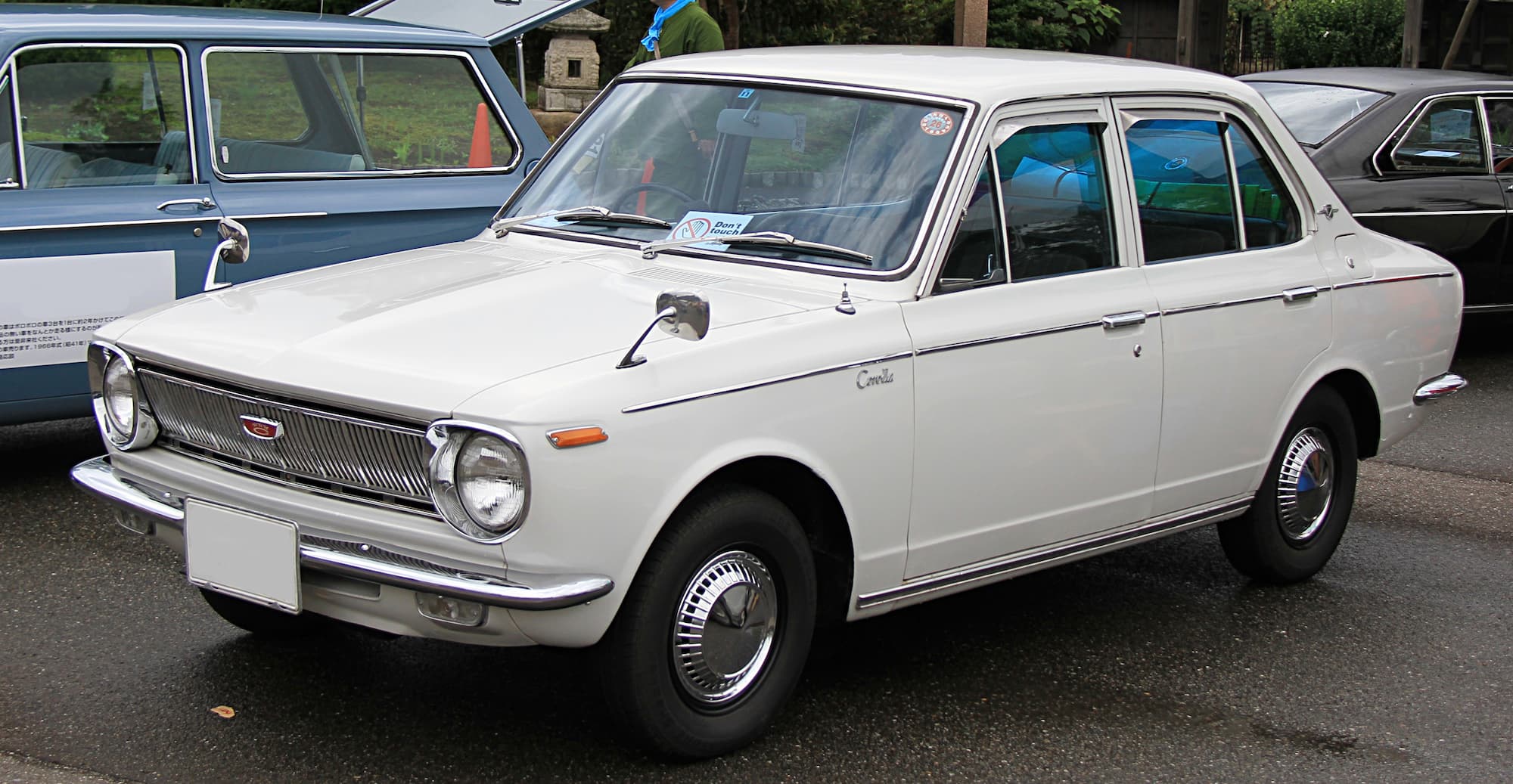
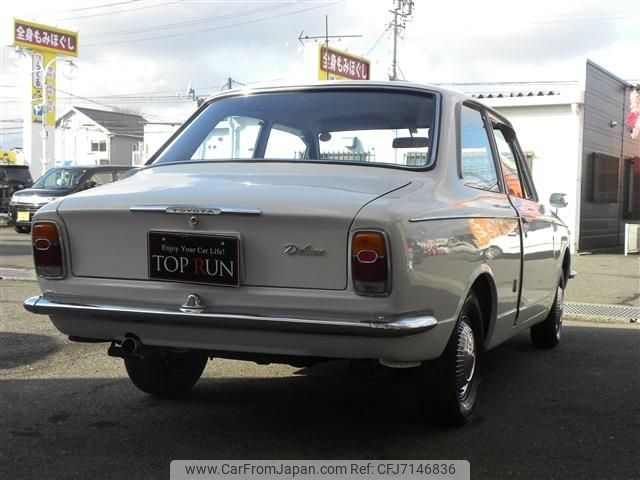
That first Corolla – the E10 – was a step forward for the brand, who had previously offered the two-cylinder Publica as its core model. The new range though was entirely conventional, consisting of a front engined, rear-wheel driven saloon, coupé or panel van with overhead valve four cylinder petrol engines.
Four short years later, this unadventurous small family car was being produced in seven different countries, and had started to earn a place in the global automotive consciousness that has never been lost. Since then, the Toyota Corolla has eschewed the conventional approach to marketing cars as glamorous or exotic over a dozen generations, and done pretty well out of it.
Early Corollas were pretty small. Leaf-sprung, with a solid rear axle, buyers could choose either a four-speed manual, or two-speed automatic transmission to transfer drive from the sole engine, a home-grown 1.1 litre unit. Drum brakes were standard, but front discs appeared as an option later on.
Two years in, a modest facelift kept things looking fresh halfway into the E10 model’s four year production run. It’s a formula that Toyota has kept to ever since; a four year (ish) product cycle with a mild refresh in the middle. Consistent, reliable, stable and predictable.
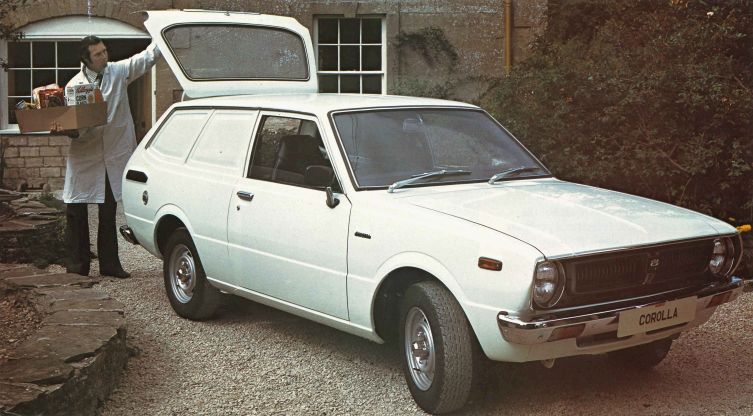
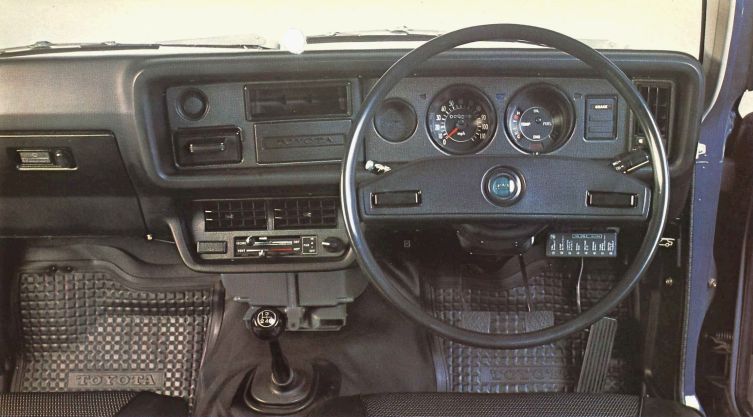
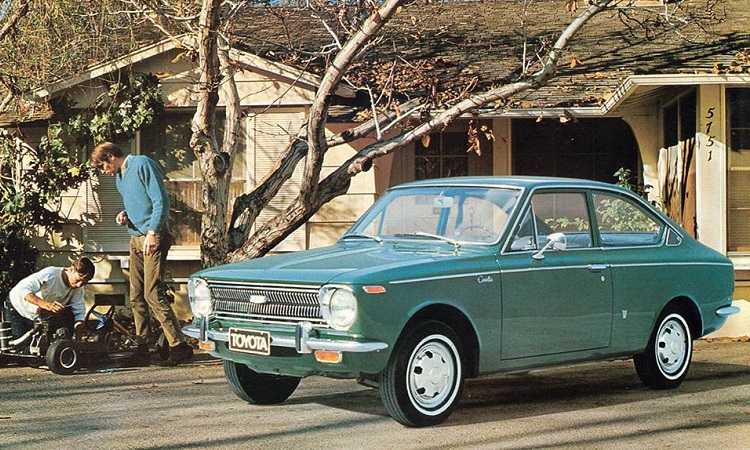
For the second generation E20 Corolla, Toyota freshened up the styling from the nicely-proportioned but unadventurous sixties sheet metal, to feature fashionable ‘coke bottle’ curves along the flanks of a car which was barely any larger than its predecessor. By now, the manufacturer had realised that the majority of the world’s new car buyers prioritised efficiency, practicality and dependability, and had charted a course to world domination by sticking to its guns.
Introduced into Europe during the first generation’s production run, by the time the E20 reached the continent, the Toyota Corolla was a common sight. A world car in the purest sense, sales were plundered from the established competition as seventies motorists started to realise that nearly a century after the internal combustion engine first appeared, it wasn’t too much to expect an engine to start when it was cold, hot, or wet.
The broad, cross-cultural appeal of a reliable, efficient and affordable small family car became irresistible through the 1970s as political upheaval and industrial difficulties led to belts being tightened, when fuel prices rocketed. The crucial US market began to notice the little Toyota during this period, and has held it close ever since.
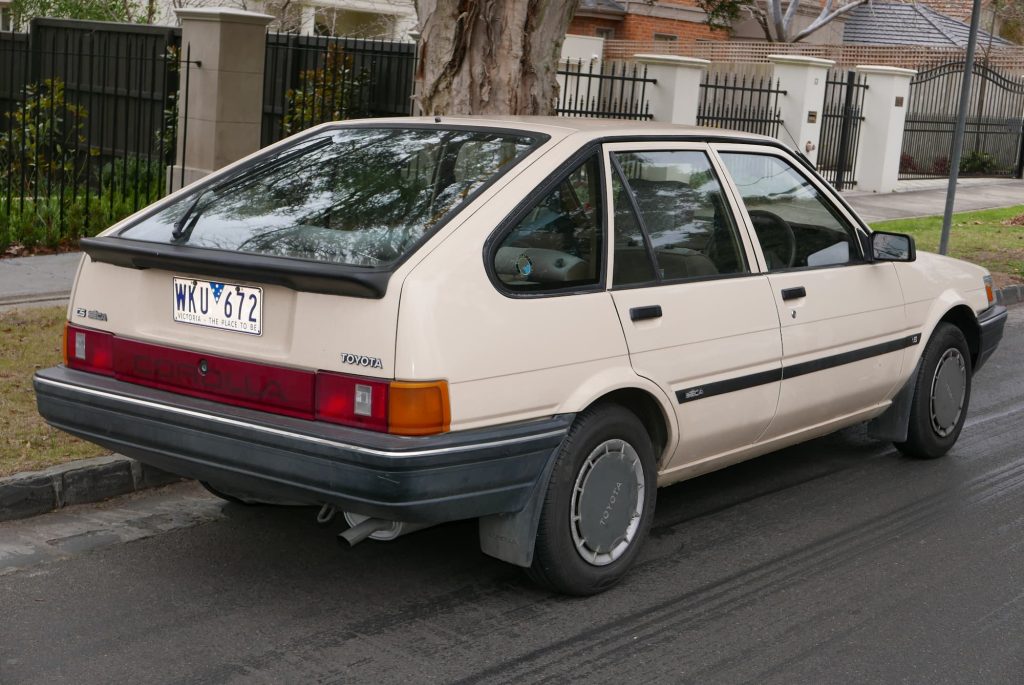
Around this time, there were some developments in the model range that would finally acknowledge a degree of maturity and variety in the Corolla’s customer base. Sportier models appeared with twin camshafts, twin carburettors and enlarged engine capacities.
The now legendary Sprinter and Trueno badges appeared on boot lids to distinguish those more spicy variants from the vanilla offerings. Retaining the car’s reputation for dependability, whilst offering a growing range of body style, powertrain and appointment, enhanced the Corolla’s rigidly successful formula with a sprinkling of feistiness.
Another four years on, and another generation of Toyota Corolla appeared. The E20 continued in some markets as a budget offering, as the E30, E40, E50 and E60 grew in size, weight, and engine capacity. No longer an apologetic compact saloon, the third generation had become confident, with coupé, lift back, station wagon and commercial styles making the Corolla the world’s favourite, into the 1980s.
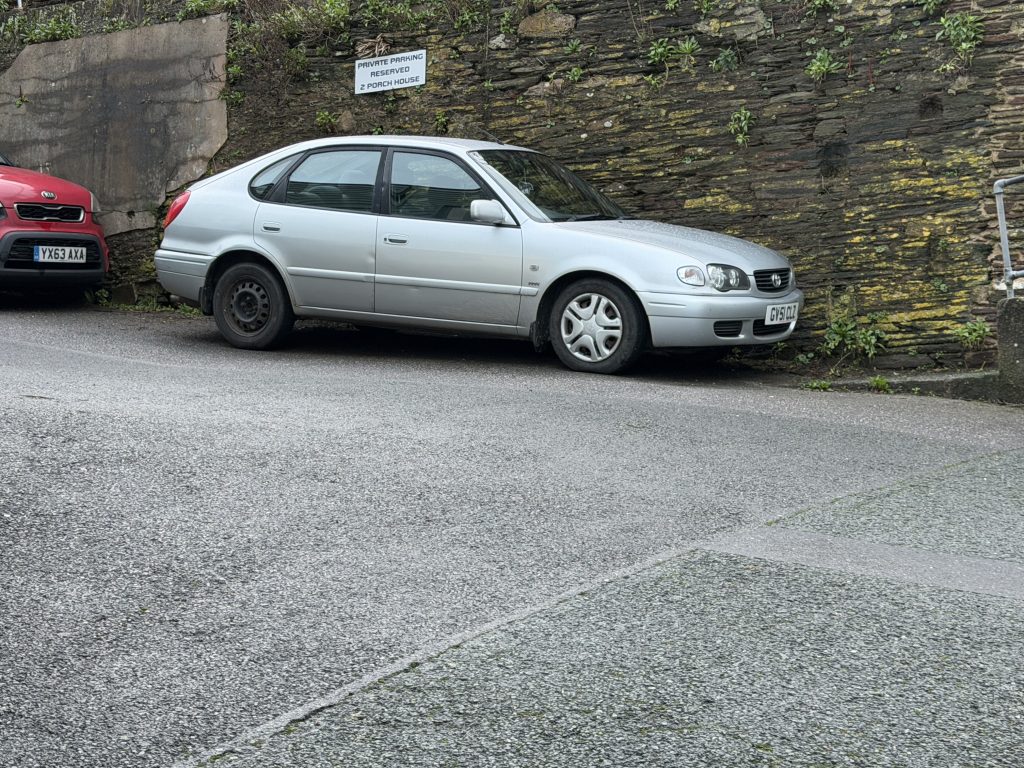
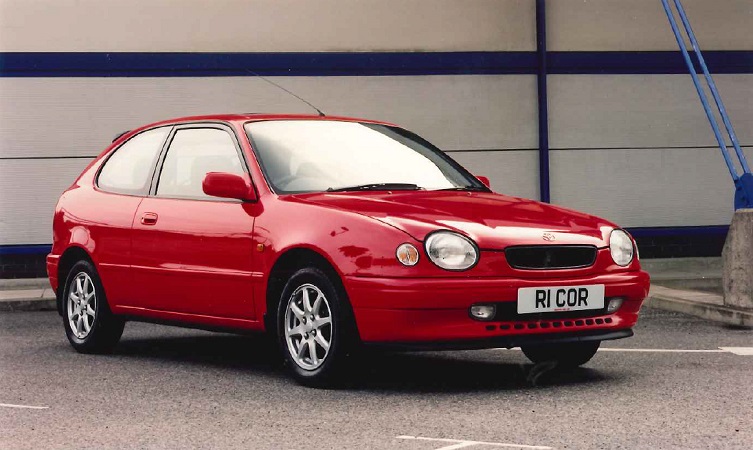
The million car milestone was reached before the first generation car had finished production. Less than two years later, that cumulative total had doubled, and when the fourth generation Corolla appeared in 1979, nearly eight million had been assembled and sold. Clearly, the world had not wearied of cars which just worked.
You know the story from here. More of the same; a new generation every fourth year or so, older models staying in production to keep sales buoyant in developing territories; a biennial facelift. As regular and reliable as a Swiss watch, if not more so. Dull, you might say.
But whilst those appliance white hatches, saloons and estates escape our gaze, we do notice when Toyota gives us something a little more special. The AE85 and AE86 Corolla Sprinter and Trueno ranges have now achieved more than a cult status, featuring in video games, television programs and comic books as 80s icons; high-revving engines propelling enthusiastic young drivers through neon-lit cityscapes on full opposite lock.
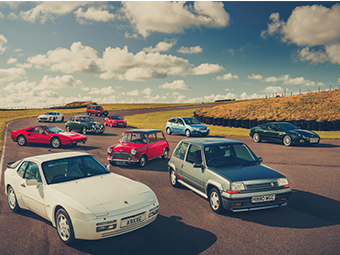
80s and 90s versions of the Toyota Corolla GTi traded blows with the likes of the VW Golf, Ford Escort, and Honda Civic, often coming out on top having delivered a knockout punch to that established competition. Rare rust-free examples of those contemporary hot hatches are keenly sought after by fans of the type across generations, wanting to rekindle old memories or make new ones in a more anodyne era.
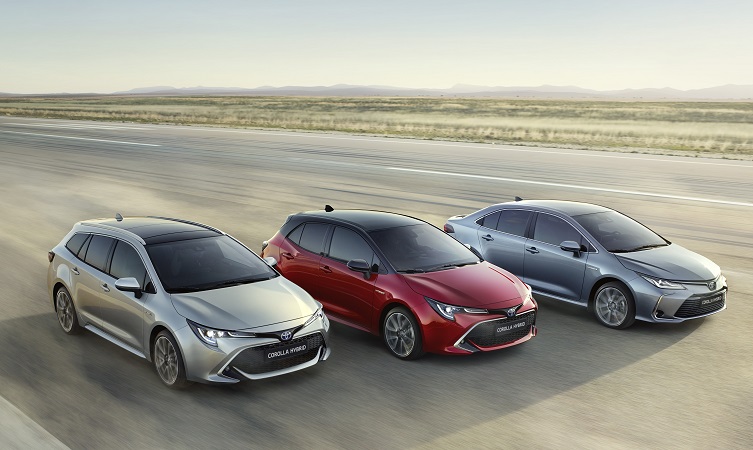
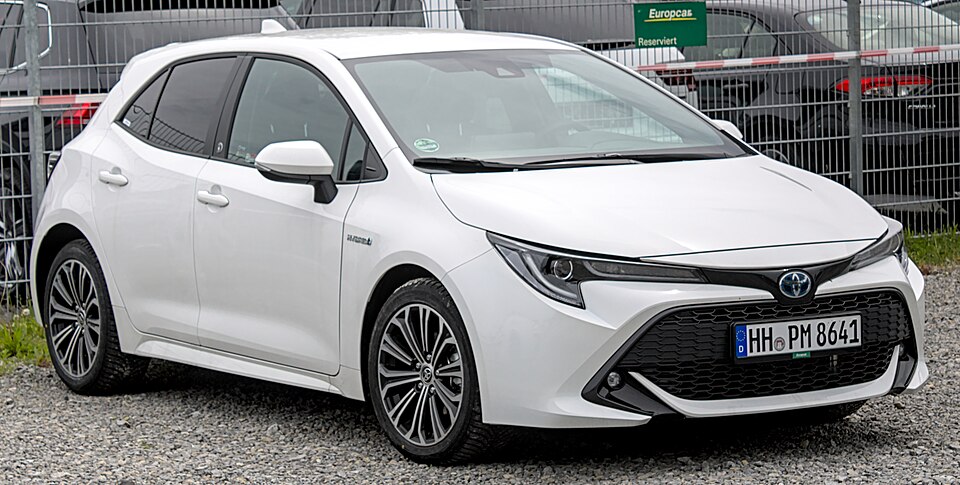
Strangely, most of Europe was forced to take a break from the Corolla when it was decided that the nameplate was too staid to generate interest in the tenth and eleventh instalments of the car. Instead, we had eight years of the Auris, but by 2020 it was business as usual, and the current generation of the Corolla – the twelfth – is a reassuringly common and familiar sight.
We are due a new version any time, although Toyota remains tight-lipped about what comes next. One thing we can be sure of though, is that whatever power source is employed, and whatever it looks like, it’ll be a winner. With each year that passes, the Toyota Corolla cements its position as the most stable thing on the planet.
Can you think of another classic that became a pioneer for everyday driving? Drop your suggestions below.
Insure your classic with a specialist insurer
If you’re looking for cover for your pride and joy, why not consider Hagerty UK? Not only are we classic car insurance specialists, but we are enthusiasts at heart. Call us for a quote on 0333 323 1138.