Born as a Talbot, rebadged, and built in the UK – here’s to 40 years of the first British-built Peugeot
There are a number of major automotive anniversaries to celebrate in 2026, but one of the most significant is also one of the most unassuming.
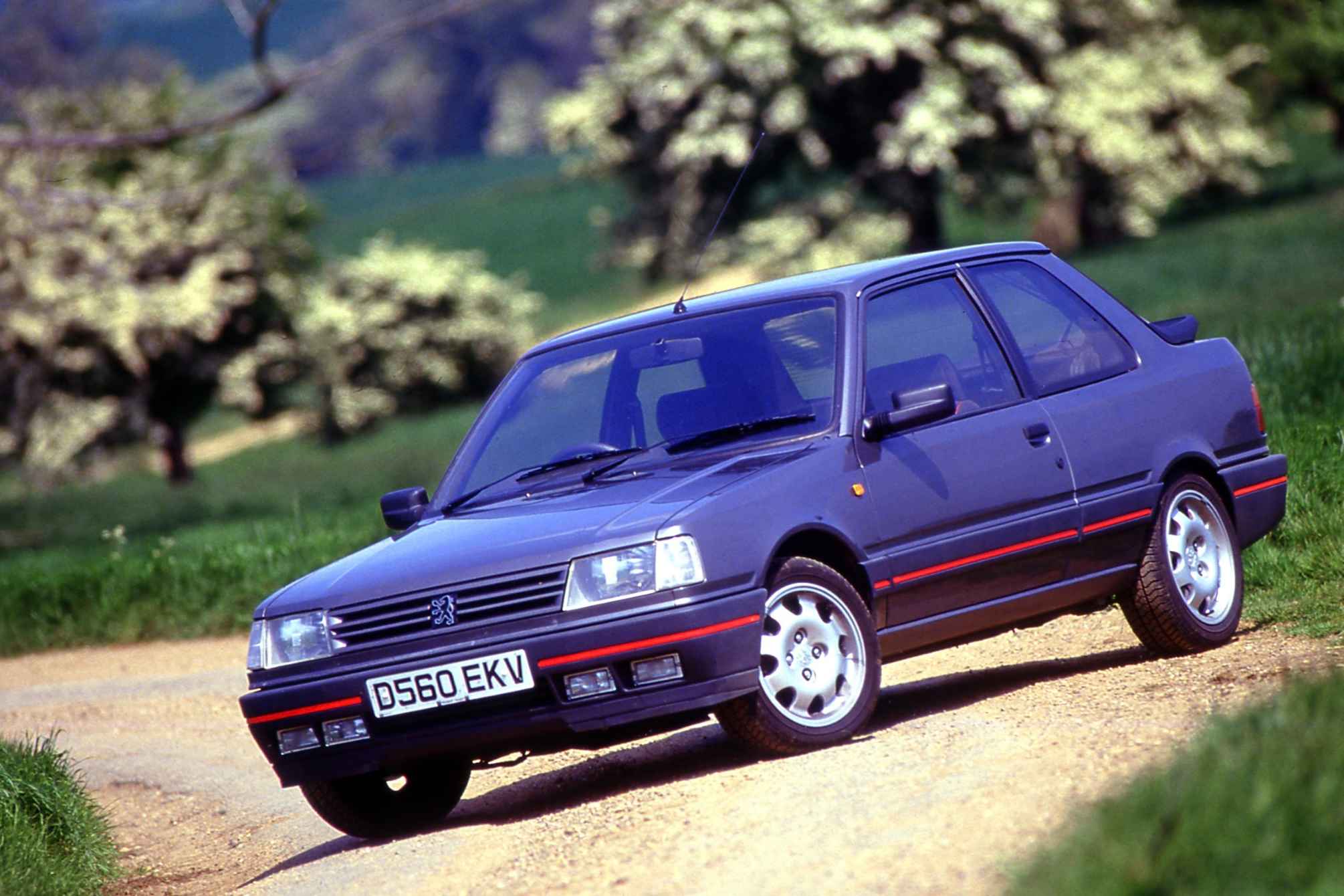
The Peugeot 309 was never the prettiest family hatchback of its era, never the obvious poster car and, for much of its life, never quite allowed to stand in the same spotlight as the brilliant little 205 or the elegant 405. Yet the 309’s story is one of the most intriguing in Peugeot history: an Anglo-French hybrid, a rescued Talbot, a lifeline for Ryton and, in GTI form, one of the great hot hatches of the late Eighties.
The reason that the 309 might have looked a bit incongruous among the sharper-edged models in the French manufacturer’s line-up is because it began life not as a Peugeot at all, but as Project C28 – the intended replacement for the Talbot Horizon. It was to be known as the Talbot Arizona.
The Horizon itself was a legacy of the Chrysler-Simca era, sold across Europe and even linked to American cousins. By the early Eighties, however, Talbot was fading. PSA had acquired Chrysler’s European operations in 1978 and revived the Talbot name for the former Rootes and Simca products, but the brand struggled to find a convincing identity. Sales weakened, the product range aged and the corporate logic of maintaining a separate marque became harder to defend.
The Arizona was meant to give Talbot a future. Its styling work was handled by the former Chrysler-Rootes design team at Whitley, near Coventry, while much of the technical packaging came from Poissy in France.
That division of labour gave the car its character – it was to be a European hatchback with British design input, French engineering oversight and a heavy reliance on existing parts. Peugeot’s highly successful 205 provided a stretched floorpan, along with the doors and windscreen. Initially, it would be offered with Simca-derived engines in lower-powered models, with the familiar XU and XUD units in those with larger units.
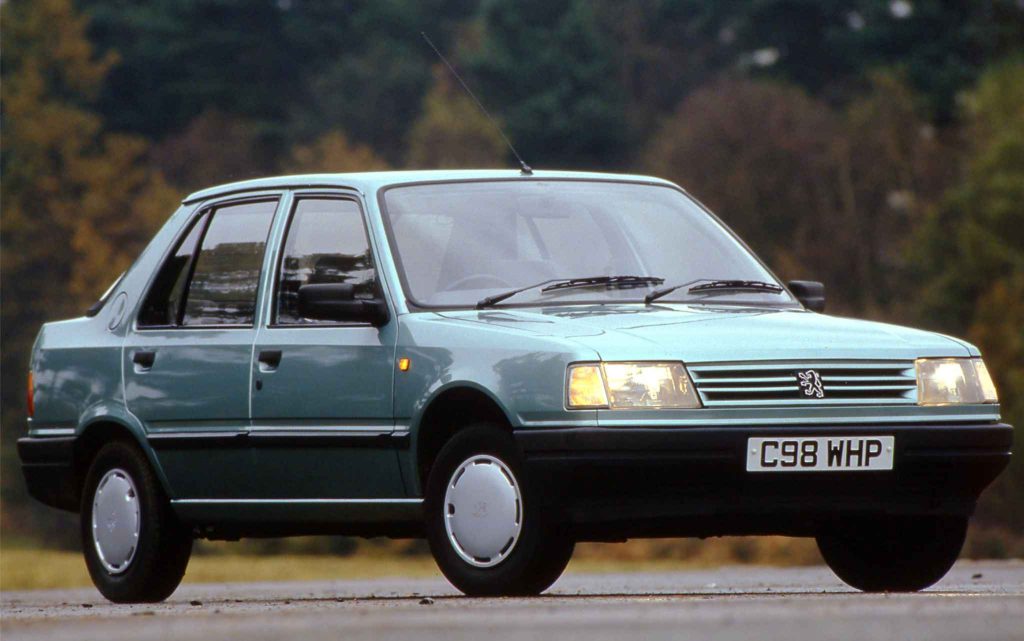
Then came the decisive rebadging. By 1985, PSA had effectively concluded that Talbot passenger cars had no long-term future. Rather than launch its new C-segment hatchback under a weakening badge, the company chose to make it a Peugeot.
The name was curious. In Peugeot numbering logic, a successor to the 305 might have been expected to become the 306, while the car’s closeness to the 205 led some to imagine a 206 badge. Instead, it became the 309, a number that stood slightly apart.
That distance was deliberate. The 309 had Talbot roots, Simca influences and a design that did not quite fit the emerging Peugeot family. Its name acknowledged that it was both inside and outside the bloodline.
The 309 may have been an odd Peugeot, but it was a significant British car. Right-hand-drive production was allocated to Ryton-on-Dunsmore, near Coventry, a plant with deep Rootes Group history. Built originally as a shadow factory for wartime aircraft engine production, Ryton became one of Britain’s great post-war car-making sites, associated with names such as Hillman, Humber, Sunbeam and Talbot before passing through Chrysler Europe and into PSA ownership.
The first pre-production British-market 309s were assembled in a pilot-build programme in late 1985, with series production and sales following in 1986, making it the first Peugeot built in the UK.
It was a significant milestone. The 309 helped secure Ryton’s short- and medium-term future after the decline of the aged Alpine, Solara and Horizon. It brought Peugeot production to British soil at a time when the UK motor industry was still recovering from the turmoil of the 1970s.
For buyers, the “built in Britain” element gave the car a local relevance that few Peugeots had previously possessed. For Peugeot, it proved that Ryton could be integrated into its wider European production strategy, later building the 405, 306 and 206. The 309 was therefore more than a model; it was a bridge between Rootes’s history and Peugeot’s British manufacturing era, keeping jobs in the area for a further two decades.
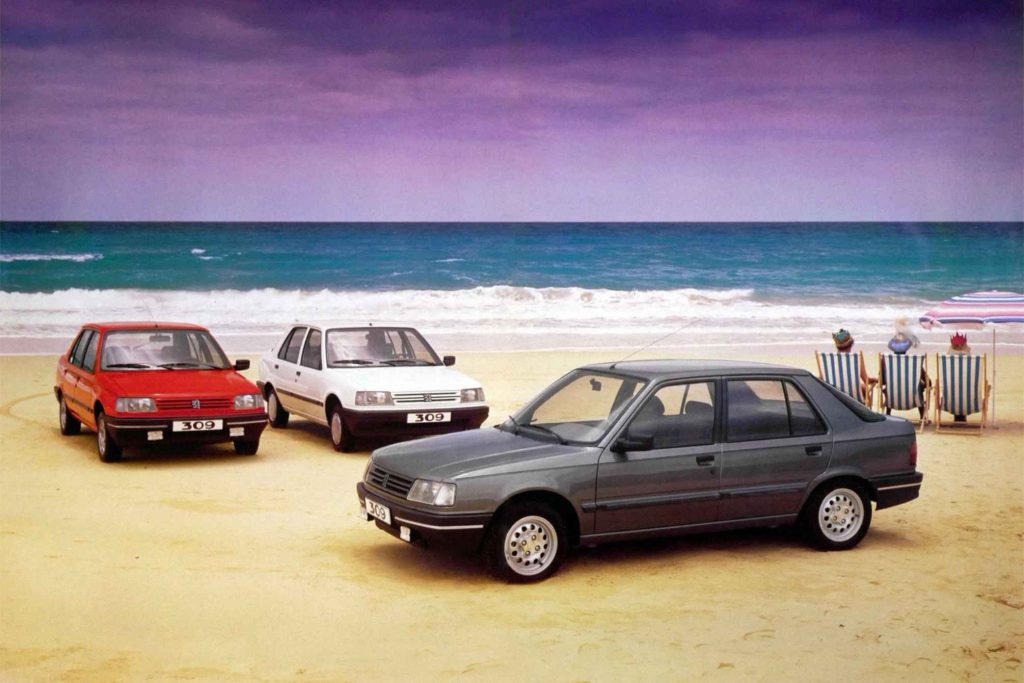
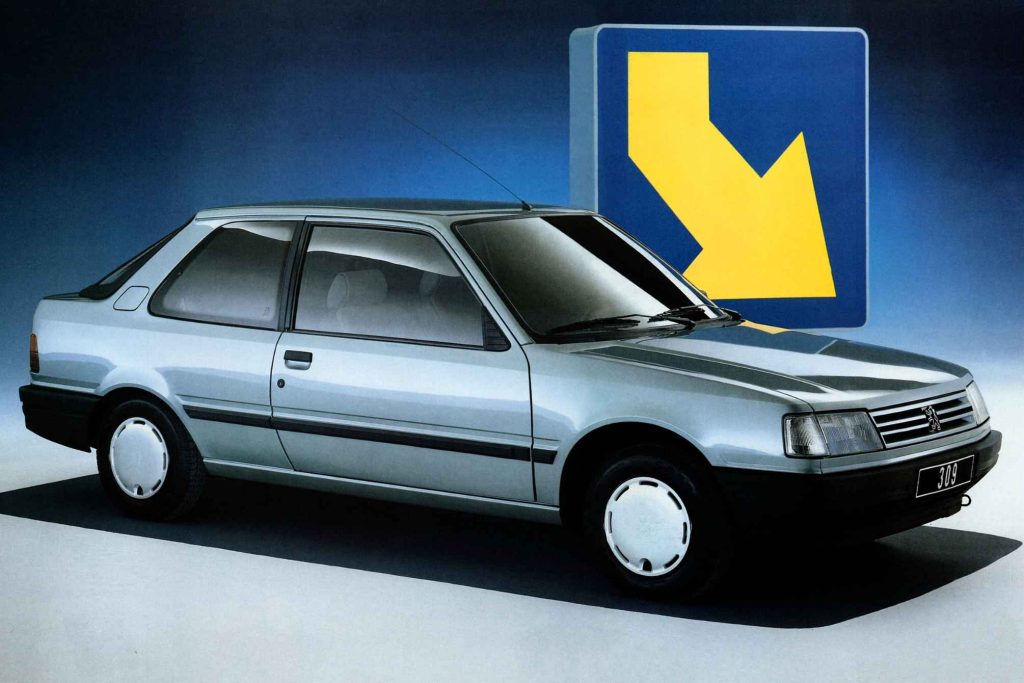
The 309 went on sale in 1986, as a three- and five-door family hatchback, although its rear treatment made it look almost like a short fastback saloon. Early cars mixed old and new. Entry-level versions used carry-over Simca engines, while Peugeot’s XU petrol and XUD diesel units gave the range broader appeal.
Trim levels varied across markets, but the basic formula was consistent: a roomy cabin, a large boot, light controls and handling that was better than the styling suggested. The car’s proportions may have been dictated by reused components, yet Peugeot’s engineers gave it the supple ride and tidy front-wheel-drive handling for which the marque was highly regarded.
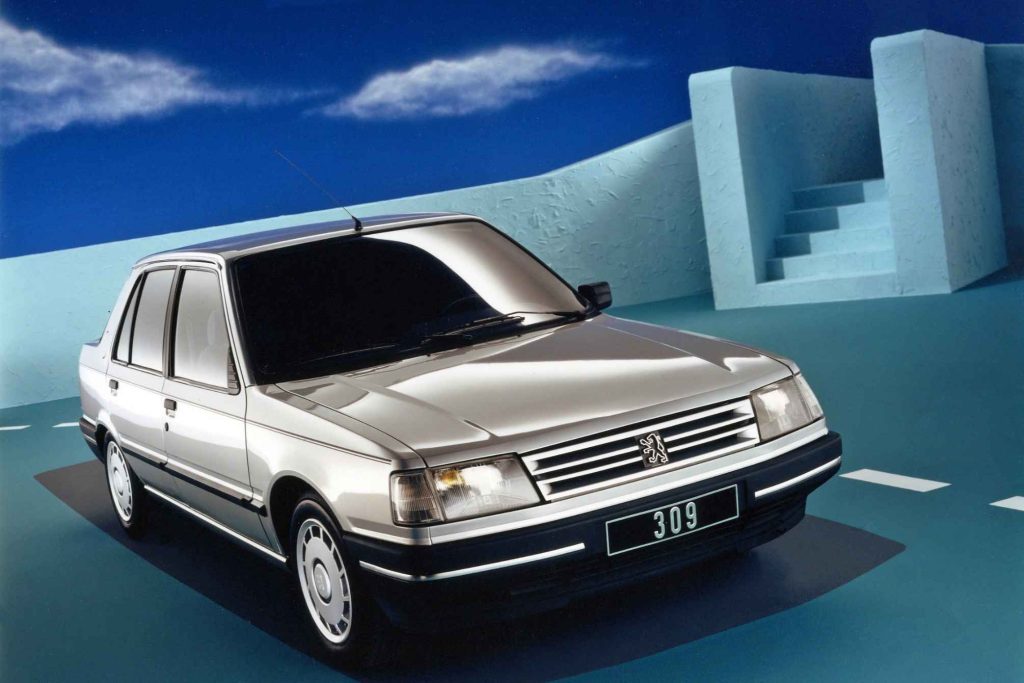
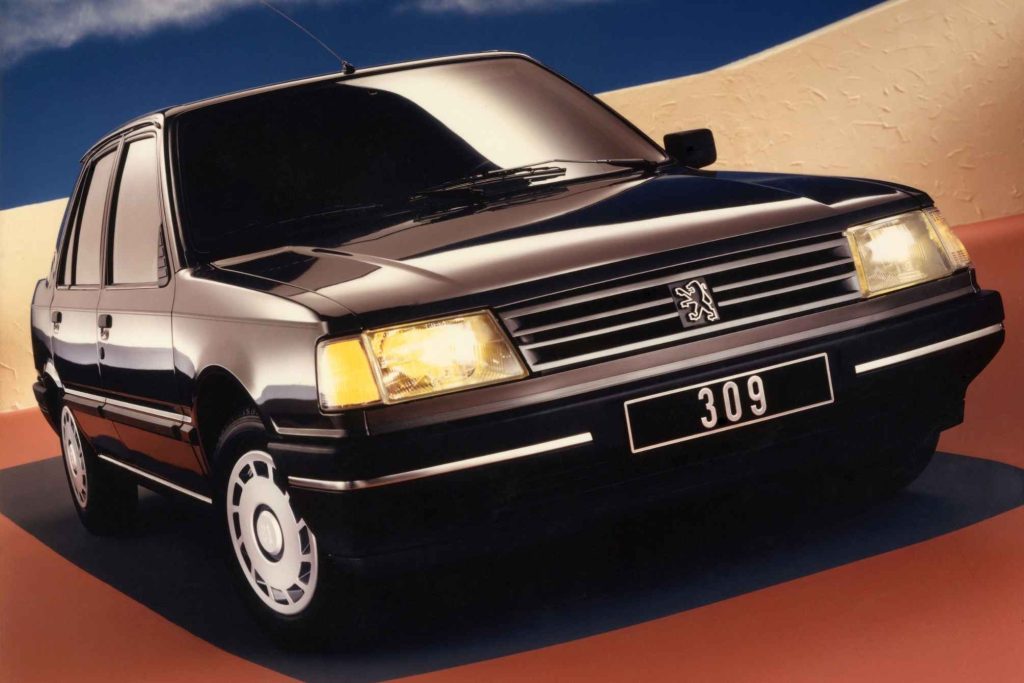
In 1990, the 309 was facelifted, gaining a cleaner nose, revised and smaller rear lights, a tidier tailgate and an updated cabin. The changes softened some of the visual awkwardness and made the car feel more conventionally Peugeot. Over its life it served as dependable family transport, company-car fodder, diesel commuter and, in hotter versions, back-road weapon.
The definition of that was the GTI. Using the 1.9-litre injected XU engine familiar from the 205 GTI, it delivered strong performance, but its longer wheelbase and wider track gave it a different dynamic. Where the 205 could feel nervous and mischievous, the 309 GTI was more stable and, in the hands of a committed driver, devastatingly quick across real roads.
In the UK, one of the most evocative limited editions was the 309 GTI Goodwood, a green-and-leather celebration that borrowed its name from Peugeot’s association with the Goodwood estate and added a touch of country-house glamour to an otherwise hard-edged hot hatch. The Goodwood’s appeal was not just cosmetic. It represented the point at which the 309 stopped being merely overlooked and became collectable: a sharper, rarer expression of a car that had always had a hidden ability.
Production continued until 1993, when the 306 took over as Peugeot’s C-segment contender – a car that fitted more congruously into the Peugeot range.
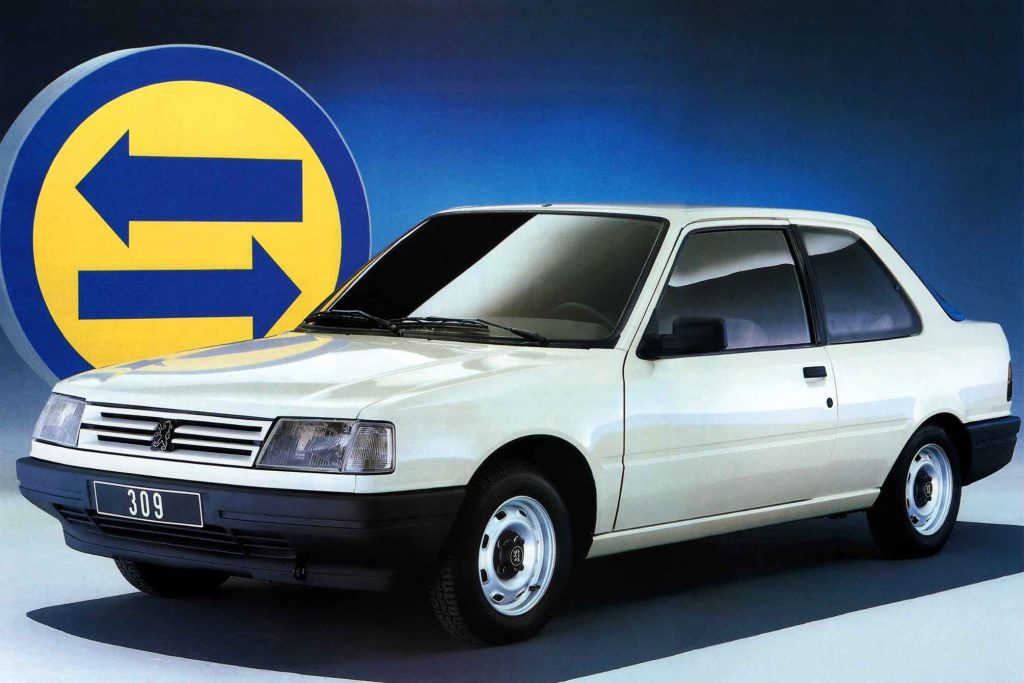
Today, the 309 is far rarer than its once-common street presence suggests. Ordinary survivors are extremely scarce, victims of low values, hard use and the natural attrition of everyday family cars when they reach the age of uneconomical repair.
The GTI models have fared better, but even they spent years in the shadow of the 205. That’s now changing. As Eighties and Nineties cars become historic in their own right, the 309’s mixture of rarity, significance and surprising ability means it has its followers.
Forty years on, it’s worth celebrating. Not because it was perfect, and not because it was beautiful, but because it was useful, clever, important and quietly brilliant — the orphan Talbot that found a home in Britain as a Peugeot, and earned its place in history.
Did you own a Peugeot 309? We’d love to hear your memories of this underrated and often overlooked hatchback in the comments below.
Insure your classic with a specialist insurer
If you’re looking for cover for your pride and joy, why not consider Hagerty UK? Not only are we classic car insurance specialists, but we are enthusiasts at heart. Call us for a quote on 0333 323 1138.