Flexibility and reliability understandably made them a popular runabout
Britain is a nation known for being a sort of pound shop USA. Trends in fashion, media, lifestyle, food and of course cars are often copied, although rarely convincingly. The annual school prom is an example of a less welcome import, together with wobbly and poorly built muscle motors from the other side of the Atlantic.
Last summer, in the traditional British peak summer season rain, a queue of cars waited outside my local high school to deliver a succession of overly made up teenage girls, and awkward looking boys, for their leaver’s ball.. Convertible roofs up, windows closed and mascara running; The most unhappy group were being delivered in a WWII era Willys Jeep.
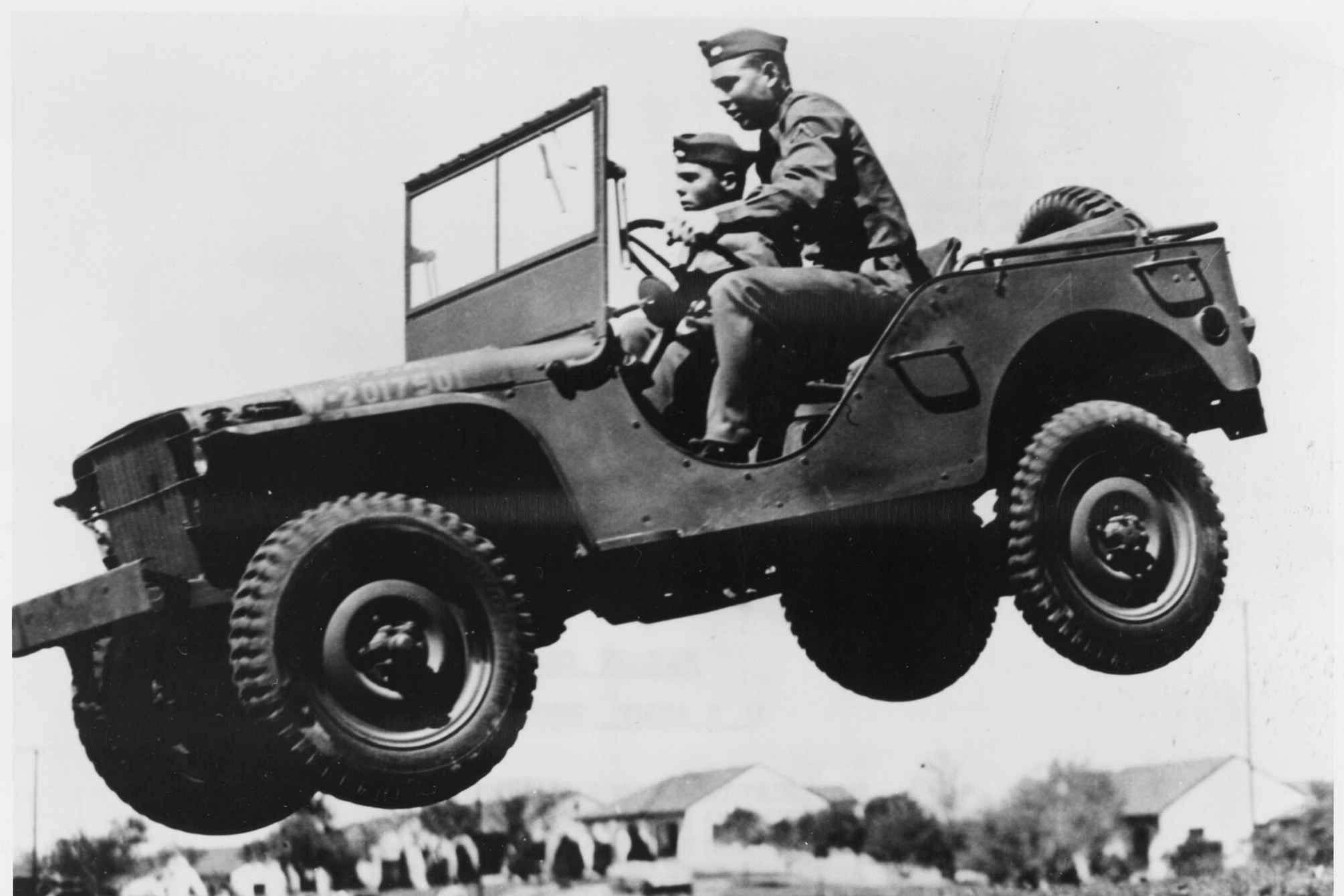
Hundreds of thousands of those Jeeps were churned out across the planet in response to the needs of the second global conflict, and their hardiness, flexibility and reliability understandably made them a popular runabout when servicemen brought them home at war’s end.
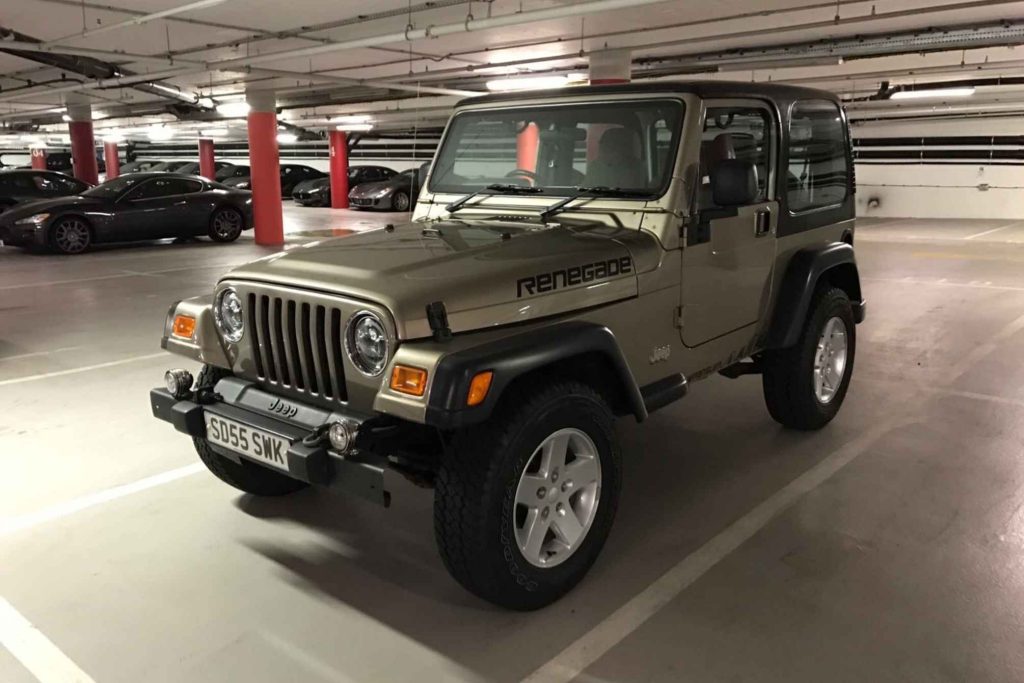
If you want to point a finger somewhere in response to today’s often inexcusable love for high-riding vehicles, you could do worse than direct it to those returning soldiers, 80-odd years ago. That’s when it became acceptable to drive an inherently slow, inefficient vehicle designed for muddy tracks down to the local grocery store and beyond.
There are almost as many stories about the Jeep’s origins and eventual transition into a civilian vehicle, as there are surviving WWII examples. One of those urban myths contends that the original Suzuki SJ was deliberately designed around the architecture of the Willys Jeep. Another largely unsubstantiated theory claims that the original Jeep could trace its DNA to pre-war Austin products.
What’s clear is that the innovative Jeep struck a chord and earned a place in civilian usage, gradually being domesticated in subsequent decades. Of course, it’s not the only vehicle of military origin to make that leap, but it is clearly the most successful, if at least in spiritual succession.
The rugged original Land Rover is often mislabelled as having military origins; whilst lucrative military sales were hoped for, the Series Land Rovers were actually conceived more as civilised tractors with people (and livestock) carrying capabilities. Like the Land Rover, many of the camouflaged vehicles present in modern conflicts, actually have their foundations in commercial catalogues.
A famous, and comically inappropriate domestication from military to private usage came in the form of the Hummer H1. Most of the world was introduced to these large, lightly armoured utility trucks through footage of wars in the Middle East, when the High Mobility Multipurpose Wheeled Vehicle (HMMWV, or Humvee) was seen roaming the deserts of oil-rich territories.
By the time a General Motors engineered civilian version of the car was launched – named the Hummer H1 – it was a good thing that the world’s oil supplies had been restored, because even with a diesel engine, this monster of a car recorded single digit MPG figures. Despite the car’s bulk, there was only room for four people inside, as transmission components were run high through the passenger compartment to reduce the risk of damage from below in the theatre of war.
For those who actually needed to put people and things in their Hummer, the more civilised H2 was subsequently introduced, based on a civilian pick up, and which by comparison was positively svelte and capacious. More than 150,000 of these found homes in the noughties, but within a few short years, the joke had worn thin, and the brand was retired.
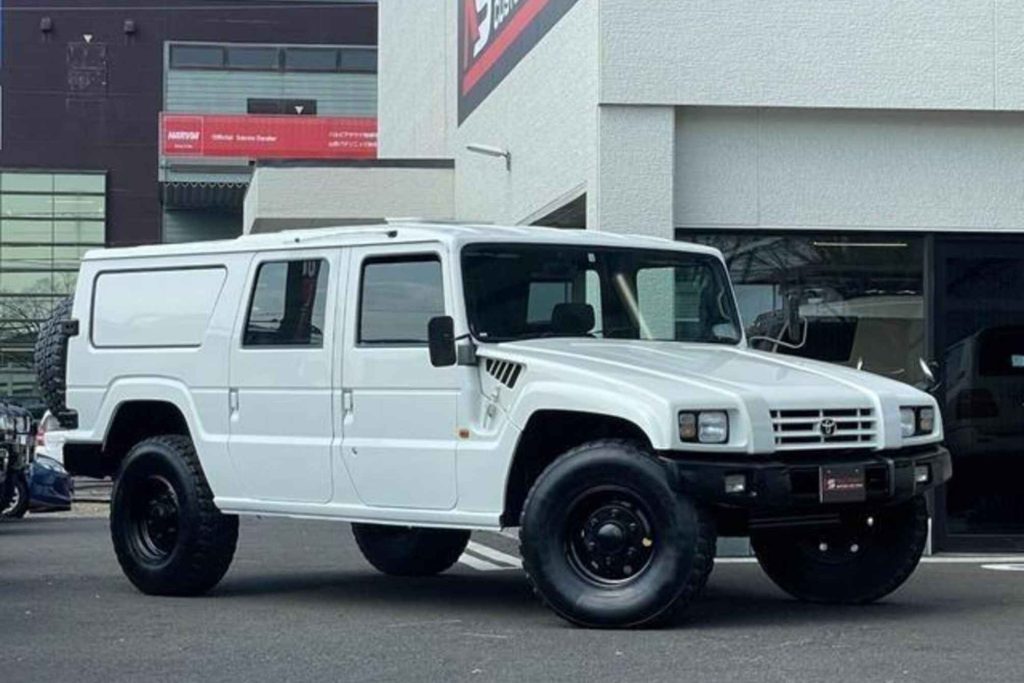
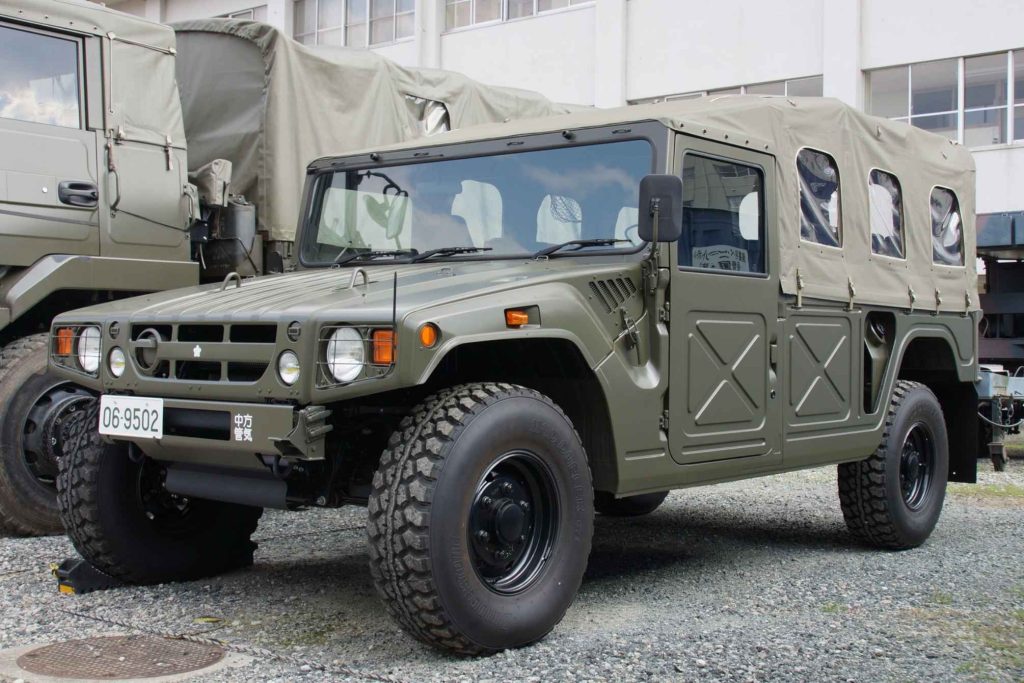
Those who really wanted a rugged, unstoppable military machine for civilian usage would have been better directed to the Toyota Mega Cruiser. Visually very similar to the Hummer H1, the Mega Cruiser was a domesticated version of the Japanese Self Defense Forces Mega Cruiser BXD10, without the surface-to-air missile system attached.
As the Mega Cruiser BXD20, private customers could only choose a vehicle powered by a 4.1 litre four cylinder turbocharged diesel engine, driving all wheels through a 4 speed automatic transmission. These enormous, six seat cars could boast four wheel steering to assist with manoeuvrability, but Japan’s crowded cities and narrow country roads proved to be the biggest obstacle in front of the car’s progress, resulting in only a small number actually being purchased by private punters.
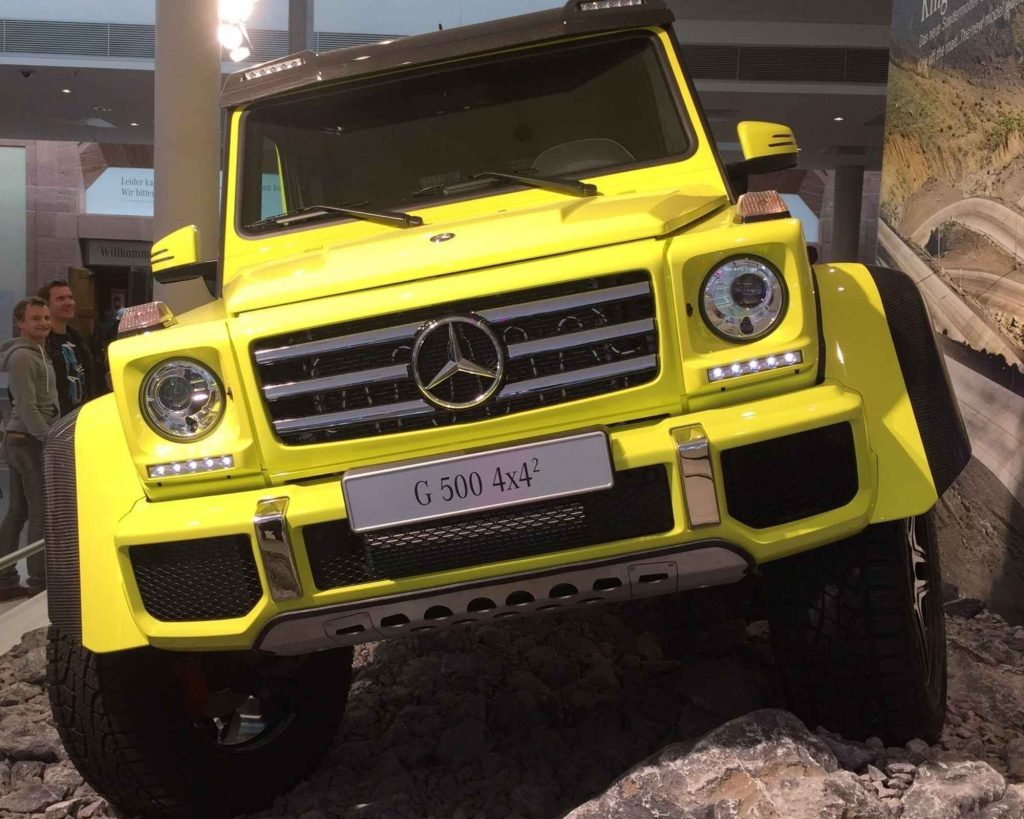
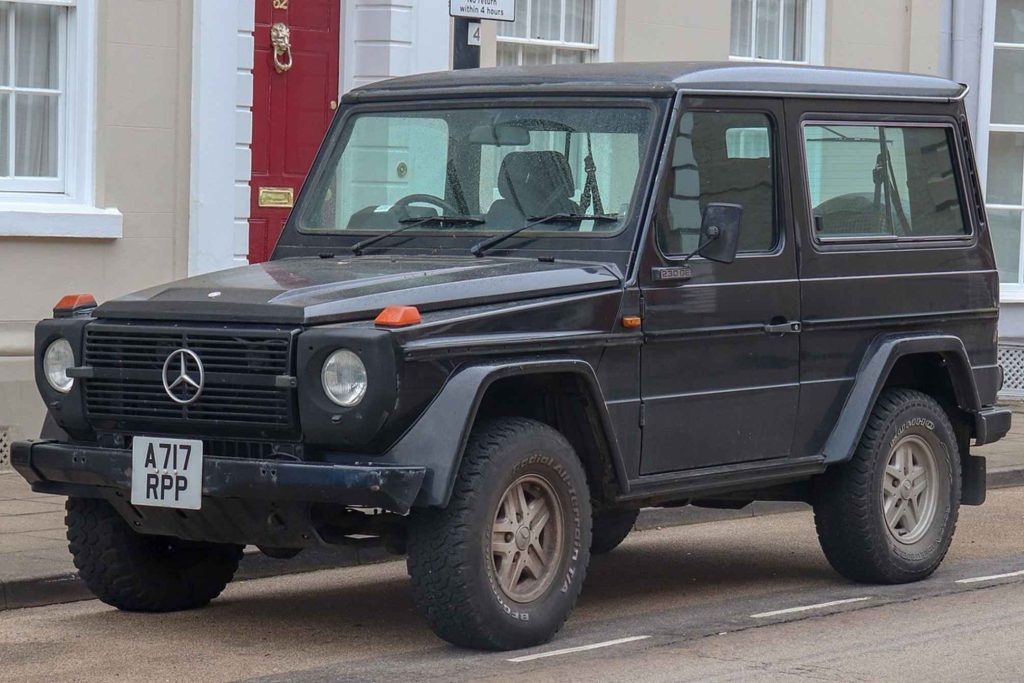
Of course, it would be hard to compose an article about military to civilian vehicle exchange without mentioning the Mercedes-Benz G-Class. Now the absolute darling of the Chelsea tractor brigade, the Gelandewagen began life as a highly mobile military car in the mould of the Land Rover, or original Jeep, in the mid 1970s.
The transition to passenger car came quickly, when the potential to go head to head with the Range Rover and other early luxury SUVs with proper off-road credentials was recognised by the Mercedes-Benz marketing team. A real blinder was pulled when an early customer was identified in the form of Pope John Paul II. Crowds waved to God’s representative on Earth as he was driven around on the back of a white G-Wagen.
That divine intervention helped to bless the G-Wagen – later renamed G-Class- with a reputation for outstanding solidity, reliability and mountain moving off-road ability that it bears to this day. The modern version of the car still uses a ladder-frame chassis to allow superior performance under tough conditions, but can be ordered with a range of sophisticated engines, including turbocharged V8 petrol motors, delivering supercar like performance, with a soundtrack to match.
Today’s military variant is reassuringly familiar in profile, but bears a distinct model code (W464 vs W465) to distinguish it from the showy but capable high-riding limo that the domestic version has now inevitably morphed into. What they both have in common, is an incredible ability to ford rivers, climb mountains and pull serious payloads, but in the case of the drab green military variant, to do this whilst running for hours on poor quality fuel.
Which military machine do you think made the most successful transition and which should have stayed on the battlefield?
Insure your classic with a specialist insurer
If you’re looking for cover for your pride and joy, why not consider Hagerty UK? Not only are we classic car insurance specialists, but we are enthusiasts at heart. Call us for a quote on 0333 323 1138.