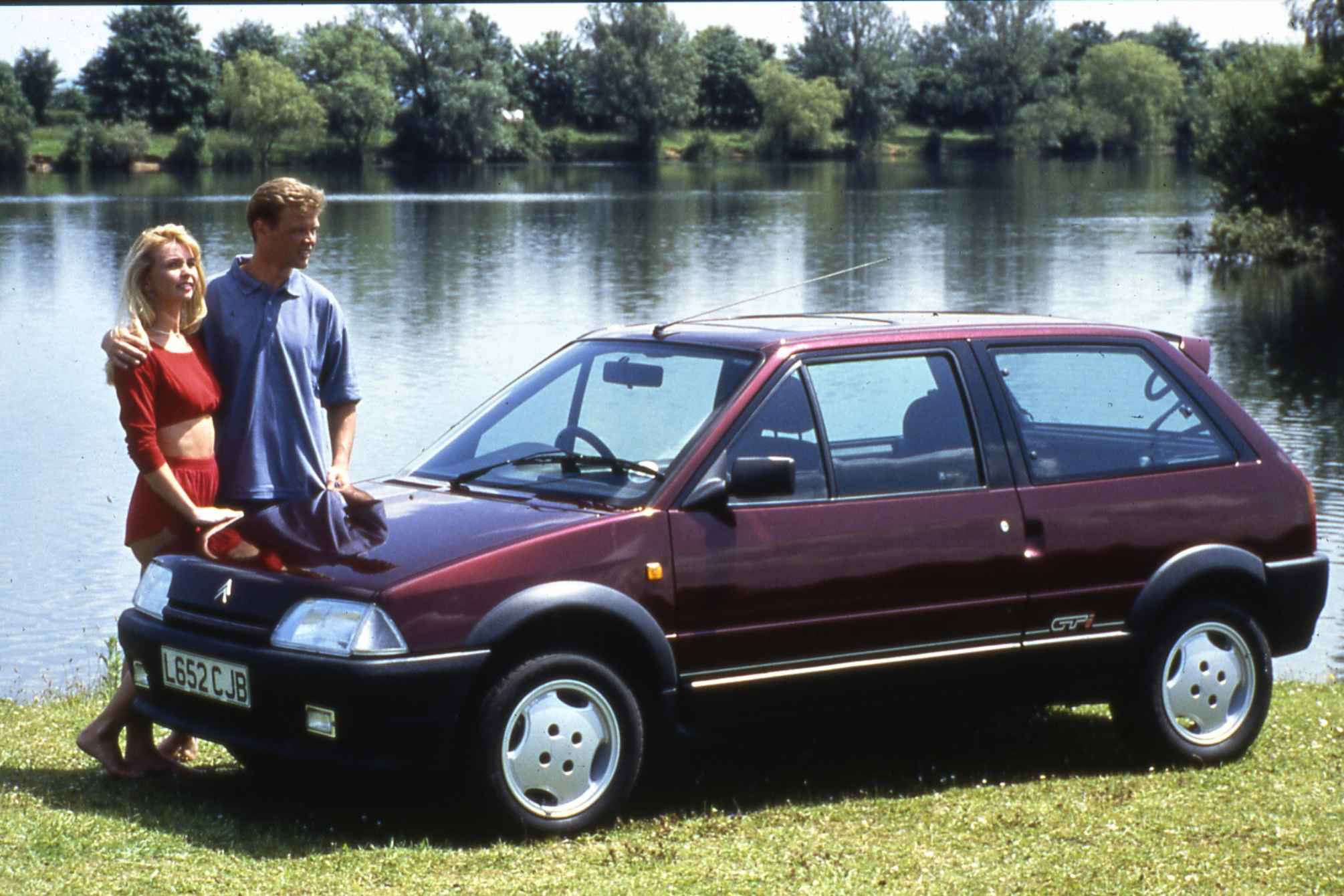
With the benefit of hindsight, the outwardly simple Citroën AX, launched forty years ago in 1986, shares more in common with the innovative cars for which the brand is fondly remembered than it does the almost painfully conventional models that began to arrive just a few years later.
The AX quickly became street furniture in the eighties and nineties, a more familiar sight in the UK than both the 2CV it sat above in price and the Visa it undercut in size. There were distinctive Citroën styling cues of course – the slash-cut rear wheel arches, the clean nose treatment of the BX, and it was more sleek and modern than rivals like the Austin Metro or Ford Fiesta.
But nor was it the dramatic statement of cars like the GSA and CX, both still on sale in 1986. Instead it was the archetype of the 80s and 90s small car, cheap and cheerful, and easy to fix should it succumb to the rough and tumble of urban motoring. Nothing special, you might think; a Fiesta or Nova could claim the same.
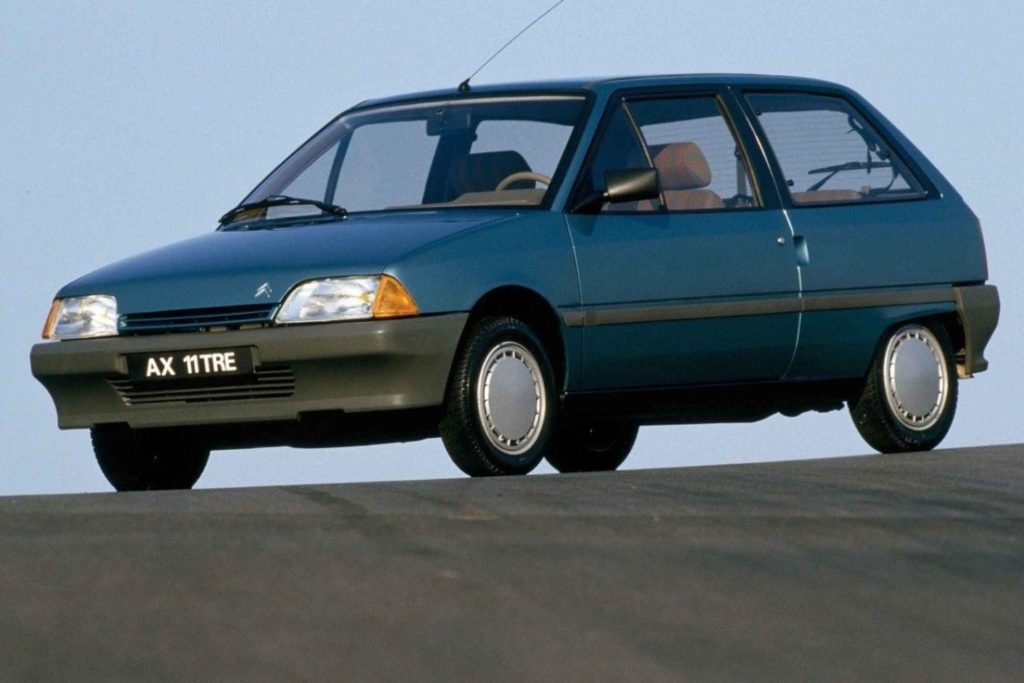
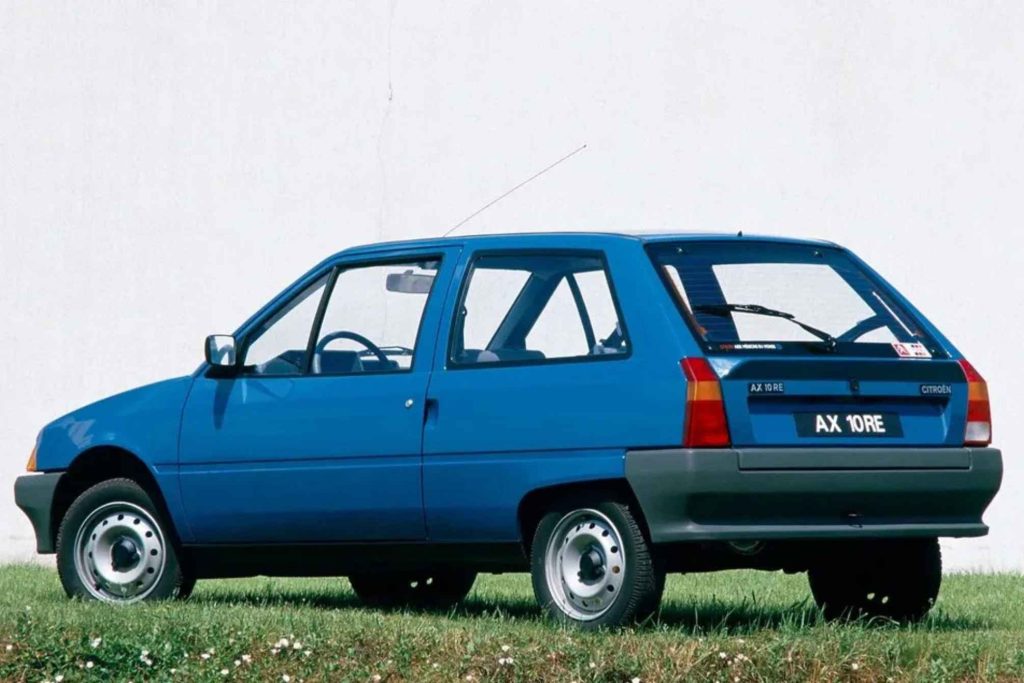
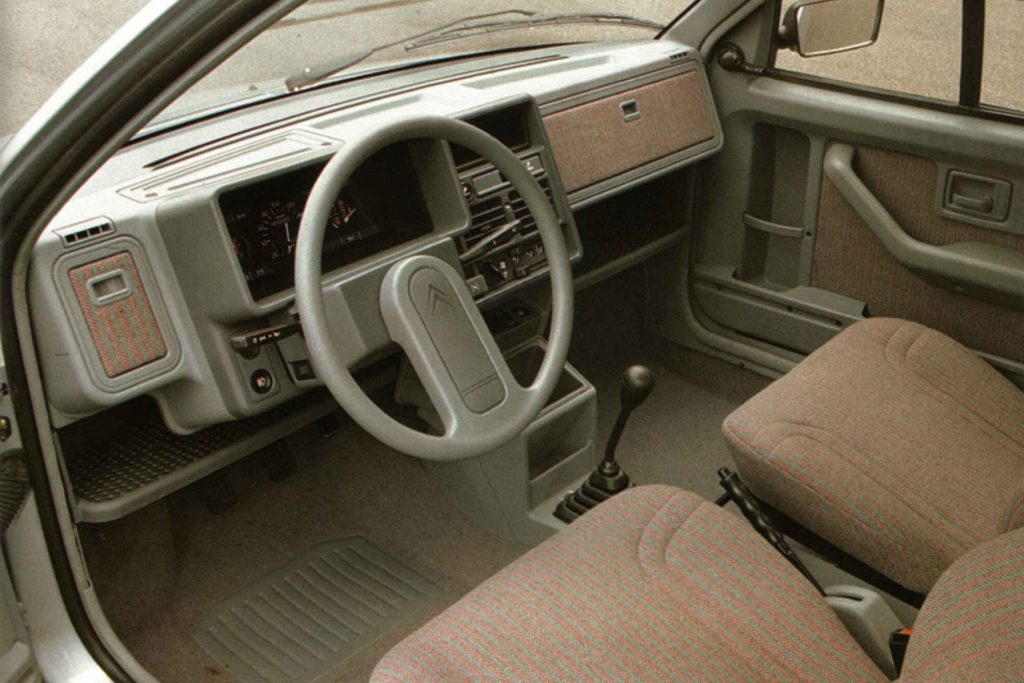
Dig a little deeper though and Citroën’s new baby was more advanced than any of its rivals. The surface-level conventionality was deliberate, the AX being smart where it needed to be rather than smart because a French engineer had decided they didn’t like coil springs, or indicator stalks, or steering wheels with more than one spoke.
For a start, the clean new lines were impressively aerodynamic. A drag coefficient of 0.31 was incredibly sleek for a car that didn’t have the benefit of length in order to keep airflow where the designers intended, since the AX was little more than 3.5 metres long. Citroën employed every trick in the book to achieve this figure: a steeply-raked windscreen, minimal front grille area, flush-fitting glass (the windscreen was bonded to the surround), recessed doorhandles, flat wheel trims on some models, and a series of small front and rear spoilers – the prominent wedge to the rear tailgate became one of the car’s most distinctive styling elements.
Aero helps with economy at high speeds, but at low speeds the AX also had the benefit of being unbelievably light. The most stripped-back entry level car virtually floated over the scales at 640kg, a full 100kg lighter than the simplest Peugeot 205 of the time. If you’ve ever wondered about the benefits of excellent aerodynamics and low weight, then turn to the 90mph that Citroën claimed of the 954cc, 45bhp AX 10E, a full 6mph more than the identically-powerful but more brick-like Fiat Uno 45.
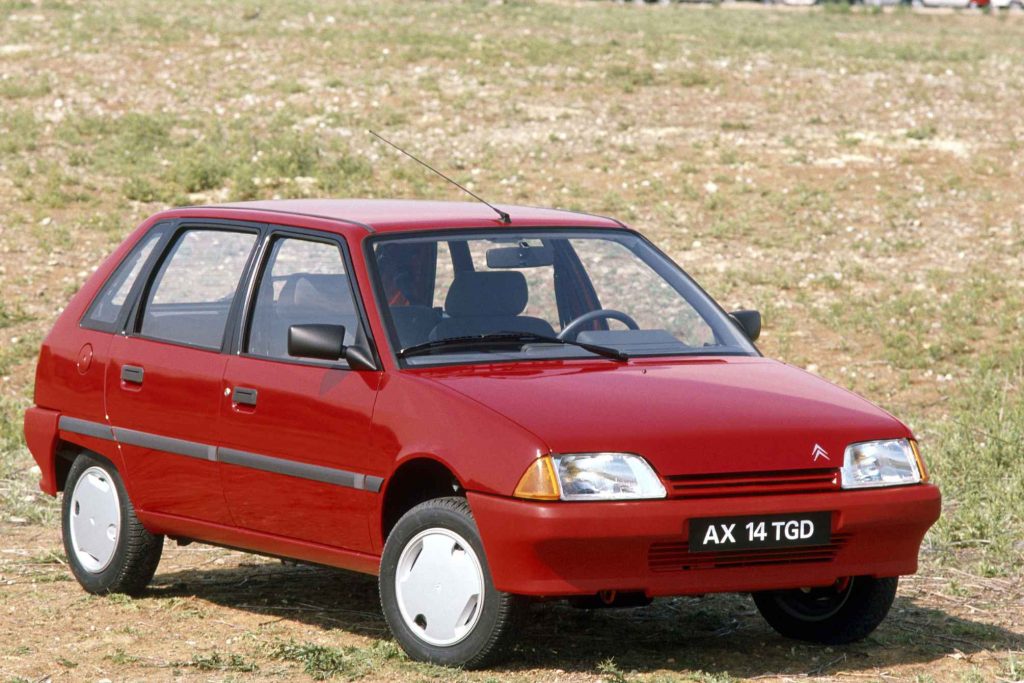
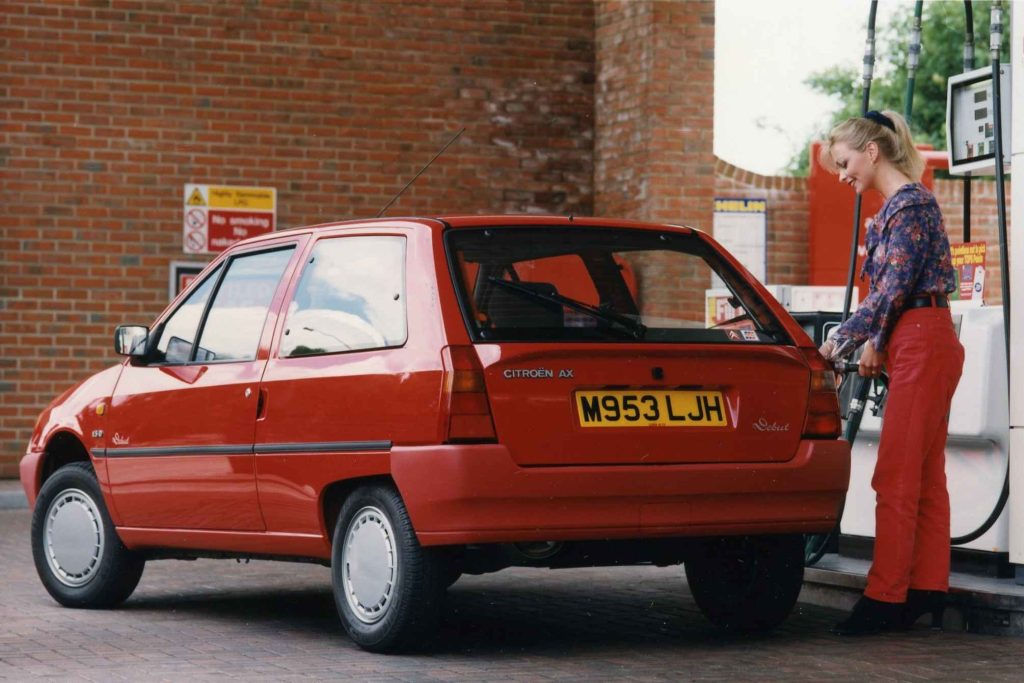
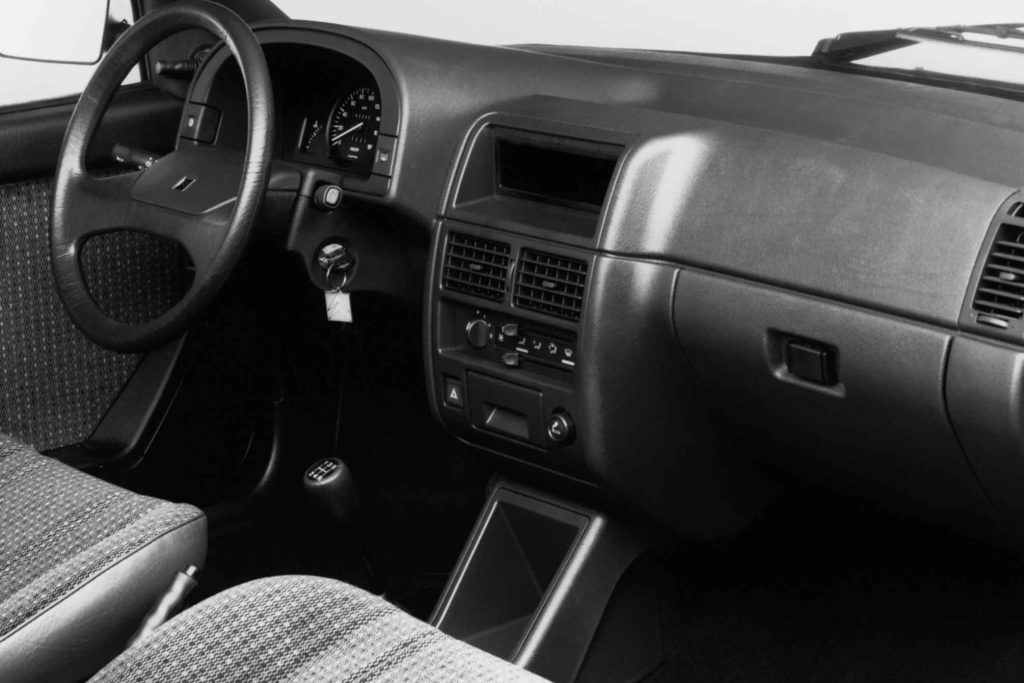
Citroën used computer aided design to pare back weight, meaning engineers could strip away mass without compromising rigidity, but there was clever thinking too, such as the tailgate effectively being the glass pane of the rear window and a bonded plastic panel – no heavy metal frame here. Then there were simpler solutions, like the AX using three-bolt wheels, a Citroën staple. The strategy wasn’t perfect of course. Early reviews suggested that even by 1980s standards, the AX felt somewhat flimsy both inside and out, though neat cabin storage, like big bottle pockets in the door cards (enough for bottles of wine, natch) made it unusually practical for its size.
Engines were all new for the AX, from PSA’s TU series. The all-alloy units were appropriately light, and both more refined and more efficient than their X-designated predecessors. The AX kicked off a familiar characteristic of the unit, with the engine gently canted forward with the inlet manifold behind, keeping the bonnet line low – another contributor to the slippery body shape.
Four- and five-speed manual gearboxes were available; unlike the larger Peugeot 205, the AX never got an automatic model, though a diesel did later join the 1.0, 1.1 and 1.4-litre TUs, taking the AX to new economical heights. Citroën proudly boasted of an astonishing 78.5mpg at 56mph, and on an economy run from Dover to Barcelona in 1989, an AX diesel achieved an even 100mpg, though the 54.7mpg mixed figure recorded by Autocar in its 1989 road test was probably more illustrative of its real-world potential.
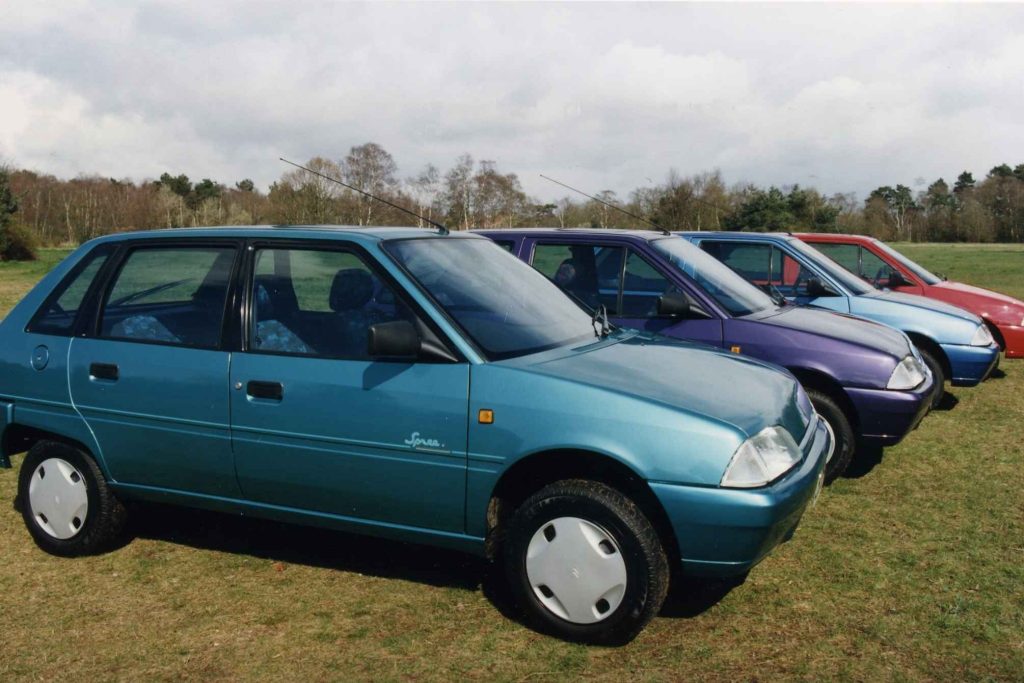
The magazine had previously pitched the basic 10E against its similarly threadbare 1986 rivals, the Fiat Uno 45 and the Austin Metro City. The Citroën and Fiat shared a 45bhp output, the City a roaring 47bhp, but the Fiat had the most torque (59lb ft) despite the least capacity (903cc – the Metro’s A-series meanwhile displaced 998cc). Despite its seeming disadvantages on paper though the AX triumphed in the bare numbers: its 43.1mpg rinsed the Metro’s 36.3mpg on test, and it was both faster flat out and, with a claimed 0-62mph of 17.9 seconds against the tested 0-60 of the Uno (18 flat) and Metro (18.2), quicker too.
The French car was also more fun than either, though the car’s light weight again manifested itself here through disconcertingly light steering, and relatively low grip from its skinny 135-section tyres. It was the car’s tinniness, and the noise of its TU breaking through the minimal sound deadening, that ultimately handed the victory to the Uno, but the Citroën had shown its strengths. Certainly, little in the class could get on terms with the AX’s long-limbed ride, thanks to absolutely enormous wheel travel in true Citroën style.
The diesel built upon the AX’s best aspects, as did the performance models that began to filter onto the market. The 94bhp, twin-carb AX Sport was first in 1987, cousin to the Peugeot 205 Rallye (though sooner to market). A more conventional AX GT arrived in 1989, with a single twin-choke carb and a less peaky 84bhp, but at 710kg, brilliant handling, with none of the understeer of under-tyred standard AXs.
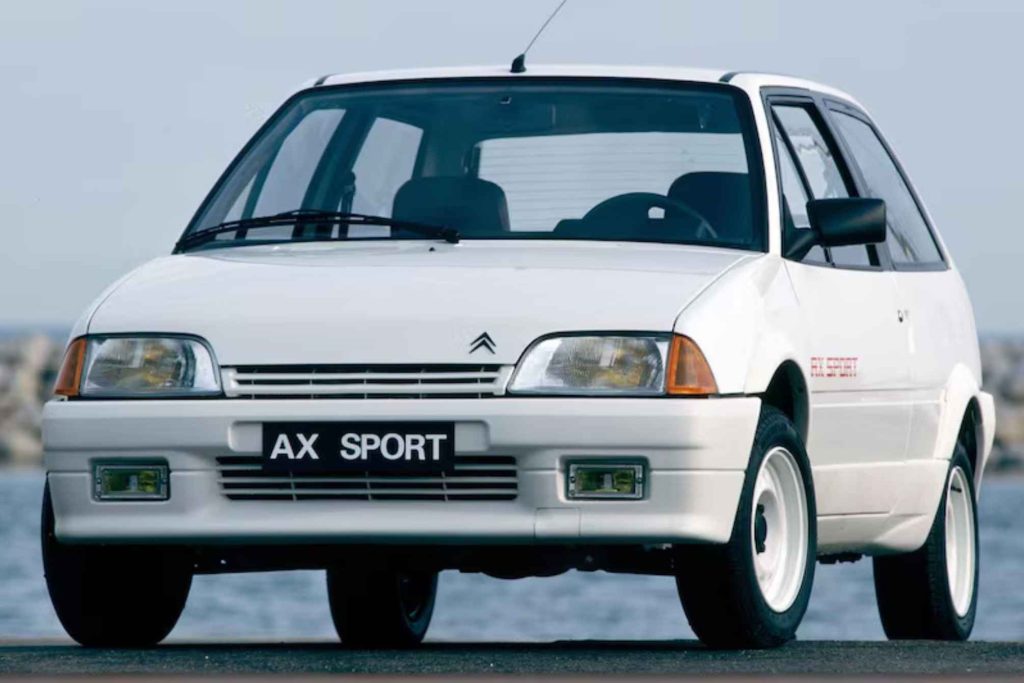
1991 saw the AX facelifted, with a much higher quality (though less innovatively styled and arranged) interior, and later that year a new 99bhp GTi inherited the performance car mantle from the GT. Citroën enthusiasts will fight over which was better and the brand’s efforts to improve refinement and quality did take away some of the edge, though this was perhaps more detrimental for the sporty one than it was for mainstream AXs. Everyday customers undoubtedly got a much better deal with the refined new model.
In the mid 1990s, Citroën (along with Peugeot, and its related 106) began exploring the potential of electric power with the AX Électrique, but by now the car wasn’t long for this world, with its more heavily 106-based successor, the Saxo, waiting in the wings for 1996. AX production wouldn’t actually end until 1998 though, with more than 2.5 million units finding homes in the 12 years it spent on sale.
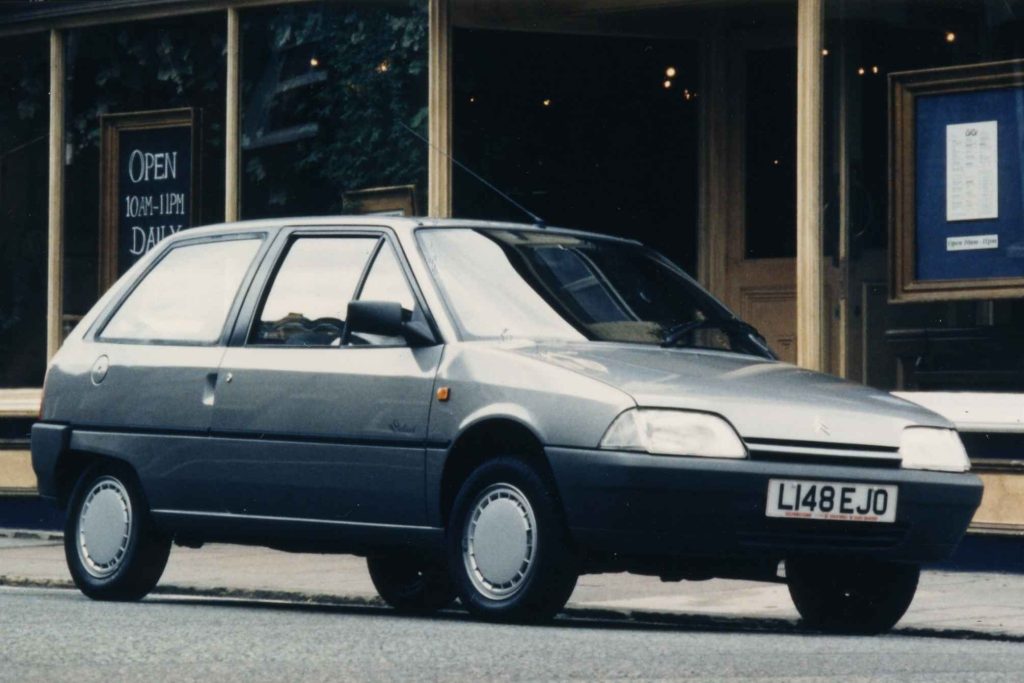
By Citroën standards, the new Saxo really was conventional, and measured against the AX even its 805kg starting point made it a bit of a heavyweight. But the fundamentals were all still there, from its fun handling (without so many compromises) to its frugal engine lineup and eager performance.
But it was one of the early signs that Citroën was becoming much more conservative in its design and engineering, and while the Saxo was a good car, Citroën leaned heavily on dealer discounts rather than class-leading ability to sell its late 90s and early 2000s wares. In retrospect, that couldn’t have been said about the astonishingly light, wind-cheating, and soft-riding AX. It was far more of a traditional Citroën than we might have thought.
Insure your classic with a specialist insurer
If you’re looking for cover for your pride and joy, why not consider Hagerty UK? Not only are we classic car insurance specialists, but we are enthusiasts at heart. Call us for a quote on 0333 323 1138.







Hired an AX in Tenerife around 1990, loved it so much bought one on our return to UK, did many many trouble free miles always put a smile on your face.
People who bought these cars didn’t care if their fish & chips were wrapped in the Daily Mirror or the Sun. The practical distinctions between the models described here are equally meagre.