Words: Craig Cheetham
Photos: Craig Cheetham/Land Rover
Ten years after Defender ended, are values now softening?
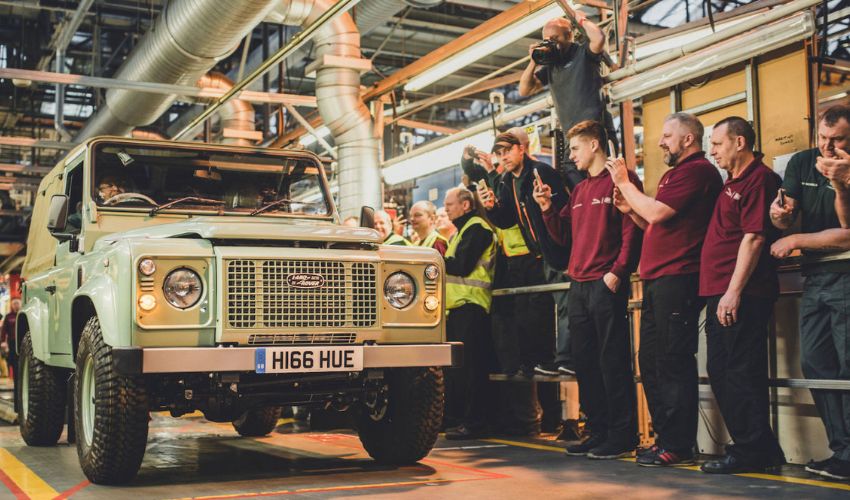
Saying goodbye to an icon is never easy – and at the end of January 2016, enthusiasts, media and Land Rover employees gathered to see the very last Defender roll down the production line in Solihull’s Lode Lane. It was an occasion as momentous as when the final Mini trundled off the line a bit further round the M42, at Longbridge, in October 2000.
It marked the sad end of the traditional utility Land Rover, after 68 years of continuous production – it being eventually killed off by emissions and safety legislation despite there still being strong demand from all sorts of folk, from Land Rover enthusiasts to farmers, who wouldn’t be without one.
The last Land Rover Defender, a Heritage Edition 90 soft top, was built in front of hundreds of current and former employees, each with their own stories and memories of working on the legendary vehicle. It wore the registration number H166 HUE – a nod to HUE 166, which adorns the first-ever Land Rover made. The two now reside side-by-side in the British Motor Museum at Gaydon, Warks.
To commemorate the occasion, Land Rover organised a special ceremony within the factory. The event was attended by workers, company executives, and even former employees who had been involved with Defender production over the decades, with speeches given to honour the vehicle’s legacy and the immense contribution it made to British automotive history.
It was a moment that made the national news, such was the Defender’s position in automotive folklore – and it was one that thrusted the late, lamented model into the spotlight, helped in no small part by a series of special editions that had been created in the run-up to the much-loved model’s final moments.
In the year before production ceased, Land Rover paid special tribute to the Defender’s legacy by launching a series of heritage-inspired models, each designed to capture the spirit and history of the iconic 4×4.
The most collectable, from the outset, was the Land Rover Defender Heritage Edition, released as part of a trio of commemorative models alongside the Adventure and Autobiography Editions.
The Heritage Edition was instantly recognisable thanks to its nostalgic Grasmere Green paintwork, reminiscent of early Series I Land Rovers, its contrasting white roof and its no-nonsense steel wheels. It featured retro-style graphics, HUE 166 badges referencing the registration of the first pre-production Land Rover, and interior trim inspired by classic models. Only 400 Heritage Edition Defenders were produced for the UK, making it an instant classic. They had sold out before the first one was built.
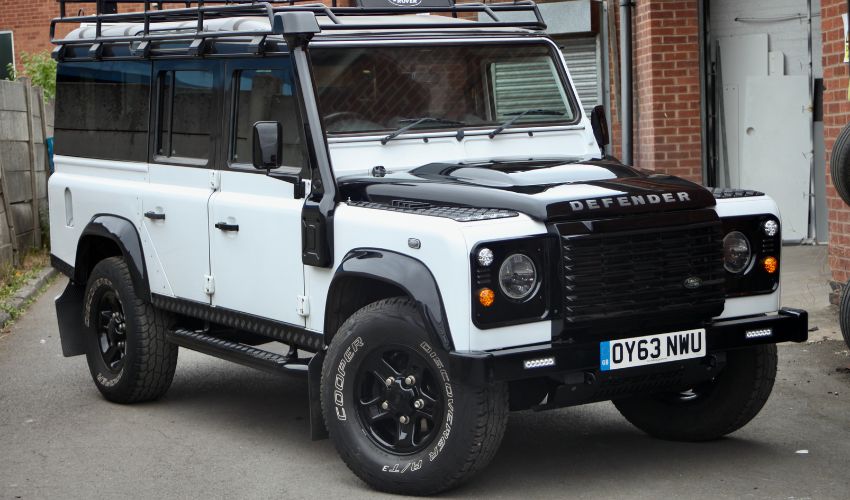
Alongside the Heritage, the Adventure Edition embraced the Defender’s rugged aura, with black wheels and enhanced off-road equipment, while the Autobiography Edition was all about luxury, offering bespoke leather interiors and exclusive colour schemes that screamed ‘Chelsea Tractor’. The appeal of each was unique, and while the Adventure and Autobiography will never be as collectable as the Heritage Edition, they’re still highly prized.
Following the end of Defender production, and spurred on by these models, values for used examples saw a dramatic surge in values, with enthusiasts and investors alike clamouring to get their hands on a piece of automotive history. Demand far exceeded supply, particularly for low-mileage examples and if you owned one, it was a great time to sell. Auction houses and specialist dealers reported record prices as collectors scrambled to secure their slice of the Defender’s legacy.
Even well-used examples saw considerable appreciation in value, driven by nostalgia and the fact that you couldn’t buy a new one any longer. Even a scruffy Land Rover Defender would command five figures at the height of this hubris.
If you bought a fairly ordinary one as an investment, though, prepare to be disappointed. It’s still desirable, of course – no Defender isn’t. But in the storm of publicity that accompanied the end of Defender production, owning one was a licence to print money. Since then, we’ve had a global pandemic, we’ve seen financial upheaval and rising interest rates, and the classic car market has had a wobbly old time.
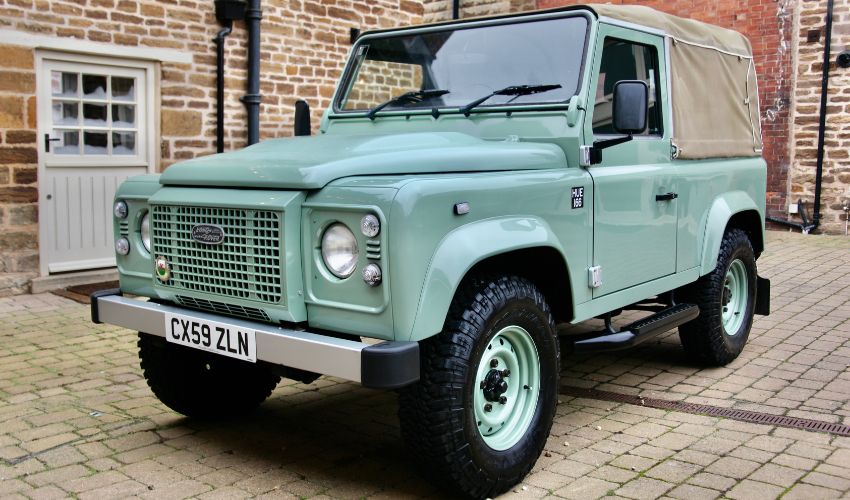
Initially, after 2016, even utilitarian Defenders – such as basic 90s and 110s – benefitted from the post-production surge, with prices rising sharply as buyers clamoured to secure any available example. However, as the initial wave of nostalgia faded and newer Defender models began to appear, demand for non-special editions cooled.
Many of these vehicles, particularly those with higher mileage or in less pristine condition, have seen their values level off or even dip compared with their peak in the aftermath of production ending, and the collector market has become more discerning – but that’s no bad thing if you just want one to enjoy (and don’t mind a bit of spannering or welding).
There is, however, another area of the market that’s somewhat protected from this, and if you have an older Defender it’s good news.
American import regulations stipulate that vehicles must be at least 25 years old to qualify as a classic and bypass stringent safety and emissions standards, and this means that Defenders manufactured before 2001 are increasingly desirable among US collectors, driving up demand and prices for older examples even if they’re scruffier than some of the examples made in the late 2000s and beyond. Indeed, there are specialists who buy them to restore, specifically for exporting to the USA.
The moment may have passed in terms of everyone wanting one – and most farmers today are happy with an Isuzu D-Max or a Toyota Hilux instead – but the Defender remains an enduring legend. It’s just not the bull market icon it once was…
What’s your take – does the Land Rover Defender’s raw authenticity still matter today, or has the world moved on? Share your thoughts in the comments below.
Insure your classic with a specialist insurer
If you’re looking for cover for your pride and joy, why not consider Hagerty UK? Not only are we classic car insurance specialists, but we are enthusiasts at heart. Call us for a quote on 0333 323 1138.






I’ve owned my 2003 Defender 110 station wagon for 14 years now and still enjoy every drive. Bernard as I named it has taken me and the family all over including Europe. I’m not interested in its value as I’ll never sell.