The 1990s was an embarrassment of riches for sports car enthusiasts. After the dry spell of the late 1970s and the 1980s, when someone with a few quid to throw at a performance car would turn towards hot hatches, sports saloons, and maybe the odd coupe, the 1990s saw the return of the proper sports car, with both roadsters like the Mazda MX-5 and Lotus Elan M100 laying the groundwork in 1989, and hard-topped sports coupes like the Porsche 968, Mazda RX-7 FD, and Nissan 300ZX Twin Turbo all furnishing the upper end of the market.
1991 saw the Honda Beat and Suzuki Cappuccino hit Japanese roads while TVR launched the Griffith, 1992 marked the debut of the Dodge Viper and TVR Chimaera, and as the decade wore on we’d get the Caterham 21, MGF, BMW Z3, and Fiat Barchetta too.
But one year in particular stands out: 1996. We don’t know what was in the water in the mid 1990s but it certainly worked, with seminal roadsters and sports coupes at just about every level of the market, some of which weren’t just significant that year but went on to define the sports car in the decades that followed too. Below are eight sports cars we believe made 1996 the high point of the 1990s for driving enthusiasts.

Lotus Elise
Several great sports cars were launched in 1996 but arguably only one transcends the year and the decade in which it was launched, the Lotus Elise. That Lotus was able to create a fantastic sports car was no surprise – the front-wheel drive M100 Elan was deeply impressive, the Esprit could out-handle virtually any rival, and the original Elan is still renowned as a sports-car great. That the company created one of the greatest sports cars ever is perhaps more significant, and did so, as designer Julian Thompson has previously remarked, for less money than some manufacturers spend designing a headlight.
The Elise lived for a quarter of a century and while there were undoubtedly some improvements over time, in terms of performance, reliability, quality, and quality-of-life for the occupants, the original could still be considered the best. It’s certainly the lightest, Autocar measuring its road-test example at 723kg back in 1996 (the stripped-back, 1.6-litre Elise of 2010 came in at 900kg, for comparison), and it’s the purest, mechanically and in terms of tactility. Few cars from any era have bettered the original Elise’s steering feedback.
It’s since become a talisman for what in retrospect was a golden era for sports cars; not just the other 1996 models on this page but all the others introduced in the 1990s, in the wake of Mazda’s revival of the segment with the 1989 MX-5. That the Elise stands out even during this busy period shows how highly it’s regarded.
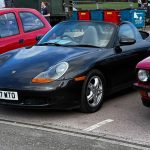
Porsche Boxster
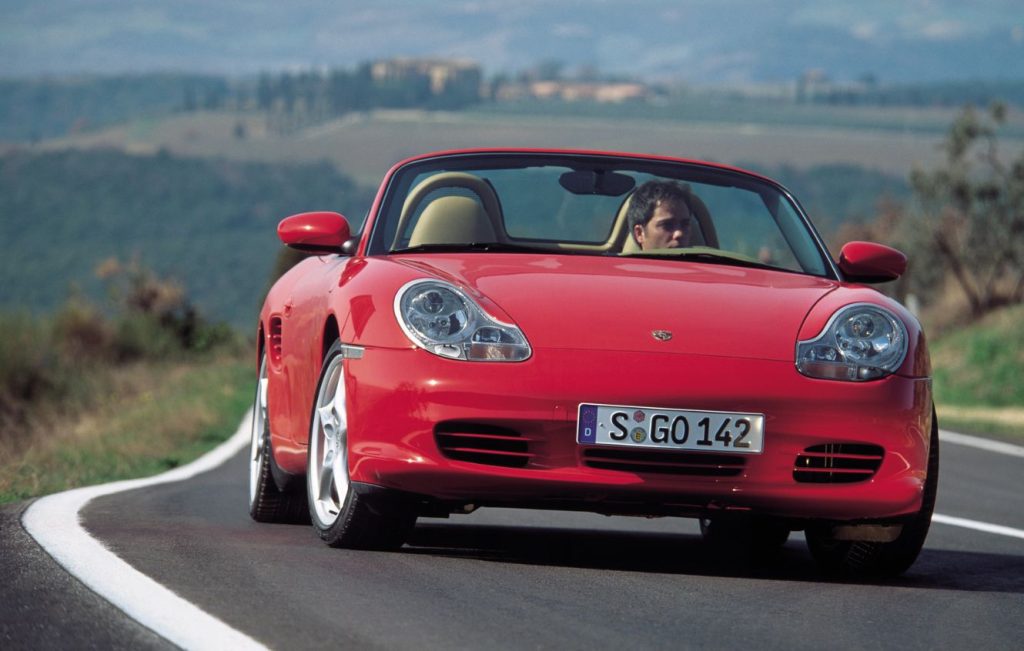
If the Lotus Elise was a swing of the needle away from the MX-5 centrepoint towards minimalism, the Boxster could be considered an alternative take, the basic brilliance of an accessible roadster taken to a more sophisticated and prestigious level. Look back on the 986-generation Boxster today and it seems charmingly simple, but with a flat six mid-mounted engine, luxuriously-trimmed cabin and an electric roof, it certainly leaned towards the upper end of the 90s roadster class.
For Porsche the Boxster was a necessity, replacing the slow-selling 968 and giving customers an entry point from which they could later hop into more profitable 911s. It also shared plenty with the 996 generation of 911, necessarily keeping costs low for a company that wasn’t flush with cash in the early 90s. But low cost didn’t mean low effort, and the Boxster, even in its basic form, was one of the decade’s best-driving cars.
The original 2.5-litre Boxster’s 204bhp seems embarrassingly modest by modern standards, but we’d take its cultured, evocative howl and fabulous feel over any overpowered modern EV – quality over quantity every time. The mass-produced cabin perhaps didn’t feel as robust as old handbuilt 911s but ergonomically it was in a different league, while the handling was fantastic, as involving as it was safe, even if you pushed your luck a little. The original Boxster’s appeal hasn’t dimmed today for all those reasons and more; that it remains a bargain 30 years on only makes it more compelling.

Mercedes-Benz SLK
It failed to match the Porsche Boxster’s dynamics in period and its modern values show where today’s enthusiasts rank it even compared to the very affordable Porsche, but it’s easy to forget that for a while, the Mercedes-Benz SLK was even hotter property than the Boxster. There were waiting lists for the SLK, and the keenest buyers paid well over the odds to get their hands on cars. The prevailing opinion was that the Bruno Sacco-led styling was prettier than the Porsche, too.
The SLK’s roof arrangement was noteworthy, being a fully automatic metal folding arrangement, which stowed itself in the boot when open (perfectly integrated, but also reducing luggage space to next to nothing), but actually the car’s main appeal was that, at a time the cheapest Mercedes SL was nearly £58,000, an SLK (for Sportlich, Leicht, Kurtz – sport, light, compact) was only £30k. Half price for a roadster that still had that all-important badge on the nose.
Handling was neat but not in the Boxster’s league, and while “Leicht” was in the name, a kerbweight figure of around 1300kg meant it wasn’t especially nimble by roadster standards. But it was easy-going, of pretty decent quality (by 1990s standards, if not Mercedes ones), and reassuringly safe, not just thanks to the well-engineered roof, but also the standard fitment of stability control, still rare at the time. Mercedes sold 300,000 during its 1996-2004 run, making it an incredible success.

Renault Sport Spider
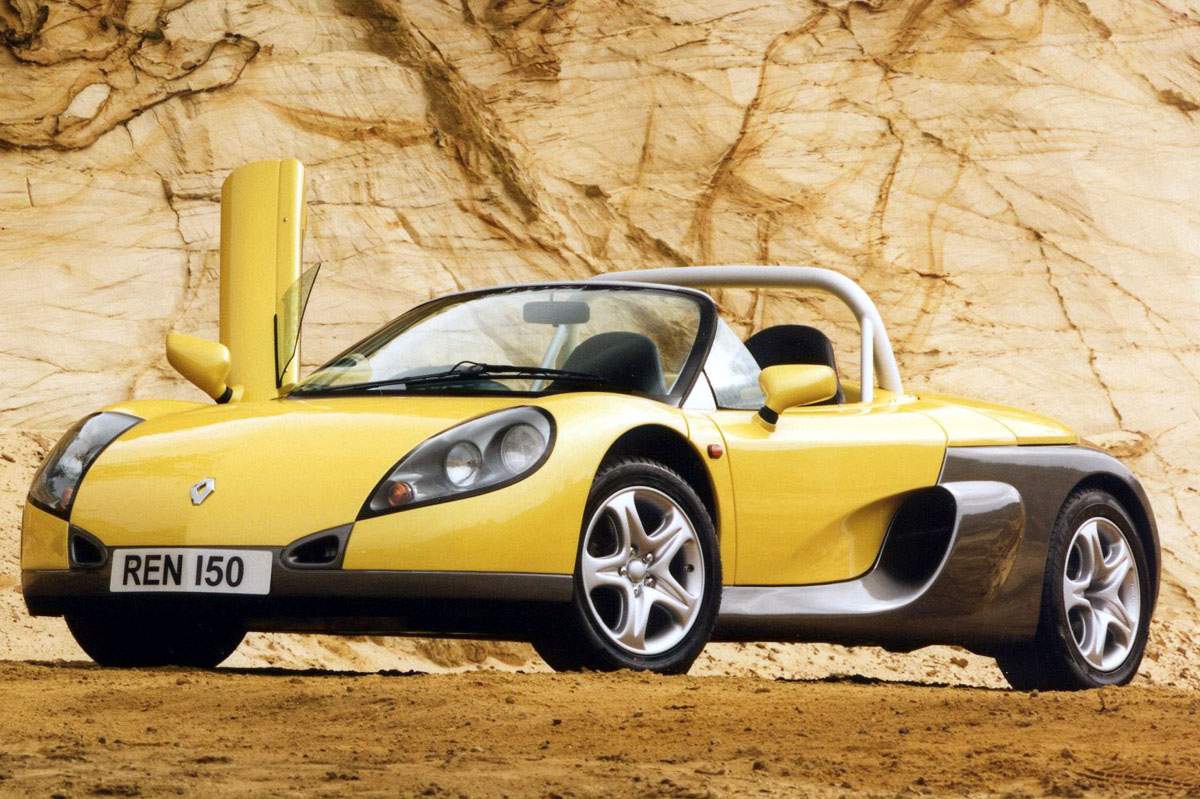
Launching a lightweight sports car at the same time as the Lotus Elise was somewhat unfortunate timing for Renault, whose Sport Spider was in every comparison test shown up by the brilliance of the new Lotus. It certainly wasn’t a bad car in isolation, but at 930kg it was around 200kg heavier than its rival from Norfolk, something the 148bhp output of the Clio Williams-sourced engine could overcome.
The Sport Spider served as a great example of Renault’s boldness though, confirmation that it’s always been willing to put something a little wild into production (as later seen by cars like the Clio V6, Avantime, Alpine A110, and the new 5 Turbo 3E). The Sport Spider used a welded aluminium chassis, pushrod suspension, featured scissor doors, and initially at least didn’t even have a windscreen, let alone a roof. It looked and felt more exotic than the Lotus, even if its weight ultimately hampered its abilities.
While on the road it might not have matched an Elise, as Evo magazine pointed out in its retrospective review of the Spider, “in isolation the Spider’s unassisted steering and brakes still offer more feel and honest interaction than those of most other cars in existence”. It also holds the accolade of launching the careers of touring car stars Jason Plato (who leapfrogged from Spiders into a 1997 BTCC Laguna seat alongside Alain Menu) and Andy Priaulx, the latter of whom won all 13 rounds in the 1999 Sport Spider race series.

TVR Cerbera
The Cerbera might be the Platonic ideal of a TVR, perhaps even of a sports car. Lightweight, great to look at, interactive to drive, and brutally fast, the Cerbera was TVR at its peak, giving supercars a duffing up yet priced lower than a contemporary BMW M3. Chimaeras and Griffiths were great cars, but the Cerbera of 1996 was a true giant-killer.
Previous TVRs had been powered by hand-me-down engines from the likes of Ford and Rover, but the Cerbera used an all-new in-house designed and built V8. The idea of a tiny manufacturer making its own engines is inconceivable now and it wasn’t common back then, but the 4.2-litre engine was pretty much a racing unit, and made 350bhp and 320lb ft. Against a measured kerb weight of 1177kg, Autocar timed its road test car to 60mph in four seconds flat, and called its flat-plane roar “an exquisitely ugly noise”.
Perhaps more pertinently though, the car managed nearly 180mph in a flat-out runway test later that year (only a Diablo and XJ220 went faster), while the later 4.5-litre car (now with 420bhp) absolutely mutilated an Aston Martin Vantage 600, C5 Chevy Corvette and a Viper GTS in the magazine’s 1998 test of the four (it was 8.5 seconds quicker to 150mph than the Viper). Put simply, few if any British sports cars have punched so far above their weight.
Lotus Esprit V8
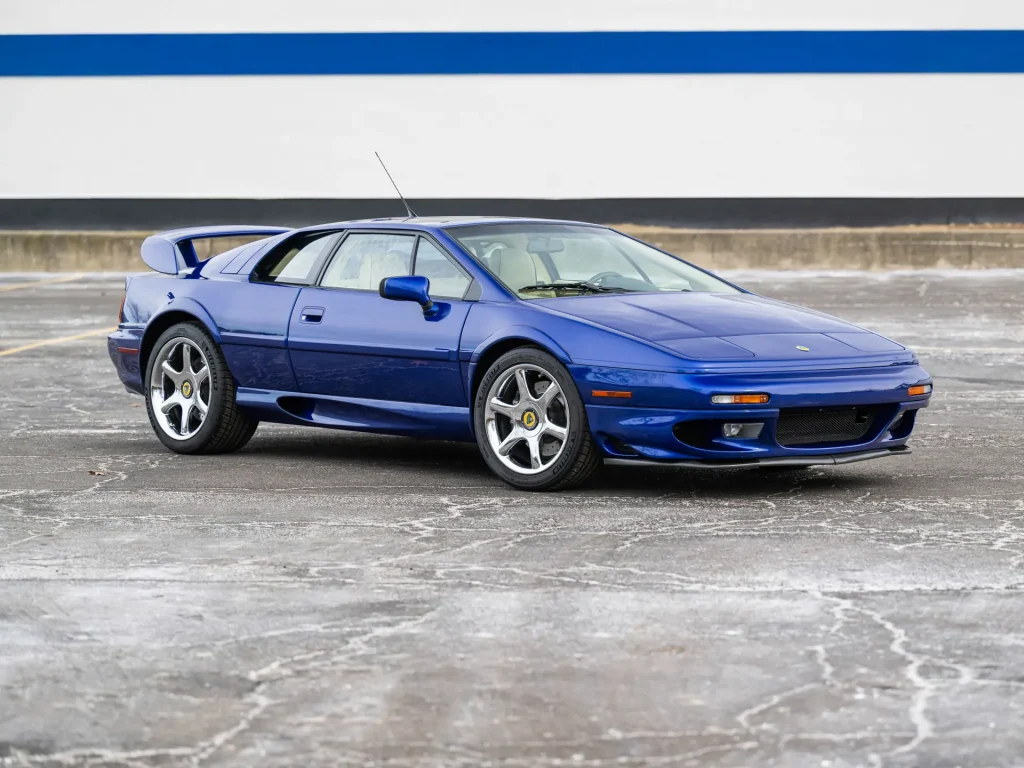
In the same flat-out run in Autocar that the TVR Cerbera managed almost 180mph, the similarly new Lotus Esprit V8 achieved just shy of 171mph. It wasn’t a bruiser like the TVR then, but as Autocar pointed out, it was within a whisker of Lotus’s claimed top speed for the car; not bad in just 1.7 miles of acceleration, and other than the XJ220, it was the most stable at speed too, shrugging off weather and crosswinds, and was utterly faultless slowing down at the far end of the runway as well.
You’d expect nothing less from a company that proved with the Elise the same year that it had mastered mid-engined chassis tuning, though in fairness, the Esprit had been playing that same trick since 1976. Interestingly, like the TVR, Lotus had developed and built its own V8 engine for the Esprit – we were eating well with homegrown V8s in 1996, it seems – and the 3.5-litre unit was, thanks to high-tech Lotus know-how, just as powerful, making 349bhp, or as good as 100bhp/litre.
As a result, performance comfortably eclipsed the Ferrari F355 that had arrived a few years before. The steering was better than just about any car on the market save the company’s own Elise, and few mid-engined cars – certainly not ones this powerful – were so friendly in their handling. And in typical Lotus fashion, it’d managed all this on a budget of just five million quid, which would have struggled to cover the annual bratwurst bills at Wolfsburg or the burgers in GM’s company canteen. It was thirsty, a bit recalcitrant at low revs, and the cabin was still a 1970s throwback, but you can’t have everything at that price.
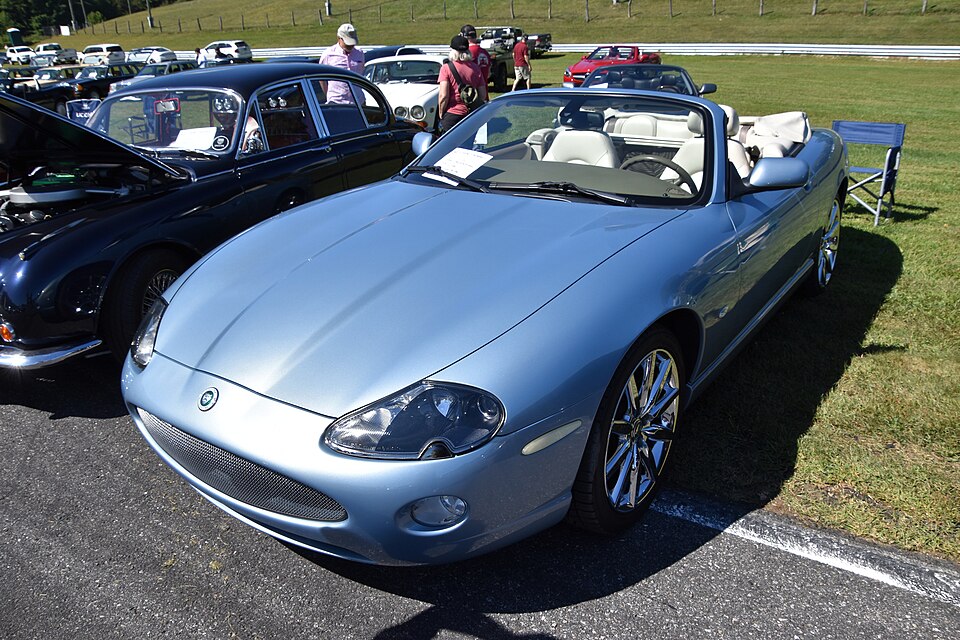
Jaguar XK8
The XK8 leans towards grand tourer more than sports car, but as a car from the same lineage as the E-Type, and one that undoubtedly had the dynamic abilities to back up its elegant looks, we’re granting it a place amongst the other cars here as one of the sports car highlights of thirty years ago.
You wouldn’t know it at a glance, but the XK8 was loosely related to its predecessor the XJS underneath (practically speaking, 90 per cent of the XK8 was either new or XJ-related), making it a sibling of the contemporary Aston Martin DB7 at the same time. More than a few commentators noted similarities between the Jag and the Aston’s styling, though with the benefit of hindsight each was undoubtedly a product of its company parent, and the XK8 fit neatly into Jaguar’s range both visually and conceptually.
A new 4.0-litre all-alloy V8 powered the XK8 (the same engine would shortly drop into the XJ, too), with 290bhp and a creamy power delivery, only ever sent through an automatic gearbox. It was quick, but this was very much a drivetrain designed for easy-going performance. The chassis trod a similar path, though cars equipped with CATS – Jag’s computer-controlled dampers – allowed the XK8 to both out-ride and out-handle the DB7. Like many Jags of the era, it was a bargain too: under £50k, when a DB7 or a Mercedes SL500 knocked on the door of £80,000.
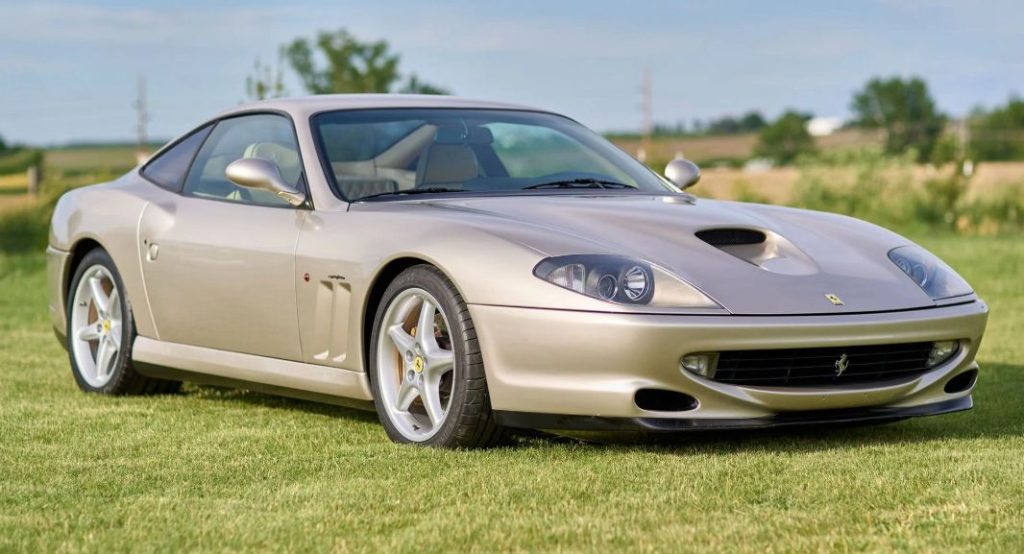
Ferrari 550 Maranello
With the passage of time, we seem to have collectively forgotten what a brilliant car the Ferrari 550 Maranello was when it was launched. Ferrari’s subsequent front-engined V12 sports tourers have taken a more aggressive approach in both their styling and tuning, to the point where the most recent 812 Superfast and 12Cilindri have been hyper-agile, 800-horsepower monsters. The 550, in contrast, was simply a fast and well-rounded sports GT.
Compared to its modern equivalents, 479bhp from 5.5 litres and twelve cylinders doesn’t seem especially potent, and that’s with around 1.7 tonnes to push around – but then a modern Ford Mustang Dark Horse, with 453bhp and another hundred kilos or so is not considered a slow car, so don’t overlook the 550’s abilities just because things have gone a bit loopy since then. And its handling was among the best of its contemporaries, comfortable yet deft and interactive.
If there’s one aspect in which the 550 has improved over the years, it’s probably styling. Buyers never seemed to mind, but journalists weren’t taken by the sharky looks, bonnet intake, chunky sills, and fingertip doorhandles. Today though it looks spectacular, with perfect proportions and a pleasing lack of ornamentation. The interior too was conceived, thankfully, around the time that Ferrari really started to get to grips with build quality and detailing. Just as the F355 had felt like a truly well-conceived mid-engined sports car and a jumping-off point for some of the brilliant cars that followed, the 550 was the point at which the modern V12 Ferrari was conceived.
Which 1996 sports car would you choose? Let us know below.
Insure your classic with a specialist insurer
If you’re looking for cover for your pride and joy, why not consider Hagerty UK? Not only are we classic car insurance specialists, but we are enthusiasts at heart. Call us for a quote on 0333 323 1138.


What about the C4 & C5 Corvettes?