Words: Nathan Chadwick
Photography: Ford
Small, bold and unexpectedly influential – the city car that changed Ford’s direction
There are small cars that exist simply because they have to. Transport appliances, built cheaply, sold cheaply and forgotten just as quickly. Then there are small cars that somehow manage to become something else entirely.
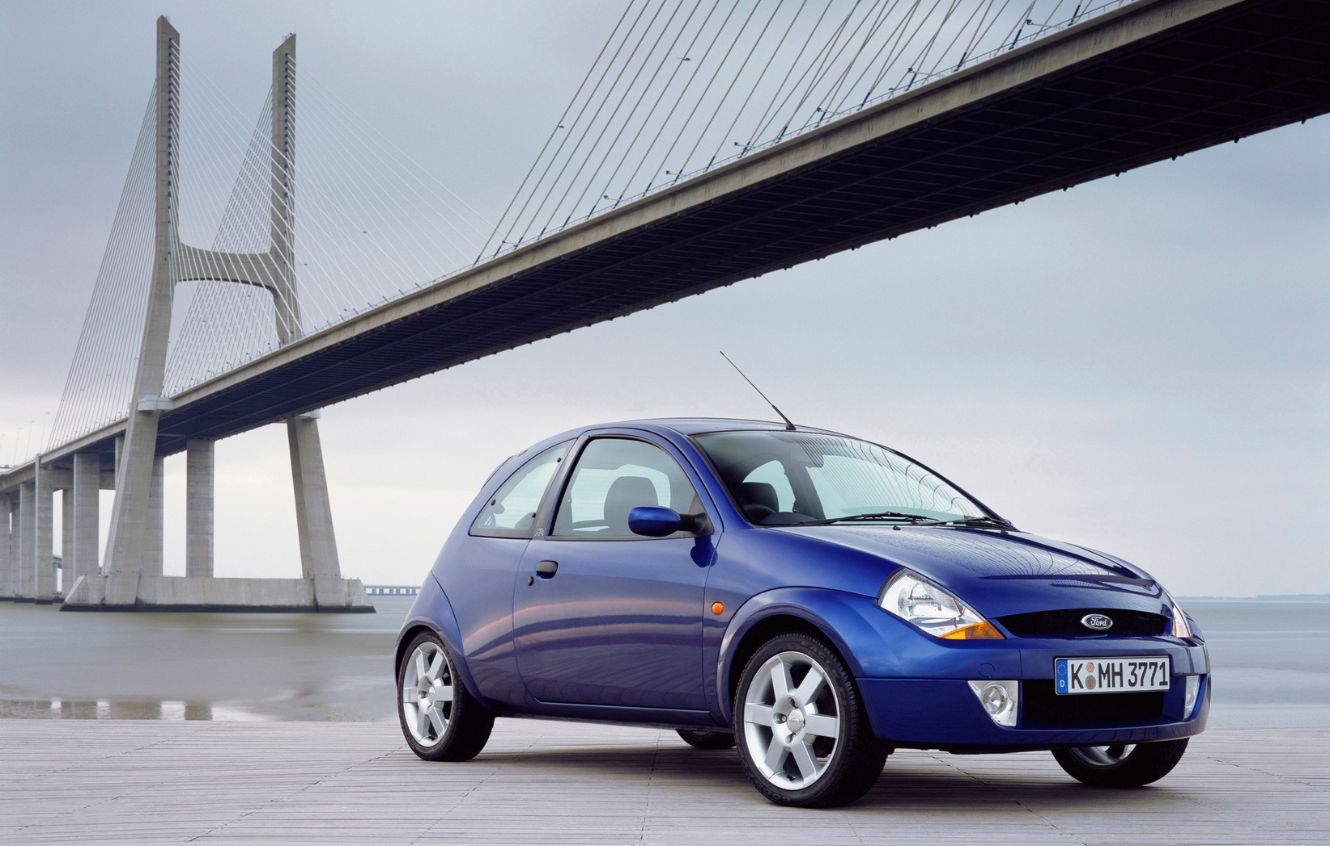
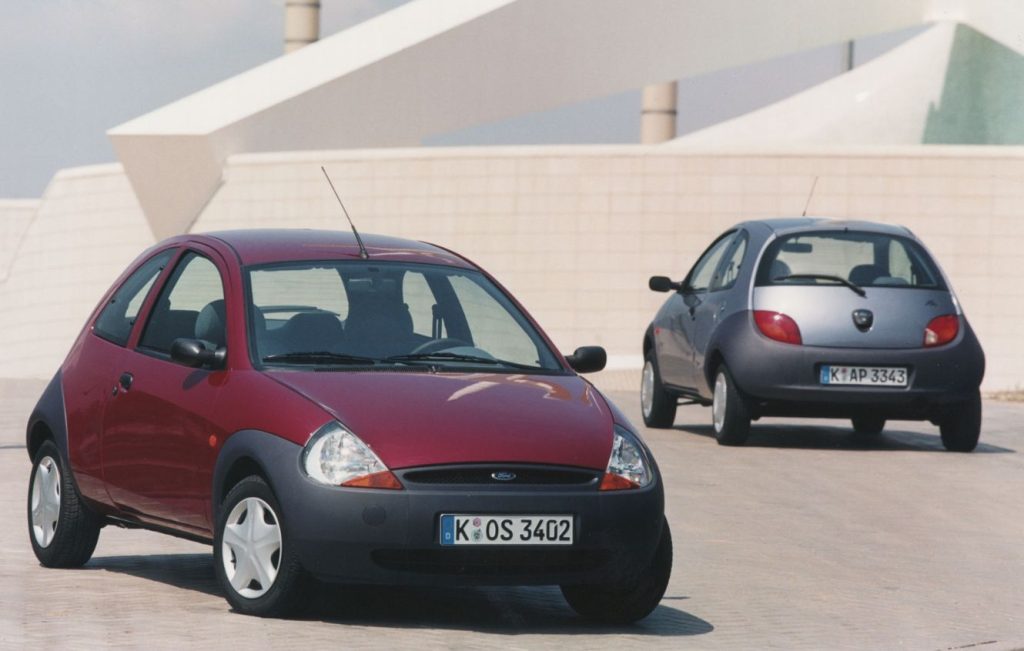
The original Ford Ka, launched in 1996, belonged firmly in that latter category. On paper it was little more than a supermini in a slightly odd suit – Fiesta bones, an engine that could trace its ancestry back to the 1950s and an interior that wouldn’t trouble a Bentley. Or even a Mondeo. But there was something about it. It had character.
More importantly, it arrived at a moment when Ford rather needed a car with character. The company had spent much of the early 1990s building competent but largely conservative machines. The Ka changed that almost overnight. Suddenly Ford looked bold again.
And it all began with a design philosophy that sounded faintly architectural: New Edge.
Ford had realised that the entry-level car market was beginning to change. Small cars were no longer merely cheap transport. Buyers – particularly younger urban drivers – wanted something with personality.
Renault had already demonstrated this with the wonderfully eccentric Twingo, while Fiat’s Cinquecento proved that a city car could have style as well as practicality. Ford needed something that would appeal to the same audience.
Internally the project was known as BE146, and from the outset cost control was paramount. Developing an entirely new platform for a small car would have been ruinously expensive, so engineers did the sensible thing and borrowed heavily from the existing Fiesta Mk3 architecture.
The Ford Ka retained a shortened version of the Fiesta’s chassis layout: MacPherson struts at the front, torsion beam suspension at the rear and front-wheel drive. Simple, robust and inexpensive to build – exactly what you want in a city car.
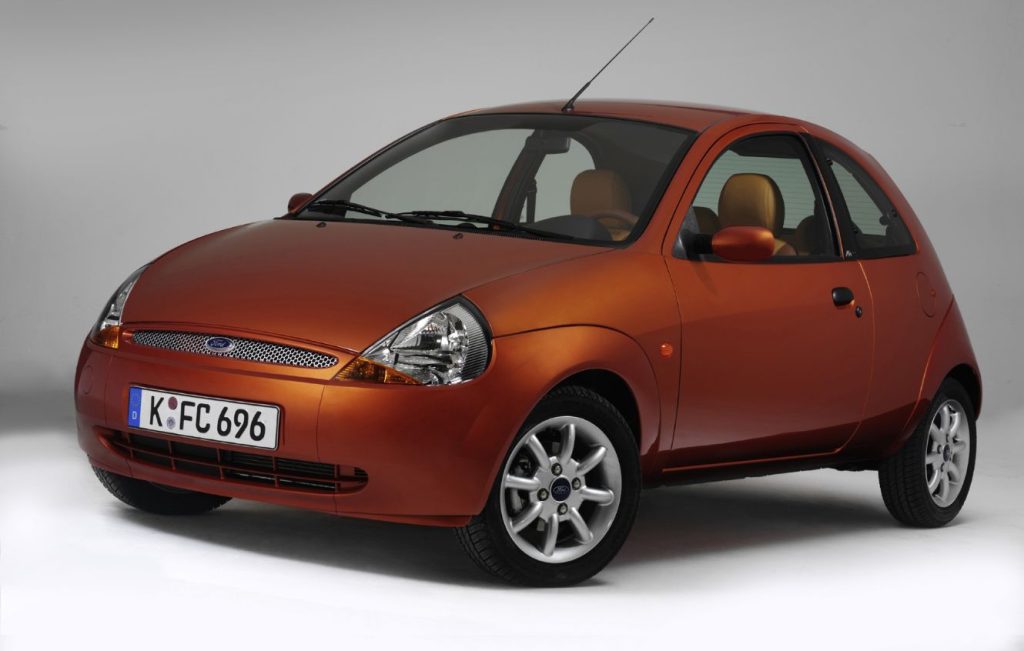
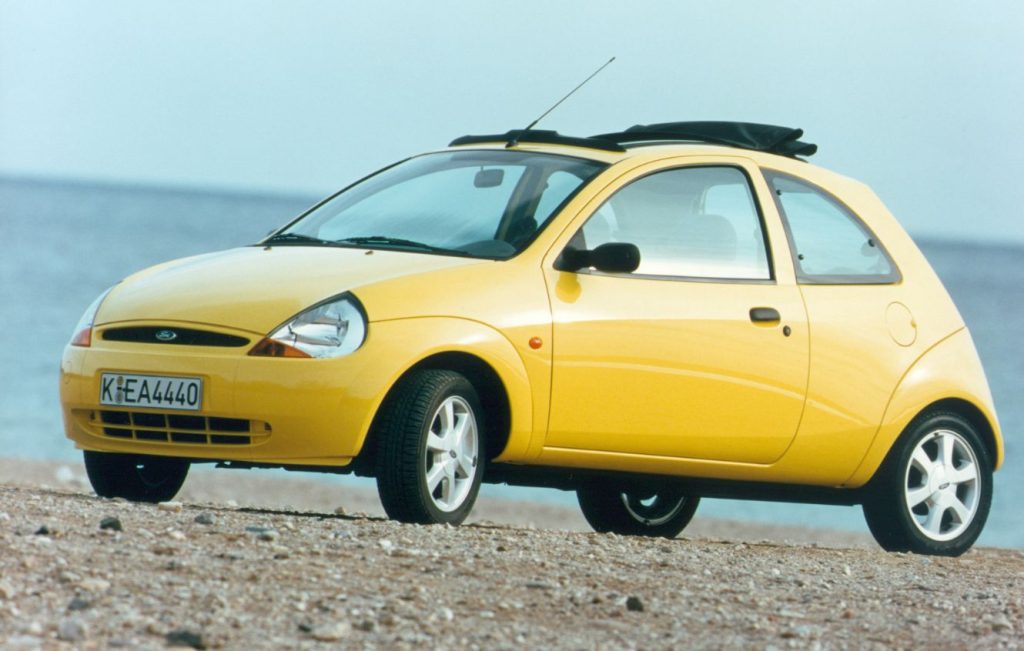
Where things became rather more interesting was the styling. During the mid-1990s Ford’s design studios were experimenting with a new visual language known as New Edge. The idea was to combine geometry with curves – sharp creases meeting rounded surfaces. It sounded unusual, and on the road it looked it too. The Ka became the first Ford to fully embrace the philosophy. The result was a car that looked unlike anything else on the road. Bulging wheelarches, triangular forms, circular headlamps and thick protective bumpers gave it a stance that was almost cartoonish.
That was entirely deliberate. The Ford Ka was meant to feel playful rather than serious.
The inspiration came partly from concept studies developed by Ghia, most notably the Saetta show car. Unlike many concept vehicles, however, the Ka retained much of that original visual character when it reached production. It still looked like a design sketch that had somehow escaped onto the road.
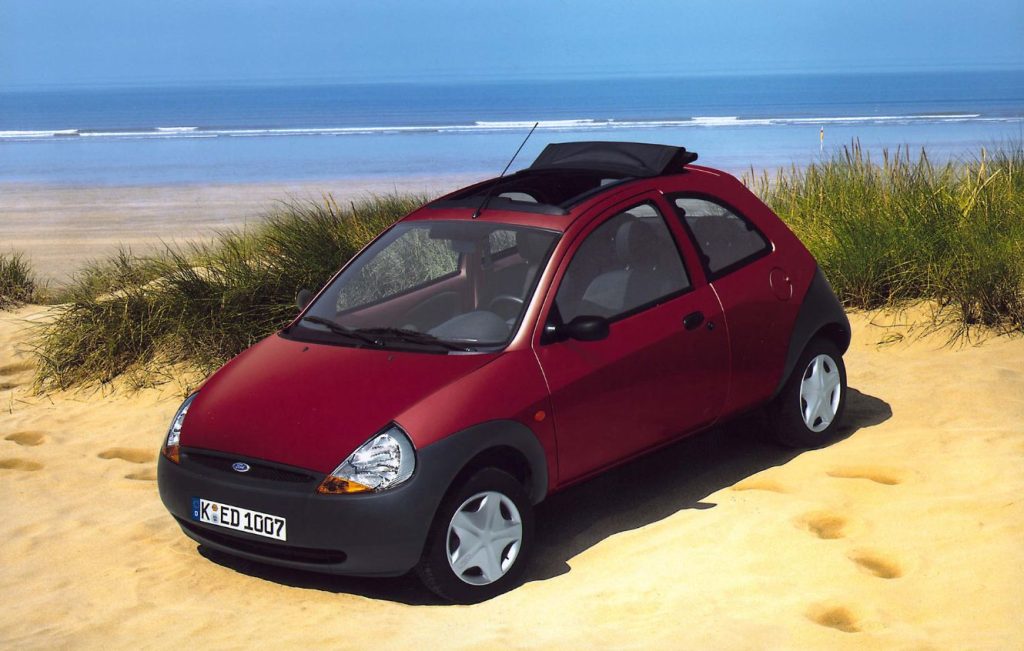
Like the similarly controversial Sierra before it, the radical styling hid something far more familiar underneath. Power came from Ford’s 1.3-litre Endura-E engine, itself a descendant of the venerable Kent unit that had powered generations of Fords since the 1950s.
By the mid-1990s it was hardly cutting-edge technology. With around 60bhp on tap it was not exactly fast either. But the engine was durable, easy to maintain and – crucially – cheap.
Cheap and cheerful too. Thanks to its short wheelbase, wide track and wheels pushed out towards the corners, the little Ford possessed a surprising degree of agility. Contemporary testers often praised its willingness to dart through city streets and tackle twisty roads with unexpected enthusiasm. It wasn’t a hot hatch. But it certainly understood the joke.
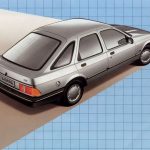
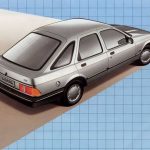
When the Ka appeared in showrooms in 1996, it caused something of a stir. Ford had not produced anything quite so visually adventurous since the Sierra in the early 1980s, and reactions were immediate – if occasionally divided.
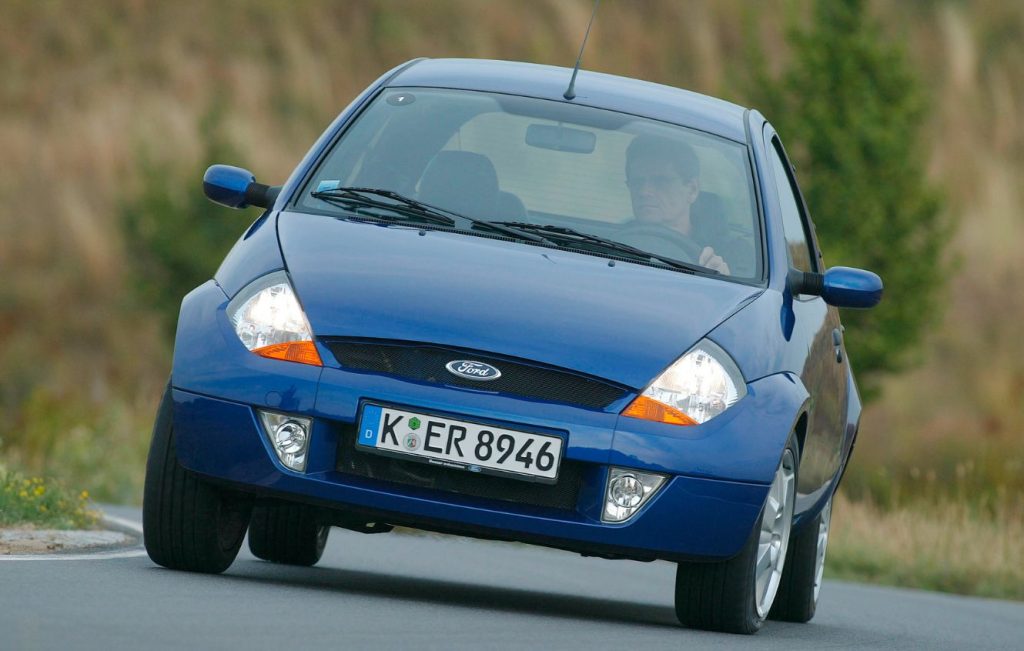
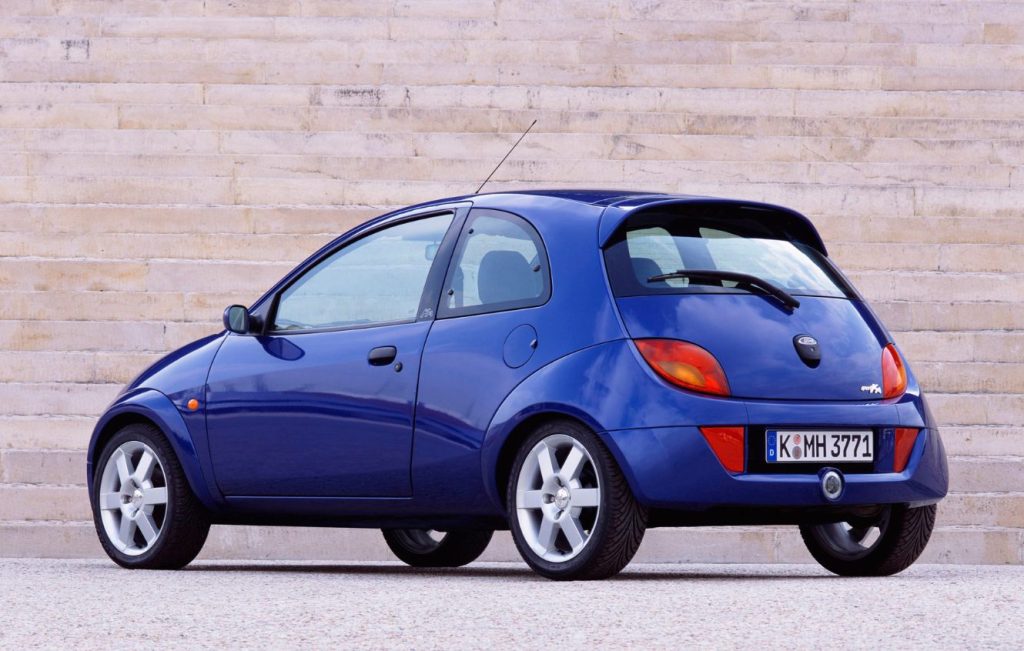
Critics occasionally described it as bulbous or awkward, and a few struggled with the New Edge aesthetic entirely. Yet even those who disliked it conceded one thing: the Ka was unmistakable, and a trailblazer. Within a few years the New Edge philosophy would appear across the company’s line-up, influencing cars such as the Puma coupe and the original Focus.
It also tapped neatly into late-1990s culture. Compact, affordable and slightly fashionable, the Ka quickly became popular with younger buyers and urban drivers. Bright colour schemes and numerous special editions reinforced the sense that this was a car designed to be fun rather than merely practical.
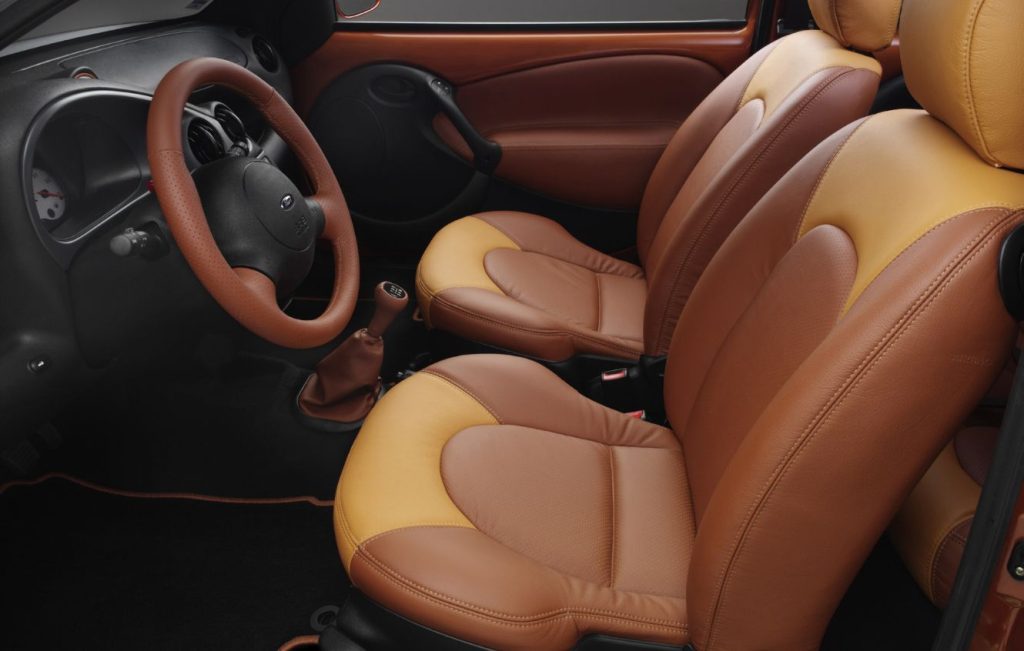
Still, the critics had their points. The ageing Endura-E engine felt distinctly old-school compared with the more modern powerplants appearing in rival superminis. Performance was modest and refinement was hardly class-leading. The interior, meanwhile, could feel rather basic in places.
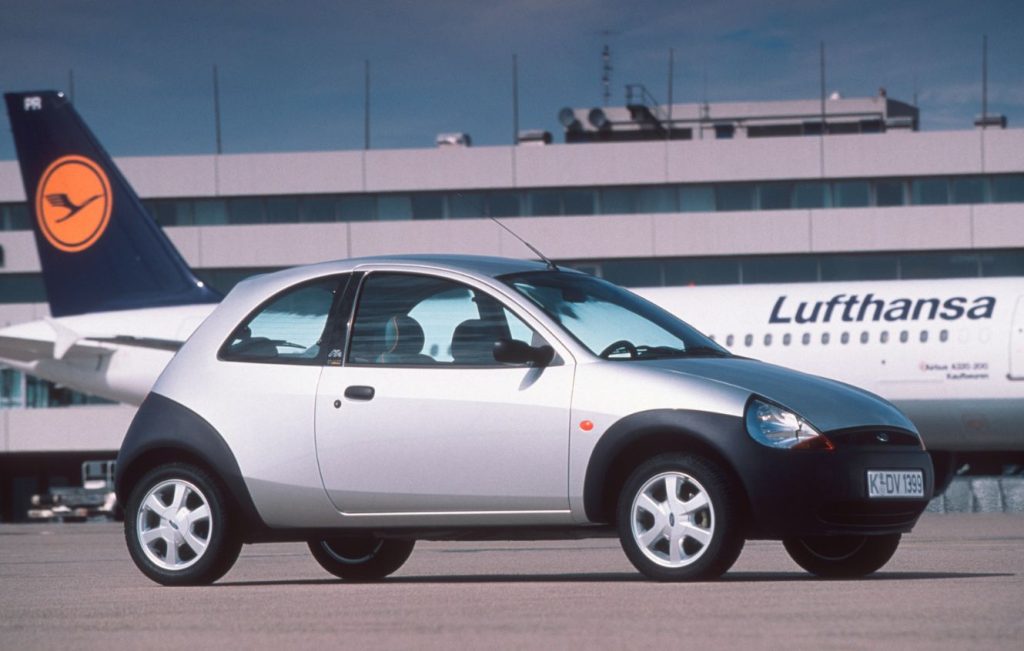
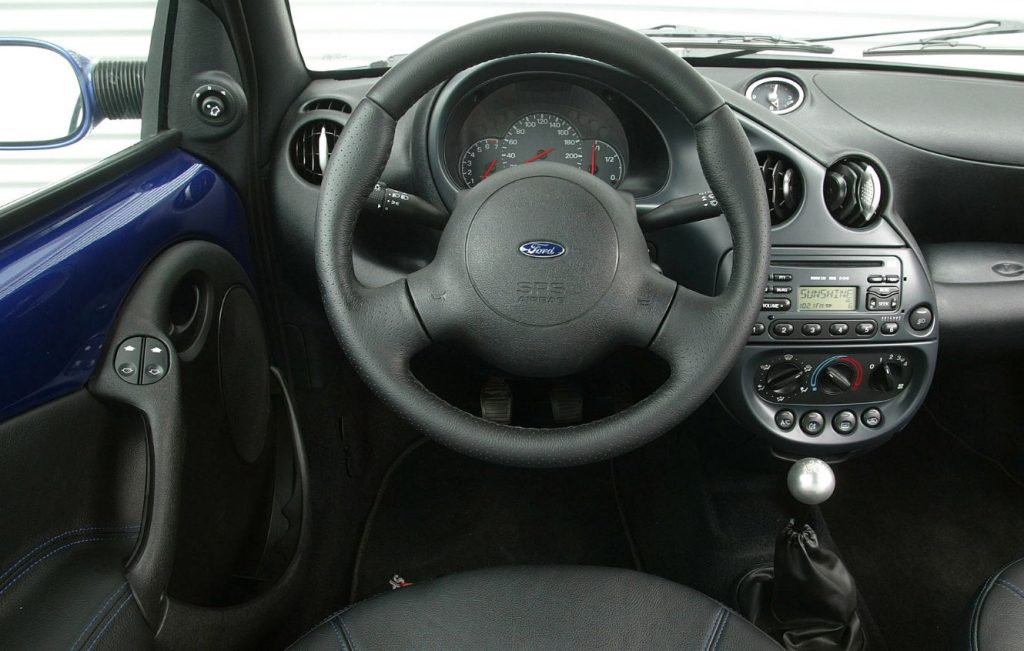
But these criticisms rarely overshadowed the car’s overall charm. The Ford Ka was small, cheerful and entertaining to drive – a combination that proved remarkably persuasive.
And the sales figures reflected that. Over its production run the first-generation Ka became one of Ford’s most recognisable small cars, populating city streets across Britain and Europe.
How about now? Once considered disposable transport, it is now increasingly recognised as an important moment in Ford’s design history.
For prospective owners the biggest concern is rust. Early Kas were not especially well protected against corrosion, and many have suffered badly around wheelarches, sills and suspension mounting points. Rear axle mounts are another area worth inspecting carefully.
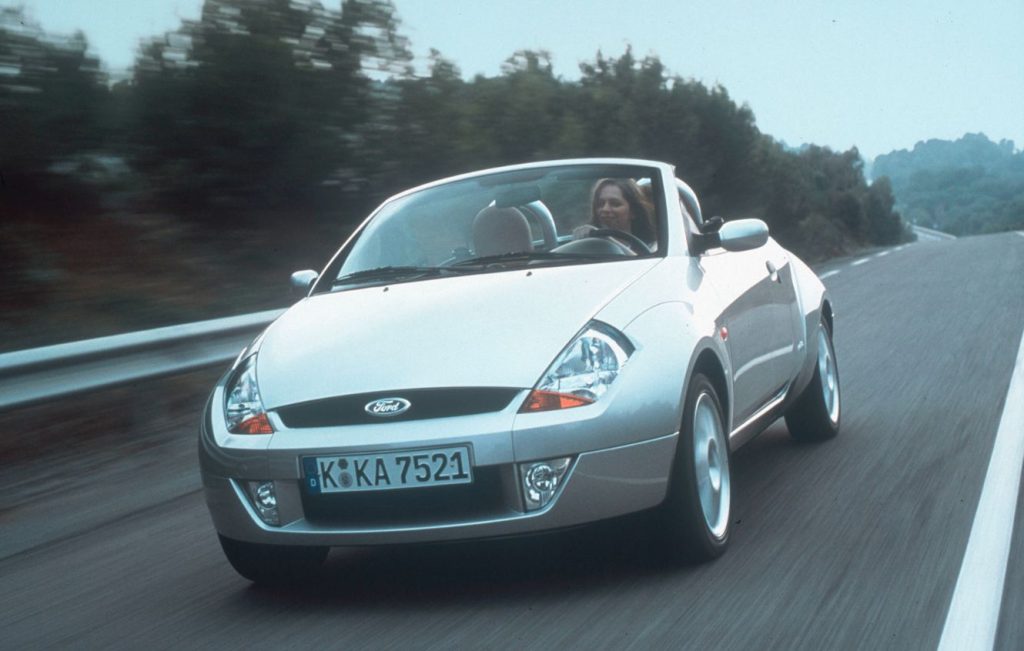
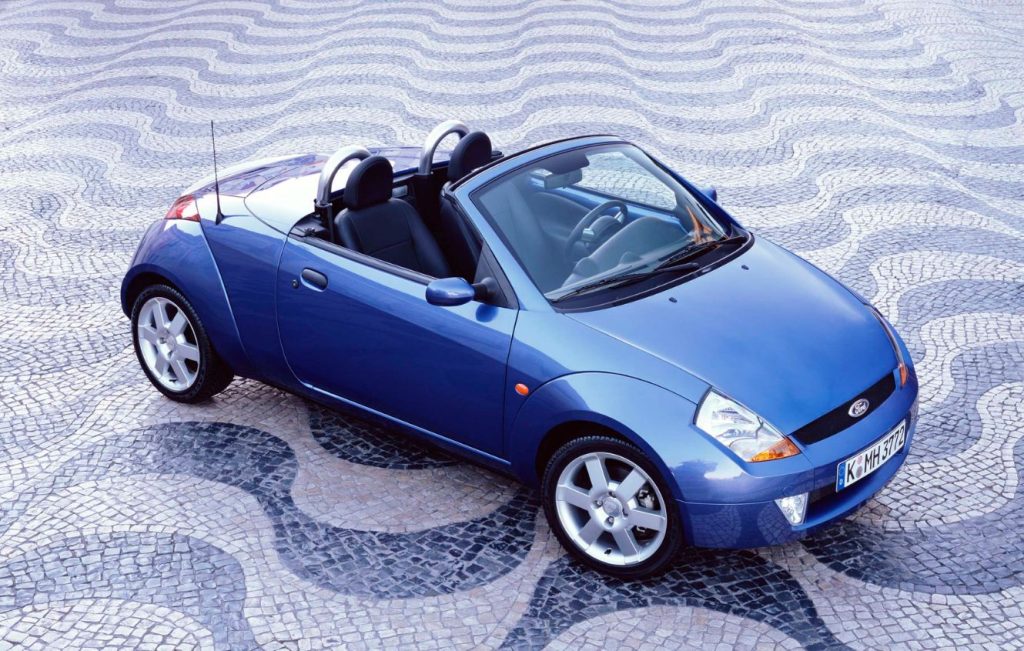
Mechanically the picture is more encouraging. The Endura-E engine may be elderly, but it is fundamentally robust and inexpensive to maintain. Parts remain plentiful and servicing requirements are straightforward.
Suspension components can wear with age, particularly bushes and dampers, but replacements are inexpensive. Interiors tend to survive reasonably well, though brittle plastics and worn seat fabrics are not uncommon.
Perhaps the Ka’s greatest attraction today is its affordability. According to the Hagerty Price Guide UK, usable examples remain firmly in the entry-level classic bracket. Project cars can still appear for a few hundred pounds, while tidy, low-mileage examples may command several thousand.
In other words, the Ka remains exactly what it always was: an inexpensive way into motoring fun. Which is rather refreshing in today’s classic car market.
Check out this 190-mile, pristine Ford Ka.
Has any modern city car matched the charm of the original Ford Ka? Tell us your pick in the comments.
Insure your classic with a specialist insurer
If you’re looking for cover for your pride and joy, why not consider Hagerty UK? Not only are we classic car insurance specialists, but we are enthusiasts at heart. Call us for a quote on 0333 323 1138.