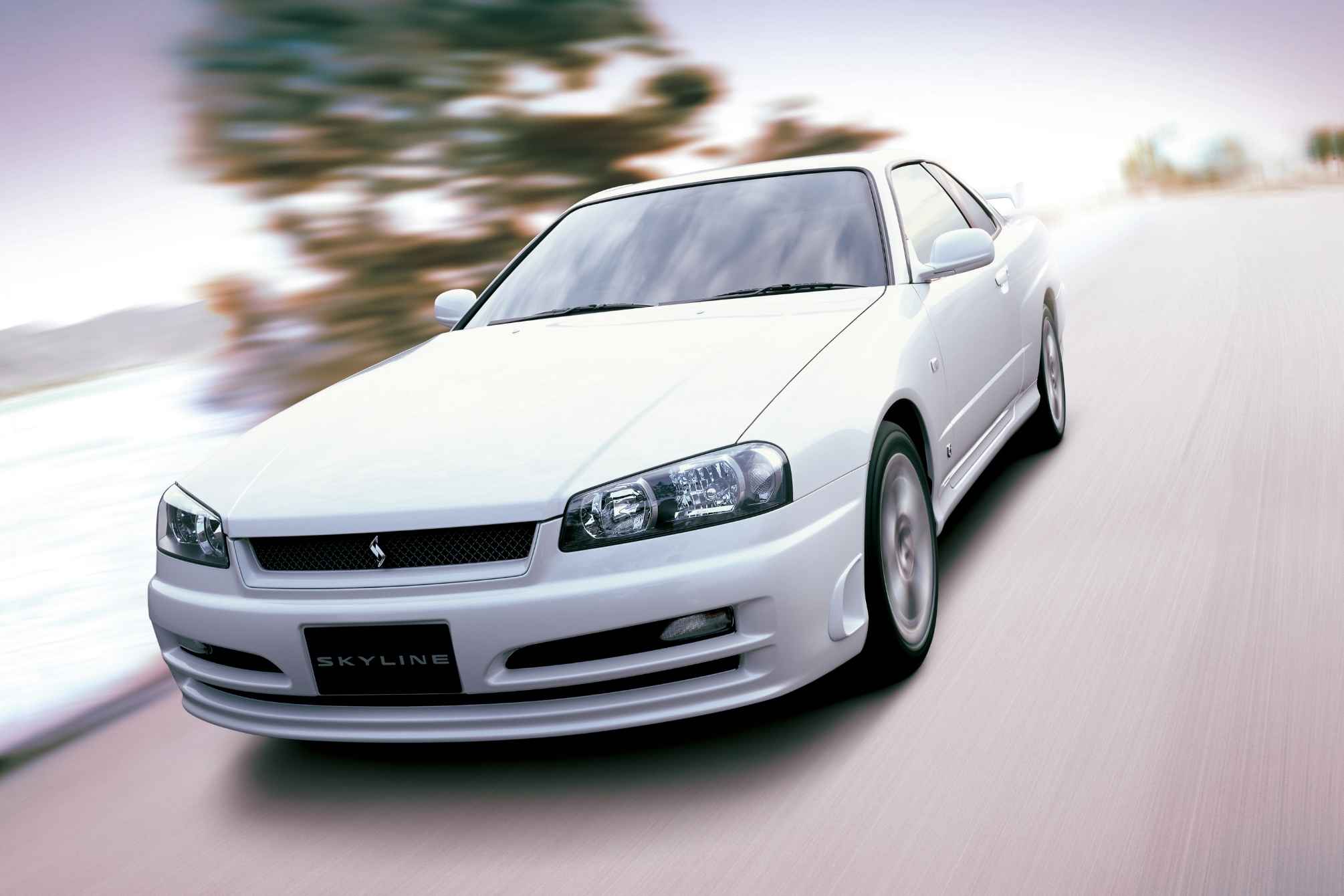
The GT-R has four-wheel-drive grip and the badge. The GT-T has less weight and more road-going fun.
The Nissan Skyline R34 GT-R has become less a car and more a folk legend. Sadly, these days it’s also more of a financial instrument. Prices now begin where sensible people start browsing houses. But spending six figures on one introduces a problem: can you really use all its capabilities, given that its limits are so high?
There is another R34. Scene law requires you to describe it apologetically, while saving for a GT-R conversion. Ignore that. The rear-wheel-drive Skyline 25GT Turbo, known almost universally as the GT-T, is not merely the R34 for people who cannot afford Godzilla. On the road it can be more entertaining.
This is not an argument that the GT-T is secretly better at everything. It is not. The GT-R has the stronger RB26DETT, a six-speed Getrag gearbox, ATTESA E-TS four-wheel drive, larger brakes and swollen bodywork. Launch both from rest and the GT-R disappears while the GT-T negotiates with its rear tyres.
But road driving is not a standing-start demonstration, and the numbers are closer than the badges suggest. The GT-T’s 2.5-litre RB25DET NEO straight-six was officially rated at 276bhp and 253lb ft. The GT-R was also quoted at 276bhp under Japan’s gentlemen’s agreement, with 289lb ft. A manual GT-T coupé weighs around 1410kg, roughly 130kg less than a standard GT-R and 150kg less than a V-Spec II. Much of that saving comes from losing the GT-R’s four-wheel-drive hardware, but the smaller brakes, five-speed gearbox, narrower wheels and slimmer body also help.
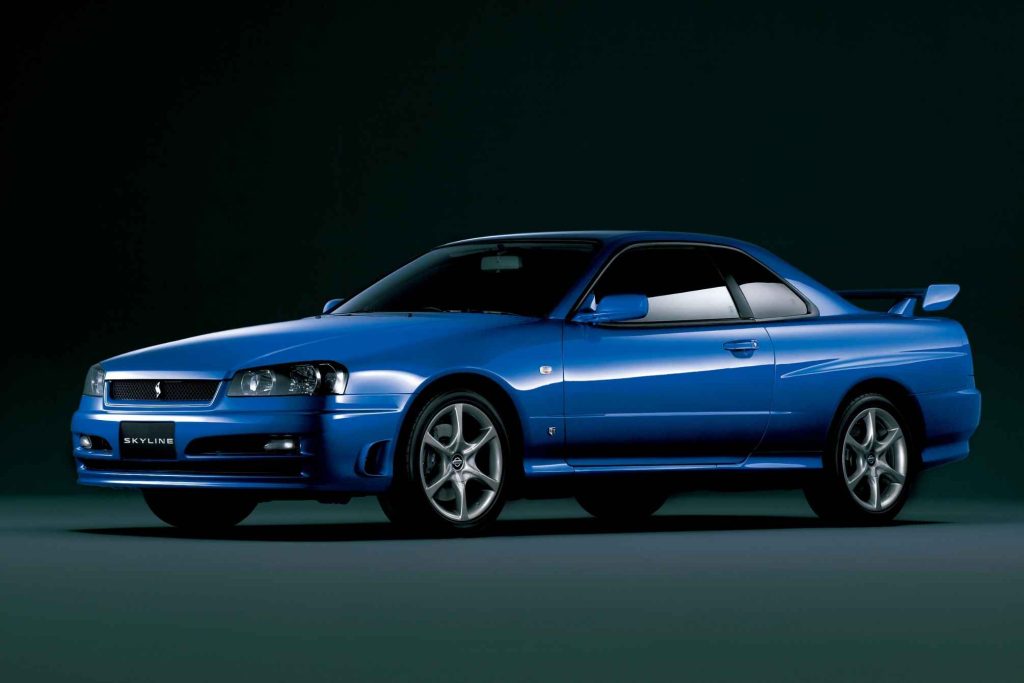
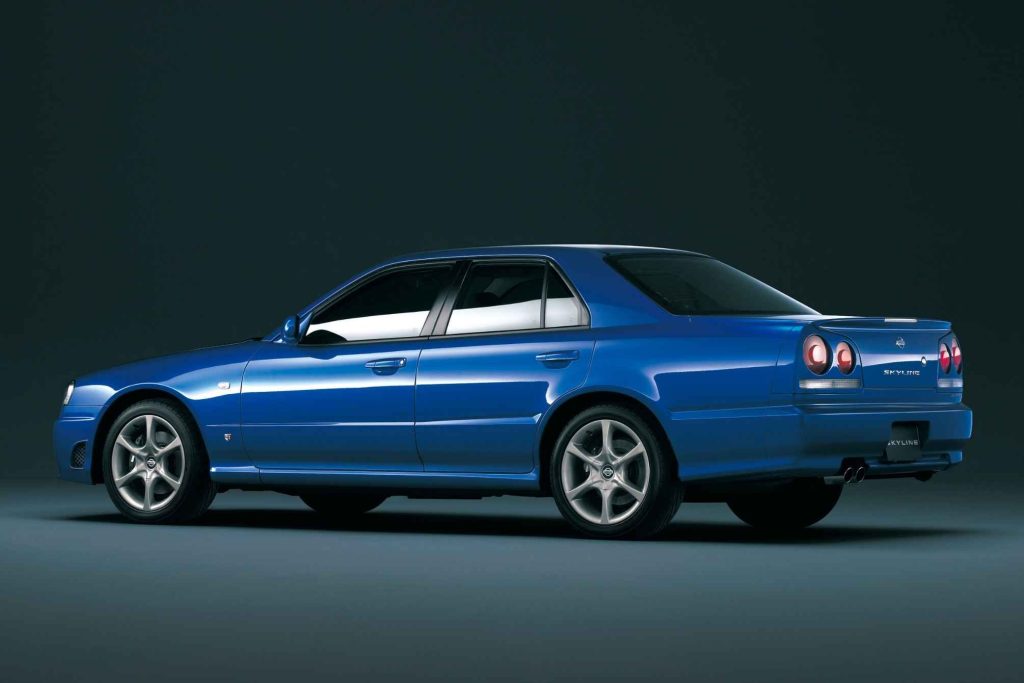
That’s rather important. Depending on the test, the GT-T reaches 60mph in 5.5 to 6.0 seconds, against 4.8 seconds for the GT-R. Once rolling, though, it does not feel like the consolation prize. The single turbo wakes around the useful end of the rev counter and the car surges forward with the slightly industrial determination that makes RB engines addictive. It has less outright violence, but you can use more of it without accidentally applying for low-earth orbit.
The R34 arrived in 1998 as Nissan’s replacement for the R33. It was shorter, tighter and visually angrier, with a bluff nose, four round rear lights and enough straight edges to furnish a small kitchen. The GT-R arrived the following year and stole the posters, game covers and film roles. The rest of the Skyline range did the less glamorous work, offered as coupés and four-door saloons with naturally aspirated or turbocharged straight-sixes.
The GT-T lacks the GT-R’s pumped arches and deep front bumper, but that is part of its appeal. In standard form it sits on 17-inch wheels, narrow enough to look almost delicate by modern standards. There is less theatre and less temptation to fit a bodykit designed during a migraine. A clean GT-T has the same square-jawed R34 shape without looking as though it is permanently waiting for its next ASBO.
Inside, the distinction is equally useful. You do not get the GT-R’s central multifunction display broadcasting boost pressure, temperatures and front-to-rear torque split like a miniature mission control. Instead there are three simple gauges angled towards the driver, solid grey plastics and seats that look ordinary until you realise they hold you properly. It is peak late-1990s Nissan: everything works, even if it feels like anyone wearing a roll-neck was noticeably absent from the interior design considerations.
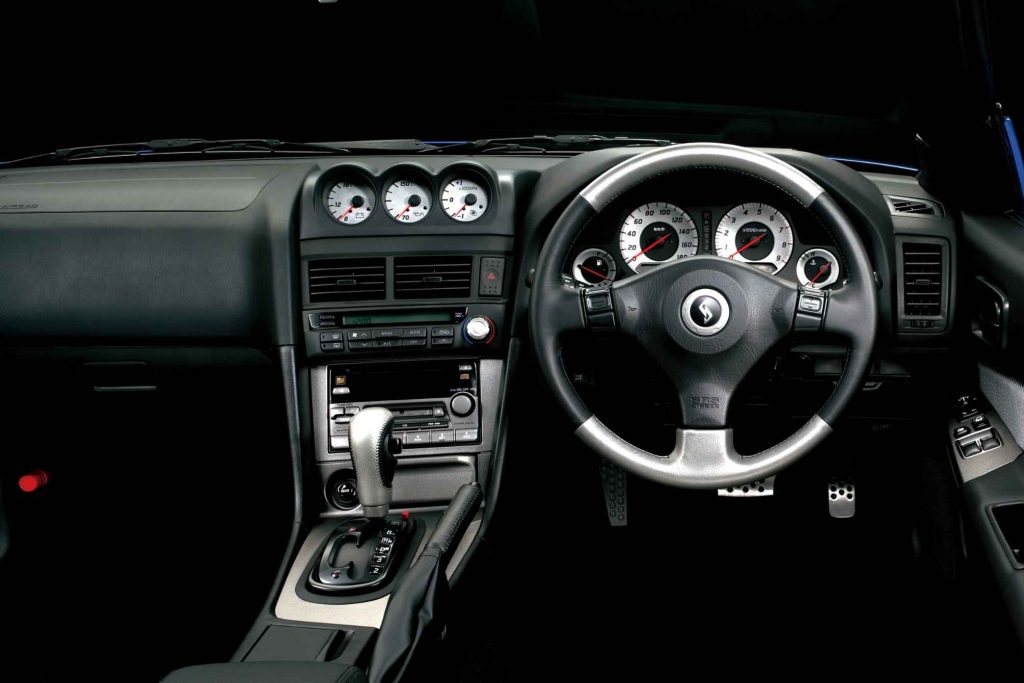
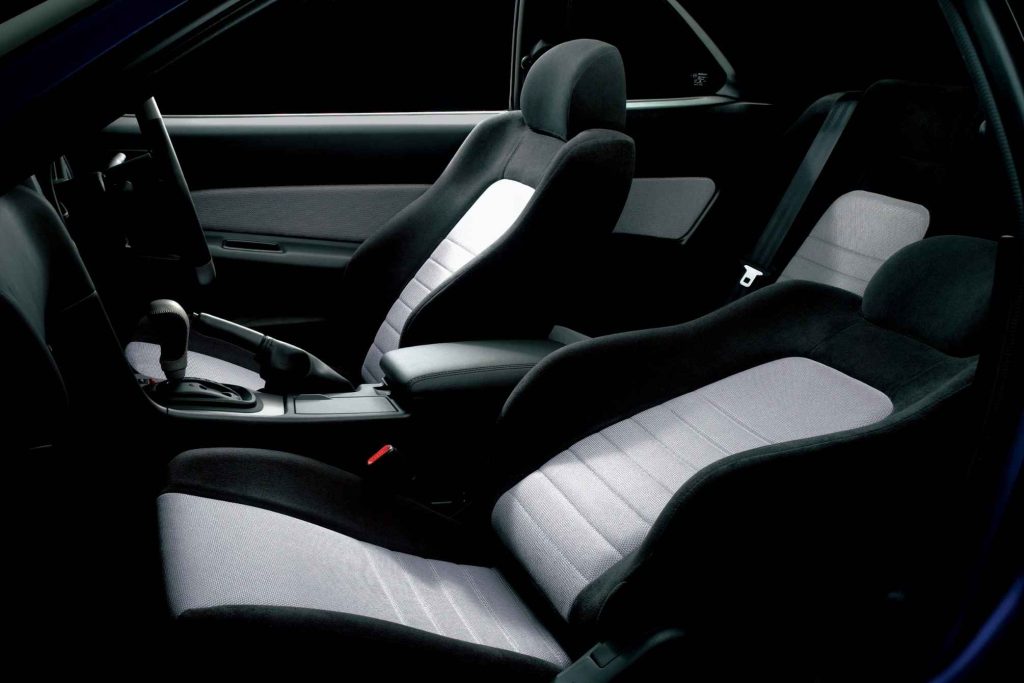
The mechanical recipe is gloriously straightforward. The RB25DET NEO uses variable valve timing, a single turbo and a five-speed manual gearbox to drive the rear wheels. Multi-link suspension sits at both ends, with Super HICAS rear-wheel steering adding some intrigue. The steering is lighter, the body moves more and the narrower tyres surrender earlier. These are advantages, not defects.
A GT-R attacks a corner by marshalling systems. You turn in, commit and feel the car distribute power with unnerving competence. It flatters you, then encourages you to arrive faster next time. The GT-T asks more questions. The front takes a set, the rear follows and the throttle becomes part of the conversation. In the dry it can be neat and accurate. In the wet it becomes a 276bhp lesson in manners, delivered after the furniture has been moved.
That adjustability is why the cheaper car can be more fun, more often. You do not need circuit speeds to feel it working. The engine has enough torque to move the chassis around, but not so much that every squeeze of throttle becomes an insurance event. The five-speed gearbox is less glamorous than the GT-R’s Getrag six-speeder, yet its ratios suit the RB25’s broad delivery and the shift has the mechanical feel of industrial switchgear.
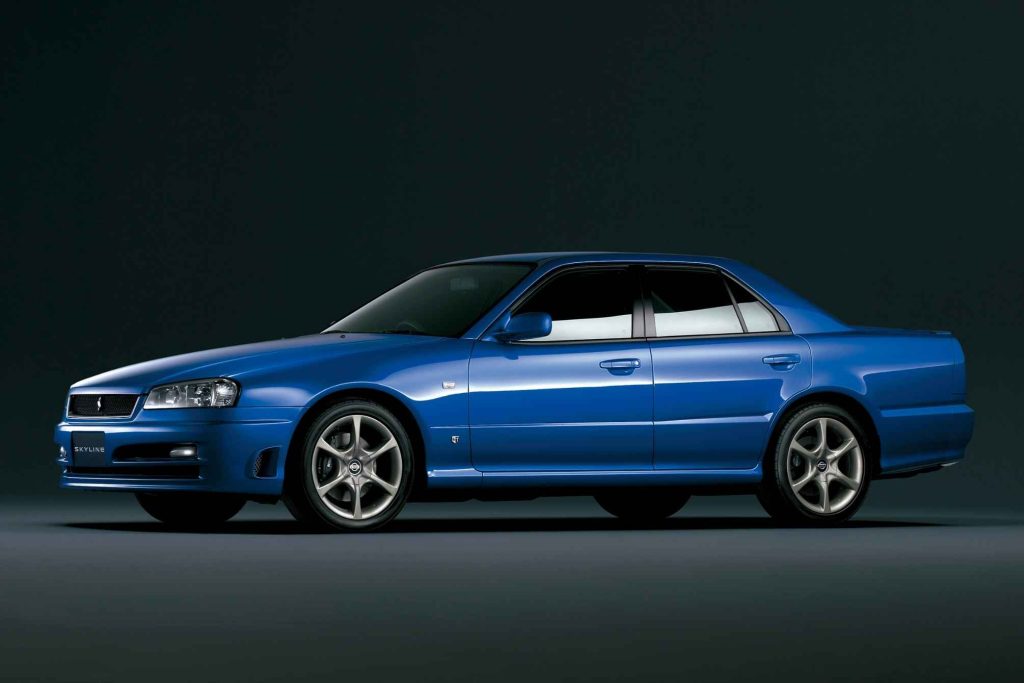
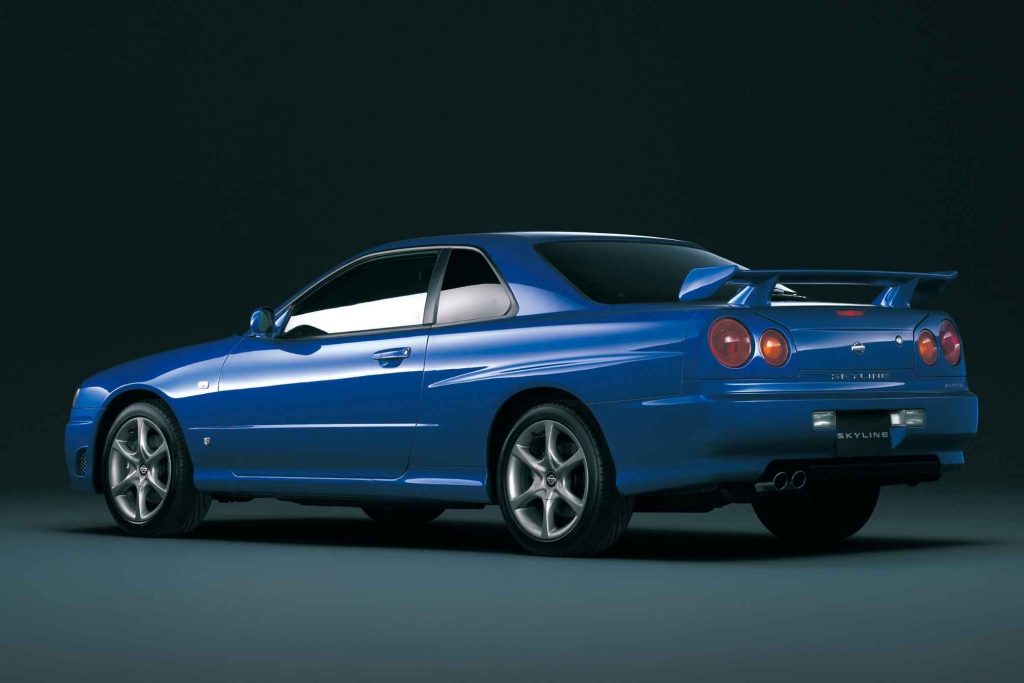
Buying one is where the celebration meets reality. GT-Ts spent years being cheap, tuneable and visually close enough to a GT-R to attract people with fibreglass catalogues. Many became drift cars, replicas or rolling exhibitions of abandoned tuning ideas. Factory manual coupés are scarce. Automatics are common, conversions vary enormously and fresh underseal can hide careful preservation or a geography lesson in Japanese rust.
The market is consequently chaotic. Modified four-doors can struggle around £20,000, while a largely original manual coupé sold for £27,000 in 2022. Today, presentable imported manuals occupy the £30,000 to £45,000 region. That sounds expensive until an average R34 GT-R is comfortably into six figures. Strong dealer cars approach £250,000, while exceptional Nür models and ultra-low-mileage examples have already sold for far more.
Buy the shell before the modifications. Check the rear arches, sills, chassis rails, boot floor and suspension mounting areas. Confirm the gearbox was born manual or converted properly, inspect the cooling system and be suspicious of heroic power claims unsupported by invoices. An RB25 will tolerate sensible tuning, but nearly three decades of boost controllers and optimistic mapping can test any friendship.
The GT-T will never replace the GT-R in collector mythology, and good. Mythology is expensive, heavy and increasingly reluctant to leave the garage. The lighter Skyline gives away traction, braking hardware and ultimate pace, then repays you with movement, accessibility and rear-wheel-drive mischief. Put aside the badge hierarchy and you find the R34 that can still be driven as its maker intended.
Godzilla wins the argument. The GT-T wins the afternoon.
Have you driven an R34 GT-T, or do you think nothing compares to Godzilla? Tell us below.
Insure your classic with a specialist insurer
If you’re looking for cover for your pride and joy, why not consider Hagerty UK? Not only are we classic car insurance specialists, but we are enthusiasts at heart. Call us for a quote on 0333 323 1138.