WORDS: Nathan Chadwick
PHOTOGRAPHY: Broad Arrow
Ford did not build the Boss 429 because Mustang owners were struggling to turn petrol into noise. It built it because NASCAR demanded 500 road cars before the 429 could go racing. Chrysler’s 426 Hemi had become the problem, Ford’s old FE V8 was running out of answers and Bunkie Knudsen wanted something brutal enough to alter the argument. Larry Shinoda supplied the Boss name, Kar Kraft supplied the fabrication skills and the Mustang supplied an engine bay never designed for cylinder heads the size of patio tables. Thus Ford’s most exotic muscle car began as paperwork for stock-car racing.
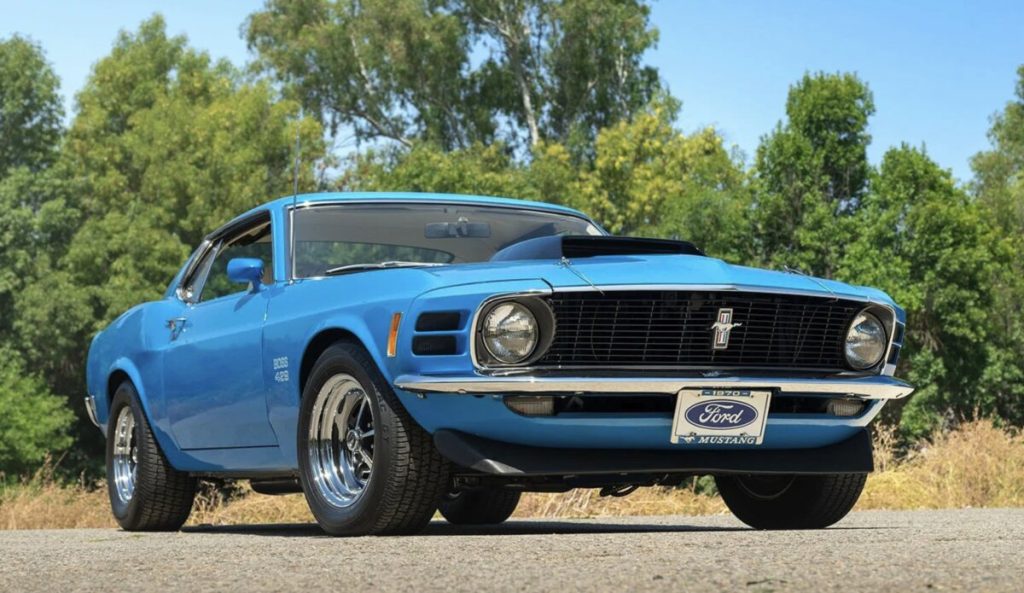
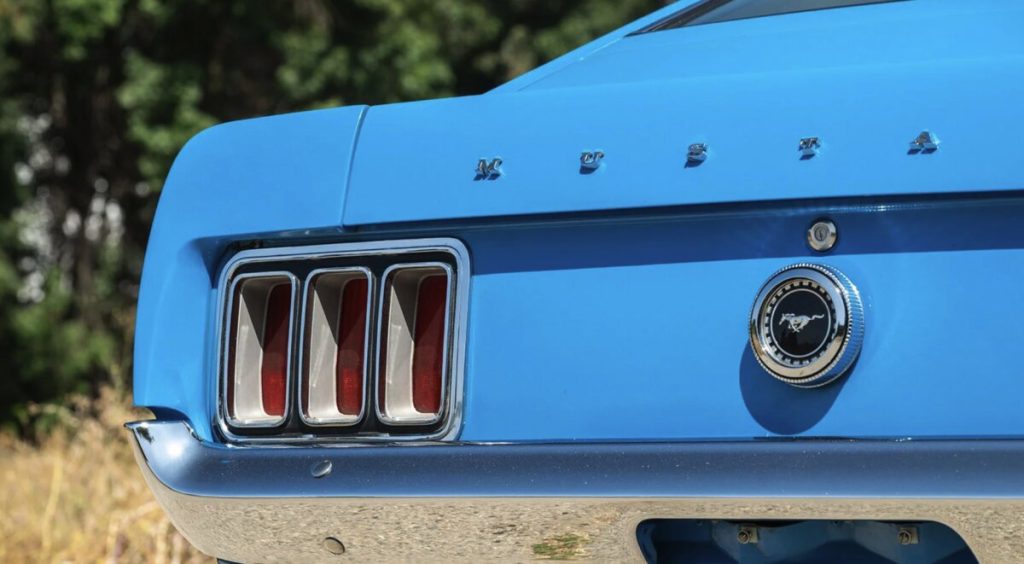
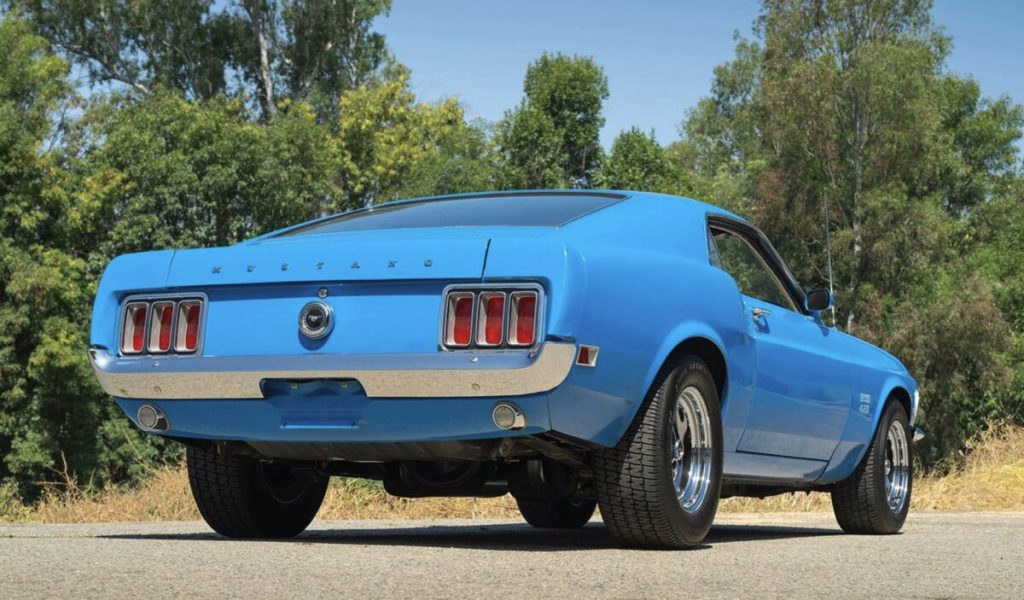
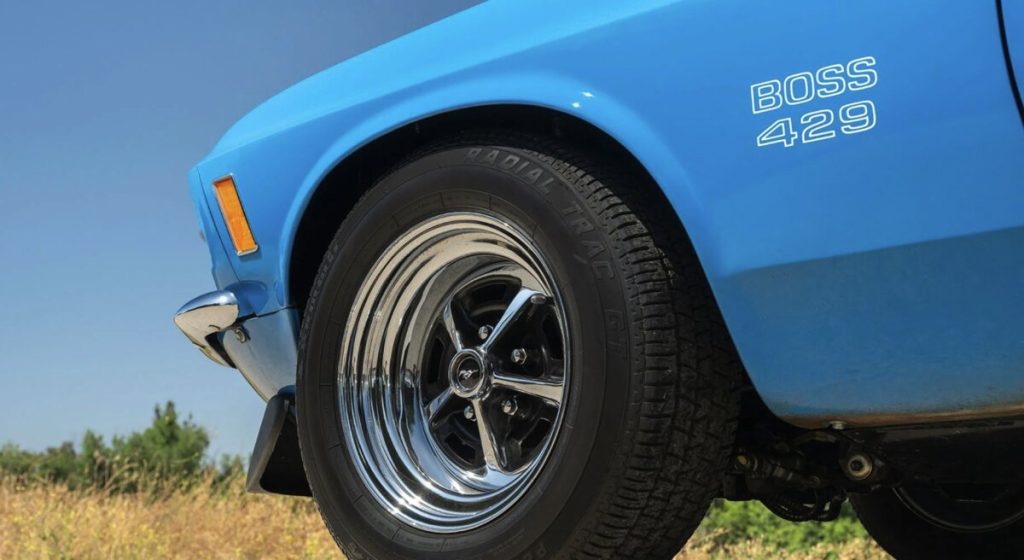
The 1969 Mustang had already stopped pretending to be the four-seater launched five years earlier. Longer, wider and wearing four headlamps beneath a brow worthy of an angry publican, it looked muscular before Ford touched the options sheet. Against such theatrical foundations, the Boss 429 was almost coy. There were no Mach 1 stripes, rear-window slats or bonnet pins arranged for maximum car-park intimidation. Small BOSS 429 decals appeared behind the front wheels, while chrome Magnum 500s and a modest chin spoiler provided the remaining clues.
The bonnet scoop was less modest. Huge, functional and operated by a cable from inside the car, it existed because the Holley carburettor required air and the engine beneath occupied the same amount of territory as Norfolk. On 1969 cars it matched the body colour, making the bonnet look as though it had developed an upstairs extension. For 1970 it became matt black, which somehow made the arrangement look even larger.
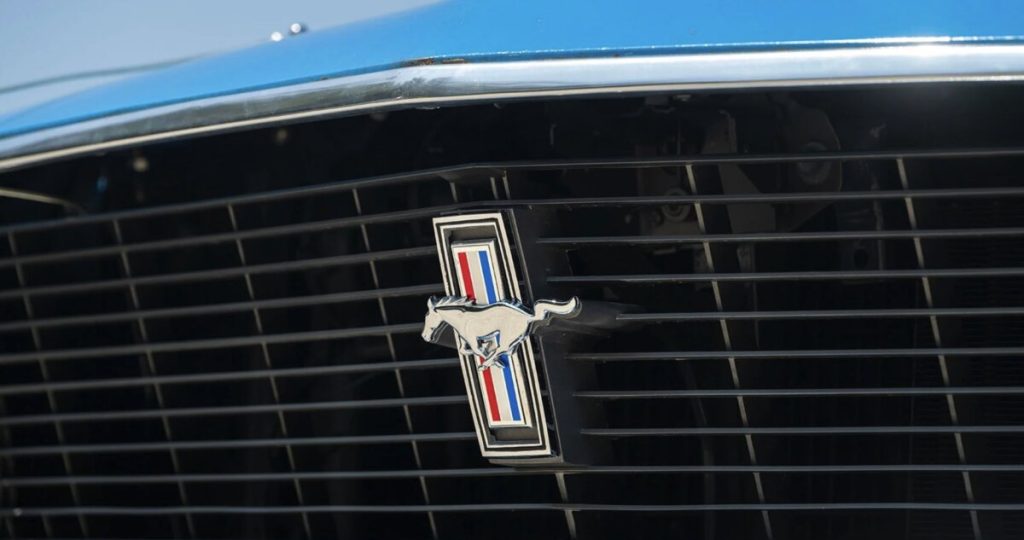
That year’s facelift also replaced the four-lamp nose with two headlamps and horizontal outer openings. The fake scoops ahead of the rear wheels disappeared, leaving cleaner flanks, while Ford’s brighter paint colours ensured nobody mistook restraint for anonymity. Compared with a Boss 302, the 429 still wore surprisingly little decoration. It did not need stripes to explain itself. The scoop had already submitted the necessary paperwork.
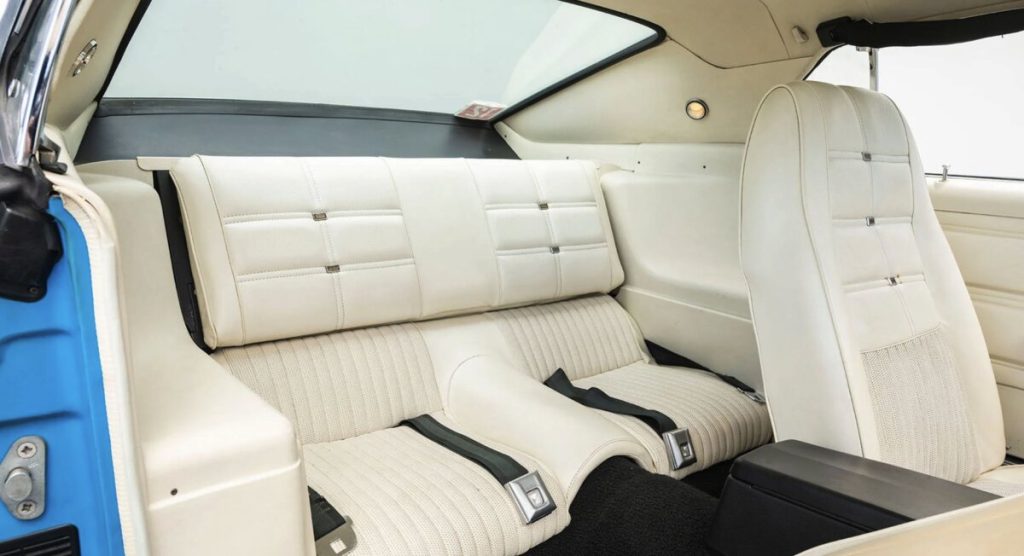
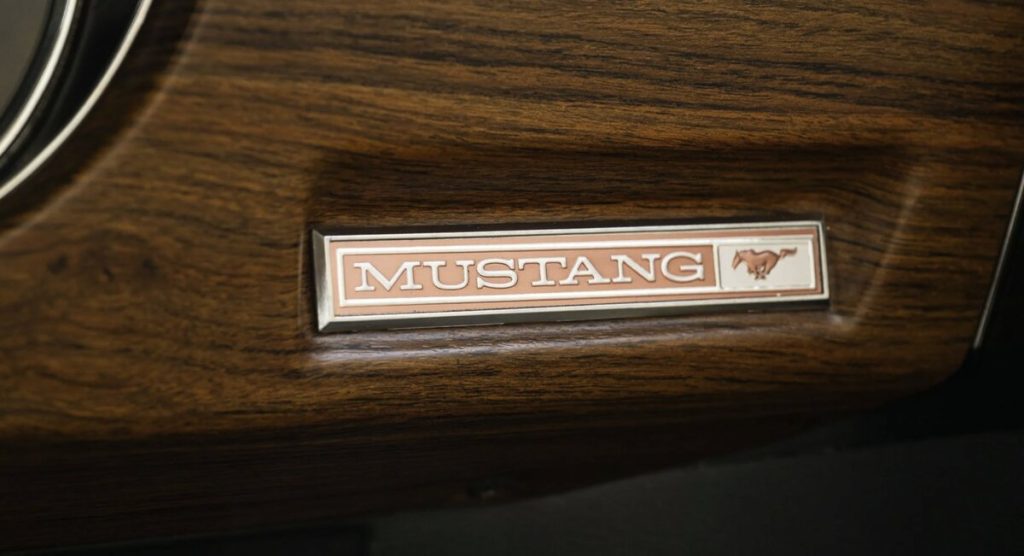
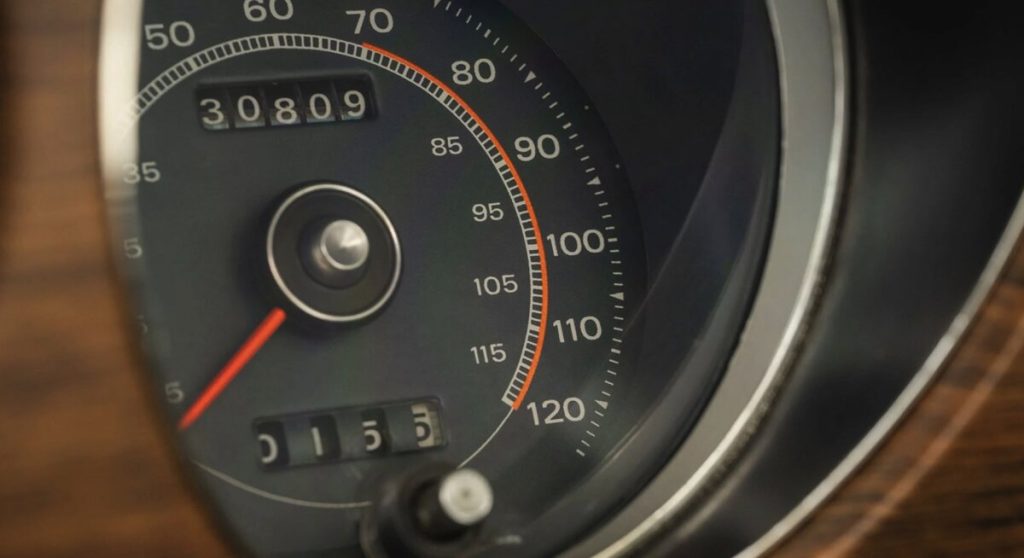
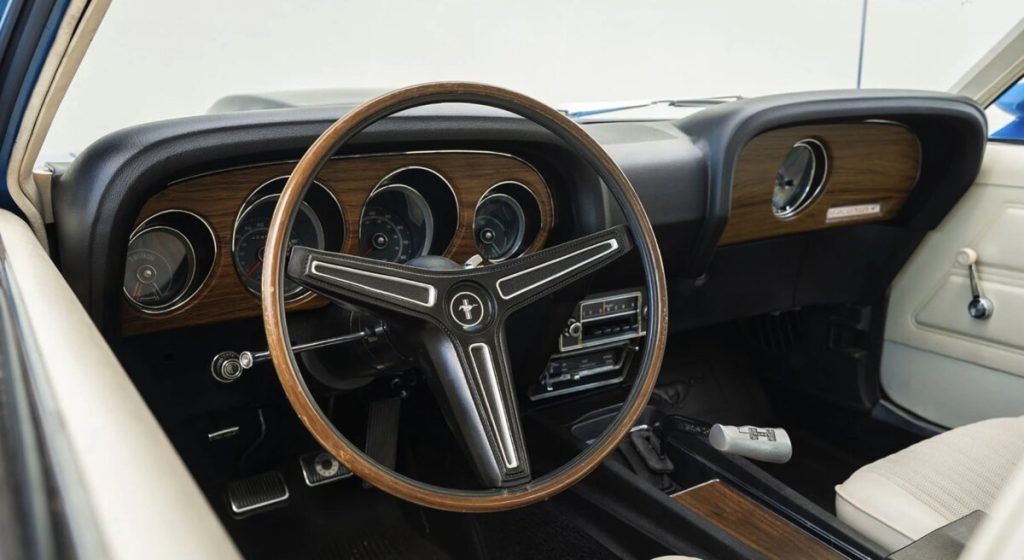
Inside sat high-back bucket seats, a woodgrain dashboard and enough bright trim to remind buyers that this was a premium Mustang rather than a competition shell with number plates. An 8000rpm tachometer hinted at the engine’s intentions, though air-conditioning was unavailable because there was nowhere sensible to put it. Every Boss 429 had a four-speed manual. The cabin was comfortable, ornate and at odds with the machinery ahead, like finding a lounge bar attached to a foundry.
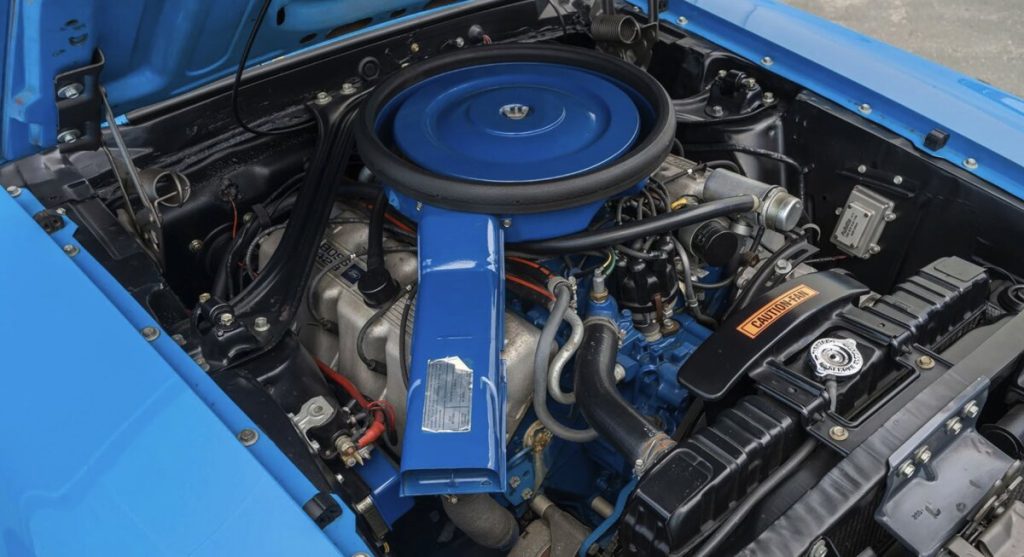
The engine justified every compromise. Its 429cu in capacity came from Ford’s 385-series family, but aluminium semi-hemispherical heads with canted valves and crescent combustion chambers made it unlike the Thunder Jet. Four-bolt mains, a forged crankshaft and forged connecting rods provided the stamina required for sustained NASCAR speeds. Separate coolant passages for block and heads created the dry-deck arrangement, with O-rings sealing oil and water rather than conventional openings through the head gasket.
A 735cfm Holley sat on an aluminium intake. Ford advertised 375bhp, plus 410lb ft in 1969 and 450lb ft for 1970, all measured by the generous SAE gross method. The 1969 road engine used hydraulic lifters, while the 1970 version adopted solid lifters without gaining an advertised horsepower. Vast ports and valves wanted revs, but street cam timing, restrictive exhaust manifolds and conservative carburation kept the homologation car civilised. This is why a Boss 429 can feel less savage at ordinary speeds than the cheaper 428 Cobra Jet. The 429 was designed to inhale deeply around Daytona, not win arguments outside a drive-in.
Getting it into the Mustang required Kar Kraft to perform surgery. Ford supplied prepared SportsRoof shells, which travelled to Brighton, Michigan, for completion. The front suspension towers were moved outwards and reshaped, the upper control-arm pick-up points relocated and the battery sent to the boot. Kar Kraft installed the engine, fabricated brackets and persuaded production-car tolerances to coexist with hand-built improvisation.
Heavy-duty springs, staggered rear dampers and the first rear anti-roll bar fitted to a production Mustang attempted to discipline the nose-heavy chassis. A close-ratio Toploader four-speed and 3.91:1 Traction-Lok axle completed the driveline. Power-assisted front discs did most of the stopping, with drums behind. It was stable, muscular and more capable than its bulk suggested, but physics had not signed Ford’s homologation forms.
The irony is that the Boss 429 Mustang never raced in NASCAR. Its job was to legalise the engine, which appeared beneath Ford Torino Talladega and Mercury Cyclone bodywork prepared by Holman-Moody and Wood Brothers. The engine entered competition in 1969, when Ford and Chrysler were treating stock-car racing as a corporate argument conducted at 190mph. David Pearson secured the Grand National championship for Holman-Moody, while Cale Yarborough, LeeRoy Yarbrough and Richard Petty added victories for Ford and Mercury.
Away from the banking, Detroit’s muscle-car war had become magnificently unreasonable. Chrysler sold the 426 Hemi and 440 Six Pack, Chevrolet produced the Chevelle SS 454 LS6 and Pontiac, Buick, Oldsmobile and AMC supplied their own methods of shortening tyre life. Ford already offered the 428 Cobra Jet, Mach 1 and Trans-Am-bred Boss 302. The Boss 429 therefore occupied a strange position: the most sophisticated engine in the least suitable competition body, sold in street tune that never exposed its full appetite.
The fun ended quickly. Insurance surcharges punished buyers, emissions rules were approaching and Ford’s enthusiasm for factory racing evaporated after Knudsen’s departure. By 1970 the horsepower war had reached maximum volume. Soon afterwards, somebody from accounts found the switch.
Ford produced 859 Boss 429s for 1969 and 499 for 1970, including engineering specials, yet rarity explains part of the fascination. The car embodies homologation at its most gloriously perverse: a racing engine installed in a Mustang that would never compete in the category responsible for its existence, then detuned sufficiently to collect number plates and a warranty. It was not the quickest muscle car and not the sweetest Mustang through a bend, but neither shortcoming weakened its legend. The Boss name returned many times. It never again arrived with so much aluminium, expense or corporate mischief beneath the bonnet.