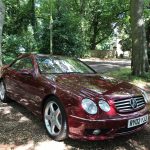
Forget the old hairdresser clichés. This supercharged drop-top is a serious miniature grand tourer.
Cast your mind back to 1996. The Gallagher brothers are locked in a chart battle with Damon Albarn, the dot-com bubble is inflating at a terrifying rate, and a pint of lager still leaves change from two quid. In the automotive world, the roadster is undergoing a renaissance. The Mazda MX-5 has successfully proved that the British sports car concept works brilliantly when assembled by people who actually understand waterproofing. BMW is flogging the Z3 on the back of Pierce Brosnan’s James Bond, and Porsche is betting the entire farm on the mid-engined Boxster.
And then, into this fray, strolls Mercedes-Benz. Not with a traditional ragtop, nor a stripped-out track weapon, but with a technological party trick that entirely rewrites the rulebook.
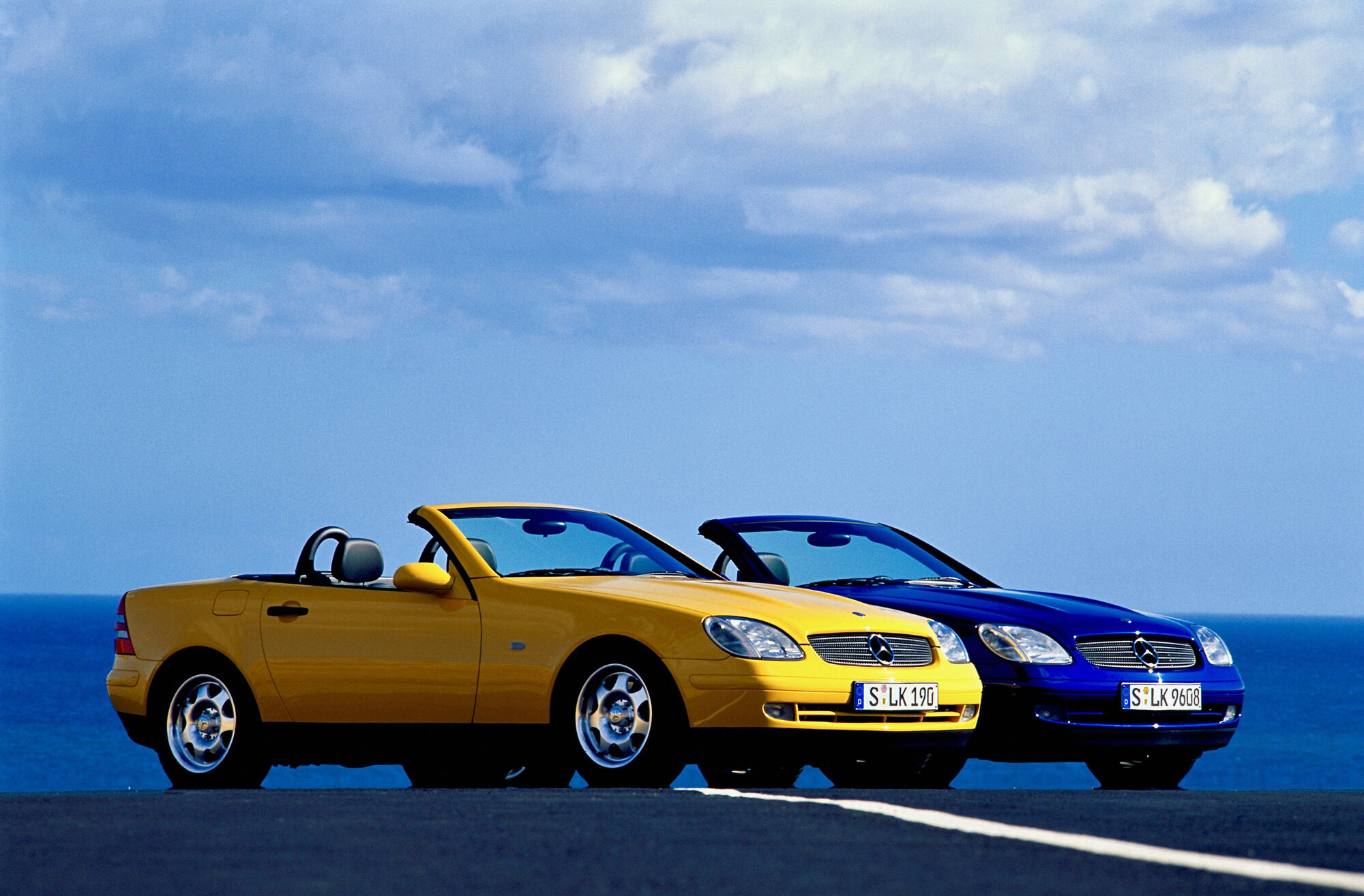
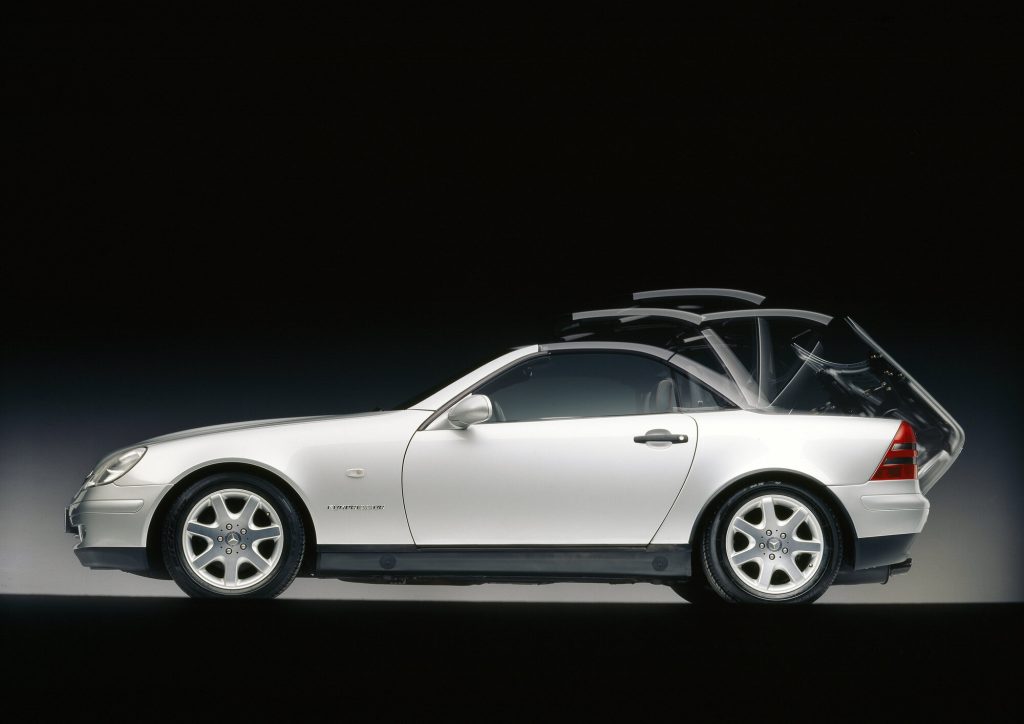
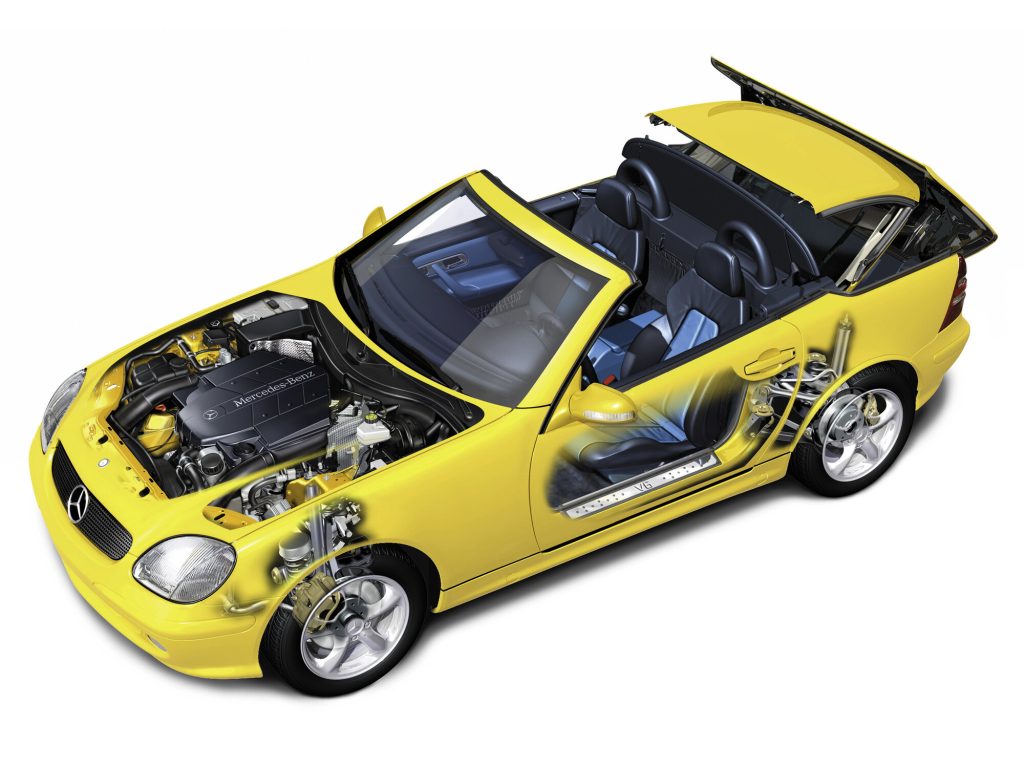
The R170 SLK – short for Sportlich, Leicht und Kurz (Sporty, Light and Short) – didn’t just move the goalposts; it folded them up, hydraulically packed them into the boot, and drove off. The Vario-roof was a stroke of absolute genius. At the push of a button, an intricate ballet of hydraulic rams and folding metal transformed a snug, refined winter coupe into a sun-drenched roadster in just 25 seconds. Peugeot had experimented with the idea decades earlier with the Eclipse, but Stuttgart perfected it. Overnight, the canvas roof felt utterly archaic.
Yet, for all its structural brilliance, the R170 Mercedes-Benz SLK has spent the better part of two decades fighting a frankly tedious image problem. Slapped with the lazy ‘hairdresser’s car’ moniker by pub bores whose driving experience rarely extended beyond a diesel Vauxhall Vectra, the SLK was dismissed by purists as a boulevard cruiser. But view the R170 through the lens of a modern classic, and you quickly realise those critics were missing the point entirely.
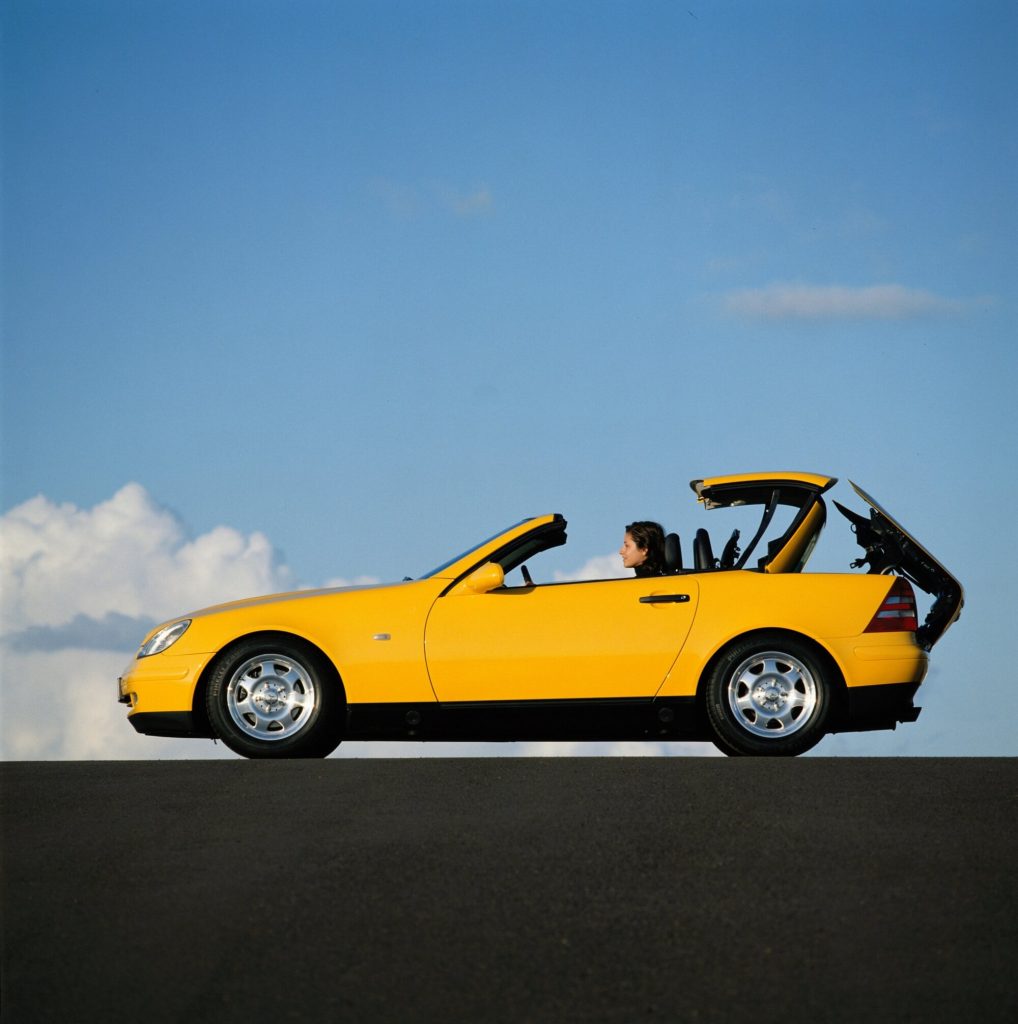
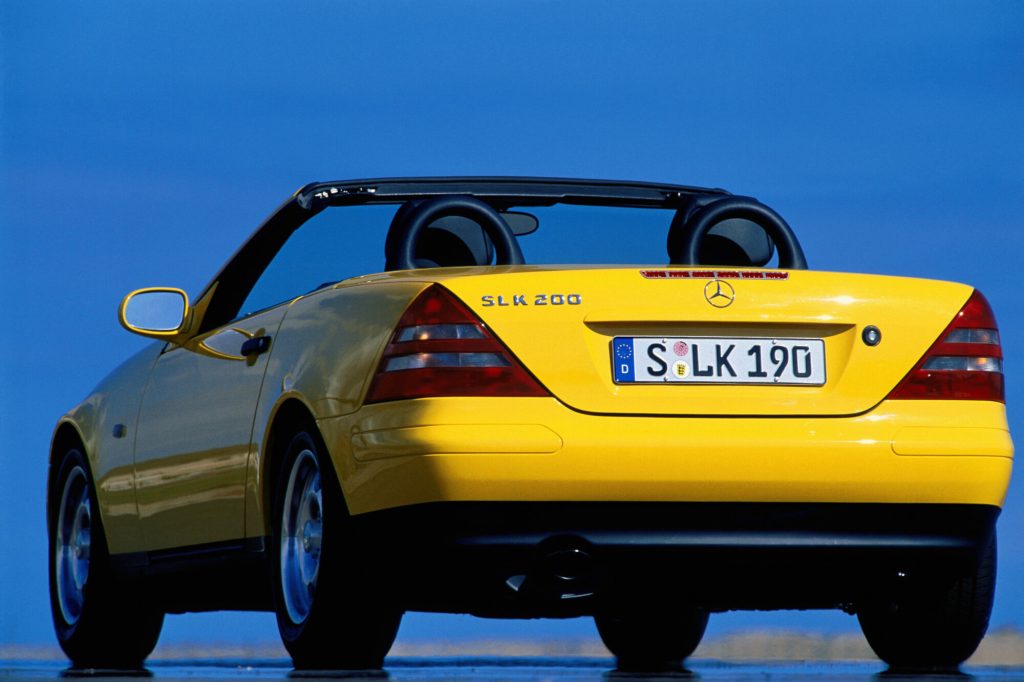
Approach an early SLK today, and the Bruno Sacco-directed styling has aged remarkably well. There is a chunky, carved-from-solid aesthetic to the R170 that later, more bulbous Mercedes designs lost. The twin power bulges on the bonnet are a delightful, unapologetic nod to the legendary 300SL Gullwing, while the truncated rear end gives it a purposeful, wedgy stance. Inside, Mercedes went remarkably bold for a company usually associated with sombre charcoal cabins. You could spec your SLK with two-tone leather in vibrant scarlet or lurid yellow, offset by faux-carbon-fibre trim that screamed late-Nineties optimism. It feels surprisingly intimate, but the ergonomics are pure, uncorrupted Mercedes: logical, robust, and built for immense mileage.
Turn the key, however, and the initial aural experience is somewhat at odds with the elegant exterior. The defining engine of the pre-facelift era is the SLK 230 Kompressor. Under the bonnet lies the M111 2.3-litre four-cylinder engine, a unit that owes more to Stuttgart’s taxi heritage than its motorsport division. At idle, it is undeniably gruff. It clatters with a utilitarian, industrial rhythm that entirely lacks the cultured, mechanical thrum of a Porsche flat-six or the silky hum of a BMW straight-six.
But pull the chunky gear selector into ‘Drive’ – because you really want the slick five-speed automatic over the notoriously notchy manual – pin the throttle, and all is forgiven. As the revs climb, the gruffness is drowned out by the distinct, industrial whine of the Eaton M62 supercharger. It sounds like a miniature jet turbine spooling up, and it delivers a thick, meaty wodge of mid-range torque. With 193bhp and 206lb-ft of twist available from just 2500rpm, the 230 Kompressor doesn’t need to be wrung by its neck. It surges forward on a relentless wave of forced induction, dispatching overtakes with a muscular, effortless shove that feels wonderfully old-school.
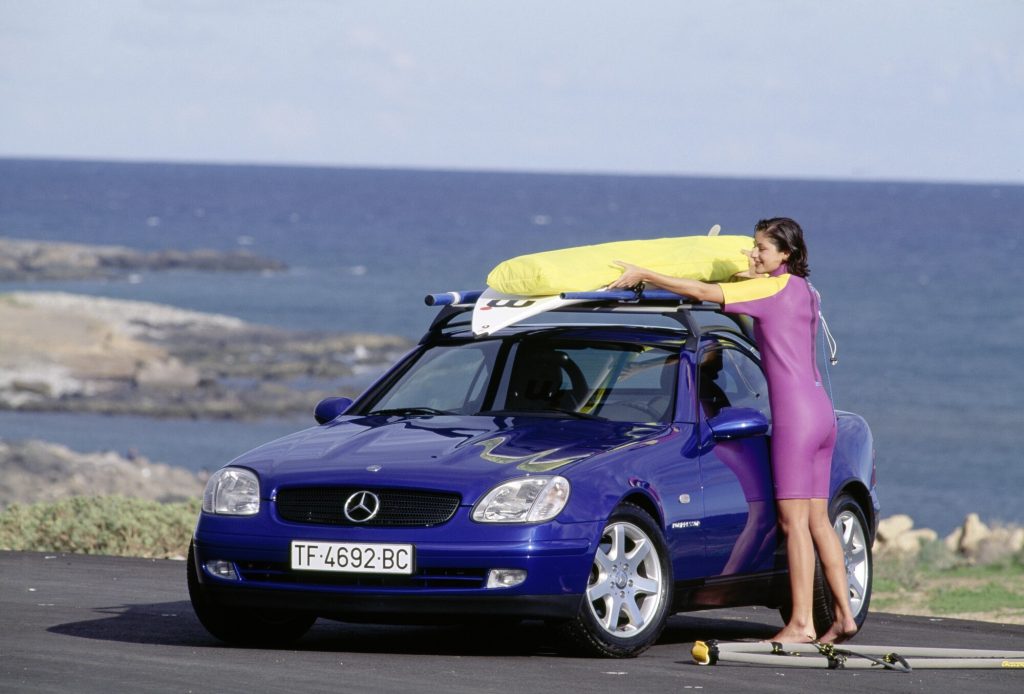
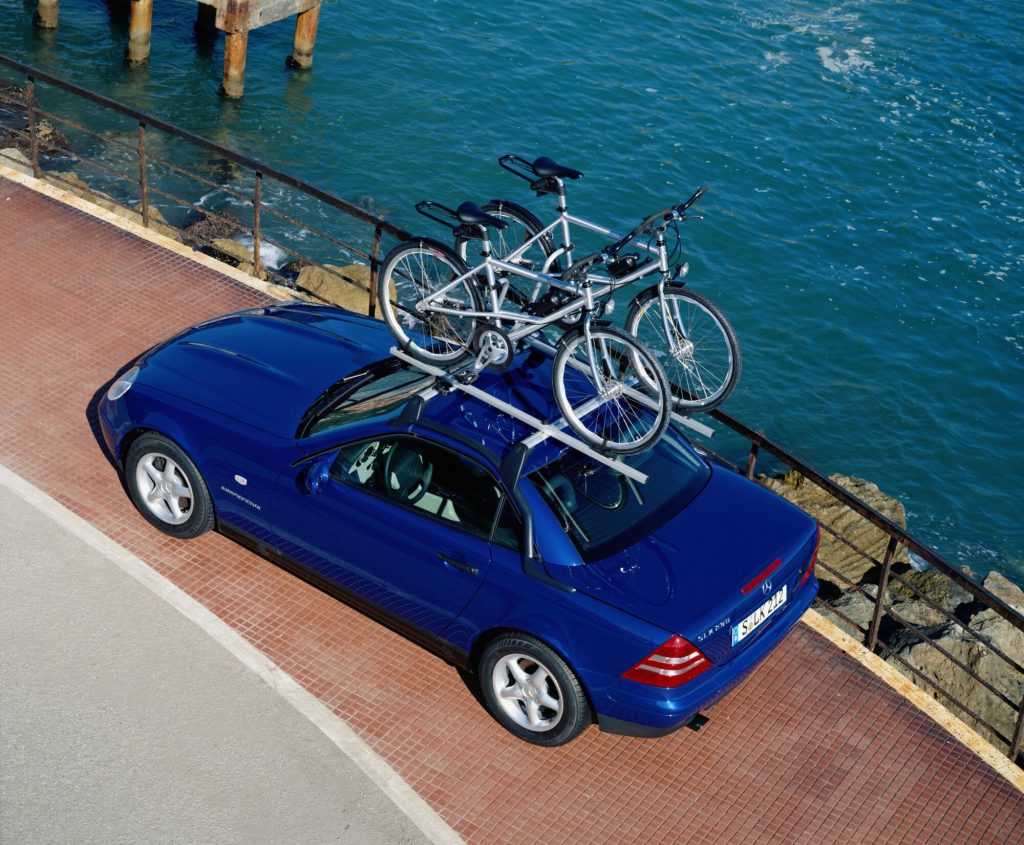
Throw it into a series of demanding B-road bends, and the SLK’s true character reveals itself. If you approach it expecting the scalpel-sharp turn-in and mid-corner adjustability of a Boxster, you will walk away disappointed. The R170 utilises a a relatively slow, lightly assisted rack-and-pinion setup. It results in a helm that is undeniably vague off-centre, requiring a moment to translate your inputs to the front wheels.
But to criticise the SLK for not being a Boxster is to criticise a sledgehammer for not being a scalpel. The SLK is not a pure sports car in the Boxster sense; it is a miniaturised grand tourer. Treat it as a pocket-sized SL and it suddenly makes perfect sense. The ride, while firm over urban ridges, settles into a glorious, long-legged lope at motorway speeds. The chassis is astonishingly stiff with the roof up, banishing the scuttle-shake that plagued its contemporaries. You pilot the SLK with your fingertips, riding that supercharged torque curve, pointing the long bonnet towards the horizon and letting the car’s inherent waftability do the heavy lifting. It is a car designed to cover hundreds of miles across the continent and still leave you feeling fresh enough to order a martini at the other end.
If you desire a sweeter soundtrack, the post-2000 facelift introduced the SLK 320, packing the buttery-smooth M112 3.2-litre V6. It lacks the punchy, low-down urgency of the Kompressor, but it transforms the car into a genuinely luxurious prospect, complete with upgraded interior materials and standard ESP to rein in the occasionally lively rear axle in the wet.
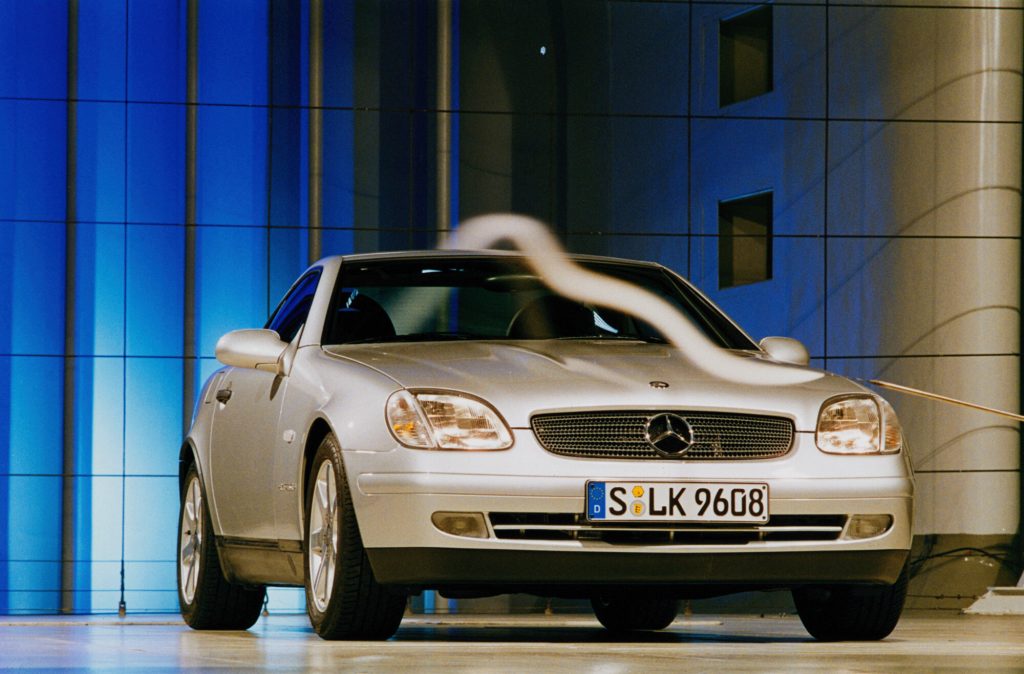
Of course, buying an R170 today requires eyes wide open. We must address the biggest issue: rust. This era of Mercedes-Benz was infamously plagued by cost-cutting and a switch to water-based paints, meaning the SLK dissolves with terrifying enthusiasm. Front wings, rear wheel arches, the boot lock surround, and the spring perches must be inspected with clinical paranoia. Mechanically, they are largely strong, but you must check the K40 relay module – notorious for dry solder joints that cause intermittent starting issues – and ensure the complex roof mechanism operates smoothly and without leaks. Interior soft-touch plastics also have a habit of peeling away like bad sunburn.
Find a good one, however, and the Mercedes-Benz R170 SLK represents one of the most compelling modern classic bargains currently on the market. It is a car that democratised the folding hard-top, wrapping strong mechanicals and genuinely punchy performance in a shell that still garners admiring glances.
It is time to ditch the outdated clichés and view the R170 for what it truly is: a brilliantly engineered, all-weather cruiser with a heavy-hitting supercharged punch. It’s Stuttgart’s miniature grand tourer, and it is finally coming of age.
Do you agree that the Mercedes-Benz R170 SLK has rightfully earned the title of modern classic or is it just another hairdressers car? Drop your thoughts below.
Insure your classic with a specialist insurer
If you’re looking for cover for your pride and joy, why not consider Hagerty UK? Not only are we classic car insurance specialists, but we are enthusiasts at heart. Call us for a quote on 0333 323 1138.