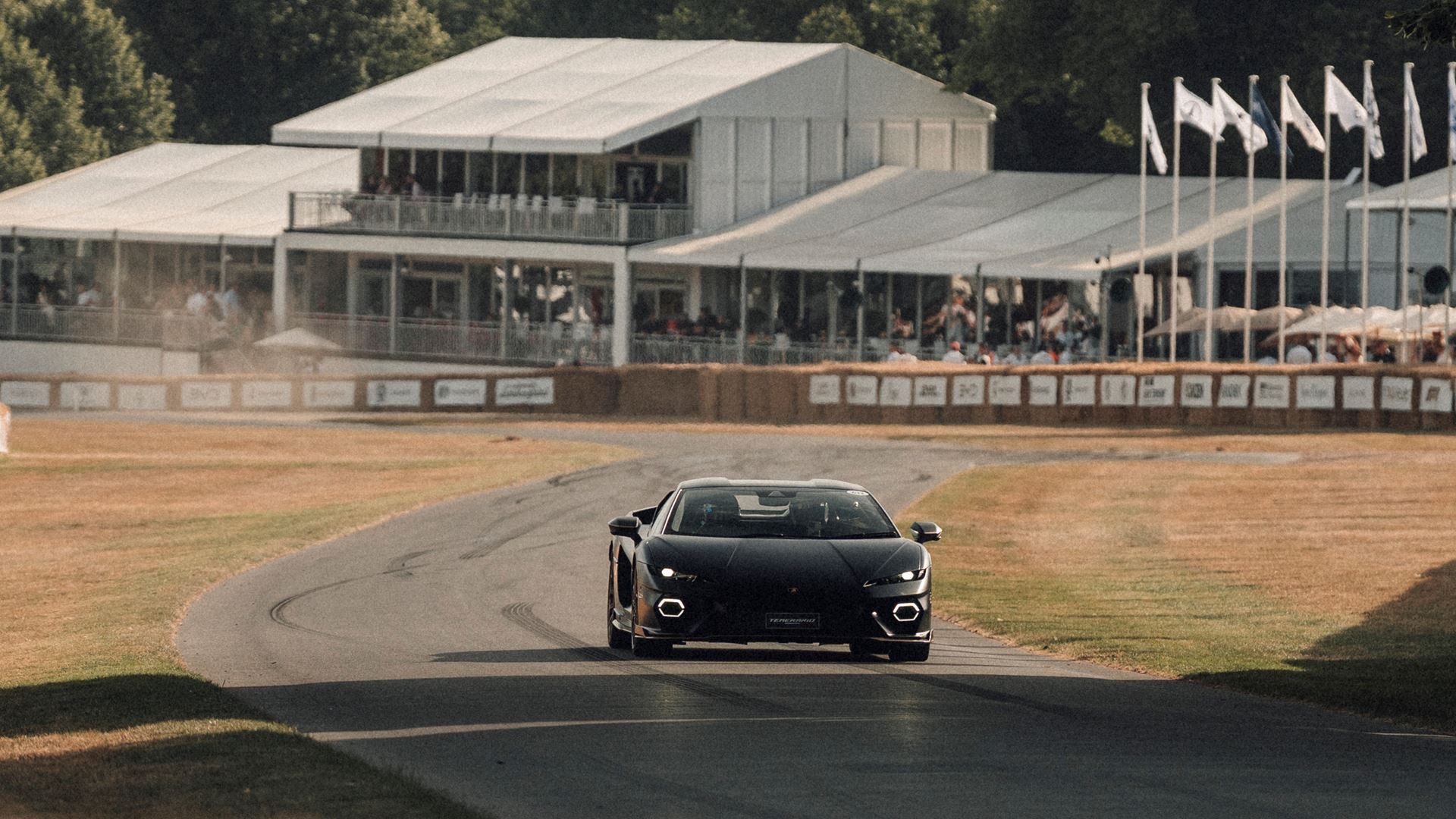
When Lamborghini decided to publicise their customer-led personalisation programme at the 2026 Goodwood Festival of Speed, they chose an apt metaphor: a Temerario clad in the automotive equivalent of a Savile Row suit, a subtle grey satin exterior picked out with chalk lines and a charcoal pinstripe interior.
Paolo Racchetti, Temerario Product Line Director, explained the choice when I interviewed him in the trackside Lamborghini Lounge. “The idea was to bring a fabric that comes from the Alta tradition (the highest tier of Italian bespoke tailoring), so there’s a real experience of Italy inside the car.”
Personalisation is all the rage at the moment, as you’ve probably noticed. The number of Tailor Made Ferraris, Sonderwunsch Porsche 911s and one-off Rolls-Royces have soared over the past few years and this year Singer Vehicle Design, which ‘reimagines’ Porsche 911s in bespoke customer builds, headlined the entire Goodwood event. Prices have risen accordingly: analysis by Hagerty last year showed that modified cars tended to sell for 8.3 percent higher prices at auction above their unmodified counterparts, a reversal of the previous trend that had, in 2022, seen an 11% reduction in value.
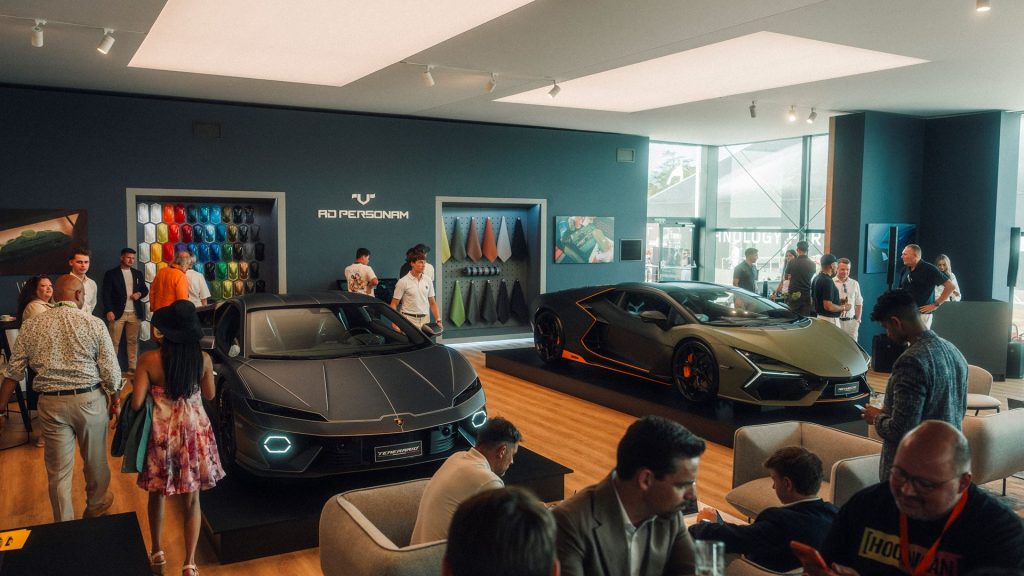
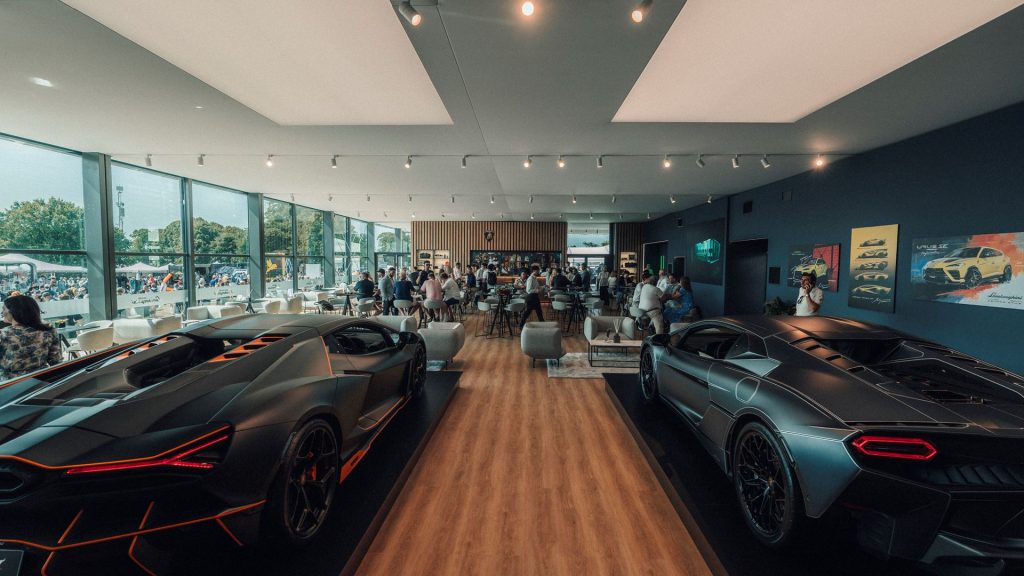
Some manufacturers allow the customer total freedom in design, but Lamborghini prefer a more guided approach as Racchetti explained. “Because the palette — one colour of interior, one of exterior, and then an infinite number of stitching combinations — can be overwhelming, we’ve built what we call “families” of customisation, which offer customers ways of interpreting Ad Personam. One family is called Classica, which brings back the best colours from our heritage. Then we have Contemporary, which approaches the car in a luxurious and elegant but modern way. We have Technica, which draws inspiration from the aerospace and motorsport industries. And then we have one where we really push the boundaries — very bold, very unexpected colours. The idea is that a customer can look at these families to find inspiration, and from there explore an exterior colour palette before going deeper into configuration. It’s a starting point, not a constraint.”
This is a sensible approach, and customers are given the benefit of the Lamborghini design team’s experience to help them choose combinations that work, just as a top tailor may gently nudge a client towards a suit that works for them.
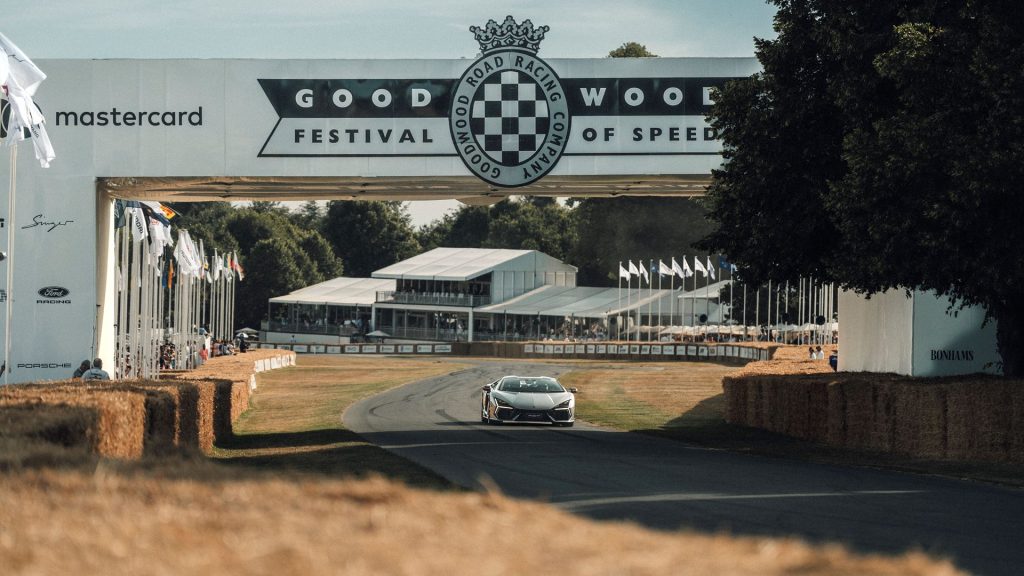
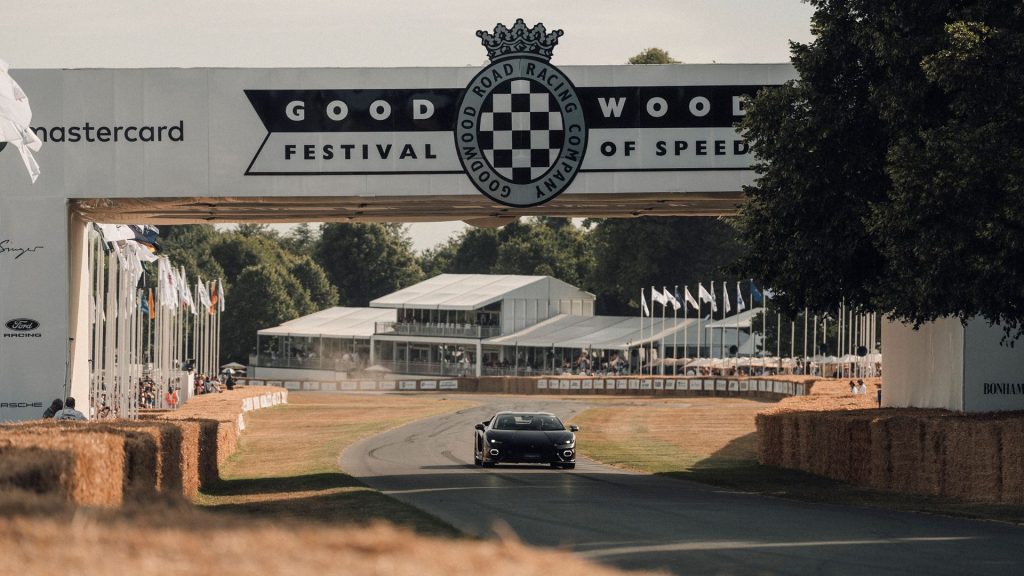
“You will first use the exterior configuration, choosing from the 400 colours, and potentially commissioning a bespoke library with one of our designers, who will create a colour library specifically for you, which you then validate. The first decision is always how many colours you want on the exterior — usually one is the safest choice, two is bolder, three is really pushing it. In this case you can see we have dark grey and light grey, and the callipers are always closely matched to the exterior, and always connected to what’s happening inside the cabin. There’ you’re always trying to bring colour across from the exterior, and then you have to decide how many colours you want inside. The simplest approach is to bring one exterior colour into the cabin — that’s the safest configuration. If you want to be bolder, you take two exterior colours and work with them inside, but typically the primary colour should be dark — black, dark grey, navy or red — because the primary colour runs across the front dashboard, and anything too light would cause significant reflections. On the secondary elements you have much more freedom.”
The importance of practicality is not something you instantly associate with Lamborghini, but that may be a reflection of the influence of parent company Audi. Interior fabrics, for example, are built to last, as Racchetti was at pains to point out. “There are other manufacturers offering exotic materials, but without guarantees of longevity. With us, it’s a lifetime guarantee — which is also why developing these things is so complex.”
“The bigger challenge we face constantly is the sheer scale and complexity of this level of personalisation, because from the very beginning of a project you have to anticipate every possible customisation combination and set up the logistics for production in a way that can work indefinitely. For example, on the Temerario, virtually the entire interior is produced in-house.”
Last year, I visited the Lamborghini factory and saw this for myself. On the same factory floor where the Miura and Countach were created, teams of men and women were hand-crafting interiors just a few feet away from the Temerario and Revuelto assembly lines. And that, of course, is the best place to spec your own Lamborghini; although an Ad Personam option is available at dealerships worldwide, many choose to spend time in Italy and soak up the experience of creating an individual masterpiece in Sant’Agata Bolognese.
Would you go bold or keep it classic? Tell us how you’d spec your own Lamborghini in the comments below.