After a truly barren period for affordable, fun and interesting cars, the fields are becoming a lot more fertile. The recent debuts of cars like the Renault Twingo E-Tech and Honda Super-N, with engaging handling, funky styling, and a lurid coat of paint thrown in for free, suggest the industry is getting its mojo back. Reducing battery costs must be helping, with these cars dropping below the £20,000 mark, a barrier it seemed electric cars of any size had long since surpassed.
It makes you wonder whether Fiat has enough margin in its 500e to knock a couple of grand from its £21k list price to give these newcomers a hard time. It feels quite appropriate that the Italian company got in there with a small, chic EV almost from the start, because few companies throughout their history have offered quite as broad a selection of characterful small cars.
Look through Fiat’s back catalogue though and you’ll find a car that could teach these modern equivalents a lot more about character, brio, and value.
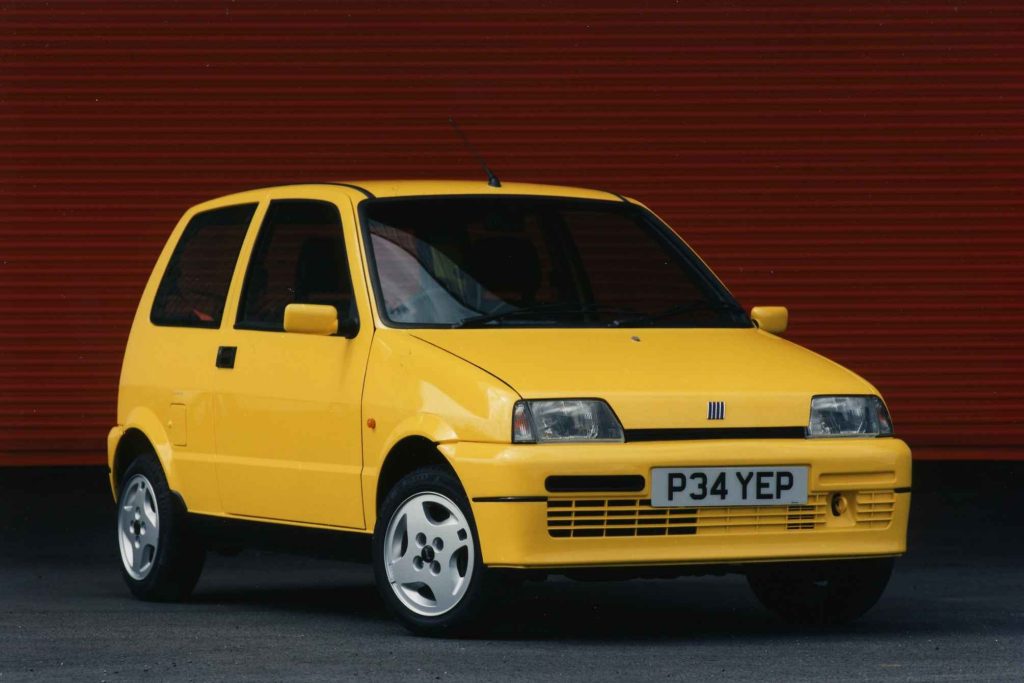
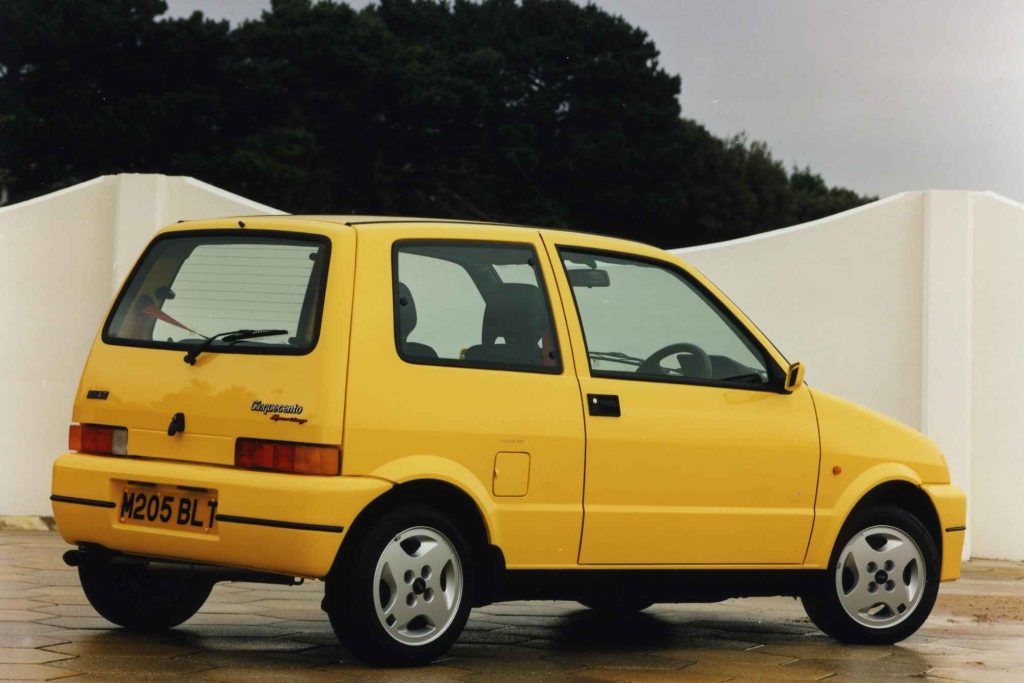
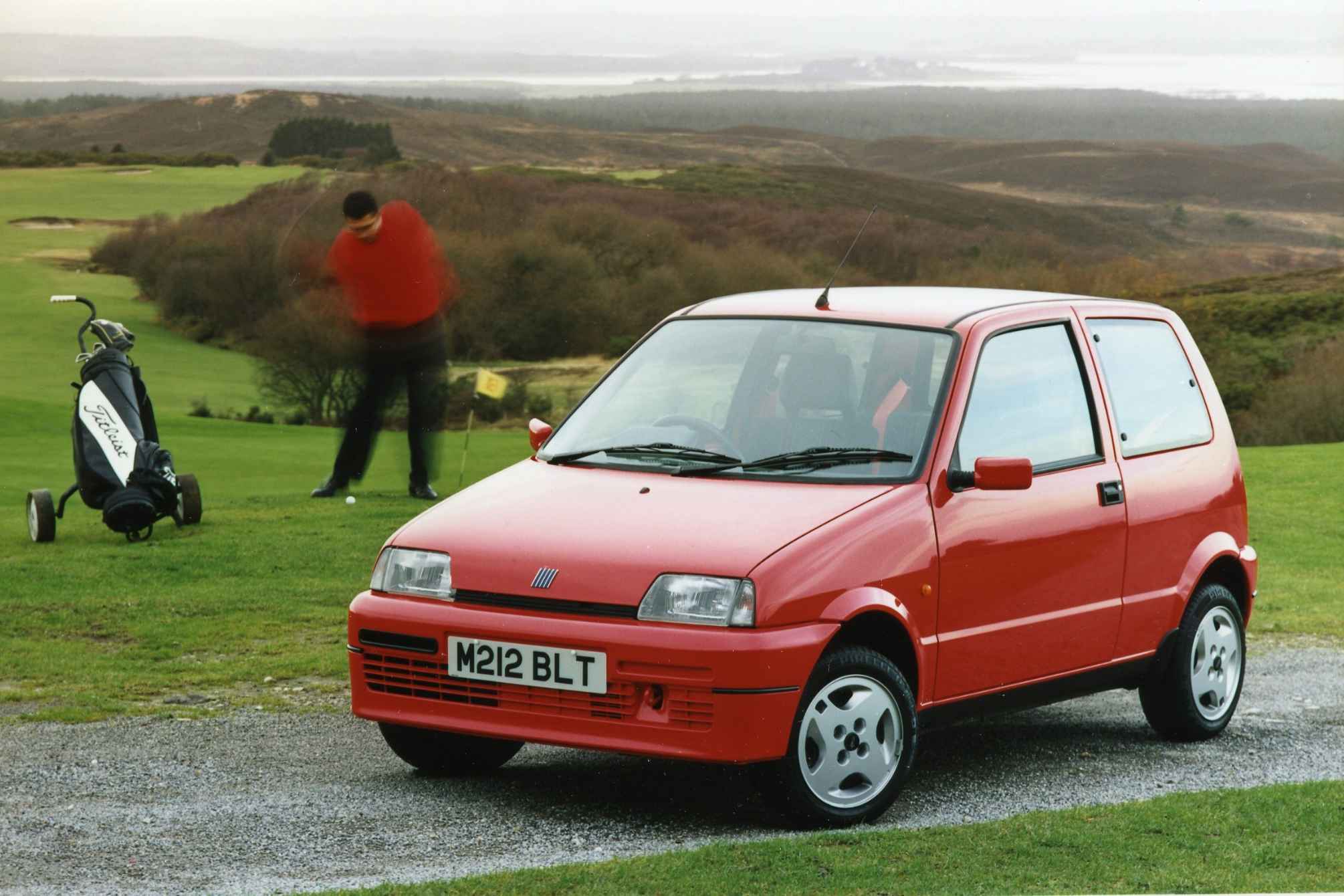
Back in 1994 Fiat launched the Cinquecento Sporting, a pepped-up version of its smallest offering, and when it hit UK roads in early 1995 it was priced at £6195. Run that number through an inflation calculator and it comes to just over £13,000 today, a good five grand cheaper than the Twingo is expected to come in at, six cheaper than the Honda, and a full eight thousand less than a 500e.
To be fair to those modern equivalents, you’re obviously getting a lot more metal these days, and they must meet unimaginably more complex and stringent regulations than a car designed in the 1980s, released in the early 90s and tweaked for the mid-nineties. But we can still look back on the Fiat Cinquecento Sporting and appreciate just how brilliant it was that you could buy a genuine enthusiast’s car for so little money – one that didn’t cost the earth to run, but could give its owner a real sense of pride as an object, and give them a kick of adrenaline when they needed it too.
Far from being a sticker pack, the Sporting was a proper performance model, just in miniature. At the time, the default engine in a UK-market Cinquecento was an 899cc overhead-valve four (I specify UK, because on the continent, the Cinq also came with a 704cc twin from the old 126), so Fiat’s choice of dropping in an overhead cam 1108cc ‘FIRE’ engine from the Punto made for a massive increase in performance.
Output went from 41 to 54bhp, torque from 48 to 63lb ft, and when Autocar tested the new car in January 1995, it cropped nearly seven whole seconds from the 0-60mph time of a regular Cinquecento. Okay, so 13.5 seconds wouldn’t light anyone’s fire today, but when you’re starting from more than 20, the Sporting felt like a rocketship. The Punto-sourced gearshift was much more pleasant to use than the regular Cinq’s four-speed porridge-stirrer, and the relative lack of effort to extract day-to-day performance made it more fuel-efficient as well.
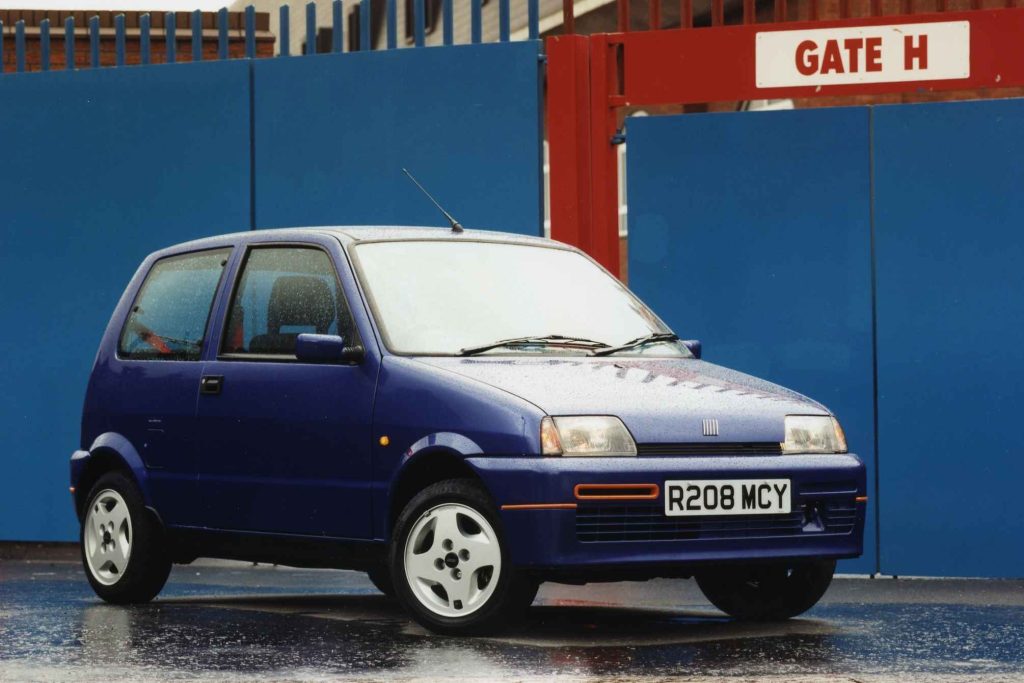
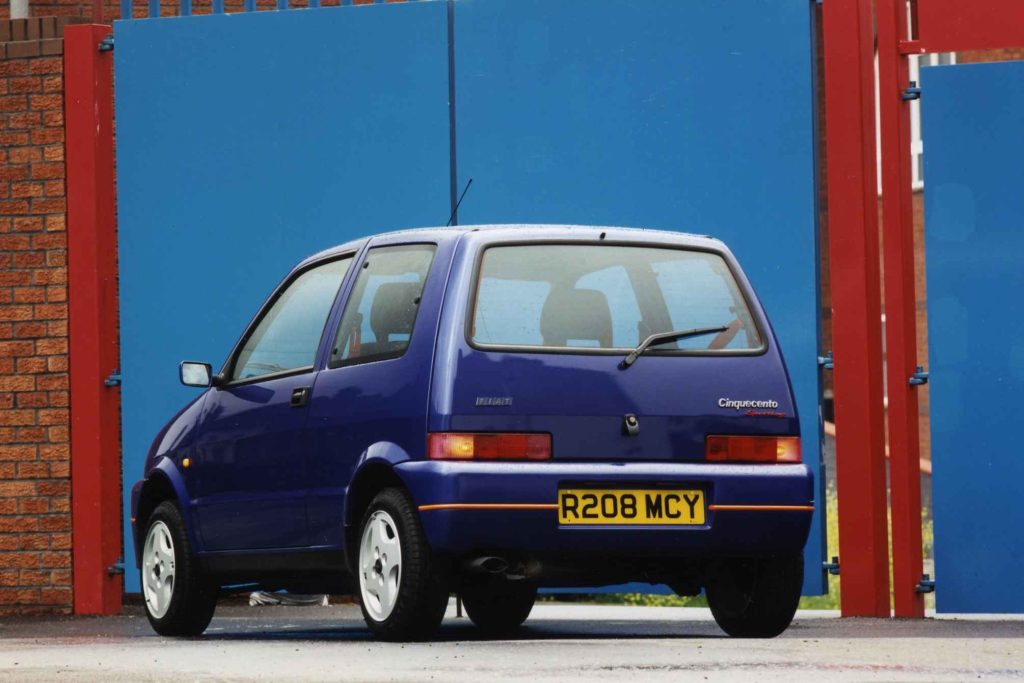
Then there were the handling improvements. The regular Cinquecento cornered neatly enough but firmer suspension and fatter tyres (165-section over chunky four-spoke 13-inch alloys, rather than 145s wrapped around 13-inch steelies) made it great fun to chuck around, despite the unassisted steering (now via a fat leather-trimmed wheel) still taking 3.9 turns between locks. Much like the performance, the Sporting’s changes didn’t exactly make it a rival for a proper little hot hatch like a Peugeot 106 XSi or Rallye, but they were such an enormous leap on from the standard car that it was like stepping from a plodding Mercedes 200D into the V8-powered 500E.
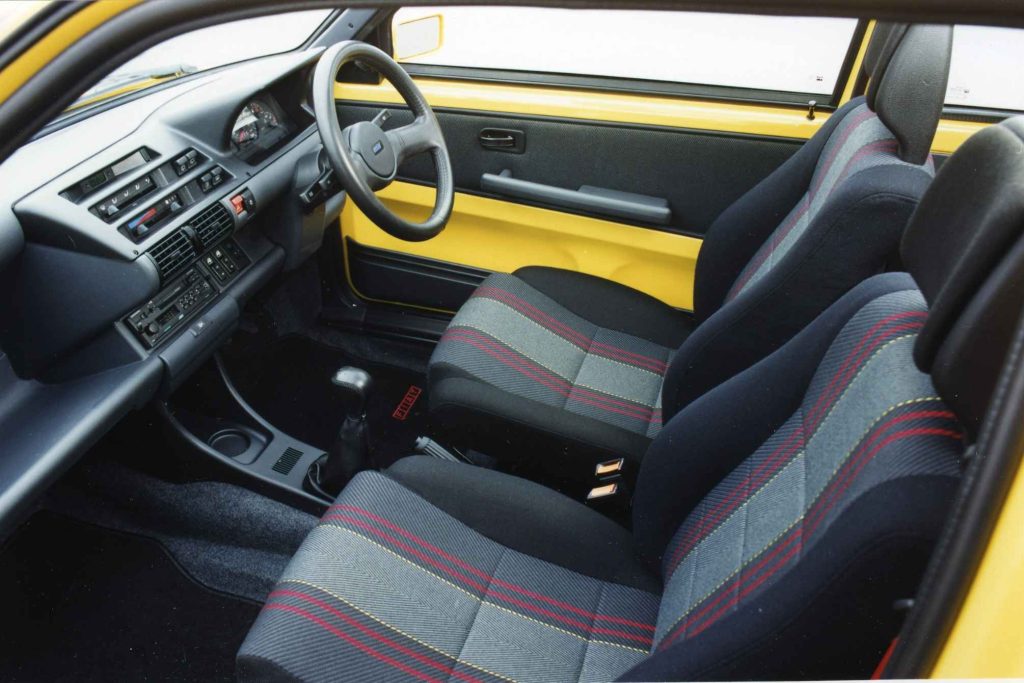
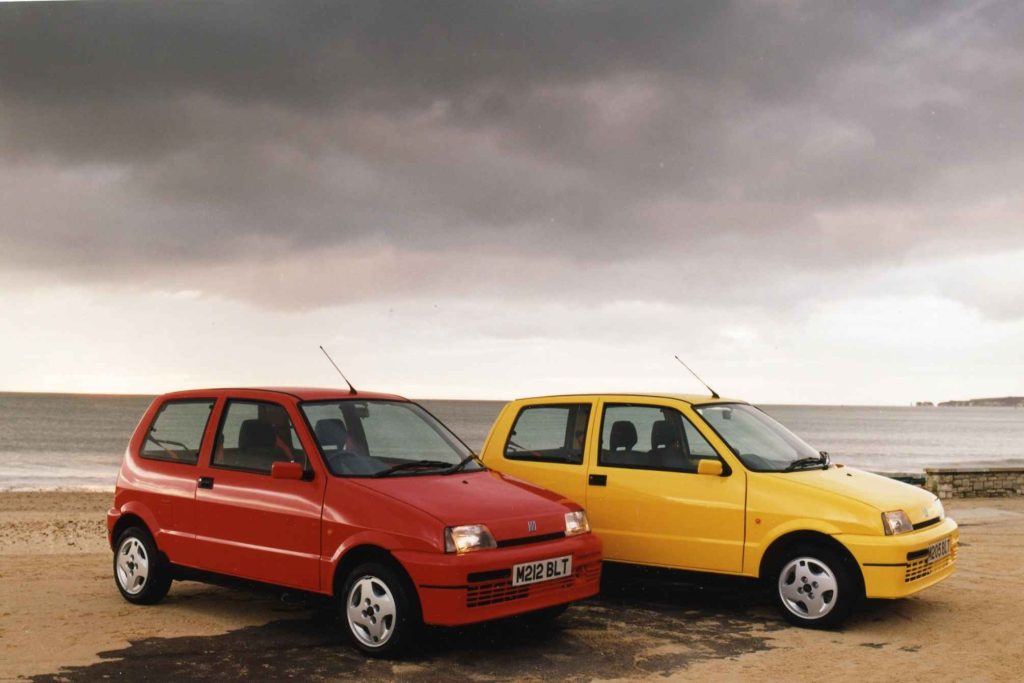
With a set of well-bolstered seats, leather trim for the wheel and gearknob, bright red seatbelts, and the exterior colour popping from the sparsely-trimmed doorcards (especially effective in the Sporting’s brightest colour, Broom Yellow) it felt suitably racy inside too.
And you just had to come back to that price. That 106 Rallye was already brilliant value but at £9395, it was still more than three grand above the Cinquecento – indeed, you couldn’t even get a basic 106 Mardi Gras for the price of the sporty Fiat. Perhaps the closest rival for the Cinquecento was a Rover Mini Cooper, which had the measure of the Fiat for performance thanks to its 63bhp engine (Autocar timed it three tenths quicker to 60mph), but then you also had to spend £7495, and that price gulf only widened as the decade went on.
The Fiat Cinquecento Sporting’s affordability has in many ways contributed to its status as a future classic. For one, cheaper cars don’t tend to be built to last, so the rate of attrition was always going to be high, but as a car aimed at young folks with plenty of enthusiasm but possibly less money or talent, a fair share of the cars sold will have met their end at the hands of either a Halfords catalogue or a hedge.
Excellent examples are still quite affordable; at the time of writing, there are a few very nice cars for sale in the £5k-£6k bracket with little more than 30,000 miles on the clock. But it’s easy to see them going the way of classic Fiat 500s, once cheap cars that through rarity and appeal can now cost quite a bit. Our advice then is find and enjoy a good one now, while they’re still relatively easy to buy. Despite the best efforts of today’s small, fun cars, we suspect you’ll struggle to find an experience quite like the Cinquecento Sporting.
Do you think today’s small EVs can match the Fiat Cinquecento Sporting’s charm? Let us know in the comments.
Insure your classic with a specialist insurer
If you’re looking for cover for your pride and joy, why not consider Hagerty UK? Not only are we classic car insurance specialists, but we are enthusiasts at heart. Call us for a quote on 0333 323 1138.



I had one of these in the mid 90s. It was a brilliantly fun car back then! Slow but mighty down twisty country lanes. Once you got it up to speed you didn’t dare touch the brakes. You just throw it everywhere!
I had a broom yellow Cinq Sporting in 1995. My first new car. Absolutely adored it – it was like a little go-kart but held its own on the motorway. Would love to drive one again as it was such a fun little car.