Author: Nathan Chadwick
Images: Manufacturers
There’s been a minor revolution in classic car circles. For years, American classics were looked down upon compared to European fare, but in recent years they’ve become increasingly popular.
Deservedly so – contrary to copy-and-paste internet opinions, 1950s and 1960s American machines were among the most technically advanced in terms of luxury features. Ok, so they may not have clipped apexes in the same way as a British sports car, but then they were never built for that – instead, the great American highway was their playground. A place where a thrumming V8 could barely trouble more than 2000rpm for miles at a time.
The argument is that British roads were too small for American classics but then look at the SUVs on our roads today… in fact, most new cars are no smaller than the, ahem, ‘Yank Tanks’ so often criticised. And with most roads now clogged up, what better way to cruise than behind the wheel of a big slice of rolling Hollywood?
With the introduction of the Ford Mustang and the Chevrolet Corvette to the UK in right-hand-drive form, and the heroic efforts of American racers at the Goodwood Revival, American cars are now far more popular.
The good news is that most still offer fantastic value for money compared to their European alternatives; there’s also excellent spares support from the US that’s easily accessible via the internet.
The obvious thing would be to pick out Chargers, Mustangs, Challengers and Corvettes, but there’s one particular part of the American classic scene that we feel is under-appreciated – the full-size American classic. We’ve focused on 1966 as a good time – the spectacular success of the Mustang led designers to bring a bit more sporting elan to even their biggest cars.
The resulting cars have a muscular feel, but plenty of luxury. Ok, so you might need a bigger garage, but each time you feel the bass note rumble out of the garage, you’ll know you’ve got that very American thing – great bang for your buck.
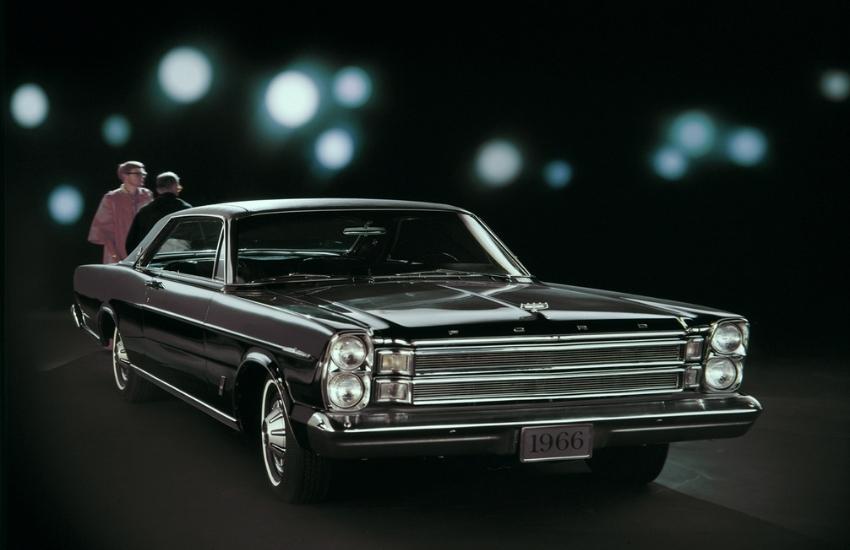
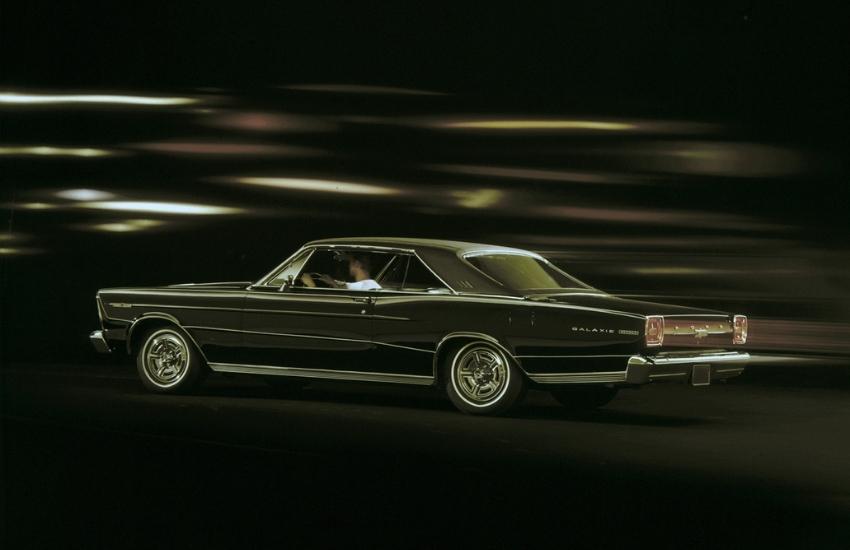
Ford Galaxie 500
We start with a nameplate that’s most recognisable to British audiences – after all, the Galaxie was a successful touring car racer in the 1960s, in the British Saloon Car Championship. They’re also regulars at the Goodwood Revival, doing battle with chippy little Alfas and Minis.
But what about the road cars? Named during the Space Race’s peak, the Galaxie was first introduced in 1959 and lasted until 1974.
The 1965 update was an all-new design, with vertically stacked headlamps and a bulkier look. It also got a three-link coil spring rear suspension, as well as an updated interior – you also got a two-way key for valet parking. The 1966 model would be our choice – not only does it have a ‘coke bottle’ design, but the Galaxie 500 7 Litre was introduced. This featured the 428ci (7.0-litre Thunderbird V8, which promised 345hp. Available in a variety of body styles, the most effective was the two-door hardtop, though the convertible was very popular in 1966. With 27,454 sold, it was the third best-selling droptop behind the Mustang and the Chevrolet Impala.
Will it fit in my garage?
Width: 1963mm
Length: 5334mm
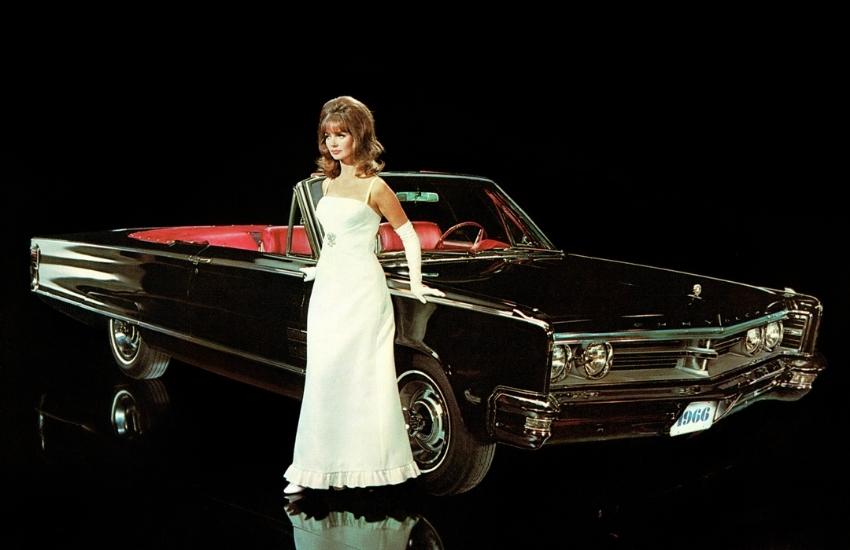
Chrysler 300
Chrysler was a little late to the sporty-looking full-size car look – its ‘fuselage’ design language wouldn’t appear until 1969.
Nevertheless, the presence of the venerable 440 V8, in two different states of tune, made the 1966 car a potent but almost stealth-like car. The Elwood Engel-designed body might not have had the shock and awe of its in-house rivals, but that was never really the remit – it was viewed as a luxurious muscle car compared to the comparatively stripped back Dodges and Plymouths.
Available in either four-door or two-door hardtop or two-door convertible forms, the 300 makes for a satisfyingly different option to the usual choices.
Will it fit in my garage?
Width: 2019mm
Length: 5542mm
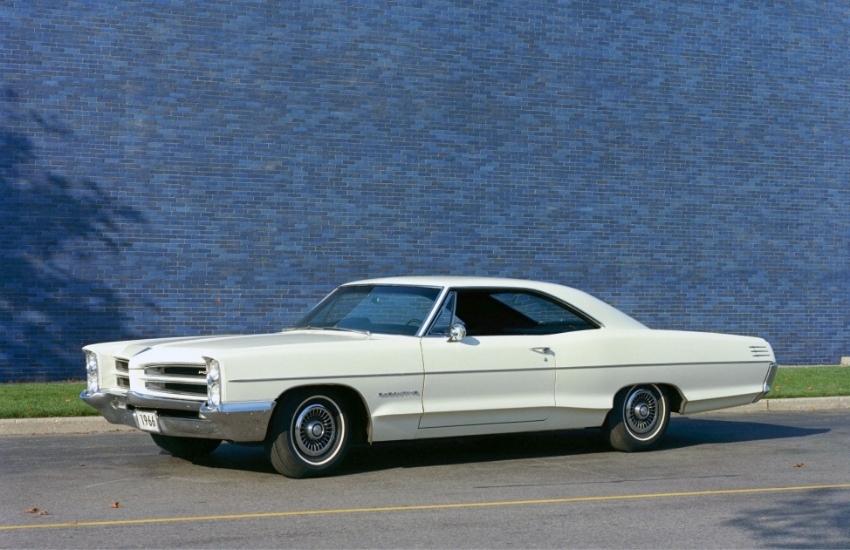
Pontiac Bonneville
The 1965 Bonneville was a dramatic change from the somewhat staid styling of the third-generation Bonneville, introducing much sharper styling that further emphasised its ‘Coke bottle’ styling. Though stylistically similar to other Pontiacs of the era, it was a full eight inches longer thanks to an all-new 124in wheelbase.
The car also introduced wheel spats – otherwise known as fender skirts – and had a fully revised interior. Though the engine choices were carried over from the previous generation, it did receive the new GM Turbo-Hydramatic 400 automatic gearbox. Alongside the GTO, Grand Prix and Catalina, it earned Pontiac plaudits from Motor Trend. In 1967, the car was revitalised with a ‘grille in bumper’ design and even more overt ‘Coke bottle’ styling; there were new engine options too.
Like V8s? Well, the Bonneville had a full suite of them, from 6.4-litres right up to a monster 7.5-litre, with myriad performance options, with the fantastically named Quadra Jet option upgrade denoting the high performance option.
Will it fit in my garage?
Width: 2024mm
Length: 5654mm
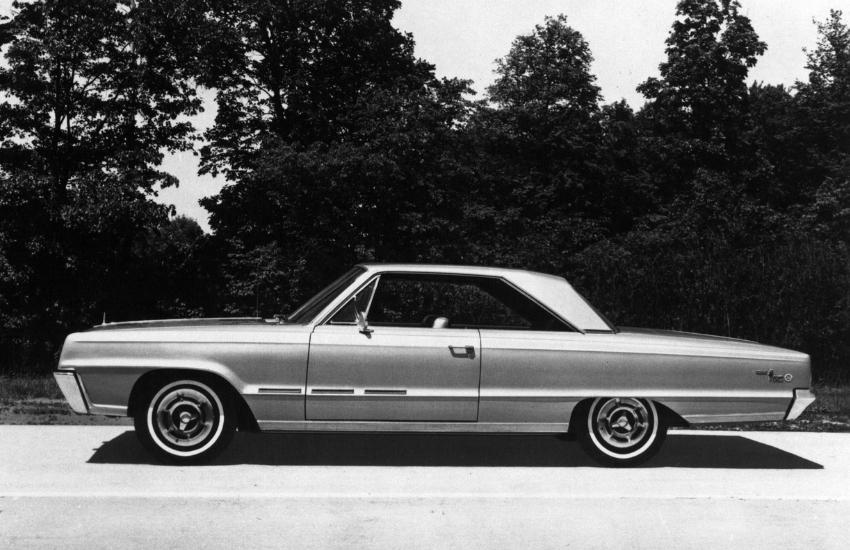
Dodge Monaco
The Monaco was supposed to battle the Pontiac Grand Prix in the burgeoning ‘personal luxury’ market, but it became Dodge’s luxury car offering instead. For 1966, the Monaco would replace the Custom 880 series and was thus available in hardtop coupe, four-door (pillarless) hardtop sedan, conventional four-door (pillared) sedan, and four-door station wagon forms. However, the Monaco 500 was strictly a two-door hardtop only.
Power came from either a 6.3-litre or 7.2-litre V8 – the latter the legendary 440ci unit that formed a key part of many transatlantic GT cars, such as the Jensen Interceptor.
Will it fit in my garage?
Width: 2000mm
Length: 5420mm
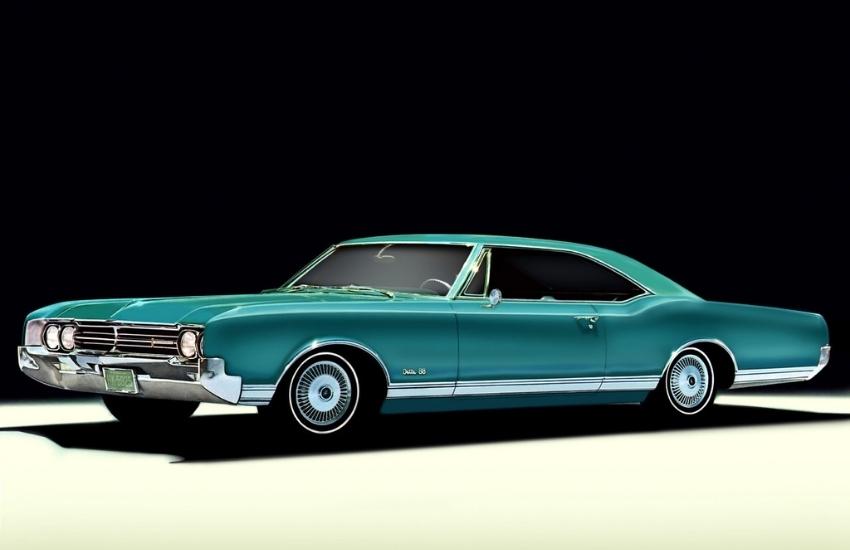
Oldsmobile Delta 88 Holiday Coupe
For 50 years Oldsmobile’s Delta 88 represented the top of the line for the brand – and at several points in its life, it was its most profitable. It also has claims – furiously disputed – to being the first true muscle car.
By the time of the sixth generation, which had debuted in 1965, the muscle car wars were already in full swing, and Oldsmobile needed a dynamic name. After the success of the Starfire, named after the United States Air Force fighter Lockheed F-94 Starfire, Oldsmobile named it top-spec 88 the Delta, after the Convair F-102 Delta Dagger. Mirroring trends elsewhere in the motoring world, the Delta 88 featured ‘Coke-bottle’ styling, rounding off the sharper edges of previous iterations. 1965 also saw the introduction of the 425ci/7.0-litre Super Rocket V8, which offered between 300hp and 370hp, with a Hurst floor-shifter manual transmission an option to the standard Turbo Hydramatic three-speed auto. In 1966, the magnificently named Comfortron Air Conditioning System was introduced to the Oldsmobile range, having debuted for Cadillac in 1964. It allowed the driver to set his or her preferred temperature all-year round; you could also adjust the steering wheel to several different positions for optimum comfort.
Will it fit in my garage?
Width: 2032mm
Length: 5512mm
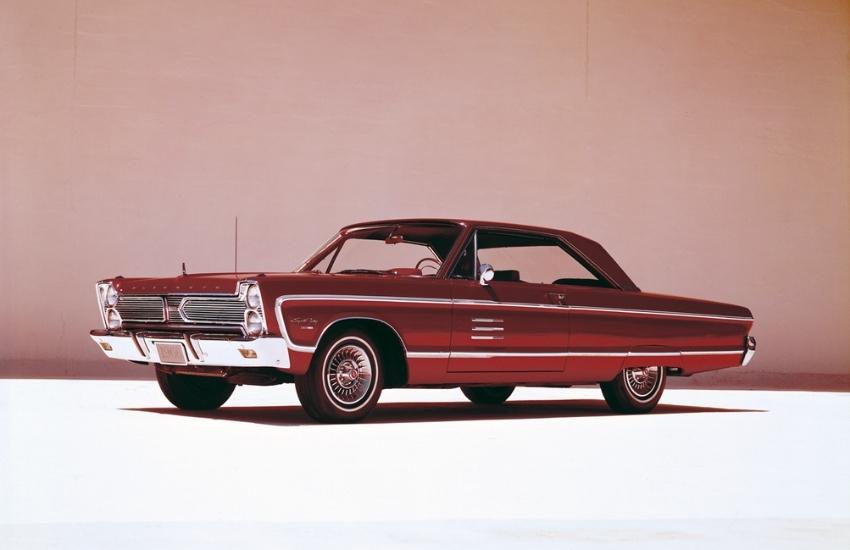
Plymouth Fury
The Plymouth Fury is most famous for its starring role in Christine, but that was a 1958 model. For the fourth-generation model, launched in 1965, the Fury was returned to its full-size body as a rival to the Ford Galaxie. The top-of-the-line model was the Sport Fury, which introduced a dynamic look to the interior and exterior, but 1966’s VIP model added an extra dose of luxury with woodgrain trim, VIP emblems and skirts, and Chrylser’s 5.2-litre V8. You also got a thicker grade of carpeting, deeper sound insulation and courtesy lighting.
For 1967 the car was redesigned for a sharper look, with stacked quad headlamps more fully incorporated into the body for a more extreme look. A variety of body styles were offered, as well as engines – including the 426 street wedge V8, rated at 385hp.
Will it fit in my garage?
Width: 5329mm
Length: 1999mm
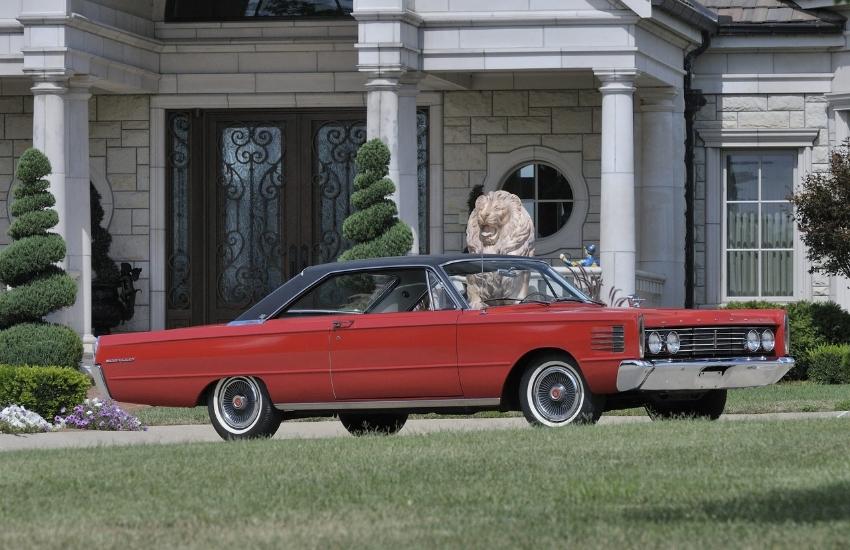
Mercury Monterey
The Monterey was at one time the recipient of the most powerful production car of all time – 1958’s Super Marauder engine pushed out 400hp. By 1965 however, the Shelby Cobra had moved the game forwards meaning the Monterey had another role to play.
Though the Monterey shares much with the Ford Galaxie, the Mercury was much more luxury focused and, as such, derived several styling cues from the Lincoln Continental. The horizontal headlamps, straight-cut wings and rear bootlid all aped the Continental of the time.
You could have no less than six body styles, with a variety of engines. The optional Super had 300hp, while the Interceptor had 330hp – though the top of the tree was the 425hp 427 (7.0-litre) V8, though that was dropped for 1966 and replaced with a 428ci/7.0-litre engine offering 345hp as the top-of-the-line model.
Will it fit in my garage?
Width: 2017mm
Length: 5547mm
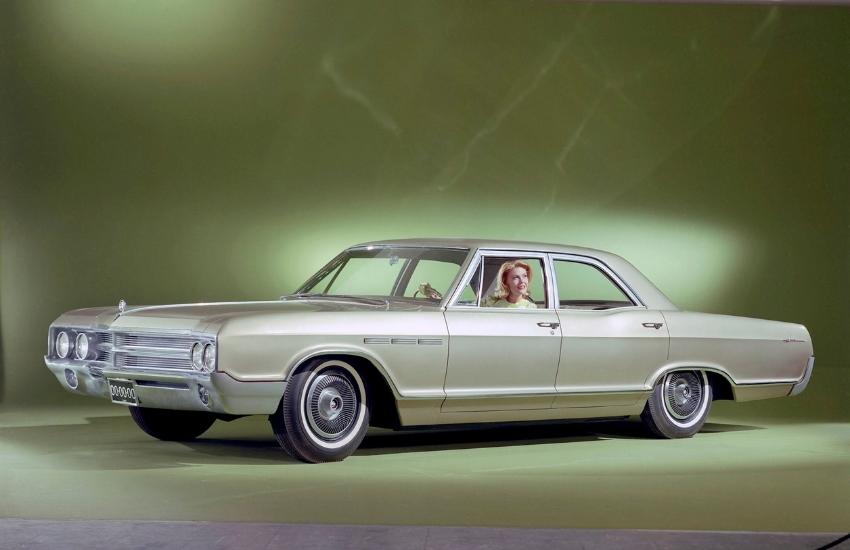
Buick LeSabre
The third generation of the Buick LeSabre saw a host of changes, not least an adoption of the ‘Coke bottle’ styling trend. It also had a new interior, and a new range of body styles. The top-of-the-line model was the LeSabre Custom, which offered a more luxurious interior and the option of a convertible body. A range of V8s were available, from 300ci (4.9-litres) to 455ci (7.5-litres), and the biggest update came in 1967 with a swoopier body style and optional front disc brakes, as well as a stereo 8-track tape player.
Will it fit in my garage?
Width: 2032mm
Length: 5237mm
What are your thoughts on owning and driving American classics in the UK? We would love to your thoughts below.
Classic car insurance from Hagerty
Keep your classic on the road with expert classic car insurance built by car lovers, for car lovers. Rated ‘Excellent’ on TrustPilot.



How many furlongs in a hectacre?
Air miles in a knot?
The American cars of this period were beautiful, I’m surprised that no mention of the Town and Country Wagon ( or any other American Long roofs) were featured! And, what about a drop top ( Convertible for those of you who don’t know the term)!
Strange you would leave out the 1966 Oldsmobile Toronado sporting a 385 hp engine and front wheel drive. Definitely my pick as I own one.
These cars are the best of early American classics.
Where is the 64 Bonneville
No contest relative to both looks and build quality- the Bonneville leaves the others in the dust of their rust. Gorgeous, balanced lines, vinyl interiors that wear like soft steel.
Grew up with a 66 Galaxie 500 convertible. Adored that vehicle.
I had my most favorite. Mercury montego 351 Cleveland. The hood was so flippin long.
A lot of car for an 18 yr old girl. Had it 20+
Buick’s 455 cid V-8 was introduced in 1970, a rework of the 430 V-8 offered glfrom 1967 through 1969. The 425 cid “nailhead” V-8 was the largest engine before that, it’s roots tracing to the original “nailhead” V-8, first introduced for 1953 on all but the 53 Special, which came with a straight 8.
Buick’s 455 cid V-8 was introduced in 1970, a rework of the 430 V-8 offered from 1967 through 1969. The 425 cid “nailhead” V-8 was the largest engine before that, it’s roots tracing to the original “nailhead” V-8, first introduced for 1953 on all but the 53 Special, which came with a straight 8.
You got the Plymouth Fury measurements crossed up. Funny to picture.
My 71 Buick Le Sabre was a tight fit in my garage. With the rear bumper up against polystyrene on the back wall, I still had to take a hammer to the ‘up and over’ garage door to allow for the central point of the front bumper to fit behind it ! Oh, and I had to climb out of the passenger window to exit the vehicle once garaged. But these little issues were nothing once I was out cruisin’ the A roads of Devon. Pure Bliss !! Get yourself a full size Yank, you won’t regret it…..