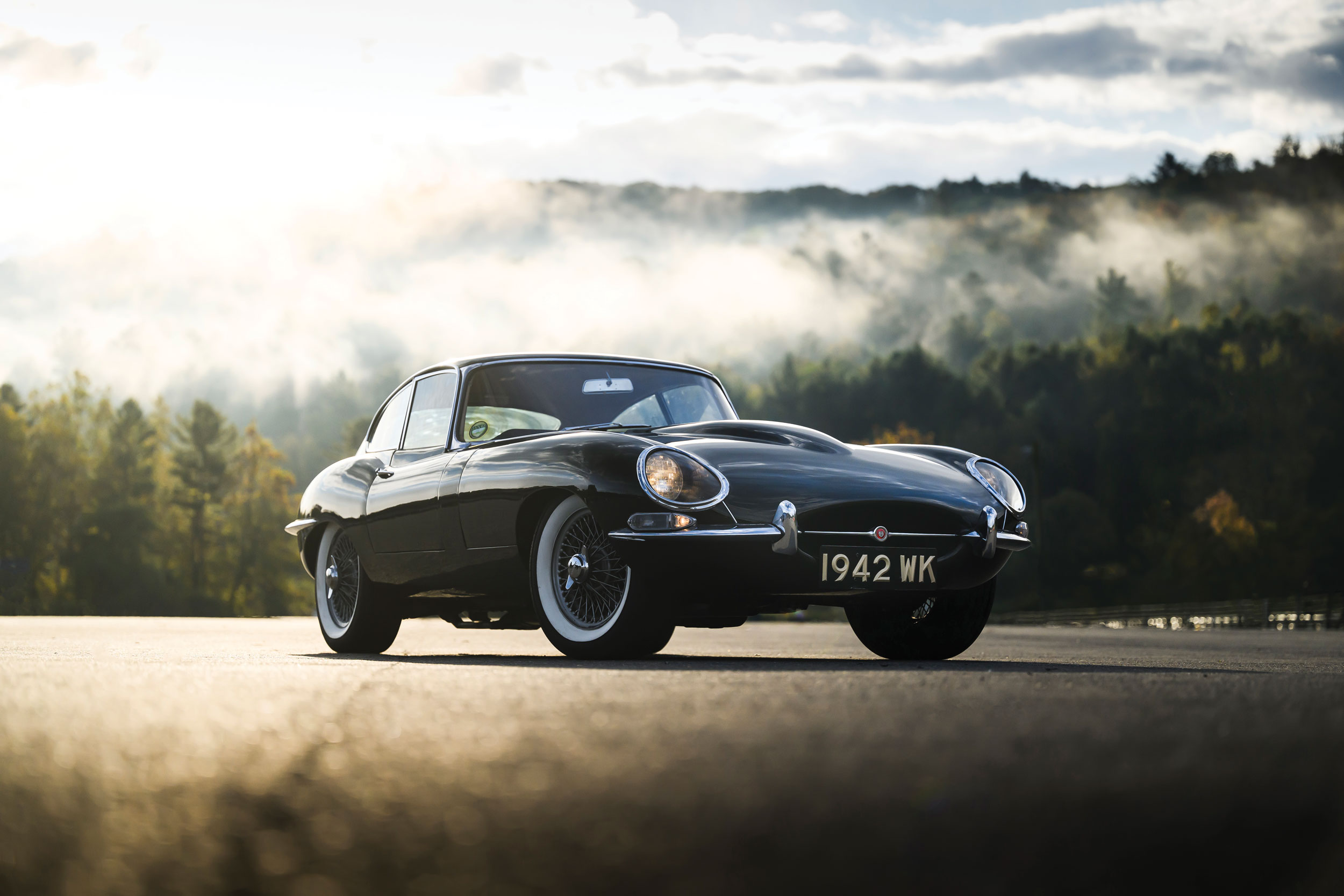
It may seem rather late in the day to publish a valuation verdict on the Jaguar E-Type, one of the mainstays of the British classic car world, but I think there’s an interesting story to tell. Like many classic British cars of the 1950s and ‘60s, E-Type values have been slipping over recent years, but it’s how the different submodels are considered, and therefore priced, that interests me: their values seem to be converging. Ten years ago, UK Hagerty Price Guide ‘excellent’ values of the earliest Series 1 cars and the last of the V12s were separated by over £50,000. Today, it’s less than a fifth of that.
We’ve always known what a hugely important model the E-Type was for the British car industry, and how it seemed to make an indelible impression on many youngsters at the time. That translated into collectability once that generation, mostly Baby Boomers, grew older and prices soared as a result. They prized the very early and rare examples most highly: prices of the tiny number of earliest fixed-head cars built with welded louvres and an outside bonnet lock peaked in 2015 with a top (concours) price of £680,000. Standard models in what we’d consider ‘excellent’ condition were much less but still demanded big prices, and there was a distinct pecking order: Series 1 3.8 roadsters were at the top, with later cars reducing in value down to the Series 3 V12.
With many of the Baby Boomer generation leaving the market through age, it is no surprise that these values have slipped over the past decade, but why they are converging is interesting as it suggests today’s buyers value different aspects of each model. The Series 1 was built at a time when the British motor industry was still a leading force in the world, and the sensation it made on launch was borne from a combination of not just its power, but its looks. Later series were maybe considered a little less pure in design thanks to new crash and emissions regulations, and built at a time when Jaguar was struggling with industrial and directional turmoil following its absorption into British Leyland in 1968.
But today, without this cultural background, the different series are maybe being taken more on their merits. Although the power outputs of the Series 1 3.8 is not a whole lot less than the Series 3 V12, the latter is arguably easier to drive over longer distances, with more torque, more space inside, driver aids such as power steering, and fewer cooling issues that typically challenged the earlier cars. Plus, today’s buyers may just want ‘an E-Type’ and the Series 3 remains the entry level, price-wise.
This may offer an opportunity for the enthusiast. Malcolm Sayer’s original creation was a masterpiece, and the feedback you get from driving a sorted Series 1 is phenomenal; maybe it’s time for another generation or two to see what all the fuss is about. The outlook is good: although prices have slipped, these are still desirable cars and although the demand has reduced, it is still significant.
Which E-Type generation would you choose? Tell us in the comments below.
Insure your classic with a specialist insurer
If you’re looking for cover for your pride and joy, why not consider Hagerty UK? Not only are we classic car insurance specialists, but we are enthusiasts at heart. Call us for a quote on 0333 323 1138.
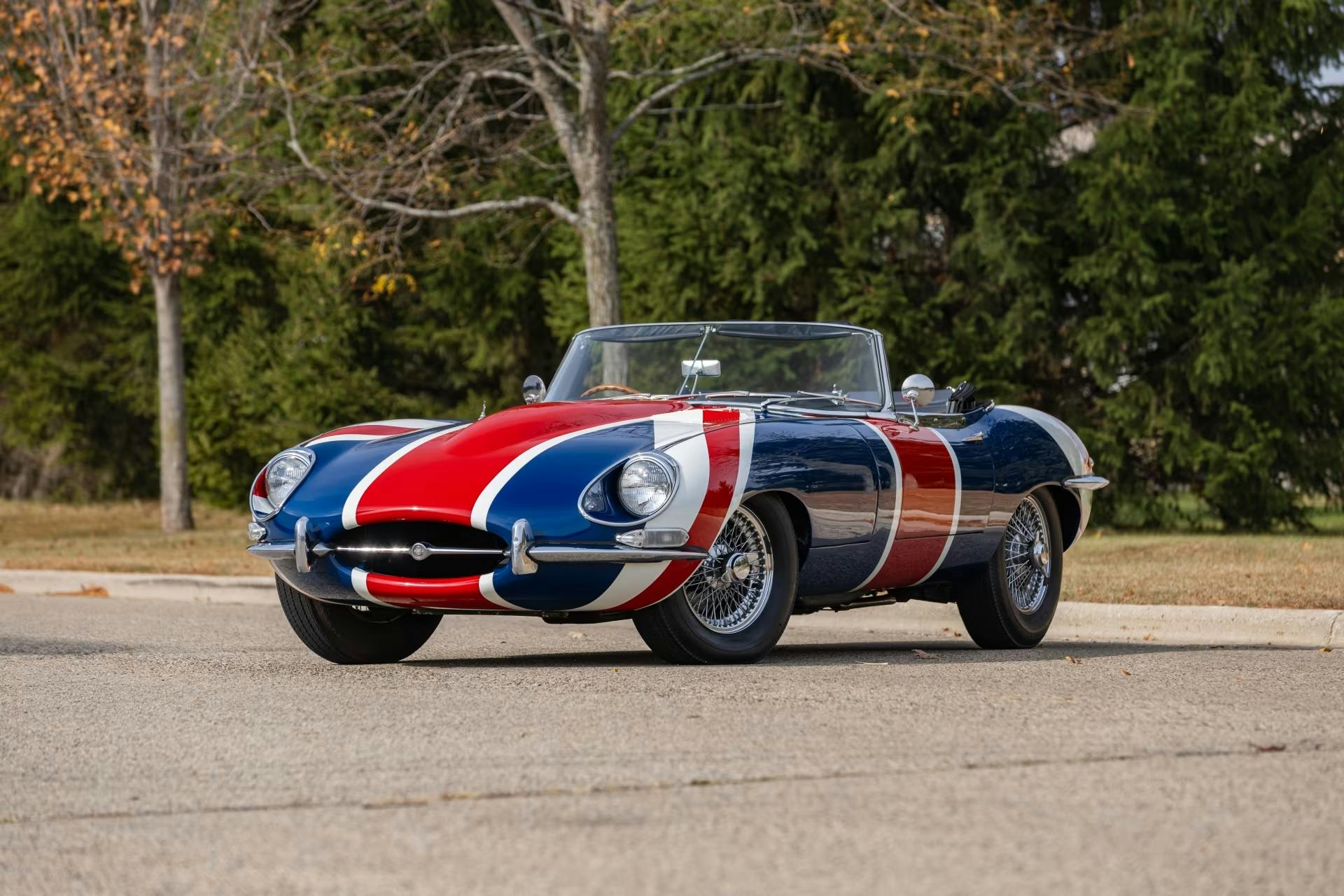




The price convergence reflects the similarities of the models and years. There were no horrible error versions, thank goodness. Any E-Type will always be the most fabulous object in the world.
It always amused me that the least useable etype, the flat floor series 1 manual roadster with a small mouth (overheating issues) and small interior was the most expensive and least expensive series 2 2+2 auto coupe the most useable.
I had an early series one 3.8 roadster, external bonnet lock glst floor when they wernt expensive. It was a joy to drive and for 3 years plus it was our daily driver, however wr inherited a cat or 2 and it had to go. Now I would have the series 3 roadster as its a nicer car, I have driven many of them as we serviced and repaired them arbour garage
I think the reason is simple and that we are seeing a shortage of series 2 and 3 cars in excellent to concourse condition, because the cost to restore them is more than the value of the car.
This inevitably leads to a shortage of the best cars from each series on the market.
It’s a simple case of supply and demand.
The E-Type is such an iconic car for all the reasons mentioned and many more besides.
I’d have an S3 V12 as having driven a few (though some time ago now to be fair) the V12 as mentioned was just a better and effortless drive!
However, the same cannot be said about the standard handling which was more akin to driving a boat!
As time goes on, the potential market for these car will simply continue to shrink as the generations that desire them dies off and the younger generations have very different aspirations.
I am a Baby Boomer, not quite ready to leave the market, I’m lucky enough to have owned a S1FHC, S2 FHC and a S3 V12 FHC at different times. I perhaps didn’t feel that lucky when I broke down in Compiegne, France, in the S2 (overheating, what else?). The S1 was the best and surprisingly the V12 was the least impressive – no feel to the PAS, soft suspension. The real thing to look out for is not which particular model you choose, rather the quality of the restoration. A poorly maintained or restored E Type is dreadful. A good one is a show stopping delight .
The Series 3 with the wider wheels is a much better balanced looking car around the wheel arches.
The earlier cars look like they are sporting delicate space saver emergency wheels!
The longer wheelbase of the S3 also creates a more elegant looker in my view.
I have owned a s 2 e type for many years and like it. I have driven a s 3 v 12 they drive better but i prefer the shape of the s1 and s2
I have owned nunerous jags from the late 50s to late 70s and repaired many more for other people.The etype looks pretty but I never really wanted to own one,I am 6 foot 5 inches and I can just get in one ,but a 10 minute roadtest is long enough. A friend that is over 6 foot has a convertable which he loves ,but he has to put the roof down before he can get in, it’s then a question of do you sit up straight and look over the windscreen ,or slump down and look through it.So if you are tall the 2+2 is the way to go , but an elderly V12 can be a money pit if you can’t do the repairs yourself,doing clutches is ok the engine comes out fairly easily , but head gaskets can be a nightmare.I can understand why the yanks put V8s in them ,I carb ,hydraulic tappets, smaller and posisibly lighter, with similar or greater power output . So you pay your money and take your choice.
i would go for an early 4.2 with the later gearbox, I think they were called series 1 !/2. If possible with fired in headlights and with the early bumpers. The ultimate would be a lightweight.
For me a series 1 4.2 OTS is the best.
It still has the same look as the first cars but with more room for your feet (a lowered floor beneath the pedals), a better gearbox, seats and brakes.
They are wonderful!
I think another contributory factor to the the drop in the values has been the high number of them up for sale or on auction sites. As the prices increased so did the number available. The prices crept up until the bubble burst. You might say the supply outweighed the demand, Perhaps the only version right now that has held its value are the Lightweight models
i
If an E-type was a woman, it called ‘Brigitte Bardot’.
I have had one of these on my bucket list for such a long time. I was shaping up for a purchase but the prices simply left me, and I guess many more, behind.
I then became aware of the recent realignment and now, finally, am the proud owner of an S2 FHC. Its simply epic to drive and I feel simply blessed to own it.