Like me, until today you’d probably never noticed that in general, humanity likes things to even out. Two hands, ten fingers, two feet, ten toes. In some parts of the world, where genetic abnormalities are part of the culture, there may be exceptions to this observation, but take a look around and you’ll see what I mean.
Asymmetry is not universally admired. Things have to balance. We’re here to talk about vehicles, so may I first direct you to the current generation Land Rover Discovery tailgate, or perhaps the second or third generation Nissan Cube for you to see what I mean? They don’t look right.
Same with wheels. Two wheels, four, six, eight. It all looks fine, but the moment someone scoots past on a unicycle or tricycle, stomachs are turned. There are probably examples of vehicles with five or seven wheels, but I’m unwilling to go any further down this uneven avenue.
Three wheeled cars just look daft, and whilst we can accept that the Morgan 3-Wheeler is a bit of harmless, eccentric fun, there’s a very good reason why 99.9% of cars have a wheel on each corner. As has been ably demonstrated on any number of Youtube videos, excerpts from Top Gear or perhaps personal experience, Reliant three wheelers enjoy tipping over. With four wheels, comes inherent stability.
So, you’d think that having an extra wheel over a typical motorcycle would be a benefit? Despite the even number of rotating discs propelling most motorised cycles, they do tend to fall over when they come to a stop. Climb aboard a tricycle then and avoid that embarrassing need to put your feet down to steady your iron horse at every traffic light.
Back to the car thing quickly. If you’ve had the joy of watching the hundreds of cars taking part in the annual London to Brighton Veteran’s Car Run, you’ll have noticed that many of those pre-1904 contraptions have only three wheels. Lightweight, more affordable and manoeuvrable, it made sense to lose a corner, particularly when their four wheeled contemporaries didn’t offer much more in terms of comfort or safety anyway.
After that early period though, the motor tricycle was always a thing of curiosity, associated with penny-pinching through lower purchase costs, taxation and the reduced requirement for skill in obtaining a licence to actually drive the triangular conveyance. I’ll bet you can’t name a tripodal vehicle built through the bulk of the 20th century that wasn’t a laughing stock.
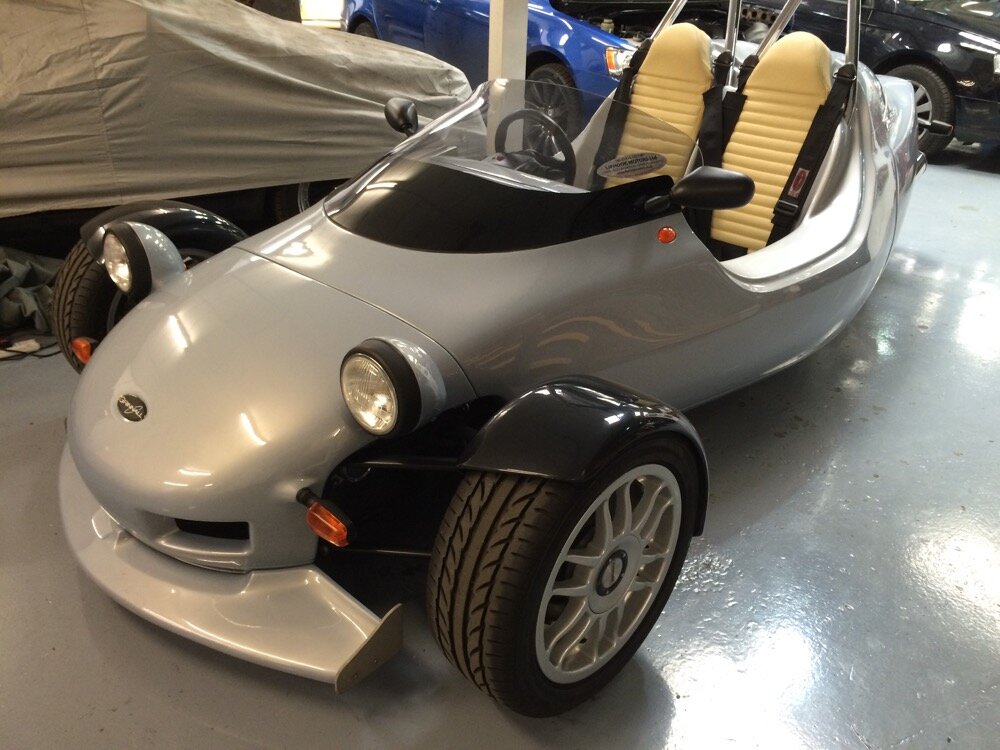
Think of a motor tricycle from that period, and you’ll conjure up an image of a social outcast on a custom built, mag-wheeled, V8 engined hell raiser, wearing a Stars & Stripes bandana, white socks and a leather jerkin. You probably won’t think of the Grinnall Scorpion.
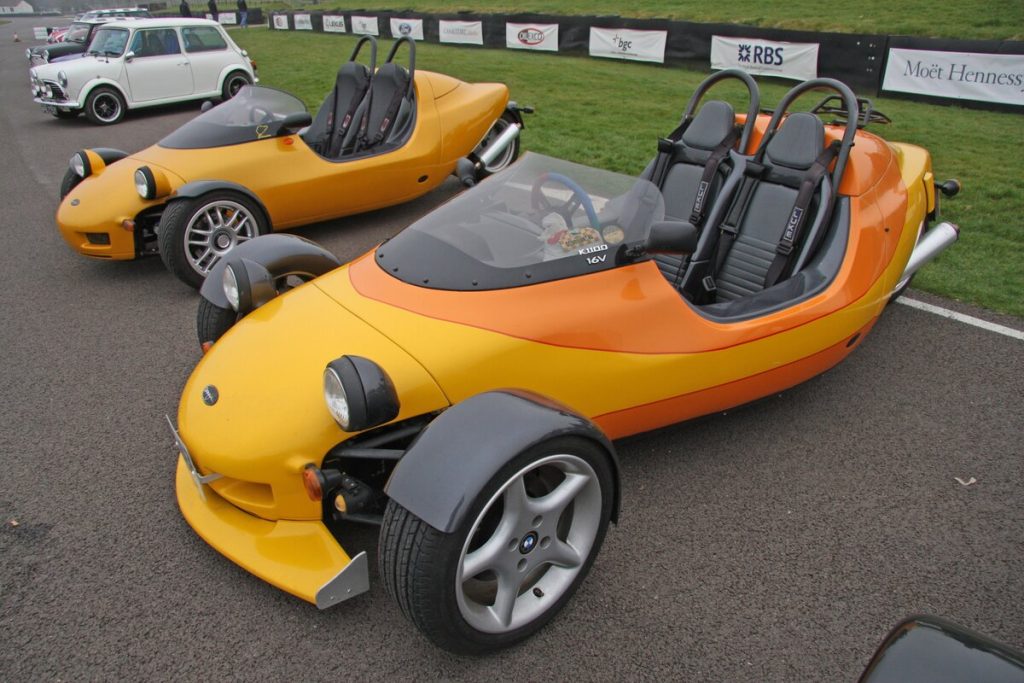
A reverse three wheeler, with the single driven alloy to the rear, the Scorpion is best described as resembling a light aircraft cockpit with comically large landing gear. The steering wheel and side-by-side seating will be familiar to anyone used to handling a roadster sports car, but the drivetrain of motorcycle engine and sequential transmission will gel straight away with fans of the superbike.
Positioned low to reduce the effects of gravity on the three contact patches, and with a wide section tyre pushing the Scorpion forward, this machine gives the immediacy of high performance motorcycle performance, with the grip and adjustability of a sports car. Grinnall must be doing something right here, because the Scorpion has been available in various forms (most of them three wheeled) since the early 1990s. The late Roger Cook had one, you know?
You’ll struggle to find any mainstream manufacturers building three-wheelers in their factories. If you’ve ever taken a road trip through North America, you’ll have come across Honda Goldwing based trikes, sometimes pulling trailers behind them. Although not uncommon, Honda only manufactures a two-wheeled Goldwing, leaving the addition of a wheel to the aftermarket.
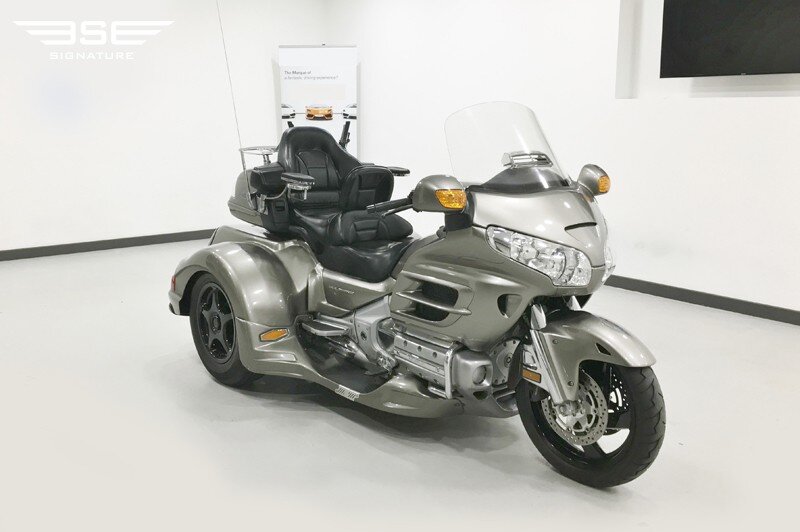
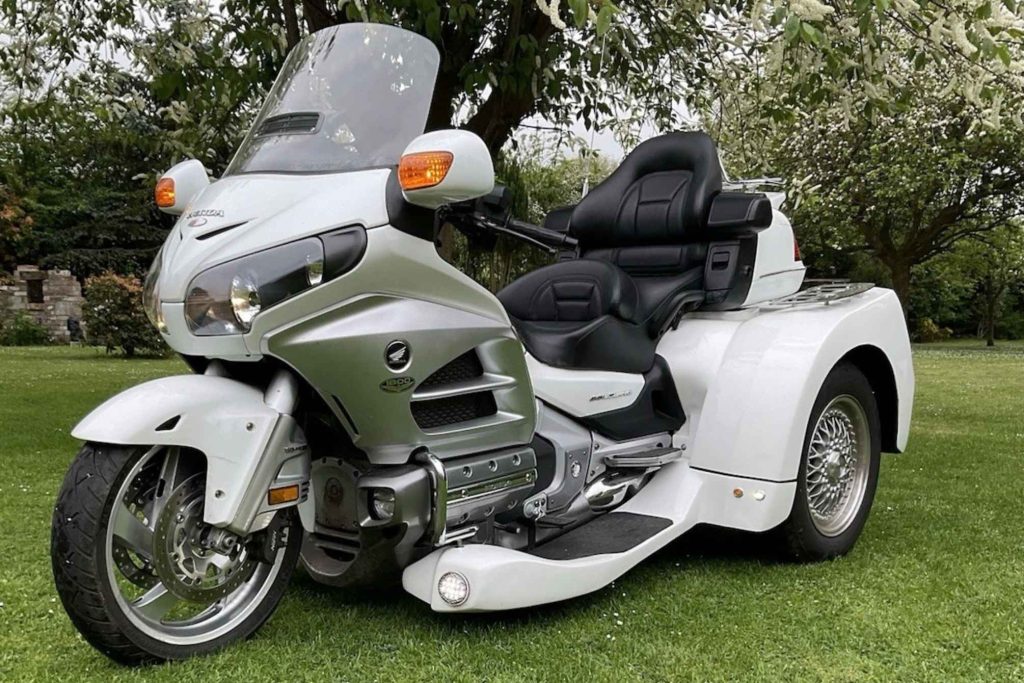
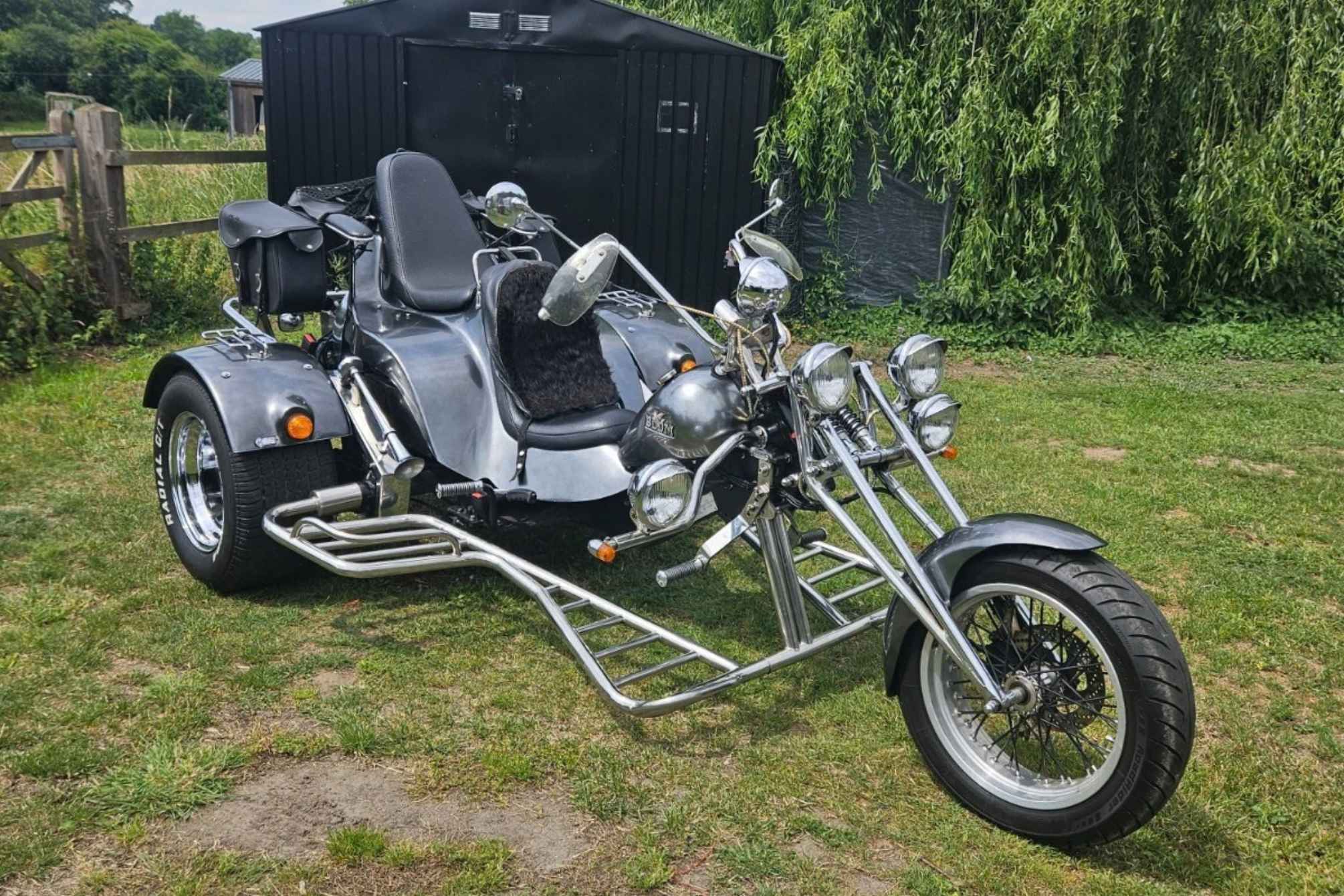
USA based conversion specialists Motor Trike offer high quality adaptations for over 25 different models of motorcycle, including Harley Davidson, Honda, Yamaha, Indian and Kawasaki. Their Goldwing conversions are best known, giving additional comfort, stability, carrying capacity and with it extended touring capabilities.
A rake adjustment kit and suspension upgrades are key additions to the extra driven wheel, helping to make the six cylinder GL1800 more manageable when not serenely cruising America’s highways. The single rear wheel is traded for a pair of polished aluminium items, which closely resemble the front.
Outside the USA, where much of the appeal of a motorcycle comes from its ability to skip traffic by filtering through it, and from the thrill of gut-punch acceleration, these heavy continent crossing trikes struggle to justify their existence over an actual car. That’s not to say that Europeans for example, aren’t averse to having an extra wheel on their bike. They just do it in a way that suits the urban environments where motorcycles earn their keep.
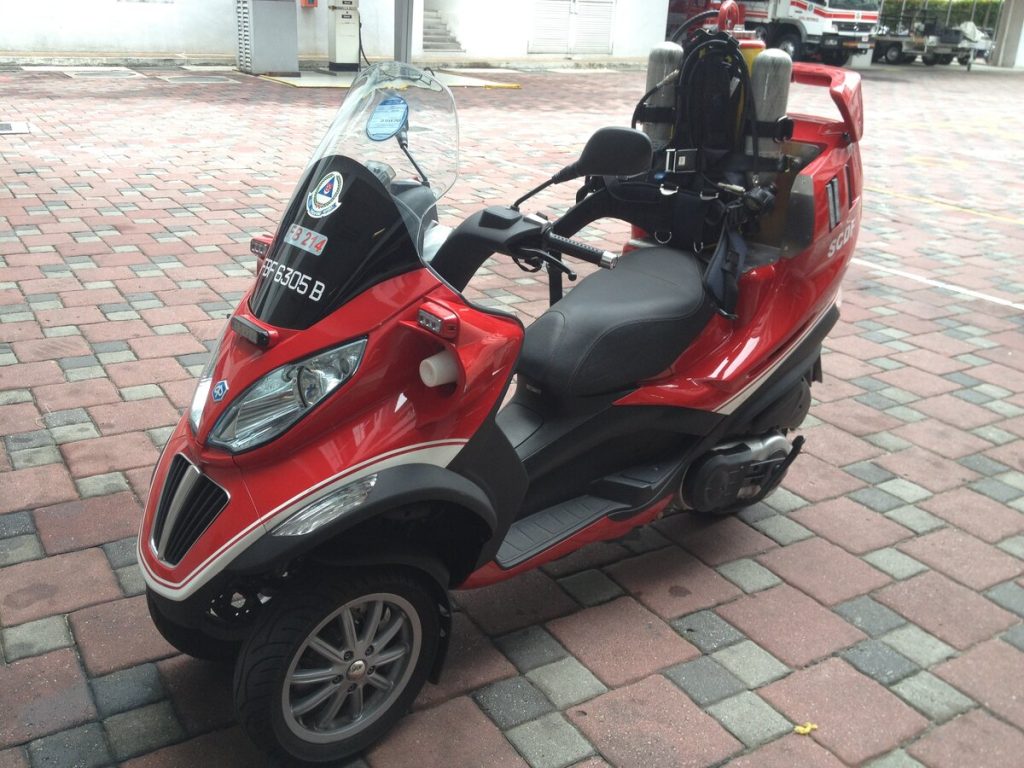
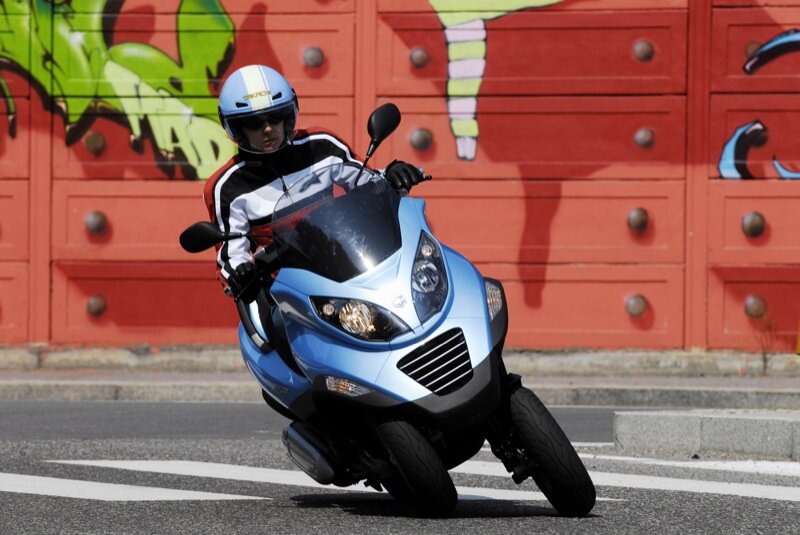
European city dwellers will know how common scooters are, and parked among the wide variety of commuter machines, are countless three wheeled models. Piaggio’s MP3 is a clever, tilting scooter with either a 310cc or or 530c single cylinder engine, and automatic transmission. Emphatically not created for those with balance issues, the extra contact provided by the two front wheels gives extra grip, but without the loss of the directional lean motorcyclists enjoy as they carve through suburbia into the city.
Not only that, but with the two front wheels positioned close together, the overall width of these machines is not compromised versus a conventional maxi scooter. Over the last two decades, the MP3 and other similar machines have earned themselves a reputation as effective, safe and confident transport solutions for crowded spaces. After 120 years of development, it seems the motor tricycle has at last come of age.
Are you a fan of three wheels? Give us your vote in the comments section below.