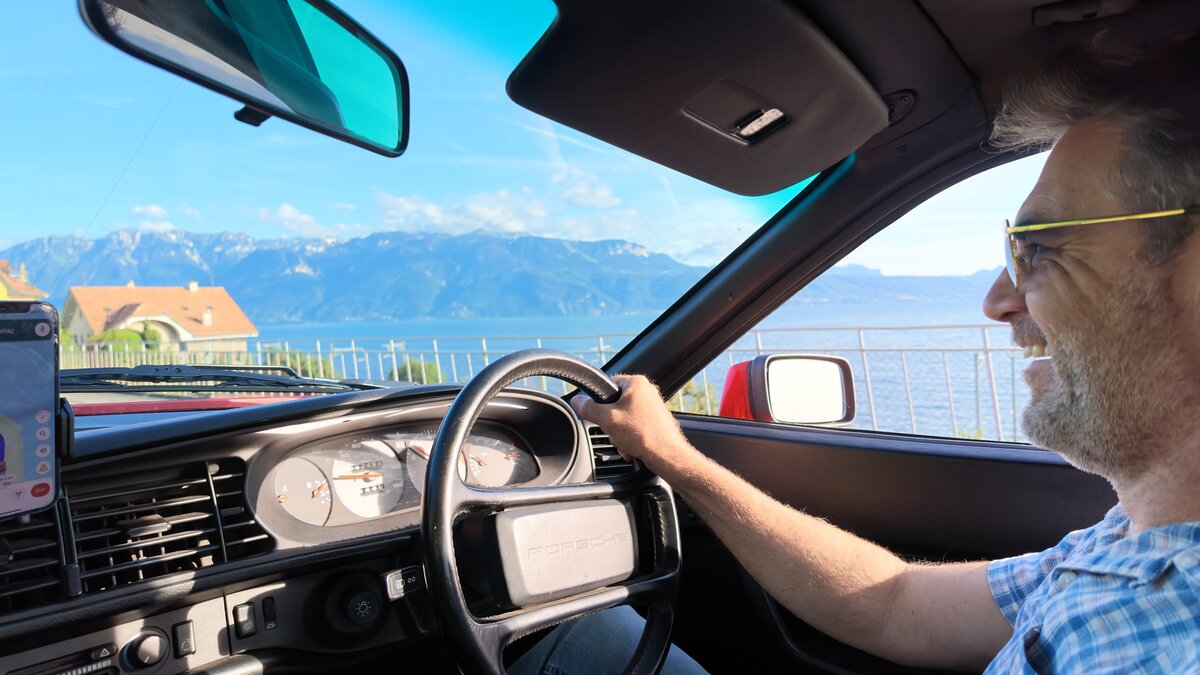
In the first of his series tracking his 2,400-mile road trip around Europe in his 1988 Porsche 944 with his son, Freddie, John Mayhead heads to one of the most famous names in French wine production with a few motoring detours on the way.
The Road to Chablis
It’s extraordinary that, in less time than it takes to drive from London to Edinburgh, you can be in the depths of France in a place that feels so wonderfully different to anything you can find on these shores. Chablis, one of the most famous names in French wine production, in northern Bourgogne, is a drive of under five hours from the channel ports and from the UK, there are many interesting choices of route. Dover or Folkestone to Calais is the traditional route for many, and although this port of entry offers many interesting routes through the Somme Valley, where British and French history are so intertwined, we decided to make that particular pilgrimage on the way back. For those with time on their side, a crossing to Cherbourg, Caen or Le Havre, driving south down to the automotive Mecca of Le Mans, then east to Orleans before a wonderful dash along the tail end of the Loire Valley would have been perfect, but our schedule was too tight, so we elected for the central route, landing at Dieppe.
Time was also limited thanks to a ferry that was an hour late unloading, finally depositing us on the quayside at 2.30pm local time. We had two realistic options: north of Paris, via Beauvais, then heading south, or the quicker route south through Rouen. Both had their attractions: the glorious Chateau de Chantilly, home to the Arts and Elegance concours in September, is almost due north of Paris and worth a visit and, as long as you don’t stray off the A86 motorway, you don’t fall foul of the ZFE clean air (Crit’Air) zone that, currently, is a grey area in regard to UK-registered classic cars, especially those between 30 and 40 years old. They should be exempt, thanks to lobbying by the Fédération Française des Véhicules d’Époque (FFVE) but there’s no way to obtain one for a British car. This is doubly tricky, as the southern route also passes through another Crit’Air zone in Rouen, and we were driving a 1988 Porsche 944 8V Lux, but we risked it.
Other than these annoyances, the southern route offered two important locations to visit. The first, just southwest of Rouen, was the old Essarts circuit, home to the French Grand Prix on five occasions between 1952 and 1968, closed in 1994 and demolished in 1999, although some fun sections remain on the D132 that can still be driven. The second requires a small detour but is worth the extra time: the Autodrome de Linas-Montlhéry, France’s answer to Brooklands with its sections of steep banking is still in use today and has hosted nearly every type of motorsport since it opened in 1924. The high-speed track made it the perfect location for speed records with over 80 still extant on the FIA website and its extended track was used for endurance racing into the 1970s. Today, it’s home to various meetings and events; I drove a 1932 MG C-Type Montlhéry Midget there in 2024, and the combination of tricky, twisty corners and high-banked parabolic turn make it one of my favourite circuits; it’s one of those places where you feel the history. From Montlhéry, we hurried on, deciding to use the autoroutes to reach Chablis before evening but were pushed south down the A10 towards Orleans by an accident on the A6 motorway. My preference in France is to set the maps app to ‘avoid motorways’ and enjoy the wonderful, twisty D roads that are usually well maintained and relatively empty, but time was tight and the weather challenging, with heavy rain arriving in squalls. South of Paris, the land is flat and storm cells rolled across it like a scene from the Midwest, and we were grateful for the Porsche’s very effective windscreen wipers front and rear. Until the previous evening, I’d been planning to use a 1967 Lancia Flaminia GTL Touring for the trip, but a spate of electrical problems, starting with a dynamo that failed to charge, indicators that didn’t indicate and ending with an aged tyre starting to crack meant that I fell back on the reliability of the Porsche. Although the Lancia is a superb car – the V6 sounds wonderful, it is a delight to drive around twisty roads, and it has more than enough comfort and space for a very long journey – the Porsche is much easier to live with in extremes of weather, especially when the traffic is heavy. Freddie, my 23-year-old son, was driving at this point, and told me it was the worst rain he’d ever driven in, and I was glad he’d not had to experience that in the Lancia with its rather flimsy 12-inch wiper blades. The 944 was also effortless at speed: during the dry patches, it sat happily at the limit of 130kph, the wheel steady in the hand, and the typical Porsche ‘tombstone’ seats were comfortable, even after hours of motoring.
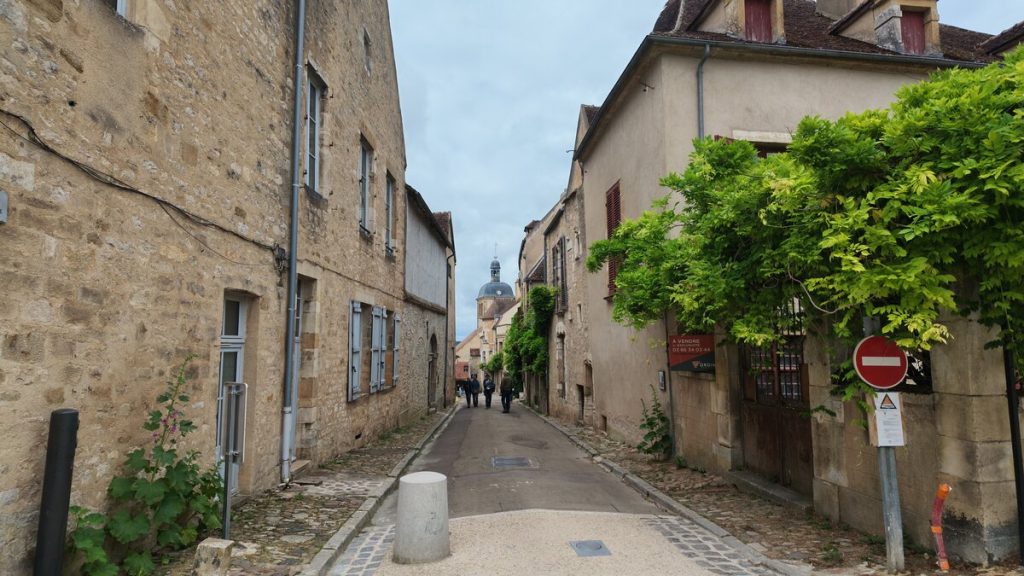
Finally, we left the motorway and enjoyed a few miles of curving minor roads flanked by vineyards before we entered the town of Chablis. A street lined with modern industrial units, most seemingly linked to the wine industry in some way, quickly gave way to the traditional centre of Chablis that looks as if it has just been built as a movie set to show the perfect French market town. The houses are typical of the region with limestone and plaster featuring heavily, some of them extremely old: the 9th-century L’Obédiencerie was a monastery where monks are credited with establishing viticulture in the region. The Serein river bubbles through the east of the town, and everywhere there are reminders of why this town is so globally respected, with the offices of different domaines (wine estates) dotted along the roads. The restaurants, too, take wine seriously: we ate at Minéral restaurant on Rue Jules Rathier and the inch-thick menu included just a single sheet of set-menu food, the rest of the pages listing numerous wines. One page even came with the warning: “These wines are rare. One bottle is allowed per table” and although some were very expensive – I noted one priced at €600 – the standard house wines were very good value: a large glass of Premier Cru Chablis was €9, less than I would have been charged in my local pub in Sussex. The food, although it wasn’t the focus of the evening, was superb.
The hotel, too, was straight out of central casting. The Hôtel de la Poste is a family-run business with tables dotting the Rue Auxerroise to the front and a passageway out to the free public town car park at the rear. Although not solely used for hotel guests, the parking was well lit and well maintained, and I had no qualms about leaving the car there overnight. The room was great: twin beds for me and Freddie, an en-suite bathroom and two windows overlooking the street. At just over £90, booked online in advance, plus €26 on arrival to cover local tax and breakfast, we felt it was good value. We fell asleep quickly, keen for day two of the trip, and looking forward to a better weather forecast. Tomorrow morning, I planned to take a closer look at the famous vineyards here before driving south, through the Parc Naturel Régional du Morvan, skirting Djon, then crossing the Jura Mountains into Switzerland. Tomorrow, the Porsche wouldn’t see a motorway and would be tested by some of the best roads in Europe. Tomorrow night, all being well, we’d be in sight of the Alps.
Have you done a road trip in your classic? Let us know where you went and if you’d recommend it in the comments below.