Author: Antony Ingram
One of the stand-out trends in the classic and modern-classic car market in recent years has been the rise in prominence of Japanese cars.
Once derided for being less characterful and less interesting to drive than their European equivalents, Japan’s spectacular efforts in the 1990s – from humble models like the K11 Nissan Micra, to supercar giant-killers like the Honda NSX – began to turn that opinion around.
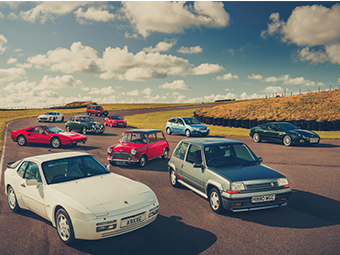
As classics though, they were still largely underappreciated, until the “PlayStation generation” came of age: people who’d grown up with games like Gran Turismo, which put Japanese cars front and centre, and finally had the buying power in their 30s and 40s to get into the real thing. The downside of course is that prices quickly began to rise, putting the brakes on a lot of enthusiasts’ dream car aspirations.
All is not lost however, as there are still plenty of Japanese cars from this 90s and 2000s golden era that haven’t yet spiralled out of reach. Below we’ve picked seven cars between the early 1990s and mid 2000s that remain affordable, with prices starting as low as a couple of grand, and a price cap at £10k to keep things sensible. If you’ve got a favourite – or an alternative suggestion – tell us in the comments section at the end.
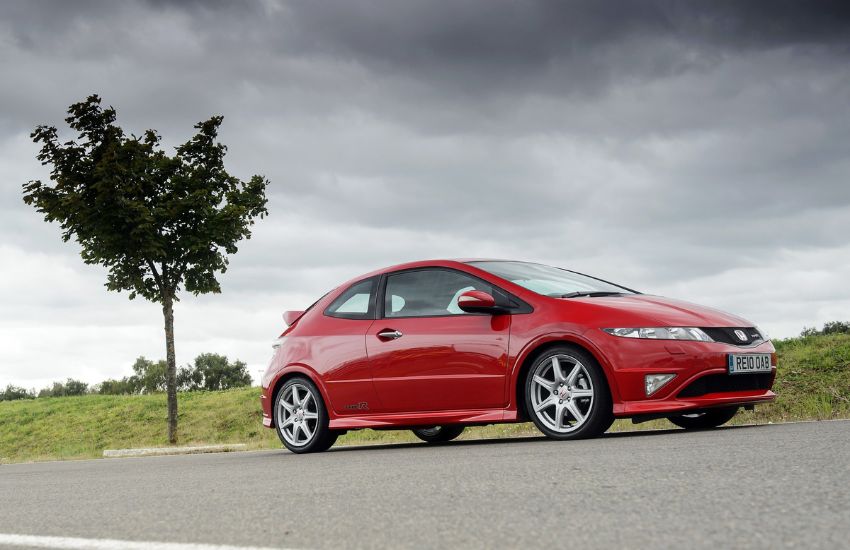
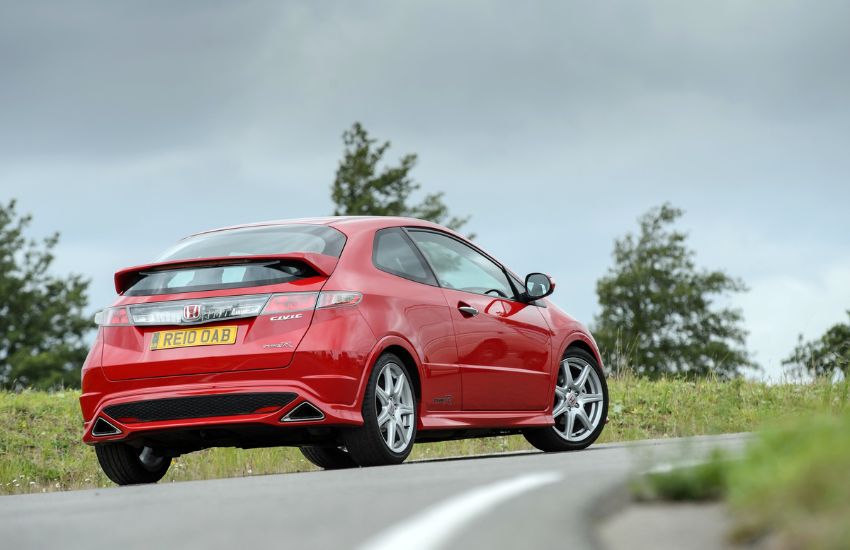
Honda Civic Type R (FN2)
There are two fizzy Hondas that stand out below our ten grand ceiling, and both wear the famed Type R badge. The first is the “EP3” Civic Type R, launched in 2001. The first Civic Type R to be offered in the UK (indeed, it was built here too) has been a performance bargain for years, but nice ones are getting fewer and farther between – you’ll need all of £10k and more for the best, now.
Which is why we’re looking instead to its slightly less beloved successor, the FN2. Also built in the UK, hardcore Honda fans scorn the car for moving to a less sophisticated twist-beam rear axle, and for offering no more performance than its predecessor. But today you can use that to your advantage: while people scrap over the handful of good EP3s that remain, FN2s are still plentiful.
And it’s not like the FN2 was bad to drive either. In fact, it’s probably got better in some ways over the years. What was once a pretty stiff-legged ride no longer feels so bad, since everything else has got worse in the meantime. The steering was already better than that of the EP3, but its response and weighting feel fairly natural today too.
Its major selling point still remains: a 198bhp 2.0-litre i-VTEC engine with an 8000rpm redline, and a gearshift that’s just as snappy and engaging as the one in the Type R that’s recently gone off sale. The mad looks inside and out stand out more than ever, and the best examples are thousands less than the equivalent EP3.
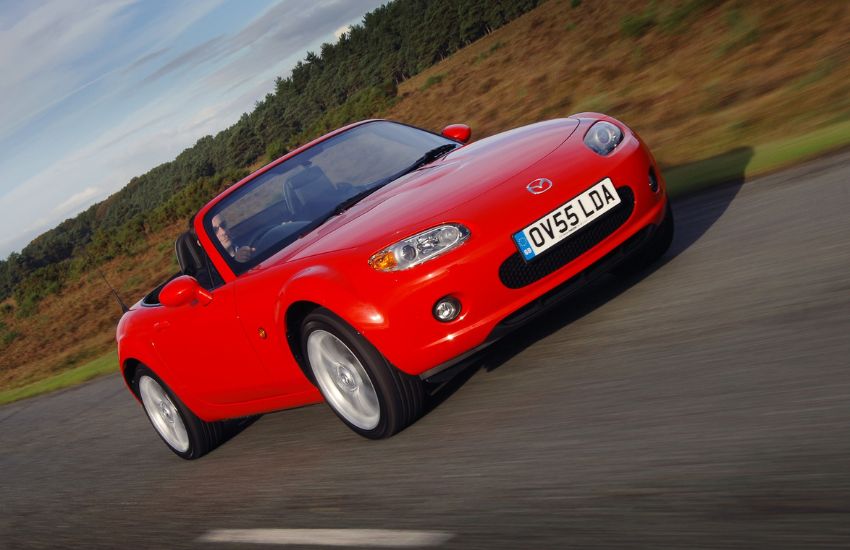
Mazda MX-5
Some of you are probably a little bored of seeing the Mazda MX-5 crop up everywhere, but the fact remains that it’s one of the best cars ever to come out of Japan. And while sales volumes don’t always equate to a great product, in this case, you really can’t argue with well over a million MX-5 buyers in the model’s now 36-year, four-generation run.
So which MX-5 to recommend? That question’s tricky now, since our ten-grand budget will get you an example of any generation; the earliest fourth-gen cars now start at little more than £7k. But you don’t even need to spend that to get a great MX-5, so we’ll set our sights a little lower.
The bargains of the four generations remain the second- and third-gen cars, often referred to by their NB and NC chassis codes. The NB was a heavy revision of the original NA, looking and feeling a little more grown-up, and ran from 1998 until 2005. Five grand is enough for a very tidy one, though still check carefully in person and through a car’s MOT history, for rust.
As little as two grand gets a 2005-on NC these days, though beware that these later cars also aren’t immune to corrosion. The 126bhp 1.8 models make bargain summer cruisers and still look smart, while upgrading to a 2.0-litre sport gets 167bhp, a six-speed ‘box and a limited-slip diff, while with the retractable hardtop they can feel surprisingly sophisticated. Rust aside, all MX-5s are easy and affordable to run, too.
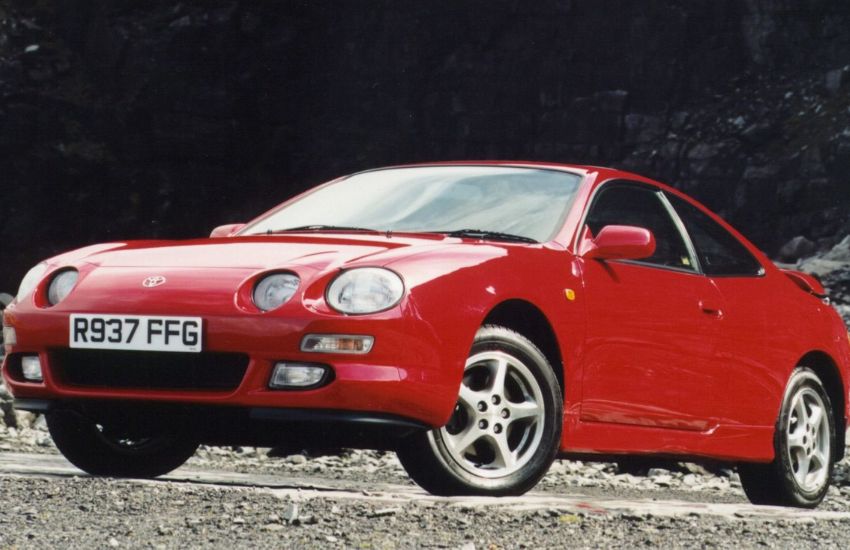
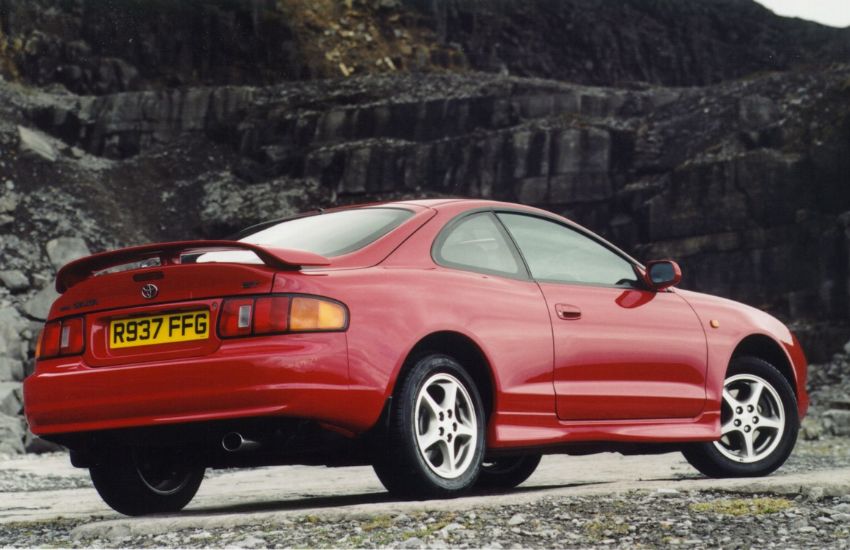
Toyota Celica
You’d be forgiven for forgetting that the Toyota Celica exists. The nameplate disappeared 20 years ago now, and while rumours persist that Toyota is considering reviving it, the brand’s other sports cars such as the MR2, Supra, and more recently the GT86 and GR86 live stronger in the memory.
As an affordable modern classic though, the Celica’s in a bit of a sweet spot. Specifically, its final two formats, the four-headlight sixth-generation model produced between 1993 and 1999, and the seventh gen that took the Celica from 1999 until the end of production.
What you’re unlikely to find these days for under £10k is a homologation-special GT-Four, at least not one that isn’t a bit rough around the edges. But 1.8-litre ST and 2.0-litre GT versions of the sixth-gen are still relatively easy to find, while despite their rapid disappearance from the road, the seventh-gen is a common sight in the classifieds, albeit often tastelessly modified.
Buy an older ST for looks rather than performance (it makes only 114bhp, but did come in some gloriously 90s teals and purples). The GT’s an underrated 90s coupe choice, while the seventh-gen models are much sharper in both looks and driving characteristics – with the 189bhp T-Sport models being our pick for six grand or so.
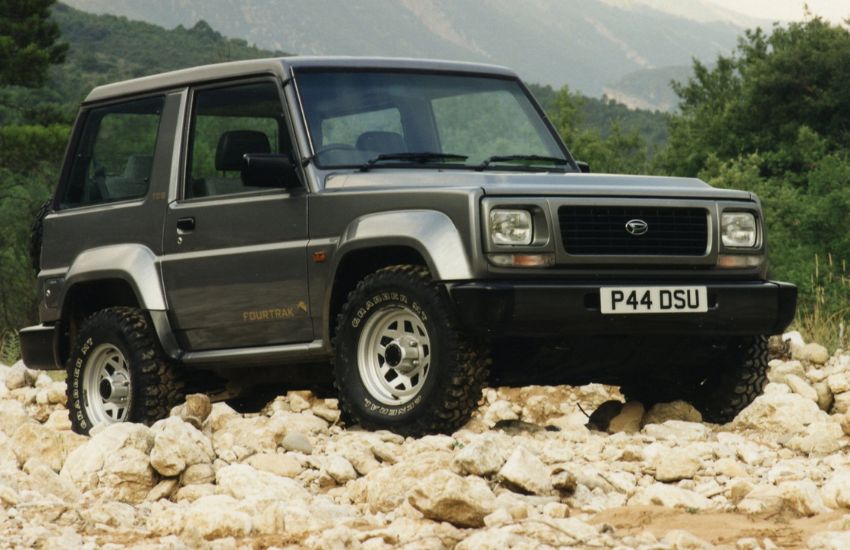
Daihatsu Fourtrak
Buying a Japanese modern classic doesn’t have to mean a four-wheel drive RAC Rally refugee or a low slung, turbocharged sports car. Grafting away in the background in the 80s, 90s and 2000s were Japan’s tough and dependable off-roaders – and one that still turns our heads today is the Daihatsu Fourtrak.
Tougher than a Jimny or Vitara, more affordable than a Land Cruiser or Shogun, the Fourtrak is the kind of vehicle that pragmatic rural folks have kept on the down-low. It’s built like a proper off-roader (think Jeep or Land Rover) but had compact dimensions, coming in at under four metres long and 1.6 metres wide, making it useful where its bigger equivalents can’t fit.
As you’d guess, it’s not really built for on-road handling, though from 1992 it did get double wishbone front suspension and a multilink with coils at the rear, so it’s no ox-cart either. An old-school intercooled 2.8-litre turbodiesel four provides motivation (to an extent; Daihatsu didn’t publish a 0-62mph time, though it would do 88mph flat out).
The styling is undoubtedly part of the appeal though. The boxy looks, broadly unchanged since the 1980s, have a timeless quality, the no-nonsense interior (with jumpseats in the boot, in addition to the two front and three rear seats) likewise. We’ve seen very tidy examples up for sale for only £5000 – pennies compared to a Land Cruiser.
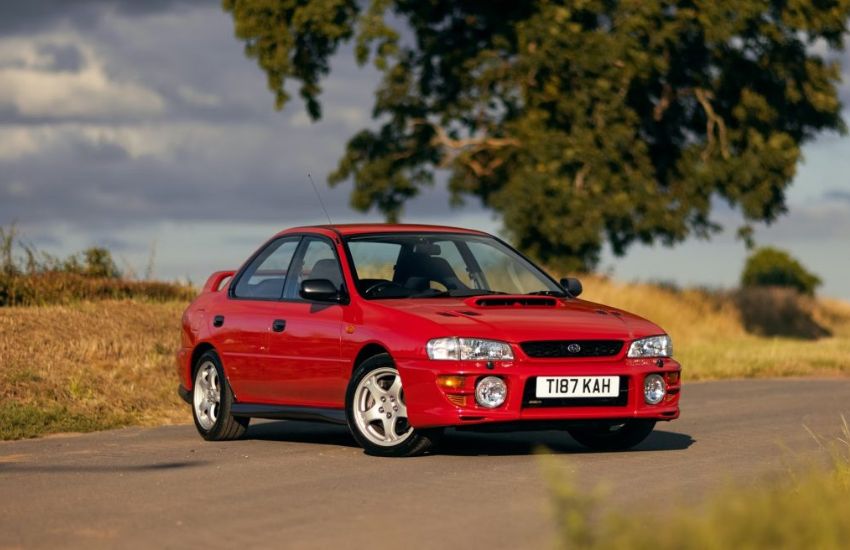
Subaru Impreza Turbo
You’d better act fast on this one, as the day of the ten-grand (or less) Impreza Turbo can’t be with us for much longer. A scout of the classifieds suggests it’s still eminently possible today, while the “GC8” Impreza’s bug-eyed successor is also still a sub-£10k car in WRX form, but you’re now looking at mid-teens for the tidiest cars.
Still, accept a few flaws here and there, and the Impreza Turbo remains the bargain it always was. In dry weather its performance has since been eclipsed by hot hatchbacks, but find a damp road and the Impreza’s security (and feedback) still elevate it above a lot of front-drive alternatives.
And it’s not like it’s ever been, or ever will be, disappointing in the performance department. The very earliest UK cars made what’s now a modest-sounding 208bhp, but had only around 1200kg to pull along, and Autocar got its road test car to 60mph in 5.8 seconds – matching the quickest cars on this page. Power and torque only went up from there too, while later cars got more attractive interior furnishings and more figure-hugging seats.
You need good seats in an Impreza as it’ll still scoot around corners with the best of them. The turbocharged flat four’s thirst means you also won’t need to stay in them for too long between fuel station visits, though that’s less a concern today as a weekend toy than it was as a daily driver in the 90s. Check for rust, avoid thrashed and modified cars, and an Impreza Turbo remains a seminal driver’s car.
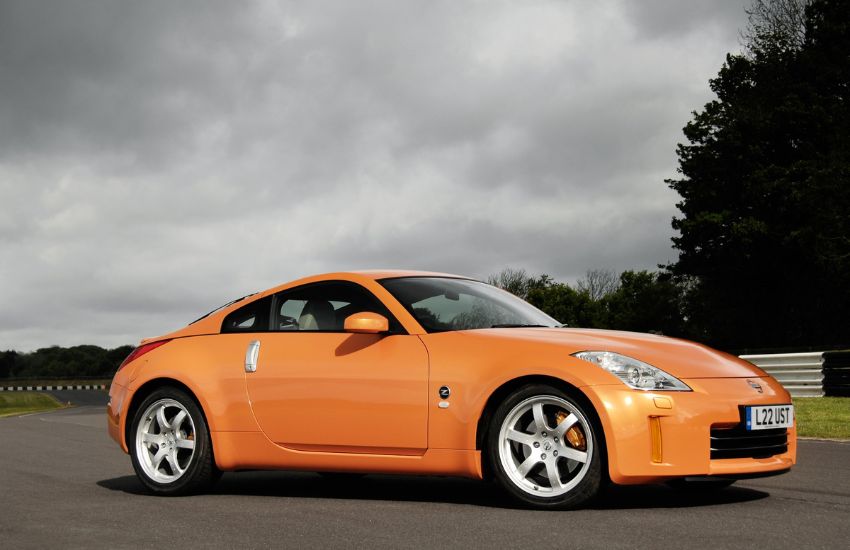
Nissan 350Z
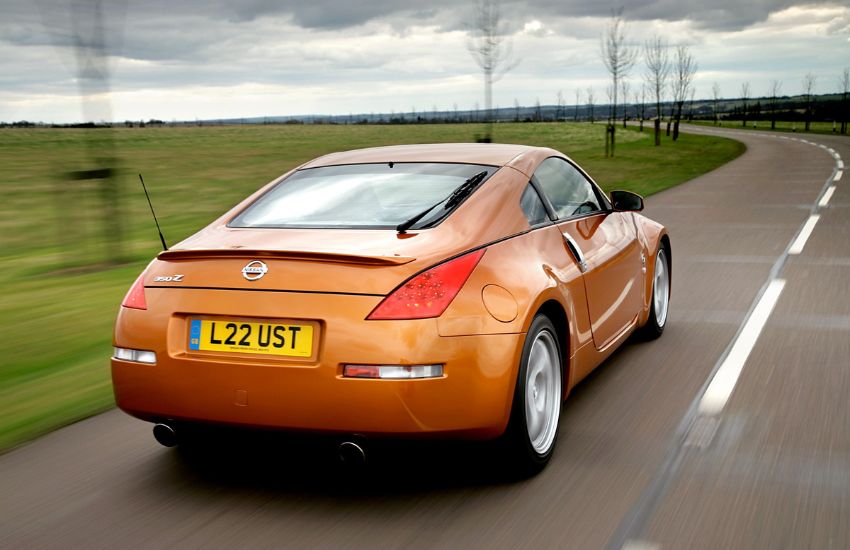
Nissan’s “Z car” lineage stretches from the late 1960s with the 240Z, to the latest twin-turbo Nissan Z. In roughly the middle of that family you’ll find the 350Z that launched in the UK in 2003, and the model happens to also be at the bottom of the pricing bell curve too, with the very cheapest as little as £5000 – though the best now break through our ten grand budget.
Still, there’ll be a time when we look back at the “Z33” 350Z and wonder how it was ever so cheap. The objective answer to that is that at £24,000 in 2003, it represented excellent value for its performance (comfortably undercutting an Audi TT or BMW 325Ci), so it sold well, and the combination of supply, age, and mixed levels of care and attention have seen prices tumble in the past 20-odd years.
A good one remains a joy today. For a start, the 350Z looks fantastic: great proportions, fab details, and clean surfacing, the work of Nissan’s US design team – unsurprising given the car’s most important market, just like the original Z. The cabin is striking too, with hooded dials, a low-slung driving position, and a cosy feel without being short on space.
The 276bhp of early cars put the 350Z on par with the Japanese icons of the 90s, just for a lot less money, and gave it a six-second 0-60mph time. It’s a brawny motor with a distinctive, if slightly strained engine note, and can easily light up the rear tyres if you’re into that sort of thing. Like a lot of Japanese cars, there’s a very healthy aftermarket too.
Mitsubishi 3000GT
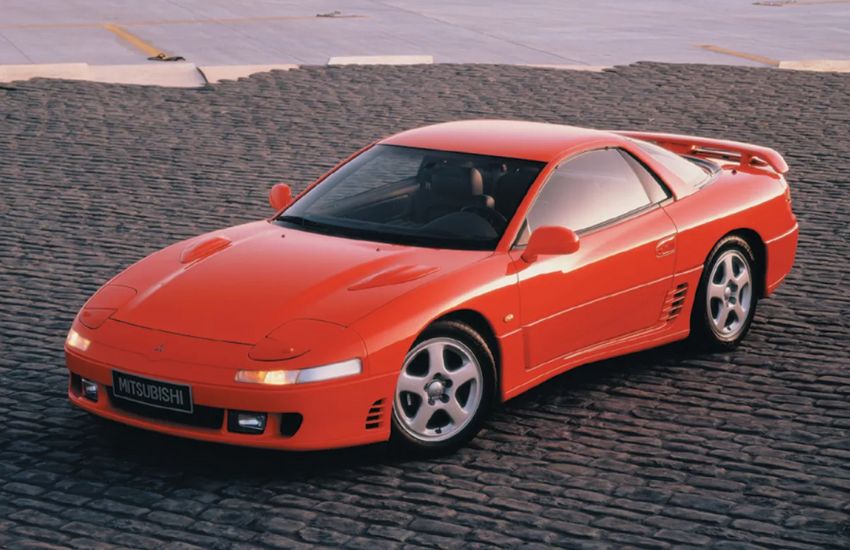
Time was when you’d have found several of the big-boy Japanese sports cars for under ten grand – RX-7s, Supras and 300ZX Twin Turbos were comfortably under, and if you didn’t mind an auto ‘box, even the NSX got close. These days only one really remains: the Mitsubishi 3000GT.
Rightly or wrongly Mitsubishi’s range-topper never attracted quite the attention of its compatriots. It can’t have been down to the 3000GT’s looks; while perhaps a little long of overhang, it’s a proper sports-car shape and its low, wedgy profile is arguably behind only the RX-7 and NSX for 90s Japanese sports-car drama.
Contemporary reviews found it heavy and overburdened with technology that didn’t materially help the driving experience though, from four-wheel steering to active aerodynamics, though UK models, whose V6s featured twin turbos and made 282bhp, were right up there for speed: Autocar timed its test car from 0-62mph in 5.8 seconds, which could see off a Porsche 968.
Today you’re more likely to find imported cars, badged GTO, for under ten grand, and non-turbo and automatic models are more plentiful. Treated as a characterful grand tourer with capable handling and a great shape though, the 3000GT has plenty of appeal.
If you’ve got a favourite – or an alternative suggestion, let us know in the comments section below.
Insure your classic with a specialist insurer
If you’re looking for cover for your pride and joy, why not consider Hagerty UK? Not only are we classic car insurance specialists, but we are enthusiasts at heart. Call us for a quote on 0333 323 1138.