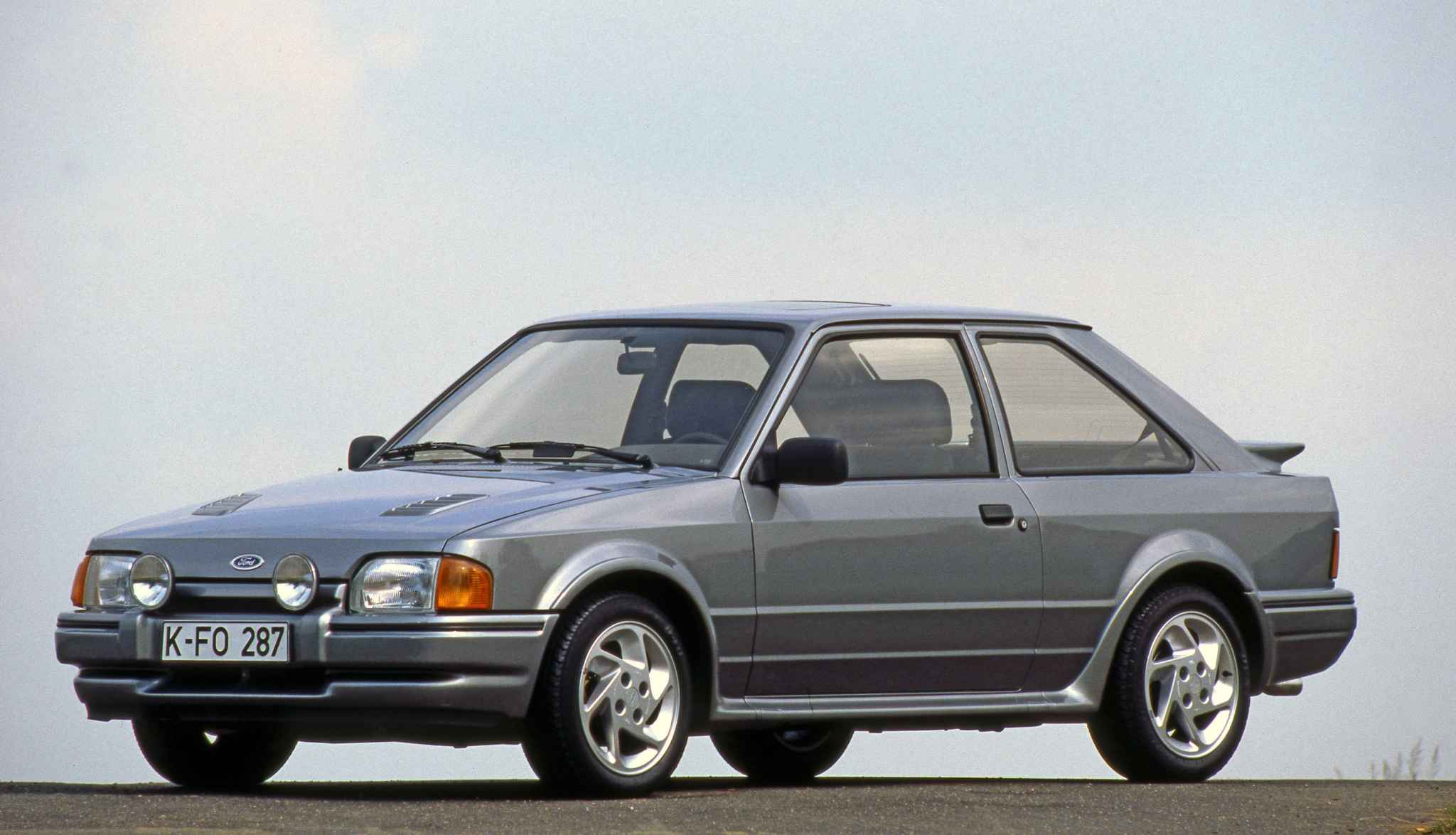
The Mk4 RS Turbo may lack French finesse, but it remains the fast Ford Britain actually bought now.
These days, the general consensus is that the French and Germans won the 80s hot hatch wars – the 205 GTI, the Renault 5 Turbo and the VW Golf GTI. The French had flair or fury, while the Golf conjured the right mix of sensible and silly.
The thing is, the reality of the hot hatch world at the time was rather different – there seems to be collective amnesia about the Ford Escort RS Turbo Series 2. It was the hot hatch as Britain actually consumed it, not as road testers wished it might be, then and now.
The Series 1 RS Turbo is now the collector’s darling: Diamond White, homologation story, Princess Diana connection and all the right 1980s ingredients. The Series 2, introduced with the facelifted Mk4 Escort in 1986, was the one people bought, modified, crashed, repaired, cherished, abused and occasionally parked under a Halfords accessory aisle. It became series production rather than a short-run homologation special, and for many buyers it was the attainable Fast Ford dream.
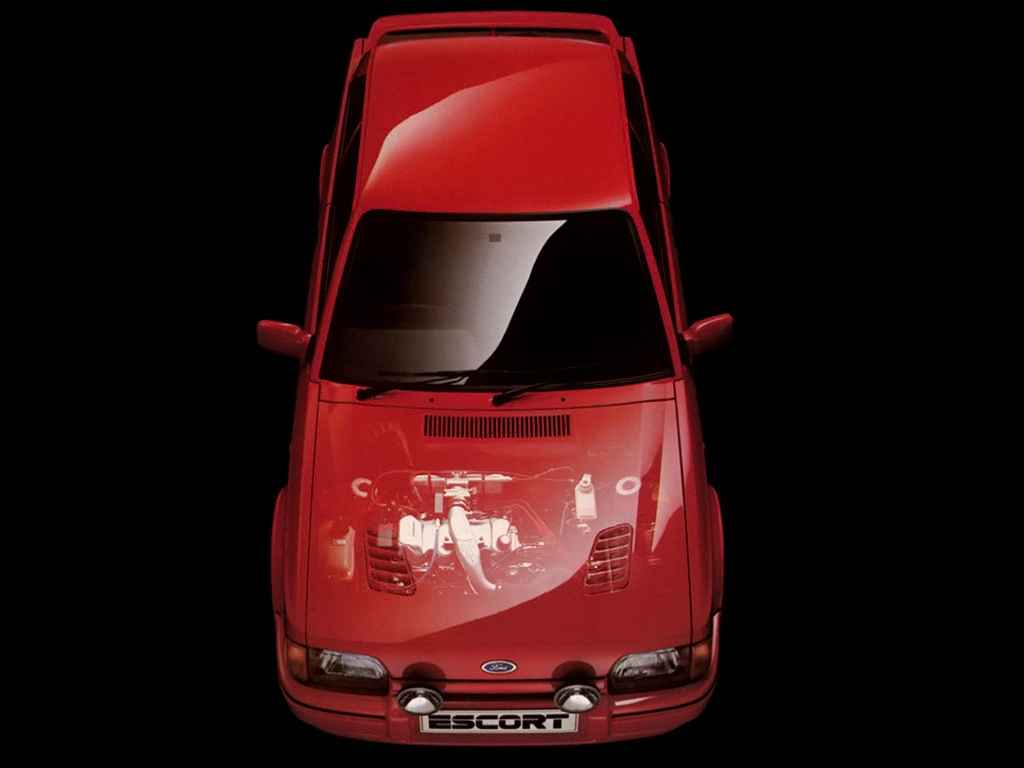
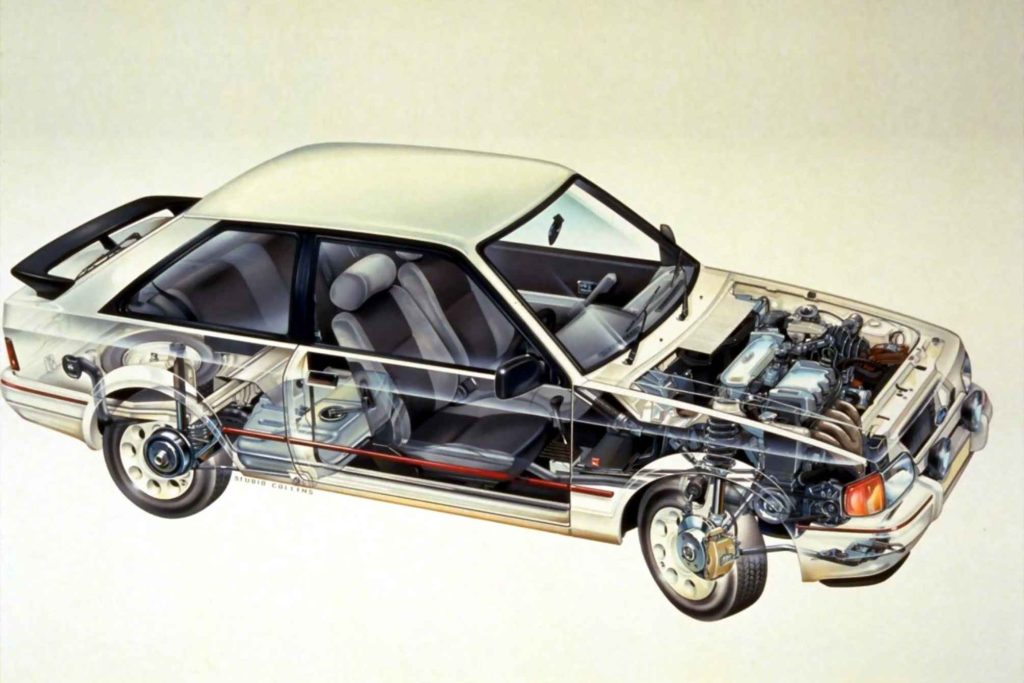
The engineering was familiar rather than revolutionary, but the ingredients still had bite. Under the bonnet sat the 1597cc CVH four-cylinder, given Bosch KE-Jetronic injection, a Garrett T3 turbo, intercooler, lower compression, electronic ignition and 130bhp with 133lb ft of torque. That does not sound vast now, but it arrived early and with a certain terrace-chant enthusiasm. Ford claimed around 8.2 seconds to 60mph and 128mph flat out. The mid-range was the party trick. This was not a delicately balanced French flyweight. It was a broad-shouldered Escort that went from sensible to silly as soon as the boost gauge had something to say.
The clever bit was the viscous-coupling limited-slip differential, retained from the Series 1. It gave the RS Turbo traction and purpose, but also its reputation for torque steer. Plant the throttle and the Escort was not afraid to offer a second opinion on directions through the steering wheel. Some loved that. Others decided the front axle had been possessed.
The chassis itself was still Escort: MacPherson struts up front, semi-trailing arms behind, stiffer springs, anti-roll bars and performance dampers. Compared with a 205 GTI 1.9, it was heavier, and not as keen to dance. Compared with a Renault 5 GT Turbo, it felt more substantial but less cheeky. The Ford was not the hot hatch for fingertip delicacy. It was the one for boost, grip and a bit of physical argument.
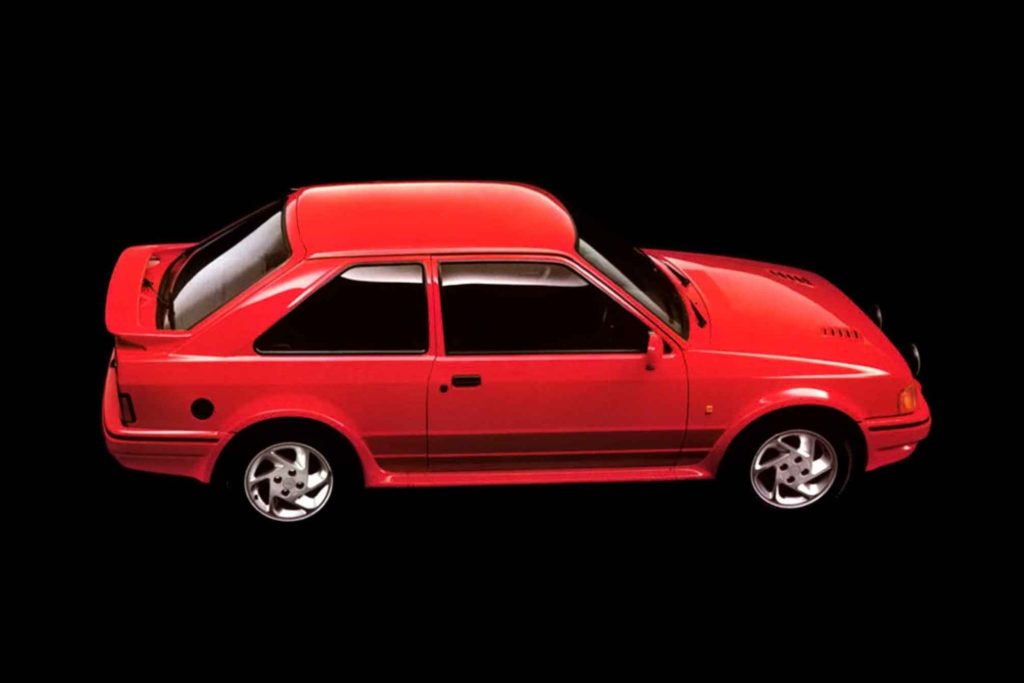
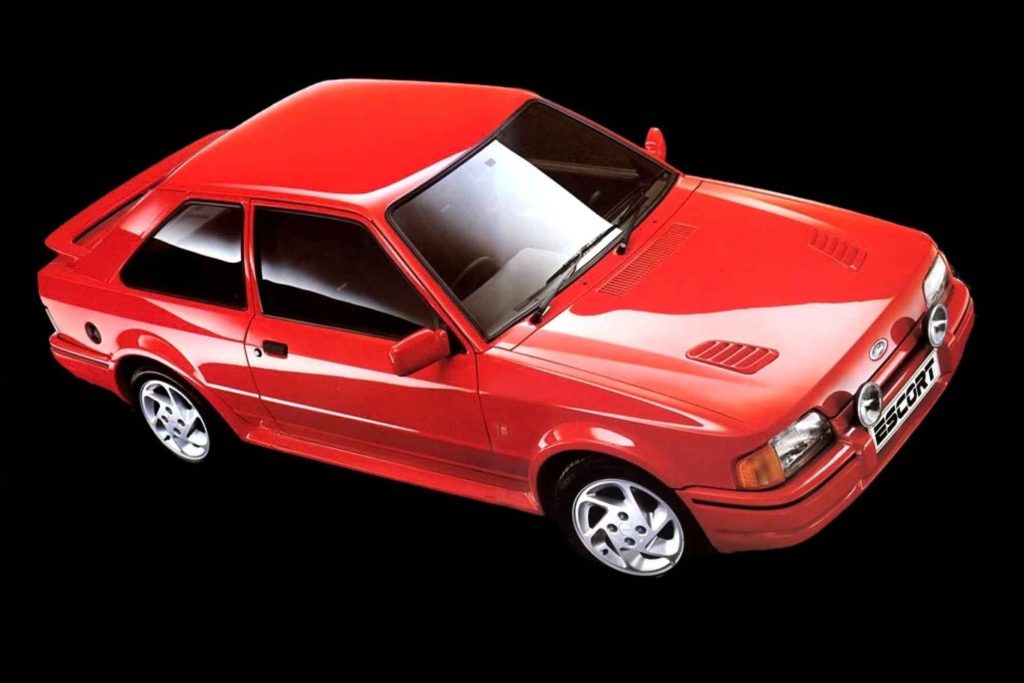
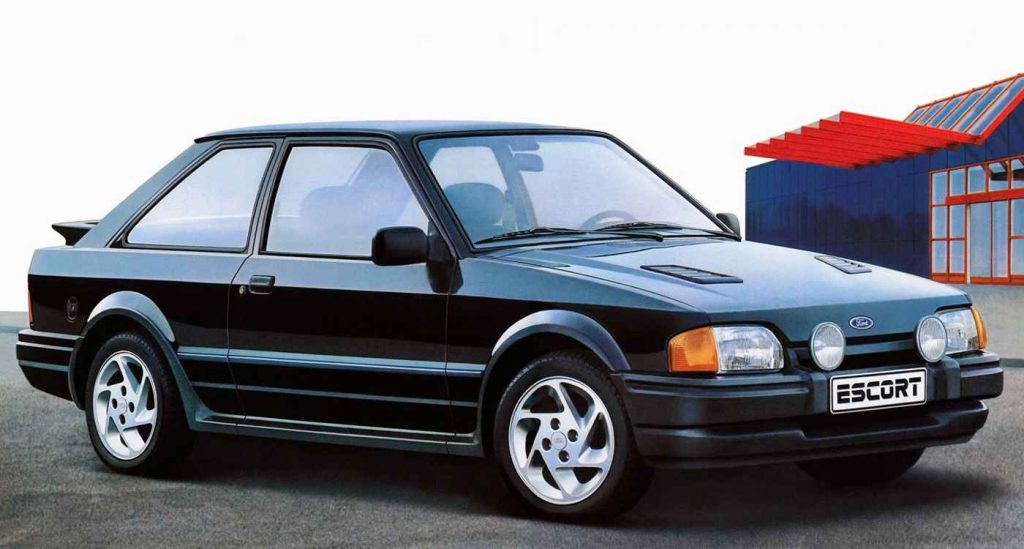
Design did a great deal of the selling. The Mk4’s smoother nose and softer lamps made the Series 2 less brittle-looking than the original, but Ford did not remove the menace. Body-coloured bumpers, wheelarch extensions, side skirts, rear spoiler and those six-spoke “sawblade” alloys gave it the right stance. The Series 1 looked like a homologation car in white warpaint. The Series 2 looked like what happened when that idea escaped into the streets.
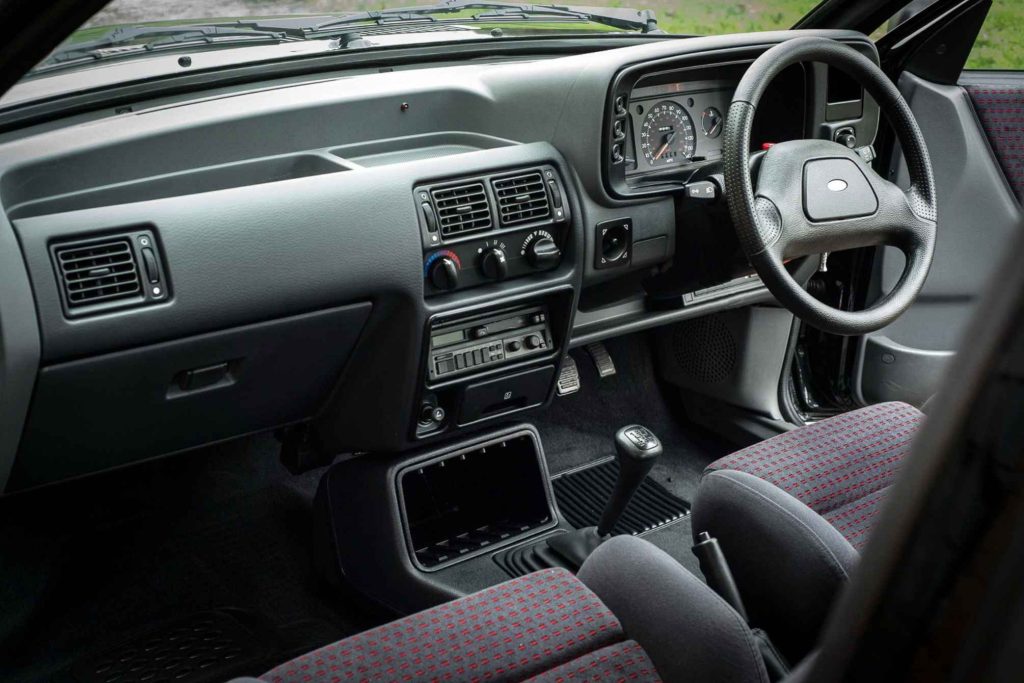
Inside, there were proper Recaros, a 140mph speedometer, simple instruments, a thick-rim wheel and Ford plastics of the sort that could make a 1980s cassette case feel luxurious. Yet the driving position was good, the cabin was usable and the boot did not require you to choose between luggage and dignity. The Escort was still an Escort, which meant parents, partners and employers could just about be persuaded it was sensible.
Contemporary road tests were less charitable than the brochure. Testers generally accepted that the RS Turbo had speed but not the polish of the best French opposition. The steering could tug, the ride could fidget and understeer was never far away if you went barrelling into a corner like a touring-car privateer with a death wish. The Peugeot had delicacy, the Renault had lightness, the Golf GTI had maturity. The Escort had boost pressure and attitude.
Were the criticisms fair? Yes, mostly. The Series 2 was not the sweetest hot hatch of its generation. Forty years later, however, that feels like missing the point of owning one now. The Ford’s flaws are also part of its character. It is more interesting than a period road-test ranking suggests because it says so much about what British buyers wanted: performance you could feel, a badge with weight, a bodykit that did not whisper and a vast tuning culture waiting to make things worse, faster or, more often than not, both.
Buying one now requires more discipline than nostalgia. Rust is the enemy before everything else. Check sills, floors, front valance, inner wings, bulkhead, battery tray, door bottoms, rear arches, boot floor and around the sunroof if fitted. Panel gaps and seam sealer need close attention because plenty have been crashed, reshelled or repaired badly. Confirm the identity, RS-specific trim, seats, wheels, decals and paperwork before getting misty-eyed.
Mechanically, the CVH is simple but not indestructible. Listen for tappet noise, smoke, low oil pressure and signs of head-gasket trouble. Check cooling, boost control, intercooler pipework and turbo condition, particularly on cars that have lived at raised boost for decades. Gearboxes suffer from tired synchros, clutch abuse and hard launches, while the LSD should pull rather than graunch. Suspension bushes, steering racks, brakes and the mechanical anti-lock system all need inspection. Standard cars are worth more than heavily modified ones unless the work is exceptionally well documented.
Prices have risen because Fast Ford nostalgia is no longer cheap. The Hagerty UK Price Guide currently puts a Mk4 RS Turbo at £8100 for a fair car, £17,100 for good, £23,200 for excellent and £32,500 for concours. In the real world, buy the best shell and most original specification you can. A cheaper one with paint bubbling in important places will become expensive with comic speed.
So, was the Series 2 overrated in period and underrated now? Probably. It was never the hot hatch connoisseur’s choice, but that was not really its job. It was the Ford people aspired to, the one that took the XR3i formula and added turbocharged silliness. The French may have built the better B-road instruments. Ford built the one half the street wanted to hear arriving.
Insure your classic with a specialist insurer
If you’re looking for cover for your pride and joy, why not consider Hagerty UK? Not only are we classic car insurance specialists, but we are enthusiasts at heart. Call us for a quote on 0333 323 1138.