Words and photography: Roland Brown
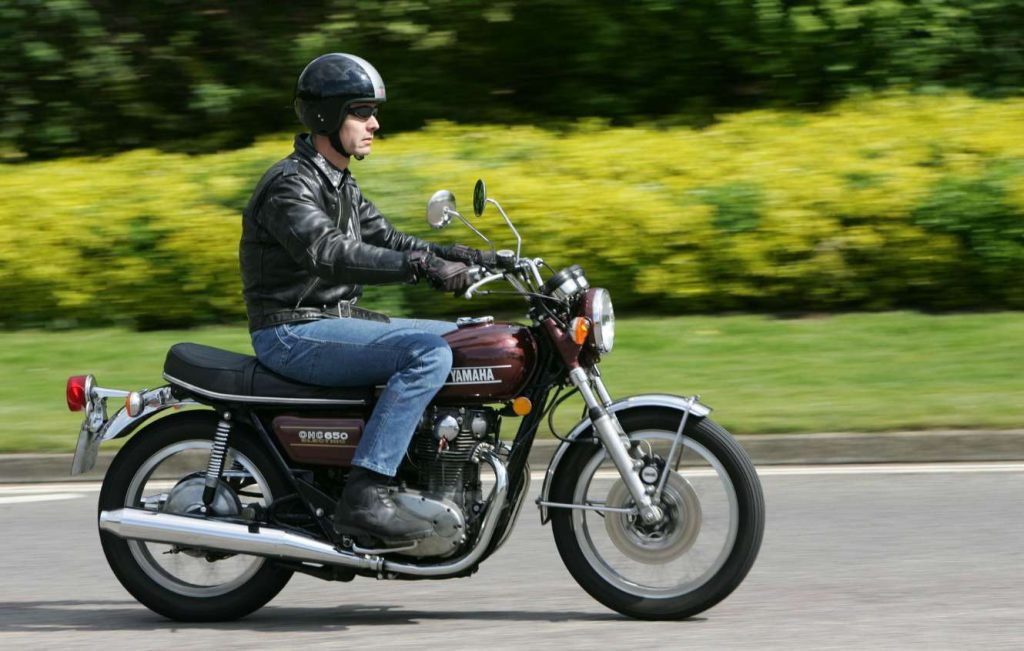
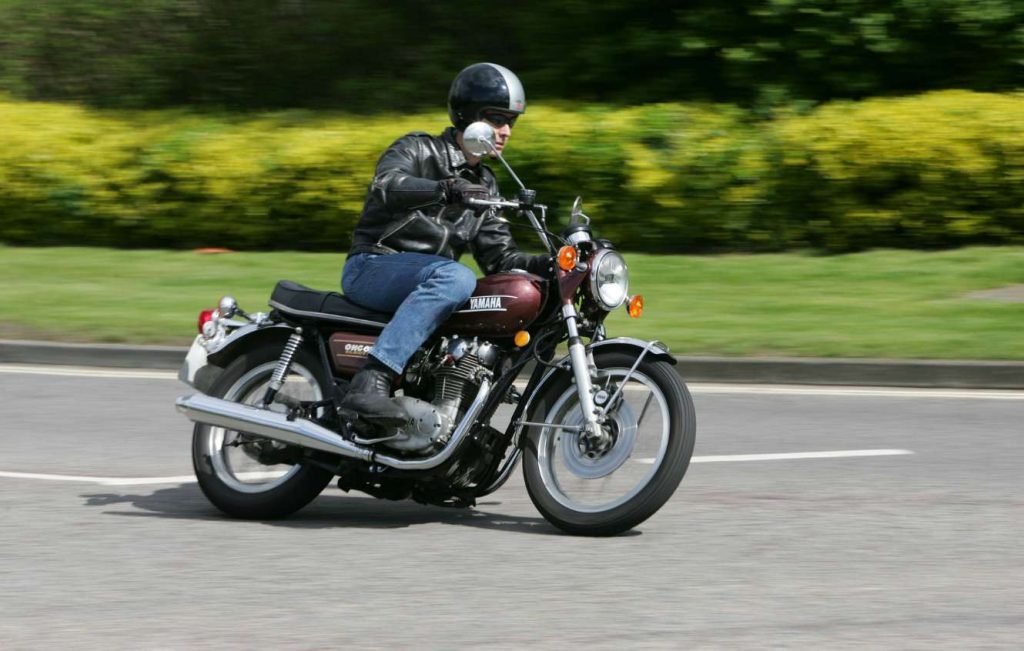
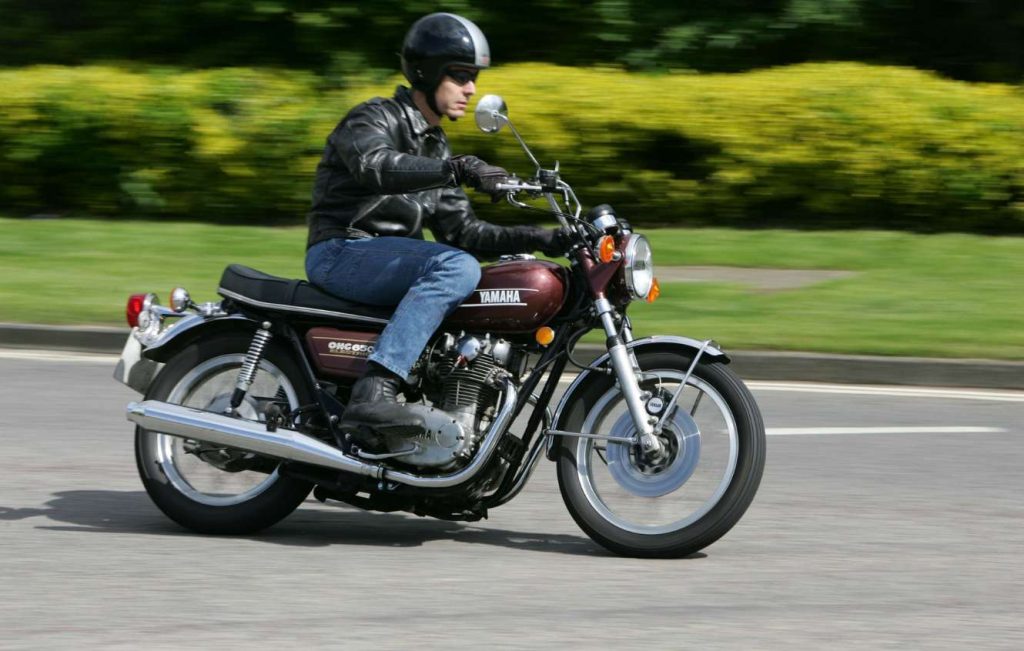
A spin on a well-preserved TX650A is an enjoyable way to spend a sunny afternoon. Yamaha’s parallel twin is respectably quick and reasonably smooth. It handles and brakes well enough to be fun on a twisty road.
Stepping off the TX, I could see why, in the mid-Seventies, Yamaha’s reworking of the familiar British parallel twin format was regarded as a worthy rival for BSA, Triumph and Norton. But it still seems strange that back then the TX was not just the Japanese giant’s top twin, it was the most glamorous model of the whole range.
Yamaha’s lack of anything resembling a superbike contrasted with the position of its rivals from the “Big Four”. By 1975 Honda’s CB750 four was into its sixth year; Suzuki’s GT750 triple was still going strong. Kawasaki’s mighty 903cc Z1, launched in 1973, had become the Z900 and still ruled the roads.
Yet despite huge success with two-strokes – and having recently unleashed the mighty four-cylinder TZ750 racebike – Yamaha had no roadsters with more than two cylinders. The firm’s sole attempt at a larger-capacity streetbike had been in 1972 with the TX750, also a parallel twin. Its balancer shaft had cut vibration but caused problems, so the model had quickly been axed.
This left the firm’s four-stroke flagship as the faithful 650cc twin, which had been called the XS-1 on its introduction in 1970, was renamed TX650 in 1973, and would become the XS650 for 1975 and subsequent years. American magazine Cycle World, for one, was scathing.
“When other manufacturers are dazzling the motorcycle world with innovative new models and displays of R&D genius in their top-of-the-line equipment, Yamaha seems content to rest on its laurels,” began its review in December 1974. “Or at least on the age-old appeal of the 650 Vertical Twin, which goes up against stiff opposition with practical but non-earthshaking credentials.”
More than half a century later, it’s hard to argue with that. But perhaps it’s also easier to ignore those superbike contemporaries and judge the long-running parallel twin on what it was, rather than bemoaning what it wasn’t.
Yamaha’s lack of a multi-cylinder challenger dated back to the different choices made in the mid-Sixties, when Japan’s two biggest manufacturers were planning to attack the growing large-capacity market in the US. Honda, which had built exotic Grand Prix racing four-strokes with up to six cylinders, had begun development of an inline four that would lead to the CB750.
Yamaha’s more cautious approach was to follow, and attempt to improve on, the market leader. This meant Triumph’s 650cc Bonneville twin, of which roughly 20,000 had been sold in the US alone in 1967. Although the firm had little four-stroke experience it had recently collaborated with Toyota in developing a six-cylinder, two-litre engine for the exotic 2000GT sports car.
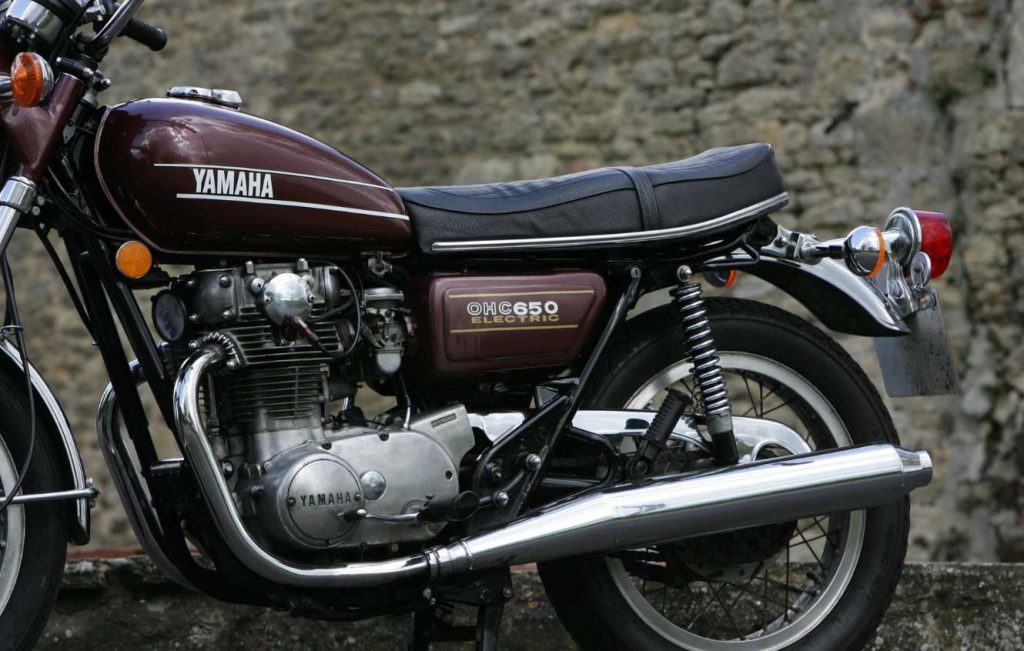
Yamaha’s engineers based their bike engine on two cylinders of the GT’s six, with a retained 75mm bore and slightly reduced 74mm stroke giving capacity of 654cc. They deemed the GT’s dohc top end too complex for motorcycle use so adapted it with an sohc layout, reportedly designing the new camshaft using the Yamaha Musical Instrument division’s computer at night, as they didn’t have a computer of their own.
The bottom-end was based on that of the 350cc YR1 two-stroke twin roadster and featured a 360-degree crankshaft, with pistons rising and falling together, as also used by most British four-stroke twins. Claimed maximum output was 53bhp at 7000rpm.
The resultant XS-1 went on sale in the States in early 1970. It impressed most who rode it with strong midrange performance, plus reliability and oil-tightness that were in contrast to the familiar failings of British twins. But vibration and sloppy handling limited its appeal, and it wasn’t sold in some export markets, including the UK.
Yamaha updated the twin in 1972 to create the XS-2, which gained a front disc brake and electric starter. This was billed by Cycle World as a “Stud Bike with a Starter, and One Helluva Stopper!”, and reached the UK in small numbers. A year later the twin was renamed the TX650, to sit alongside the TX750, but its only changes were a slightly larger, more rounded fuel tank and another fresh paint scheme.
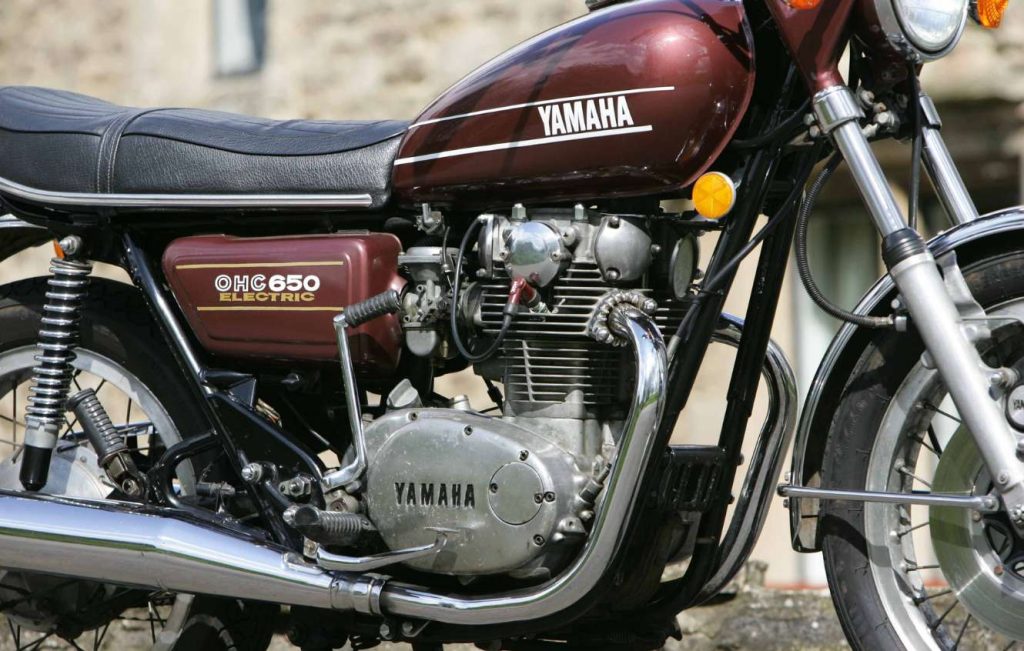
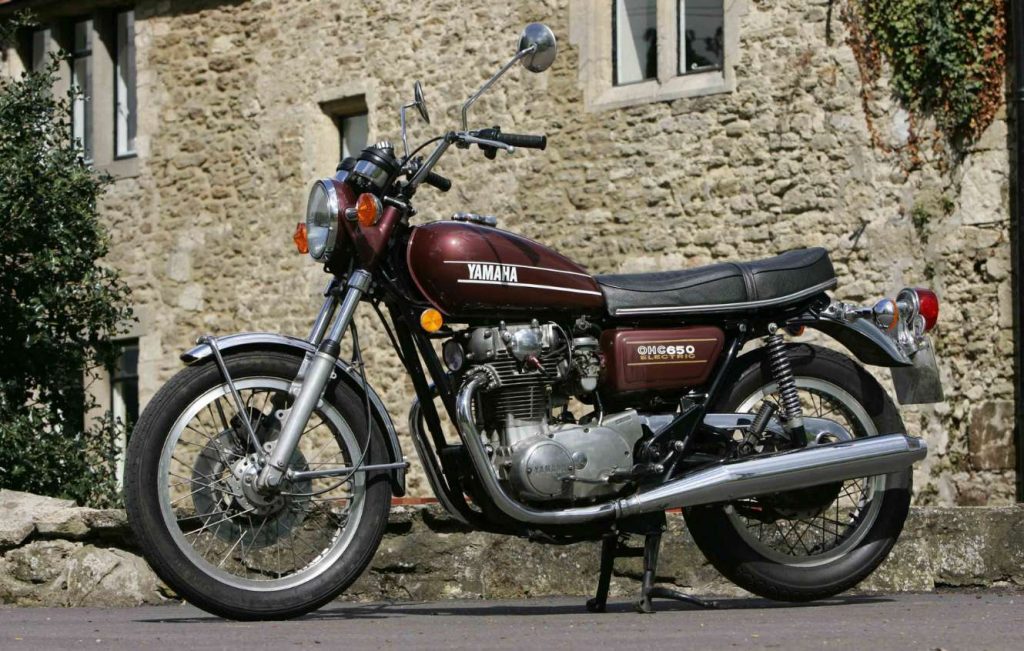
The significant update came in 1974 with the TX650A, whose engine featured a slightly lower compression ratio and some lighter internals to reduce vibration. Its main update was to the chassis – guided by a Brit, renowned former Triumph test rider and racer Percy Tait, who had been hired by Yamaha to aid development.
At Tait’s suggestion the frame was reinforced with gussets at the steering head and engine mounting plates. The swing-arm was lengthened, and the engine moved slightly forward and down to shift the centre of gravity. Suspension at both ends was firmed-up.
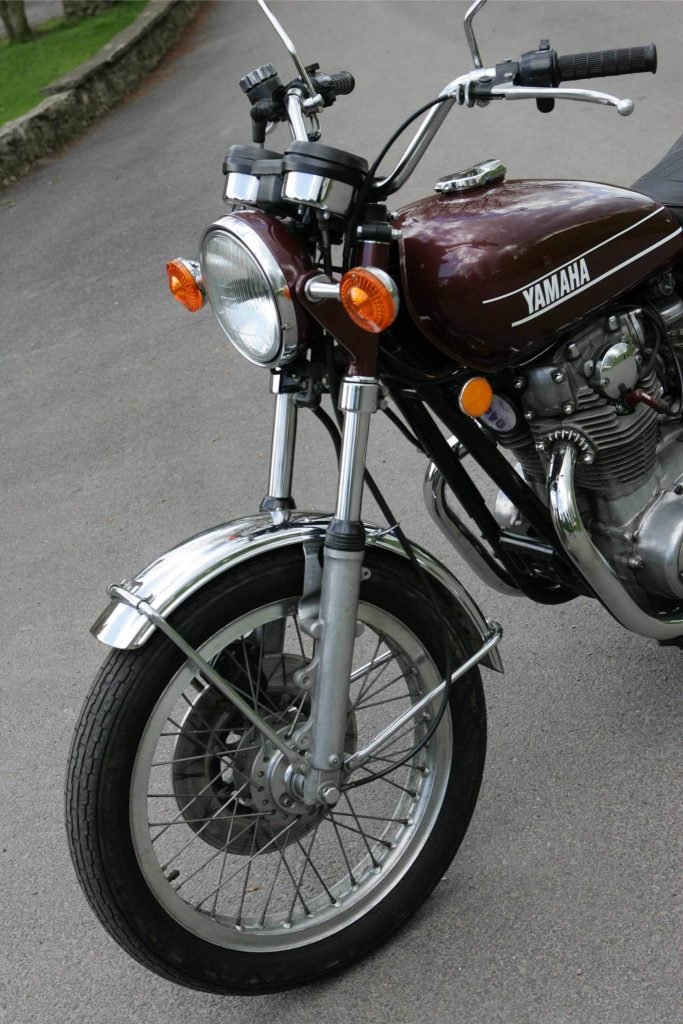
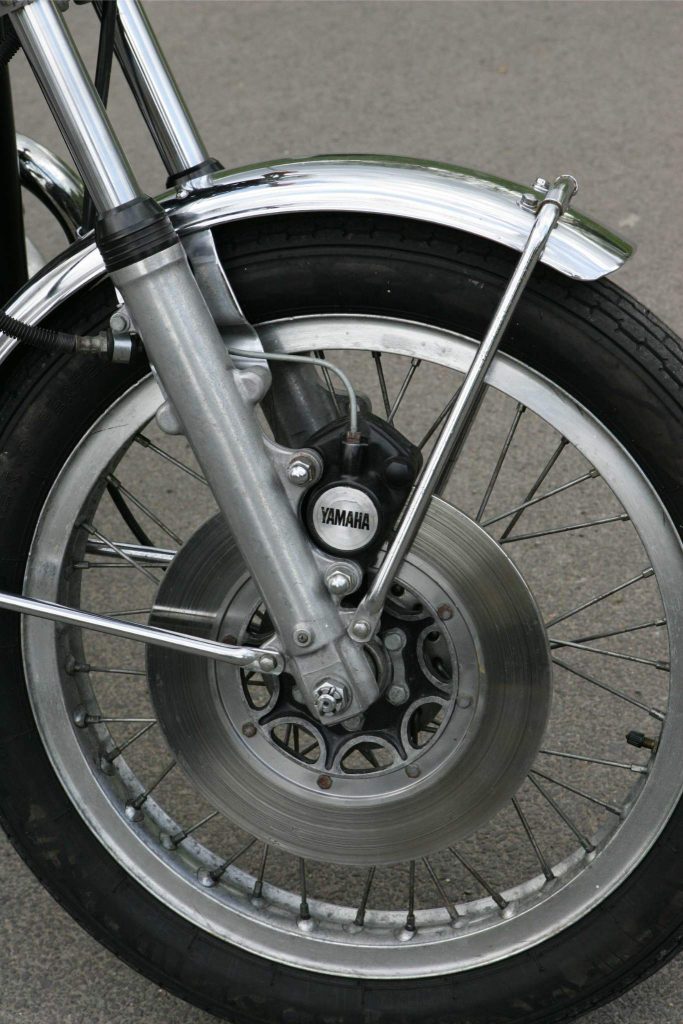
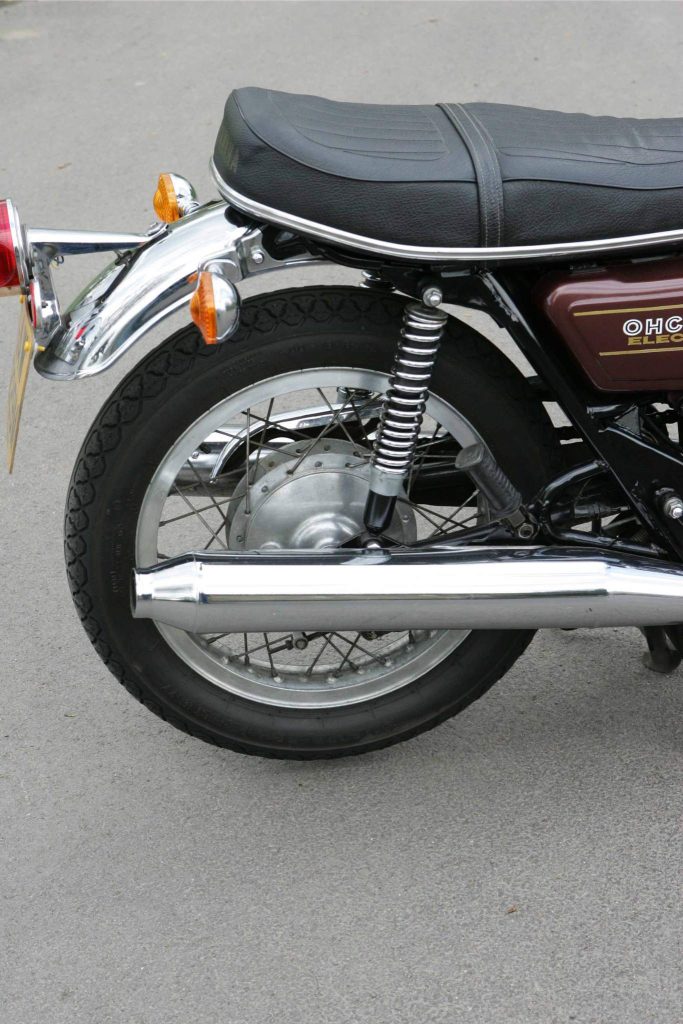
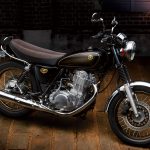
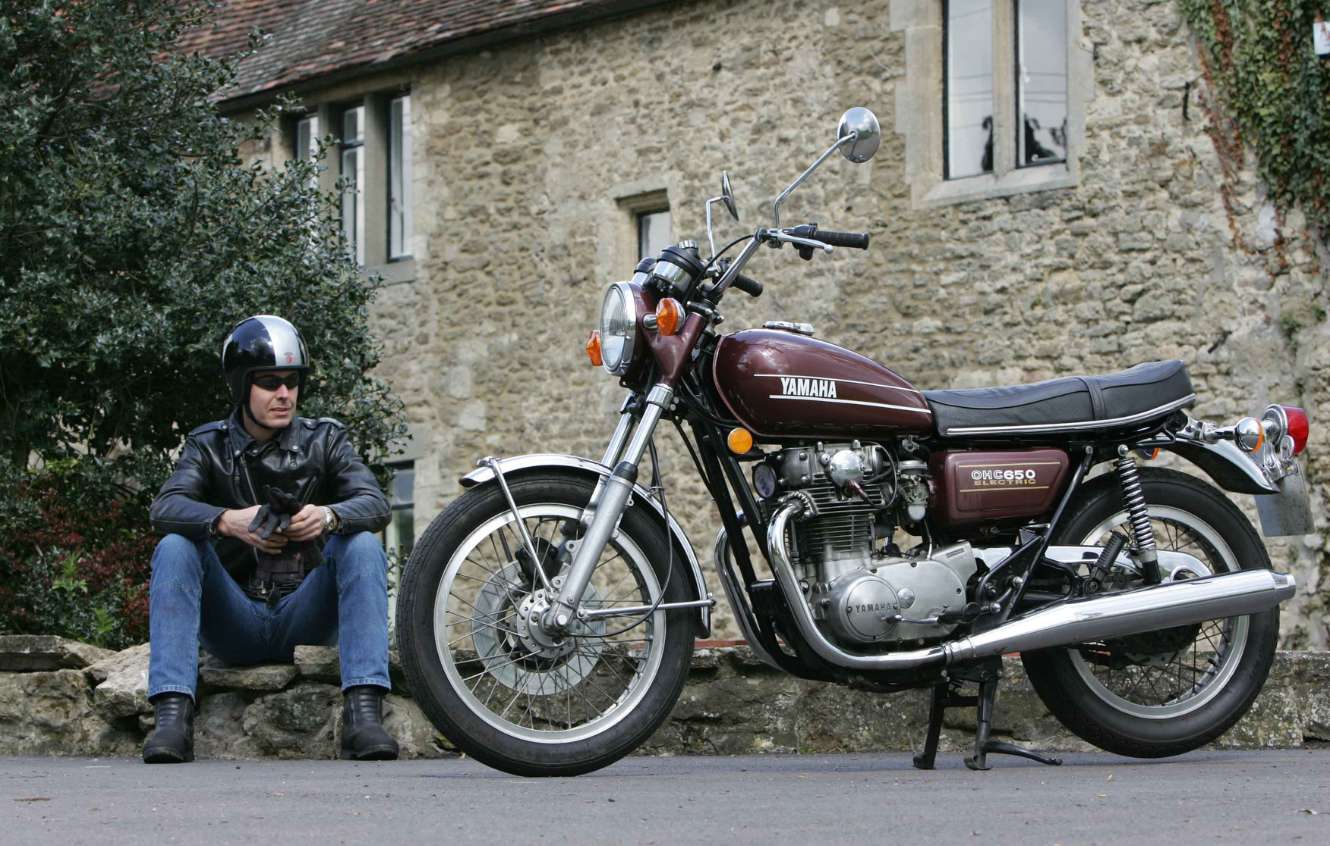
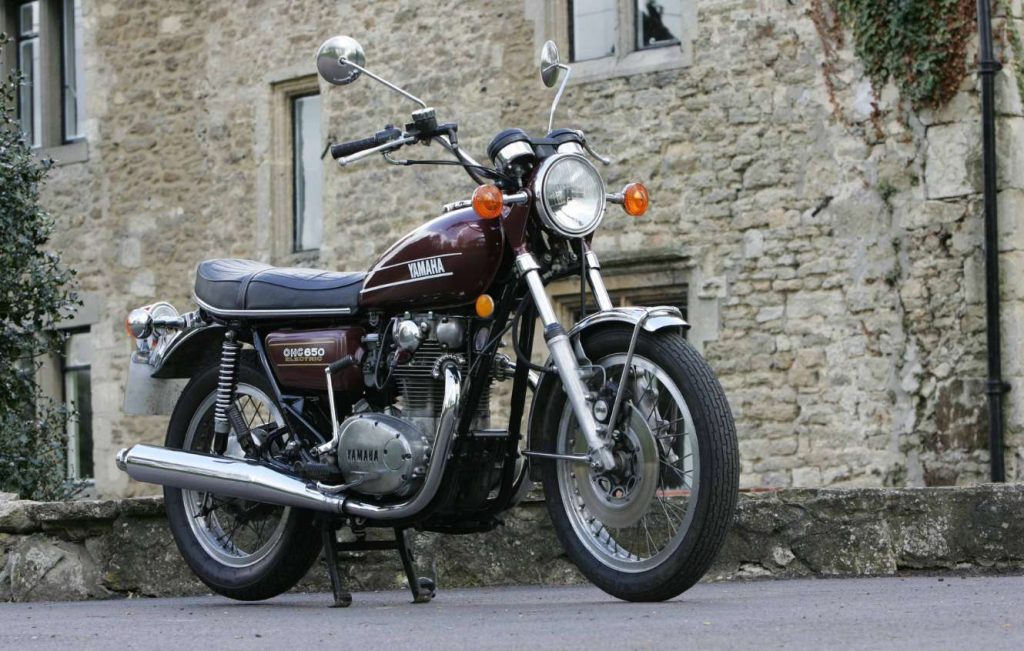
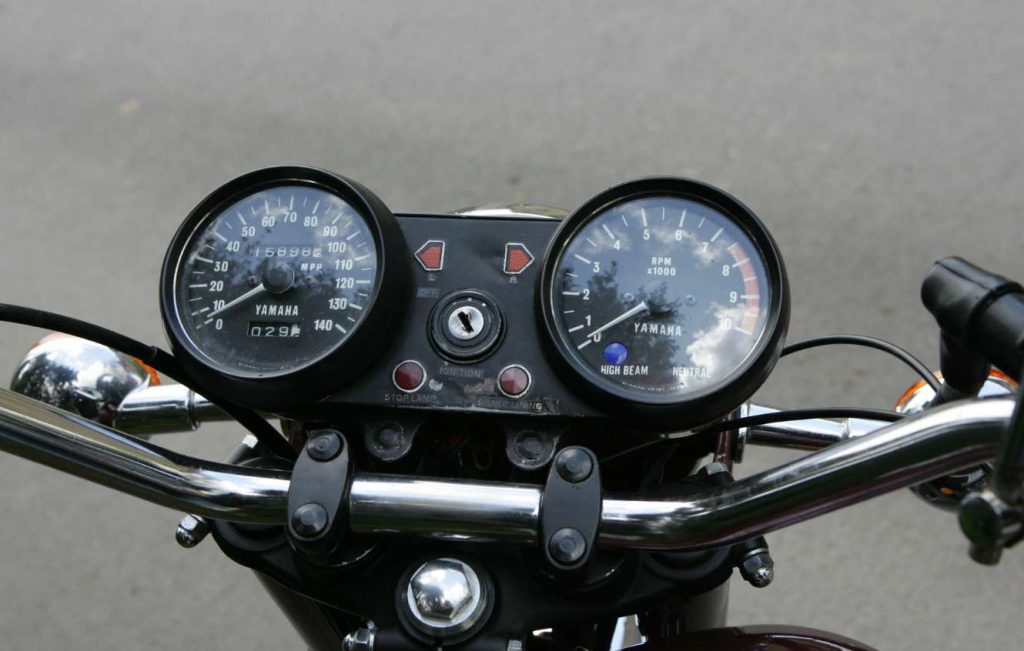
The TX650A also came with another colour change, this time a choice of Candy Green or the darker Cinnamon Brown, as displayed by this very original machine, which was in excellent condition with just under 16,000 miles on its odometer.
At around 200kg ready to ride, the TX was almost 20kg heavier than Triumph’s Bonneville (which by now was the 750cc T140 model). But the Yamaha still felt fairly light and manoeuvrable, after I’d thrown a leg over its broad dual-seat and reached up to grip the raised bars. It started easily on the button, and idled contentedly.
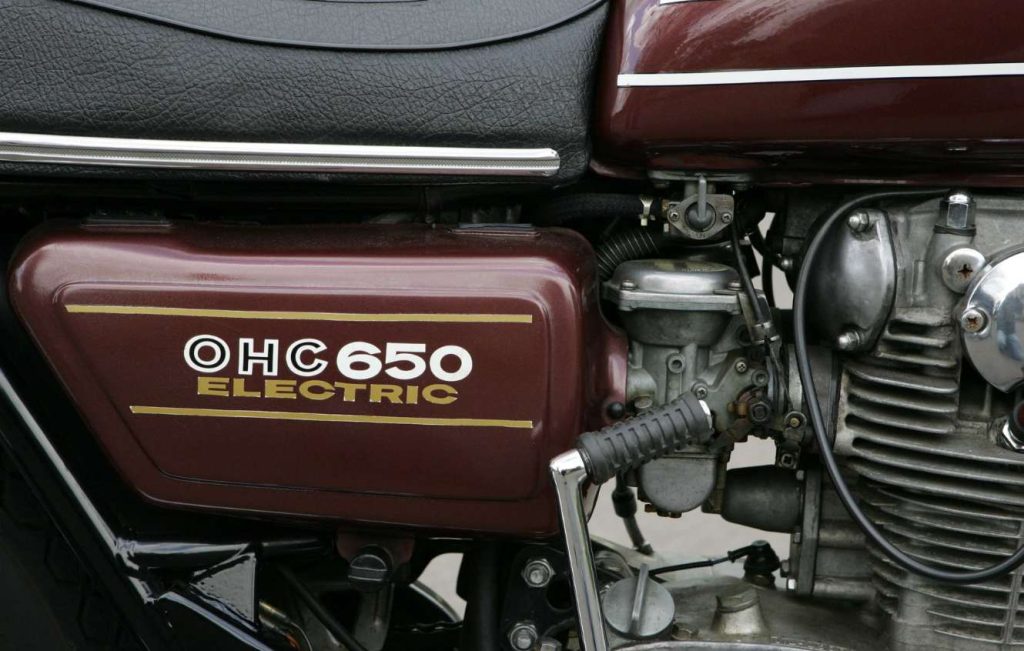
Low-rev performance was marred by a slight stutter below 3000rpm, probably due to the Mikuni CV carbs requiring attention due to lack of use. Even so, the Yamaha had plenty of torquey parallel-twin appeal. Its midrange acceleration was instant and strong, backed-up by a fruity sound from the silencers as the bike surged forward, wind tugging at my shoulders due to the upright riding position.
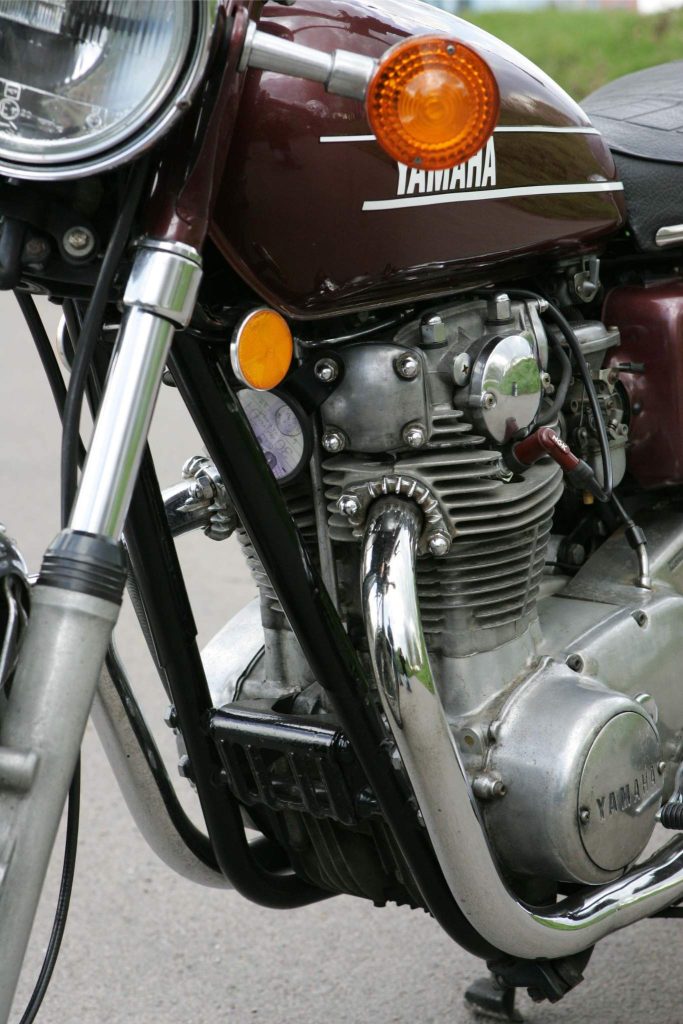
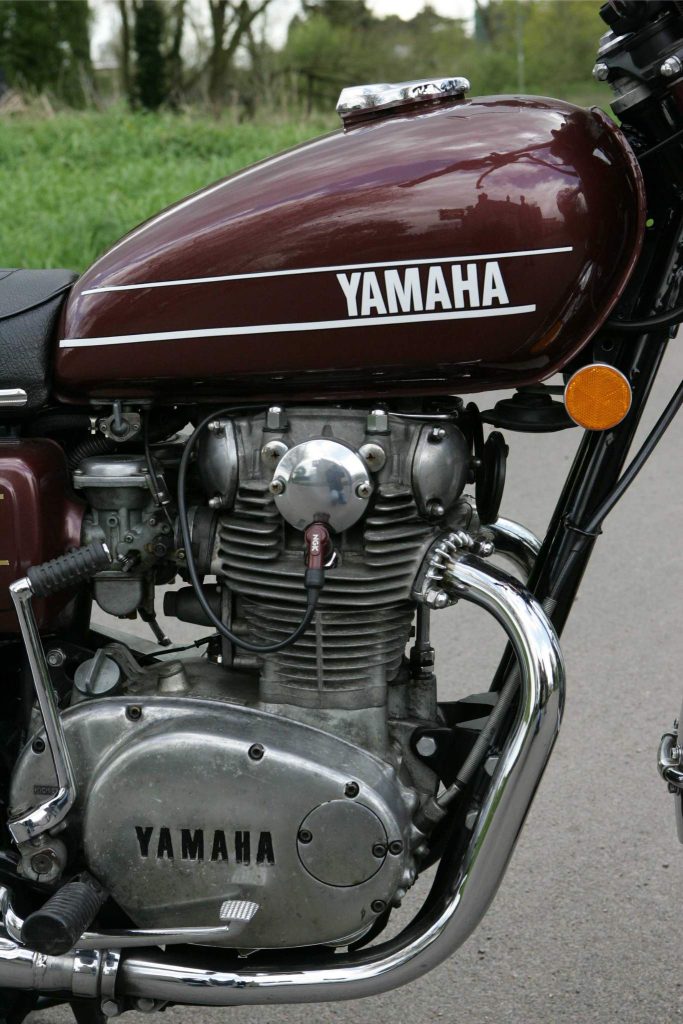
The five-speed transmission was slick, with no sign of the vague shifting mentioned in some contemporary tests. Despite the engine’s lightened internals there was still some buzzing through bars and seat from about 4500rpm. The TX cruised smoothly at 70mph, which generally felt fast enough, given the riding position. Revved harder it was good for a teeth-rattling indicated 110mph flat-out, right on the red-line at 7500rpm.
Handling was distinctly better than I recall that of the XS-1 that I once rode. The wide bars meant the Yamaha could be made to change direction fairly quickly, despite its old-fashioned geometry and 19-inch front wheel. Yet it was stable in a straight line and didn’t give any worrying moments when cranked through a series of curves.
More aggressive riding prompted a slightly vague feeling, doubtless not helped by the forces being fed through those high bars. But the suspension was much better than I’d expected. The forks worked sufficiently well to suggest that their oil had been changed to good effect at some point. And the aftermarket shocks were more compliant than those the TX would have worn when new.
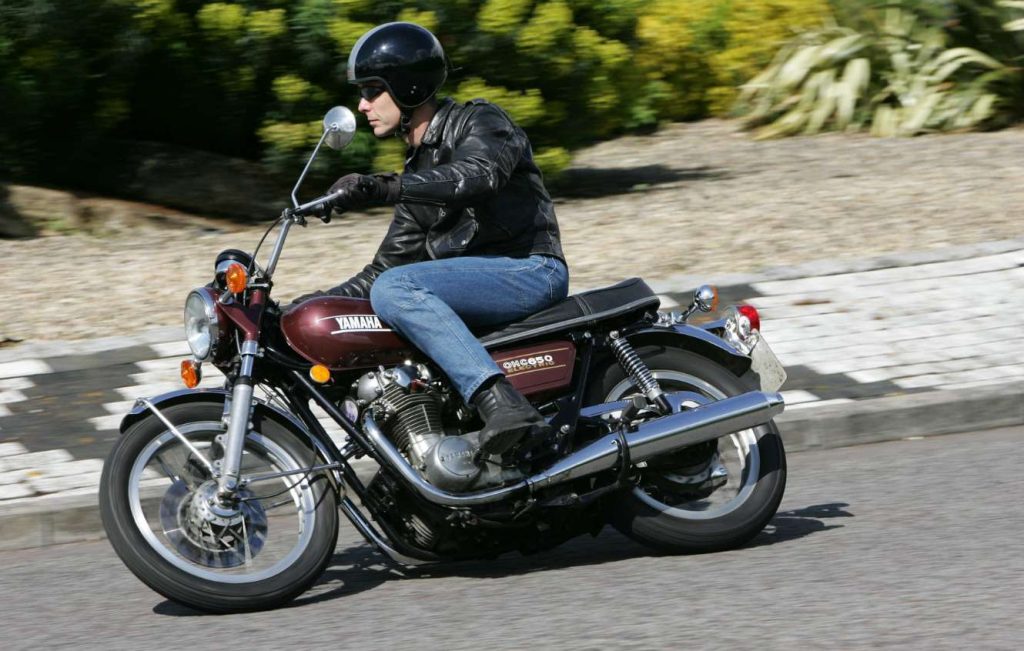
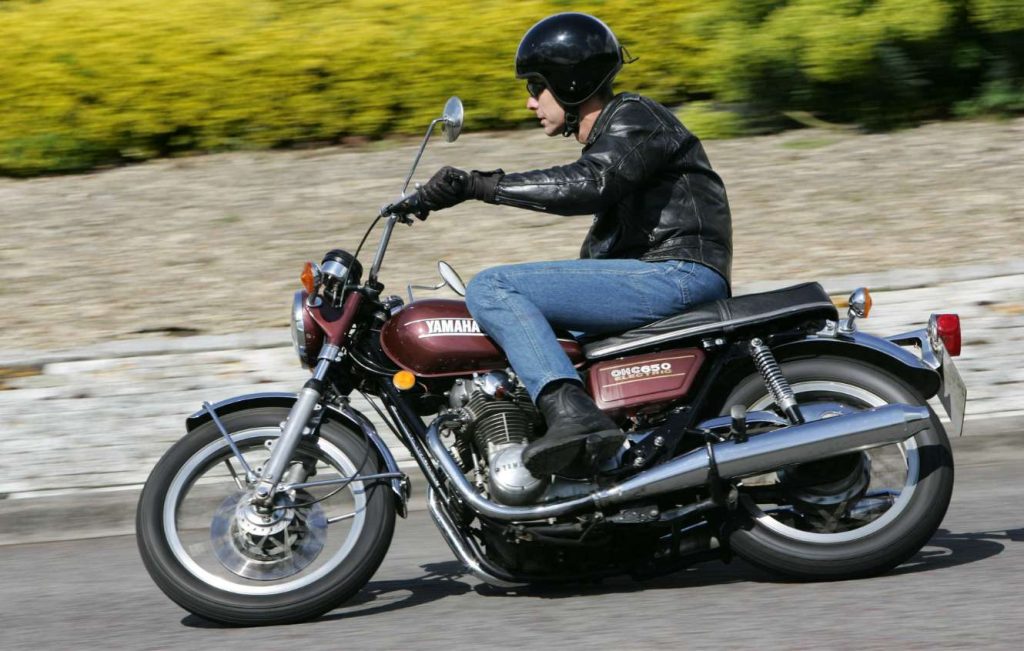
Such changes were welcome because the TX650A’s stiffened suspension had not been especially well received at the time. Cycle World commented that “rough surfaces bounce the machine around to the point of grip-tightening concern”, and recommended that fork tuning and accessory shocks were in order for any type of riding.
Yamaha’s front disc brake had made a more positive impression, but this bike’s felt wooden and lacking in power, making me glad of the rear drum’s assistance. Modern Metzeler tyres brought grip levels up to date, and allowed use of the reasonably generous ground clearance.
The TX650 was apparently sufficiently well developed for Yamaha, who did little to update it for 1975. They merely gave it another new paint scheme and changed its name to XS650B, in an attempt to distance it from the by now disgraced TX750.
Meanwhile the twin had been generating favourable feedback on the racetrack, albeit in heavily modified form. Yamaha USA’s young ace Kenny Roberts had beaten the Harley-Davidson hordes in numerous flat-track races on the way to winning the Grand National championship in 1973 and ’74.
Despite this the XS had always appealed more to laid-back riders than the sporting crowd. And it had made less impact in Europe, where it was less competitively priced against British twins, and where more riders were willing to put up with poor build quality to gain the badge and superior handling of a BSA, Triumph or Norton.
By 1976 enthusiasm for the venerable twin was fading but the XS line received a timely boost with the growing popularity of “factory customs”, especially in the States. The XS650SE was launched for 1978 featuring high, pulled-back bars, stubby exhausts, stepped seat and 16-inch rear wheel with fat tyre. Known as the Special, it was an instant hit, and was updated several times while remaining in production well into the Eighties.
Meanwhile, Yamaha had belatedly joined the superbike club – firstly in 1977 with the XS750 triple, then a year later with the four-cylinder XS1100. Ironically, both models struggled to compete with rivals from the other Japanese firms, although the big touring four won admirers in the States. Yamaha wouldn’t have a global four-stroke hit until the FJ1100 arrived in 1984.
So for all the grumbling about the TX650’s lack of glamour and modest cylinder count, it was just as well that the humble twin was around throughout the Seventies to keep Yamaha’s four-stroke flame burning. Especially as it provided enjoyable, reliable transport for plenty of riders along the way.
Are you lucky enough to have owned or ridden a Yamaha TX650A? We’d love to hear your stories in the comments below.