Words: Craig Cheetham
Photography: Craig Cheetham
Japanese bikes that changed the world: the Yamaha RD250
The 1970s was a decade of rebellion, from the rise of punk to the Stonewall riots, the emergence of environmentalism and the power of the protest song.
To be young at a time of great uncertainty, with the end of the Vietnam war, spiralling inflation and an imminent economic collapse, wasn’t easy, but it was empowering. Among a rather chaotic period in history, there was a lot of hope among the youth. In automotive terms, much of it came from Japan.
While Datsun was teaching British Leyland how to build a decent sports car, the country’s booming motorcycle market was also turning convention on its head. Back in 1972, the maximum engine capacity for a learner bike was 250cc – meaning many a youth could buy an L-plate and a motorbike and discover their own freedom, many not even bothering to take any form of driving test.
But if you wanted to buy British, your options were limited – the BSA Starfire 250 being about as good as things got. It was a heavy bike and quite old-fashioned, but had a deserved cult following among younger riders. Then, the Yamaha RD250 arrived…
What was special about it?
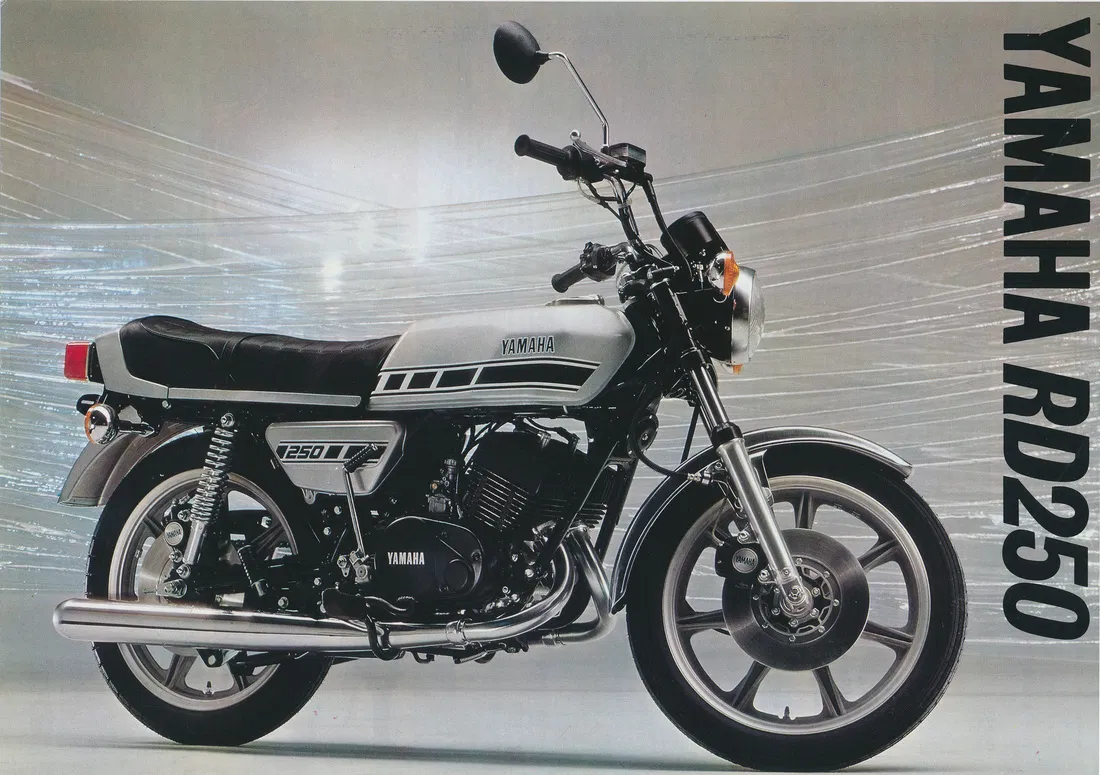
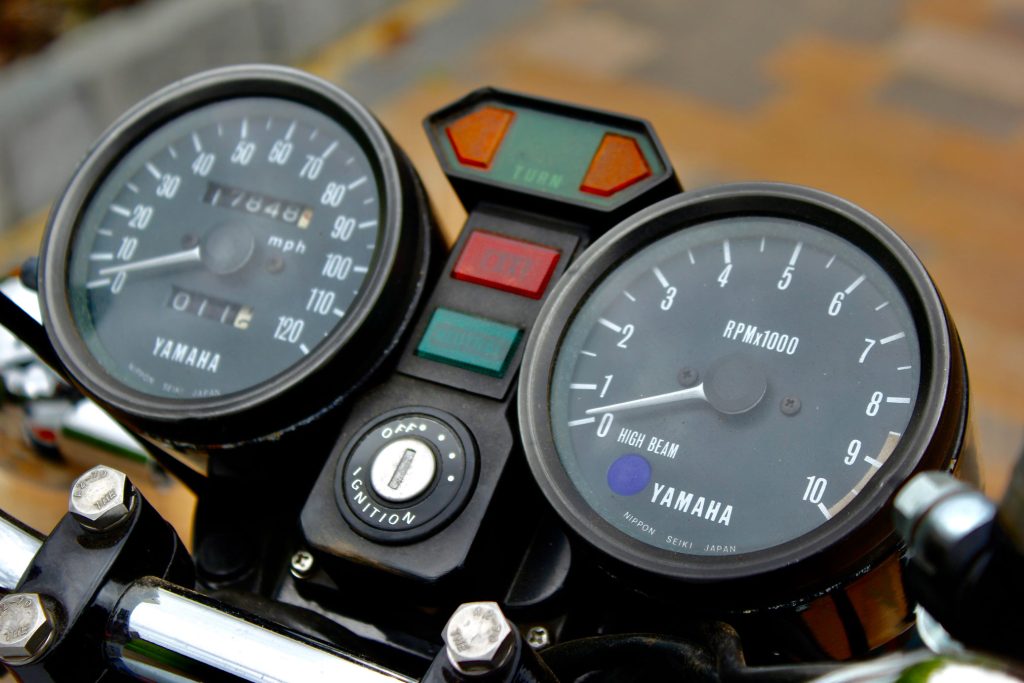
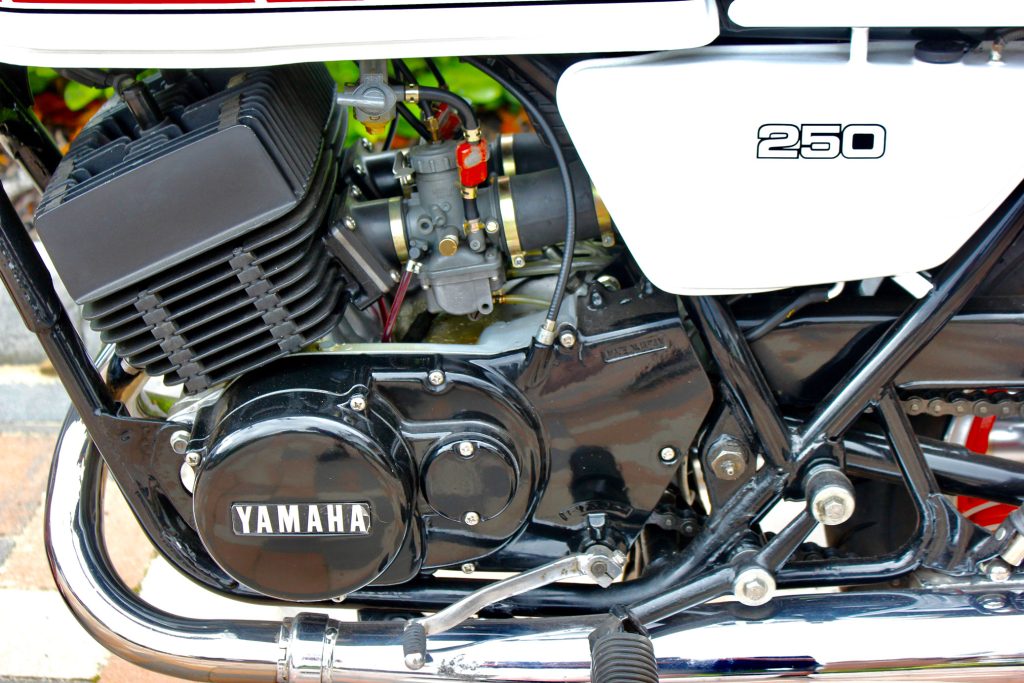
The two-stroke parallel twin RD250 had 35.5bhp, which in the Yamaha’s lightweight frame gave a top speed of 93mph. RD, meanwhile, stood for ‘Race-Developed’, which, along with the impressive pace, gave the bike huge appeal among the leather-clad youth of the early Seventies.
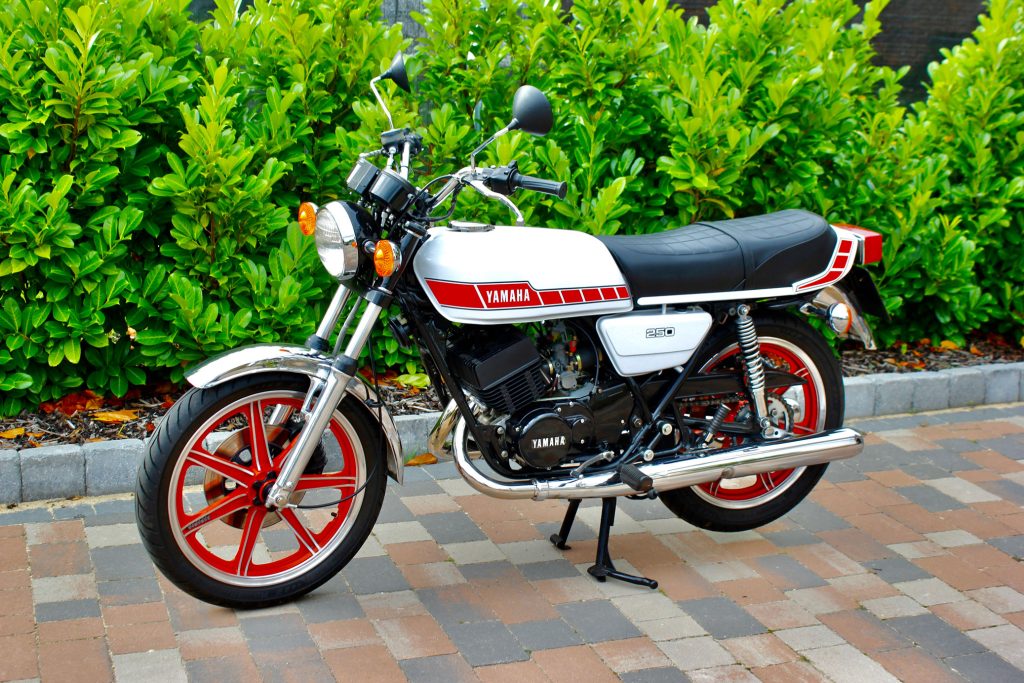
It was a handsome bike, looking much like a scaled-down version of the ‘UJM’ style bikes pioneered by the Honda CB750, but in a smaller, leaner, learner-friendly package. And at £427 (around £5,100 in today’s money), it was accessible to those with full-time jobs, no mortgage and no kids.
Its liveliness came from its engine design, while it also had a twin-piston calliper front disc brake and a five-speed gearbox – things that were practically unheard of to British bikers before. Even better, owners soon discovered the gearbox in fact contained six sets of cogs, with sixth gear blanked off with a stopper on the selector mechanism. It didn’t take them long to find a workaround, by which point the RD became a 100mph bike.
How did it evolve?
In 1976 the RD250 was given a makeover, with a new coffin-shaped tank – though the frame remained the same. It’s this model that’s very much the icon of its era, continuing largely unchanged until 1980, its owners amassing outside chip shops, cafés and in pub car parks with a swagger of their own, happy to be a custodian of what was the bike to own.
At the start of the 1980s, it changed even more significantly with the launch of the RD250LC, which stood for ‘liquid cooled’. With 35.5bhp, the new RD250LC was as quick as the old RD350 had been, with a top speed of over 100mph, yet you could still ride one with no more than a provisional licence and L-plates.
Other changes included a new race-style chassis, including a mono-shock rear end – it really was the closest you could get to a 250cc sports bike. The final change came in 1984, when a fairing was added for extra safety, but by then, the RD250 was no longer suitable for learners…
Learner controversy
For years, the 250cc motorcycle market thrived in the UK, thanks to a law that dated back to when bikes were heavy and slow, before the Japanese brands turned that market on its head.
But it was when Yamaha increased the power output of the RD250LC and it became capable of over 100mph that the UK government finally sat up and took notice. For a year or so, it flew out of showrooms, with keen young buyers flocking to buy the fastest bike they could for as little money as possible. Inevitably, the number of accidents rose, and insurance premiums spiralled as a result.
By February 1983, after much lobbying, the law was changed and the maximum engine size allowed for learner motorcyclists was dropped to 125cc – a ruling which still exists to this day. Unsurprisingly, the market for 250s collapsed overnight, both new and used, as those with full licences much preferred bigger-engined bikes. Many were scrapped because they had become utterly worthless, which seems like sacrilege in today’s collectors’ market.
How much is a Yamaha RD250 today?
Thanks to its legendary status and the power of the drug that is nostalgia, the RD250 tends to command a slightly higher value than most 250s of its era – think of it as a two-wheeled equivalent to a Ford Capri; once cheap, ubiquitous and favoured by the youth, but now in a cycle where demand exceeds supply.
For a project in running order, you’ll need about £3,500, rising to £6,000 for a decent example. A good one will set you back around £8,000 and you’ll need upwards of £10,000 for a great, restored example.
Do you own a Yamaha RD250? Would you recommend it to fellow bike lovers? Let us know below.
Read more:
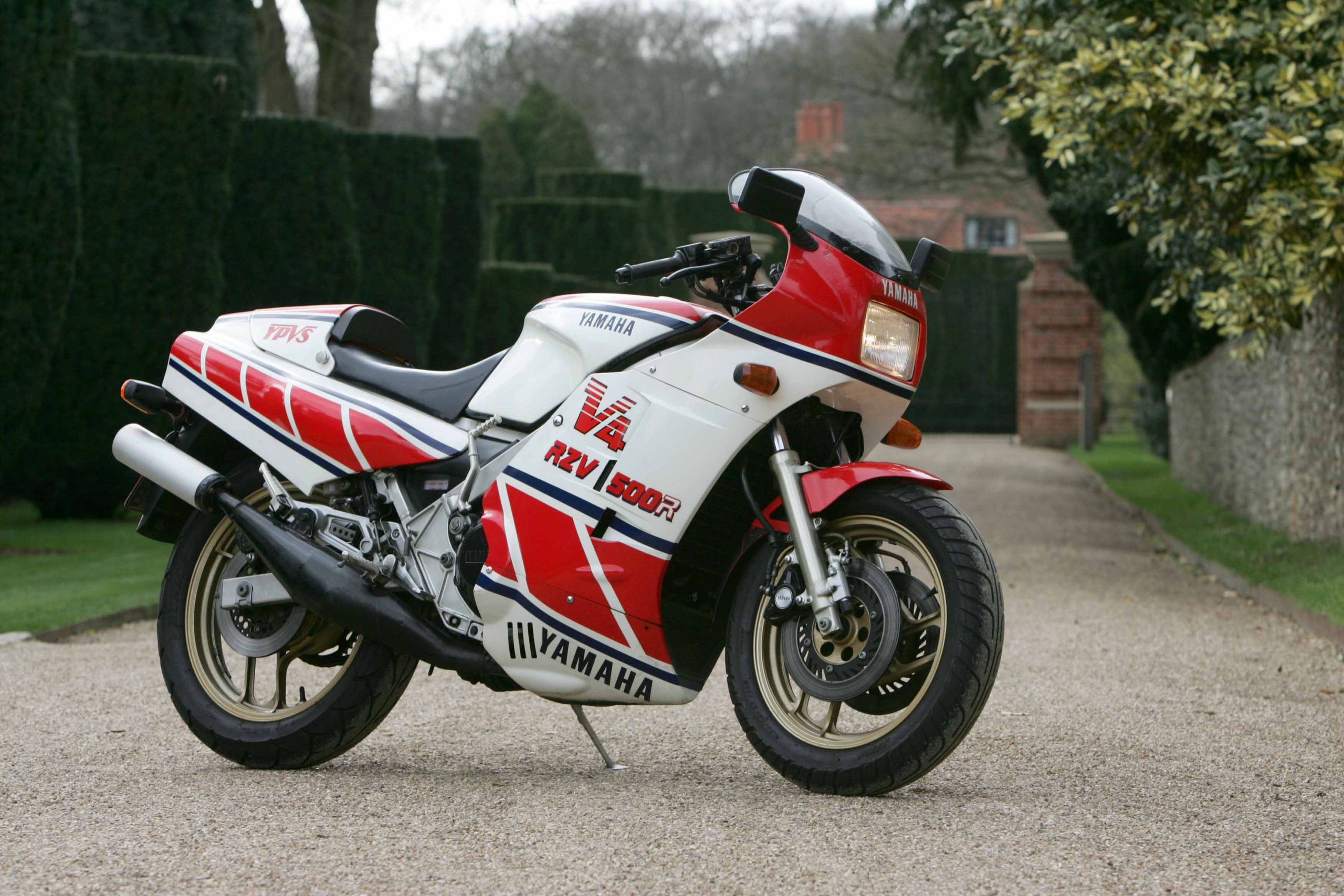
Yamaha RZV500R
The Yamaha RD350 was the Best Bike of the ’70s
Yamaha’s V-Max was the motorcycle that thought it was a muscle car