Words: Nathan Chadwick
Photography: Hagerty UK
The 2026 Bull Market List highlights cars with the makings of true long-term favourites, but figures and forecasts only tell part of the story. What really matters is how these cars feel to own and drive.
To get beyond the data, we spoke to owners and dealers about what makes each choice stand out, and what to watch for when buying. The Bull List may track the market, but Hagerty’s focus is on the reality of living with these cars, on the road and in the garage. So, over to the true heroes – the stewards of the Bull Market List cars. Here we take a look at the MGA, VW Golf GTi Mk2, Ferrari F430, Ford Transit Mk1 and Vauxhall Viva.
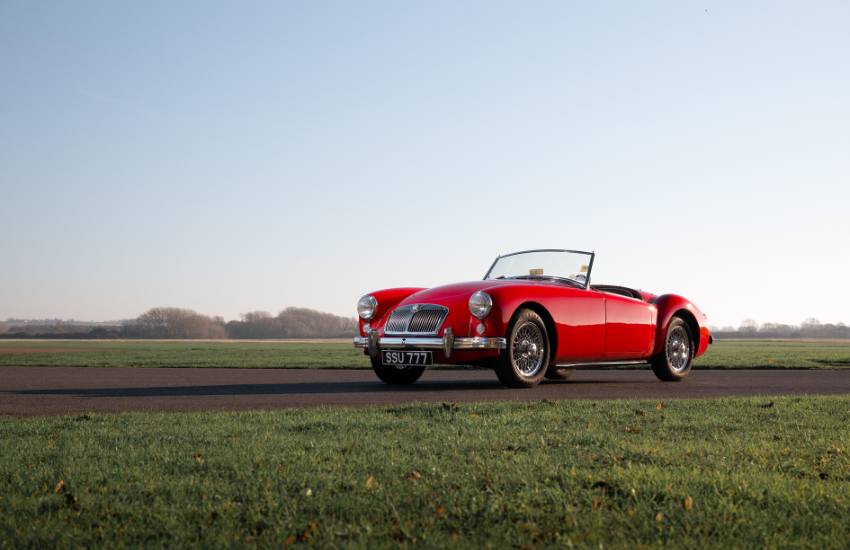
MGA
If you’re used to more modern cars, the idea of running an MGA may bring up some unpleasant stereotypes about British sportscars. The reality of running an MGA might just surprise you…
Paul Wooding has owned this MGA since 2019. “It was my first classic,” he explains. “A group of friends were planning to drive to the Le Mans Classic in 2020. I had a Caterham at the time, which didn’t feel quite right for a long continental run, so I started looking for something older. I hadn’t considered an MGA until I saw this one – and it was an instant yes.”
Despite its age, Paul finds the MGA perfectly usable. “Coming from a Caterham, I’m used to being the smallest thing on the road – the MGA feels almost substantial by comparison,” he grins. “The car comes alive on B-roads – precise, light and genuinely engaging.”
The original four-speed gearbox has no synchromesh on first or second, so he converted his car to a five-speed Ford Type 9. “It transforms usability – my wife and children drive it like a modern car,” he says. “It keeps up with traffic comfortably, and on French B-roads it’s in its element.”
Feeling tempted? It’s understandable – and the biggest worry is rust. “This car originally lived in dry-state Arizona before returning to the UK, so it had escaped the worst of corrosion,” he says. “On an MGA the A- and B-pillars, sills and chassis legs are critical: moisture gathers there and repairs can be extensive. If you can find a rust-free or properly restored car, you’re halfway there.”
Beyond that, Paul says the MGA is straightforward to maintain. “Everything unbolts – you can strip one to a bare chassis with basic tools,” he says. “During lockdown I carried out a full nut-and-bolt rebuild in the garage; nothing about it is intimidating mechanically.”
Paul reports that parts availability is exceptional – and you could build an entire MGA from new components if you wanted to. “Many Lucas items are shared with period cars from other marques, so nothing is scarce,” he says. “Specialist suppliers are everywhere, and the model is simple enough that most maintenance can be done at home.”
However, it’s the looks that warm the heart most, according to Paul. “It’s hard to take a bad photograph of one,” he says. “The lines are beautiful from almost any angle – classic British design at its best. But more than that, it makes people smile – of all the cars I own, the MGA gets the warmest reaction. It’s charming, simple and full of character. Every time I get in it, I grin – it’s a keeper.”
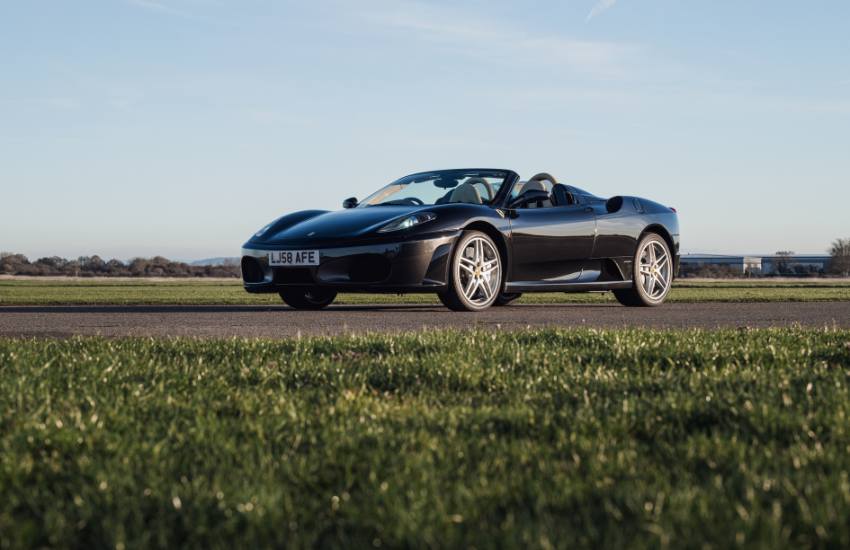
Ferrari F430
The prospect of running a supercar might seem like the ultimate flight of fancy – for all those Miami Vice dreams, there’s a perception of a troubling breakdowns on every trip out and parts costs that will dry the back of your throat quicker than the car’s 0-60mph time. However, post-2000 Ferraris are cut from very different cloth to troublesome earlier cars – but just how easy to live with are they?
This 2008 Ferrari F430 Spider F1 is up for grabs with Bicester Motion-based dealer Hangar136. For 32-year-old Associate Director Laurence Pawson, the car hits a generational sweet spot. “The 360 was the poster car of my childhood, then the F430 arrived and felt like the next big leap,” he explains. “Now values have settled to a point where they’re suddenly attainable – still a lot of money, but realistic for what you get.”
Manual cars command a significant premium – you’d need to double the £65k purchase price of the F1 car you see here – but Tom argues the F1 paddleshift gearbox deserves more credit. “People slate it, but drive a good one properly and it’s far better than its reputation suggests – with the F1 gearbox, the F430 offers serious value,” he says.
Laurence says the key buying checks are the state of a potential purchase’s exhaust manifolds, which can crack after too much interaction with speed humps, and for F1 gearbox cars in particular, the amount of clutch wear. “Carbon-ceramic brakes can also be eye-watering to replace – we were recently quoted for four discs at £16k – so many owners sensibly convert to steel.” Comprehensive servicing is essential, he adds. “They’re robust when looked after, but values have dropped to a point where some cars inevitably slip out of careful ownership. Go in with your eyes open.”
The car he’s currently selling proves the point: a right-hand-drive F430 with carbon bucket seats and 42,000 miles. “High miles for a Ferrari, but it drives beautifully,” he says. “If it were a Ford with that mileage, people would call it low. With Ferraris everyone panics – but it’s a fantastic car.”
Despite the mechanical similarity with the 360, the F430 is markedly different. “It’s a major step on from the 360 – more power, a sharper engine, a noticeably more modern feel – and still miles cheaper than a 458.”
Ultimately, he says, a buyer will gravitate toward the car they fall in love with. “However, the 430 sits in a real sweet spot for performance and price,” he adds.
Thanks to hangar136.com for the loan of the car.
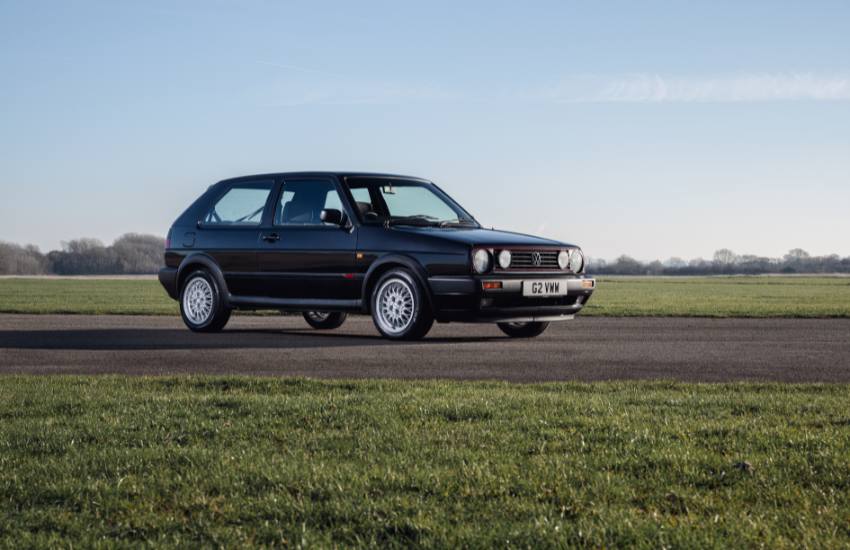
VW Golf GTI Mk2
The VW Golf GTi is the star of the Bull List’s hot hatch index; it’s also well known for being much more robust than its great period rivals, the Renault 5 GT Turbo and Peugeot 205 GTI. However, age gets to us all – does the Golf GTI Mk2 still provide all the thrills without the wallet spills in 2026?
The car before you is an 8v car from Volkswagen UK’s heritage fleet – and though it was the 16v GTIs that drew most attention back in the day, all examples of the breed are piquing interest. For Steven Renwick, who owns a 1988 8v, the appeal is simple: “I turned 17 in 1988 and the Golf GTI was the car to have – I know magazines idolised the 205 GTI for its handling and Ford guys love their XRs and RSs, but the Golf’s silhouette just looked perfect for the time,” he says. The only problem was that, at the time, he couldn’t afford a GTI and had to make do with a bottom-of-the-range model. “I still loved it – unlike other cars of the era it felt robust and solid, and dependable. It could have been a bit quicker though.”
He finally scratched the itch to own one four years ago during the COVID pandemic, and he’s never looked back. “Just sitting in it takes me back to the 80s and early 90s – the seat fabric, the smell of the plastic, the knobs and switches. It’s a time machine to a much simpler time,” he says.
Unlike a certain other 80s time machine, the Golf doesn’t rely on difficult-to-source plutonium. “The spares support really is amazing – though some trim pieces can be challenging to get hold of, everything mechanical is available, and it’s relatively easy to service too. You don’t need a specialist on-hand to help you out, though I do prefer to take mine to someone who’s an enthusiast for these cars,” he says. Steven says both the 8v and 16v engines are durable if well maintained, though the K-Jetronic mechanical fuel injection on early 16vs is sensitive to air leaks and blocked warm-up regulators. Rust is the bigger concern, however. “You’ll need to check everywhere from the arches, sills and jacking points to the fuel filler neck, front subframe and windscreen scuttle,” he says. “Mine escaped most of that, but it still had some rust around the front footwells.”
Steven says the best thing about the Golf is the same thing that made it such a compelling car in its heyday – its sheer useability. “I feel you could use a Mk2 Golf GTI as a daily driver even today – okay, so it doesn’t have some of the more modern creature comforts but it’ll keep up with traffic and it doesn’t feel too small on the road compared to newer cars,” he says. “And because it’s a hatchback it’s really practical – mine is a five-door so I can take the kids to swimming classes and then head to a classic car meet, then go shopping, pick the kids up and then head home the fun way back. Not many classics have that versatility.”
Thanks to Volkswagen UK for the loan of the car.
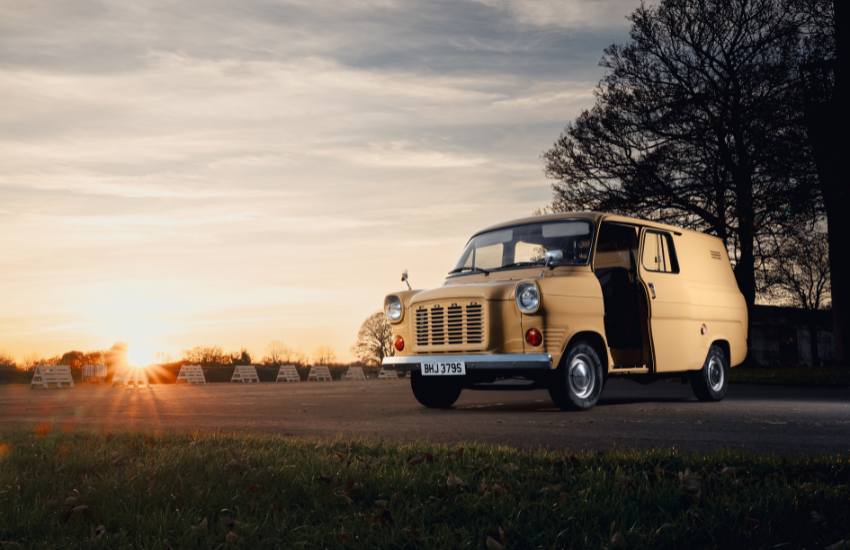
Ford Transit Mk1
Ford’s Transit is a fascinating addition to the Bull Market List – but as a vehicle never intended for long-term ownership when conceived, is running one as a collector machine as simple as it seems?
For Dexter Conrad, owning a Ford Transit is more than stewardship of a van – it’s a tangible link to childhood memories with his father. “My dad used to do food deliveries for South-East London markets in a Mk1 Transit, which was already a rare thing by the early 1980s,” he recalls. “I used to ride up front with him during the school holidays and help with the deliveries – he always loved driving it harder than he perhaps should have; I think he tuned it as I distinctly remember him winning drag races against XR3s back in the day – though only when the back was empty!”
Ford UK provided the Transit seen here. Dexter’s 1976 Transit uses the 2.0-litre V4 Essex engine, which he’s chosen to leave standard – so XR3s need not hold any fear today. However, he has fitted a disc brake conversion, a more modern alternator and taken steps to improve the cooling. “However, it’s such a good vehicle to drive – all those claims of a car-like feel are really true; it can really be quite fun hustling it along, even if it’s not particularly quick by today’s standards,” he says.
Mk1 Transits are hard to find in standard condition – Dexter advises that rust can hit just about everywhere and that the body’s overall condition is what dictates how much you should pay. “Many Mk1s have had multiple rounds of repairs,” Dexter says. “Inspect the quality of the welds, check for excessive filler and look for structural corrosion hidden beneath the underseal.”
Though there is good parts commonality with other realms within the Blue Oval empire, Transit-specific items are hard to find. “Originality is king, so check for cracked dashboards, worn seat frames and padding, missing heater controls, non-original seats and ‘upgraded’ instruments – because these vans weren’t cherished for many years, nobody bothered to keep spares,” Dexter says.
For Dexter, the big appeal is the Ford scene, and the smiles his Transit brings out of people when out and about; he uses his to pick up, deliver and sell vinyl records. “Everyone has memories of a Transit – they’re a piece of what I call British culture’s architecture, they were the beams that held up the rest of society,” he says.
Thanks to Ford for the loan of the Transit.
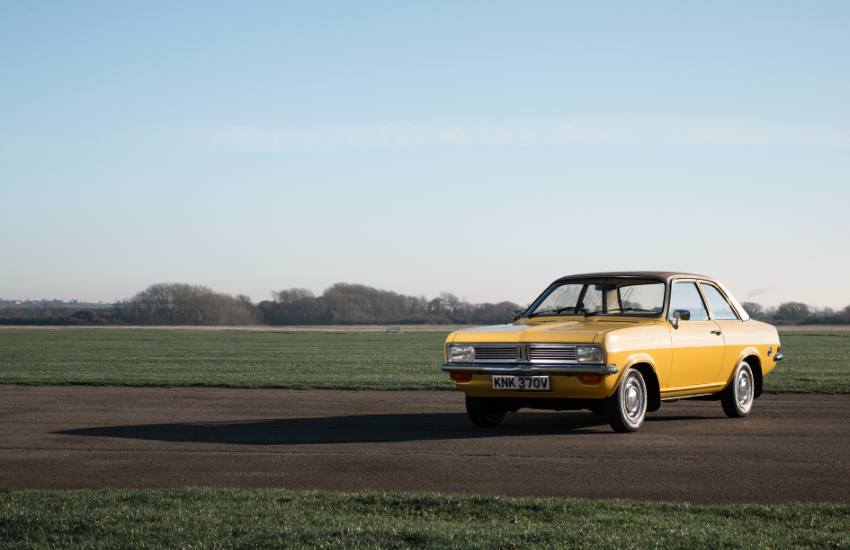
Vauxhall Viva
The Vauxhall Viva was an immensely popular car, but with so few remaining, is ownership in 2026 a straightforward proposition?
The Vauxhall Viva you see before you was provided by the British Motor Museum – it’s a rare survivor out of the 1.5m built. However, there’s a small but passionate group of enthusiasts keeping the cars alive – and for Derek Norman, it’s become (at his own admission) a bit of an obsession. He currently owns two but has owned at least 25 over the years. “It was Vauxhall’s first small car designed to compete with the Ford Anglia and Hillman Minx – and unlike those, the styling just seemed so much more modern and exciting; the HB looked like a shrunken muscle car,” he says. For him there’s a personal connection – his mother and father met while working at the Ellesmere Port factory, and of course Vivas became the car of choice for the family when he was growing up. It’s a passion that’s continued to this day – he owns a twin-carb HB GT and a 1971 HC, the latter of which he uses to for vintage clothes fairs in thanks to its large hatch/estate rear loadbay. “Though the GT is the sporty one, the HC is the one I love most,” he says.
Derek says rust is the key concern with any Viva – sills, wheel arches, the floorpan, the rear subframe mounts, door bottoms and hinges. “Check the boot floor too – I once put a vintage Technics sound system in the boot of one Viva I’d just bought and hadn’t checked properly, and it simply gave way under the strain,” Derek laughs.
Derek advises that at this age the electrical system can be a little brittle, but the car’s sheer mechanical simplicity means that it’s easy to work on. “Some modifications are useful – better dampers and brakes, and electronic ignition – but several have had homebrew engine swaps and cut springs, which are best avoided.”
For Derek, the best thing about the Viva is the zesty driving experience. “They’re just so light and agile, they really are very fun to drive – and way less expensive than a similar Ford,” he says.
Thanks to the British Motor Museum for the loan of the car.
Do you own any of these cars? Let us know what it’s really like to own them below.
Classic car insurance from Hagerty
Keep your classic on the road with expert classic car insurance built by car lovers, for car lovers. Rated ‘Excellent’ on TrustPilot.





Wow. My SLK is on the bull market list, plastic bumpers and all. What does that tell you about the evolution of the market? This is the “observed” and computed spreadsheet area of the market where the auction result $ quantity dictates the order. It’s actually miniscule compared to the unobserved classic/muscle car area of the market where unknown numbers of vehicles are privately traded at meets or bequeathed for $zero in a will.
If “Paul” thought his MGA did not have synchro on second gear it is a good job he changed the gearbox! Pity it was for a Ford 5 speed though rather than overhauling the original.