Words: Alex Wakefield
Photos: Alex Wakefield/Hagerty Media/Wikipedia/Arnold Motors
All cars look the same. Since the first horseless carriages terrified pedestrians on city streets, all the way to today’s zombie waves of seemingly identical electric SUVs, every car designer has sincerely flattered the next.
Just like every generation of youngsters is rude, disrespectful, and destined for hell, or tubs of Roses get smaller with each Christmas, all cars look the same. This is easy to understand, because there are a lot of apparently very similar looking SUVs and crossovers.
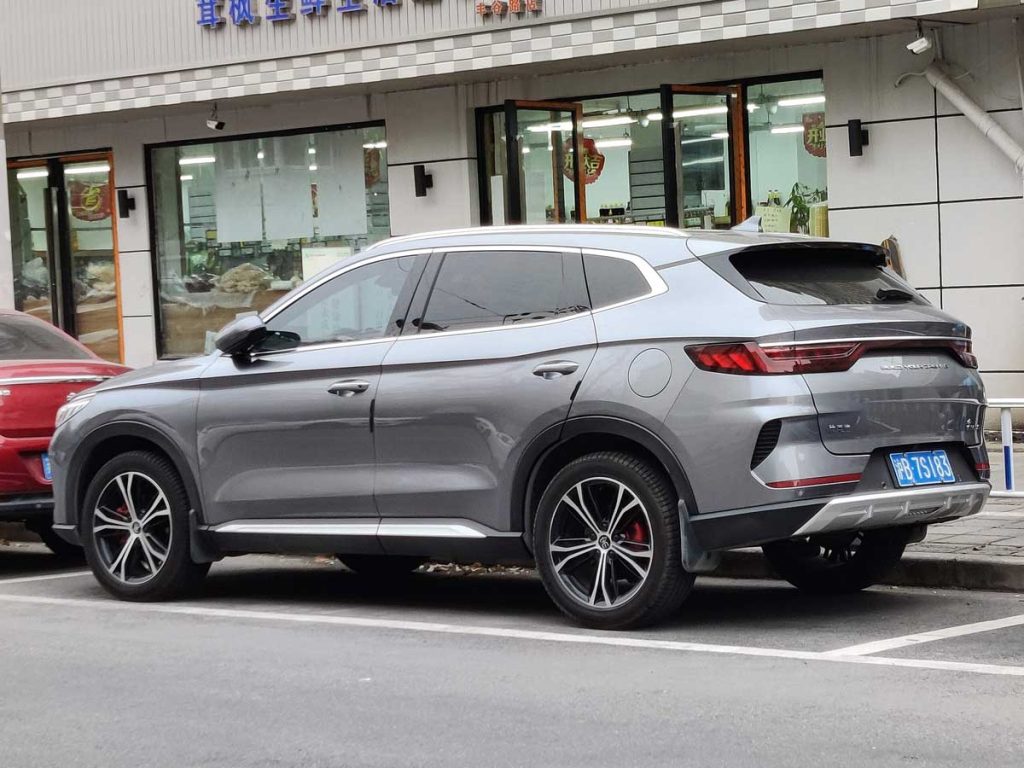
A couple of months ago whilst driving through Belgium, up ahead of me on the road I could see a mid-size, grey coloured SUV. I had no idea what it was. It looked new, quite smart and on the boot lid, was the word BEIJING.
It was the second time that day where I’d come across something I could not immediately identify. The first was a trailer full of small electric Alfa Romeos. Seized by the moment, I found myself telling my co-driver that all cars look the same now.
Except of course, they don’t. Or rather, they do. Or they did.
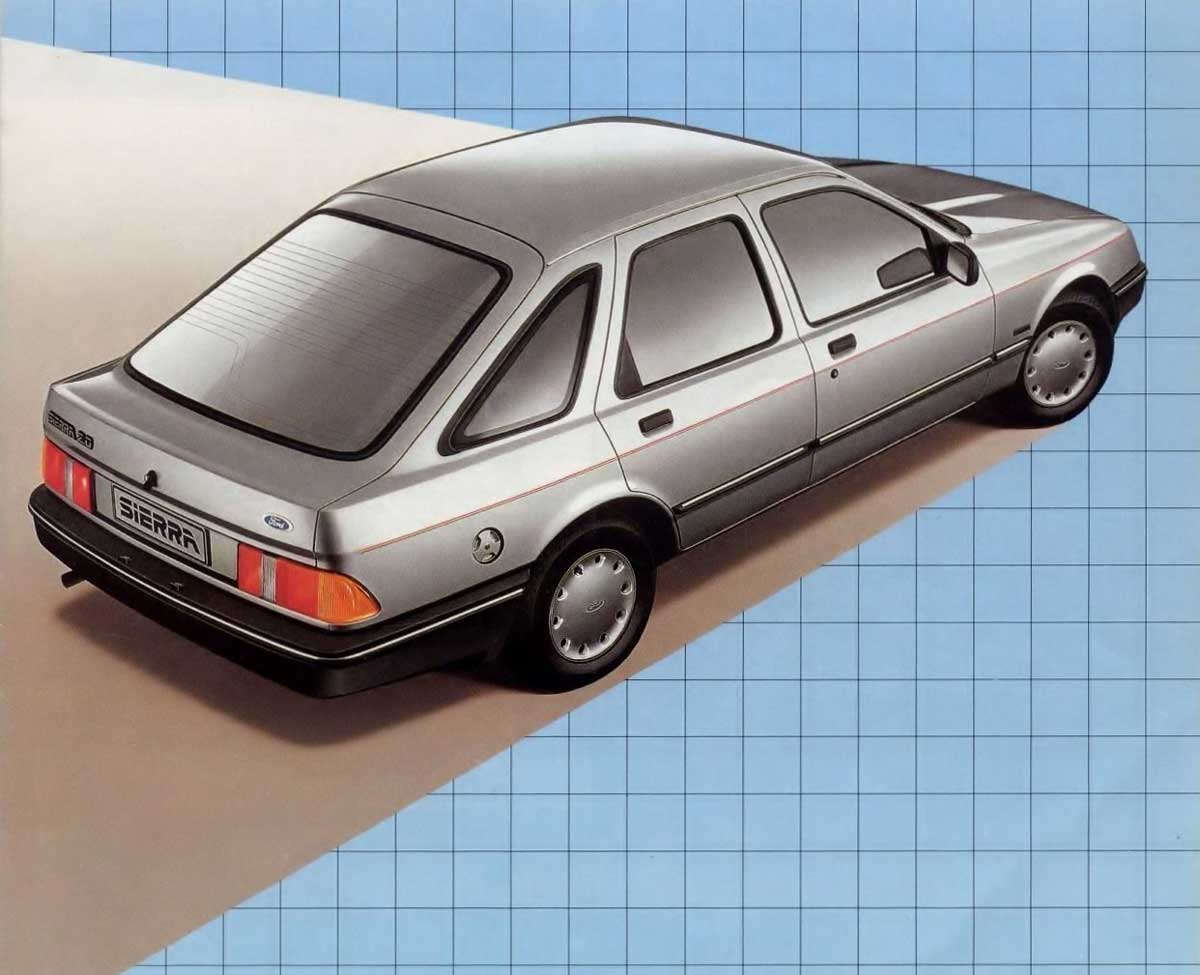
Ford launched the Sierra in 1982. It marked the end of a run of cars that all looked the same, and the start of a new era, where all cars looked the same again. Out with the boxy four door saloon, and in with the smoothed aerodynamic curves that dominated car design for the next decade.
It’s not clear if the Sierra was the first car to be labeled with the ‘jelly mould’ badge, but it’s definitely not the last. Spotted in the comments box below an advert on social media for a Chinese SUV recently, I found the term being employed once again, presumably by someone still sore about the Cortina’s demise forty odd years ago.
I’ve never seen a jelly mould in the shape of a pseudo off-road vehicle, nor have I found one in the shape of any Ford hatchback. If I had, I’d have bought it and made jelly on a regular basis. Jelly moulds are shaped like 1950s racing cars, because they all looked the same, too. The only mould I actually have, is actually rabbit-shaped (the animal, not the US-spec VW Golf).
The funny thing is, that different versions of the Sierra, even at launch, were quite distinct. We can pick them out now; lowly dangle-mirror base spec, with unpainted grilles and steel wheels. Further up, a bit more colour coding, and plastic wheel trims with two sets of gills on each.
Keep spending, and you’d get larger headlamps, bumper inserts, front fog lights, extra wheel trim ventilation and other distinguishing features. Three door hatch, five door hatch, estate. A conventional four door came along later, to appease the die-hards who’d held on to their run out Cortina Crusaders in the hope that the blue oval would eventually capitulate and give them a three box saloon.
Any car loving child of the 70s, 80s and 90s can easily tell every make and every model apart, across a spectrum overlapping that period by ten years either side. Their parents though would struggle, just as their children would look at the products of a generation before with an almost complete inability to identify the cars that their father would spot a mile off, with ease.
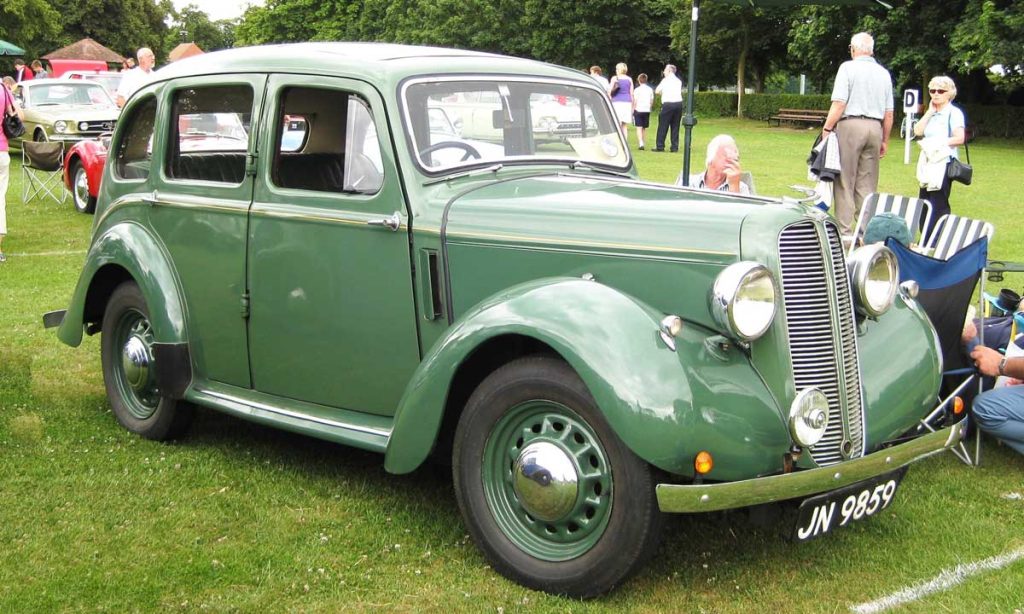
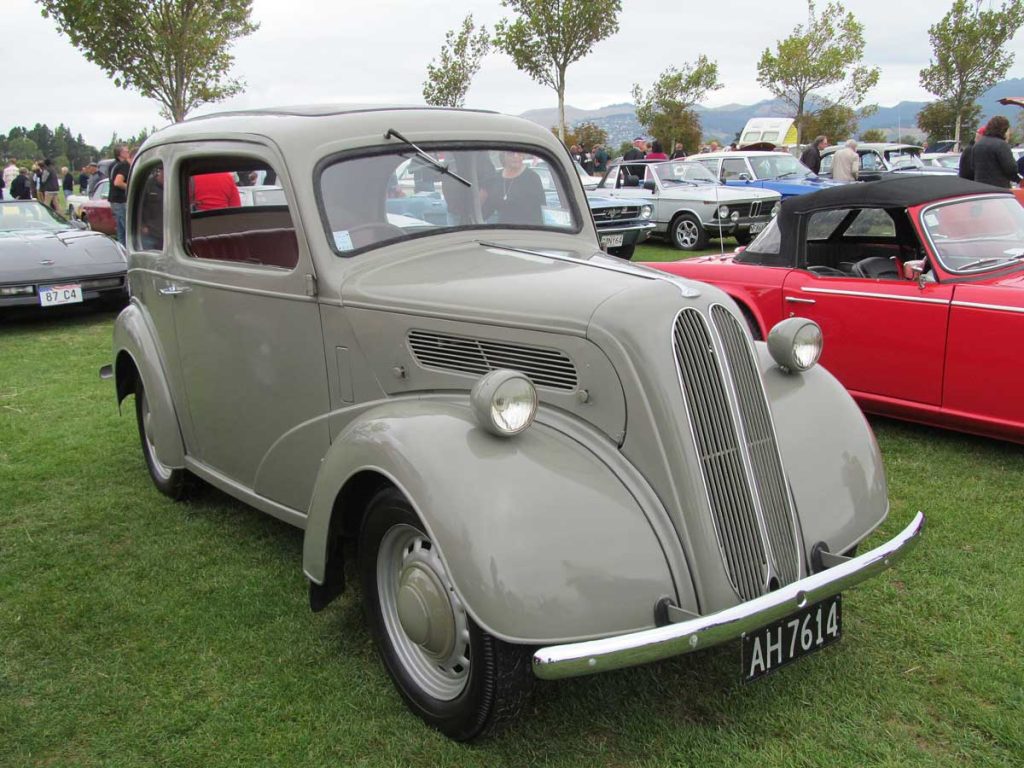
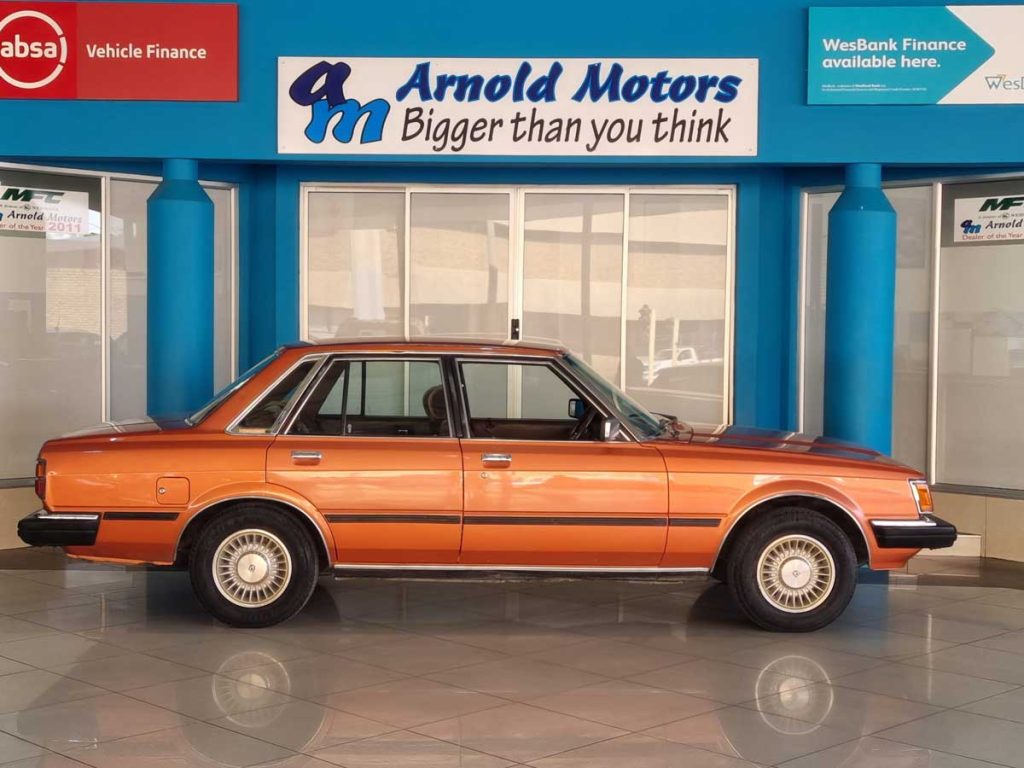
You see, in the 40s, 50s and 60s, cars all looked the same. After the second world war, all cars had headlights mounted in front of the wings, and by the 50s, all cars had the headlights mounted inboard. Through the 50s, all cars were painted pastel shades, in two-tones and had convex windscreens. The set-square dictated that the cars of the 60s also looked the same as each other.
Trends in architecture, fashion, and personal grooming come and go, and it’s the same for car design. We become familiar with each trend and their details, eventually. The fashions of our youth stay with us as nostalgia, until they become cool again. This is why Hagerty’s Festival of the Unexceptional (FOTU) exists, and has been such a runaway success.
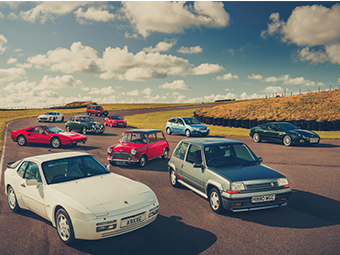
In the space reserved for the finalists of the most recent FOTU Concours de l’Ordinaire, were fifty cars that spanned more than two decades of blandness, most of which had they been born in an era of social media, would have received comments on their similarity to each other.
An Austin Montego and a contemporary Vauxhall Cavalier are now so easy for our eyes to tell apart, but imagine how they would have gone down in 1984? Almost identical dimensions, sharp lines tempered with curved edges, front wheel drive with engines of matching displacement and power. Only a group test in the hands of professional drivers, across the Brecon Beacons, would really tell them apart.
The small hatchbacks present in the courtyard of Grimsthorpe Castle could be tarred with that same brush. Volkswagen Golf, Volkswagen Polo, Citroën Xsara. Safe design, inoffensive, bland and all draped over entirely conventional drivetrains. The cars on display here, all had sandwich boards printed with their make and model, but not one single visitor needed to read them, because they all knew. Most could have, if asked, identified each car from a heavily edited image of one small part of it.
No cars look the same. Not even those amusing copyright infringement specials churned out by the adolescent Chinese car industry about ten years ago. It might pain you to hear it, but at FOTU 2050, there’s going to be one of those newly denuded, peasant specification Tesla Model Ys that has just been unveiled in an attempt to stem the flow of former customers, into the Chinese equivalents that actually do look quite distinct.
Modern design is polarising and making people take sides more than ever. Jaguar’s relaunch will bring cars that emphatically do not look the same. Nobody could accuse modern BMWs of looking like modern Audis. This has happened before, for every generation. We’ve just forgotten. Jelly moulds, indeed!
What would you like to see at FOTU this year? Let us know below.
Insure your classic with a specialist insurer
If you’re looking for cover for your pride and joy, why not consider Hagerty UK? Not only are we classic car insurance specialists, but we are enthusiasts at heart. Call us for a quote on 0333 323 1138.




Interesting article. A lot of nonsense and some interesting points.
I’m in the “all look the same” camp. I thought it was partly to do with so many colaborations between manufacturers e.g. 107/C1/Aygo and sharing platforms. I used to be able to tell cars apart from the configuration of their lights now I can’t see the lights for the glare anyway. One last gripe – why do DRL’s have to switch off before you can see the indicators? This must be an unnecessary complication too far, just separate the lights sufficiently for goodness sake.
I’ve often heard the term “pile of junk” used regarding particular cars. How about a comprehensive article?