Words and Photography: Antony Ingram
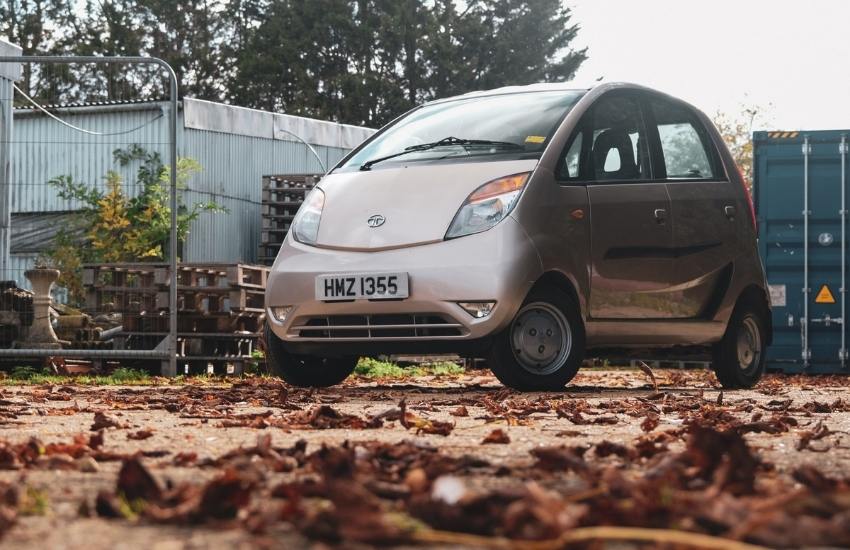
Driving the Tata Nano: once the world’s cheapest car “It feels a little like driving a Citroen 2CV” explains Siôn Hudson before I set off in the Tata Nano. With a 624cc twin-cylinder engine thudding out 33 horsepower there are definitely similarities both in the sound and the preservation of forward momentum, and you could say there’s a philosophical similarity too, in that both the postwar French icon and the late-2000s Indian city car were both designed to put a nation on wheels.
Only one of the cars ever managed that though, and it wasn’t the one I’m driving today. With a goal to sell quarter of a million cars a year, the gigantic Tata Motors corporation fell short by an order of magnitude. After ten years, fewer than 300,000 hit India’s roads.
The idea of the Nano was sound. Genius, even. It was intended as a true people’s car, from a completely clean sheet, just as the 2CV, Beetle, Trabant, 500, and other iconic people’s cars were. Company chairman Ratan Tata (who died in 2024, aged 86) conceived the idea in 2004 after watching whole Indian families cramming themselves onto scooters and motorcycles.
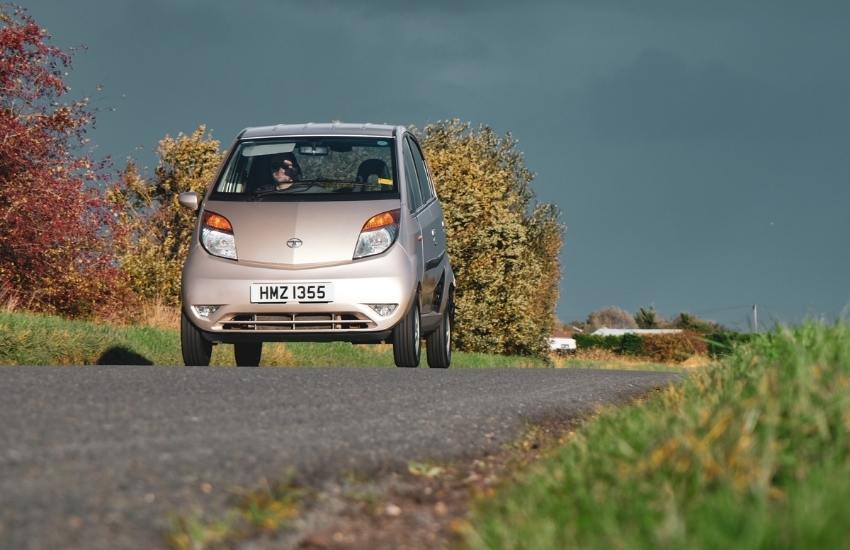
Speaking to Autocar in 2008, Tata first envisioned a car made from motorcycle parts, keeping it cheap but giving families something a lot safer to move around in. He proposed the idea to an industry association as a kind of “Asian car”, useful in countries across the continent where two-wheelers were still the primary method of transport, but nobody took him seriously. So Tata went it alone: the idea evolved from a kind of four-wheeled motorcycle, to a doorless four-wheeled autorickshaw, and then finally to something approaching a proper car.
It was always intended to be cheap however. The Tata Nano made headlines in 2008 for its opening price of one lakh (100,000) rupees, only a little more than the average annual wage in India at the time and equivalent to around £1500 (or $2000), comfortably the cheapest new car in the world. It didn’t stay that way for long, and the price actually came about through a soundbite; interviewed by the Financial Times, Tata was quoted as saying the car would be “about 1 lakh” and the media ran with it. Rather than issuing a rebuttal, Tata set it as a target.
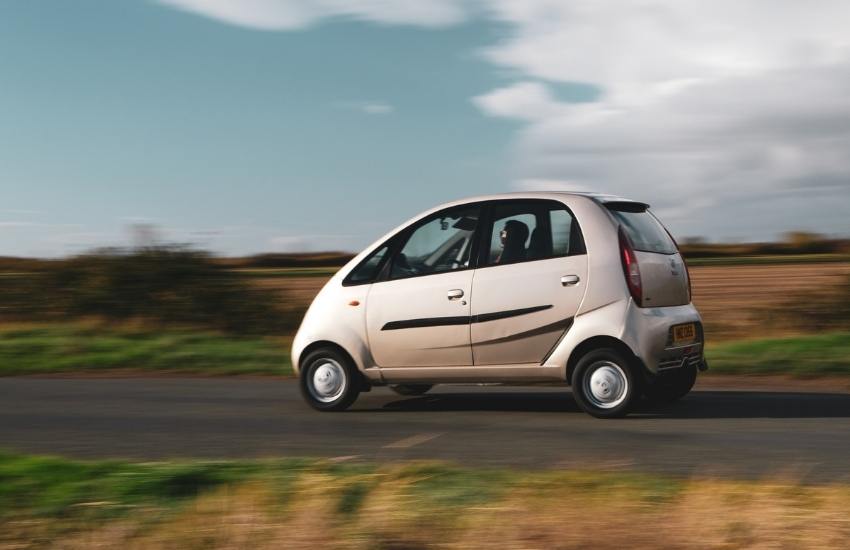
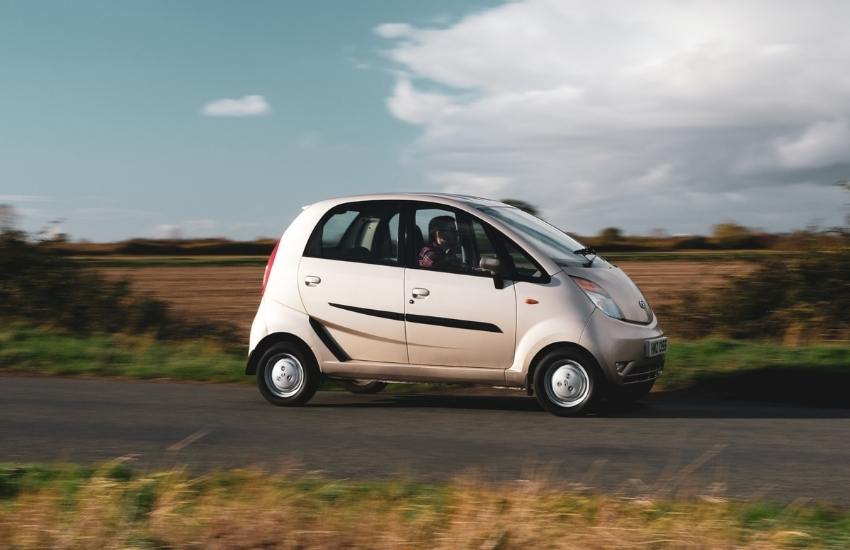
The Nano is simple but also fascinating, just like its people’s car forebears. The tall, arch-shaped body riding on tiny 12-inch wheels has a hint of the cars sketched by cartoonist Stan Mott in the 1950s, but as Siôn notes while we’re out on the road, almost nobody pays it any attention. The metallic beige of this car is almost as characteristic of the early Nanos as black is of a Ford Model T (though other hues were available), but seems to help it blend into the background. Likewise, the shape isn’t actually that far removed from a contemporary Hyundai i10, so very few bystanders seem to clock that it’s not a native to UK roads.
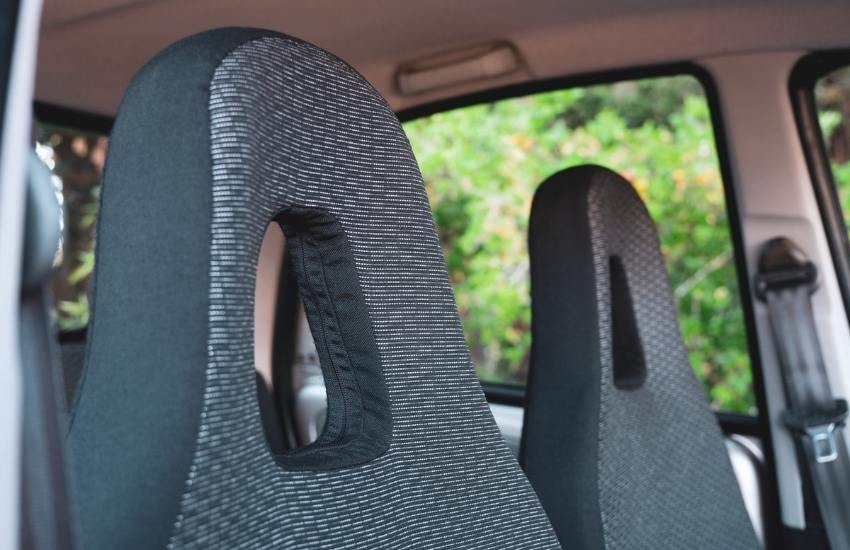
From inside it also gives the general impression of a typical 2000s tall-body supermini. Well, maybe a 1990s one like the Suzuki Wagon R or Hyundai Atoz, only even more rudimentary. The doors clatter shut in a way I’ve not experienced for decades and the cabin materials definitely prioritise robustness over tactility, though the effectiveness of that is debatable – at around 50,000 kilometres, the driver’s seat fabric is beginning to sag, the thin carpets are fraying in places, and the plastic-rimmed steering wheel is already showing signs of developing a sheen, while the lever for air recirculation has long since made a break for freedom and the cable for opening the bonnet dangles limply in the driver’s footwell.

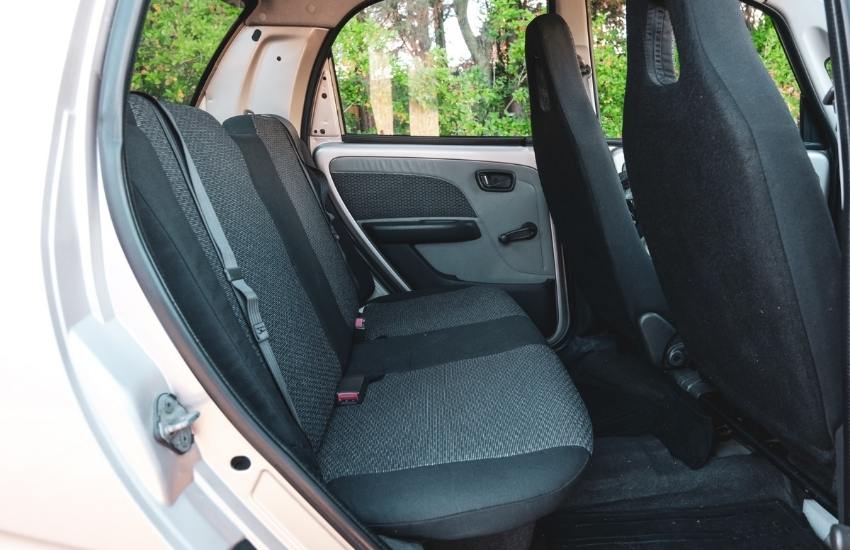
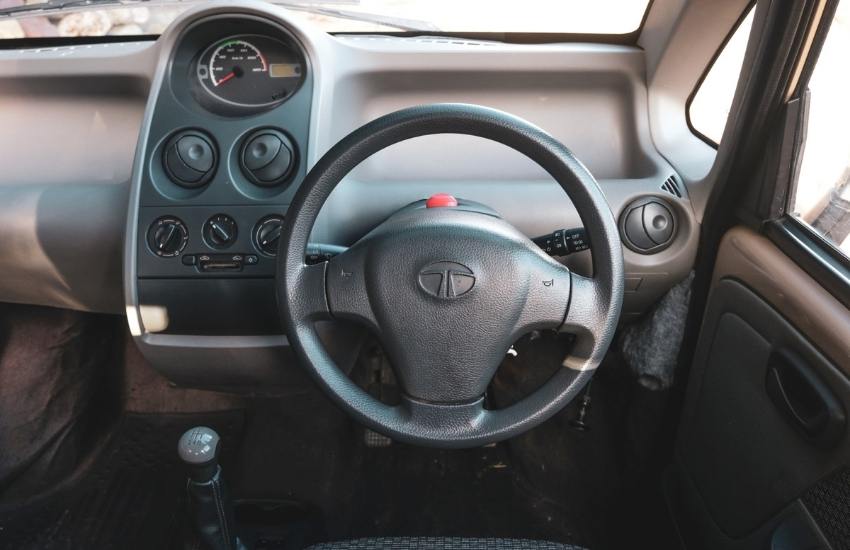
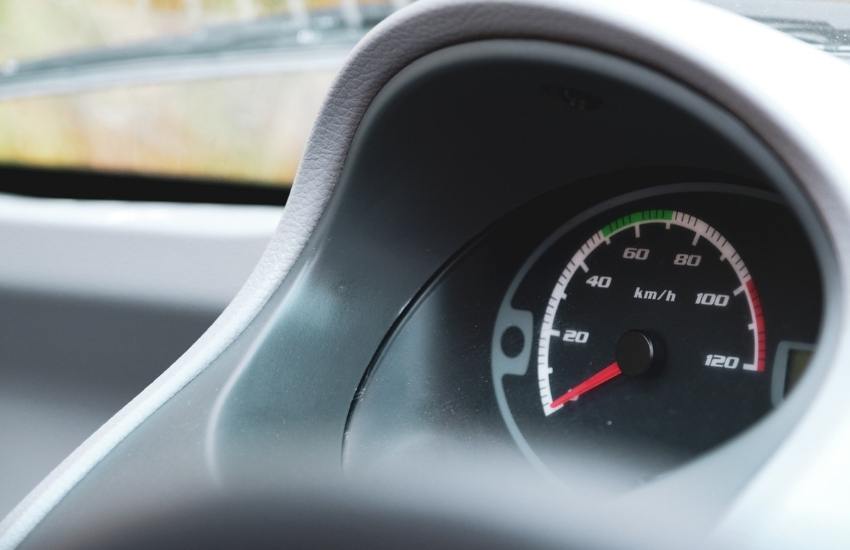
Still, it’s smartly designed, provided you’re not seeking visual flair. The dashboard is symmetrical, presumably a cost-saving nod to Tata’s original intentions to expand sales beyond India and into left-hand drive markets. The instrument cluster is necessarily simple, with just a speedometer calibrated to 120km/h and a small LCD display for the fuel gauge and odometer. Large scoops in the dash moulding allow for storage (without the extra cost of a glovebox), and with a high driving position, plenty of glass, and a largely flat floor, it feels very spacious. Not just feels, in fact – while at 5’8″ sitting behind myself rarely presents a challenge, the slim seats and clever packaging mean those sitting in the rear seats have more space than in most modern superminis.
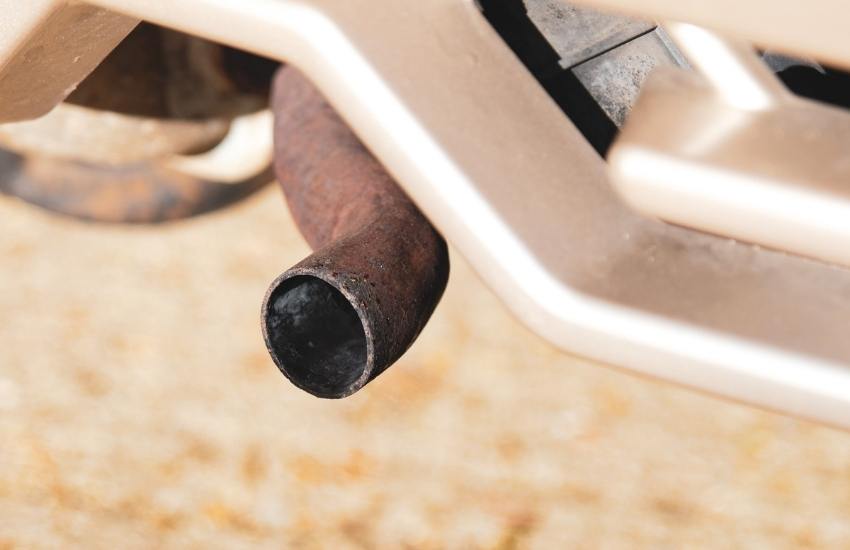
There are a handful of oversights in the name of minimising cost. Firstly, in these early Nanos, there’s no tailgate, in part to aid the car’s rigidity – accessing the fairly pokey luggage area behind the rear seats involves going in through the rear doors and folding the seat back forward. Sound deadening is effectively nonexistent, and it’s fair to say that neither front nor rear seats are padded in such a way that you’d want to contemplate too long a journey. Then there’s the fuel filler: it’s under the bonnet, as having a dedicated flap is another extravagance when you’re trying to make the world’s cheapest car. A full-sized spare also sits under the bonnet.
The spacious cabin comes courtesy though of the engine’s location in the back, rather than the front, so in just 3099mm of length – shorter even than the 3.4 metres allowed of Japan’s kei cars, and just 45mm longer than the original Mini – you get more leg and headroom than some Golf-sized cars today. Tata claimed at the time that while 200mm shorter than a Maruti Suzuki 800, the Nano’s closest rival, its cabin was 21 per cent bigger. The only other car I’ve driven with so much of its length dedicated towards passengers is probably the original Mercedes A-Class. The Nano’s height also helps: at 1652mm it’s taller than a Nissan Qashqai.

You notice the height on the road. At 600kg and with sail-like sides it wanders around with every wind gust, though not notably worse than say, a Smart Fortwo, and the limited performance means you’re rarely travelling quickly enough for it to become a big problem. At urban speeds the Nano’s twin-cylinder chuckles away quite happily (with surprisingly little vibration, courtesy of a balance shaft) and as again hinted at by Siôn, demands a 2CV-like driving style, with your foot wedged in the firewall more frequently than you might in one of its contemporaries.
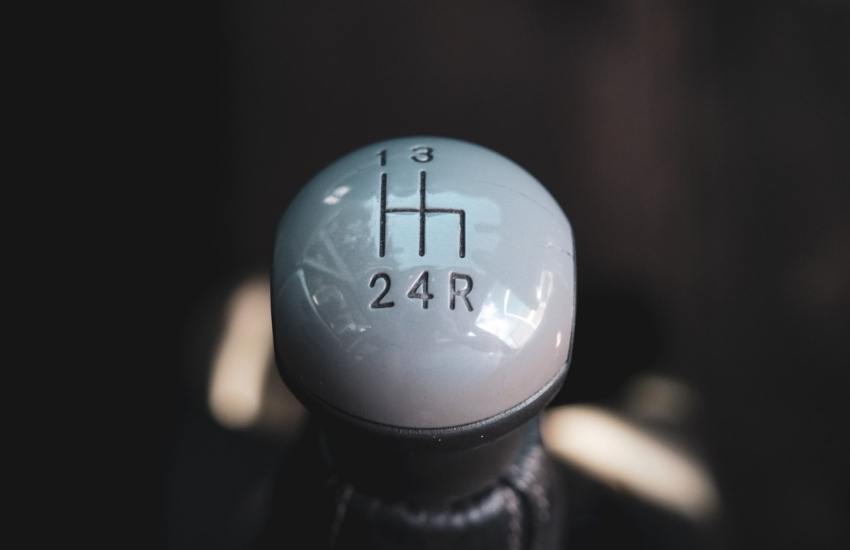
The gearshift (only four speeds) is sweet between first and second, and while the long throw and somewhat approximate gate catches me out a few times when I try to find third, it pays to not overthink things – each ratio finds its way home if you just guide the lever vaguely in the right direction. It’s slick on the way back down too, and the engine braking helps bolster the servo-assisted four-wheel drums. Given Indian driving conditions, I’ve no doubt the brakes are up to the job of more insistent use, but there’s certainly not the bite and power you’d get in a Citroen C1 or Hyundai i10 from the period.
With more time behind the wheel and on more familiar roads I’d probably have pushed a little harder in the corners, but with Siôn sitting next to me and this being probably the only Nano in the country, I figured a little more caution was in order. The ratio of height to width, light steering, 145-section tyres and rear-engined layout (with fully 70 per cent of the car’s weight on the rear axle) are all fine in isolation but not confidence-inspiring when combined. Where an old 2CV quickly goads you into pushing harder, with front-wheel drive and decades of accumulated knowledge that it’s not going to fall over, in the Nano you just accept that you’re going to have to work the engine hard again on corner exit to steal back your lost momentum.

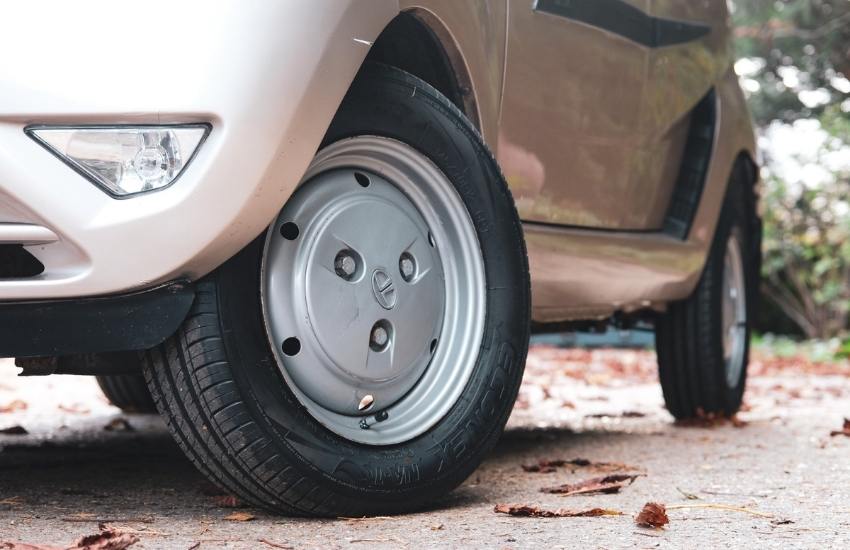
One other quality the Nano lacks beside a 2CV is its ride. Perhaps again due to the height, it’s firm, and the button-like wheels don’t help it. Potholes are best dodged rather than ploughed through, though again, I might have been too precious – Nano drivers in India presumably deal with even worse roads than those in the UK (despite our best efforts), so maybe the little car is up to the task.
A reason not to explore that theory is the difficulty in finding parts if something does go wrong. Remember, the Nano was a clean sheet of paper, and that also meant a lot of parts created for the Nano were made for that car alone, rather than pinched off some of Tata’s other models. Siôn explains how he assumed he and Nano co-owner Jim Magill would be able to harvest components off a Cityrover (Brit cousin of the Tata Indica), but almost nothing transfers across. Had the Nano enjoyed a long production run then the sheer volume might make fixing the thing a little easier, but a decade’s worth of production isn’t a lot, and obviously the parts that do exist need to make the voyage from India. And there’s not much love for the Nano in India.
Brilliant though the idea was, it never sold strongly and was beset by issues throughout its production run. It went on sale late, due to protests over farmland acquisition in the area Tata wanted to build its factory. Then there was a spate of high-profile incidents where the cars caught fire, which led to a nosedive in sales.

In 2011 the Indian government increased petrol (but not diesel) prices, which further limited the petrol-only Nano’s appeal, but fundamentally, the Nano just wasn’t that desirable among customers. Tata tried to jazz up the Nano with brighter colour schemes a few years in, but there was always a stigma to owning the “world’s cheapest car”. The average Indian, earning in a year what the average Brit makes in two weeks, would rather have scrimped and saved a little more for the slightly more upmarket Maruti 800, or bought a used car from another make, than buy a symbol of austerity like the Nano had become. Cars are an inherently aspirational object, even at the very bottom of the market, and the Nano just didn’t tick that box for buyers.
Nano production ended in 2018, and it has not been replaced; Tata’s entry-level model is currently the Tiago. It’s a relatively conventional 3.7-metre long city car, a touch larger than a modern Hyundai i10, and at 5 lakh rupees (about £4300), far from being India’s cheapest car – Maruti Suzuki once again holds that title with the 3.5 lakh (£3000) S-Presso. We’re unlikely to see the Nano’s like again – the global automotive market has moved on from attempting to serve the needs of those stepping onto the very first rung of the ladder – but despite low sales and little love, it will still earn its place in history for what Tata attempted to achieve.
With thanks to Siôn Hudson and Jim Magill (who insure the Nano with Hagerty)
Tata Nano
- Highs: Spacious, cleverly engineered, amazingly cheap
- Lows: Boot access, parts supply, sidewinds
- Takeaway: Sales figures didn’t do this clever people’s car justice
Specs: Tata Nano
- Price: £2000 approx (2009)
- Powertrain: 624cc in-line two-cylinder, four-speed manual
- Horsepower: 33bhp
- Torque: 35lb ft
- Layout: Rear-wheel drive, four-door hatchback
- Weight: 600kg
- Competition: Maruti Suzuki 800, Honda Cub, a donkey
Classic car insurance from Hagerty
Keep your classic on the road with expert classic car insurance built by car lovers, for car lovers. Rated ‘Excellent’ on TrustPilot.