Words and pictures: Craig Cheetham
Can you make a silk purse out of a sow’s ear? MG Rover did – the Z Cars celebrate 25 years in 2026
On the 9th of May 2000, BMW sold Rover to the Phoenix Consortium for £10 – a whole £790,000,990 less than it had paid for it six years previously.
The ‘English Patient’, as it had become known within the German company, was no longer. Land Rover had been sold off to Ford, MINI and the Cowley factory had been snaffled aside, and the remains had been bought by a group of businessmen from the West Midlands.
The next five years were a rollercoaster of highs and lows, as the British company battled for survival. It was an ultimately ill-fated quest, but if you needed proof that the engineers, designers and sales and marketing teams within MG Rover Group gave it their best shot, then the MG Z Cars are it.

Rising like a, well, Phoenix…
At the very heart of MG Rover’s resurgence lay the MG Z cars. It was part of the company’s survival plan to reinvent itself as a maker of performance models, so what better way to do so than to use an already resurgent brand to do that? MG was back in the public eye, the MGF having come from nowhere to become the UK’s best-selling sports car in 1995. The brand was less tarnished than Rover and, all throughout BMW’s tenure, Rover Group’s engineers had been hamstrung by a dictate from Munich to not build any new sports saloons, lest they compete with BMW’s own cars.
The move killed off cars that were already in the planning, such as the Rover 425 (a KV6-engined Rover 400 that ultimately made the MG ZS easy to develop) and a more powerful ‘Sport’ specification on the Rover 75. This meant that some of the groundwork had already been done.
In addition, MG Rover Group’s new design boss, Peter Stevens, had been consulting on a performance body kit for the Rover 25, which would originally have been offered as a dealer accessory but became the ZR. The bare bones for a new MG saloon car range were already there, and MG hit the ground running.
The ZR, ZS, and ZT – known initially as X10, X20 and X30 – were revealed less than 10 months after the BMW/Rover divorce, at the 2001 Geneva Motor Show, and then in production form on the 7th of June the same year. That was the very same week that BMW launched its new MINI; a skilful bit of taunting from Longbridge to remind car buyers that the German firm’s new car (which had been mostly developed by Rover) wasn’t the only new British-built car on the block.
The Z Cars were more than just reinvigorated versions of existing Rover models or a shot across the boughs to BMW though; they represented a spirited attempt to revive the marque and a symbol of British engineering ingenuity, cultural pride, and the enduring appeal of affordable performance cars.
The MG ZR was based on the Rover 25, the ZS on the Rover 45, and the ZT on the Rover 75, but to dismiss the Z cars as badge-engineering would be to miss the point entirely.
Each received substantial mechanical and aesthetic upgrades that transformed staid family cars into lively, engaging drivers’ machines – and no, we haven’t been sniffing glue.
What made them great?
When it pulled the covers off its new model range, MG Rover came out fighting. “Life’s too short not to” shouted the brand’s advertising, for its “Full-fat, high-caffeine, maximum strength” new model range that promised “outrageous fun for all”.
Yep, like Rocky Marciano crawling his way back into the ring, MG Rover was back, and it wanted everyone to know about it.
MG’s aim was to offer ‘real-world’ performance and handling at a price point within reach of many. Girl-band Atomic Kitten were brought in to do some promo, and the press launch was held at Pembrey Circuit. There was a sense of freedom emanating from Longbridge that hadn’t been felt since BMW arrived.
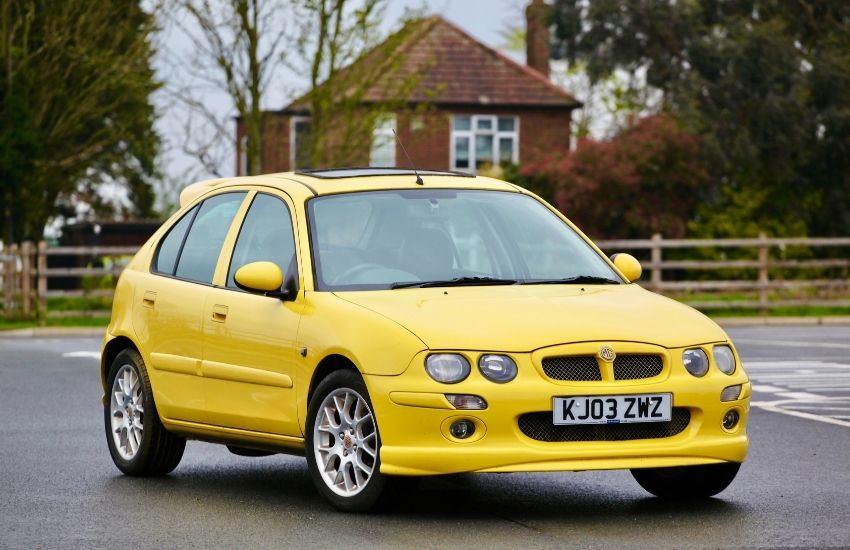
At the start point of the range, The ZR quickly established itself as one of the most affordable hot hatchbacks on the market, picking up the mantle from the soon-to-retire Citroën Saxo as the warm hatch of choice for Britain’s youth, spurred on by zero per cent finance, free insurance deals and a 1.4-litre 16v engine that punched well above its weight – the baby K-Series having 10bhp more than a contemporary Ford 1.6 and only 10bhp less than a 2.0-litre VW Golf GTI.
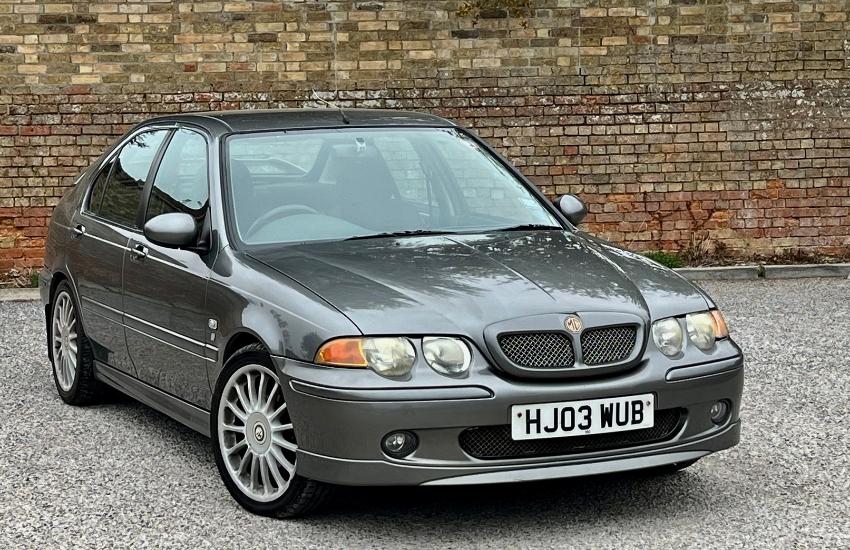
Next up came the ZS, offered as a saloon or five-door hatch, and with a choice of 1.8-litre K-Series or 2.5-litre KV6 engines. The latter was the headline, its 178bhp quad-cam V6 turning the grandad-special Rover 45 into a bewinged maniac of a car, with a burbling V6 up front and a touring-car style wing on the rear (hell, they even took it racing in the BTCC as if to prove this). But the real sweet spot was the bargain four-banger – yours for less than a much smaller MINI Cooper, it was arguably one of the finest front-wheel-drive cars ever made, and still is. If you don’t believe us, get a cheap ZS, ignore the inevitable off-the-shoulder headlining and self-destructing door handles, and take it for a blast on a decent B-road. For the minimal outlay it’ll require to buy one, you will not regret it.
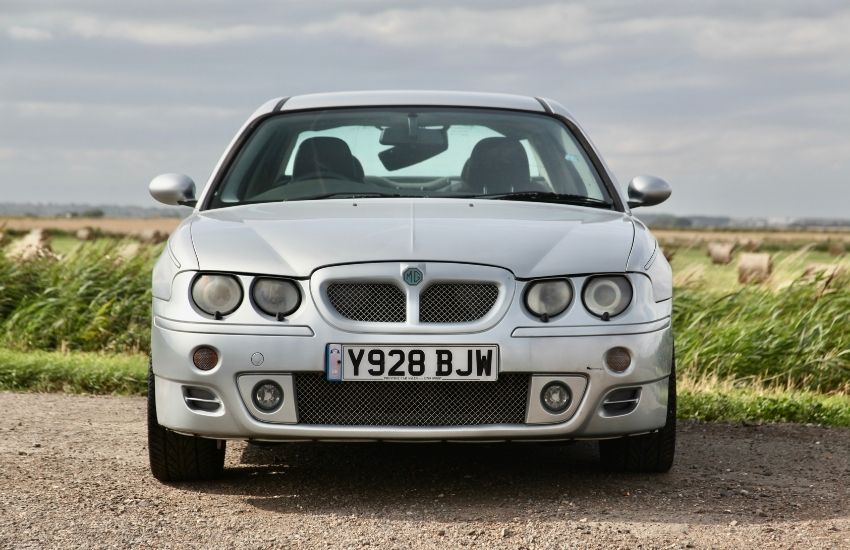
More mature, perhaps, but only in the sense of growing old disgracefully, there was the ZT, or if you wanted one with a longer roof and room for a domestic appliance in the back, the ZT-T. It was a car that took the already superb Rover 75 chassis and tightened things up a bit. It was, whisper it, probably as good as BMW 325i, albeit driven from the front and not the rear.
Too little, too late?
Beyond their emotional appeal, the MG Z cars played a crucial role in sustaining British car manufacturing during a period of instability that would, tragically, see Longbridge’s demise.
By generating excitement and increasing showroom traffic, they helped keep the company afloat for a few more years, preserving jobs and skills at a time when the industry faced significant headwinds as MG Rover Group scrabbled around for investment.
The Z cars demonstrated that British engineers could still deliver vehicles that punched above their weight, both in terms of performance and value – despite being held back by woefully out-of-date interiors, the Z Cars were genuinely great.
A 2004 facelift hinted that MG Rover wasn’t ready to give up, but its backers and suppliers were and on April 15, 2005, MG Rover fell into administration – a sad end following what had been a plucky effort from some of the best design and engineering minds in the business to keep things going.
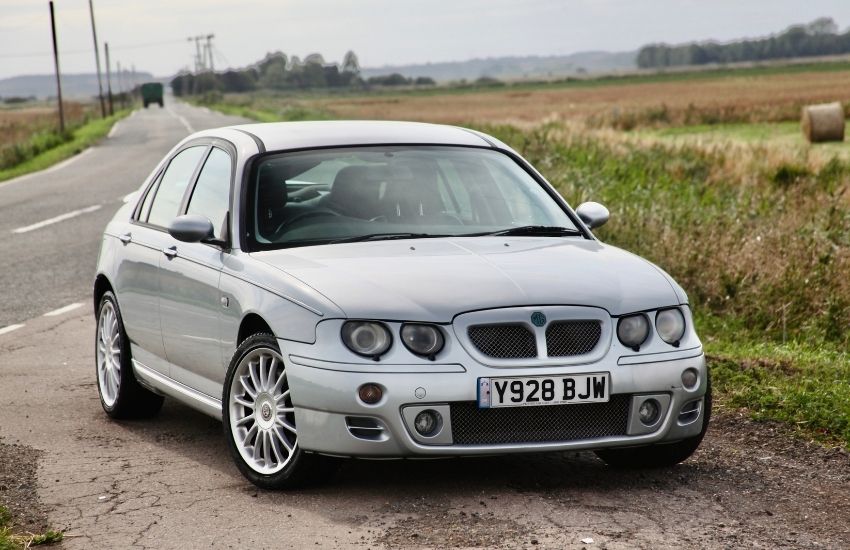
Should I buy one?
If you want a usable modern classic that’s a sure-fire future gem, then the answer is a resounding yes. All of the Zs are terrific fun, from the 1.4 ZR 105 upwards, so there’s a Zed for every age and budget, along with a thriving MG Rover scene that seems to get bigger year-on-year.
They’re old cars, so of course they go wrong. Be prepared for the less imaginative to ask you how many head gaskets you’ve had every time you stop for fuel, and look out for disintegrating sills and frilly front wings, but for a defunct brand, parts availability is still surprisingly good.
For years, Z Cars have been cheap and disposable. So much so that some variants have all but disappeared. But now, they’re on the up and they’re rising quickly, as enthusiasts catch on to Longbridge’s last hurrah. You can still pick up a tidy example of each for under £2,000, but that’s twice what you paid just a year ago – hurry, because as soon as the anniversary hubris kicks off, we reckon interest will start to peak…
Underrated heroes or flawed from the outset? Let us know your thoughts on MG Z cars below.
Classic car insurance from Hagerty
Keep your classic on the road with expert classic car insurance built by car lovers, for car lovers. Rated ‘Excellent’ on TrustPilot.


This gives me some much appreciated motivation to continue the light restoration on my ZR 105, not that I’ll ever make a profit on it but it makes me feel better.