Author: Alisdair Suttie
Photography: Bentley
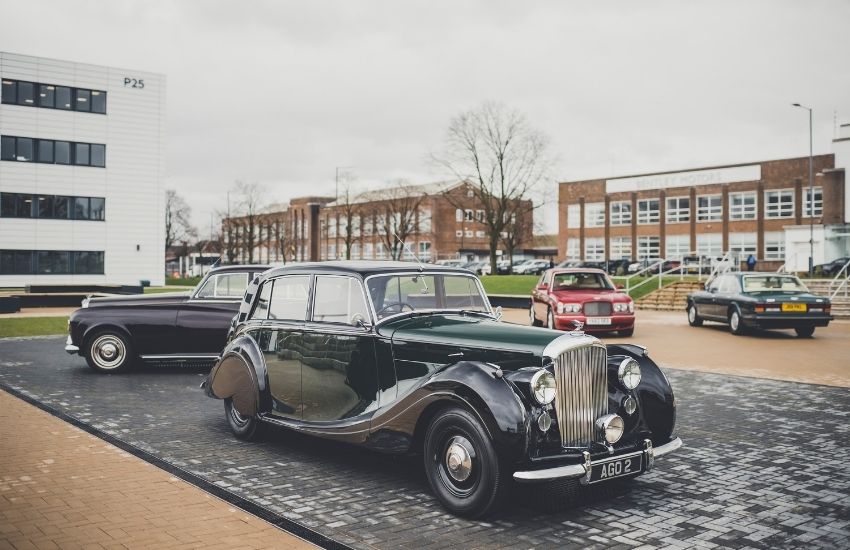
Regarded as an absolute pillar of the motoring establishment, Bentley and its Rolls-Royce parent were quietly subversive when it came to launching their first post-war model in 1946. The Bentley Mk VI was radical because, for the first time, it offered customers a standardised body direct from the factory. No more messing about buying a running chassis and then having it clothed in a bespoke, coachbuilt body, though this was still an option for the very well heeled.
Given this new direction, Rolls-Royce was cautious of upsetting its traditional customer base, so the Bentley Mk VI went on sale in 1946 and the Rolls-badged Silver Dawn equivalent didn’t see the light of showroom until 1949. During the intervening three years, the Rolls Silver Wraith kept the Spirit of Ecstasy aloft as the pinnacle of coachbuilt British cars.
Back in 1946, the Bentley offered buyers a handsome four-door saloon with styling by John Blatchley, who would go on to guide much of the company’s post-war elegance. The body was made by Pressed Steel and power came from an under-stressed 4257cc straight-six driving a four-speed manual gearbox, with a GM-sourced four-speed automatic transmission becoming an option not long as the Mk VI went on sale. When the Silver Dawn did arrive, it made do with a single carburettor rather than the mildly more sporting Bentley’s twin Sus.
In the summer of 1951, the Mk VI gained a more powerful 4566cc engine, which offered around 20bhp more, though Rolls-Royce and Bentley were modestly shy about confirming exact power outputs. The car also gained more accurate steering at the same point as part of the ongoing refinement of the model. Then, in 1952, the Mk VI morphed into the R-Type and was easily spotted thanks to its larger boot. Rolls-Royce Silver Dawn gained the same improvements but there was no name change, while Bentley customers could now also order the exquisite Continental coupé based on the R-Type chassis and with a sleek two-door body. For a time, this 120mph express was the fastest four-seat production car in the world and commanded a considerable premium.
While the Continental hogged the headlines, the R-Type got on with the job of keeping industry’s captains happy with its 100mph top speed and decently quick acceleration. It would even deliver decent fuel economy when driven in a fittingly relaxed manner. If you chose to sit in the back, as plenty of owners did, it was also spacious and as well-appointed and comfortable as its clientele would expect.
All of this meant the Bentley Mk VI and R-Type, and the Rolls-Royce Silver Dawn, were far from being stop-gap models before the all-new S1 and Silver Cloud models came on stream in 1955. The decision to go with its own ‘Standard Steel’ body was a shrewd move and saw 5201 Mk VIs made, along with a further 2320 R-Types and 760 Silver Dawns. Those numbers include all of the coachbuilt cars, but Standard Steel models greatly outnumber those with bespoke bodies. Any Mk VI, R-Type or Silver Dawn makes a very able classic and, if you stick to the Standard Steel saloons this guide is concerned with, they are also surprisingly, pleasingly affordable.
What’s a Bentley Mk VI like to drive?
Few cars communicate quite as clearly what you can expect of the drive from the way they look as the Bentley Mk VI and its sister models. The flowing lines, upright radiator, and the country house scale of the car all say it’s going to be a cosseting, relaxed experience either while driving or being driven in it. And that’s exactly what you get.
The 4.2- or 4.6-litre straight-six engines are not completely silent when you fire them up, but they do come to life with nothing more than a pleasant hum. Even when revved hard out on the road, the motors keep their manners and there’s nothing as unseemly as the sort of growl you get from a Jaguar XK inline six. Instead, the Bentley relies on its sizeable dollop of torque to get going and build speed in a fuss-free and solid manner. If you really pushed it, an R-Type is capable of 0-60mph in around 15 seconds and 100mph all out, but a little decorum when driving will still see you easily keep pace with modern traffic.
The four-speed manual gearbox has very mechanical feel with no synchromesh on first or reverse, but it’s still a lot easier to operate than pre-war Bentley models. More of an issue is the gear lever is sited to the right of the driver’s seat in right-hand drive models, and on the left in left-hookers, so can catch your trouser leg when getting in and out. To avoid this altogether, you could opt for the automatic gearbox that takes slight edge off acceleration but rewards by making the Mk VI feel even more luxurious and impervious to any outside hurly-burly.
Helping this impression is the soft but controlled suspension set-up. Compared to a later Silver Shadow or a Jaguar XJ6, the Mk VI leans and lopes along, but it’s much more settled than the styling first suggests. You won’t be able to hustle a Bentley or Rolls in the same fashion as a Jaguar MkVII, but the steering has reasonable feel and is not too heavy at parking speeds. Nor are the brakes anything to concern the modern driver. So long as the large drums have been properly set-up and maintained, you can hail the might of the Mk VI back to a stop with complete confidence.
The only area where the Mk VI concedes ground to more modern luxury cars is high speed refinement. Designed and built in a pre-motorway age, there is noticeable wind noise above 60mph, but it’s not deafening and certainly won’t put you off covering large distances in the delectable wood and leather ambience of the cabin. If are going to tour regularly, the R-Type’s larger boot is more practical, too.
How much does a Bentley Mk VI cost?
If you can live with a few scabs on the bodywork of a Bentley Mk VI or R-Type, or even the rarer Rolls-Royce Silver Dawn, you could be sat in the driver’s seat for £13,500. Admittedly, this will be a car that needs a large dose of work and cash to bring it up to snuff, but it will still be a running and driving Bentley.
Step your budget up to around £20,000 and you will find several Mk VIs in decent shape but needing some cosmetics to make them really stand out. For a car that needs very little and that you can jump in and use at any time, around £30,000 is the sort of money you will need to spend. Up your ambition to a car in truly superb order and a further £10,000 will be required.
The Mk VI is by far the most common of this trio of Bentley and Rolls cars, but if your heart is set on an R-Type Standard Steel saloon, reckon on spending 20 percent more than a Mk VI and a Rolls-Royce Silver Dawn will cost much the same. Should you look to coachbuilt cars, the prices can vary wildly depending on the looks, coachbuilder and quality of the bodywork. Open-top cars also command a premium, while the factory R-Type Continental is in a totally different price league where a minimum of £400,000 is your starting point.
What goes wrong and what should you look for when buying a Bentley Mk VI?
The chassis of the Bentley Mk VI, shared with the R-Type and Rolls-Royce Silver Dawn, is of Forth Bridge proportions, so major structural corrosion is rare. It’s still important to check it carefully, but it pays to inspect all of the suspension mounts and brackets. Much more of a concern is the state of the bodywork. Given the values of the Standard Steel saloons versus the cost of a full restoration, sorting a rough car will require a much larger spend than buying a good example in the first place.
There’s plenty of bodywork to check over, so start with all the obvious places like the inner wheelarches, sills, door bottoms, boot lid, window surrounds, and wing edges. You also need to check the state of the chrome – there’s plenty of it and it’s pricey to have repaired and refinished to a high standard. Next, check the floors of the car by lifting the carpets to spot signs of rust, damp or poor repairs. While you’re prodding around here, examine the bottoms of the B-pillar for corrosion and previous patches. A tell-take for rust in the B-pillar are doors that don’t close with just a gentle push – if you have to slam them shut, the doors have likely drooped on their hinges due to a weakened pillar.
If the body checks out, next in line for inspection is the interior as the expense of repairing all that wood and leather can easily turn a project car into an uneconomical prospect. Worn, brittle leather can be rejuvenated with time and patience, but damaged wood will need specialist care to fix or replace. Worn door and sunroof seals can also let in water, leading to damp and mould, so have a good sniff and check the carpets for any evidence of water ingress.
Lastly, the mechanical side of the Mk VI and brethren is very well engineered and largely reliable, though this can result in miserly previous owners skimping on maintenance. A small puff of smoke when the engine fires up is acceptable, but clouds of the stuff as you drive along signal a worn engine and imminent rebuild. Also have a look at the coolant level and type of coolant used, which should ideally be a modern type with corrosion inhibitor. A full engine rebuild can easily exceed the value of a cheap Bentley Mk VI, so walk away from ones with a motor that doesn’t run smoothly. The transmissions in the Bentley are strong, however, but listen for any grumbles from the back axle that indicate worn bearings in the half-shafts. As for the suspension and steering, it’s all very simple and robust, so even if an issue arises it should be straightforward to put right without costing a King’s ransom.
Which is the right Bentley Mk VI for you?
Stick with the Standard Steel models and the Bentley Mk VI and R-Type, and the Rolls-Royce Silver Dawn, represent excellent value for money. They are all fine cars to drive, exceedingly well made, and impart a sense of regal style into any drive. You can also keep one running well for no more than the cost of most 1950s saloons as parts are available and they’re simple to work on, though you do have to account for the expense of their luxurious cabins if they need restoration work.
The Silver Dawn is not quite as powerful as the Bentley variants and the Rolls-Royce is much thinner on the ground as far fewer we made when new. Unless you are absolutely wedded to the idea of a Silver Dawn, we’d look for a car with a winged ‘B’ on the bonnet. The R-Type has a touch more pep and performance, and a larger boot should you want to head off on holiday, so it’s the choice of those seeking the most practical version.
Despite this, we’re drawn to the Mk VI as our choice as it’s just as stylish and there are more to choose from. Find a late example from mid-1951 onwards and you also benefit from the improved steering set-up and larger engine. With a manual gearbox, it’s almost a luxury sporting saloon without the huge cost of an R-Type Continental.
Classic car insurance from Hagerty
Keep your classic on the road with expert classic car insurance built by car lovers, for car lovers. Rated ‘Excellent’ on TrustPilot.