Words and photos: Craig Cheetham
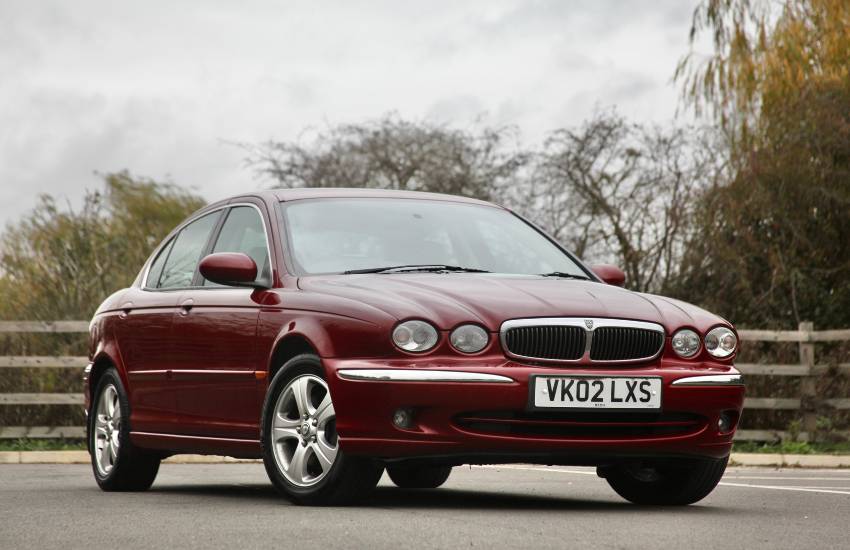
Jaguar went to great lengths to distance the X-Type from the Mondeo. Time to appreciate it in its own right?
“What a wicked game you play, to make me feel this way; what a wicked thing to do, to let me dream of you,” so went the introductory line from Chris Isaak’s hit single, Wicked Game, on the original TV advert for the all-new Jaguar X-Type in June 2001.
It was all part of Jaguar’s strategy to make the ‘baby’ saloon appeal to a new audience. A much younger demographic.
As a silver X-Type weaved its way along a snowy mountain pass in the ad, its all-wheel-drive chassis making light work of the treacherous conditions, its impossibly handsome young driver ignored the advances of a supermodel for the pleasure of driving his car as Isaak bursts into a crescendo of “and I…. don’t want to fall in love with you…”
The ad closes with a slogan flashing up. ‘The New Jag Generation” before finishing with the line “The Power of Performance”.
For Jaguar this was a pivotal moment. It was arguably the first time that the company had truly looked forward in its advertising rather than relying on the laurels of the past. Everyone called a Jaguar a Jag, so why shouldn’t Jaguar?
It had spent a fortune on the campaign, filmed in New Zealand and directed by Grammy-winning producer Jeff Darling. Just part of the seemingly limitless budget that Jaguar spent on launching its most important new car in a generation – a car that, ironically, looked like a scaled-down XJ.
It didn’t matter that he had no usable cupholder, no company car tax-friendly diesel and the rear subframe from a Mondeo estate – the implausibly good-looking chap behind the wheel was in his element. Cool, confident and in his prime. The very kind of customer that Jaguar was desperate for.
After all, a lot was riding on the coat-tails of the X. Not only was there a £300m investment at Ford’s Halewood factory, where the X-Type would be built on the old Escort line, but there was a brief to double Jaguar sales.
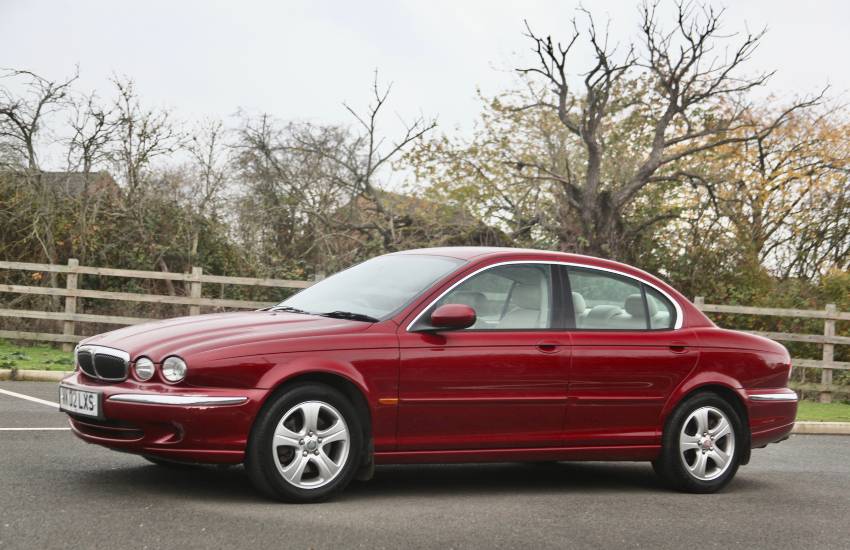
There was certainly a lot of hubris around Ford’s Premier Auto Group (PAG) when the car made its debut. Here, at last, was the model that would give Jaguar a foothold in the burgeoning compact executive market. A saloon that could take the fight to BMW and Audi, but with the sophistication and driver appeal that only a Jaguar could muster.
Conceived as part of Ford’s 10-year ‘Jaguar Master Plan’, two options were on the table. One was on a truncated S-Type platform, maintaining the traditional Jaguar virtue of rear-wheel-drive. The second was to look elsewhere in the Ford stable for a platform that could be developed.
Ironically, given what followed, if Jaguar hadn’t over-estimated production, the rear-drive platform may have won. But to do so, it would have to be built alongside the S-Type at Castle Bromwich, where capacity for 100,000 units per annum didn’t exist.
Where PAG did have that capacity, though, was Halewood, Merseyside. From 1968, the site had been home to another British icon, the Ford Escort. But with Escort production drawing to a halt, the facility was to stand idle. Building the new Jaguar there would offset job losses and keep the factory alive, securing investment from the Government’s North-West Development Agency.
The brief was to create a car that would appeal to the under 40s – meaning less of a focus on wood and leather, the emphasis skewed towards technology, driver appeal and – of course – what ‘Jaguar’ stood for.
Under the skin was Ford’s CD132 platform, which underpinned the Mk 3 Mondeo. A sensible costing approach, but one that made Jaguar’s senior management twitchy. Jaguar was renowned for its bespoke engineering, and it was imperative to play down the Mondeo connection – something which would later backfire.
So keen was Jaguar to not talk about the Mondeo bits that the automotive media were determined to do the opposite, so the ‘Mondeo Jag’ reputation stuck, the irony being that there was less than 20% commonality between a Mondeo hatch and an X-Type, which had the floorpan, bulkhead and some front sub-assemblies from the Mondeo and the heavy duty rear subframe of the estate. Otherwise, it was 80% Jaguar. To paraphrase Michal Caine, not a lot of people know that.
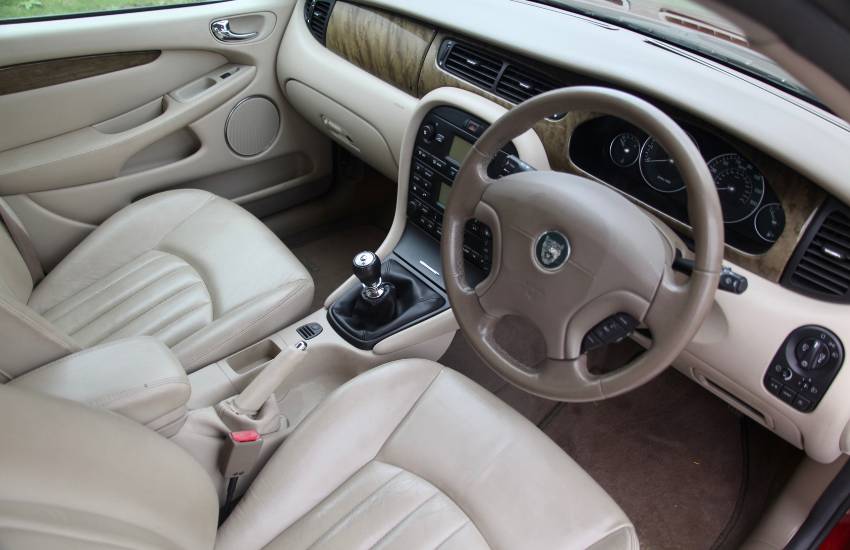
The engineering brief stipulated that it had to ‘feel like a Jaguar’. It also instructed that the X-Type would have to have the best steering of any car in its class, and ride comfort befitting of the brand – a Jaguar hallmark. And for that it earned 10 out of 10.
But Jaguar’s resistance to adopt front-wheel-drive meant all launch models would have four-wheel-drive, with a 60% rear bias. That was mistake number one, as it bumped the price up.
The second dropped ball was the decision to use V6 petrol engines, which was great for setting a performance benchmark, but not ideal when competing with German rivals, where modern, efficient diesels were streets ahead. When the X-TYPE was conceived, most company car tax schemes were focused on list price rather than exhaust emissions, but in 2001 the government delivered a blow in the form of CO2 based benefit-in-kind tax, and a V6-powered Jaguar was no competition to a BMW 320d in its effect on your take-home pay.
It’s a shame, as the engines were fabulous. The range-topper was the 3.0-litre 231bhp unit found in the S, while a smaller-capacity 2.5-litre derivative was specifically developed for the model, offering 194bhp.
The X-Type was revealed in February 2001, though it would be a further four months before it went into production. That gave Jaguar just enough time to tie itself in knots.
Rather than be upfront about the basic architecture, Jaguar persisted with marketing messages about ‘Jaguarness’, which were all well and good, but led the automotive media into a mode of suspicion and cynicism during the protracted launch. The irony being that the Mondeo was universally considered to be the best handling car in its class, and the Audi A4 and A6 were based on the platform of the inferior VW Passat, yet this did the German firm no harm at all…
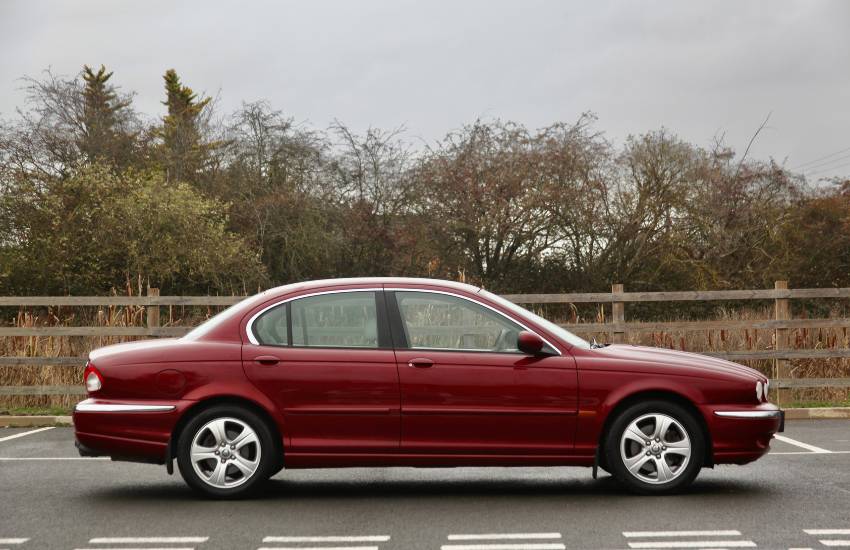
It was well received, but widely criticised for the engine choice. The V6s were great, but appealed only to the upper end of the compact executive market. They failed to give Jaguar the foothold it needed in fleets, thanks to that shift towards CO2-based tax.
Jaguar knew and had to react, accelerating the development of models it should have made from the outset. The first was the 2.0, introduced in early 2002. Technically a 2.1, it came with a shorter stroke version of the 2.5 V6, but was front-wheel-drive, making it the first ever Jaguar to have power at the ‘wrong’ end.
The following year, Jaguar tradition was torn to shreds and the best-selling X-Types arrived – the diesel, using the Duratorq 2.0 and 2.2-litre engines found in the Mondeo and (whisper it…) Transit. Buyers and drivers didn’t care, while fleet managers were delighted. Then, in 2004, came a handsome estate.
If Jaguar had bitten the bullet at launch, with a full model range, it may have achieved the 100,000 annual sales that it hoped for. In reality, the first year of diesels and estates being available (2004) was also the X-TYPE’s best, with over 51,000 sales – just over half of the initial projection.
Today, it’s an up-and-coming modern classic and has aged beautifully, but just look out for sill rot under those elegant plastic covers. Buy a good one, and you’ve a sure-fire future classic.
Have you previously owned an Jaguar X-Type or have any advice for potential X-Type buyers? We’d love to hear from you below.
Classic car insurance from Hagerty UK
Keep your classic on the road with expert classic car insurance built by car lovers, for car lovers. Rated ‘Excellent’ on TrustPilot.