Words and photography: Alex Wakefield
There’s nothing like a war to help advance technology – and motorbikes were a case in point…
Let’s get this bit out of the way first; Steve McQueen rode a fake military motorbike in The Great Escape. Because 1940s era motorcycles weren’t generally used to jump fences, a far more powerful, 1960s Triumph TR6 Trophy was disguised as a Wehrmacht BMW R75 to clear the fence. Without it, the movie’s protagonist may never have got one over on the enemy.
Everyone knows that motorbikes are fun, but in military usage, their tasks have often been mundane. Appearing first on the battlefields of the First World War, they were fast, agile and efficient ways of moving messages around, at a time when radio communications were still primitive.
Of course, the machines employed by either side were vulnerable. That didn’t stop tens of thousands of them being put into service, operated by dispatch riders moving orders, maps and reports around, under difficult conditions. The light weight and speed of the motorcycle ensured this method of communication found favour with military planners who managed to put these machines to more ingenious usage as the war dragged on.
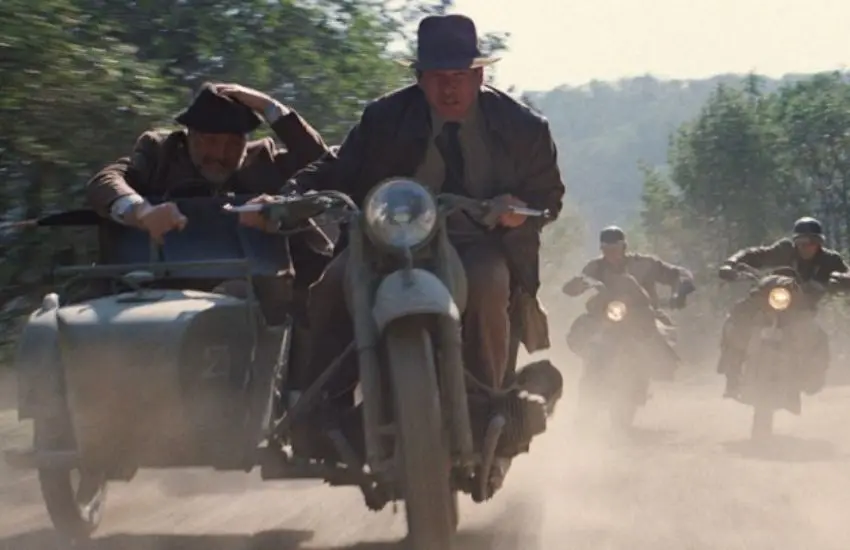
Four-wheeled transport was also used, but two-wheelers were able to quickly dive out of harm’s way, through craters, and over muddy routes that would have bogged down a car or truck. Bikes, often with sidecar combinations, were used as ambulances, mounted guns and for small-scale supply transport.
The variety of manufacturers represented during the 1914-1918 conflict was almost as confusing as the progress of trench warfare during that period. Motorcycles had, before the war, been gaining popularity as an affordable method of motor transport, and in the growth of the industry that followed, many new brands appeared.
Clyno, Scotts and Zenith were early suppliers to the British military. They built machines of typically less than 10HP, with single or two-cylinder petrol engines, but more familiar manufacturers made an appearance as the conflict lumbered on. Eventually, Royal Enfield, Triumph, Indian and Harley Davidson frames dodged their way across treacherous landscapes.
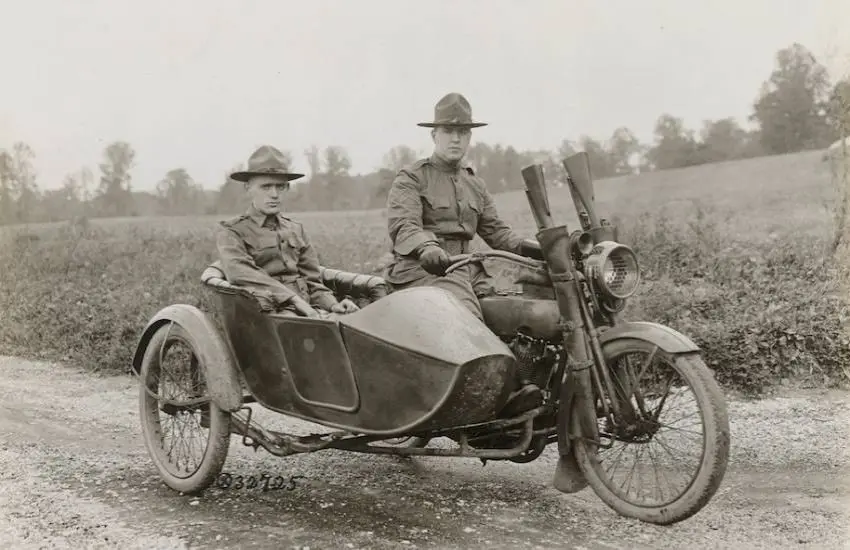
When the USA entered the war, they placed huge orders for motorcycles with domestic manufacturers. Three years after the war had begun, the American machines, such as the Indian PowerPlus, spat out more than double the power of their British counterparts. That meant two stretchers could be mounted on a sidecar when used in the role of an ambulance.
Harley Davidson’s J-Series featured a V-Twin motor, three-speed transmission, and applied braking to the rear wheel. Those employed as riders were expected to have plenty of experience in the operation of their steed; despite an apparent horsepower deficit compared to modern kit, 60mph was achievable and whilst under fire, it must have been terrifying.
Despite war’s appetite for destruction, periods of conflict bring rapid advancement in technology. The motorcycle was firmly established as a battlefield tool by the time the world’s belligerents locked horns again in the second global conflict of the 20th century. By then, the motorcycle market had grown, although the number of brands had reduced over time.
The opening acts of World War Two saw Nazi Germany pioneering their concept of Blitzkrieg, which saw unprecedented progress of personnel and logistical support across vast distances in a very short time. Unsurprisingly, two-wheeled military transportation was at the tip of the Wehrmacht’s spear. The two decades of peace between the European wars saw enormous progress with motorbike development.
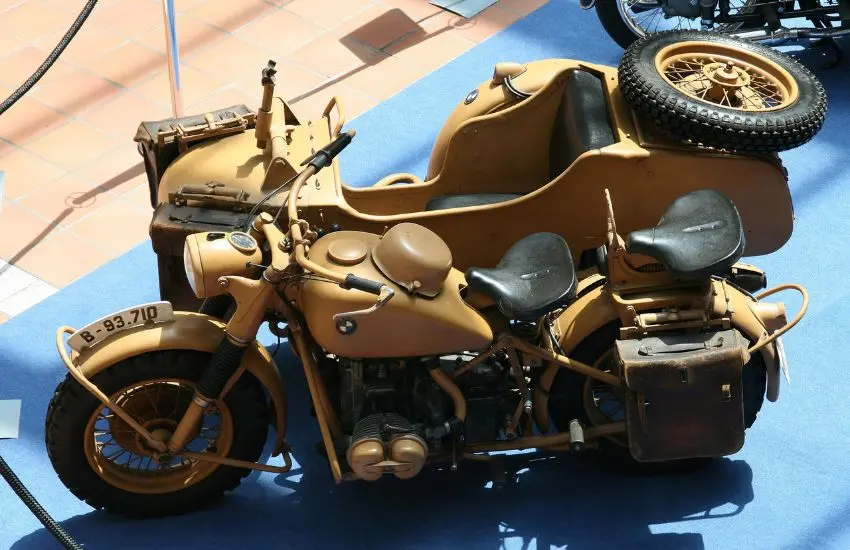
This brings us back to the BMW R75. Bayerische Motoren Werke had made the most of the relative prosperity brought about by peace in Europe, developing a series of powerful, reliable civilian motorcycles. Based around a flat-twin, overhead-valve motor of up to 745cc, these high-specification frames featured hydraulic forks, effective brakes and easy-to-use manual transmissions. It was logical to take those market-leading ‘bikes and develop them into something to help the Nazi war machine blast its way across enemy territory.
The R75 was remarkable. Built as a sidecar combination, it employed two shafts from the engine to drive both rear wheels. Not only that, but the lockable differential enabled both on, and off-road gearing. This is the poster child for motorcycle use in any conflict. You’ll be hard-pressed to conjure up any other image in your mind’s-eye if you’re asked to think of two (or three)-wheelers at war. Actual war, that is, not just Hollywood movies.
After the end of World War Two, the military motorcycle started to lose its USP. Messages were passed through encoded transmissions without delay. Tracked and wheeled heavy vehicles had become more capable and were safer than their two-wheeled counterparts. Aircraft and satellites could scout far more effectively and safely.
The ‘bike took on a very different role through the latter part of the twentieth century. Still in use as a fast, flexible means of getting around, it is now a specialised tool. Hard to detect, and capable of crossing terrain at speed, it has become a favourite of today’s special forces.
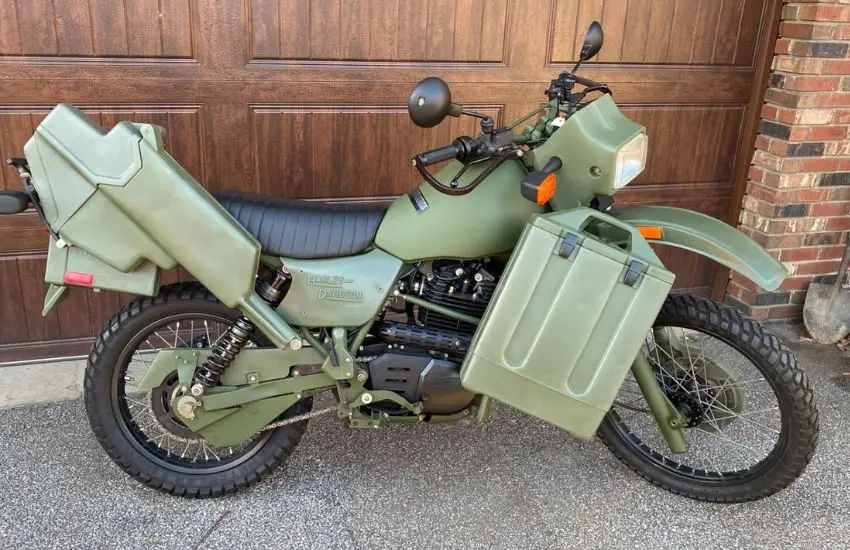
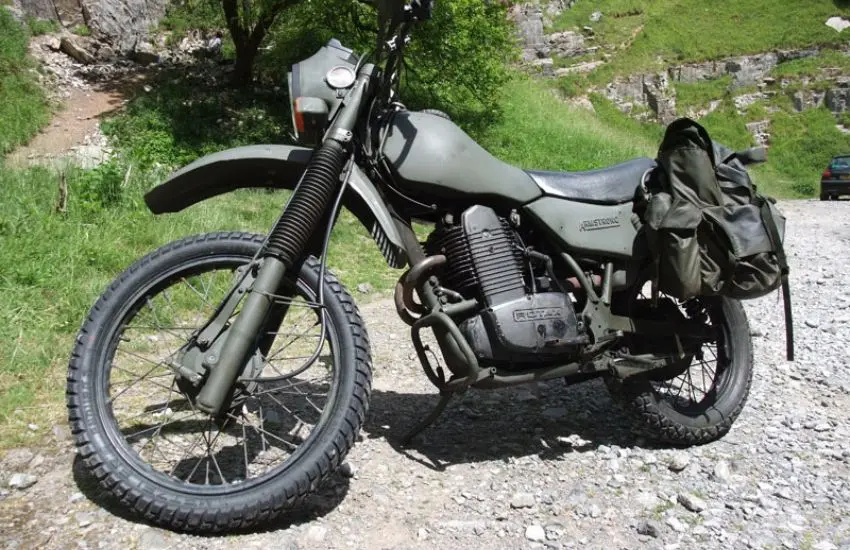
Harley Davidson made a return to this area when they acquired the rights to the Armstrong MT500, originally an Italian designed motorcycle, envisaged specifically for military usage. A small number were put into use as the Harley Davidson MT500, but as in civvy street, it was the Japanese who ultimately won the sales war.
Today’s special forces have returned the motorcycle to its early use for specific tasks where technology can’t replace a human. Enduro-style ‘bikes from brands including Kawasaki and Honda have been seen chasing down insurgents, or beneath special forces operators searching for hidden equipment.
Experiments with diesel fuel met a dead end, but more than 100 years after motorcycles were introduced to war, they continue to evolve. The appeal of an electric drivetrain to service personnel is obvious, particularly for operatives for whom silence is essential. Electric bikes have been tested recently in Ukraine, and you can be sure that these rapid, simple and lighter weight relatives of those early signal carriers will be getting attention from military planners across the world.
Got a favourite military motorbike or a story about riding or restoring one? Drop them below.