Words: Nathan Chadwick
Photography: Hagerty UK
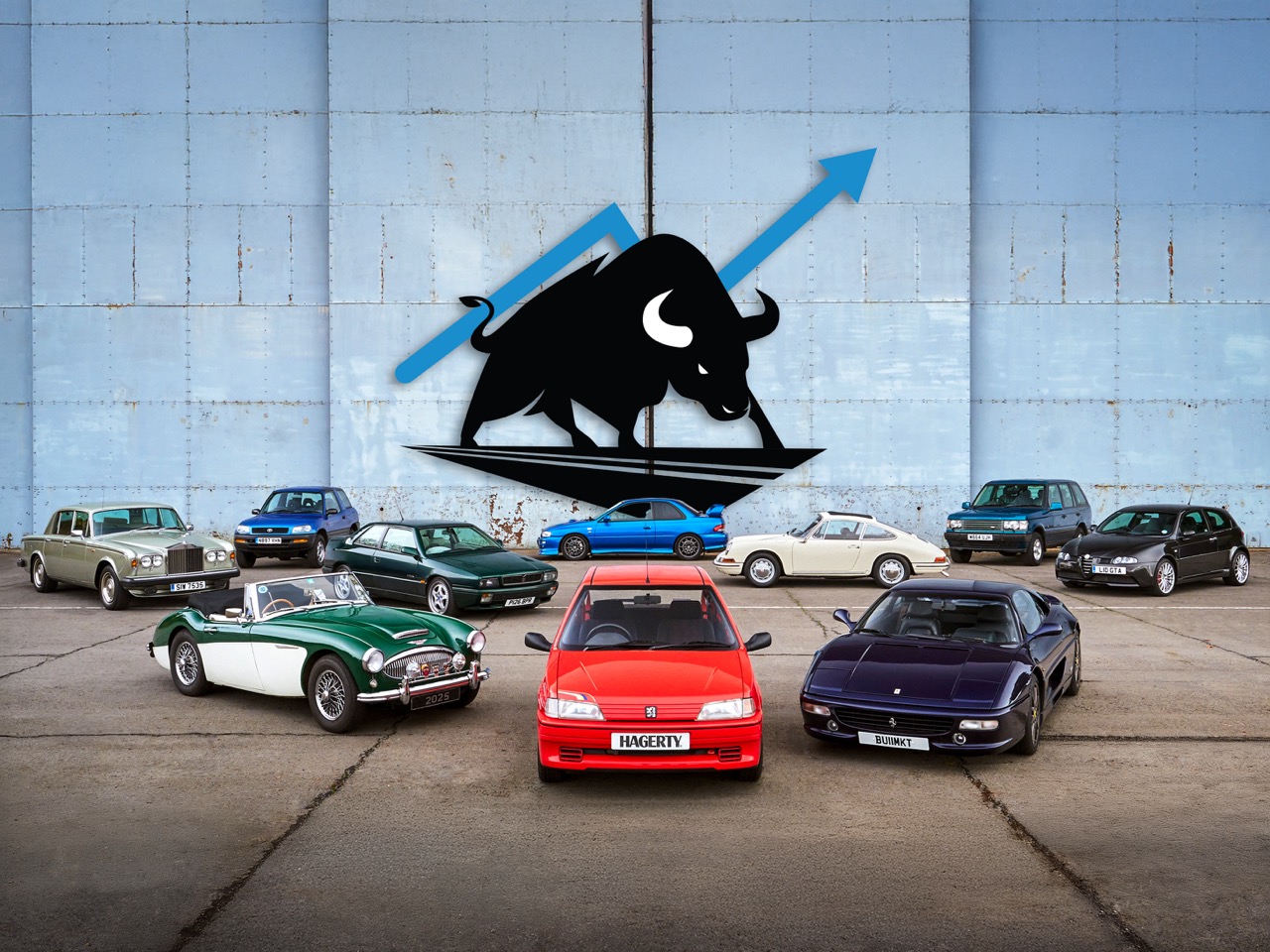
Our 2026 Bull Market List selection has a potential pride and joy for all tastes – but what’s life really like beyond the facts and figures?
We caught up with owners and dealers to find out why each of our selection is special, and what to look out for when looking for one yourself. After all, while the Bull Market List is a useful take on where the market is, Hagerty UK is all about driving – so who better to guide us through the realities of ownership than those who run with the Bulls on a daily basis? Here we take a look at the Alfa Romeo Spider, Mercedes-Benz SLK R171, Toyota Supra MkIV, Riley 9 and Porsche 911 (996). For part two, head here.
Alfa Romeo Spider
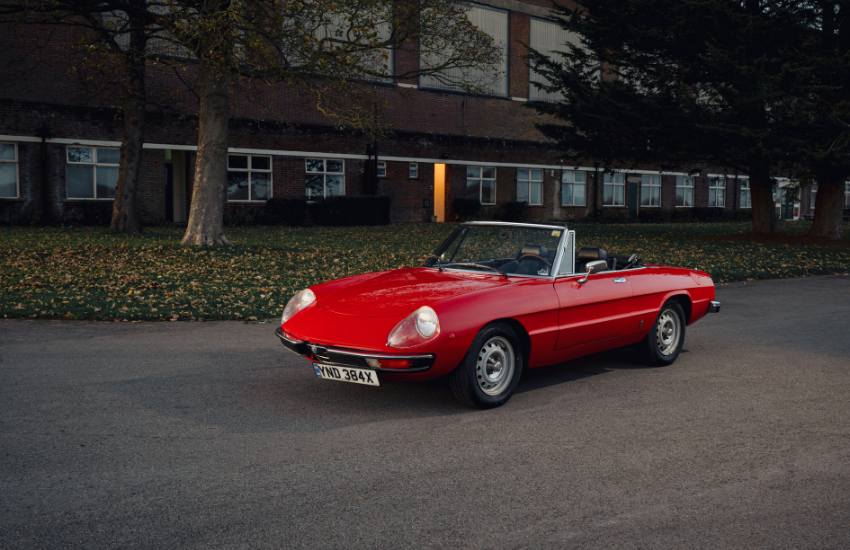
The 2026 Bull Market List has picked out the Alfa Romeo Spider as a car to watch. Of course, the internet will tell you Alfa Romeo ownership is a reliability nightmare – but is that really the case? We speak to Jean-Luc Cartwright of Maple House Classic Cars, with whom this 1980 Series 2 is up for sale.
“For me, it’s the styling above all else,” says Jean-Luc Cartwright of Maple House Classic Cars, with whom this 1980 Series 2 is up for sale. “The design is phenomenal, but the chassis and engine are equally special.” This particular Spider came from Croatia. “My daughter and I flew out and drove it all the way back, so I’m especially attached to this one,” he says. If you’re similarly enamoured with the Alfa Romeo Spider, Jean-Luc has some key advice that might go against conventional classic car wisdom for seeking out minimal-miles examples – instead, he recommends choosing a car that’s been used regularly. “The ones that sit for years are the ones with niggles – generally they’re very reliable,” he says. “I’ve owned several and done some questionable European trips in them without a major issue – just the odd switch or wiper deciding not to work. That’s Italian charm. Mechanically they’re robust, provided the car hasn’t been left idle. The main concern is corrosion; if it runs well and the shell is sound, you’re looking at a good car.”
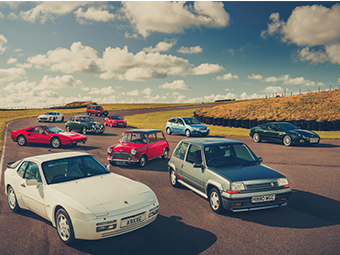
Other than the rust, Jean-Luc doesn’t believe the Spider holds any particular hidden pitfalls. “The drivetrains are strong – I once had a gearbox fail, but even then the car made it halfway back from the Netherlands in third gear,” he laughs. “People think Alfas are fragile, but my own experience is the opposite. Small things go wrong, but nothing that leaves you stranded.” Cartwright owns Alfas himself – a 105-series Giulia saloon race car among them – and credits the Alfa Romeo Owners Club with fostering a strong community. “We’re based in Scotland, so many events are far away, but the support is excellent,” he says. “It’s a die-hard, enthusiastic group. Even in rural areas, as soon as someone sees an Alfa on the road, you’ve made a friend. Before long you’re in a shed building cars together.”
It may sound like a cliché, but Jean-Luc believes Alfa Romeo stewardship can change you – for the better. “It makes you more patient – maybe it’s the Italian laid-back attitude,” he laughs. “When a switch stops working, you just shrug. It builds tolerance and I think it actually makes you a better person. Those imperfections are what give the cars their charm – they humanise them, and that’s why you fall in love with them.”
Thanks to Maple House Classic Cars
Mercedes-Benz SLK R171
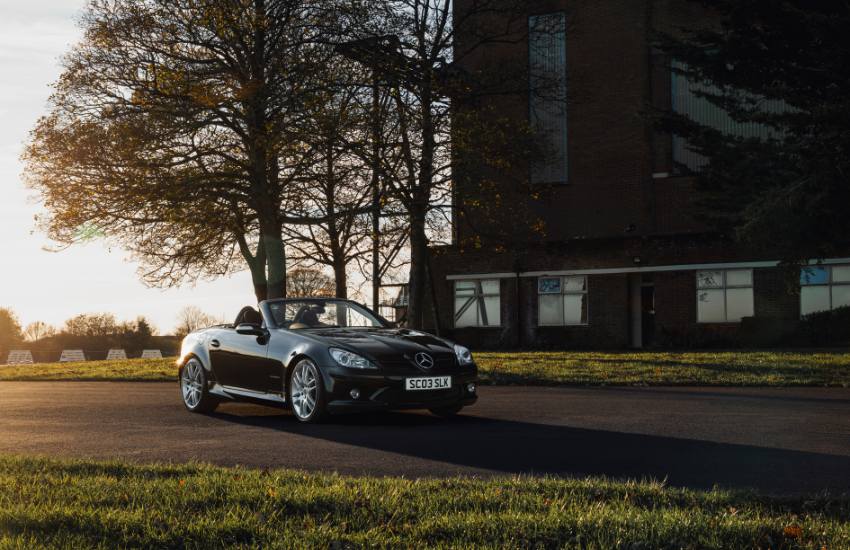
The Mercedes-Benz SLK R171 is one of the Bull List’s true bargains – it’s a lot of car for the money. However, it was developed at a time when the brand was only just returning some lustre to the Three-Pointed Star after a difficult late-90s era for reliability and corrosion. What’s the reality?
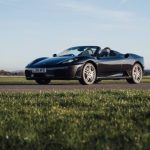
This SLK R171 is a car our very own John Mayhead knows well – and though he’s tipping the AMG SLK55 as not on the most desirable option and thus the model to hold its value or even rise, a base-model SLK200 like this is also well worth a look. “It’s the entry-level model in the R171 range and, for the money, it’s a perfectly decent little car,” he says. “It’s priced at around £5900, and as an MX-5 alternative at that level – 50,000 miles, Mercedes build quality, everything working, heated seats – it represents good value.”
When maintenance costs are mentioned, John acknowledges the SLK’s reputation for expensive repairs. “Some components are awkwardly placed, and certain jobs can be disproportionately costly. But at the entry-level end, if you buy a sound example and keep expectations sensible, it’s fine.”
Turning to its strengths, he says: “I like the folding metal roof – simple to operate and less noisy than many soft-tops. It’s comfortable, stable on the road and relatively spacious for a two-seater. The boot is good with the roof up, although it shrinks noticeably when the roof folds away. There’s some road noise and the odd squeak, but nothing alarming.”
However, it’s the interior that marks the SLK out against its roadster rivals, even against more premium models from BMW and Porsche. “The cabin feels solid and traditionally Mercedes, with proper knobs and dials,” he says. “It’s a perfectly pleasant, presentable car for not very much money, and you could easily use it for touring – boot space notwithstanding.”
The only problem is a hangover from the 1990s in-car entertainment theft plague – it’s a fully integrated unit. “The infotainment unit is an odd size, with no Bluetooth or USB. It’s CDs or radio only,” he says.
At the cost of entry, John sees a non-AMG SLK as excellent value. “We’re no longer in the old ‘buy it now before it goes up’ market. Instead, it’s about recognising cars that simply offer a lot for the money-and in that sense, this SLK fits the brief,” he says. However, it’s only worth buying a non-AMG car that’s either in excellent or concours condition. “If you’re going to spend money improving one, you might as well start with the AMG – you’re far more likely to see that investment again.”
Toyota Supra MkIV
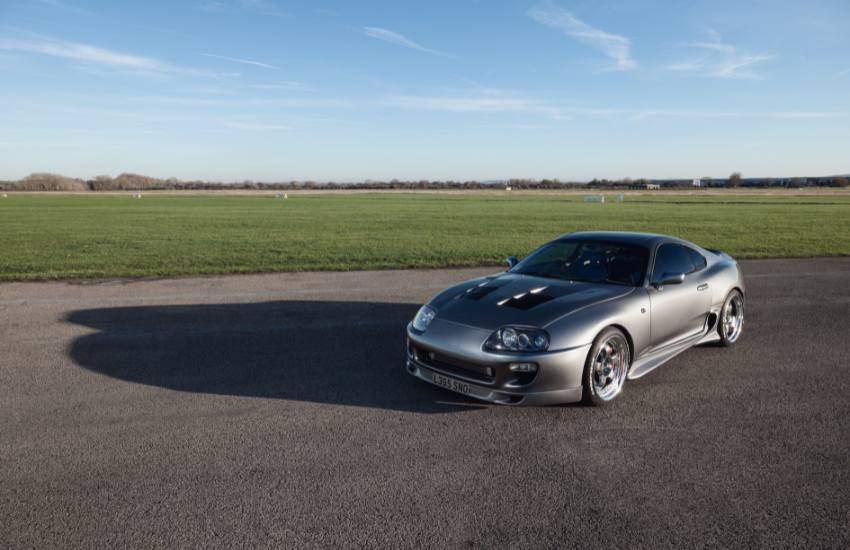
The Toyota Supra is an icon of the 1990s and early 2000s modifying scene – but as this turbocharged six-cylinder machine gains years, its appeal is now following the path of that great modder’s favourite of the past, the Ford Sierra RS Cosworth. However, there’s more to owning a Supra than its big power credentials.
Owners Jas and Gukz Johal describe the Toyota Supra’s appeal as a blend of heritage, engineering ambition and genuine character. “It’s the legend of Toyota massively over-engineering a car,” says Jas. “It arrived as a surprise to everyone – capable, durable and endlessly upgradeable. That whole ‘supercar-killer’ reputation hooked me early on.”
His introduction to Japanese performance came through his brother’s Nissan GT-R. “Once you experience how well-built these cars were for their era, you want a piece of it,” he says. “The Supra just looked right and had the engineering to back it up.”
The Supra’s tunability means many cars have been modified – some expertly, others less so. “A well-maintained, lightly modified or stock example is the ideal,” he says. Indeed, though Jas’s car is extensively modified, like the Ford Sierra RS Cosworth and other tuner car legends before it, owners are now removing modified parts and returning them to stock because that’s what the wider, non-scene market prefers. Values favour two extremes: clean, original cars or professionally built, high-quality modified examples. “Early mods used outdated turbo tech, and many cars were tweaked inconsistently – those don’t carry the same appeal,” he says. “You’re actually seeing people remove big bodykits now and return cars to a more classic look.”
However, modifications aren’t always a thing to be feared, he says. “The platform is genuinely robust; treat it properly and it’ll look after you. I’ve had mine 17 years and it’s never thrown big bills.”
UK-spec cars command a premium thanks to larger brakes, glass headlights and other small upgrades. But over time, most Japanese-market imports have had higher-spec parts fitted anyway. “Unless you find a totally original example, the differences matter less than overall condition and history,” he says.
For Jas, the Supra strikes a balance modern cars often miss. “New performance cars are incredibly capable, but you feel disconnected,” he says. “The Supra still gives you that mechanical clarity – great gearbox feel, proper clutch feedback, real involvement – yet it’s reliable enough to use regularly. It’s one of the few cars from its era that still drives brilliantly today.”
The sequential turbos add another layer of charm: “You get this wave of boost, then another – the turbos give the car true personality,” he says. “You have to learn it, work with it. Modern cars are faster, but they don’t demand as much from you – and that’s where the Supra shines.”
Riley 9
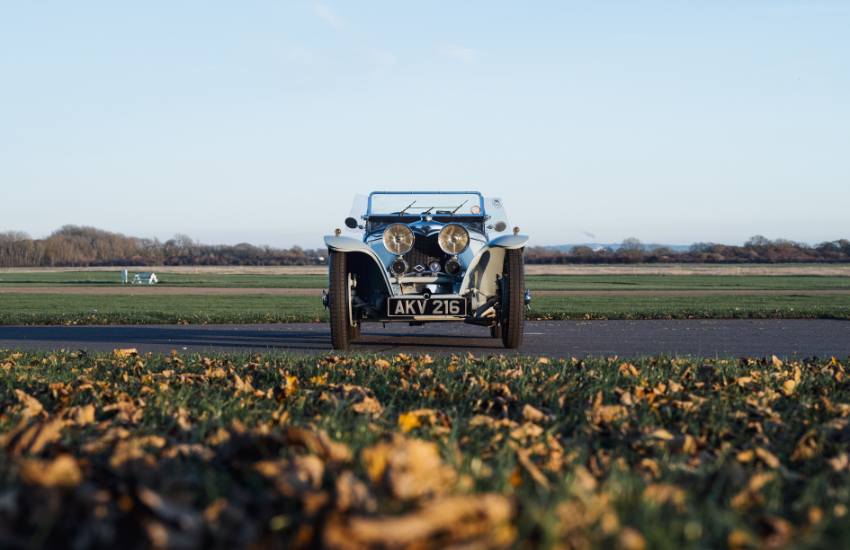
The Bull Market List’s vintage car hero might not be the first one to come to mind, but compared to more lionised marques, running one doesn’t necessarily mean a life of hardship.
The Riley Imp before you belongs to John Lomas of marque specialist Blue Diamond Riley Services. “It’s a two-seat sports model with lovely proportions that are often compared to a Zagato-bodied Alfa, though I think it’s better,” he says. “My late father bought it in 1955 as his first car, and I inherited it. Before that it belonged to his best friend’s family, who purchased it new in 1937. So it’s had only a handful of owners and has been part of my life since childhood.”
John says the broader Riley Nine family was remarkably advanced for its era thanks to the twin high-cam engine. “It’s not quite overhead cam, but with the camshafts mounted high in the block, you get very short pushrods. That gives you the simplicity of a pushrod engine but the performance characteristics of a high-cam design,” he explains. “Add a hemispherical head and you have an engine that’s incredibly tuneable – that’s why the model range stretches from modest saloons to competition cars worth hundreds of thousands.”
For those considering a Riley, John splits the guidance into two categories. “With saloons, the biggest concern is the bodywork. They’re ash-framed and clad in aluminium, so restoring a rotten body can cost many times what the car is worth,” he says. “With the two-seat sports models, there’s simply less body to worry about, so the focus shifts to mechanical condition and the history of major work – rewiring, engine rebuilds, wear from trials use. The engines run on white metal bearings, so any rebuild is specialist work, but they last decades if properly maintained.”
John says Rileys reward keen drivers. “They steer beautifully, have well-balanced chassis and engines with surprising flexibility,” he says. “You can really lean on them in corners,” he says. “This 1100cc Imp with 48bhp feels alive in a way modern cars, for all their excellence, sometimes don’t.”
Keeping up with traffic is not an issue, he insists. “A well-sorted Nine will cruise at 60mph,” John says. “I’ve done long-distance rallies – John O’Groats to Monaco in four days – and even used a four-seat Riley as a daily driver for years. The main limitation is braking: they won’t stop like a modern car, so you learn to look further ahead. It genuinely makes you a better driver.”
The even better news is that running a pre-war Riley is nowhere near as challenging as you might think. “Most components are still available – new blocks, cranks, pistons, cams,” John says. “The Riley Register has a superb spares service, and the community is very active. That’s a contrast with some other pre-war marques, where even basic parts can take months to source. Rileys were the thinking person’s sports car of their day – and they still offer huge enjoyment for the money.”
Thanks to blue-diamond-services.co.uk for the loan of the car.
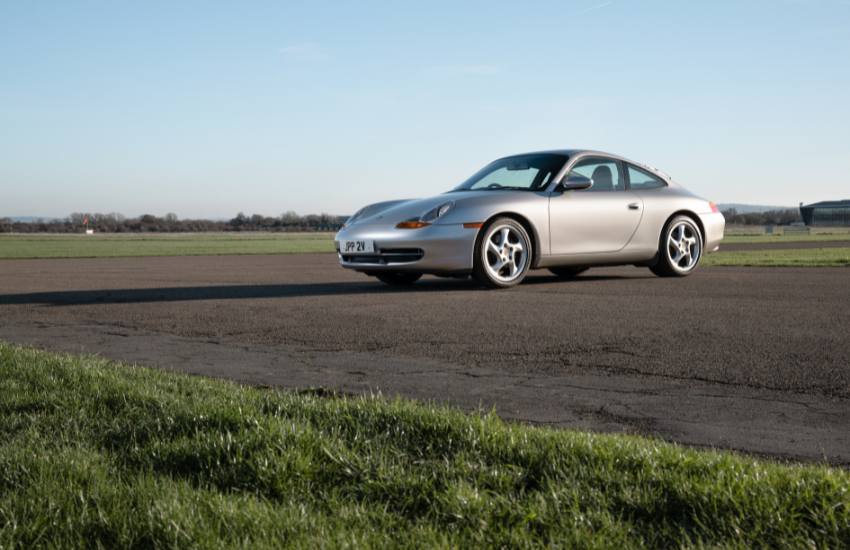
Porsche 911 (996)
The internet does like a horror story, and the presence of a 996 on the Bull Market List will kick off familiar stories about the frailties of the 911 first watercooled flat six. But what’s the reality – a wallet buster or social media bluster?
Jeff Pyle owns this early Carrera 2 from 1998. “I’ve had it for 18 years,” he says, “and it’s been extremely reliable. It’s now on 93,000 miles, and almost half of those have been with a modified 3.7-litre engine rather than the original 3.4.”
Jeff says the appeal of the 996 is that it’s much more hands-on to drive than most modern sports cars. “It’s basic in a good way; you’re involved in everything it does, rather than filtered through layers of driver aids,” he says. “Yes, it’s noisier and a bit firm on today’s roads, but that’s part of the character.”
The 996 hasn’t always had the best reputation for reliability, but if a 996 has survived this long then those worries matter less now, Jeff believes. “Most cars from that era have had the necessary corrective work now,” he affirms. “My car is on its second engine – the previous owner suffered an IMS bearing failure – but since the rebuild and upgrade, I’ve done 45,000 miles without issue. Early on we had some high oil temperatures, solved easily with a deeper sump and extra oil capacity.”
Jeff services the car through specialist Autofarm. “They originally used this engine as a test bed for their modifications, so I’ve stayed with them for 30 years,” he explains. “Parts availability is generally very good, though the occasional odd component – like alarm-system parts – is getting harder to find. The main mechanical items are no problem.”
Jeff advises deep research before purchase, and to source a car from a specialist or one with proper history. “996s are excellent value at the moment,” he says. “Being the first water-cooled 911 means they live under a bit of a stigma, but I’ve never understood that. If you find a good one, it’s a lot of car for the money – a well-maintained 996 is a superb purchase because they’re still tremendous fun to drive.”
A big part of the Porsche lifestyle is the scene around the marque, Jeff says – he’s a member of Porsche Club GB and has been on several of its European drives. “They’re a very friendly bunch – any ideas about Porsche owners being a particular ‘type’ belong in the 1980s,” he adds. “It doesn’t matter what model you drive; everyone’s welcome.”
Which car would you choose? Let us know below.
Classic car insurance from Hagerty
Keep your classic on the road with expert classic car insurance built by car lovers, for car lovers. Rated ‘Excellent’ on TrustPilot.